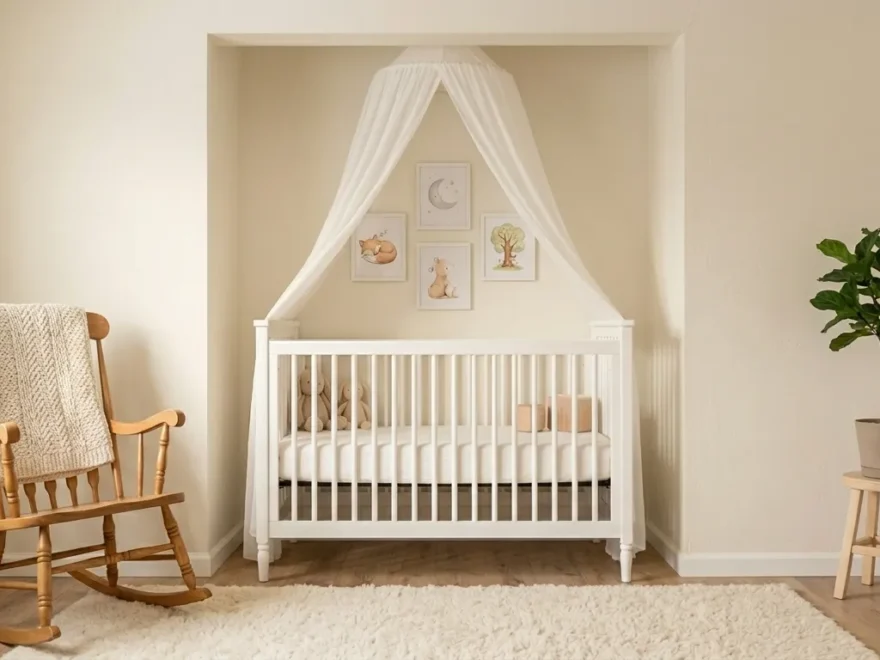
Creating a nursery that feels calm, safe, and beautiful is one of the most personal projects a parent takes on. The space where your baby sleeps, plays, and grows sets the tone for their earliest experiences. And the good news is you do not need to spend a fortune or hire a designer to get it right. The most calming nurseries are built on thoughtful choices, soft textures, gentle colors, and a few meaningful touches that make the room feel like it was made with love. Whether you are starting from scratch or refreshing an existing room, nursery decor ideas will help you build a space that works for both baby and parent. If you’re also exploring home gym decor ideas, using motivating wall decor, smart storage, durable flooring, and energizing lighting can help create a workout space that feels practical, organized, and inspiring to use every day.
1. Choose a Soft, Calming Color Palette
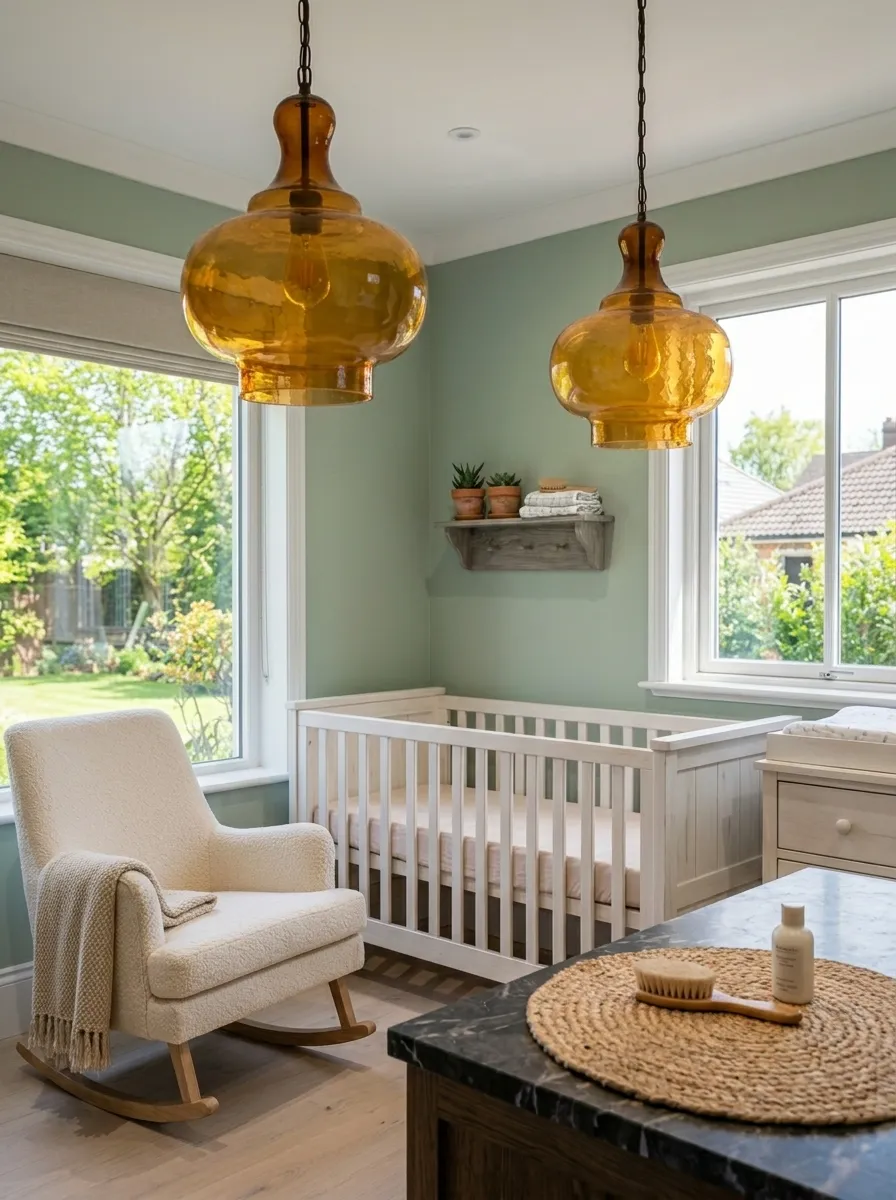
Color sets the emotional tone of any room. In a nursery, you want colors that feel gentle on the eyes and calm on the nervous system.
Soft sage green, warm white, dusty rose, pale lavender, and muted sky blue are all excellent choices. These tones are easy to live with through all stages of early childhood and they photograph beautifully for those first year milestone shots.
Avoid very saturated or primary colors in large amounts. They can be stimulating in ways that work against sleep and calm. Save bold colors for small accents.
You also do not have to match everything perfectly. A slightly mismatched palette of soft neutrals with one gentle color accent looks more natural and considered than everything being the exact same shade.
Budget tip: One feature wall in a soft accent color uses minimal paint and has maximum impact. You save money on paint while still creating a room that feels designed and intentional. Tester pots from paint shops are often enough for a single wall.
Color is the foundation on which everything else builds. Get this right and the rest of the room falls into place naturally.
2. Hang a Soft Canopy Over the Crib
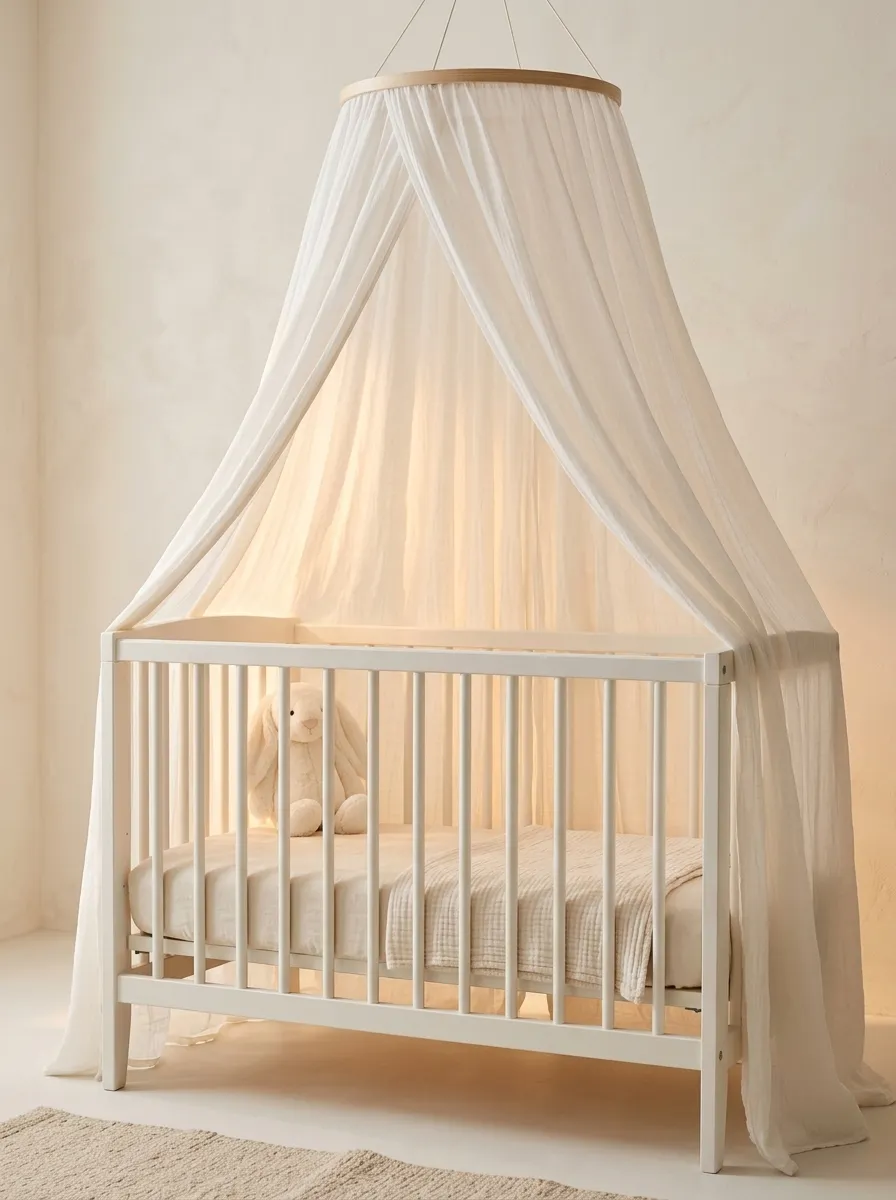
A canopy above the crib is one of the most magical and affordable additions to any nursery. It creates a sense of enclosure and coziness that babies naturally respond to.
You do not need anything complicated. A simple wooden or macrame hoop suspended from the ceiling with sheer fabric draped through it is all it takes. The effect looks soft, dreamy, and like something from a high-end nursery shoot.
Muslin fabric is a wonderful choice. It is breathable, lightweight, and comes in a wide range of soft colors. One or two meters of fabric is usually enough to create a beautiful drape.
Make sure the canopy is mounted securely and that no loose fabric can fall into the crib. Safety always comes first. Keep it decorative and position it so the fabric frames the crib without touching the baby’s sleeping space.
Budget tip: A macrame hoop and a length of sheer white fabric from a fabric store costs very little. This is one of the easiest DIY nursery projects with one of the biggest visual payoffs. You can find tutorials online in minutes and put the whole thing together in an afternoon.
A canopy transforms a plain crib into a beautiful centerpiece.
3. Add a Rocking Chair or Glider
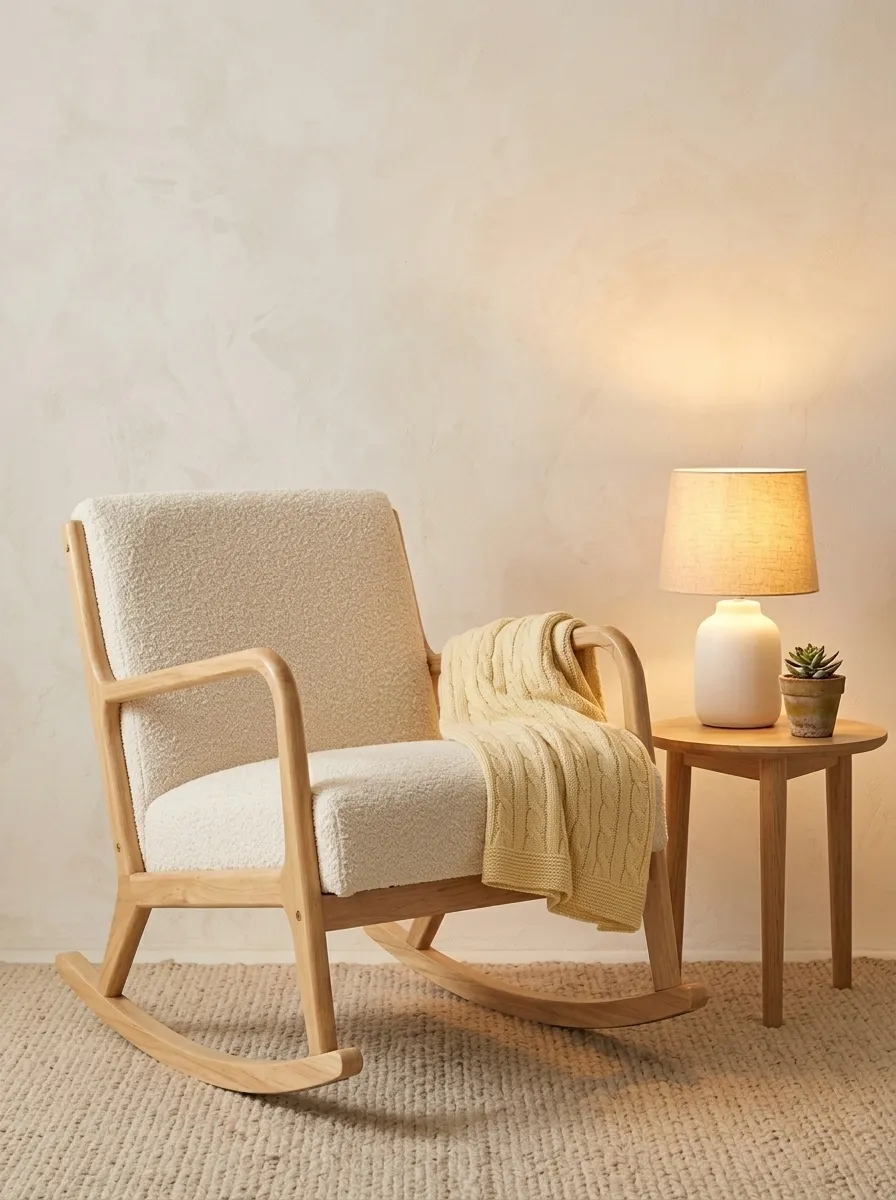
A comfortable place to sit is not just a practical addition to a nursery. It becomes the heart of the room. This is where you feed, rock, read, and spend countless quiet hours with your baby.
Choose a chair that is genuinely comfortable for adult sitting since you will be in it a lot, especially in those early weeks. A rocking chair with cushioned arms and a supportive back makes night feeds far less exhausting.
Style it as part of the room rather than just a functional piece. A beautiful knit throw over the arm, a small pillow, a side table with a lamp nearby all make it feel like a designed corner rather than a piece of medical equipment.
Natural wood with cream or linen upholstery suits almost any nursery color scheme. It is warm, classic, and does not date quickly.
Budget tip: Second-hand rocking chairs in good structural condition can be reupholstered relatively affordably. Even a simple cushion update with new fabric transforms the look entirely. Facebook Marketplace and charity shops often have perfectly solid chairs at a fraction of new prices.
This chair is where memories are made. Make it a place you actually want to sit.
4. Use a Soft Rug to Define the Play Area
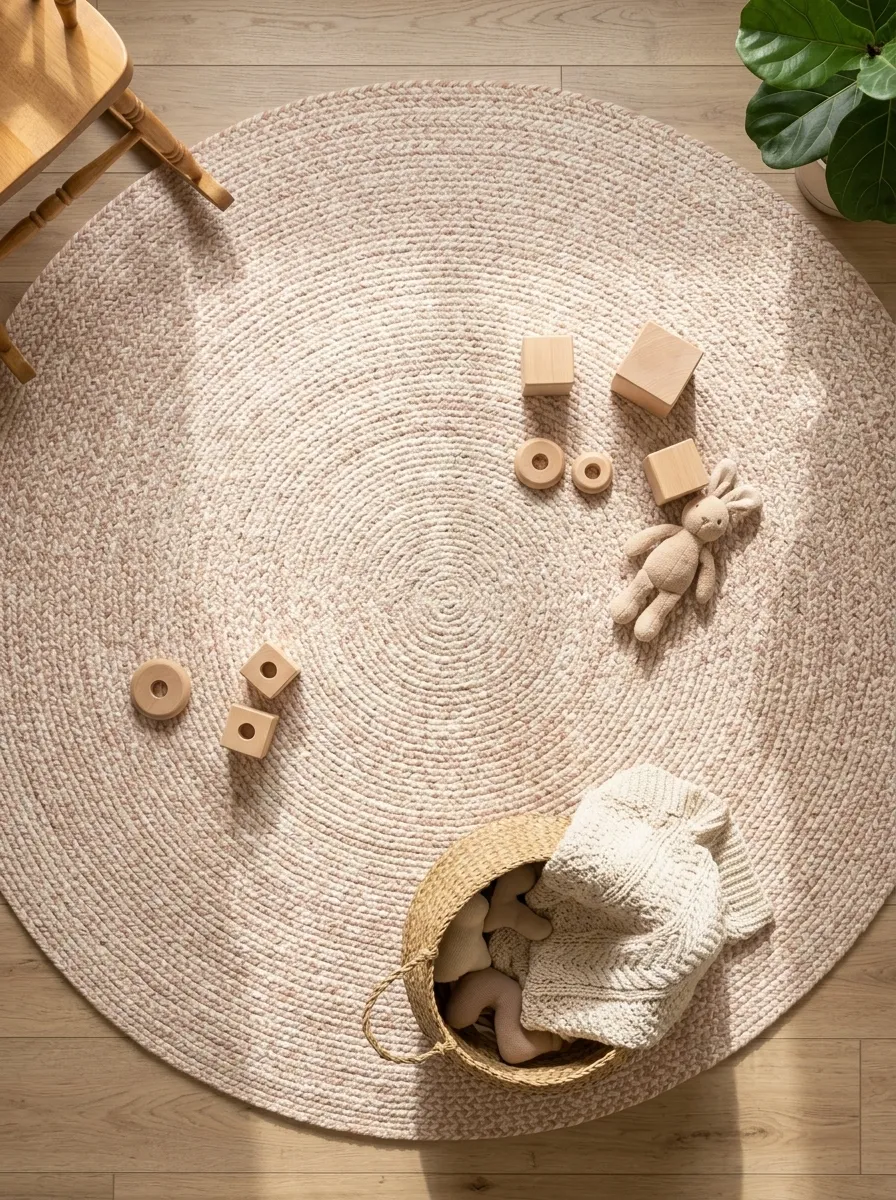
A good rug does several things in a nursery at once. It softens the floor for tummy time and crawling. It defines the play space visually. And it adds a layer of warmth and texture that makes the room feel cozy.
Round rugs work beautifully in nurseries. They soften the hard lines of rectangular furniture and feel playful and gentle. A large round rug in the center of the room with the crib and chair around it looks incredibly well styled.
Choose something with a low pile that is easy to clean. Babies and mess go together, so machine washable is always a bonus.
Colors and patterns should stay soft. A simple geometric print, a subtle stripe, or a tonal texture in blush, cream, sage, or grey fits most nursery palettes beautifully.
Budget tip: Cotton washable rugs are widely available at accessible price points from stores like IKEA, H&M Home, and Amazon. Look for rugs marketed as machine washable since nursery life requires easy cleaning. A round rug in a muted color is one of the most impactful and practical buys you can make.
A soft rug anchors the room and makes the floor a safe, comfortable place for your baby to explore.
5. Create a Gallery Wall of Gentle Artwork
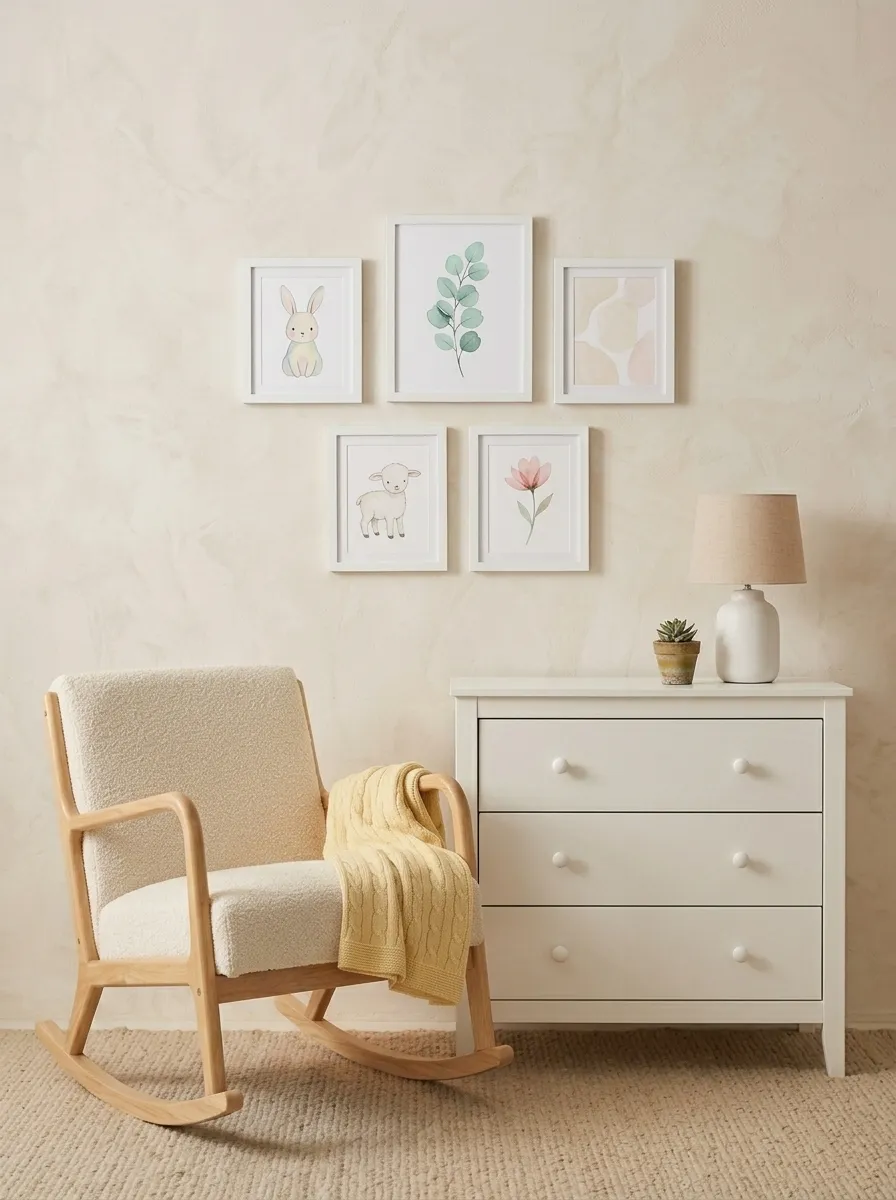
Artwork in a nursery does not need to be baby themed in an obvious or cartoonish way. Some of the most beautiful nursery walls feature simple watercolor illustrations, abstract shapes in soft colors, or gentle nature prints like botanicals and animals in a quieter style.
A gallery wall above the dresser or changing area turns a plain wall into a feature. Keep frames consistent, white or natural wood, and mix sizes for visual interest.
Print your own art to save money. Watercolor botanical prints and simple animal illustrations are widely available as free downloads or from Etsy sellers at very low prices. Printed at a local print shop and framed in affordable frames, they look just as good as expensive art.
Choose art that will age with your child rather than becoming babyish very quickly. Soft nature prints, abstract shapes, and simple illustrations can stay on the wall for years.
Budget tip: The Rijksmuseum online collection and sites like Unsplash offer free high-resolution images that print beautifully. Simple white Ikea frames in different sizes create a cohesive gallery for minimal cost.
Thoughtful wall art tells visitors that this room was designed with care and intention, not just assembled from a box set.
6. Install a Floating Shelf for Display and Storage
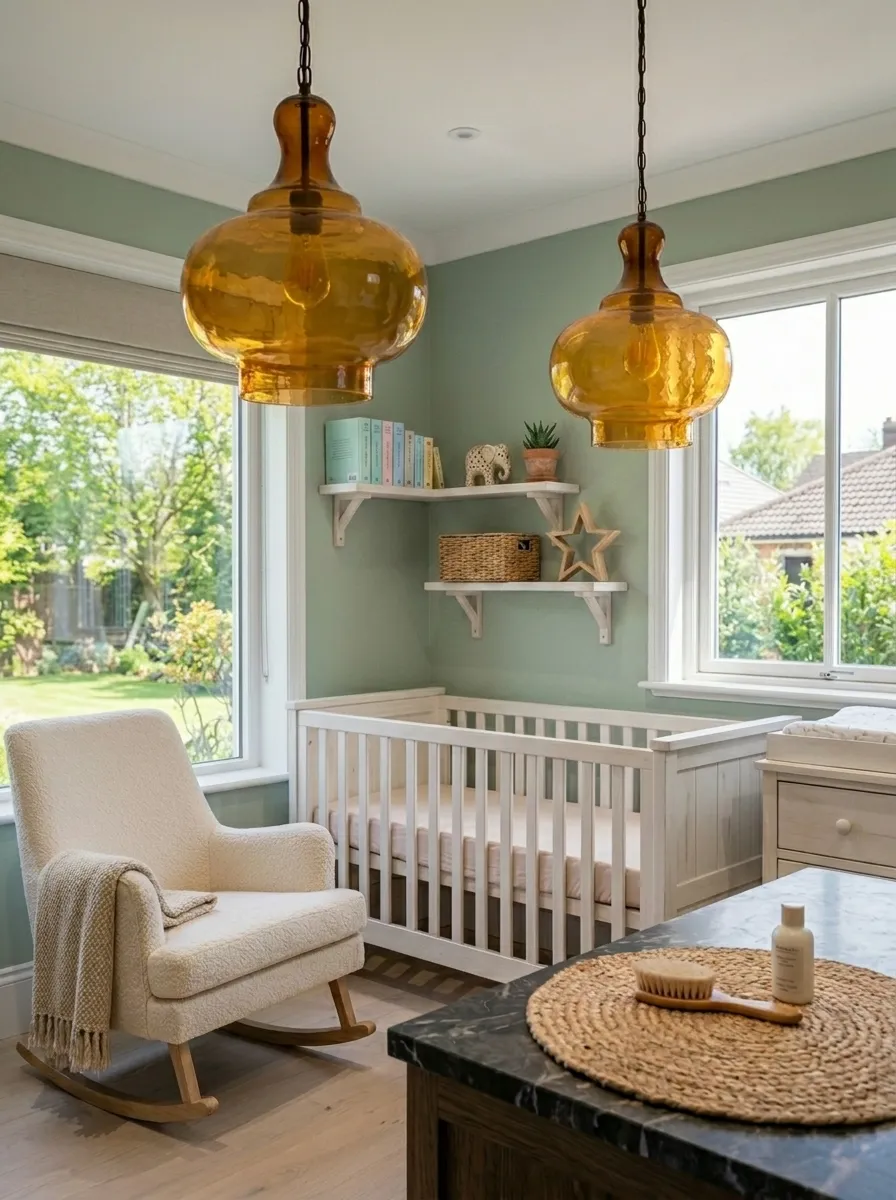
Floating shelves solve the nursery problem of needing storage while keeping the floor clear for movement and play. They also give you a place to display the beautiful little objects that make a nursery feel personal.
A shelf above the changing table is one of the most practical spots. Keep nappies, wipes, and small essentials in a basket on the shelf and decorate around it with a plant, a small framed photo, or a sweet figurine.
Shelves beside the crib work beautifully for books and a small nightlight. Shelves above the dresser create display space for meaningful keepsakes and soft toys.
Keep the display edited. A few carefully chosen items look better than every item crammed together. Leave space between things so each one can be seen.
Budget tip: Simple pine floating shelves with invisible brackets are inexpensive at most hardware stores. Paint them white or leave them natural depending on your nursery palette. The wood itself costs very little and the installation is manageable for most people with basic tools.
Floating shelves add design detail to walls that would otherwise feel flat and unused.
7. Layer Soft Lighting for Day and Night
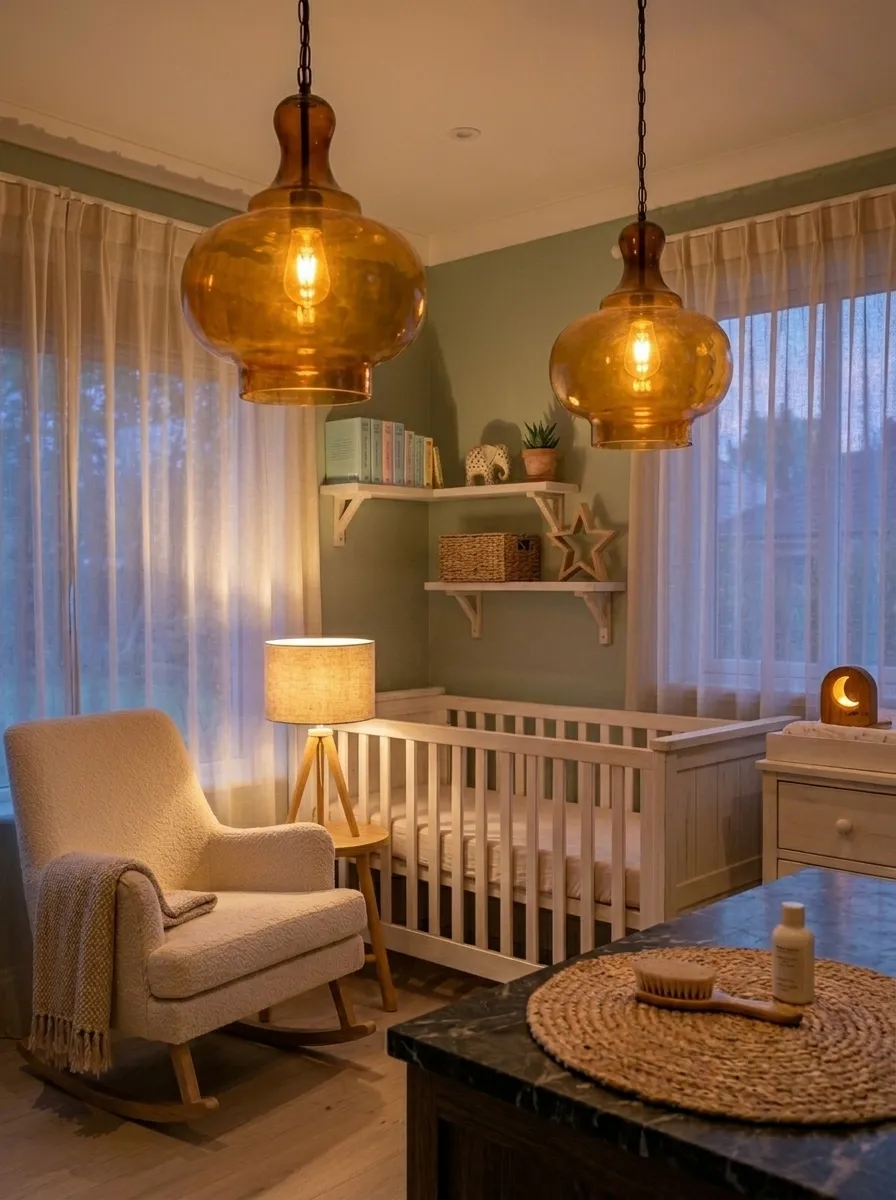
Lighting in a nursery does a lot of work. During the day you want enough brightness for play and feeding. At night you want soft, warm light that does not disrupt sleep or wake a drowsy baby.
Layer your lighting so you have options. A main overhead light for full brightness during daytime activities. A table lamp or wall sconce beside the feeding chair for warm side lighting during evening feeds. A small nightlight for the dark hours.
Warm white bulbs are non-negotiable here. Cool or daylight bulbs at night signal wakefulness to both you and your baby. Anything around 2700K gives a beautiful amber warmth that feels calm and safe.
A dimmer switch on any light you plan to use during night feeds is one of the most practical nursery investments you can make. Being able to drop the light to its lowest setting makes a huge difference at 3am.
Budget tip: A simple plug-in nightlight with a warm amber glow costs very little and does the job perfectly. Many come with timers and sensors now. For a table lamp, any affordable base with a warm bulb and a linen shade looks lovely without spending much at all.
Good lighting makes a nursery feel calm and safe at every hour of the day.
8. Add a Wooden Bookshelf for Baby’s First Library
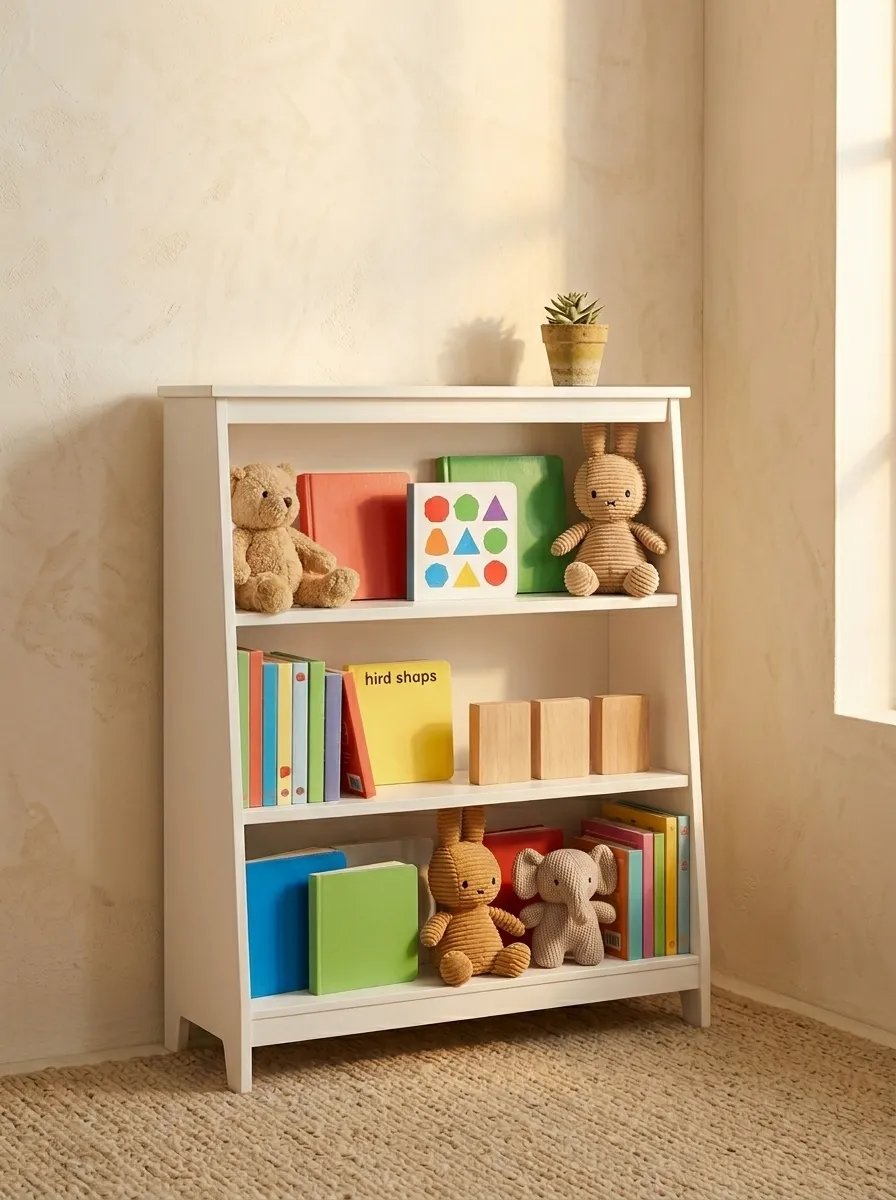
Books in a nursery are more than decoration. They signal to your baby from day one that reading is part of life in this home. And a beautifully styled bookshelf is one of the most charming features any nursery can have.
Display books facing forward rather than spine out wherever possible. The illustrated covers of board books are often beautiful little artworks in their own right and they make the shelf look incredibly appealing and colorful.
A low bookshelf that your child can eventually access themselves is a better long-term choice than a tall one they cannot reach. It also stays useful as they grow from baby to toddler.
Style the shelf with a mix of books and small objects. A plush toy between two book stacks, a small plant, a wooden animal figurine. Keep it curated and uncrowded.
Budget tip: Second-hand board books are just as good as new ones and cost almost nothing at charity shops and library sales. The covers might be slightly worn but babies absolutely do not care. A beautiful collection of affordable pre-loved books is a wonderful start to any nursery library.
A nursery bookshelf is one of those details that makes a room feel genuinely prepared and thoughtful.
9. Hang Macrame or Woven Wall Art
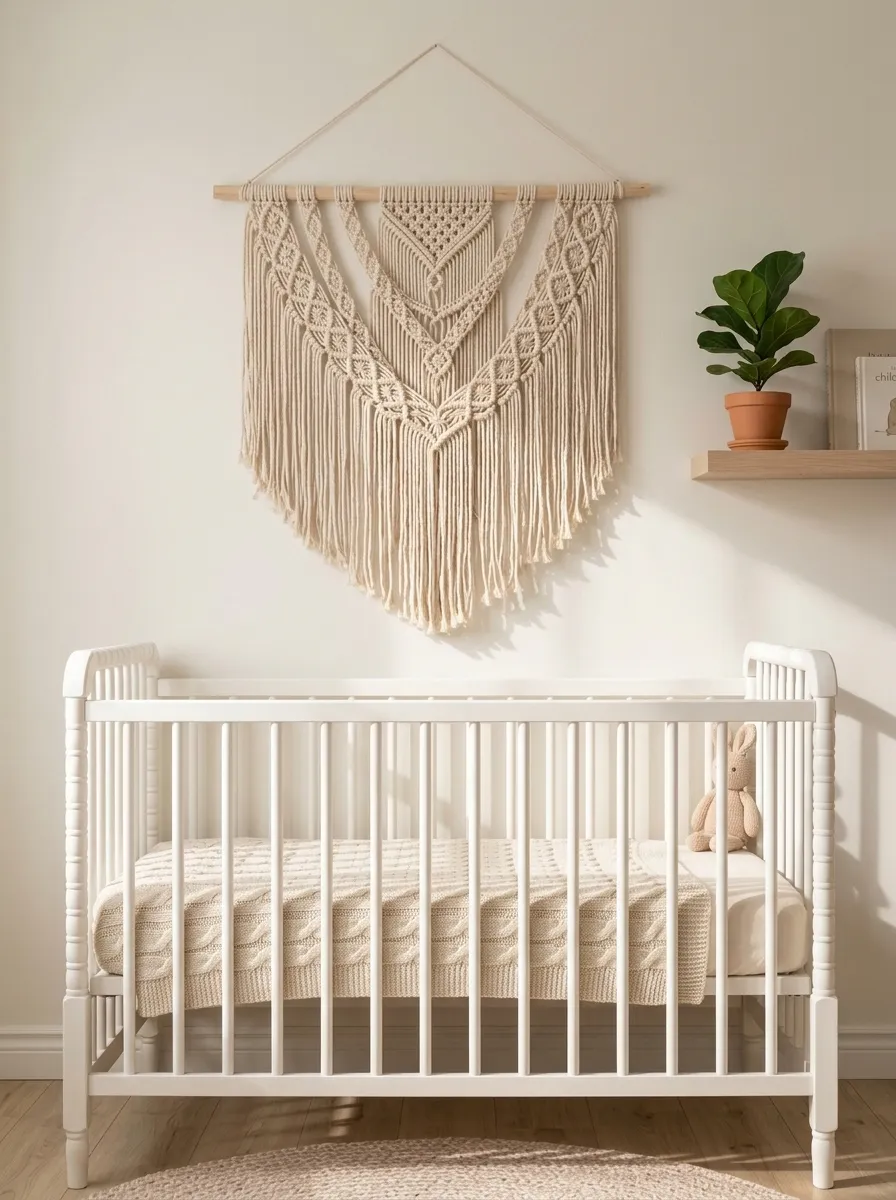
Macrame and woven wall art add texture to a nursery in a way that no print or painting can. The natural fibers, the movement of the fringe, and the handmade quality all bring warmth and softness to walls.
A large macrame piece above the crib creates a beautiful focal point. It fills the wall space meaningfully without adding visual noise. The texture reads as gentle and organic, which fits beautifully with a calm nursery aesthetic.
You do not need to spend a lot. Small woven pieces can be layered together on a wall for a collected, artisan look. A mix of sizes and shapes at varying heights creates depth and interest.
Natural cotton cord in cream or off-white suits every nursery color palette. It never looks out of place and does not date quickly.
Budget tip: Macrame kits for beginners are widely available and very affordable. Even with no prior experience, a simple wall hanging is a manageable first project and makes a beautiful personalized piece of nursery art. YouTube tutorials walk you through the basic knots in under an hour.
Handmade art in a nursery adds a layer of love and intentionality that bought pieces simply cannot replicate.
10. Choose Blackout Curtains Styled to Look Beautiful
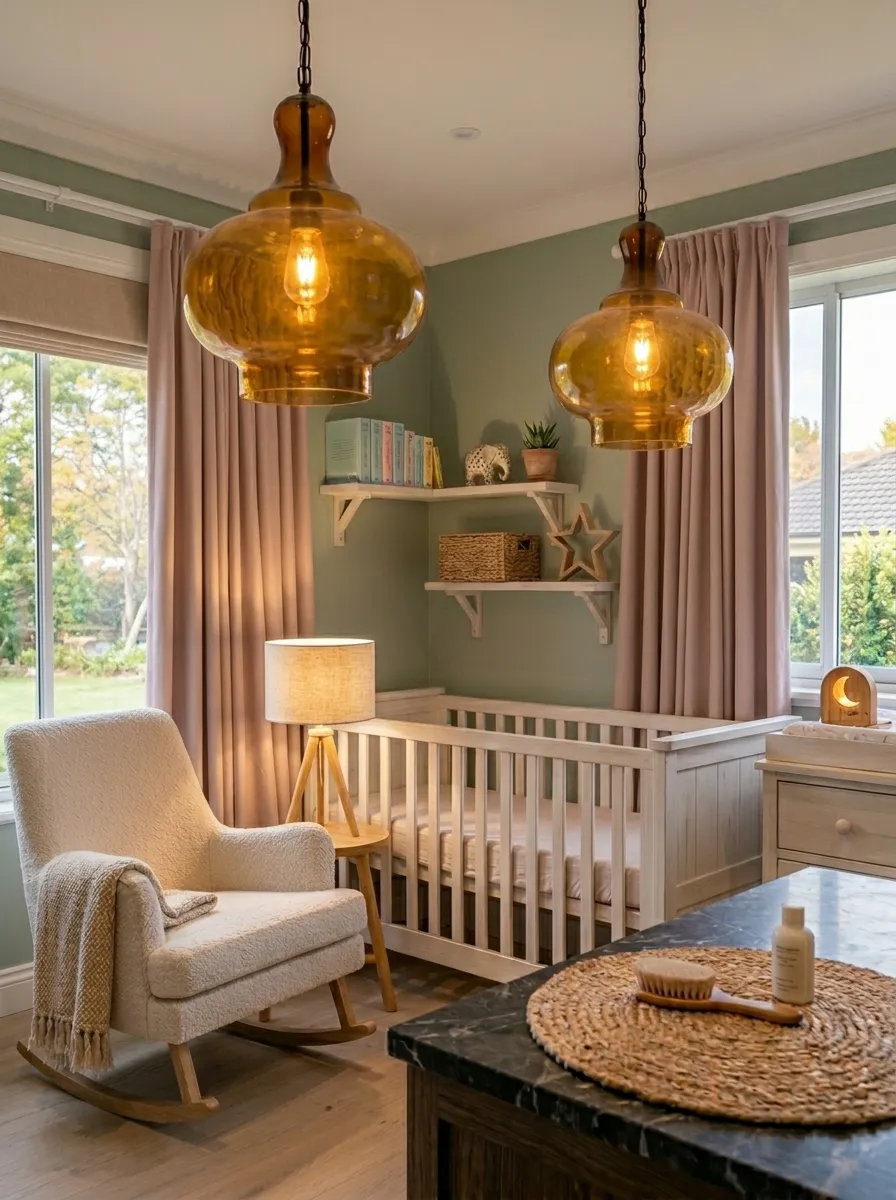
Blackout curtains are one of the most practical additions to any nursery. Good sleep depends on darkness. But practical does not have to mean ugly.
Beautiful blackout curtains in soft colors look just as good as decorative panels and serve a far more useful purpose. Dusty pink, sage green, warm white, or soft grey all work wonderfully in a nursery setting.
Always hang the curtain rod as high as possible, close to the ceiling. This makes the windows look taller and the room feel more spacious. Let the curtains reach the floor for a polished and luxurious look.
If you find beautiful sheer panels you love, you can often layer them over a basic blackout blind. The sheer goes on an outer rod for style and the blind sits behind it for function. This gives you the aesthetic of soft curtains with the practicality of blackout coverage.
Budget tip: Basic blackout roller blinds from hardware stores are very affordable and do the functional job perfectly. Add a decorative curtain panel on a rod over the top for the styling you want at a fraction of the cost of buying blackout curtain panels.
Good sleep is one of the best gifts you can give your baby. Curtains that support that are worth prioritizing.
11. Incorporate Natural Wood Furniture
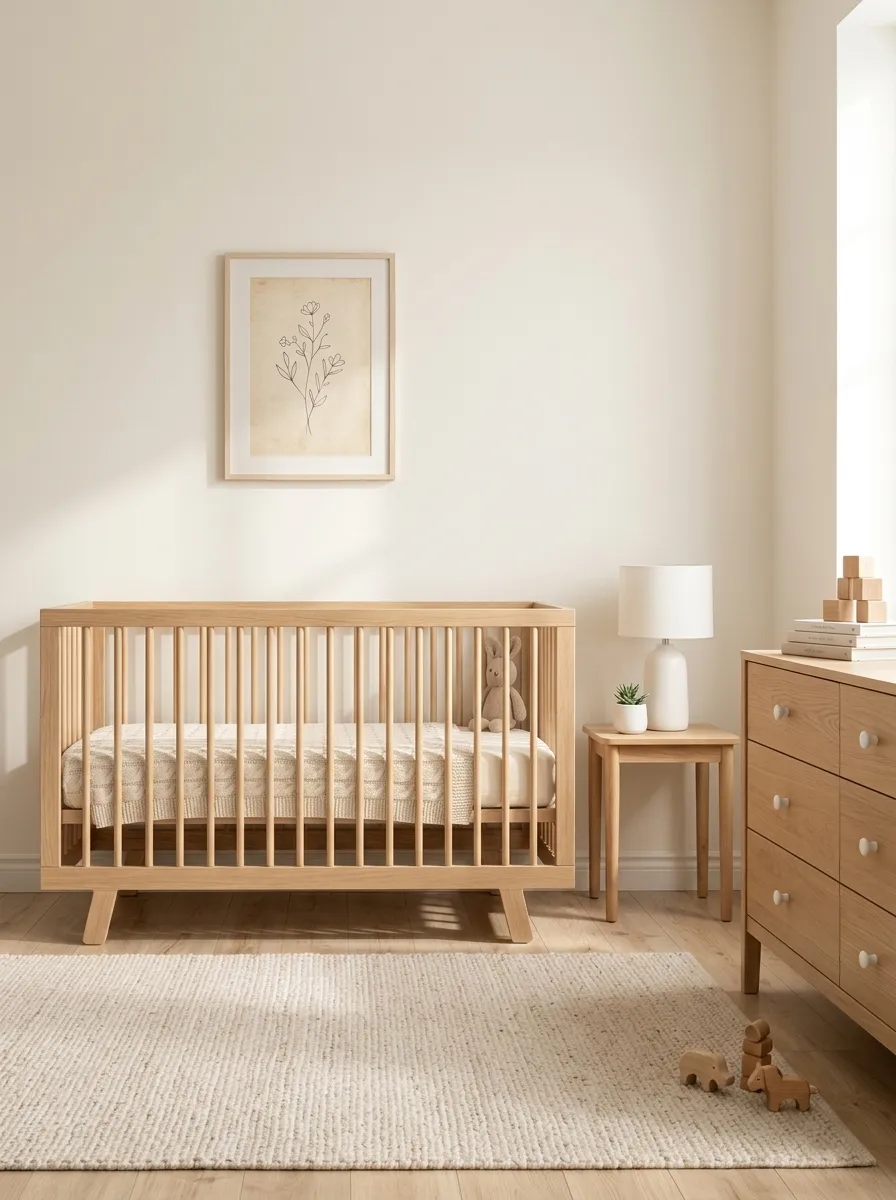
Natural wood furniture brings warmth and timelessness to a nursery that painted furniture often lacks. The grain, the tone, and the organic quality of wood make a room feel grounded and calm in a way that feels genuinely nurturing.
Light oak, pine, and birch are all beautiful choices. They work with every color palette and get more beautiful with age. They also photograph incredibly well, which matters when you are documenting your baby’s first months.
Mixing wood furniture with white or soft painted pieces creates a collected, intentional look rather than a perfectly matched set. A wooden crib with a white dresser, or a white bookshelf with wooden side tables, looks naturally styled rather than like a furniture showroom.
Choosing furniture made from solid wood also means it lasts long enough to be used for multiple children or passed down over time.
Budget tip: Solid wood furniture holds its value well on the second-hand market. Facebook Marketplace and local selling groups often have excellent quality wooden nursery furniture from parents whose babies have outgrown it. A good clean and new hardware can make a pre-loved piece look brand new.
Natural wood in a nursery creates a quiet, organic warmth that synthetic materials simply cannot match.
12. Use a Changing Table With Built-In Storage
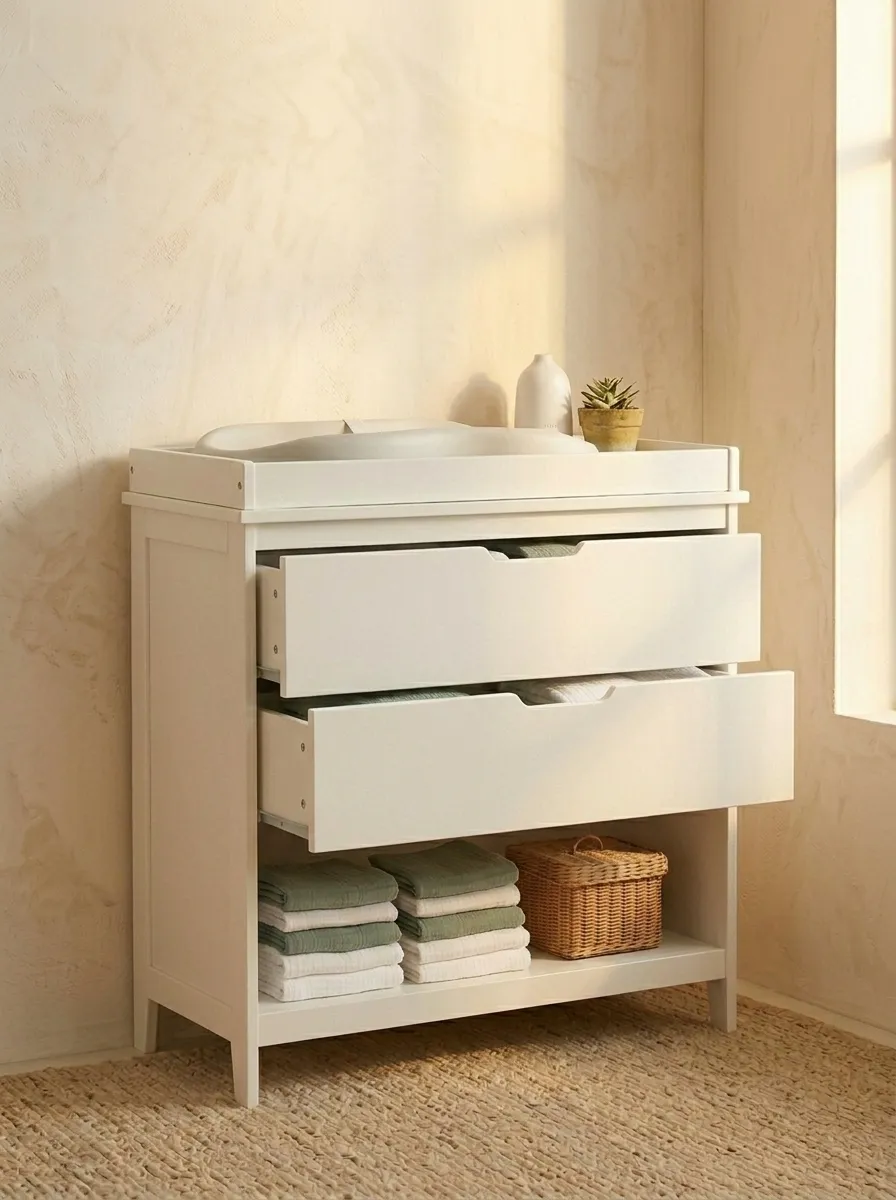
The changing table sees more action than almost any other piece of nursery furniture. Making it organized and beautiful at the same time is absolutely worth the effort.
A changing table with built-in drawers or shelving below is far more practical than a standalone surface. You want nappies, wipes, creams, and spare clothes all within arm’s reach. Reaching across the room while holding a baby is not an experience anyone enjoys.
Style the top of the changing table simply. The changing pad, a small plant, a dispenser for wipes, and perhaps a small framed print on the wall above. Keep it clean and uncluttered.
Baskets and small bins inside the drawers keep items sorted and easy to grab. Label them if you share changing duties with a partner so both of you always know where things are.
Budget tip: A simple dresser with a changing topper placed on it works just as well as a purpose-built changing table and often provides more storage. Many parents find this more cost-effective and the dresser continues to be useful long after the changing stage is over.
A well-organized changing area makes the inevitable countless daily changes much less stressful for everyone involved.
13. Add a Mobile Above the Crib
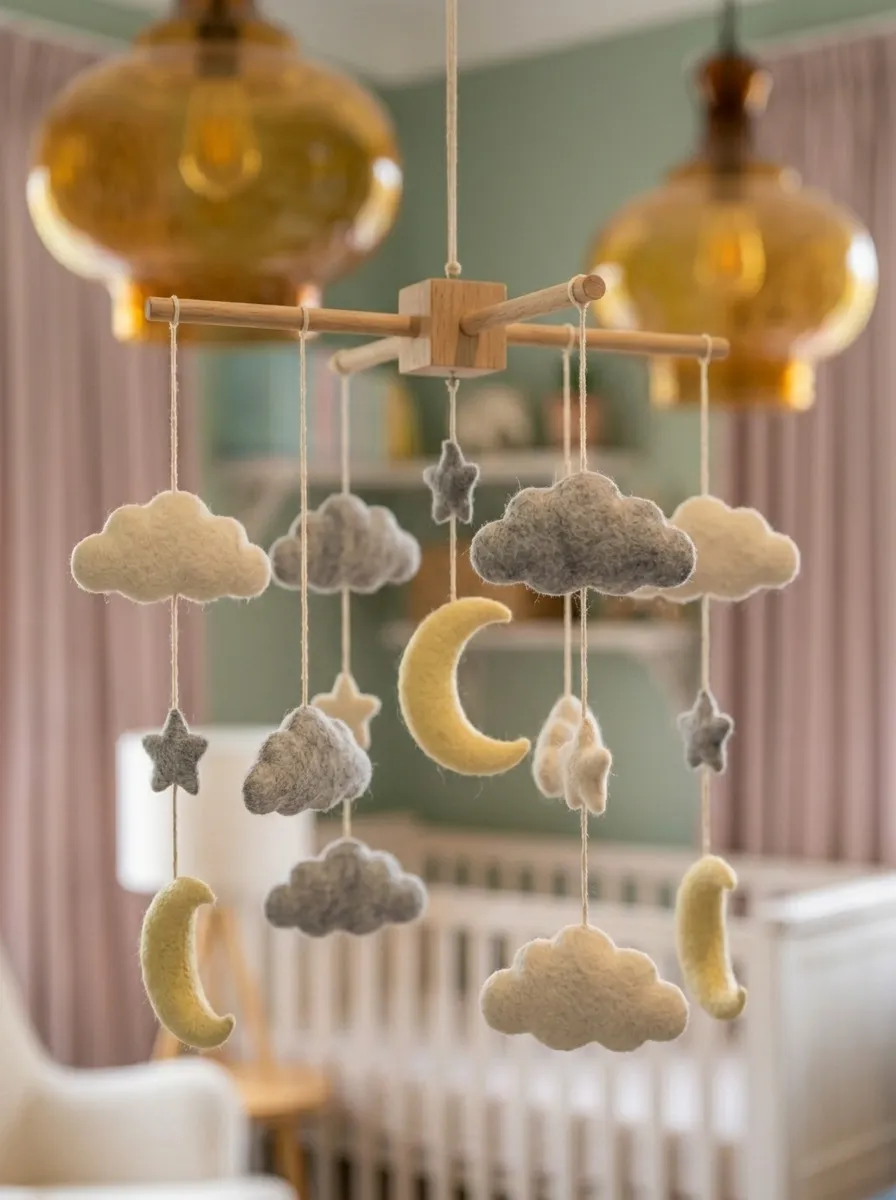
A mobile is one of those nursery details that serves multiple purposes beautifully. It gives babies something gentle and moving to look at during the crucial early weeks when they are developing visual tracking. It also adds a decorative focal point above the crib that photographs wonderfully.
Felt mobiles with soft shapes like clouds, stars, moons, raindrops, and animals are classics for good reason. They are lightweight, quiet, and come in colors to suit any nursery palette.
Wooden mobiles with geometric shapes have a more modern, Scandinavian aesthetic and work beautifully in a neutral or minimalist nursery.
Make sure whatever you choose is hung securely from a ceiling hook rated for the weight. Keep mobiles out of reach of a baby who can sit up and grab.
Budget tip: DIY felt mobiles are one of the most popular nursery craft projects. Felt sheets, a wooden dowel or embroidery hoop, some thread, and basic sewing or gluing skills are all you need. The result is a unique, personalized piece that costs almost nothing and looks genuinely charming.
A mobile catches light, creates gentle movement, and adds a finishing touch to the crib area that makes the whole nursery feel complete.
14. Create a Cozy Reading Corner
A reading corner in a nursery starts as a beautiful styling element and grows into one of the most used spaces in the whole room. Children who have a dedicated cozy reading spot use it constantly as they grow.
A simple teepee or canopy tent in the corner creates an enclosed, magical feeling that children are naturally drawn to. Add a plush floor cushion or a small pile of soft cushions inside and a basket of books nearby.
String lights draped around or over the tent add warmth and a sense of wonder. Use battery-operated warm lights for safety and flexibility.
As your baby grows into a toddler, this corner becomes a place for independent play, quiet time, and eventually independent reading. It earns its space many times over.
Budget tip: Canvas teepees are available at very accessible prices from many online retailers and home stores. You can also make a simple version from wooden dowels tied at the top with twine and draped with a light cotton fabric. The cushion inside can be a simple floor pillow from any homeware store.
A reading corner tells your child from their very first days that books and quiet time are something special worth having a space for.
15. Personalize With Name Letters or Initials
Personalizing a nursery with your baby’s name is one of those touches that makes the space feel genuinely theirs. It adds warmth and identity to the room in a way that no generic decor can replicate.
Wooden letters mounted above the crib or on an accent wall are the classic approach. Painted in a color that fits the room palette, they look clean, handmade, and personal.
Other options include a name embroidered on a cushion, a custom print with the baby’s name incorporated into a beautiful design, or wooden name cutouts hung on a mobile or shelf.
Keep the lettering style soft and simple rather than loud or novelty-shaped. Clean, rounded fonts in soft colors suit the calm nursery aesthetic beautifully.
Budget tip: Raw wooden letters from craft stores are very inexpensive. Paint them yourself in any color with a basic craft paint for a completely custom look. This is a fun and simple pre-baby project that costs almost nothing and makes a big personal statement in the room.
A baby’s name on their nursery wall is one of those details that feels meaningful every time you walk into the room.
16. Layer Blankets and Textiles for Warmth and Texture
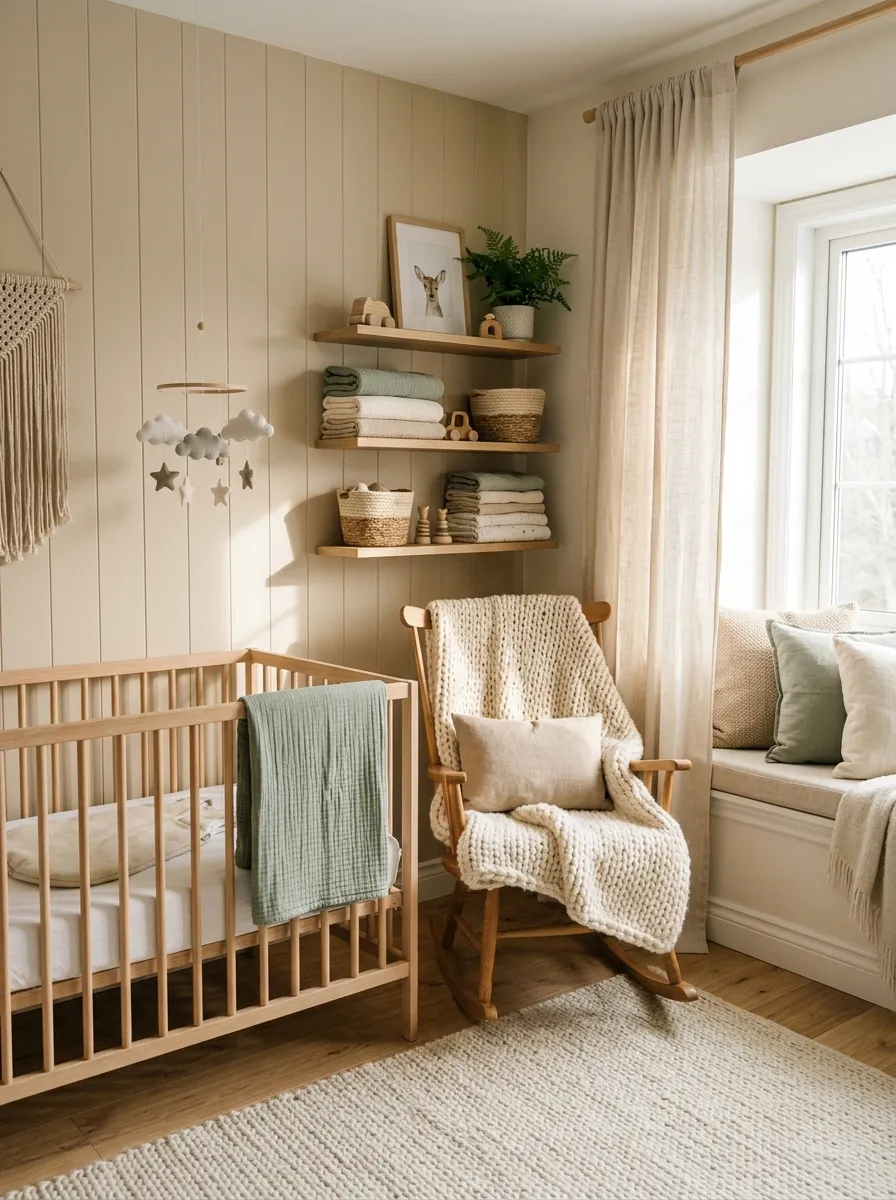
Textiles are what make a nursery feel genuinely soft and warm rather than just decorated. The layers of blankets, muslins, knit throws, and cushion covers all come together to create a room that looks and feels cozy.
For the crib, keep safety guidelines in mind and use only what is safe for your baby’s sleep stage. But styled on the rail, draped over the side, or folded at the end for display purposes, blankets and textiles add enormous visual warmth.
For the rest of the room, layer freely. A chunky knit throw over the rocking chair, a muslin swaddle draped over the bookshelf, a cotton cushion on the window seat. These small textile touches add up quickly.
Stick to natural fibers like cotton, muslin, and wool where possible. They photograph beautifully and age gracefully.
Budget tip: Muslin cloths come in multipack sets for very little money and work for everything from swaddling to styling to actual daily use. A set of four or five muslins in complementary prints is one of the most cost-effective nursery buys you can make both practically and aesthetically.
Textiles are the last layer that pulls a nursery together and makes it feel truly finished and full of warmth.
17. Hang a Wooden or Rope Swing Shelf
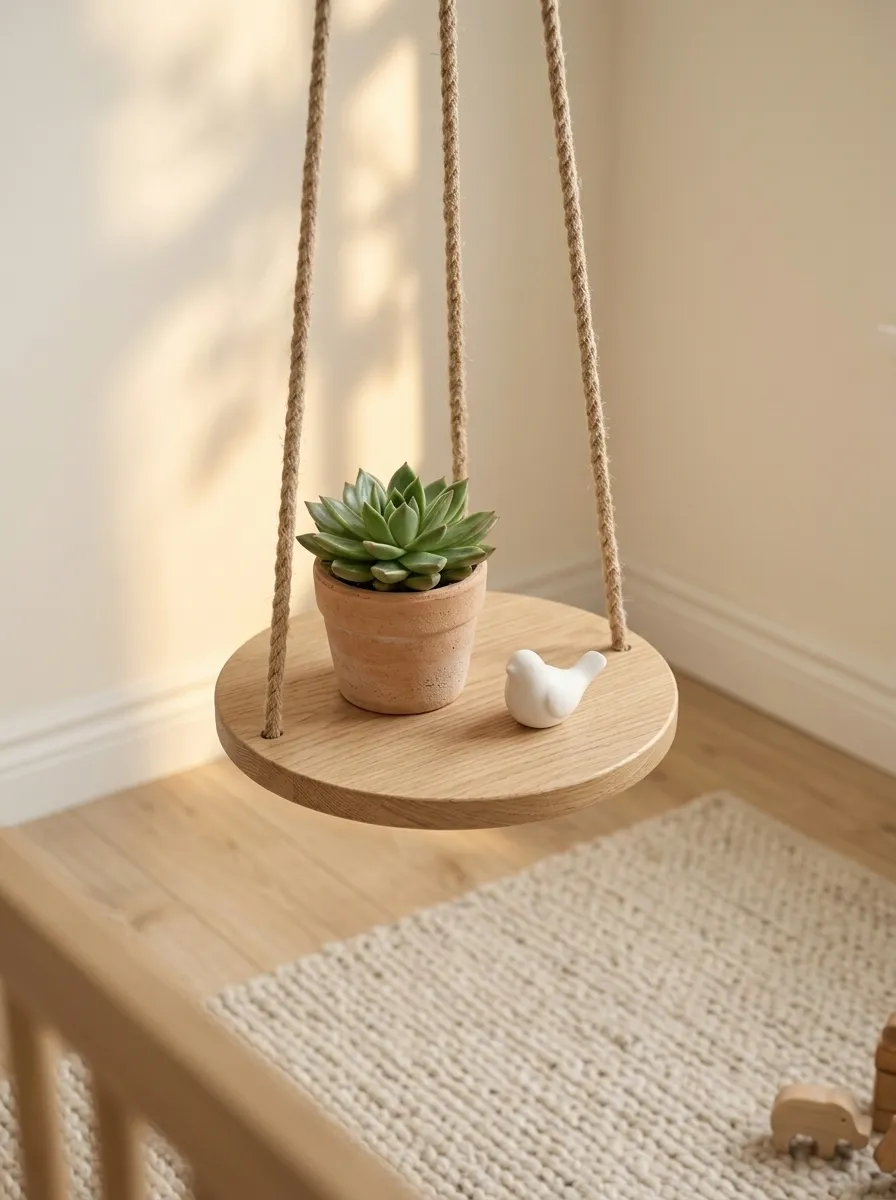
A hanging rope shelf adds a playful and organic design element to a nursery that standard shelving cannot match. The way it suspends from the ceiling adds visual depth and an artisan quality to the room.
Use it as a display shelf for a plant, a candle, or a small decorative object. Position it in a corner or beside the reading area where it becomes part of the room’s overall styling story.
Make sure it is mounted into a ceiling joist or with appropriate fixings rated for the weight it will carry. Safety in a nursery is non-negotiable and a falling shelf is a risk not worth taking.
The natural wood and rope combination suits Scandinavian, bohemian, and nature-inspired nursery aesthetics equally well. It is one of those pieces that looks like it cost much more than it did.
Budget tip: DIY rope shelves require only a wood plank, thick natural rope, and two ceiling hooks. Drill the holes, thread the rope, knot it securely, and hang. The whole project takes an afternoon and costs very little. Sand and oil the wood for a beautifully finished look.
This small suspended shelf adds a touch of something unexpected that makes guests immediately take notice.
18. Use a Soft Peel and Stick Wallpaper on One Wall
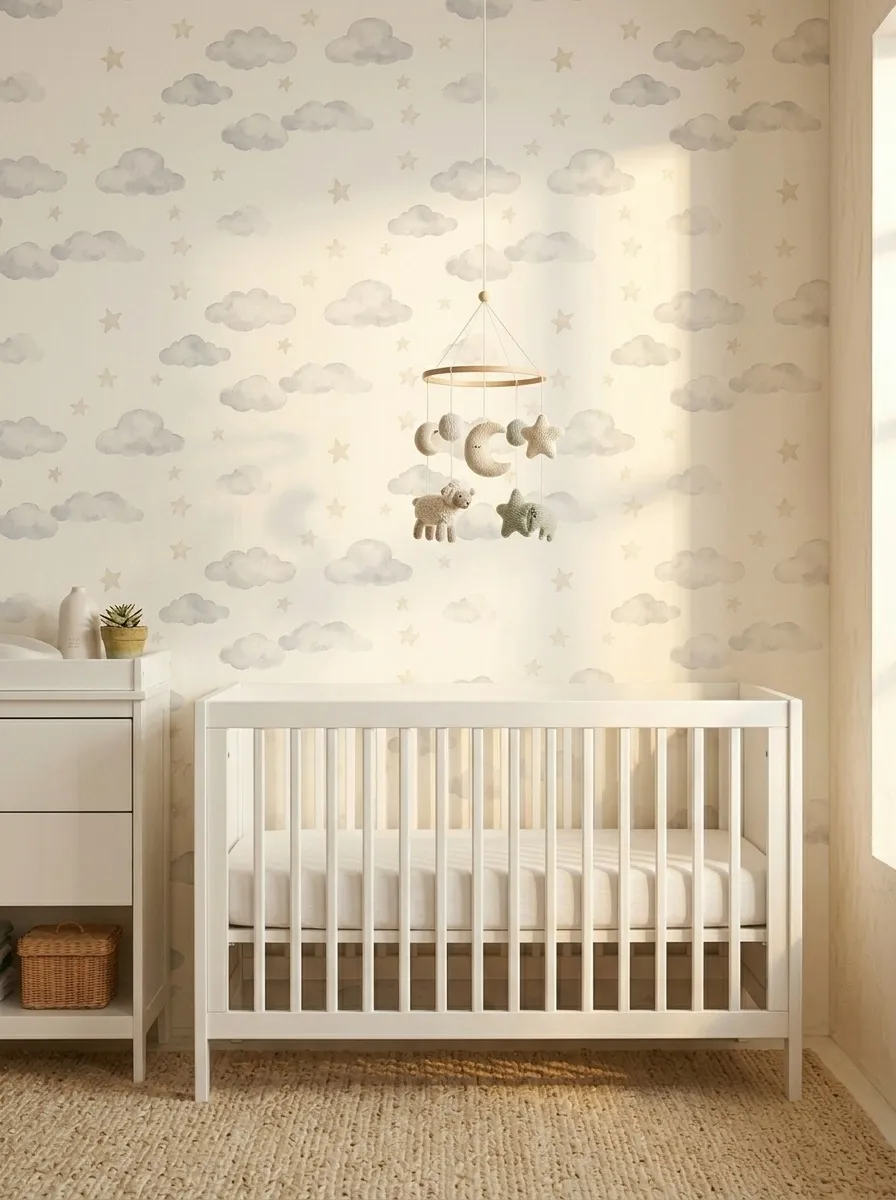
Wallpaper has come a long way. Peel and stick versions now look genuinely beautiful and are a game-changer for renters or anyone who wants the option to change things easily as the child grows.
One wallpapered accent wall behind the crib creates a stunning focal point with almost no permanent commitment. Soft patterns work best in a nursery. Watercolor clouds, delicate botanicals, simple geometric shapes, gentle animal prints in muted tones.
Avoid very large or busy patterns in a nursery. They can feel overwhelming in a small space and work against the calm atmosphere you are trying to create.
Application is straightforward. Most peel and stick papers require only a smooth, clean wall surface and some patience with alignment. No paste, no soaking, no professional required.
Budget tip: Peel and stick wallpaper has become much more affordable as it has grown in popularity. Many online retailers sell it by the panel or roll at accessible prices. A single accent wall behind the crib usually requires fewer panels than you expect, keeping costs low.
A wallpapered wall gives the nursery a completely finished, designed quality that paint alone rarely achieves.
19. Add a Small Side Table Beside the Feeding Chair
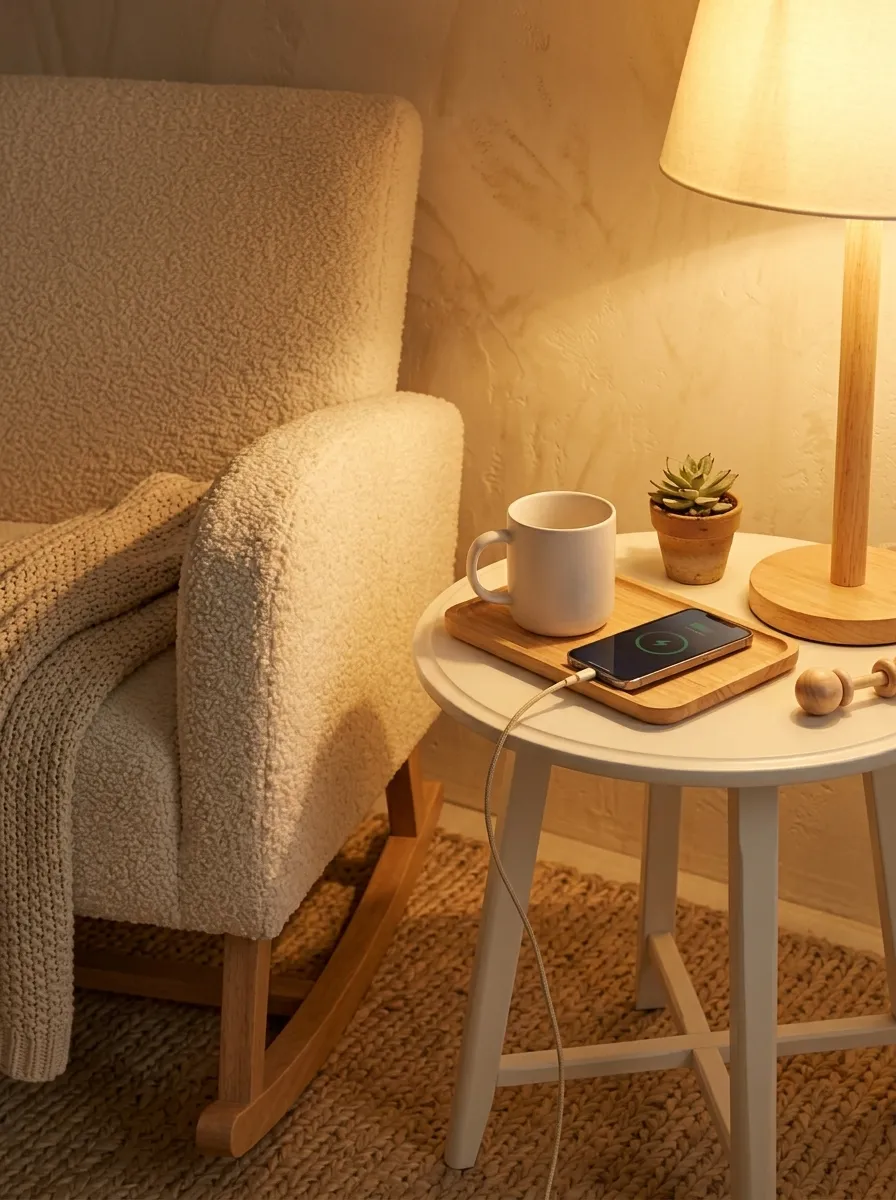
This is one of those practical additions that you will appreciate enormously once your baby arrives. Night feeds and long rocking sessions are much more manageable when you have a surface within reach.
A side table beside the feeding chair holds your water bottle, your phone, a small lamp, and whatever book or snack is keeping you company during the quieter moments. These small comforts matter a lot when you are tired.
Choose a table that is roughly the height of the chair arm so things are easy to reach without bending or stretching. A small round table takes up almost no floor space and fits beside any chair comfortably.
Style it simply. A small plant, a candle when the baby is not in the room, a beautiful mug. These small details make the chair area feel like a considered space rather than just a functional one.
Budget tip: Any small round table works here. Thrift stores and discount home stores often have perfectly suitable options for very little money. A basic wooden stool can double as a side table if you need to save space. Function and style at minimal cost.
A side table beside the chair tells you this nursery was designed for the parent as much as for the baby.
20. Install a Star or Cloud Projector Nightlight
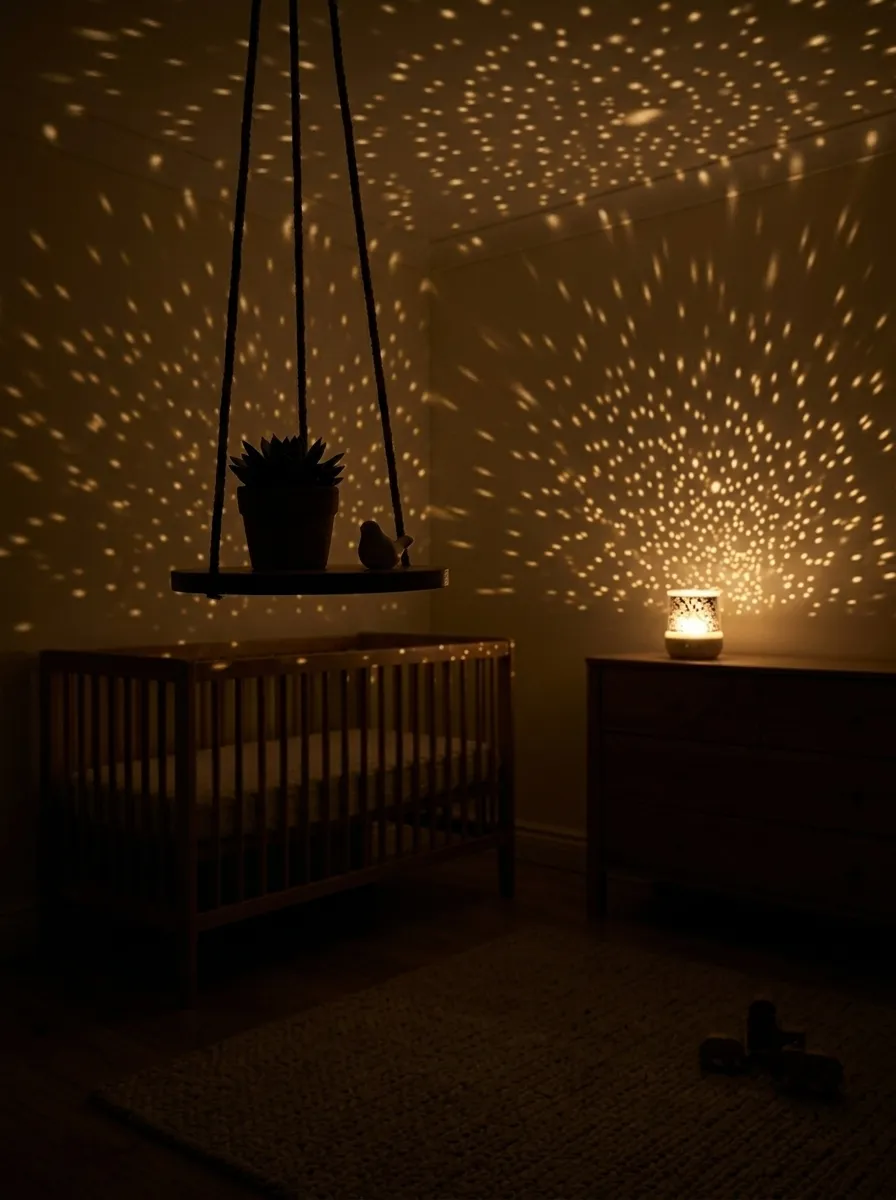
A star or cloud projector nightlight turns bedtime into a genuinely magical experience for babies and toddlers alike. The gentle movement of projected light on the ceiling is soothing and creates a visual focus for restless little minds.
Many projectors come with adjustable brightness, color options, and timers so you can set them to turn off automatically once your baby is settled. This makes them practical as well as beautiful.
The ceiling and walls of the nursery become a gentle, moving scene. Stars slowly rotating, clouds drifting, or constellations appearing quietly overhead. It creates a calming ritual around bedtime that children come to associate with sleep.
Choose a model with warm light options rather than only bright or cool colors. Warm amber and soft gold tones are much more sleep-friendly than blue or white projections.
Budget tip: Star projector nightlights are widely available at very accessible price points from online retailers. You do not need to spend much to get a projector with good brightness, color options, and a timer. Many parents consider this one of the best value nursery purchases they made.
A star projector makes bedtime something to look forward to for both baby and parent.
21. Organize Toys in Beautiful Baskets
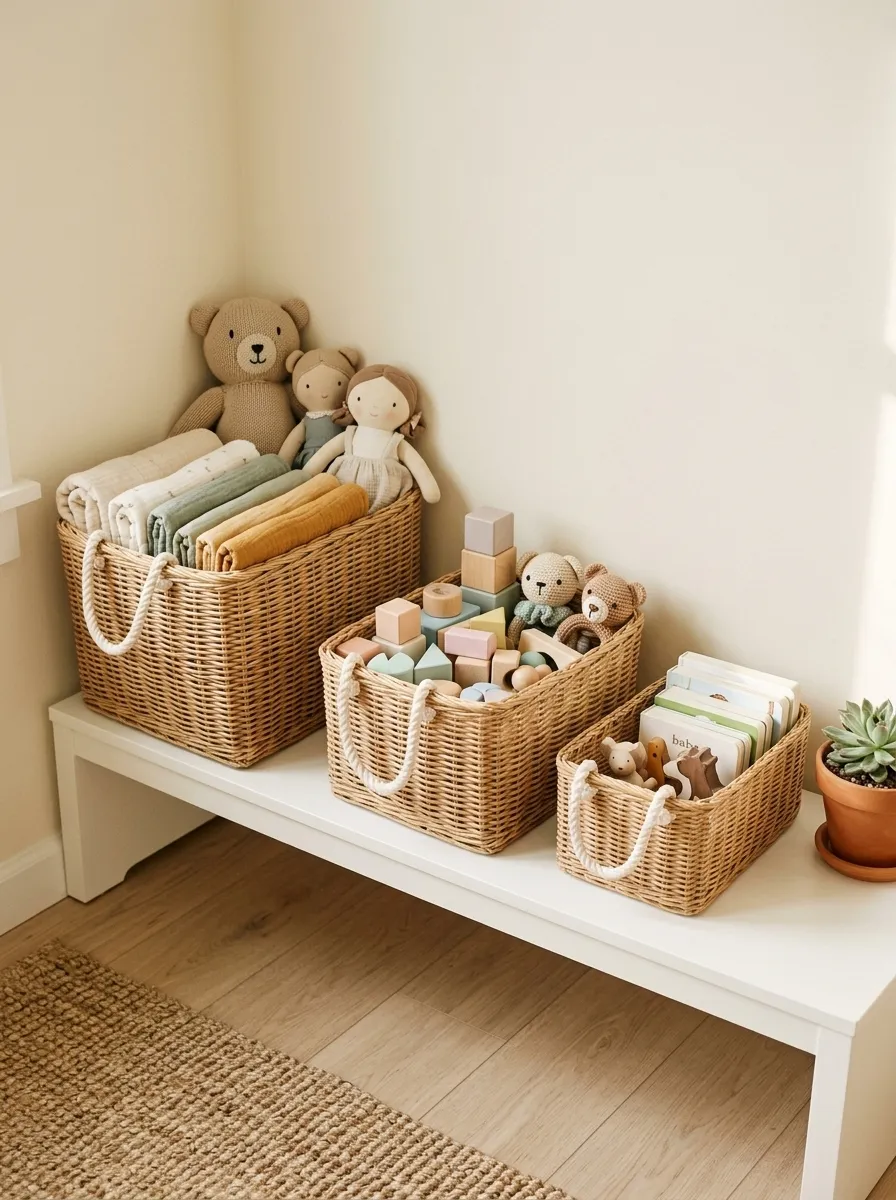
Toy storage is a nursery reality that does not have to look like a plastic bin situation. Beautiful baskets in natural materials like wicker, seagrass, and cotton rope look wonderful while doing the same job.
Choose baskets in a consistent material and color family so they look cohesive on a shelf or on the floor. Three or four matching or complementary baskets create a storage wall that looks intentionally styled.
Label baskets simply and clearly as your baby grows into a toddler. This teaches tidying up as a natural part of play from very early on.
Keep baskets accessible. Low shelves and floor-level baskets mean children can eventually put things away themselves, which is one of the most useful habits to establish early.
Budget tip: Wicker and seagrass baskets are widely available at discount home stores and online at very low prices. Buying them in a set often works out cheaper per basket than individual purchases. Even a single large wicker basket does excellent toy storage work and looks beautiful doing it.
Stylish storage is what separates a nursery that looks calm and organized from one that always feels chaotic.
22. Hang Sheer Fairy Lights for Gentle Ambiance
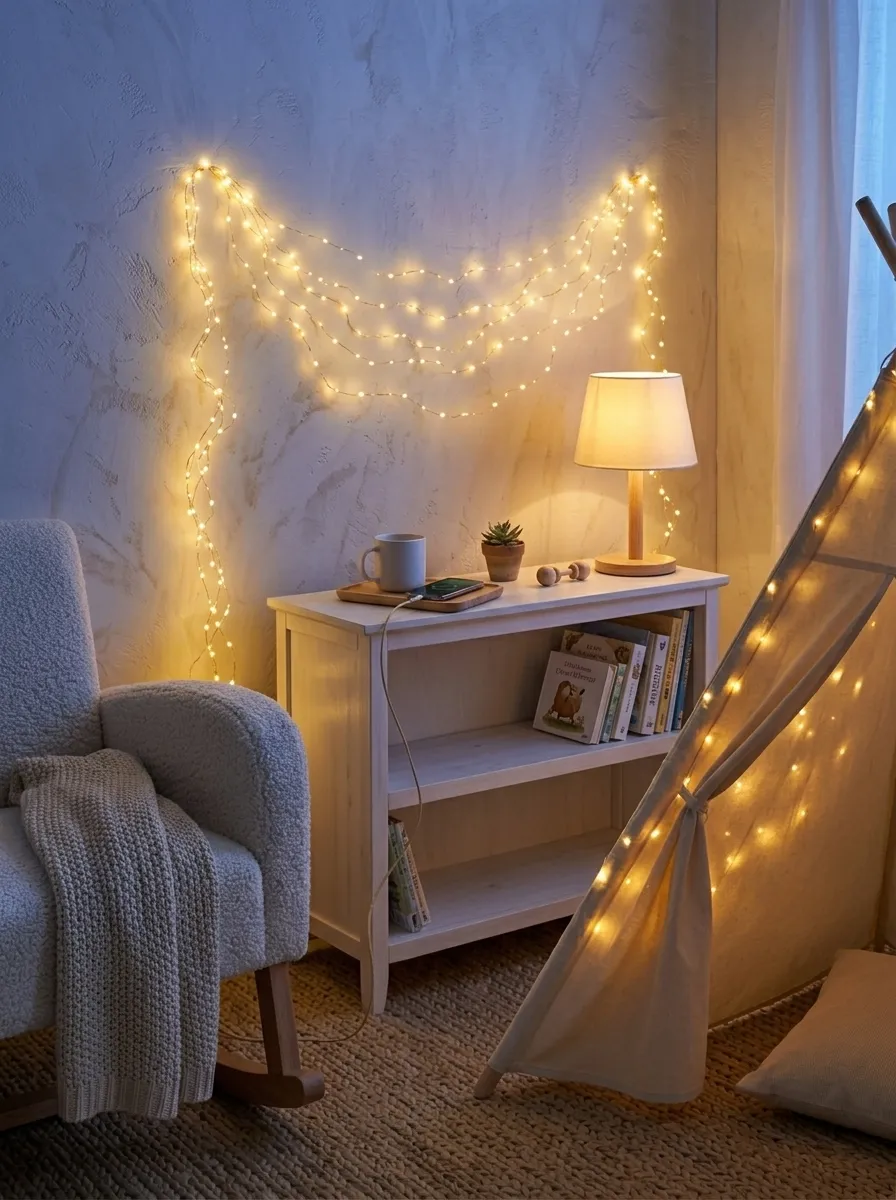
Fairy lights have a particular magic in a nursery. The warm, soft glow they cast is completely different from any lamp or overhead light. They feel playful, gentle, and genuinely beautiful.
Drape them along the top of a wall, across the frame of a canopy, around a bookshelf, or over the reading teepee. Warm white or amber lights suit nurseries far better than multicolored options.
Use battery-operated or plug-in versions with a timer so they switch off automatically. This makes them both safe and practical without requiring you to remember to turn them off manually each night.
Fairy lights are not a substitute for functional lighting. They are a layering tool that adds warmth and atmosphere when paired with lamps and proper overhead lighting.
Budget tip: Warm white fairy lights are one of the most affordable home decor purchases available. A long string of warm white lights typically costs very little and lasts for years. Battery-operated versions give you maximum flexibility in where you place them.
Fairy lights in a nursery create exactly the kind of soft, warm glow that makes the room feel like a place of safety and gentle wonder.
23. Use Peg Rails for Functional Wall Storage
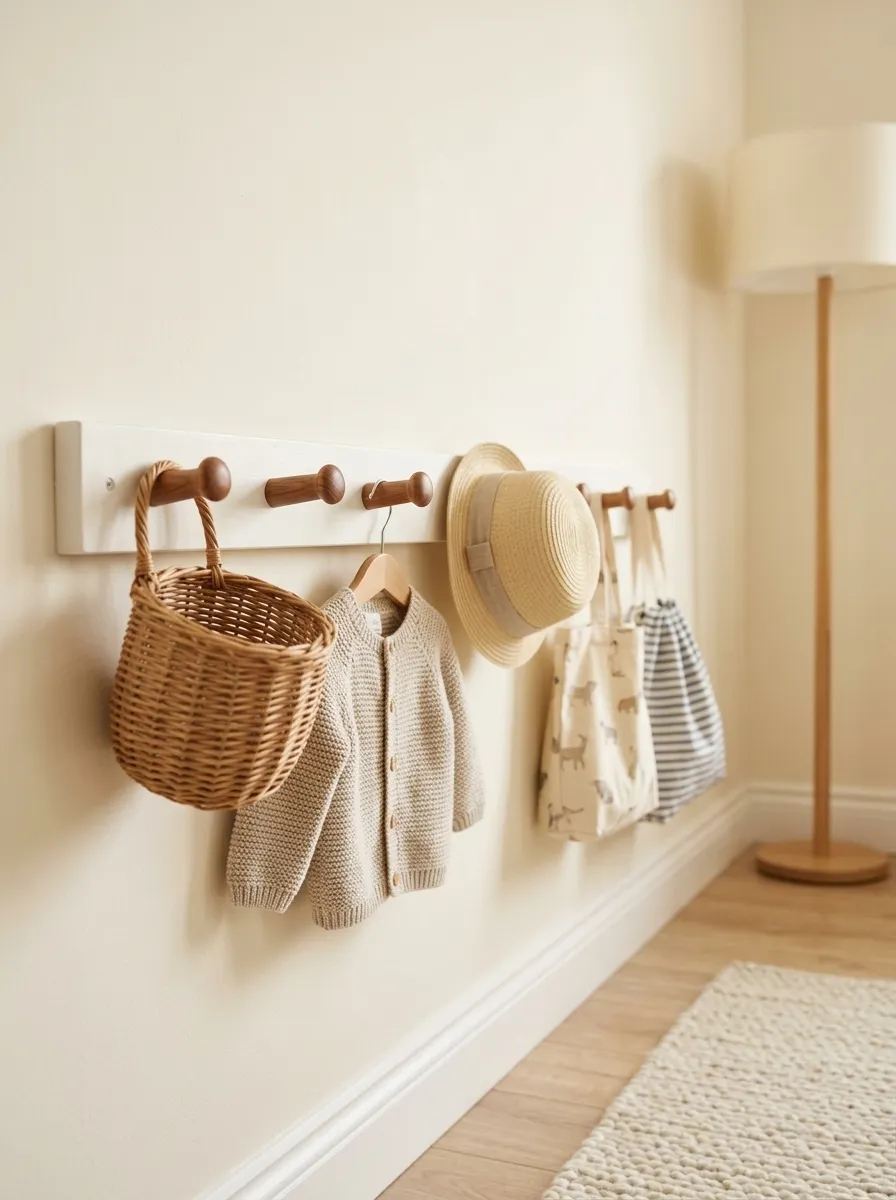
A peg rail is one of the most charming and functional things you can add to a nursery wall. It takes up minimal space and creates a place for everything from baby clothes and hats to small bags and baskets.
Mount it at a height that works for you now and will eventually be accessible for your child as they grow. A row of five to eight smooth wooden pegs on a painted board is the classic Shaker style that suits every nursery aesthetic.
Hang things that are both practical and beautiful. A small woven bag for nappies, a tiny knit cardigan, a straw sun hat, a fabric wall organizer with pockets for small items. The rail becomes a display as much as a storage solution.
Paint the board to match your wall for a seamless look, or contrast it in white against a colored wall for a feature effect.
Budget tip: Peg rails are incredibly simple to make. A piece of pine wood, some shaker pegs from a hardware store, paint or stain, and basic fixings are all you need. The whole thing can be assembled in an afternoon for a fraction of the cost of a bought version.
A peg rail is one of those details that nursery visitors always admire and ask about.
24. Introduce a Simple Nature Theme Through Prints and Objects
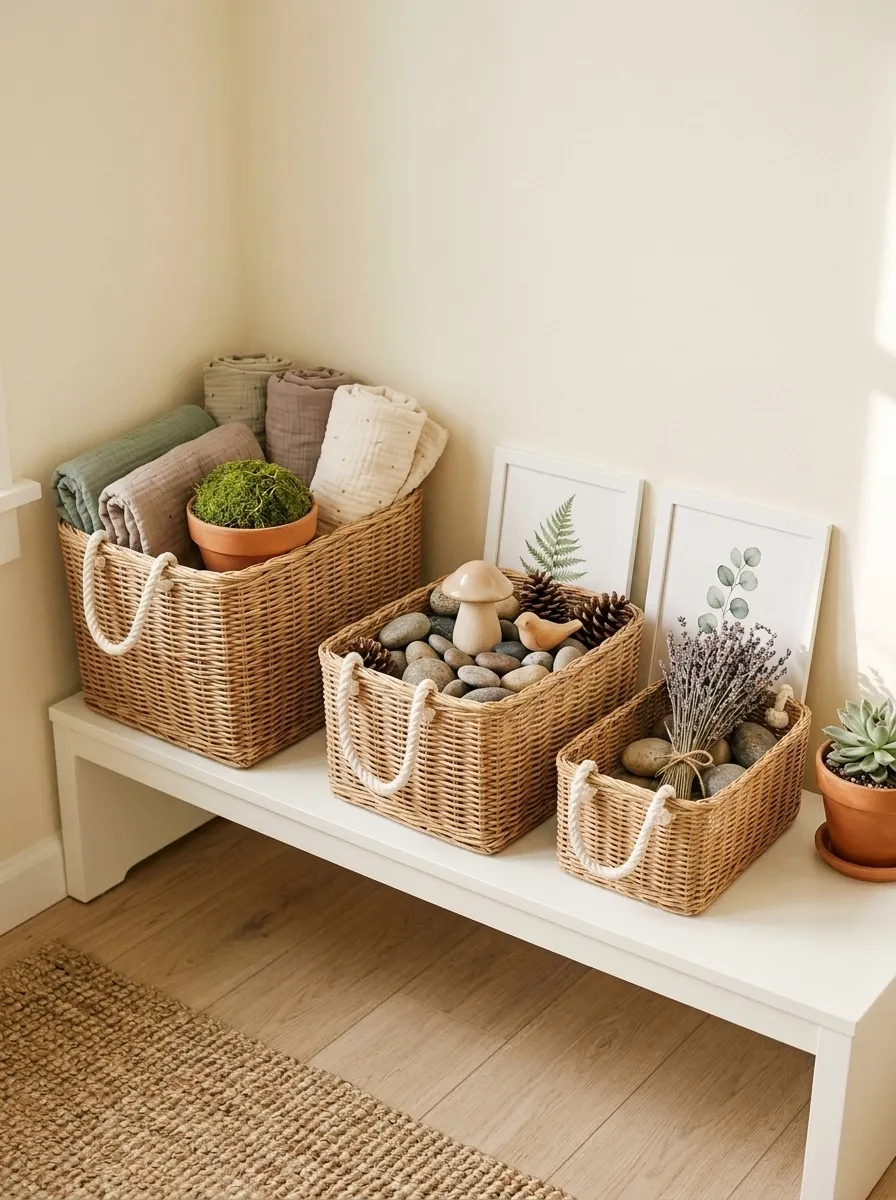
A nature theme in a nursery creates a sense of calm and connection to the organic world from a baby’s very first days. It is also one of the most timeless choices you can make since it grows naturally with the child and never becomes babyish.
Think botanicals, animals in their natural settings, wood textures, stone, leaves, birds, and trees. These references can appear in prints on the wall, objects on shelves, the materials of furniture, and the colors of textiles.
Nature-themed nurseries age beautifully. A room with botanical prints and wooden animals works for a newborn, a toddler, and even a school-age child. You get years of use from choices made before the baby even arrives.
Keep the palette earthy and calm. Sage green, warm clay, soft cream, muted teal, and natural wood tones all sit beautifully within a nature theme.
Budget tip: Nature finds are free. Smooth stones, dried botanical stems, pressed leaves in a frame, a small piece of driftwood on a shelf. These genuinely beautiful natural objects cost nothing and add the most authentic organic quality possible.
A nature-themed nursery tells your baby that the world outside is something beautiful to pay attention to.
25. Create a Sensory Wall Panel for Stimulation
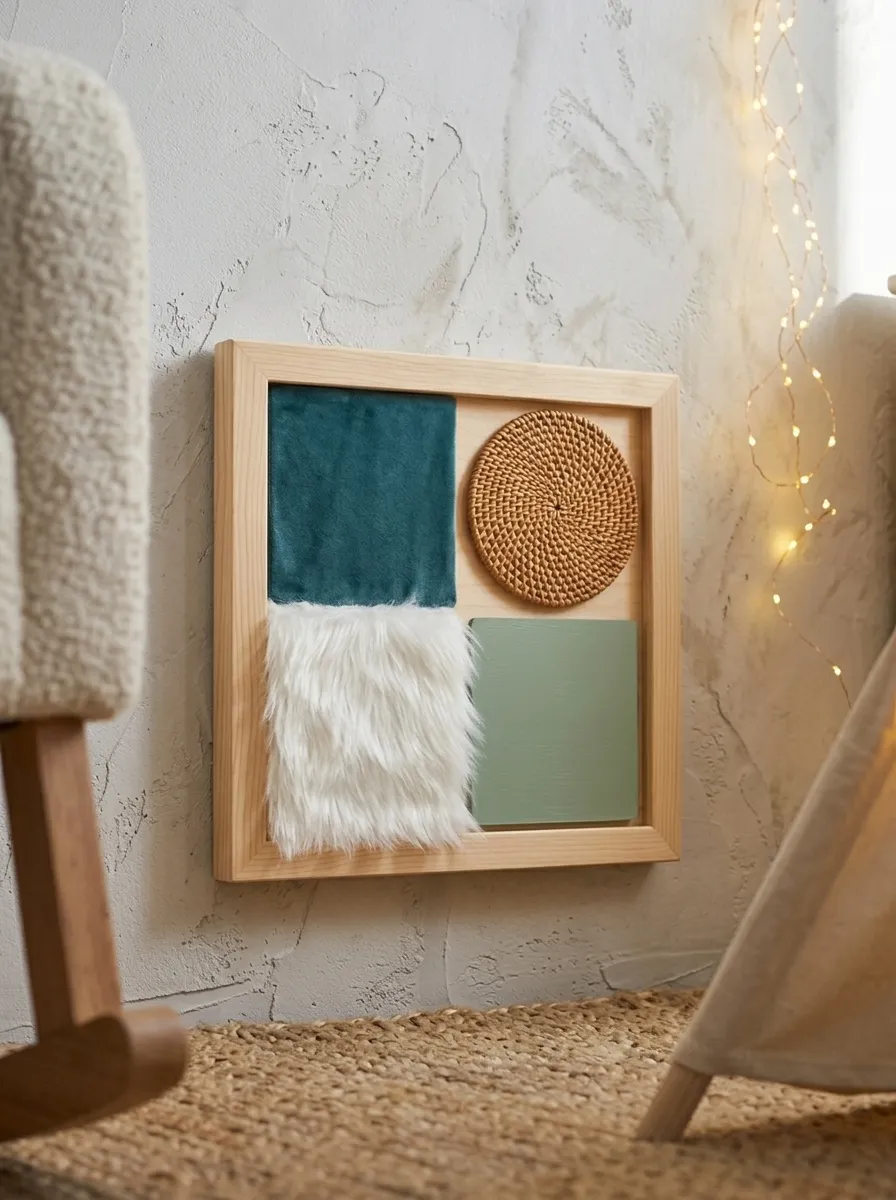
A sensory wall panel is a beautiful and developmentally valuable addition to a nursery that most people have never thought of. It gives babies and young toddlers a dedicated space to explore different textures, sounds, and visual stimuli in a safe and contained way.
Mount it low on the wall at floor or low shelf height so your baby can reach it during tummy time and later while sitting. Include a variety of textures such as smooth wood, soft fabric, rough wicker, crinkly material, and a small mirror square.
The panel can be beautifully styled to fit your nursery aesthetic. Use a natural wood frame and choose textures in your room’s color palette so it looks like decor as much as a developmental tool.
It grows with your child from a newborn visual focal point to a toddler touch-and-explore station.
Budget tip: Build your own sensory panel from a basic wooden frame or shadow box. Fill each section with fabric swatches, craft store materials, and small mirrors. The materials cost very little individually. This is a rewarding DIY project that provides genuine developmental value at minimal expense.
A sensory panel in a nursery shows that you thought about your baby’s development as much as the aesthetics of the room.
Conclusion
Building a nursery that feels calm, personal, and beautiful does not require a large budget or weeks of planning. It requires thought, intention, and a willingness to make choices that serve both you and your baby. The ideas in this guide work across every style, every budget, and every size of room. Start with the pieces that matter most to you, whether that is the lighting, the color palette, or the reading corner, and build outward from there. A great nursery is not finished all at once. It grows and changes as your baby does. The most important thing is that it feels safe, warm, and completely yours.