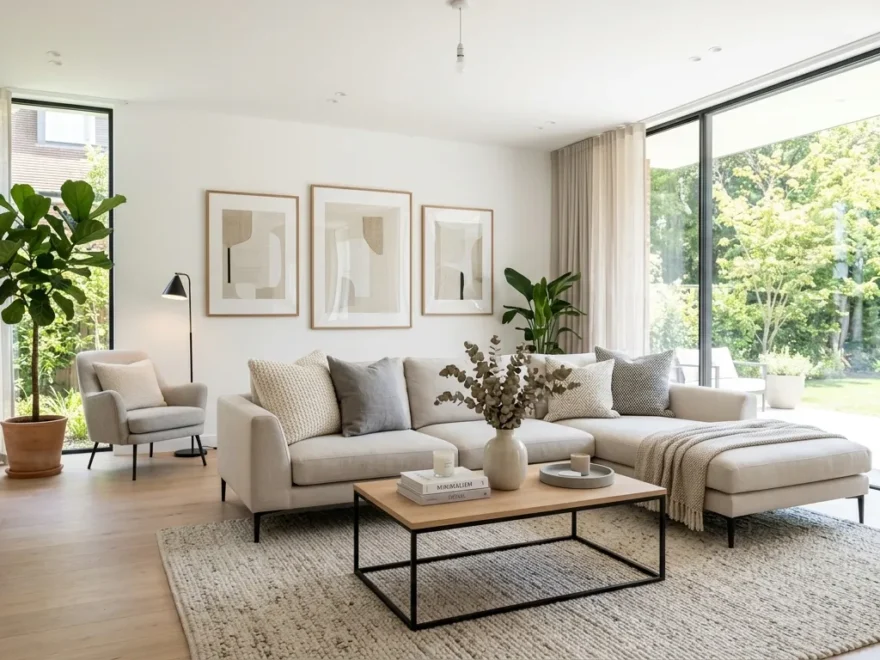
1. Go Neutral With a Warm Twist
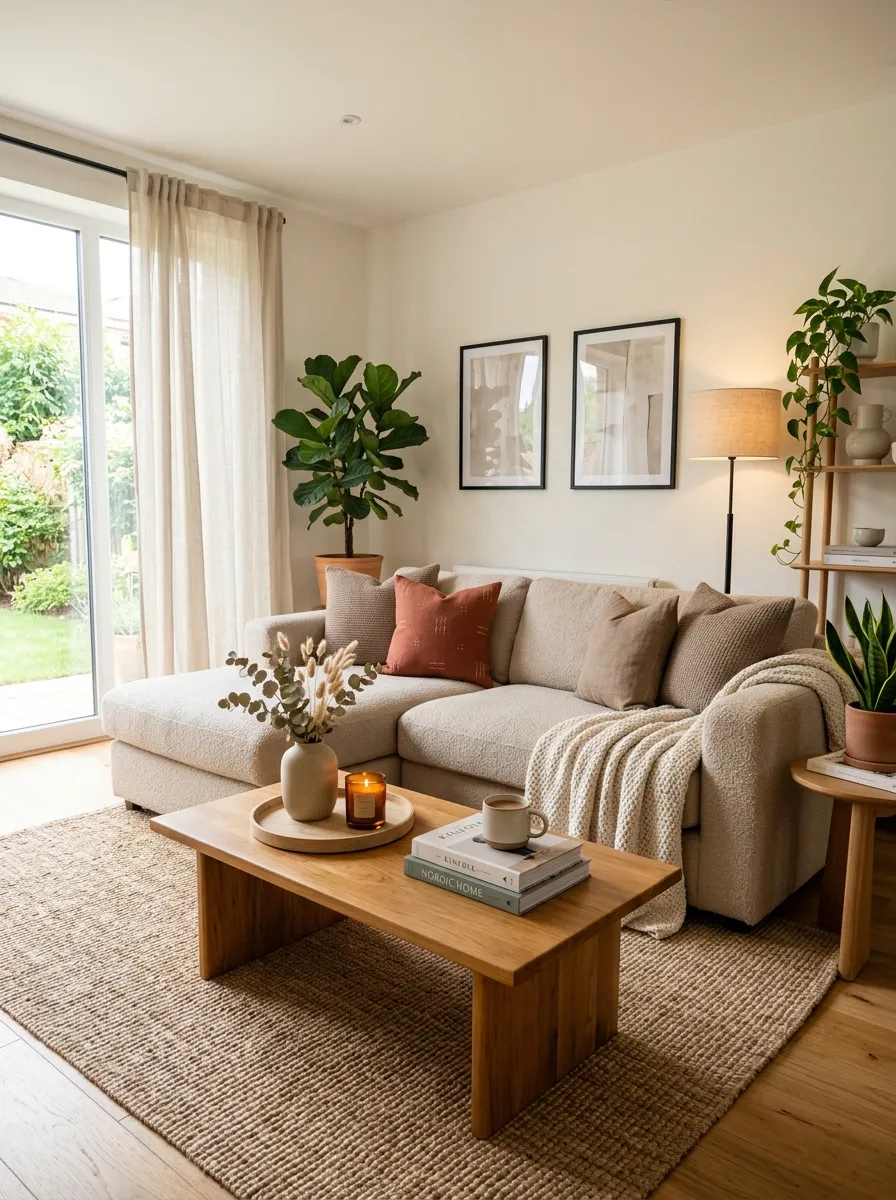
Neutral rooms do not have to feel cold or boring. The secret is layering warm shades together instead of sticking to one flat tone.
Think creamy whites, warm taupes, and soft beiges side by side. Add in a terracotta pillow or a honey-toned wood shelf and the room immediately feels alive.
Warm neutrals work in every room size. Small rooms feel bigger. Large rooms feel cozier.
You can start with what you already own. Swap out cool-toned grey pillows for warmer ones. Add a jute rug or a wooden tray on your coffee table.
These small changes stack up fast. You do not need to repaint the whole room. A few warm-toned accessories can do the same job for under $50.
The goal is a room that feels calm but not sterile. Warm neutrals give you that balance without trying too hard. It is one of the most reliable foundations for a modern space that still feels like a home.
2. Try a Statement Wall Without Wallpaper
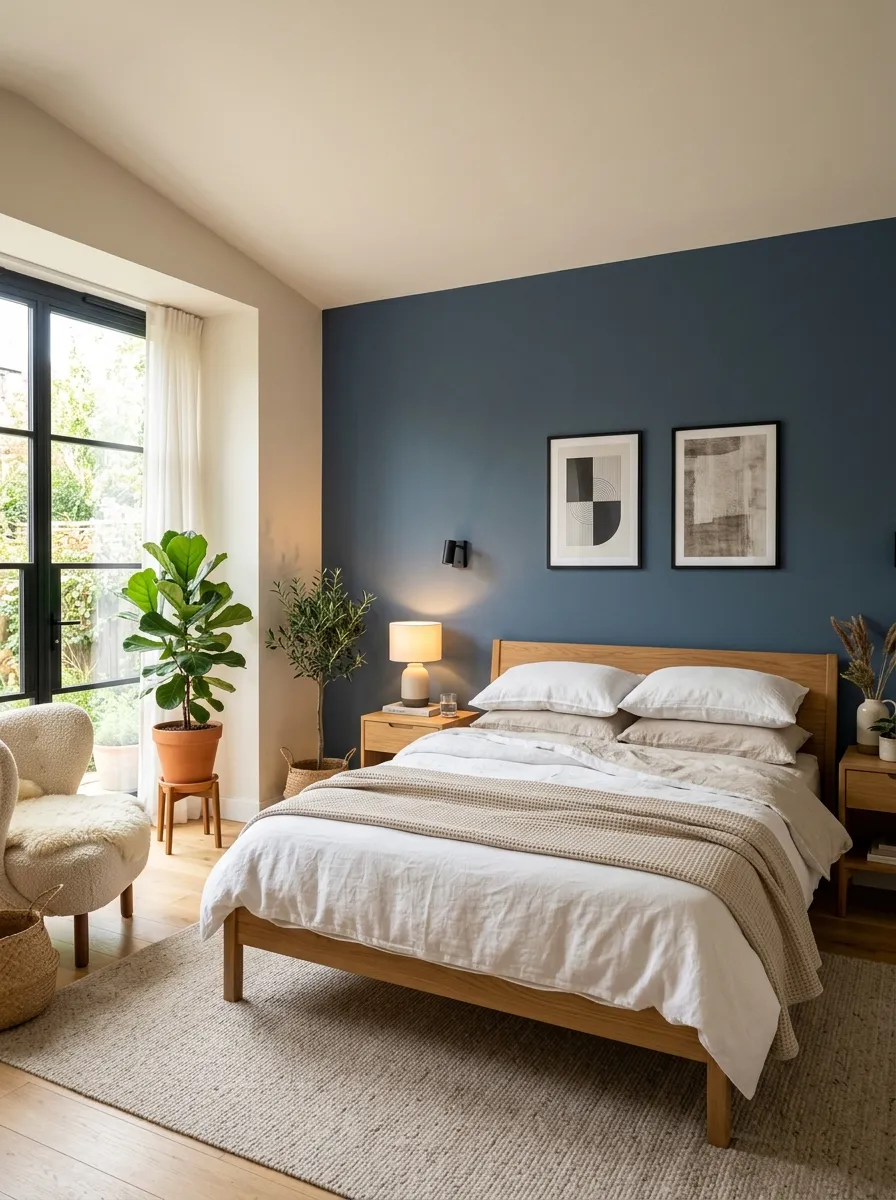
You do not need wallpaper to create a stunning focal point. A single painted accent wall can completely change a room’s energy.
Pick one wall, usually the one behind your bed, sofa, or TV, and go bold with it. Deep greens, charcoal greys, dusty blues, and terracottas all work beautifully in modern spaces.
One can of paint costs around $30 to $50 and takes a single afternoon to apply. That is one of the best returns on investment in home decor.
The trick is keeping the rest of the room simple. If your accent wall is bold, let the other walls breathe in white or a soft neutral.
You can also create a statement wall using wood slats, shiplap panels, or even a grid of painted geometric shapes. These are beginner-friendly DIY projects that look like they cost much more.
Pick a wall that naturally draws the eye when you walk into the room. Work with the existing light in that space. A north-facing wall benefits from warmer tones while south-facing walls handle cooler shades well.
3. Swap Out Your Lighting Fixtures
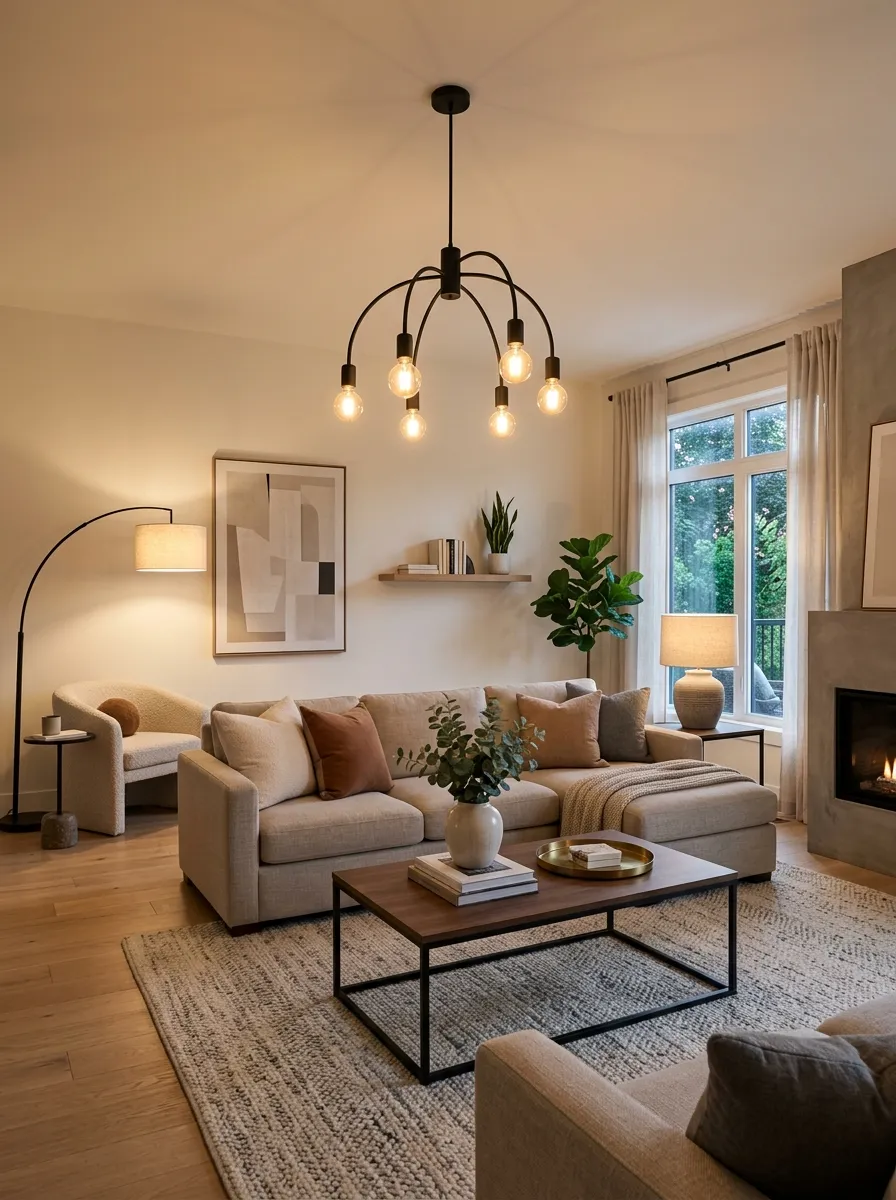
Lighting is the single most underrated part of room decor. Most people ignore it completely.
Swapping a basic ceiling fixture for something with real design intention changes the mood of the entire room. You do not need to rewire anything. Most pendant lights and flush mounts are plug-and-play replacements.
Budget-friendly swaps start at around $40 on sites like Amazon or IKEA. Matte black, brushed brass, and rattan shades are all trending and very easy to find.
Think about the kind of light you want in each room. Warm bulbs (2700K) create a cozy, golden feel. Cooler bulbs (4000K) are better for workspaces or kitchens where you need clarity.
Add a dimmer switch while you are at it. They usually cost under $20 and let you control the mood of the room at any time of day.
Floor lamps and table lamps also count. Layering different light sources at different heights gives a room a professional, styled look that overhead lighting alone cannot achieve.
Start with the room you spend the most time in. One good fixture makes an immediate difference.
4. Use Floating Shelves as Decor and Storage
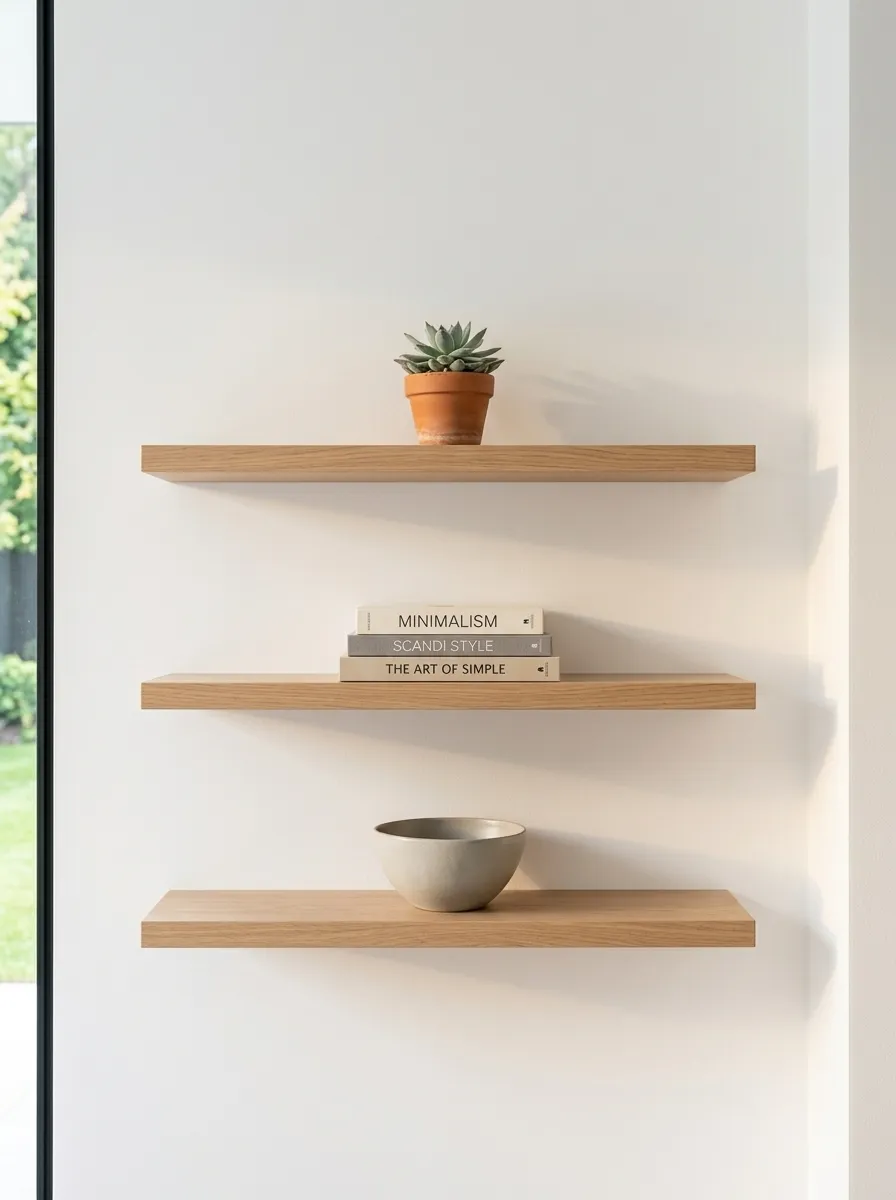
Floating shelves solve two problems at once. They give you storage and they give you a place to style your personality into the room.
The key is not overloading them. A common mistake is cramming every shelf with objects. Instead, follow the rule of threes: group items in odd numbers and vary their heights.
A set of three floating shelves costs around $30 to $80 depending on the material. Oak veneer and white lacquer are both clean modern choices.
Mix practical items with decorative ones. A stack of books next to a small plant next to a ceramic bowl looks curated without being stiff.
Keep some empty space on each shelf. White space is part of the design. It lets the eye rest and makes the displayed items feel intentional.
Shelves work in every room. In a bedroom, they replace bulky nightstands. In a bathroom, they hold towels and plants. In a kitchen, they show off your nicest dishes.
Install them at eye level or slightly above for the best visual impact. Use a level and wall anchors rated for the weight you plan to put on them.
5. Bring in Organic Textures
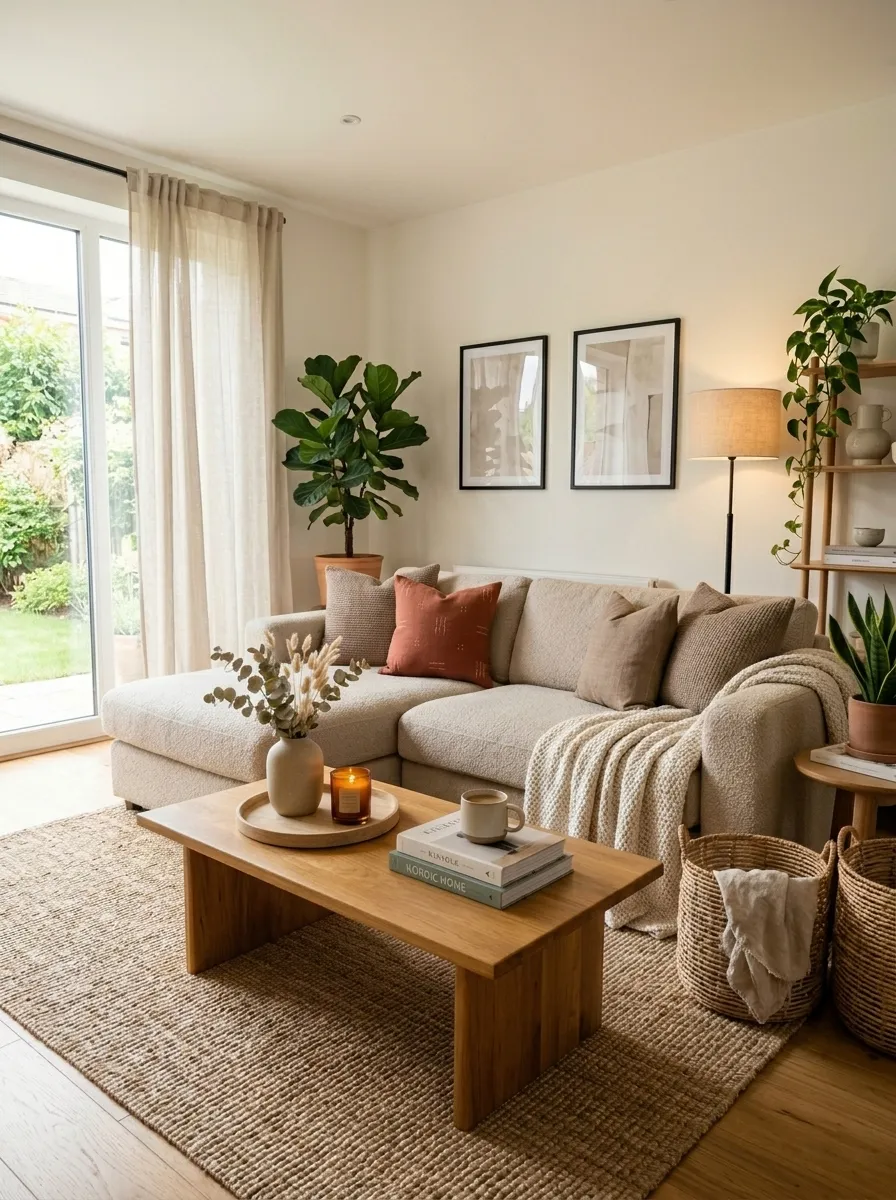
Modern rooms can sometimes feel too polished. Adding organic textures fixes that immediately.
Think woven baskets, linen throws, jute rugs, rattan furniture, and unglazed ceramic pieces. These materials bring warmth and a tactile quality that hard, shiny surfaces cannot replicate.
You can find great woven and rattan pieces at thrift stores, IKEA, and TJ Maxx for very reasonable prices. A jute rug alone can transform a space for under $60.
Layer your textures intentionally. A smooth leather sofa pairs well with a chunky knit blanket. A sleek coffee table benefits from a rough-edged wooden tray on top.
Do not go overboard though. Pick two or three textures per room and repeat them throughout. This creates a sense of cohesion.
Organic textures also photograph incredibly well if you ever want to share your space on social media or sell your home in the future.
They age beautifully too. Unlike trendy painted pieces, natural materials like rattan and jute get better with time. They develop character instead of looking worn out.
This is one of the easiest and most affordable ways to make a modern room feel genuinely livable.
6. Create a Gallery Wall With Intention
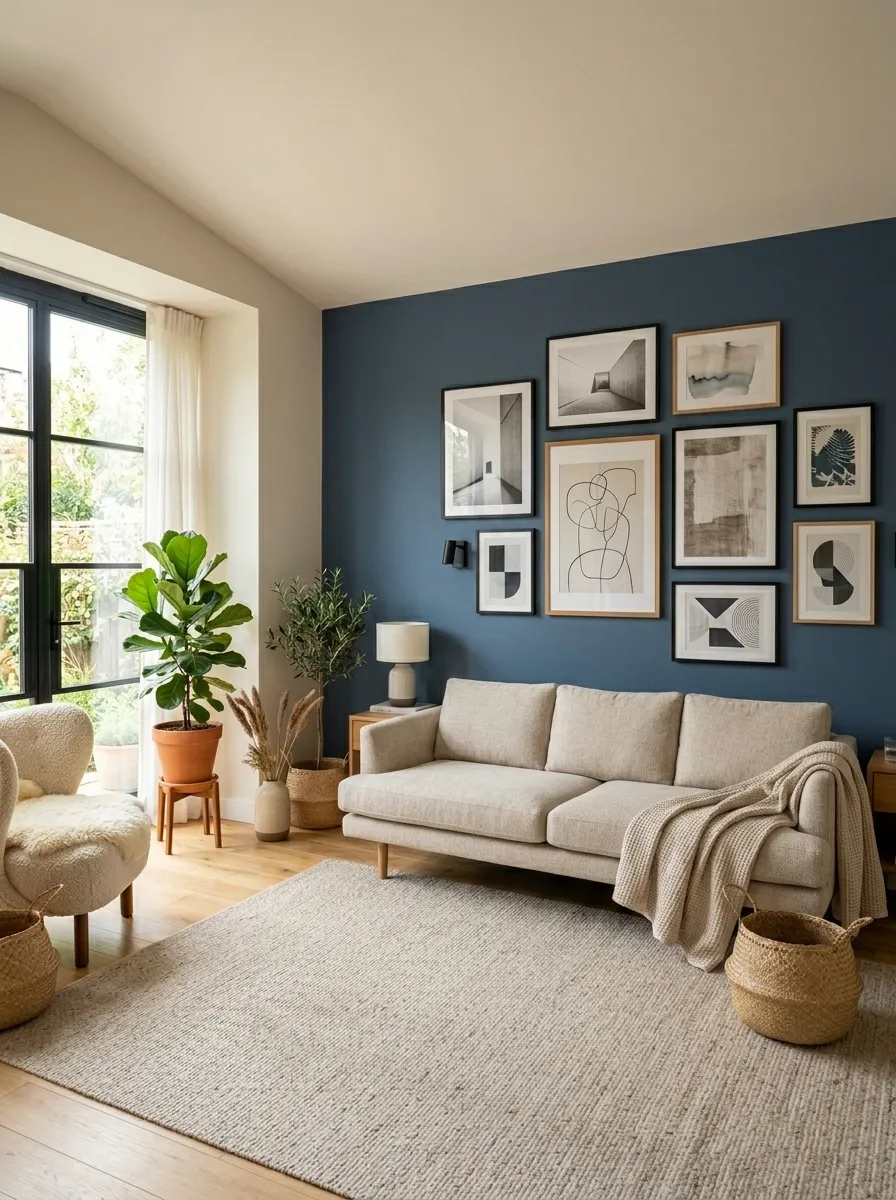
A gallery wall sounds intimidating but it is actually very forgiving once you understand the basics.
Start by choosing a consistent frame style. All black frames, all white frames, or all natural wood frames will keep things looking clean even when the art itself is varied.
You do not need expensive art. Print free artwork from sites like Unsplash or Creative Market. Frame pages from old art books. Use your own photos printed in black and white.
Lay your arrangement out on the floor first before you put a single nail in the wall. Take a photo of the layout and use it as a reference while hanging.
Aim for at least one large anchor piece and build smaller frames around it. Keep spacing between frames consistent at around 2 to 3 inches.
A gallery wall works in a hallway, bedroom, staircase, or living room. It is one of the few decor moves that feels personal and modern at the same time.
If you are nervous about putting holes in the wall, use picture-hanging strips. They hold most frames securely and remove cleanly without damage.
Change out prints seasonally if you want a refresh without any new holes.
7. Invest in One Quality Sofa
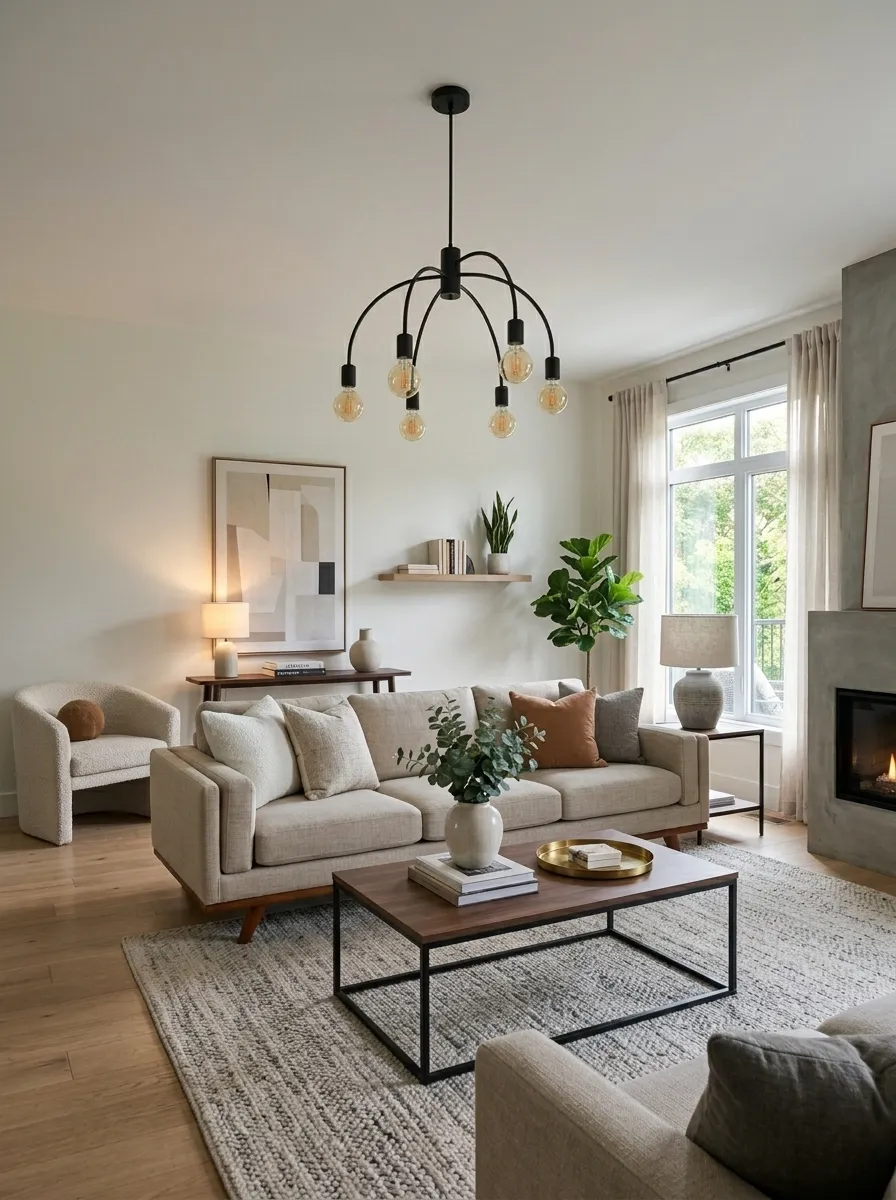
Your sofa is the biggest visual anchor in a living room. Getting it right matters more than almost anything else in the space.
You do not need to spend $3,000. But you do need something with clean lines, a low profile, and a quality fabric. A mid-century silhouette with tapered wooden legs reads as modern in almost any setting.
Wayfair, Article, and IKEA all offer well-designed sofas under $800 that hold up well over time. Look for frames that are kiln-dried hardwood and fabric rated for high durability.
Neutral upholstery in linen, boucle, or performance fabric gives you the most flexibility. You can change the whole look of the room just by swapping throw pillows.
If budget is tight, consider reupholstering an older sofa. A local upholsterer can give a solid-frame sofa a completely new look for $300 to $600.
Placement matters too. Pull your sofa slightly away from the wall. Even a few inches creates a more intentional, layered look.
Add a sofa table behind it if you have the space. It adds a layer of lighting and decor without crowding the room.
8. Use Mirrors to Expand the Space
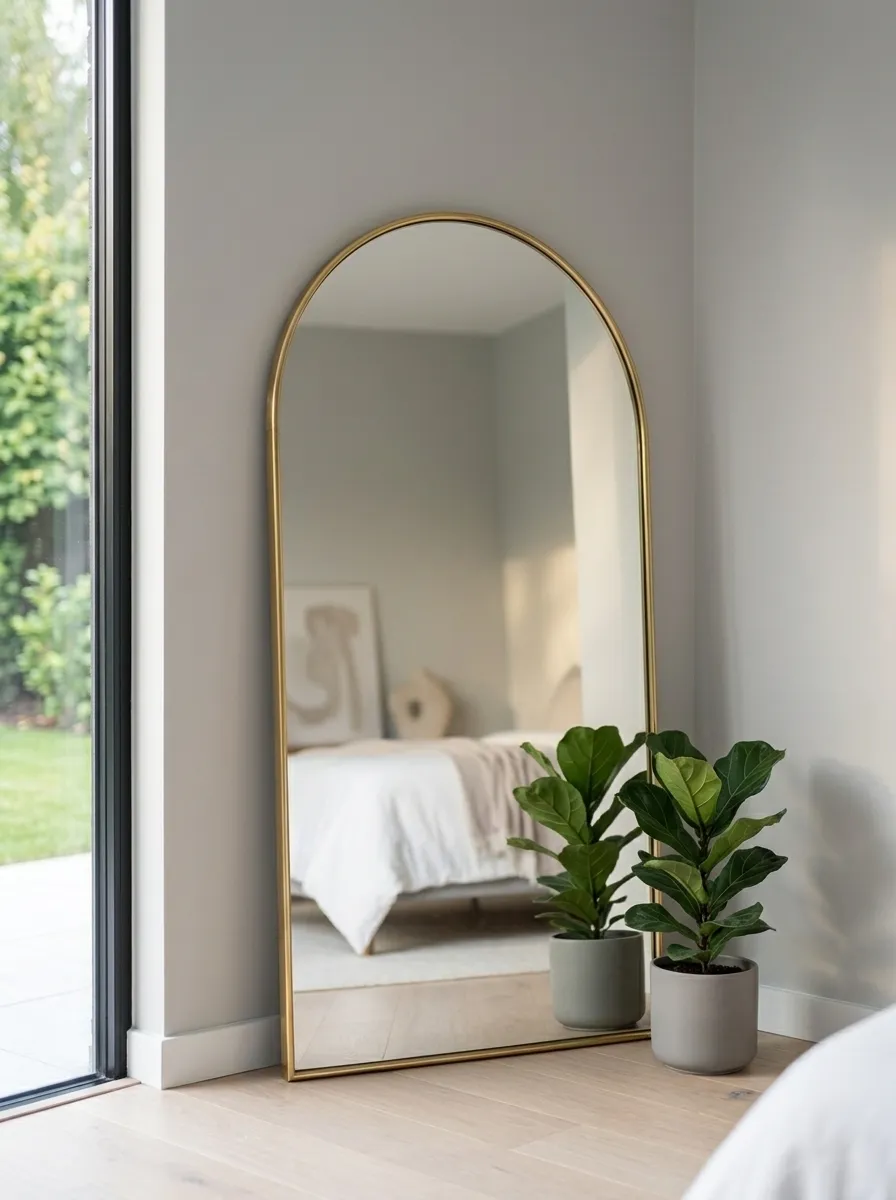
Mirrors are one of the oldest tricks in interior design and they still work better than almost anything else for making a room feel larger and brighter.
A large mirror on the right wall can make a room feel like it has doubled in size. The key is placement. Position it across from a window so it reflects natural light back into the room.
A big round or arched mirror can cost as little as $40 to $100 at stores like IKEA, HomeGoods, or Amazon. They are one of the best budget investments in modern decor.
Lean a floor mirror in a corner for an effortless, styled look. Hang a rectangular mirror horizontally in a narrow hallway to widen the perceived space.
In a bedroom, a full-length mirror behind a door or on the back of a closet door solves a practical need while keeping the room visually clean.
Groupings of smaller mirrors can create a gallery wall effect with even more light play. Mix shapes for a more eclectic modern look.
The frame style matters. Thin metal frames, simple wood, or frameless designs all feel clean and current. Avoid ornate or heavily gilded frames unless you are going for a specific maximalist style.
9. Pick Furniture With Exposed Legs
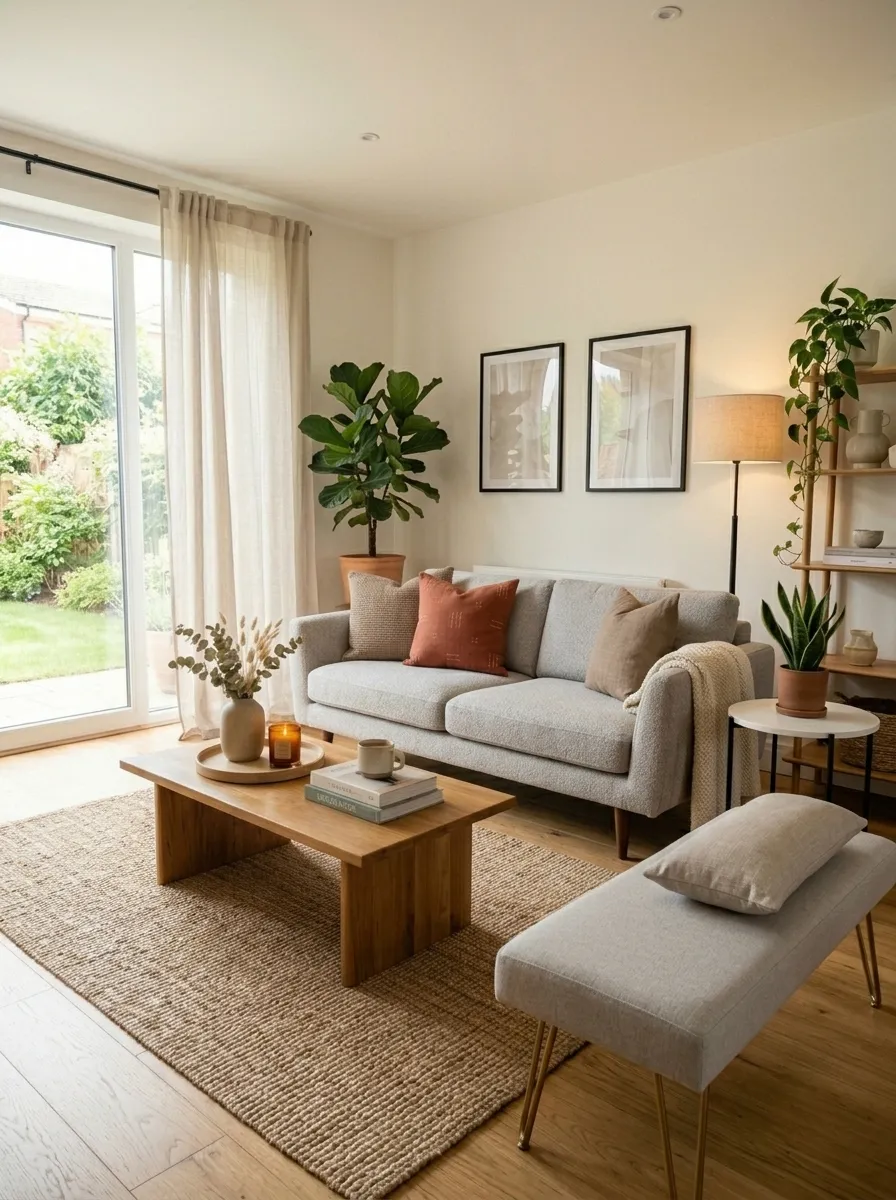
Furniture that sits on exposed legs makes a room feel airier and more open. It is a simple design principle with a big visual payoff.
When furniture floats above the floor, your eye can see under it. This creates a sense of visual breathing room that makes even small spaces feel less crowded.
Look for sofas, chairs, bed frames, and side tables with tapered wood or metal legs. These pieces are easy to find at most furniture retailers and they sit at a wide price range.
If you already own furniture with a solid base, consider what can be replaced first. A sofa and bed frame with legs will have the biggest visual impact in your space.
Hairpin legs are a popular modern choice. They are slim, industrial, and very affordable. You can even buy hairpin legs and attach them to old coffee tables or benches as a DIY upgrade for under $30.
This approach works particularly well in smaller apartments. When the floor is more visible, the room reads as larger even if the square footage has not changed.
Keep the space under furniture dust-free. It is now visible and becomes part of the room’s overall aesthetic.
10. Layer Your Rugs
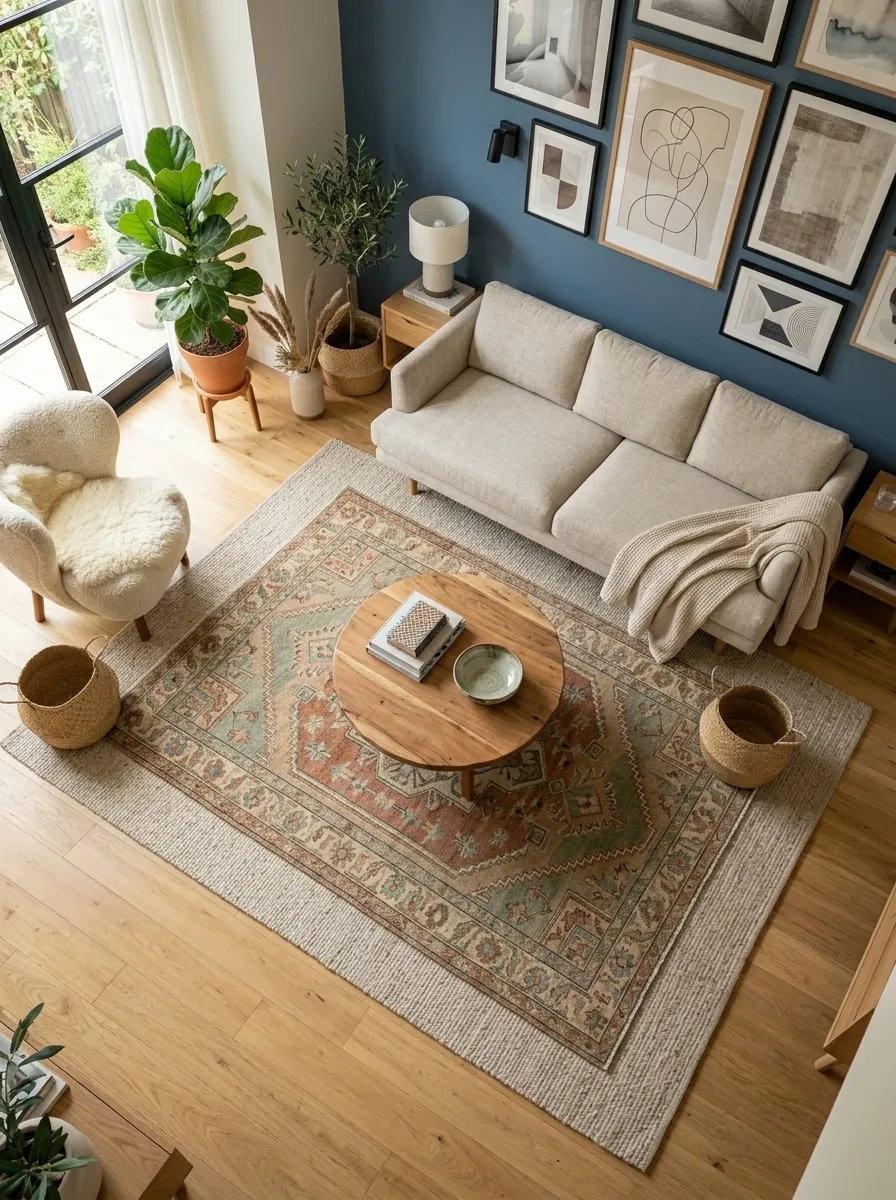
Layering rugs is one of those styling tricks that looks complicated but is actually very easy to execute.
Start with a large, flat-weave or jute base rug that covers most of the seating area. Then layer a smaller, more decorative rug on top at an angle or aligned at the front edge of the sofa.
A jute rug base can be found for under $60 at IKEA or Amazon. The top rug can be a vintage find, a Moroccan-inspired weave, or even a sheepskin throw.
This works especially well in living rooms and bedrooms. In a bedroom, a layered rug at the foot of the bed adds a cozy and styled look without major investment.
Mixing textures is the secret. Flat base rug plus a high-pile or textured top rug creates a contrast that feels intentional and warm.
Keep colors within the same tonal family so the layers feel cohesive rather than chaotic. Earth tones, warm whites, and soft terracottas all mix well together.
This is also a practical solution if you have a rug that is too small for a room. Layer it over a larger base and suddenly the scale feels right.
11. Style Your Coffee Table Like a Pro
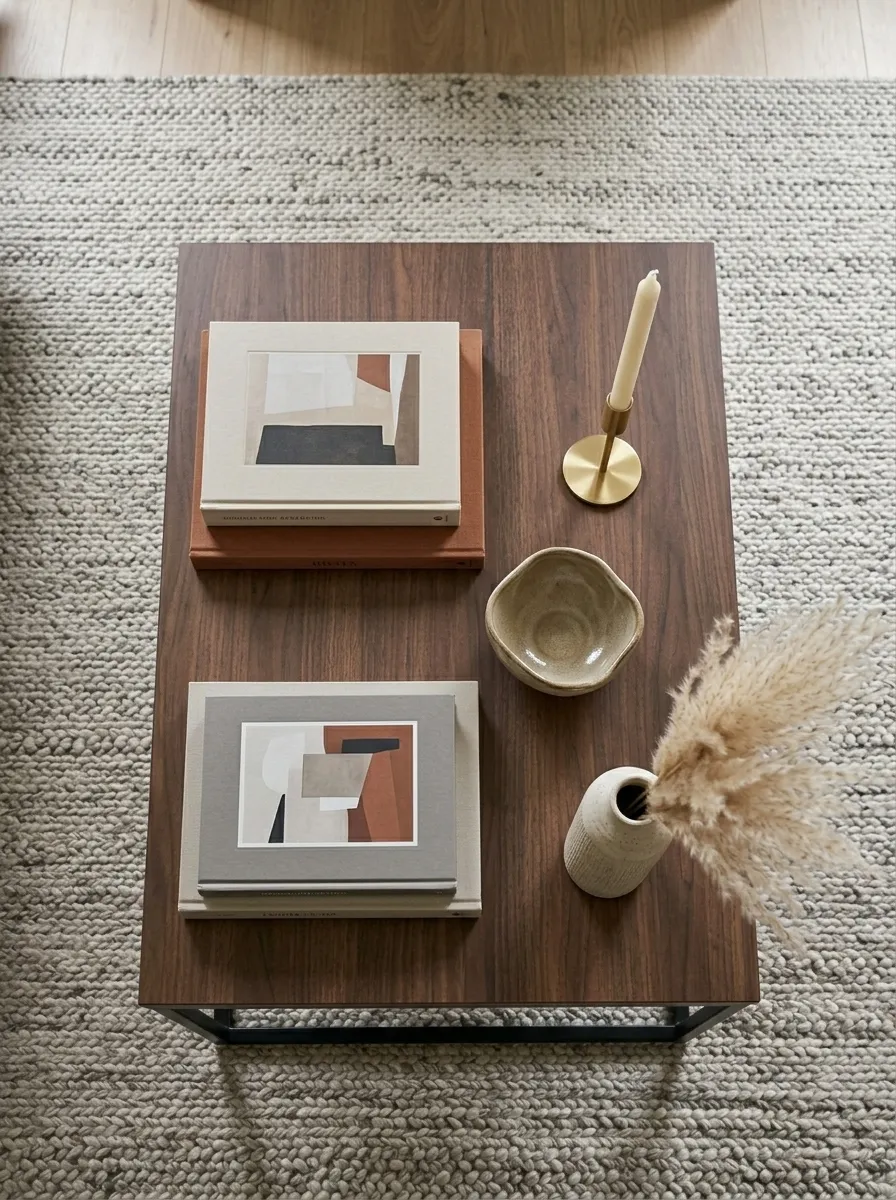
A coffee table can easily become a dumping ground. With a few simple rules, it becomes a centerpiece instead.
The classic formula is: one tray, one stack of books, one plant or candle, and one sculptural object. Four elements, each serving a different visual purpose.
Use a tray to anchor the arrangement. It tells the eye where to look and keeps things from feeling scattered. A simple black, white, or wooden tray costs $10 to $20 at most home stores.
Stack two or three large books horizontally. Coffee table books with beautiful covers double as decor. Check thrift stores for great options at $1 to $5 each.
Add a small plant or a single candle for height contrast. Then finish with one small object: a ceramic bowl, a smooth stone, or a small sculpture.
Change this arrangement seasonally for an easy refresh. Swap the candle for fresh flowers in spring. Add a small pumpkin in autumn.
Keep one area of the table clear. This is where drinks, remotes, and real life happen. Design should work with your actual habits, not against them.
12. Maximize Natural Light
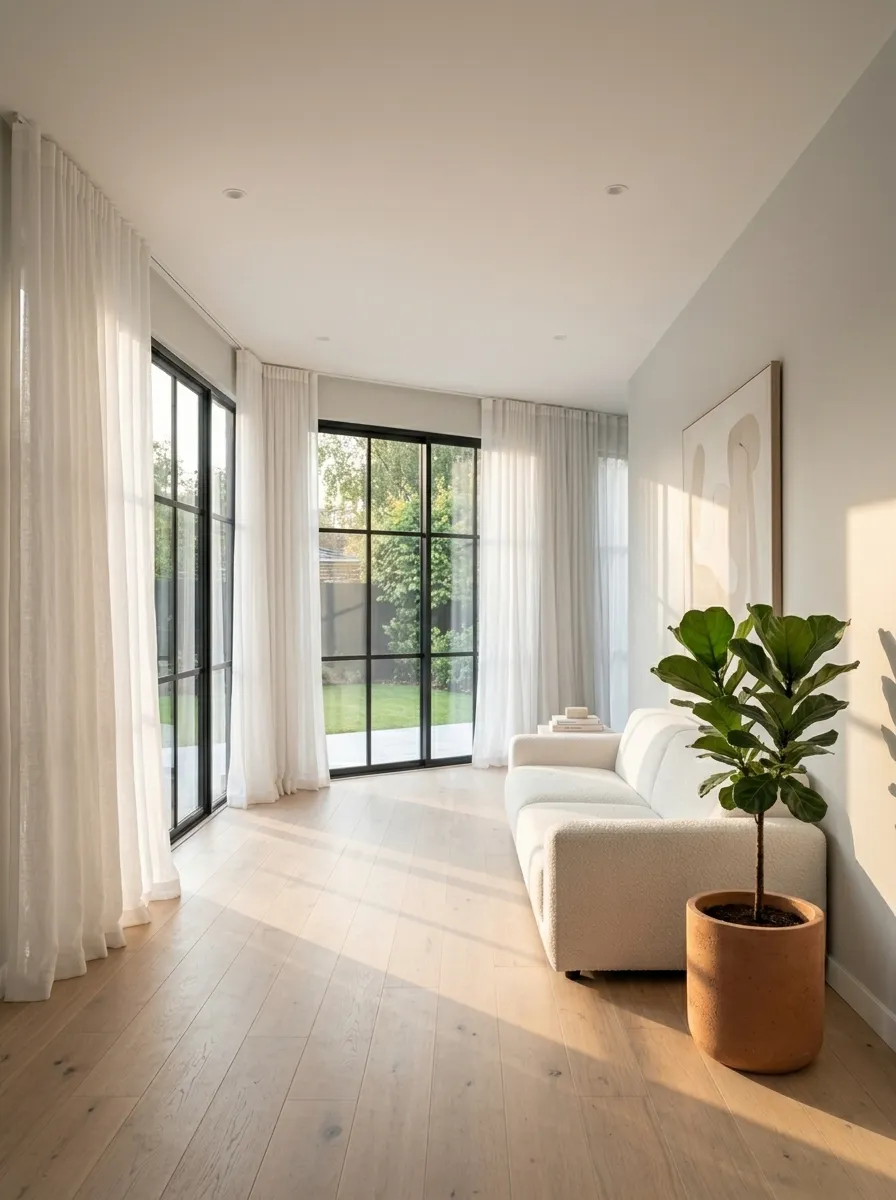
Nothing makes a modern room feel better than natural light. And most people are unknowingly blocking it.
Start by looking at your window treatments. Heavy drapes in dark colors absorb light instead of letting it fill the room. Swap them for sheer linen panels in white or ivory.
Sheer curtain panels from IKEA start at around $15 to $30 per panel. They let diffused natural light in while still giving you some privacy.
Hang curtain rods higher than the window frame and wider on both sides. This tricks the eye into thinking your windows are larger than they actually are.
Pull furniture away from windows. A sofa or bookcase placed in front of a window blocks light from entering the room. Even moving a piece 12 inches can make a noticeable difference.
Use light-colored walls and floors to bounce light further into the space. Glossy or satin paint finishes reflect more light than flat paint.
Add mirrors opposite or beside windows to double the amount of light bouncing through the room.
Clean your windows regularly. It sounds obvious but dirty glass can reduce the amount of light entering by a surprising amount.
13. Go Minimal With Decorative Objects
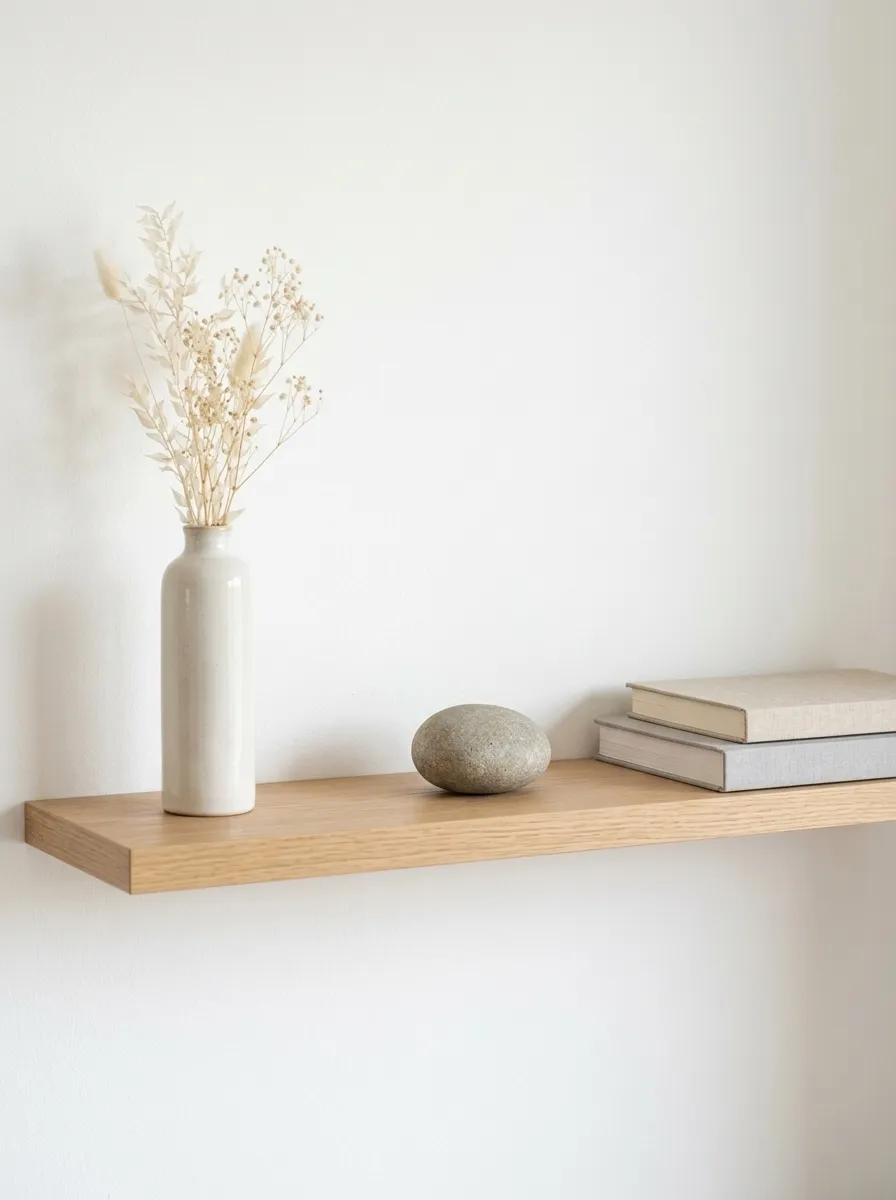
Modern decor is not about having a lot of things. It is about having the right things, placed with care.
Too many objects create visual noise. They make a room feel cluttered even when it is technically clean. The solution is editing ruthlessly.
Take everything off your shelves and surfaces first. Then put back only the pieces that you genuinely love or that serve a real purpose. Whatever is left goes into a box.
Live with the reduced version for a week. You will quickly know what you actually miss and what you were just keeping out of habit.
For each surface, aim for a maximum of three to five objects. Leave visible empty space between items. That space is part of the design.
Choose objects with clear shapes. Spheres, cylinders, and rectangles all read as clean and intentional. Overly fussy or ornate pieces tend to compete for attention.
Group similar objects by material or color to create cohesion. Three white ceramic pieces together feel curated. Three unrelated random objects together feel like clutter.
Rotate objects seasonally. Keep a box of pieces in storage and swap them out throughout the year. This keeps your space feeling fresh without buying new things.
14. Add Indoor Plants Strategically
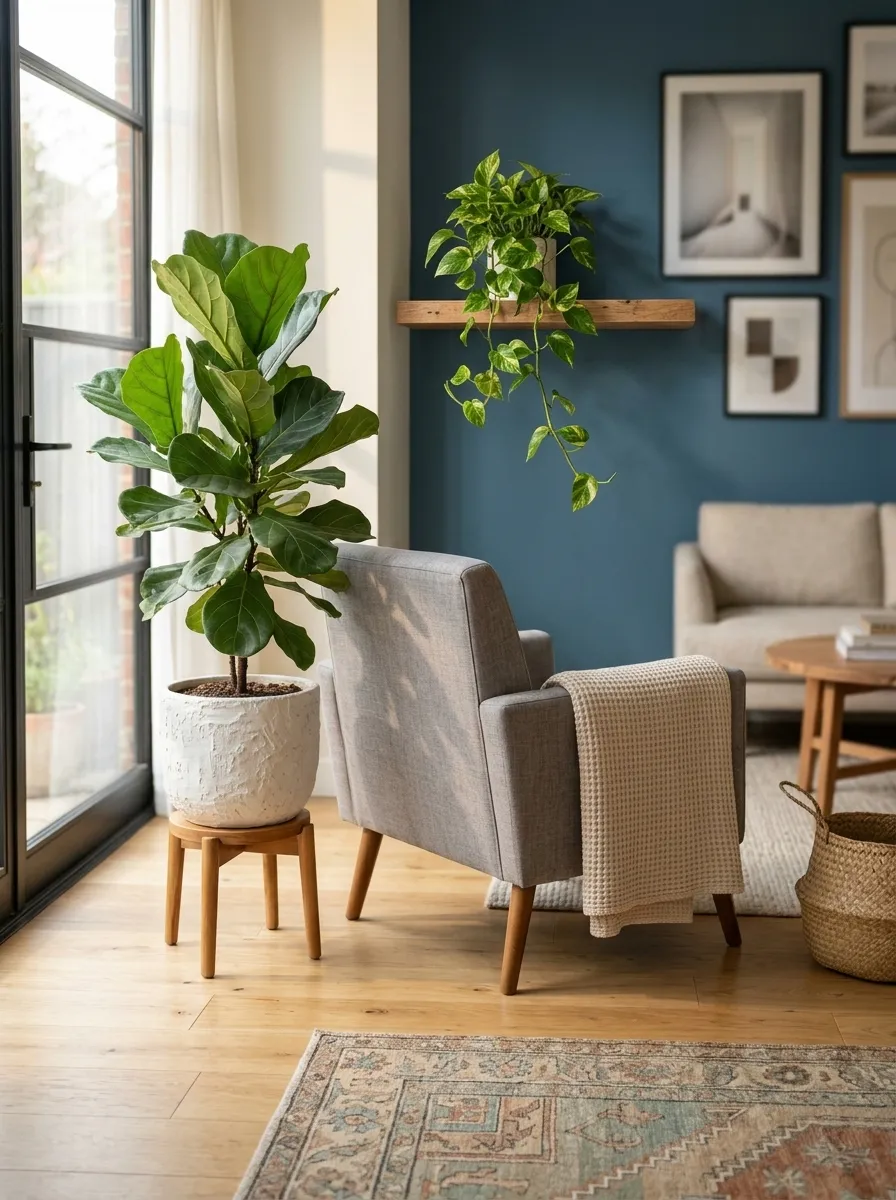
Plants are one of the fastest ways to bring life into a modern room. But placement and scale matter enormously.
A tiny plant lost in a large corner does almost nothing. One large statement plant in that same corner completely changes the room’s energy.
Fiddle leaf figs, monstera deliciosa, and snake plants are all great large-format options that look incredible in modern spaces. They are available at most garden centers for $20 to $60.
Choose planters that complement the room. Matte white ceramic, terracotta, and simple concrete planters all work well with modern interiors. Avoid overly ornate or bright plastic pots.
Place plants where they will actually thrive, not just where they look good. A plant that gets proper light will grow fuller and look better over time.
Use plant stands to elevate smaller plants to the right visual height. A trailing pothos on a high shelf or hanging planter adds a vertical dimension that most rooms are missing.
If you travel frequently or forget to water, opt for low-maintenance varieties like snake plants, ZZ plants, or succulents.
Even a single well-placed plant with a beautiful pot can do more for a modern room than a shelf full of decorative objects.
15. Update Your Hardware
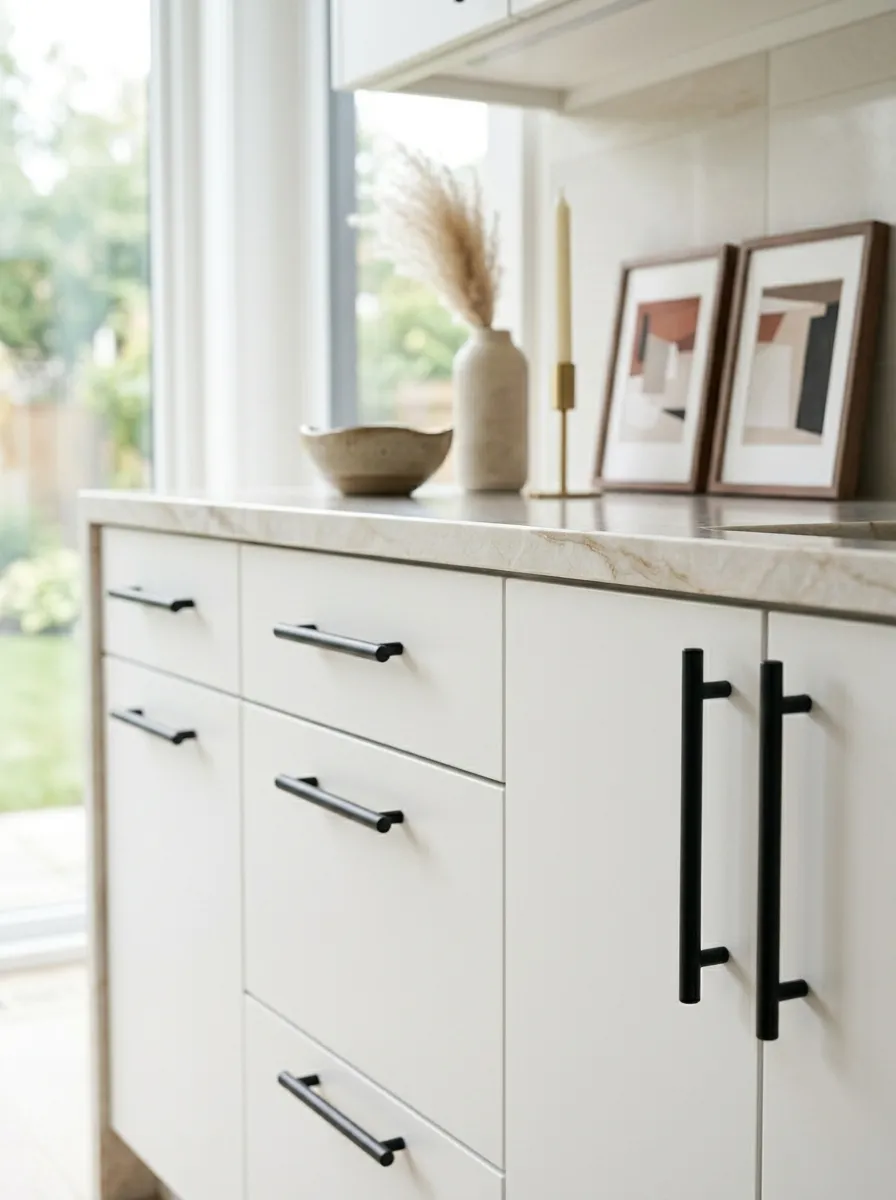
Changing cabinet and drawer hardware is one of the cheapest and fastest ways to update a room.
Old brass knobs on kitchen cabinets can make even a recently renovated space feel dated. Swap them for matte black pulls, brushed nickel handles, or slim bar pulls and the entire room shifts.
A pack of ten cabinet pulls costs $15 to $40 depending on the finish and style. For a typical kitchen with 20 to 30 cabinets, you are looking at a total cost of $30 to $80. That is a dramatic visual update for very little money.
The same applies to bathroom vanities, bedroom dressers, and built-in wardrobes. Hardware is the jewelry of furniture.
When choosing hardware, pick a finish and stick with it throughout the room. Mixing metals can look intentional but requires a skilled eye. For beginners, consistency is the safer choice.
Bar pulls and cylindrical knobs feel the most current right now. Ornate, filigree, and shell-shaped hardware tends to date a space quickly.
You only need a screwdriver for most installations. The whole project can be done in a single afternoon with zero experience needed.
16. Create a Reading Nook
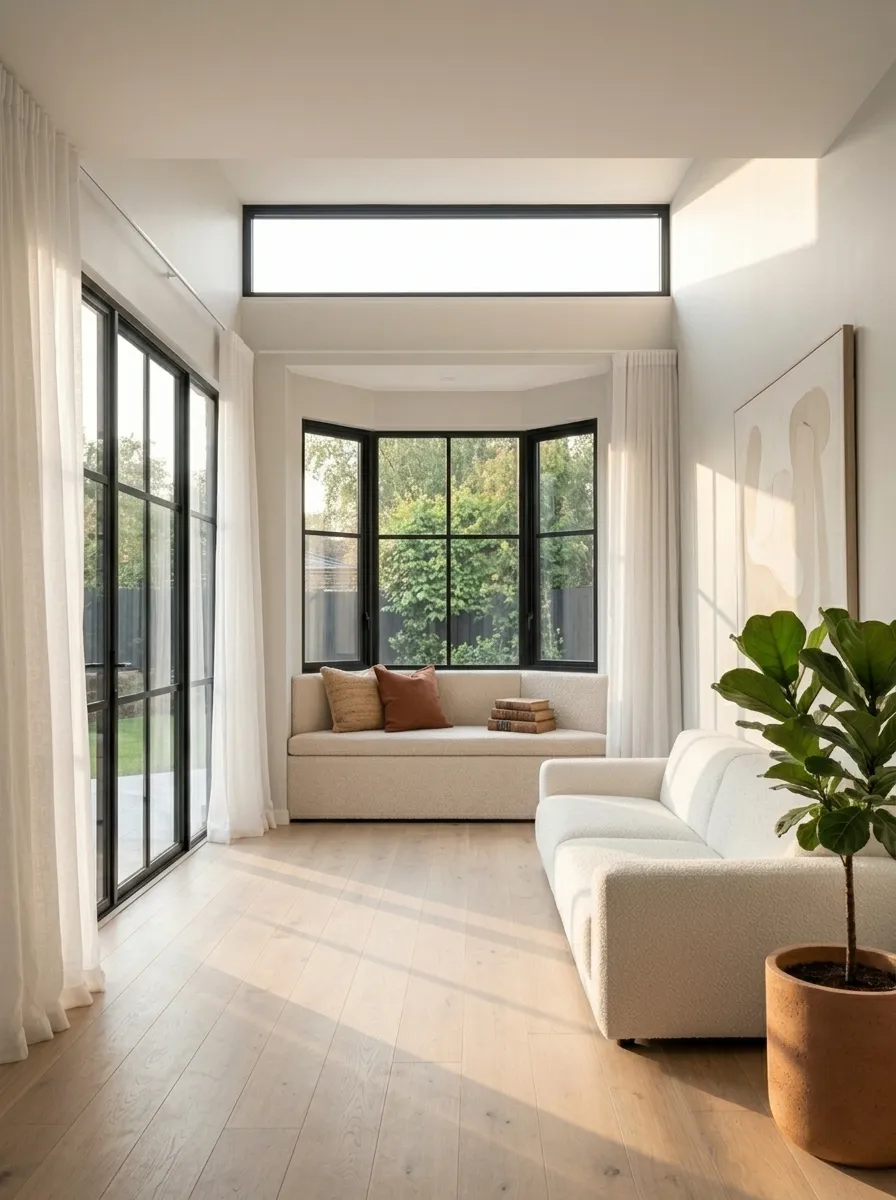
A reading nook adds personality and purpose to any underused corner of a room.
You do not need a built-in bench or a special alcove. A corner armchair, a floor lamp, a small side table, and a rug create the same feeling in any room.
The most important elements are comfort and light. A good lamp with warm light and a chair you actually want to sit in are the foundation of the whole setup.
Add a small plant nearby, a cozy blanket draped over the arm of the chair, and a side table large enough for a drink and a book.
If you have a window seat or bay window, use it. Add a simple foam cushion wrapped in a fitted linen cover. This can be made for around $40 to $80 in materials.
Built-in bookshelves flanking the seat elevate the look dramatically. But simple floating shelves above the seat achieve a similar effect at a fraction of the cost.
Even in a small apartment, a dedicated reading corner creates a sense of separation and intention. It signals that this space is for rest and quiet.
This is a weekend project that completely changes how a room feels to live in.
17. Use a Cohesive Color Palette
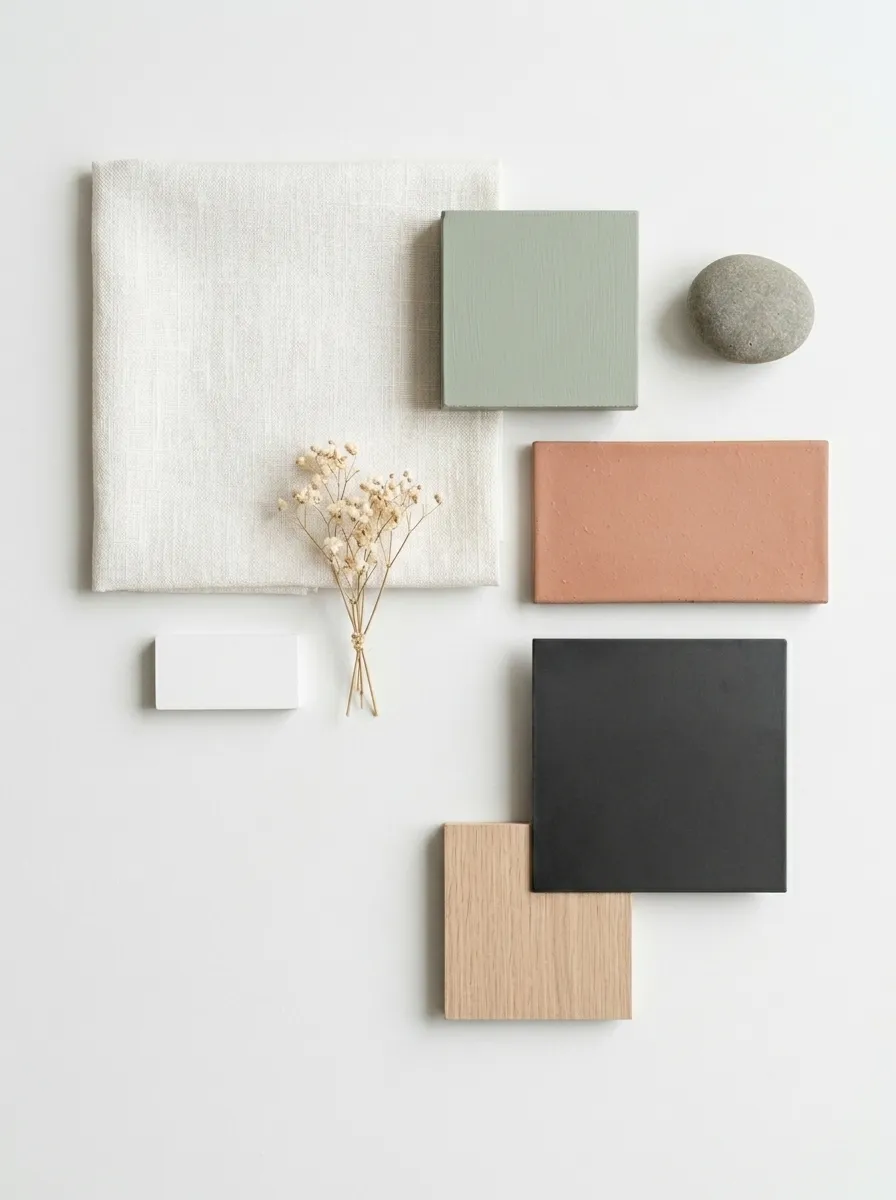
A cohesive color palette is what separates rooms that look put together from rooms that just look busy.
You do not need a designer to help you with this. Choose three colors: a dominant neutral for walls and large furniture, a secondary color for mid-sized pieces, and an accent color for small objects and textiles.
The 60-30-10 rule is your guide. 60% dominant color, 30% secondary, 10% accent. This ratio creates balance without looking boring.
Stick to your palette when adding new pieces. Before buying anything, ask yourself if it fits the three colors you have already chosen.
Cool palettes (whites, greys, blues) feel modern and calm. Warm palettes (creams, taupes, rusts) feel cozy and grounded. Either works beautifully in a modern space.
Test colors on your walls before committing. Paint a 12×12 inch sample patch and look at it at different times of day. Paint looks very different in morning versus evening light.
Color also applies to your furniture, rugs, and art. Choosing artwork that pulls out the same tones as your room creates an effortless, layered look.
This is free to plan and saves money in the long run by preventing impulse purchases that do not work in your space.
18. Hang Curtains High and Wide
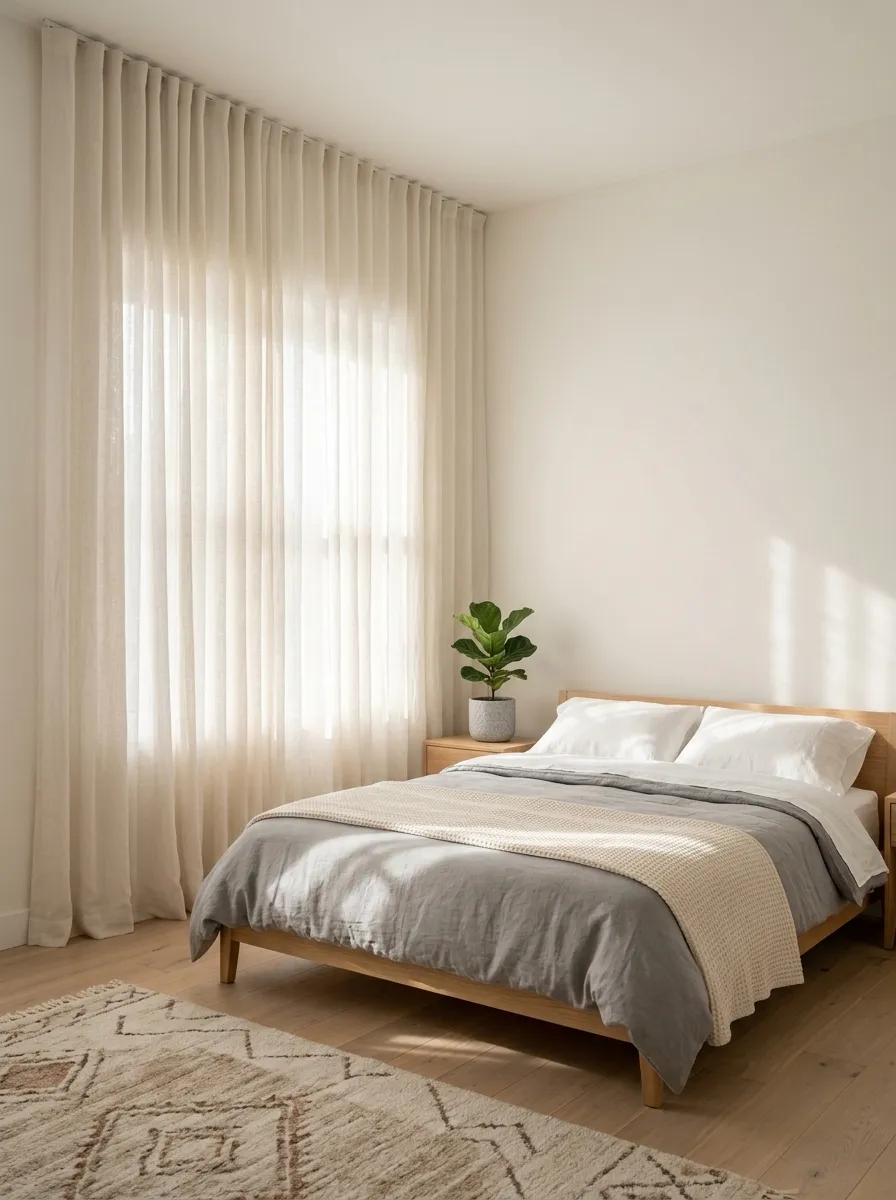
The way you hang curtains can make windows look twice their actual size or make them look small and awkward.
The rule is simple: hang the rod as close to the ceiling as possible and extend it 6 to 12 inches beyond the window frame on each side.
This single adjustment makes ceilings look taller and rooms look wider. It is one of the highest-impact styling moves you can make and it costs almost nothing extra.
Most curtain rods are adjustable and fit a wide range of window sizes. A basic rod from IKEA or Amazon runs $10 to $30.
Choose curtains that pool slightly on the floor or just skim it for the most polished look. Curtains that end above the floor look cut short and unfinished.
Linen and cotton blend fabrics in off-white, soft grey, or ivory read as clean and modern. Avoid heavily patterned fabrics unless you are committing to a bolder style.
Blackout lining can be added to any curtain for better sleep quality without changing the overall look. This is a practical addition that most people do not think about until it is too late.
Hang curtains before making any other major decor decisions in a room. They set the scale and tone for everything else.
19. Style a Bedside Table With Purpose
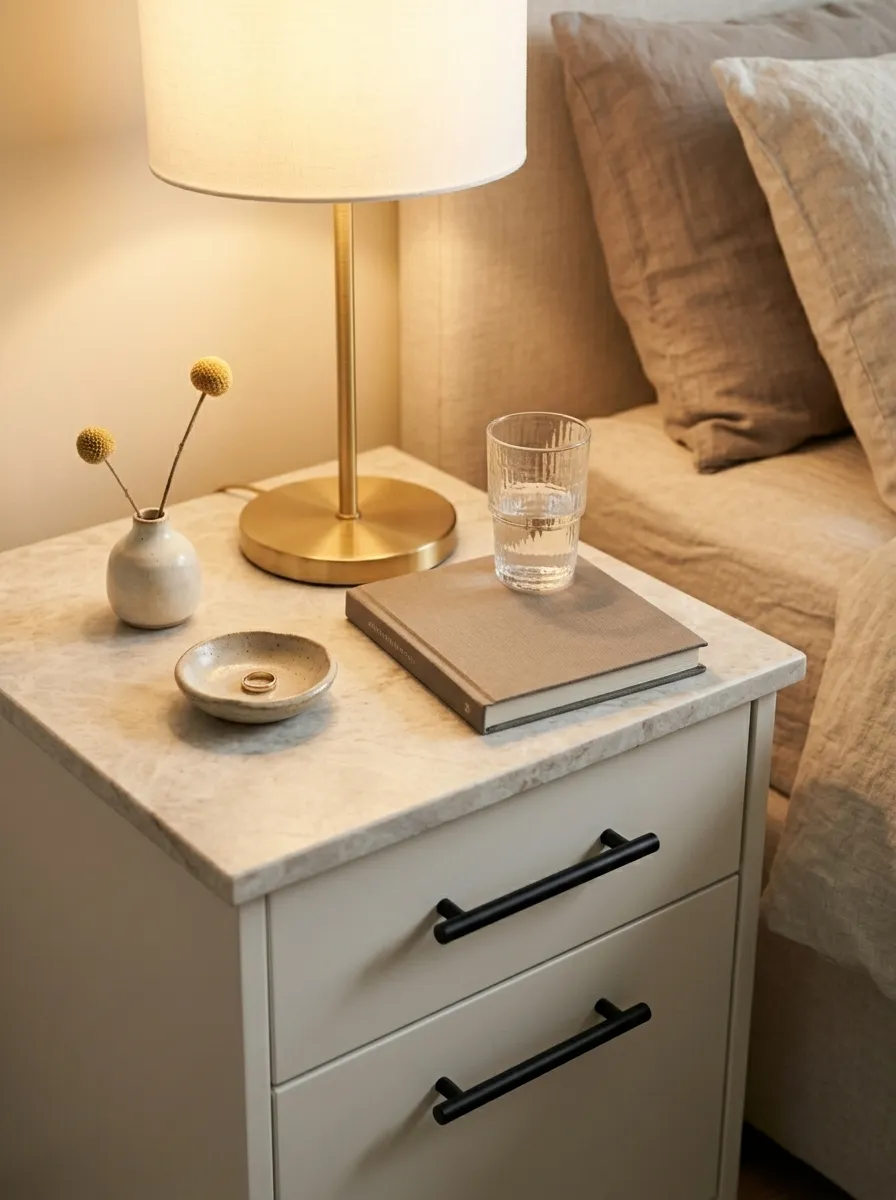
Your bedside table is the last thing you see at night and the first thing you see in the morning. It deserves some real attention.
Keep it functional but beautiful. The basics are: a lamp for reading, something to put your phone on, a glass of water, and one small decorative piece.
That fourth decorative item is what ties the table into the rest of the room’s style. It could be a small plant, a candle, a ceramic dish, or a single art book.
Avoid clutter. A bedside table with too many items feels chaotic before bed. Edit down to just what you need each night.
If your nightstand is too small, a wooden stool, a stack of oversized books, or a simple plant stand can serve the same purpose at a fraction of the cost of a new table.
Consider matching or intentionally mismatching your two bedside tables. Mismatched tables in the same tonal family feel collected and intentional rather than unfinished.
Cord management matters here too. Use a small cable tidy or run your lamp cord under the table to keep things neat. Even small things like a visible charging cable can make a styled table feel messy.
20. Declutter and Edit Regularly
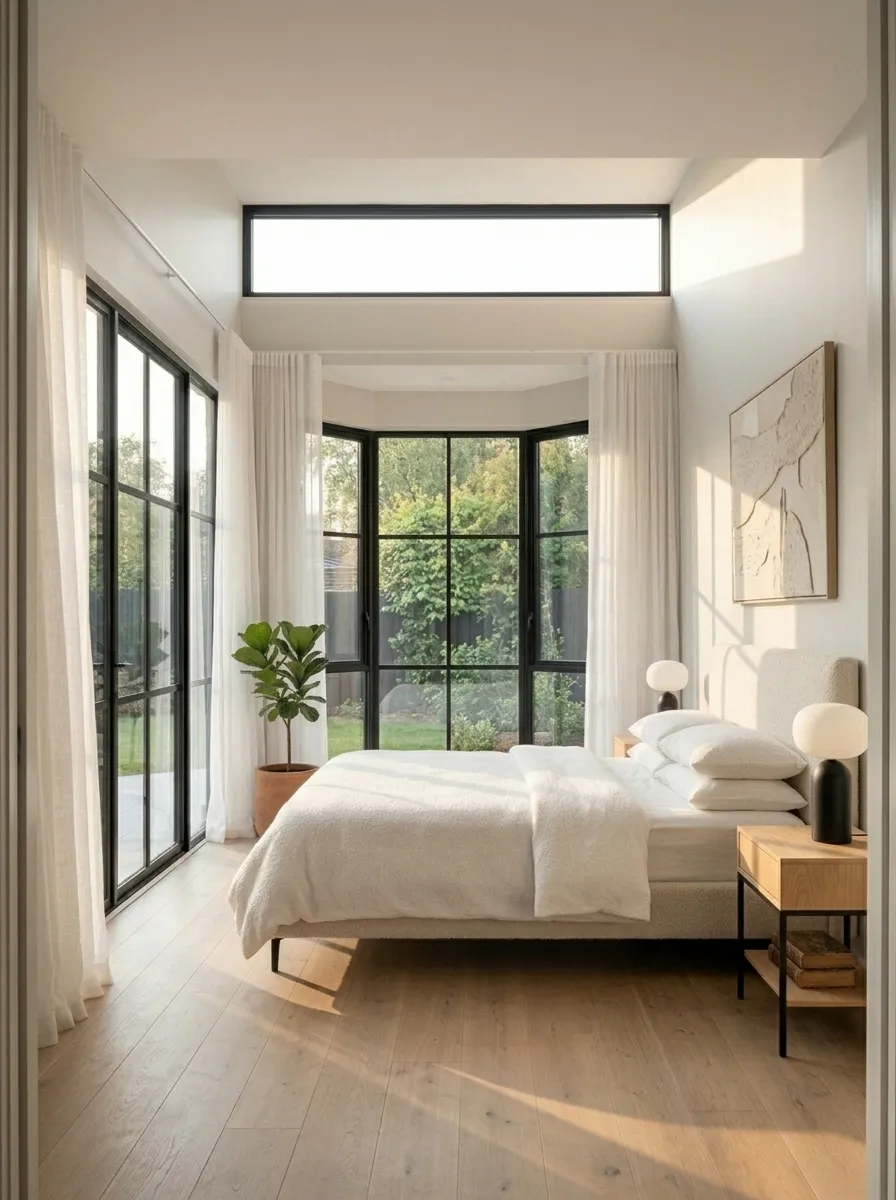
No amount of good furniture or styling will work if the room is cluttered. Editing regularly is one of the most underrated parts of modern room decor.
Set a simple rule: if something does not serve a purpose or bring you genuine pleasure, it does not belong in the room.
Start with surfaces first. Counters, tables, shelves, and floors should be as clear as possible. Clutter on surfaces creates mental noise even when you are trying to relax.
Go through one drawer or cabinet every week. This keeps the deeper storage in check without requiring a massive weekend overhaul.
Use the box method: fill a box with items you are unsure about and store it out of sight for 30 days. If you do not miss anything in the box, donate it.
Storage baskets and closed cabinets are your best friends. They keep necessary clutter out of sight while still being easily accessible.
A clean room is not about having fewer things. It is about having a smart place for everything. Once your storage is intentional, maintaining a clean space becomes much easier.
This is ongoing work, not a one-time fix. The best-looking rooms belong to people who edit consistently rather than decorating once and never revisiting.
21. Add a Bench at the Foot of the Bed
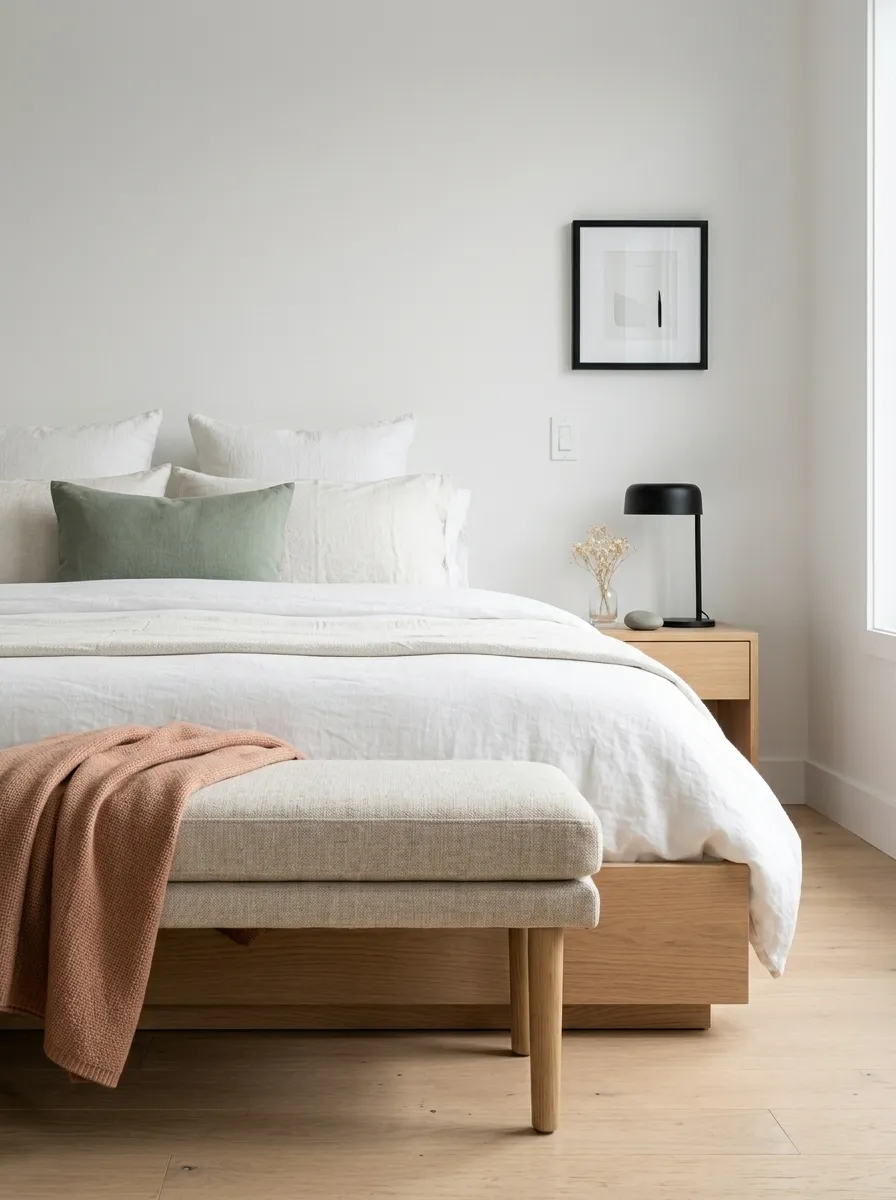
A bench at the foot of the bed is one of those pieces that makes a bedroom feel immediately more finished and luxurious.
It is also incredibly practical. You can sit on it while getting dressed, use it to lay out tomorrow’s clothes, or drape a throw blanket across it at night.
Upholstered benches in neutral fabrics are available at IKEA and Amazon starting around $80 to $150. For a higher-end look, check secondhand furniture stores where vintage benches can be found for $30 to $60 and reupholstered cheaply.
Choose a size that leaves at least 18 to 24 inches of walking space on each side of the bed. A bench that is too wide will make the room feel blocked.
The upholstery color should complement your bedding. If your bedding is white or light grey, a warm linen, boucle, or soft velvet bench adds texture and warmth.
Avoid adding too many objects on top of the bench. One folded throw is enough. Keeping it mostly clear emphasizes the clean, modern aesthetic.
This single piece of furniture adds a hotel-room quality to a bedroom without requiring any structural changes or major investment.
22. Use Vertical Space in Small Rooms
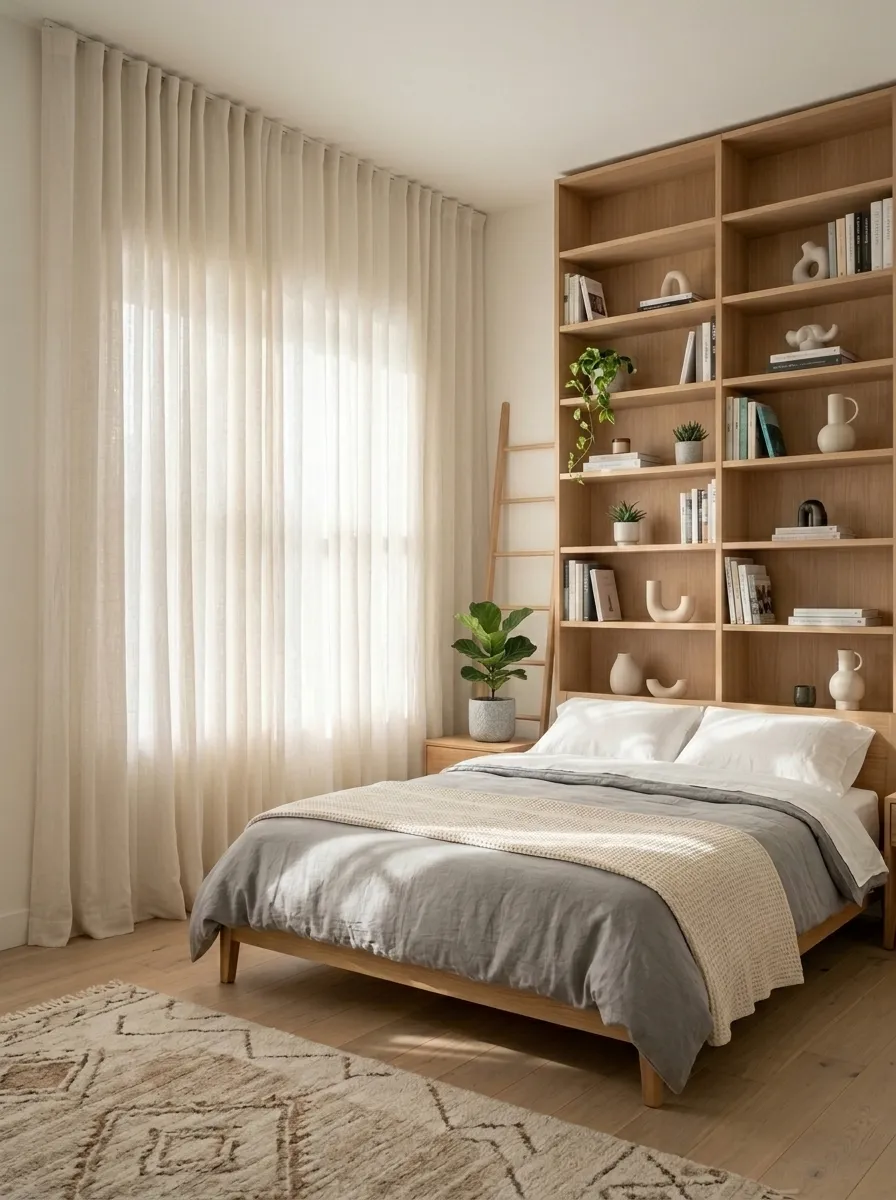
When floor space is limited, the answer is almost always to go up.
Tall bookshelves, vertical wall art, floor-to-ceiling curtains, and hanging plants all draw the eye upward. This makes a room feel taller and larger than it actually is.
A tall KALLAX or BILLY bookshelf from IKEA can be used in every room of the house for under $100 to $200. Style it with a mix of books, plants, and decorative objects to keep it from looking like pure storage.
Hang artwork higher on the wall than you normally would. The conventional advice is to hang at eye level, but in a small room, placing art slightly higher draws the eye up and creates the illusion of height.
Use the space above cabinets and wardrobes. Add baskets, plants, or decorative objects up there. Space above furniture in a small room reads as a wasted opportunity.
Wall-mounted sconces and floating shelves replace floor lamps and side tables, freeing up floor space while still serving the same purpose.
Even mounting your TV on the wall instead of using a TV stand frees up several square feet of visual and physical space.
Think up first, then out.
23. Incorporate Black Accents
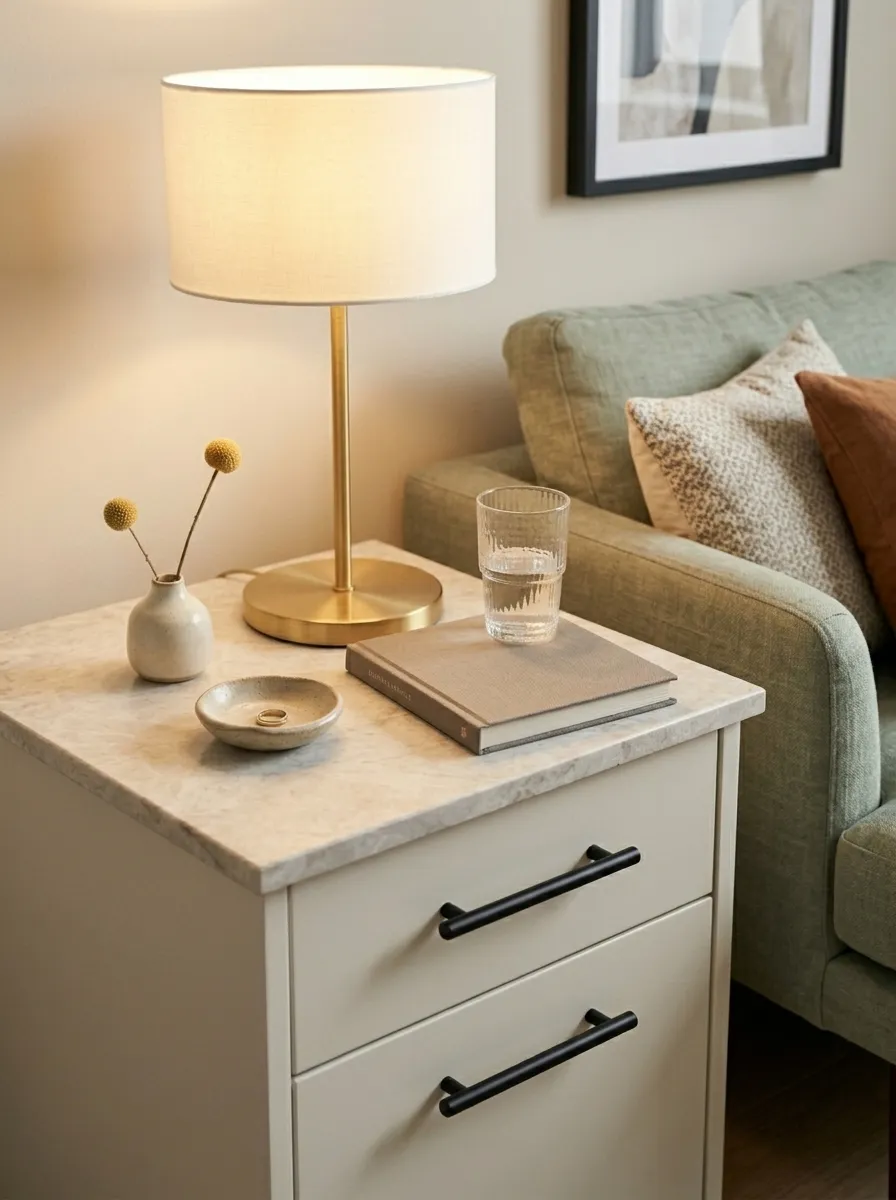
Black accents are one of the most reliable tricks in modern interior design. They ground a space and give it definition without adding visual weight.
The key is using black as an accent, not a dominant color. A little goes a long way.
Try black picture frames, black cabinet handles, a black pendant lamp, a black plant pot, or a matte black faucet in the bathroom. Each piece is subtle, but together they create a sense of intention.
Black accents work with almost every color palette. Against warm neutrals, they add contrast and sophistication. Against cool whites they add drama.
You do not need to match every black piece. Different finishes and textures of black work well together. A matte black frame next to a glossy black pot looks intentional rather than mismatched.
Start with one or two black pieces and see how the room responds. Most spaces can handle more black than their owners initially expect.
Avoid going overboard. When more than 20% of the visual field is black, the space can start to feel heavy. Keep black as the supporting character, not the main event.
This is a very low-cost update. A few new frames and a hardware swap can introduce the right amount of black for under $50.
24. Design a Functional Entryway
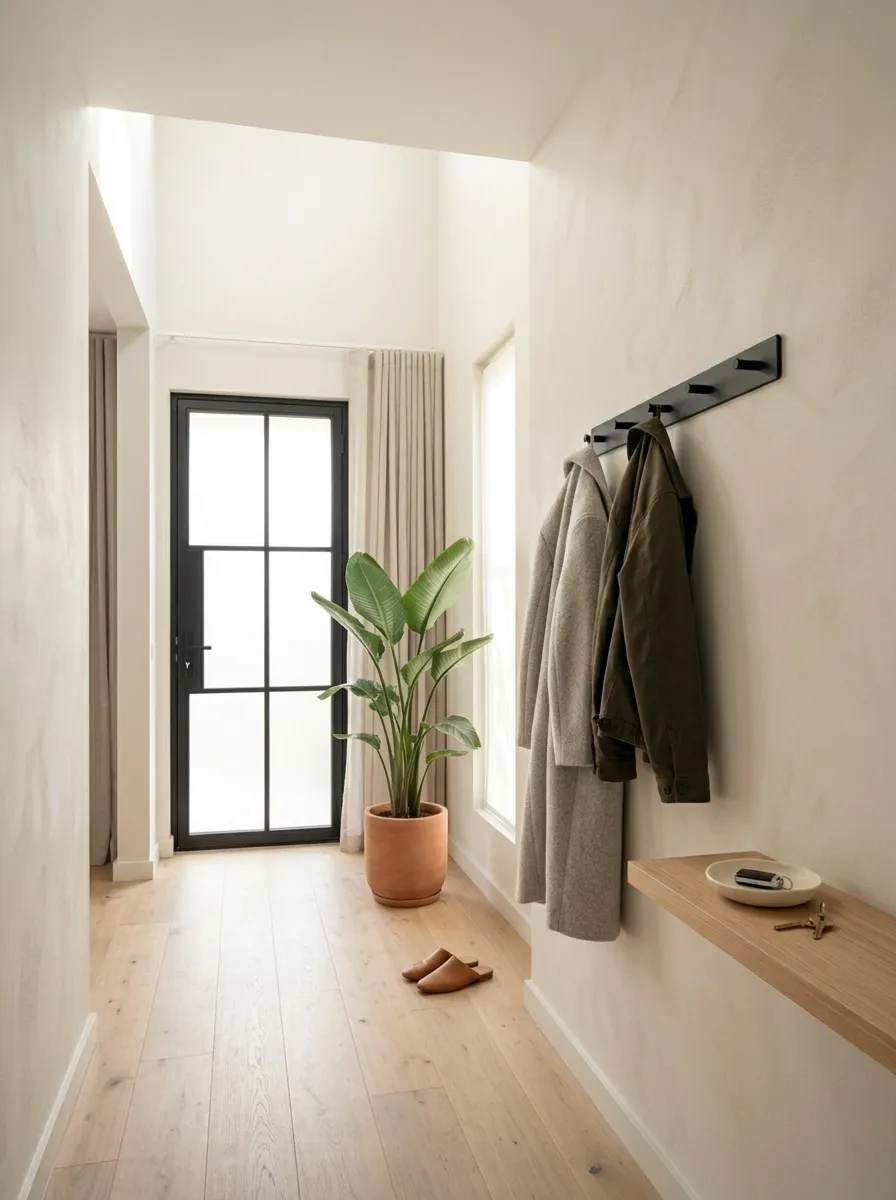
The entryway is the first space you see when you come home and the first thing guests experience. It deserves a proper setup even in very small apartments.
Most entryways need the same four things: a place to hang coats and bags, a spot to drop keys, a place to sit and remove shoes, and something that feels welcoming visually.
A wall-mounted hook rail solves the coat problem for $20 to $40. A small ceramic dish on a floating shelf handles keys. A simple bench or a small stool handles shoes.
Add one decorative element: a plant, a piece of art, or a small mirror. This transforms a functional space into one that feels thought about.
Keep the floor as clear as possible. Shoes stacked against the wall or stored in a small wicker basket maintain the tidy look while being genuinely accessible.
Lighting matters in an entryway too. A small wall sconce or a plug-in pendant adds warmth to a space that often relies on harsh overhead light.
The best entryways feel calm and organized because everything has a designated home. When objects have a place, they stay in place.
25. Try Monochromatic Room Styling
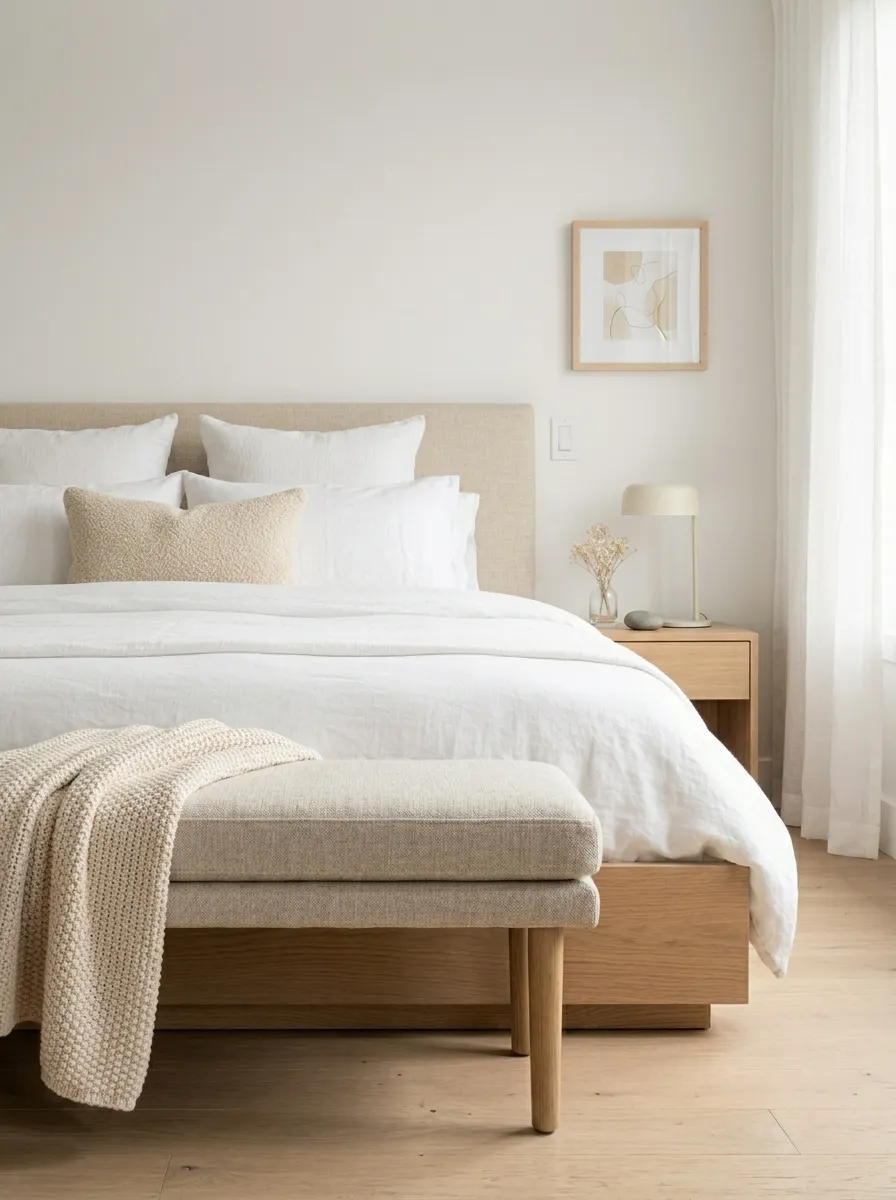
A monochromatic room uses one color family across everything: walls, furniture, textiles, and objects. It sounds limiting but the effect is incredibly sophisticated.
The secret is variation in texture and tone. A room in all-white works because linen white, chalk white, warm white, and bright white are all distinct. The texture of a chunky knit blanket next to a smooth ceramic vase creates visual interest without color contrast.
This approach is actually budget-friendly because you do not need to worry about whether a new piece matches your palette. If it is in the same color family, it works.
Choose your base color first. All-white, warm beige, soft sage, or deep navy are all popular options for a modern monochromatic scheme.
Then shop for pieces that fall within that color range in varied textures. Wool, linen, cotton, ceramic, wood, and metal all look different in the same color.
Add depth through pattern, too. A tonal geometric rug, a textured pillow cover, or a woven basket all add dimension without breaking the color scheme.
This styling approach photographs beautifully and feels calming to live in. It is one of the most timeless looks in modern interior design and one of the easiest to maintain.
Conclusion
Modern room decor does not have to be expensive, complicated, or reserved for people with design degrees. Every idea in this list is something you can start today with tools and a budget you already have.
The most important step is simply deciding what you want your space to feel like and making intentional choices toward that feeling. Pick two or three ideas from this list and start there. Do not try to change everything at once.
Small, deliberate changes add up faster than you expect. A new lighting fixture, a decluttered shelf, a fresh coat of paint on one wall, or a well-placed plant can shift the entire mood of a room.
Your home should feel like you. Use these ideas as a starting point, mix what works for your life, and give yourself permission to adjust things as you go. A modern home is never really finished. It grows with you.