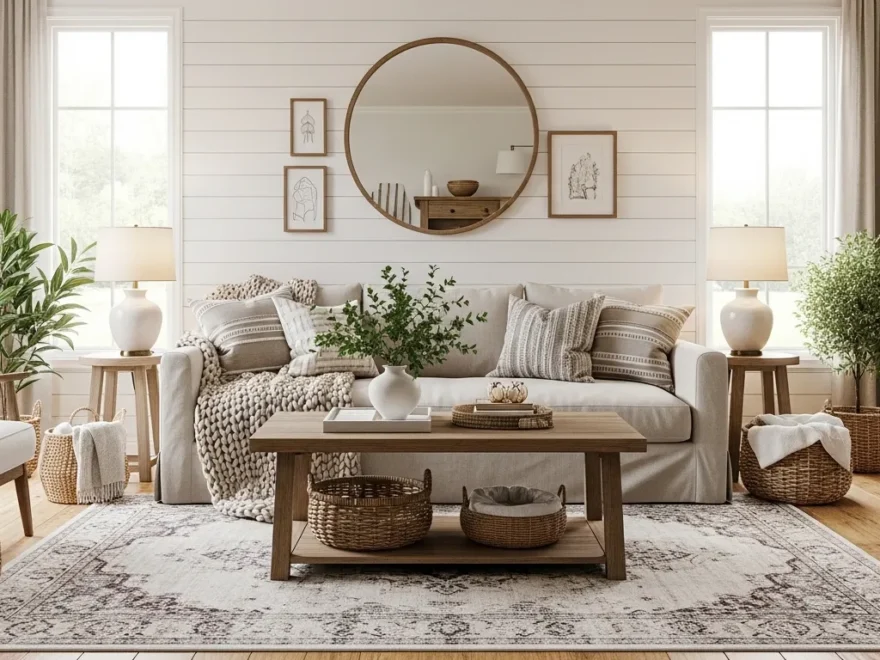
There is something about a farmhouse living room that immediately makes you want to kick off your shoes, sink into the sofa, and stay for hours. It is warm without being heavy, simple without being boring, and layered in a way that feels genuinely lived-in rather than staged. The farmhouse style has endured as one of the most beloved interior aesthetics for years and it is not hard to understand why. It combines the comfort of a country home with the clean lines of a modern space in a way that feels completely natural and effortlessly welcoming. If you’re learning how to decorate a boho room, blending natural textures, relaxed layouts, and personal accents can help you create a warm, creative space that feels both stylish and easygoing.
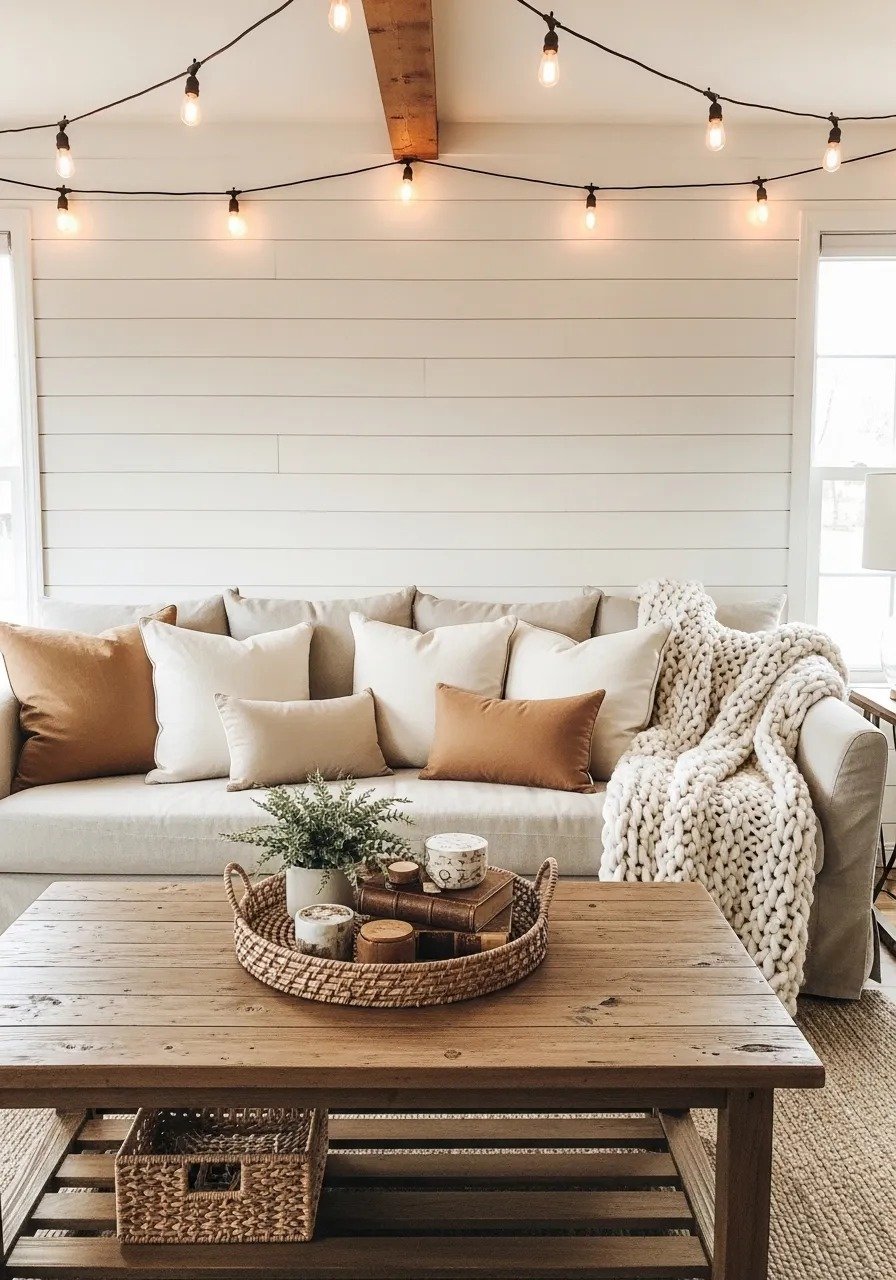
Here is exactly how to decorate a farmhouse living room that feels genuinely cozy from the moment anyone walks through the door.
Build Your Farmhouse Foundation with the Right Materials
The farmhouse aesthetic is defined more by its materials than by any specific color or furniture style. Getting the materials right from the beginning gives every decorative layer that follows a strong and authentic foundation to build on.
Natural wood is the most essential material in any farmhouse living room. Exposed wooden beams on the ceiling, a reclaimed wood coffee table, wooden shelving, or even a simple wooden tray on the coffee table all bring the organic warmth that is at the heart of the farmhouse look. The wood does not need to be perfect or polished. Slightly rough, aged, or distressed wood actually looks more authentic and more beautiful in a farmhouse setting than anything too smooth or refined.
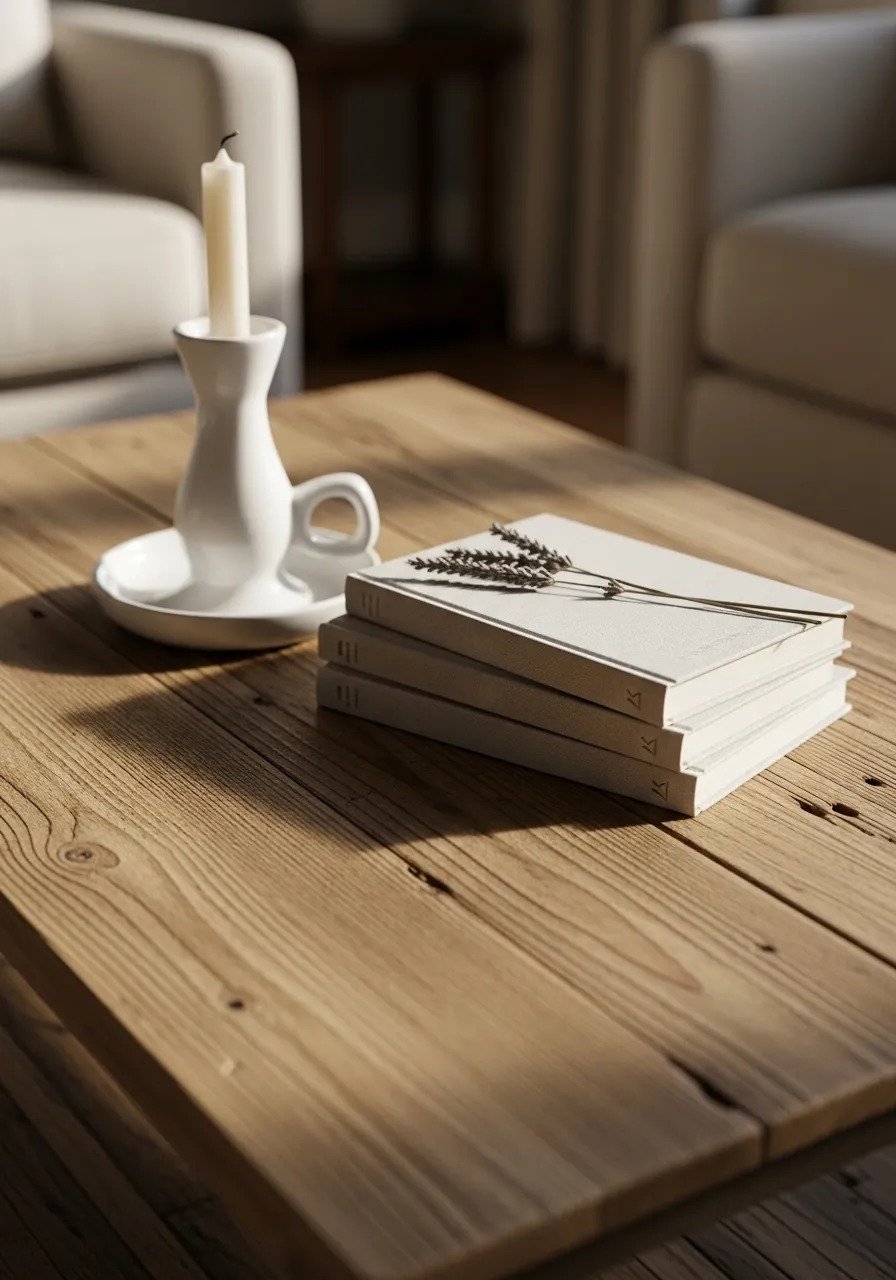
Shiplap is the wall treatment most associated with the farmhouse style and for good reason. A single shiplap accent wall behind the sofa or fireplace instantly gives a room that characteristic farmhouse quality without covering every surface. White or off-white shiplap adds architectural interest, texture, and a clean backdrop that makes every piece of furniture and every decorative element in front of it look more intentional and more beautiful.
Linen, cotton, and other natural fabrics belong on every soft surface in a farmhouse living room. Linen sofa covers, cotton cushion covers, jute rugs, and woven throws all contribute to the layered, textured warmth that makes the style feel so genuinely cozy. Avoid synthetic fabrics and overly shiny or sleek upholstery as these work against the natural, relaxed quality that defines farmhouse living.
Stone and iron accents complete the material palette. A stone fireplace surround, iron candle holders, black iron curtain rods, and vintage-style iron hardware on cabinets and doors all add that rugged, grounded quality that balances out the softness of the linen and natural wood throughout the rest of the room.
Layer Textures and Soft Furnishings for Maximum Coziness
A farmhouse living room that truly feels cozy is almost always one that has been layered generously with soft furnishings and varied textures. This layering is what creates that enveloping, come-sit-down warmth that makes the style so irresistible and so comfortable to actually live in every day.
Start with a large area rug in a natural fiber like jute, sisal, or a woven cotton blend. The rug anchors the seating area and adds the first layer of texture underfoot. A rug with a simple stripe, a subtle diamond pattern, or a natural woven texture suits the farmhouse aesthetic far better than anything with a bold contemporary print or a high-gloss finish.
Layer the sofa generously with cushions in varying textures and a mix of neutral tones. Linen cushions in warm cream, a few cotton ones in soft grey or warm taupe, and one or two in a simple ticking stripe or a subtle check pattern create that comfortable, collected look that feels like the cushions have been gathered over time rather than bought as a matching set.
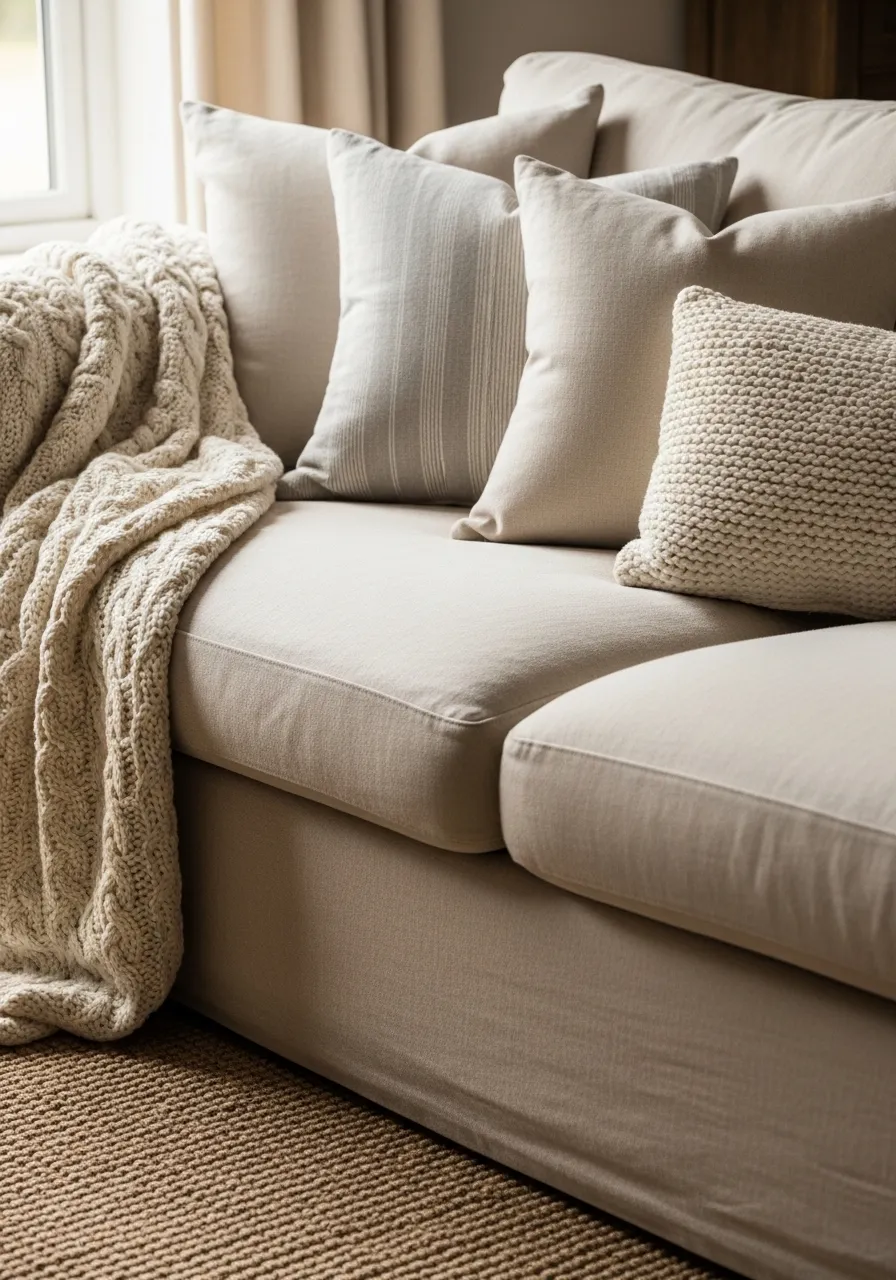
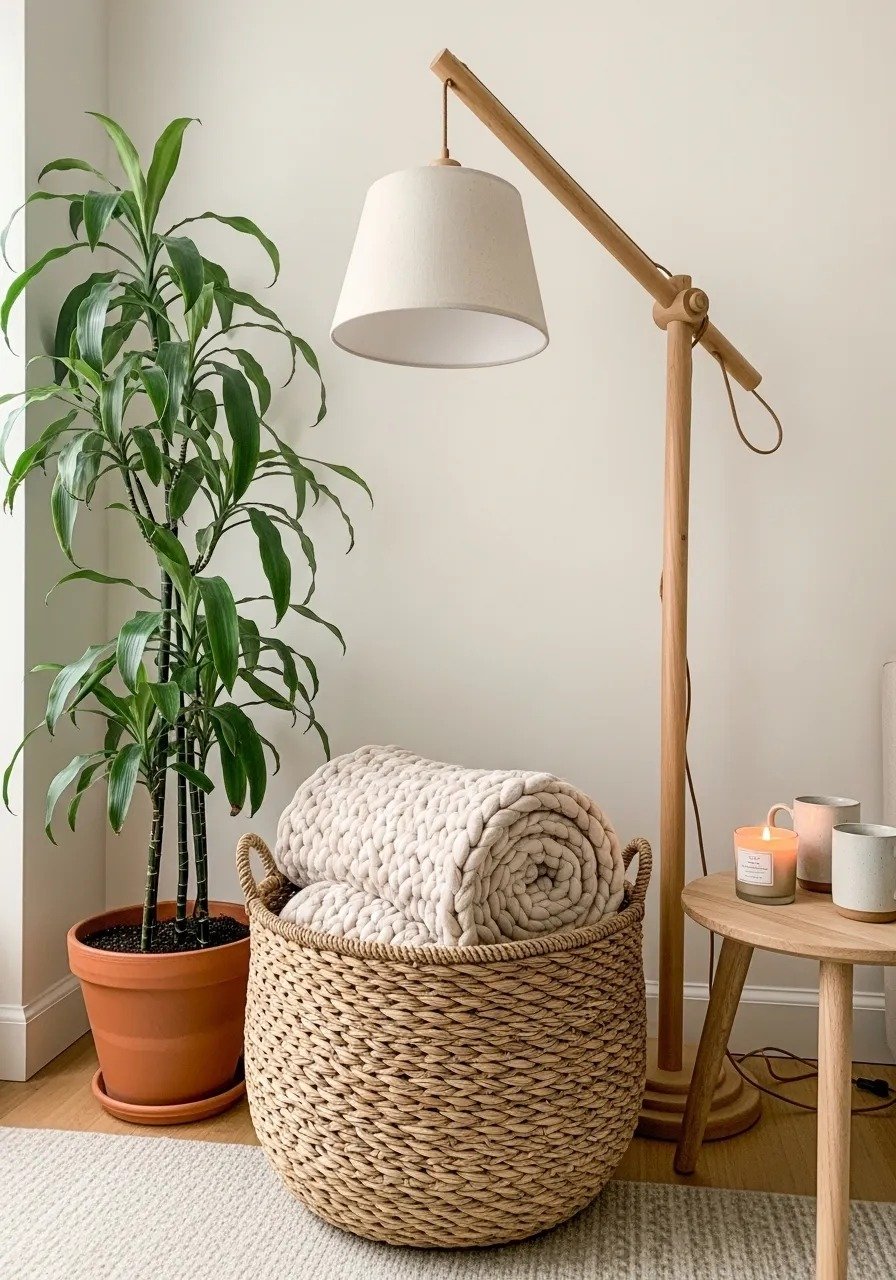
A chunky knit throw draped casually over the arm or back of the sofa is one of the easiest and most effective additions to a farmhouse living room. It adds immediate warmth and visual softness and signals that the space is genuinely comfortable and inviting rather than just decorative. Wool, cotton, and chunky acrylic knit all work beautifully and all look equally at home in a farmhouse setting.
Layer window treatments for both softness and light control. Sheer linen panels let natural light filter through during the day while adding softness and movement to the windows. Adding a simple wooden or iron curtain rod rather than a standard chrome one keeps the window treatment feeling true to the farmhouse aesthetic.
Decorate with Simple, Meaningful Farmhouse Accents
The decorative layer of a farmhouse living room is where the personality of the space really comes through. Farmhouse decor works best when it feels collected, personal, and slightly imperfect rather than matching, coordinated, and overly styled.
Woven baskets are one of the most versatile and useful farmhouse decorating tools available. Use them for storing throw blankets beside the sofa, as planters for indoor greenery, as magazine holders beside an armchair, or simply as decorative objects stacked in a corner or on a shelf. Their natural texture and organic shape suit the farmhouse aesthetic perfectly and they are incredibly affordable.
Fresh and dried botanicals bring the outdoors into a farmhouse living room in the most natural and beautiful way. A large bunch of dried pampas grass in a tall ceramic or terracotta vase, dried lavender stems tied with twine and displayed on a shelf, or a simple vase of fresh eucalyptus all add life, texture, and a soft organic quality that makes the room feel genuinely alive.
Vintage or vintage-inspired pieces add the authenticity that separates a truly beautiful farmhouse living room from one that just looks like a catalog page. An old wooden clock on the mantle, a vintage-style lantern filled with pillar candles, an antique mirror leaning against the wall, or a collection of old books with worn spines stacked on a shelf all contribute that sense of history and character that the farmhouse style needs to feel real.
Frequently Asked Questions
What colors work best for a farmhouse living room? Warm whites, soft creams, warm greige, and natural linen tones form the foundation of most farmhouse color palettes. These light neutral tones create the bright, airy backdrop that makes the natural wood and textured accents stand out beautifully. Accent tones like soft black, warm terracotta, dusty sage green, and faded navy add depth and character without competing with the natural, relaxed quality of the overall palette.
Do I need a fireplace for a farmhouse living room to feel cozy? A fireplace is a beautiful addition to a farmhouse living room but it is absolutely not necessary to achieve the cozy quality the style is known for. Warm lighting, layered soft furnishings, natural textures, and generous use of candles all create the same sense of warmth and comfort that a fireplace provides. An electric fireplace insert or even a well-styled fireplace surround used purely as a decorative focal point delivers much of the visual warmth without requiring a working fire.
How do I make a modern home feel more farmhouse without doing a full renovation? Start with the textiles. Swap synthetic cushions and throws for linen, cotton, and knitted versions in warm neutral tones. Add a jute or woven cotton rug. Replace any chrome or silver hardware and fixtures with matte black or aged brass versions. Bring in natural wood through a coffee table, a shelf, or a simple wooden tray. Add woven baskets and dried botanicals. These changes alone transform a modern room into one that reads clearly as a farmhouse without touching a single wall.
What type of lighting suits a farmhouse living room best? Warm-toned bulbs in the 2700K range are essential for creating the cozy glow that defines a farmhouse living room. Edison bulbs in exposed filament designs are particularly popular in this style because they add visual warmth and a vintage quality even when turned off. Layered lighting works best. A combination of overhead warm lighting, floor lamps with linen shades, table lamps, and candles throughout the room creates the multi-dimensional warmth that makes farmhouse spaces feel so inviting at any time of day or evening.
Create Your Cozy Farmhouse Living Room Today
A farmhouse living room that truly feels cozy is built one layer at a time. It starts with the right materials, builds warmth through texture and soft furnishings, and comes alive with simple, meaningful decorative pieces that feel personal and collected rather than purchased and placed. You do not need to do everything at once. Start with one layer, add another when you are ready, and watch the room gradually become the warm and welcoming space you have been imagining. Save this guide and come back to it every time you are ready to add the next piece to your farmhouse living room.