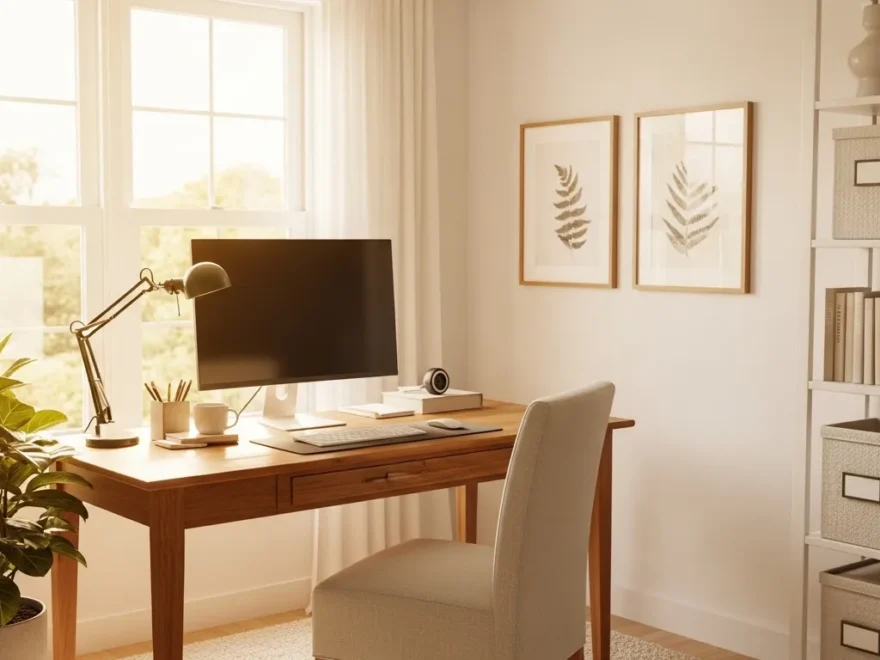
Your home office should work as hard as you do. Whether you’re in a spare bedroom, a closet conversion, or a corner of your living room, the way you decorate your workspace directly affects how focused and motivated you feel. The good news? You don’t need a big budget or a design degree. Small, intentional changes — the right lighting, a plant, a better chair position — can completely shift your energy. Here are 20 smart home office decor ideas that are practical, affordable, and actually make a difference. If you’re also exploring bedroom decor ideas, focusing on comfort, lighting, and balanced organization can help create a space that feels both relaxing and visually inviting without requiring major changes.
1. Choose a Desk That Fits Your Work Style
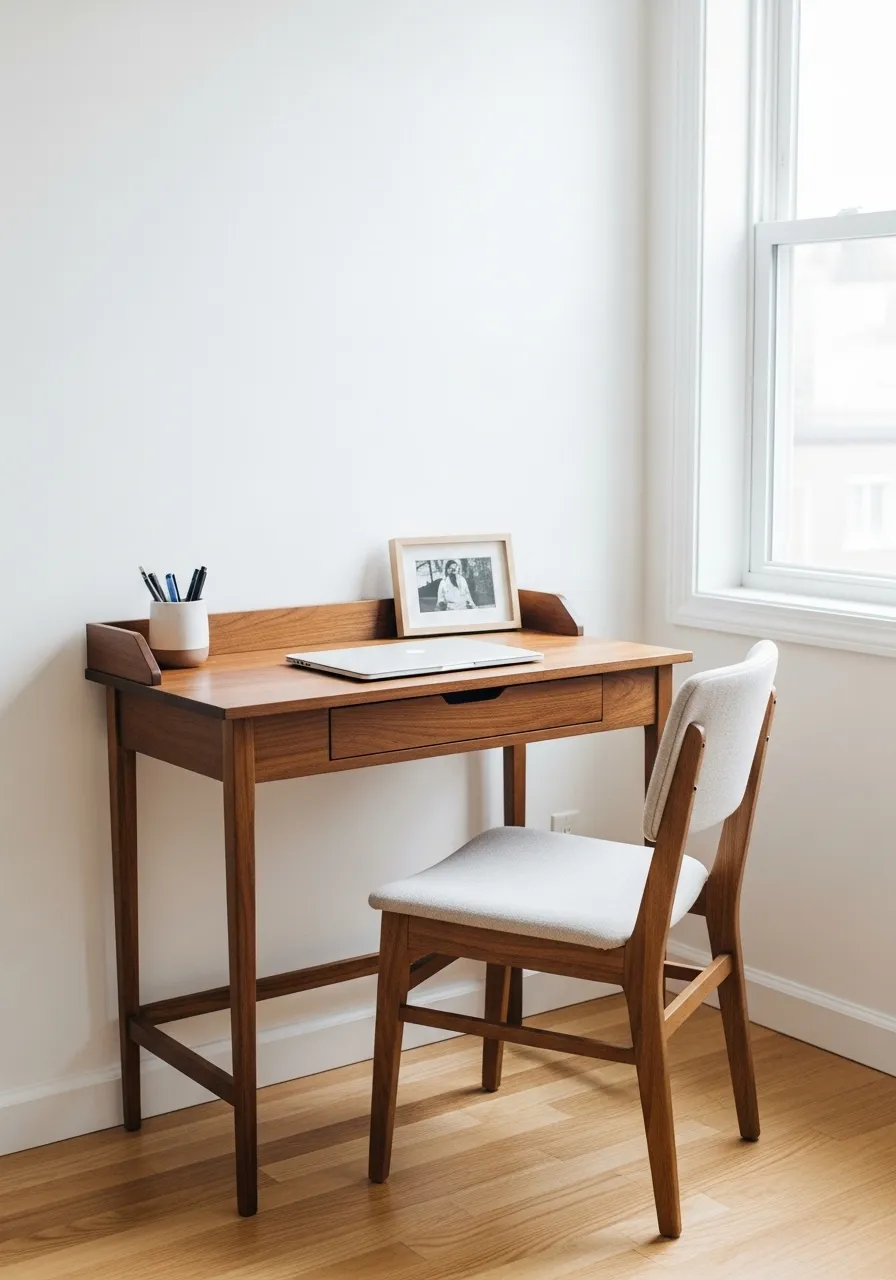
Your desk is the foundation of your workspace. Get this wrong, and everything else suffers.
Think about what you actually do at your desk. Do you need multiple monitors? Do you spread out papers? Or do you just need space for a laptop and a notebook?
A small desk isn’t always a bad thing. If you’re in a tight space, a wall-mounted fold-down desk is a game-changer. It folds flat when you’re done, giving you your room back.
For a bigger setup, an L-shaped desk gives you room to spread out without taking over the whole room.
Budget tip: Check Facebook Marketplace or thrift stores. You can find solid wood desks for under $50. A coat of paint or new hardware can make it look brand new.
Don’t overthink the material. What matters more is the height. Your elbows should sit at roughly 90 degrees when typing. If your desk is too high or too low, your body pays for it by end of day.
Match the desk size to your actual tasks, not to what looks impressive on Instagram.
2. Invest in Proper Lighting Before Anything Else
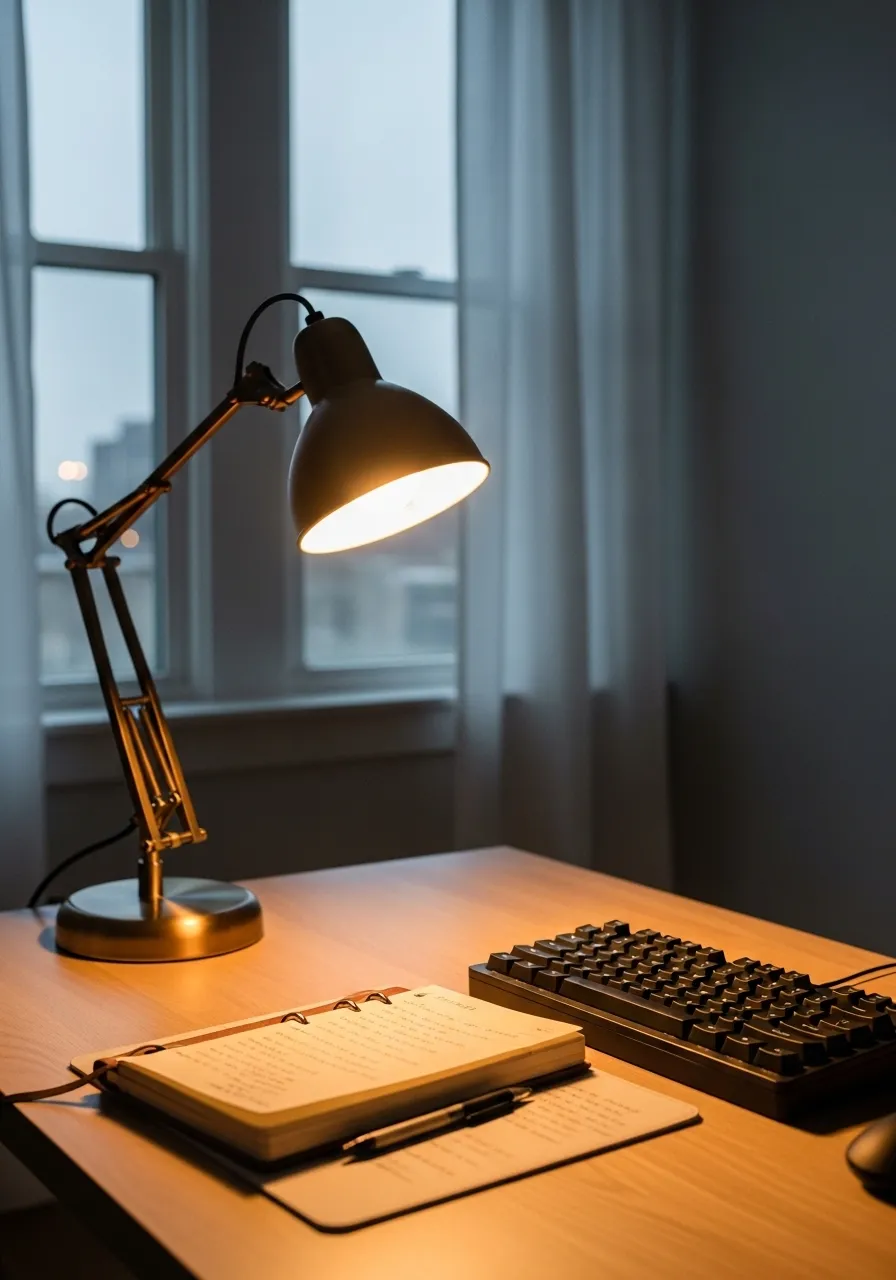
Bad lighting causes eye strain, headaches, and that 2pm crash you blame on lunch.
Natural light is your best friend. Position your desk so the window is to your side — not directly behind or in front of your screen. Behind you causes glare. In front of you creates harsh contrast.
If natural light isn’t an option, layer your lighting. Use a ceiling light for general brightness and a desk lamp for focused task lighting.
Look for bulbs labeled “daylight” (around 5000K–6500K). These mimic natural light and keep you alert. Warm yellow bulbs are cozy but can make you sleepy.
Budget tip: A simple adjustable desk lamp from IKEA or Amazon runs $15–$30 and makes a huge difference. Look for one with brightness settings so you can adjust throughout the day.
Avoid overhead-only lighting. That single ceiling fixture casting shadows across your screen is working against you.
Proper lighting isn’t a luxury — it’s a basic requirement for doing your best work. Fix this first before you spend money on anything else in your office.
3. Paint One Wall a Focus-Friendly Color
Color affects your mood more than you might realize.
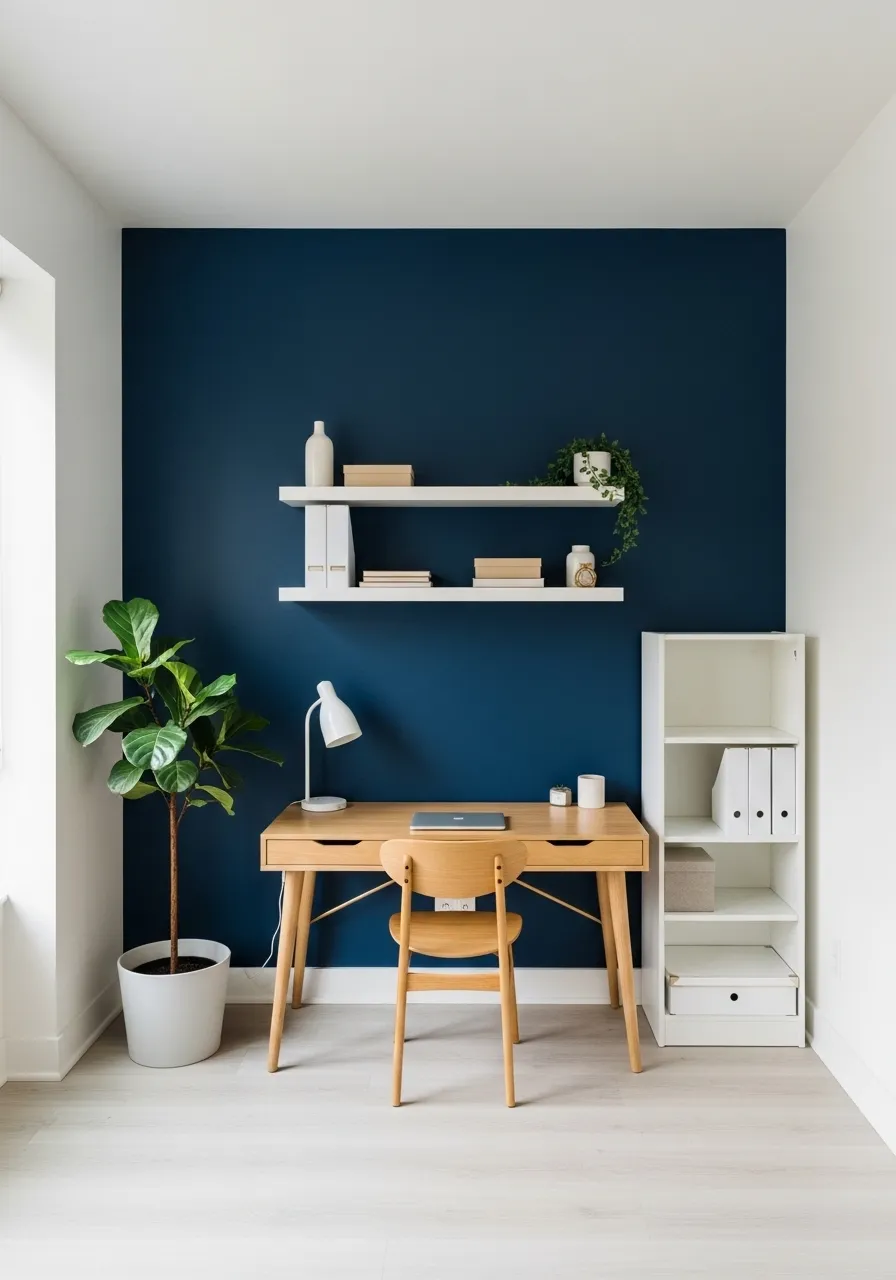
You don’t have to repaint the whole room. Pick one wall usually the one behind your monitor and give it a fresh coat of paint. This becomes your focal wall and sets the tone for the whole space.
Soft blues and greens are known to support calm focus. Deep navy or forest green can feel grounding and professional on a video call. Warm whites and off-whites keep the space feeling open and clean.
Avoid loud reds or very bright yellows as your main color. They can feel stimulating in short bursts but become exhausting in a work environment.
Budget tip: One quart of paint (usually $10–$18) is enough for a single accent wall in most rooms. Stir in one weekend, and your office feels completely transformed.
Test a small patch first. Paint colors look very different on the wall than they do on the chip at the store. Always let it dry before making a final call.
This single change is one of the highest-impact, lowest-cost things you can do.
4. Add a Plant (Just One Is Enough)
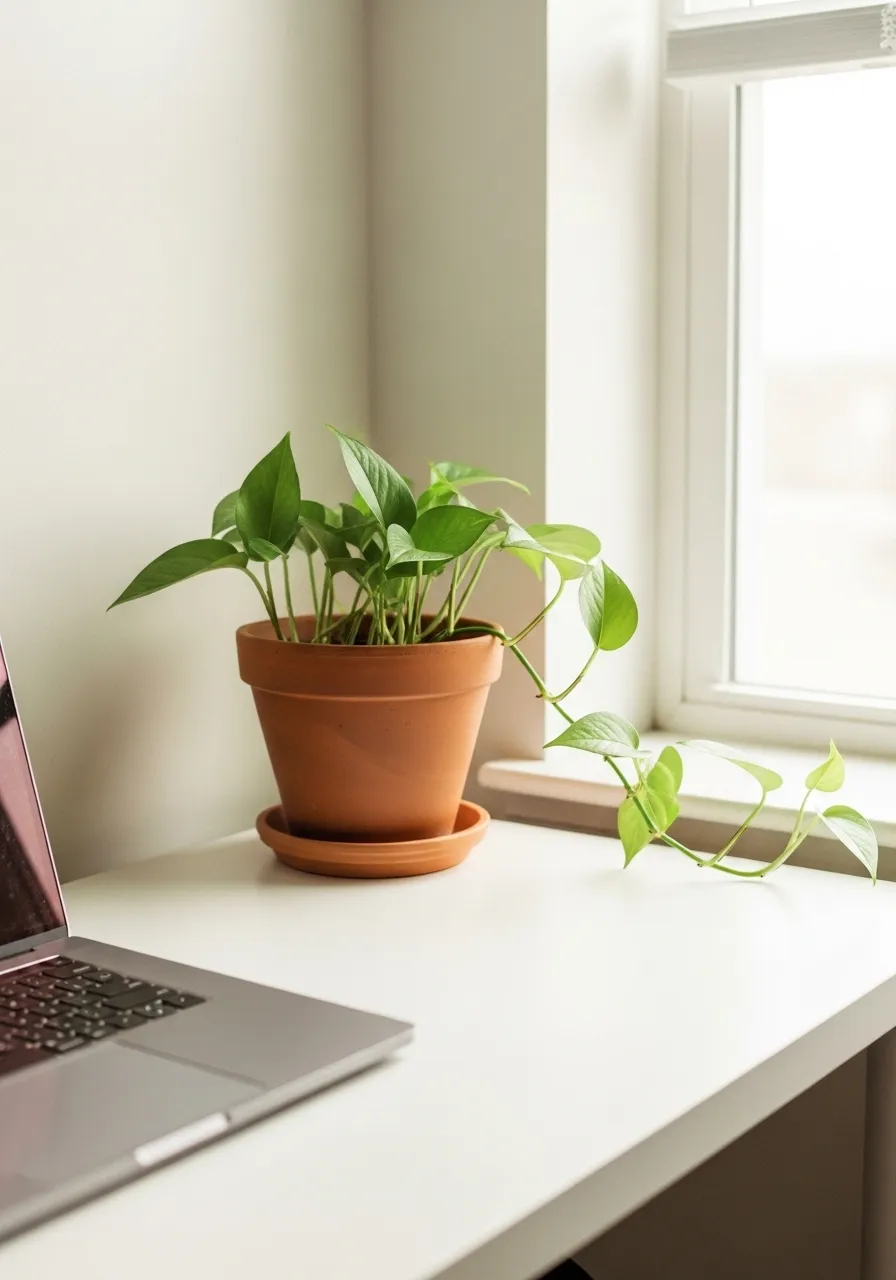
You don’t need a jungle. One plant is enough to change the feel of a workspace.
Plants add life and color to an otherwise flat, screen-heavy environment. They also give your eyes a natural resting point between tasks — something soft to look at when you glance away from your monitor.
The best plants for home offices are low-maintenance ones. Pothos, snake plants, and ZZ plants survive in most light conditions and only need watering once a week or less.
If you tend to forget watering, go with a snake plant or cactus. They genuinely thrive on neglect.
Budget tip: Small pothos or snake plants cost $5–$10 at most garden centers or hardware stores. Skip the decorative pots at first. A simple terracotta pot from a dollar store looks clean and earthy.
If you have no natural light at all, a small succulent under a grow light is still worth it. The green presence helps.
Don’t overthink which plant. Pick one you like the look of, put it where it gets reasonable light, and water it when the soil feels dry.
That’s really all there is to it.
5. Use Floating Shelves to Get Stuff Off Your Desk
A cluttered desk is a cluttered mind. If your workspace is buried under books, cables, and random items, your focus will be too.
Floating shelves solve this without taking up floor space.
Mount two shelves above your desk. Use the top shelf for things you reference occasionally — books, binders, decorative items. Use the lower shelf for things you grab daily — notebooks, your planner, a small plant.
Keep the desk surface itself for active work only. Laptop, monitor, notebook, pen. That’s it.
Budget tip: IKEA LACK shelves are around $8–$12 each and come in multiple colors. All you need is a drill, a level, and two wall anchors. The whole install takes about 20 minutes.
If you’re renting and can’t drill, there are adhesive shelf brackets rated for light loads (up to 15–20 lbs). These work well for lightweight items.
Label your storage boxes. Even a simple label maker or handwritten tag helps you find things faster and keeps the shelves looking intentional rather than messy.
Clean shelves above your desk signal to your brain: this is an organized, capable workspace.
6. Create a Dedicated Cable Management System
Tangled cables are both ugly and distracting. They make even a nice desk setup look like a mess.
Fixing this takes less than an hour and almost no money.
Start with cable clips. These small adhesive clips stick to the back or underside of your desk and hold cables in a neat line. A pack of 20 costs about $5.
A cable tray mounted under your desk keeps your power strip and excess cable length hidden completely. You can mount one for under $15.
Use velcro cable ties instead of zip ties. They’re reusable and make it easy to adjust later when you add or remove a device.
If you have multiple cables going to the same device area, bundle them together with a sleeve. These fabric sleeves wrap around 3–5 cables and turn them into one clean line.
Budget tip: Everything you need for full cable management — clips, tray, ties, and a sleeve — costs under $25 total on Amazon or at a hardware store.
The before-and-after difference is dramatic. Once you do this, you’ll wonder why you waited so long.
It also makes cleaning your desk area much faster and less annoying.
7. Hang a Simple Pegboard for Flexible Storage
A pegboard gives you fully customizable wall storage that you can rearrange anytime.
This is especially useful if your needs change regularly — freelancers and creatives love this setup.
You can hang hooks for headphones, small baskets for pens and supplies, clipboards for notes, and even small potted plants. Everything is visible and within reach, but off your desk.
Paint the pegboard before mounting it. White, black, or a soft color that matches your wall makes it look intentional rather than industrial.
Pegboards come in standard sizes at most hardware stores. A 2×4 panel runs about $10–$15. Hooks and accessories are inexpensive — you can build out a full setup for under $40.
Mount it at eye level above your desk. Use wall anchors rated for the weight you plan to hang.
Budget tip: IKEA SKÅDIS pegboards are a popular, affordable option with a wide range of compatible accessories. The system is designed to grow with you.
Start simple. Hang only what you actually use daily. Add to it gradually as you discover what belongs there.
The beauty of a pegboard is that nothing is permanent. It’s the most flexible storage solution you can add to a wall.
8. Set Up a Dedicated “Start of Day” Tray
A physical tray that holds your daily essentials is a simple but powerful habit tool.
It sounds overly simple. But having one designated spot for your notebook, pen, planner, and phone keeps your desk anchored and your morning routine consistent.
When you sit down, everything you need is right there. No hunting for a pen. No clearing space to think.
Use a small wooden tray, a shallow ceramic dish, or even a repurposed picture frame (glass removed) as your tray. It doesn’t have to be expensive.
Keep only what you use every single day in the tray. Anything you use weekly or less should live on a shelf or in a drawer.
Budget tip: Thrift stores almost always have wooden trays or decorative dishes for $1–$5. A quick sanding and a coat of paint turns anything into a clean desk accessory.
The tray also serves as a visual reset cue. At the end of the day, anything that drifted onto your desk goes back where it belongs. The tray stays set for tomorrow.
It’s a small habit that keeps the rest of your workspace organized without requiring a full tidy-up every evening.
9. Hang Framed Art That Actually Means Something to You
Bare walls in a workspace feel cold and uninspiring.
You don’t need expensive art. What matters is that the pieces you choose feel meaningful or motivating to you — not just decorative filler.
A few options that work well in home offices: black and white photography, minimal line art, botanical prints, hand-lettered quotes, or architectural drawings. Simple, calm visuals are generally better than busy or chaotic pieces.
Print and frame your own art for almost nothing. Sites like Unsplash offer free high-resolution images. Download, print at a local print shop for $2–$5, and frame it.
Budget tip: IKEA RIBBA frames start at $4. A gallery wall of three matching frames looks very intentional and polished even when filled with free printed images.
Arrange art at eye level while seated, not while standing. Most people hang wall art too high.
Choose pieces that you’ll enjoy glancing at during the day. Your workspace should feel like yours — a space that reflects your personality, not just a functional corner of your home.
One or two pieces done right beat a wall full of random filler prints every time.
10. Use a Rug to Define the Office Zone
If your home office is part of a larger room, a rug does something very specific: it creates a visual boundary.
That boundary matters psychologically. When you’re on the rug, you’re at work. When you step off it, you’ve left the office. This separation is hard to create in open-plan living spaces, but a rug does it without any construction.
Choose a low-pile rug that can handle a rolling chair. High-pile rugs make chair movement frustrating and can strain your legs over time.
A 5×7 or 6×9 size is usually right for a desk and chair setup. You want the front legs of the desk on the rug at minimum. All four legs on the rug looks even better.
Budget tip: Rugs are one area where shopping secondhand pays off massively. Facebook Marketplace and thrift stores often have quality rugs at a fraction of retail prices. Look for natural fibers like wool or cotton — they hold up better.
Neutral colors (cream, grey, beige, tan) keep the space feeling open. Geometric or simple stripe patterns add interest without competing with the rest of your decor.
This single piece of decor can make a makeshift corner feel like a real, defined office.
11. Organize Your Desk Drawers with Dividers
Desk drawers become black holes very quickly.
Within a few weeks of setting up an office, drawers fill with tangled earbuds, dead pens, mystery keys, and things you’ve been meaning to deal with since last year.
Drawer dividers fix this for good.
You can buy bamboo divider sets for $10–$15 that fit most standard desk drawers. They create sections for pens, clips, sticky notes, chargers, and other small items.
Spend 20 minutes doing a full drawer purge first. Empty everything out. Throw away dead pens, old receipts, and anything you haven’t touched in six months. Then only put back what you actually use.
Budget tip: Repurpose small cardboard boxes (like tea box inserts or jewelry boxes) as drawer dividers. They work just as well as purchased dividers and cost nothing.
Label each section if you share the desk with someone else or if you tend to forget where things go.
Once your drawers are organized, maintaining them is easy. Things have places. You put them back. You spend less time looking for things and more time working.
This small change quietly saves you several minutes every single day.
12. Add a Whiteboard or Chalkboard Wall Panel
Sticky notes scattered across your monitor, reminder apps on your phone, notes in three different notebooks — there’s a better way.
A whiteboard on the wall gives you one visible, central place for current tasks, ideas, and reminders.
You can see everything at once without opening an app. This is especially helpful if you have a lot of moving parts in your work — projects, deadlines, client names.
A standard 2×3 framed whiteboard costs $20–$30 and mounts in minutes. For a larger, budget-friendly option, whiteboard paint turns any smooth wall section into a writeable surface for around $30–$50.
Chalkboard panels are another option if you prefer the look. They add a warm, textured element to the wall while functioning the same way.
Budget tip: Adhesive whiteboard sheets are available for under $15 and peel off cleanly from most wall surfaces. Great for renters.
Keep markers, an eraser, and maybe a couple of colored markers in a small tray nearby. If supplies aren’t right there, you won’t use the board consistently.
Use it for this week’s priorities only. Not everything. Just the 3–5 things that actually matter this week.
13. Bring in a Second Monitor (or Raise Your Existing One)
Neck pain from looking down at a laptop screen all day is one of the most common and easily fixable work-from-home problems.
Your screen should be at eye level. If it’s lower than that, your neck is bent forward for hours — and you’ll feel it by evening.
A monitor riser or stand lifts your screen to the right height. These cost $15–$40 and come in wood, metal, or acrylic.
A stack of large hardcover books works just as well if you’re on a tight budget. Seriously. Raise the screen until the top third of the monitor is at eye level. That’s the right position.
If you can afford a second monitor, do it. The time saved switching between windows and the reduction in mental load is significant. A basic 24-inch monitor runs $100–$150 and connects via HDMI or USB-C.
Budget tip: Refurbished monitors on Amazon or eBay can be found for $50–$80. They work perfectly for office tasks.
Even just fixing the height of your single existing monitor changes your posture, reduces fatigue, and makes your workspace look more polished at the same time.
14. Use Baskets and Bins for Open Shelf Storage
Open shelves look great — until they don’t. Without containers, open shelving turns into a visual pile-up fast.
Matching baskets or bins solve this completely. They hold miscellaneous items neatly, keep the shelf looking uniform, and make it easy to grab what you need without exposing the chaos inside.
Woven rattan or seagrass baskets work beautifully in most home office styles. They’re warm, textural, and look intentional. Wire bins or fabric cubes give a more modern look.
Use bins for things like charging cables, backup office supplies, paper, notebooks you don’t use daily, and small tech accessories.
Budget tip: Target’s Threshold line and IKEA’s KNIPSA and RASSLA baskets are excellent quality at $5–$15 each. Buying two or three matching pieces creates a cohesive look.
Add small labels to the front of each basket. Even handwritten labels on brown kraft paper tags look clean and organized.
Don’t fill baskets to overflowing. Leave a little room at the top. When a basket gets full, it’s a sign to purge — not to get a bigger basket.
This is one of the easiest ways to make your home office look designed and intentional with minimal effort.
15. Create a Vision Board Corner
Not everything in your office needs to be functional in a traditional sense.
A vision board — a small collection of images, goals, and reminders that represent what you’re working toward — keeps your bigger picture visible during the day-to-day grind.
You don’t need a full wall. A small corkboard (12×16 or 18×24) is plenty. Pin printed images, handwritten goals, quotes that actually resonate with you, and small reminders of wins.
The point isn’t aesthetics. It’s visibility. When you can see your goals, they stay alive in your mind. When they’re buried in a journal you rarely open, they get forgotten.
Budget tip: A corkboard costs $5–$15 at office supply stores. Print images from Pinterest or Google at home on plain paper. Use washi tape and push pins to create an arrangement that feels like yours.
Update it every few months. Remove what no longer applies. Add what’s new.
Keep it near your desk but not directly in your main line of sight during screen work — slightly to the side is ideal. Glance at it intentionally, not accidentally.
This corner of your office quietly reminds you every day why the work matters.
16. Add a Small Side Table or Rolling Cart
Your main desk doesn’t have to hold everything.
A small side table or a rolling cart beside your desk extends your workspace without requiring a bigger desk.
Use the cart for your printer, your current reading stack, a water bottle and coffee mug station, or anything that needs to be close but doesn’t belong on your work surface.
Rolling carts are particularly great because you can move them. When you need the space, roll it to the corner. When you need it right beside you, roll it back.
Budget tip: The IKEA RÅSKOG cart is a home office favorite for a reason — it costs about $20, rolls smoothly, and comes in multiple colors. Three shelves, sturdy build, fits almost anywhere.
A small wooden side table from a thrift store does the same job for $5–$20 and looks more stylish if a more permanent setup appeals to you.
Don’t turn it into a clutter collector. Give each shelf a purpose and stick to it.
A cart or side table gives you a lot of workspace flexibility — especially if your home office serves a dual purpose like a guest room or living area.
17. Soundproof Your Space with Soft Furnishings
If noise is ruining your focus, you don’t need professional acoustic panels.
Soft materials absorb sound. Hard surfaces reflect it.
The more soft furnishings you have in your office — rugs, curtains, upholstered chairs, bookshelves full of books — the quieter and more contained the room will feel.
Start with a rug if you have hard floors. This single change makes a noticeably bigger difference in room acoustics than most people expect.
Heavy curtains (sometimes called blackout or thermal curtains) block outside noise as well as light. They run $20–$50 for a standard window and make a real difference.
A bookshelf along a shared wall acts as a natural sound buffer between your office and the next room. Fill it with books rather than leaving it sparse.
Budget tip: Fabric wall hangings (woven tapestries, macramé) are affordable and add acoustic softness to bare walls. These run $15–$40 online.
If you’re on video calls frequently, a quieter room isn’t just comfortable for you — it sounds more professional to everyone on the other end.
Soft furnishings are dual-purpose: they make your office look more finished and feel more focused at the same time.
18. Keep a “Clear Desk” Rule at End of Day
Decor isn’t only about what’s on your walls. It’s also about the habits that keep your space functional.
A clear desk rule is one of the most impactful habits you can build. Before you finish work for the day, spend five minutes clearing your desk. Papers get filed. Tools get put away. The desk resets.
When you come back the next morning, you start fresh — not buried under yesterday’s chaos.
This is especially important if your home office is in a shared space. A clear desk signals “work is done” at the end of the day, and it creates a welcoming, ready-to-work signal in the morning.
Budget tip: Invest $5–$10 in a small inbox tray for papers that need to be dealt with the next day. Stack them in the tray rather than spreading them across the desk.
Create a physical end-of-day checklist if that helps. Write it on your whiteboard or keep it as a note card in your desk tray: clear surface, file papers, charge devices, write tomorrow’s top 3 tasks.
A beautiful, well-decorated office only stays that way with a simple daily maintenance habit. This one takes five minutes and pays back an hour of scattered morning productivity.
19. Personalize with a “Shelf Shelfie” Display
Your bookshelves tell people a lot about you — but more importantly, they should tell something to you every time you look up from your screen.
A styled shelf does two jobs: it stores things and it inspires you.
Group books by color for a cohesive look. Mix in a few meaningful objects — a travel souvenir, a small sculpture, a photo you love, a plant.
The formula that always works: books + one small plant + one decorative object. Repeat that in groups across the shelf.
Avoid filling every inch. Space on a shelf is not wasted — it’s intentional breathing room that makes the whole shelf look less cluttered.
Budget tip: Style what you already own first. Books you already have, photos you’ve printed (or can print for $1–$2 at a drugstore), and one or two small items from around your house. See how far that gets you before buying anything.
Objects with a story are better than objects purchased purely for looks. The shelf should feel personal, not like a showroom.
This is one of the few decor elements in your office where the only rule is: make it yours.
20. Build a Simple Morning Ritual Corner
Not every part of your home office needs to be desk and screen.
A small “morning ritual” corner — even just a chair, a side table, and good lighting gives you a space to think before you start working. Or to decompress before you end your day.
Use it for reading, journaling, planning your day, or just sitting with your coffee before the work kicks in.
This corner signals a buffer between “home mode” and “work mode.” It’s a transition zone that doesn’t require you to leave your house.
A simple accent chair from IKEA or a thrift store ($20–$80), a small lamp ($15–$25), and a side table ($10–$30 secondhand) is all it takes to create this space.
Budget tip: A floor cushion or pouffe works just as well as a chair and costs even less around $20–$40 for a decent option.
Keep this corner intentionally separate from your desk area. It’s not a second desk. It’s a thinking space.
Offices that support both focused work and quiet reflection tend to feel more like places you want to be which is exactly the goal.
Conclusion
A productive home office doesn’t require a renovation budget or an interior designer. It takes a few deliberate choices: the right lighting, a desk setup that fits how you actually work, some storage that keeps clutter managed, and enough personality in the space that it feels like somewhere you want to show up every day.
Start with one or two changes from this list. Fix your lighting. Clear your desk. Add one plant. Each small improvement builds on the last, and before long you have a workspace that genuinely supports your best work not one you’re tolerating.
The best home office is the one that works for your habits, your budget, and your goals. Pick what resonates, skip what doesn’t, and make the space yours.