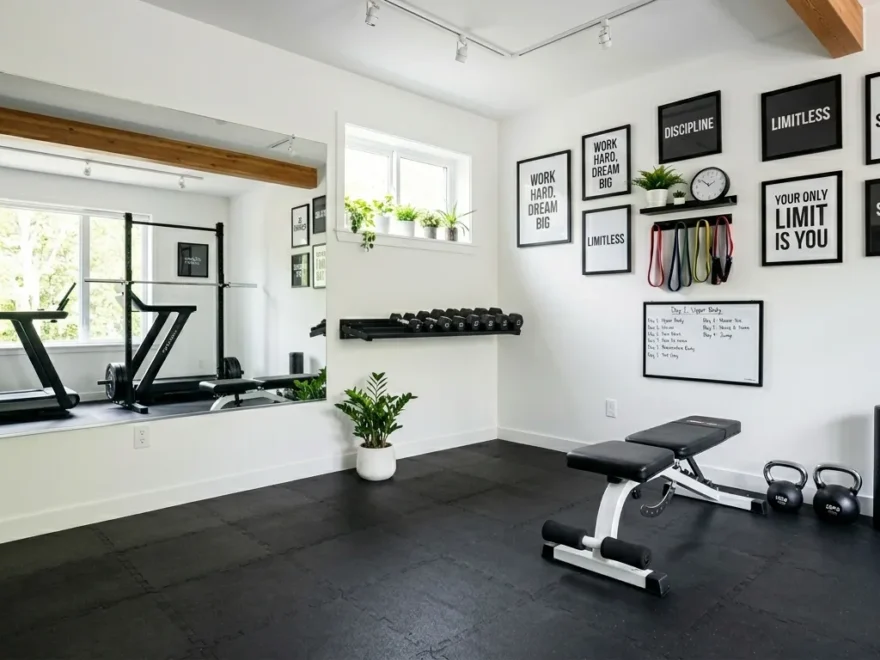
You do not need a fancy commercial gym to get serious results. Your home gym can become a space that pulls you in every single day. The way a room looks and feels has a real impact on how motivated you feel to actually work out. When the walls inspire you, the floor feels right under your feet, and everything has a place, training becomes something you look forward to. These home gym decor ideas are practical, affordable, and easy to pull off even in a small space. Whether you have a full basement or just a corner of your bedroom, you can turn it into a place that gets you moving. If you’re also exploring lightning decor ideas, layered lighting, warm tones, and smart placement can completely transform the mood of a room and make your workout space feel more energizing and inviting.
Mount a Full-Length Mirror Wall
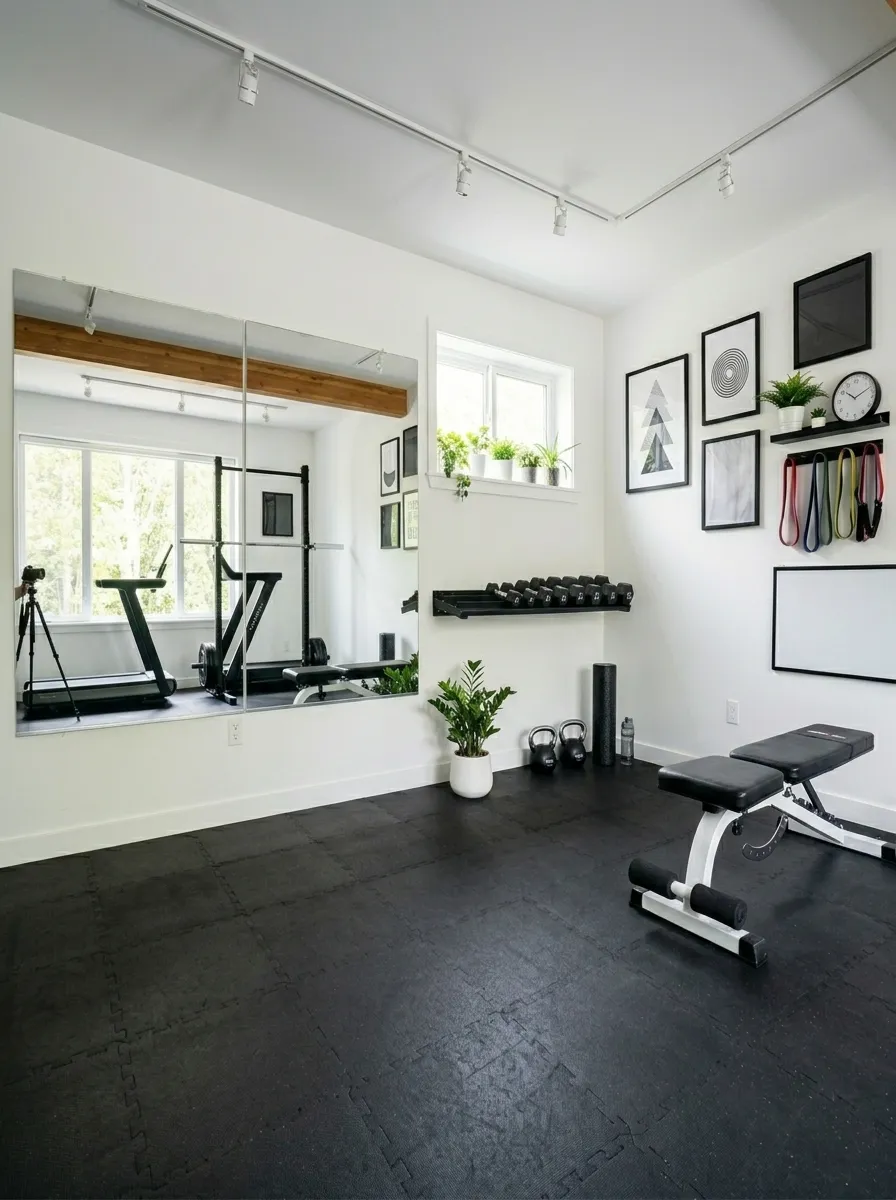
Mirrors do two things in a home gym. They make the room feel bigger and they let you check your form while you train. Bad form leads to injuries. A mirror helps you catch that instantly.
You do not need to buy an expensive gym mirror. Head to a hardware store and pick up large wardrobe mirrors or frameless wall mirrors. They are usually much cheaper than specialty gym mirrors.
You can mount two or three side by side along one wall to create a full mirror wall effect. Use mirror mounting clips to secure them safely.
If you rent your space, lean mirrors against the wall at a slight angle instead of mounting them. A couple of heavy-duty adhesive strips at the back keep them steady.
The difference a mirror wall makes is immediate. Your workouts feel more focused. You stop guessing if your squat is deep enough or if your shoulders are aligned. You can see everything in real time.
This is one of the most affordable upgrades for a home gym. A couple of large mirrors can cost under thirty dollars each. The results they give you are well beyond that price.
Paint One Wall a Bold Color
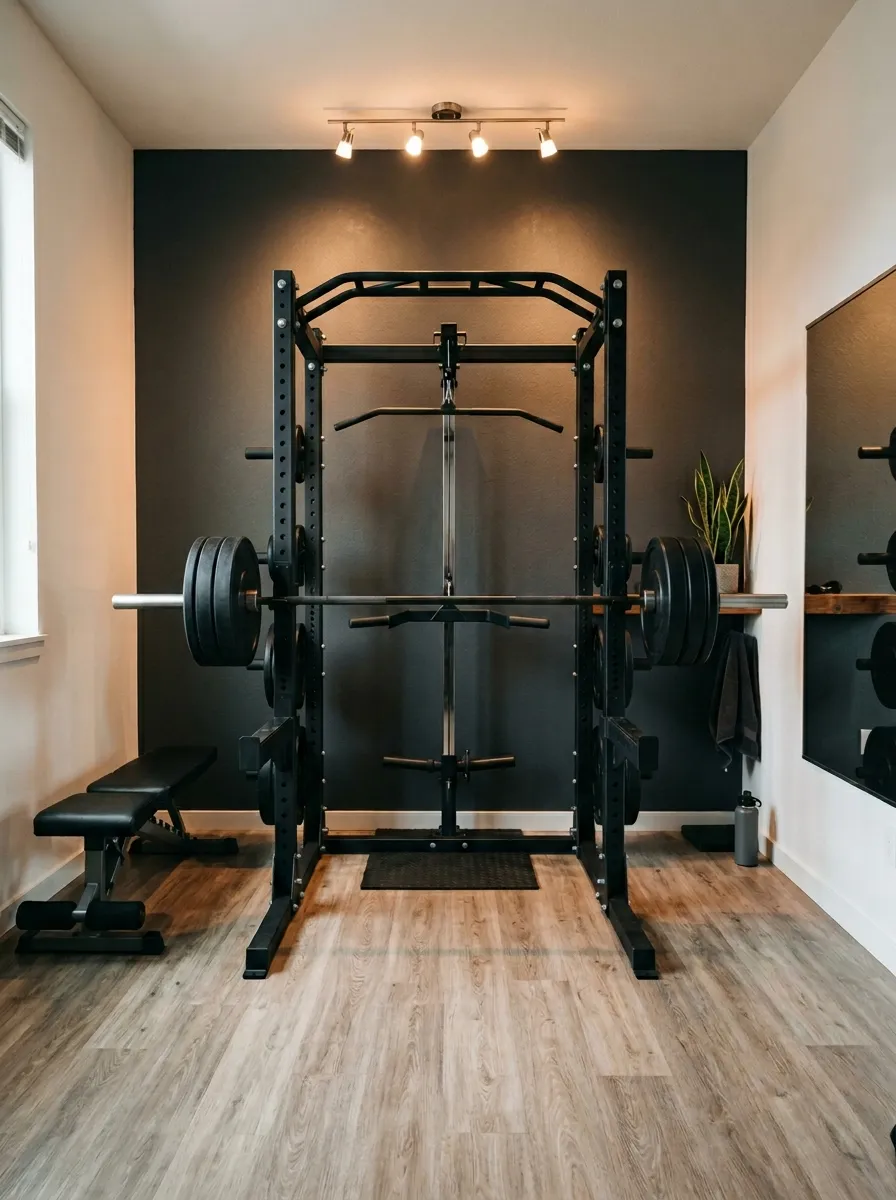
Color changes how a space feels. A bold accent wall in your home gym can shift your entire energy when you walk in.
Dark colors like charcoal gray, deep navy, or forest green make a gym feel powerful and focused. Bright colors like red or orange can feel energizing if you like high-intensity training.
Pick one wall, ideally the one you face most during your workouts. Paint just that wall a strong color. Keep the other walls neutral. This creates contrast without making the room feel heavy.
Paint is one of the cheapest ways to transform a space. A quart of paint can cost as little as eight to fifteen dollars. One wall does not take long to do either.
You can also go bold with a dark ceiling if your space allows it. A black ceiling in a basement gym can make the room feel like a serious training facility.
If you are not ready to commit to a full color, try a peel-and-stick wall panel or removable wallpaper in a bold texture. These cost around twenty to forty dollars for a few panels and give a similar effect without permanent paint.
Test a small area first before committing to any color. Natural and artificial light change how a color looks on a wall.
Install Rubber Flooring Tiles
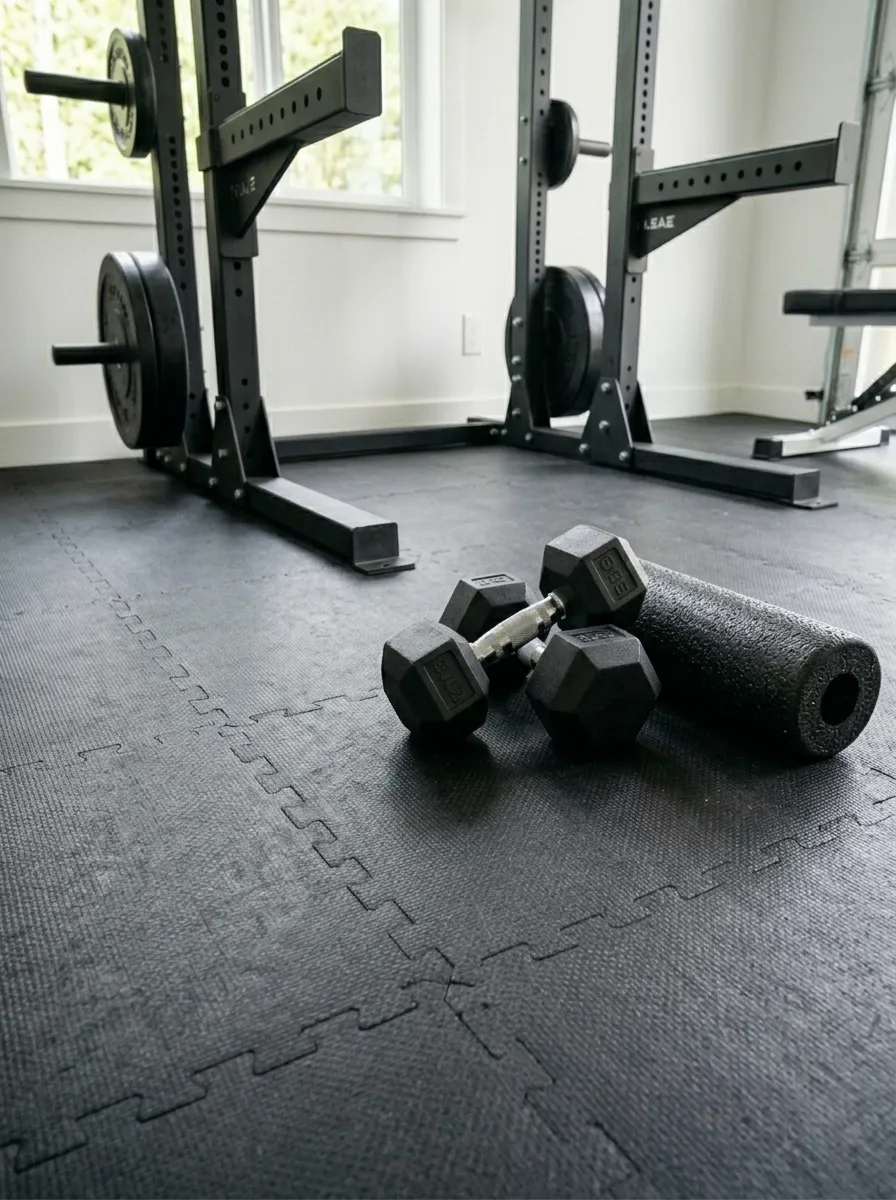
Flooring matters more than most people think. The right floor protects your joints, protects your equipment, and makes your gym look put together instead of makeshift.
Rubber flooring tiles are the gold standard for home gyms. They absorb impact from dropped weights and give you grip during heavy lifts. They also look great and are easy to clean.
You can find interlocking rubber tiles online or at home improvement stores. They come in half-inch and three-quarter-inch thickness. Go with three-quarter-inch if you plan to drop weights regularly.
A basic set of rubber tiles for a small space can cost between fifty and one hundred fifty dollars depending on the size you need. That is a one-time purchase that lasts for years.
Installing them is simple. They click into place like puzzle pieces. No glue, no tools, no professional needed.
If rubber tiles are out of budget right now, horse stall mats from farm supply stores are a great alternative. They are thick, durable, and cost around forty to fifty dollars for a four-by-six-foot mat.
Good flooring also adds to the overall look of your gym. It signals that this is a real training space, not just a corner with a few weights thrown on the carpet.
Hang a Motivational Quote Gallery Wall
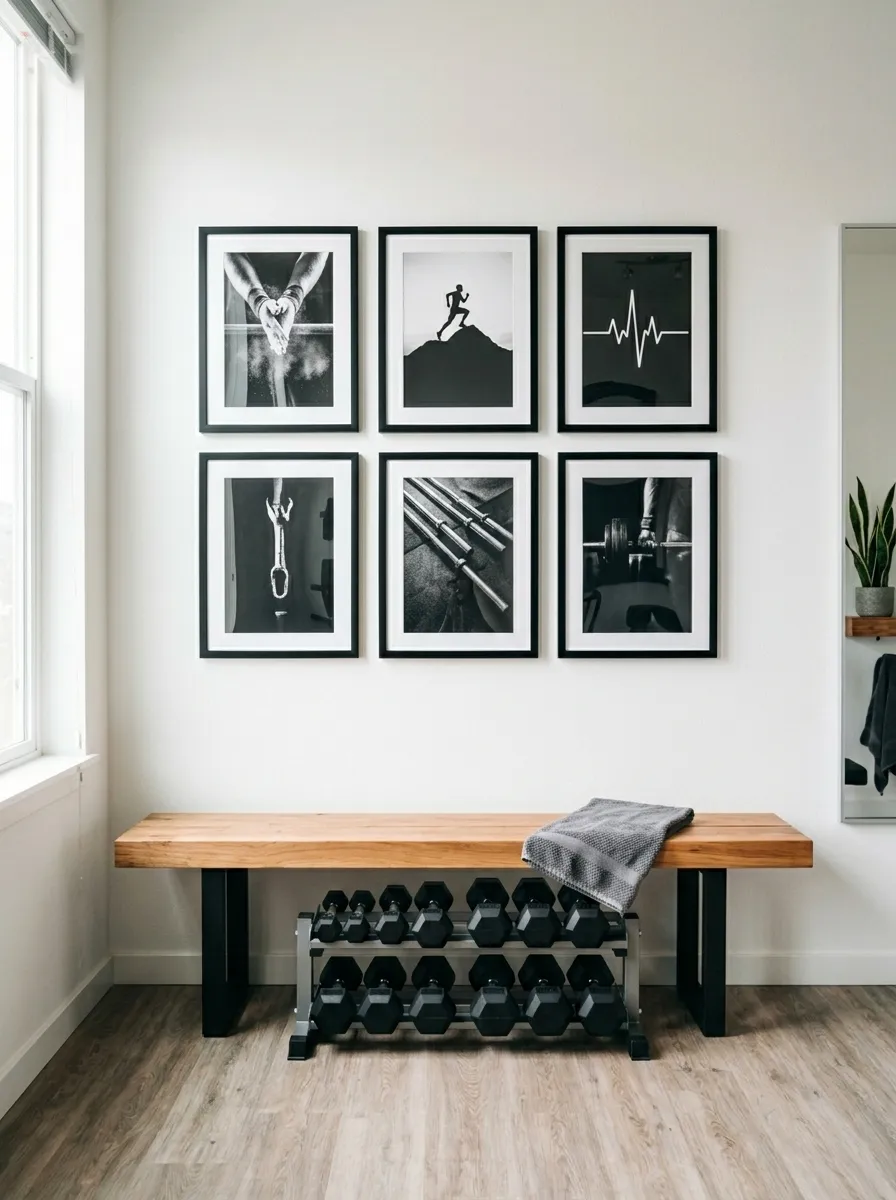
Words on a wall can hit differently during a tough set. A gallery wall of motivational prints is one of the easiest ways to personalize your gym without spending a lot.
Print your favorite quotes at home on plain white paper. Use bold fonts and print them on cardstock for a cleaner look. Frame them in matching black frames from a dollar store or a discount home goods shop.
A set of three, four, or six matching frames arranged in a grid looks clean and intentional. Spacing them evenly makes a big difference in how polished the result looks.
You can also mix quote prints with simple graphic prints. Things like anatomical muscle charts, athletic silhouettes, or black-and-white action photography all fit well in a gym.
Sites like Etsy and Creative Market sell printable gym art for just a few dollars. You buy the file and print it yourself. This keeps costs very low.
The key is consistency. Pick a theme or color palette and stick to it. All black frames with white matting looks sharp. Mixing frame styles can feel messy and distract from the energy of the space.
Swap prints out whenever you want a change. That is the beauty of printable art. Your gallery wall can grow and shift with your goals and mindset.
Add Dimmable LED Strip Lights
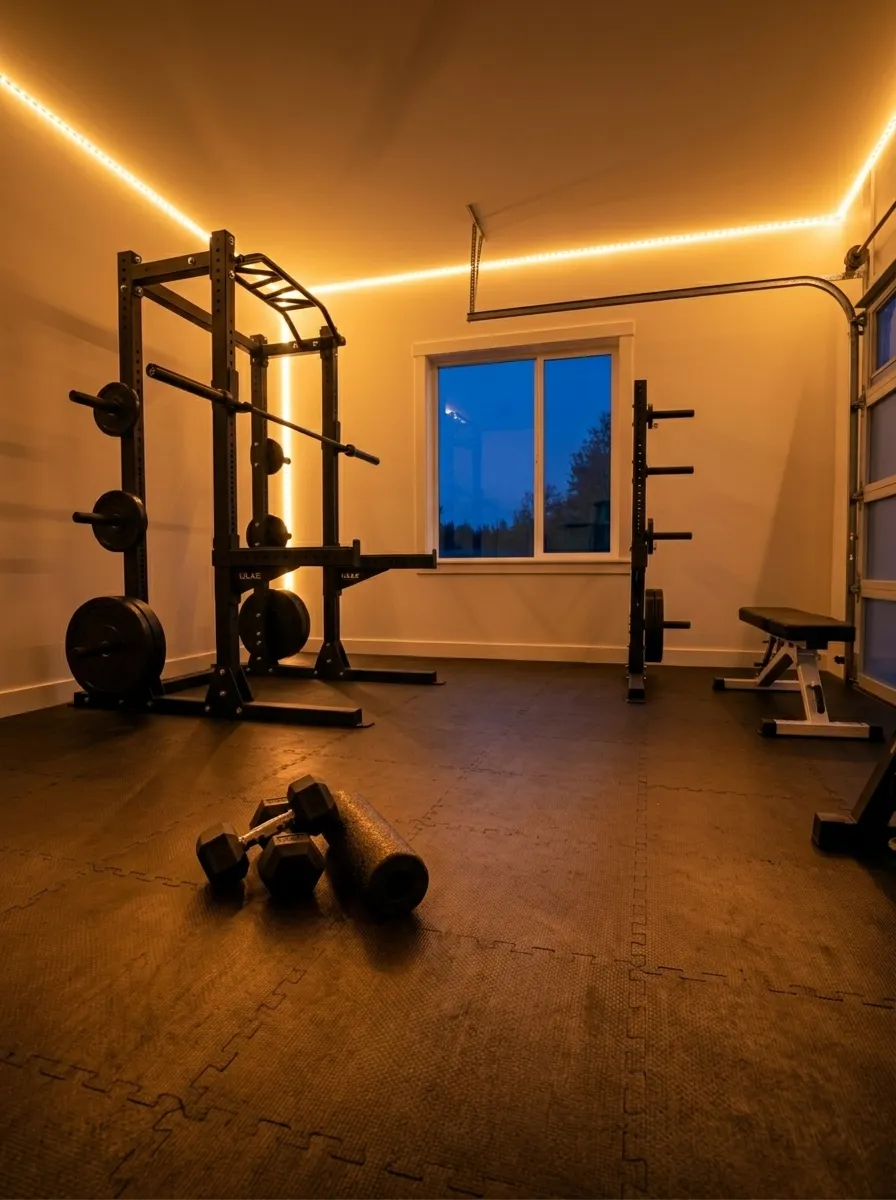
Lighting affects mood more than most people realize. A harsh overhead fluorescent light does not set the same tone as adjustable LED lighting you can control.
LED strip lights are one of the most affordable and fun upgrades you can make to a home gym. A roll of smart LED strips costs around fifteen to thirty dollars and covers a full room.
Mount them along the top edge of your walls or behind shelving units. You get a halo effect that adds depth and dimension to the space.
Smart LED strips connect to your phone via an app. You can set them to any color. Red and orange feel intense. Blue feels calm and focused. White feels clean and clinical.
Some people set the lights to change colors based on their workout playlist. It sounds gimmicky until you actually try it and realize it genuinely changes how hard you push.
You can also add a dimmable ceiling light on a smart switch. Being able to dim the room during a stretch or cool-down session makes your gym feel like a professional space.
Combine LED strips with a solid overhead light for the best results. The strips create atmosphere. The overhead provides practical visibility for reading weights or checking your phone.
Build a DIY Weight Storage Wall
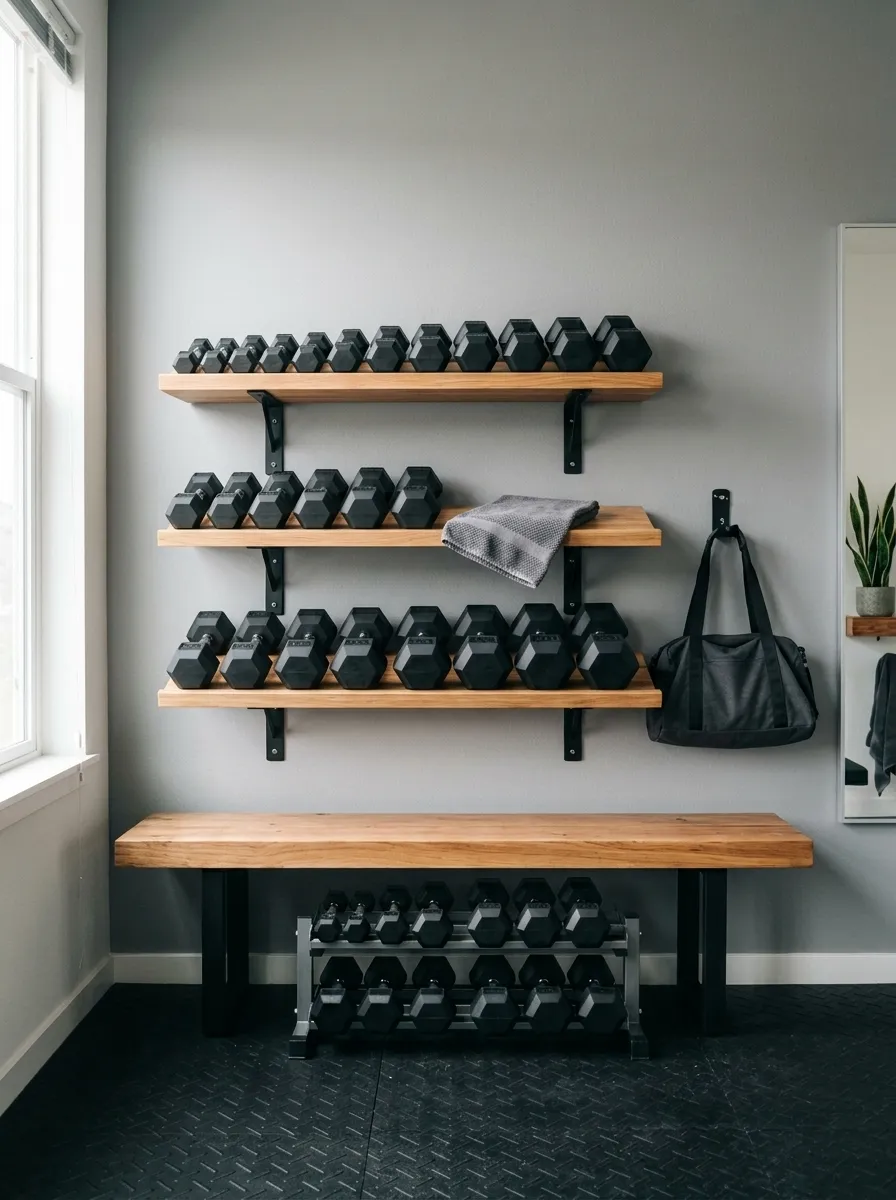
Clutter kills motivation. When your weights are scattered on the floor, your gym feels chaotic and hard to work in. A dedicated weight storage wall solves this immediately.
You do not need to buy an expensive commercial dumbbell rack. Build your own with a few basic supplies.
Purchase wooden boards from a hardware store and wall-mount them using heavy-duty brackets. Sand them smooth, stain or paint them, and they look great. Mount them at a height that works for your weights and how you like to access them.
You can also use metal pipe shelving for a more industrial look. Black pipes and wooden boards together create a gym-style aesthetic that looks custom and deliberate.
Label each shelf by weight. This keeps everything organized and speeds up your workout since you are not hunting for the right dumbbell mid-set.
If you have kettlebells, add a low shelf near the floor. Resistance bands can hang on simple hooks beside the shelf.
A wall-mounted storage solution also frees up floor space. In a small gym, floor space is everything. When your weights are on the wall, you have more room to move, stretch, and train without stepping around equipment.
This is a weekend project that costs between thirty and seventy dollars depending on materials. The results look far more expensive than they are.
Hang a Punching Bag for a Raw, Gym Feel
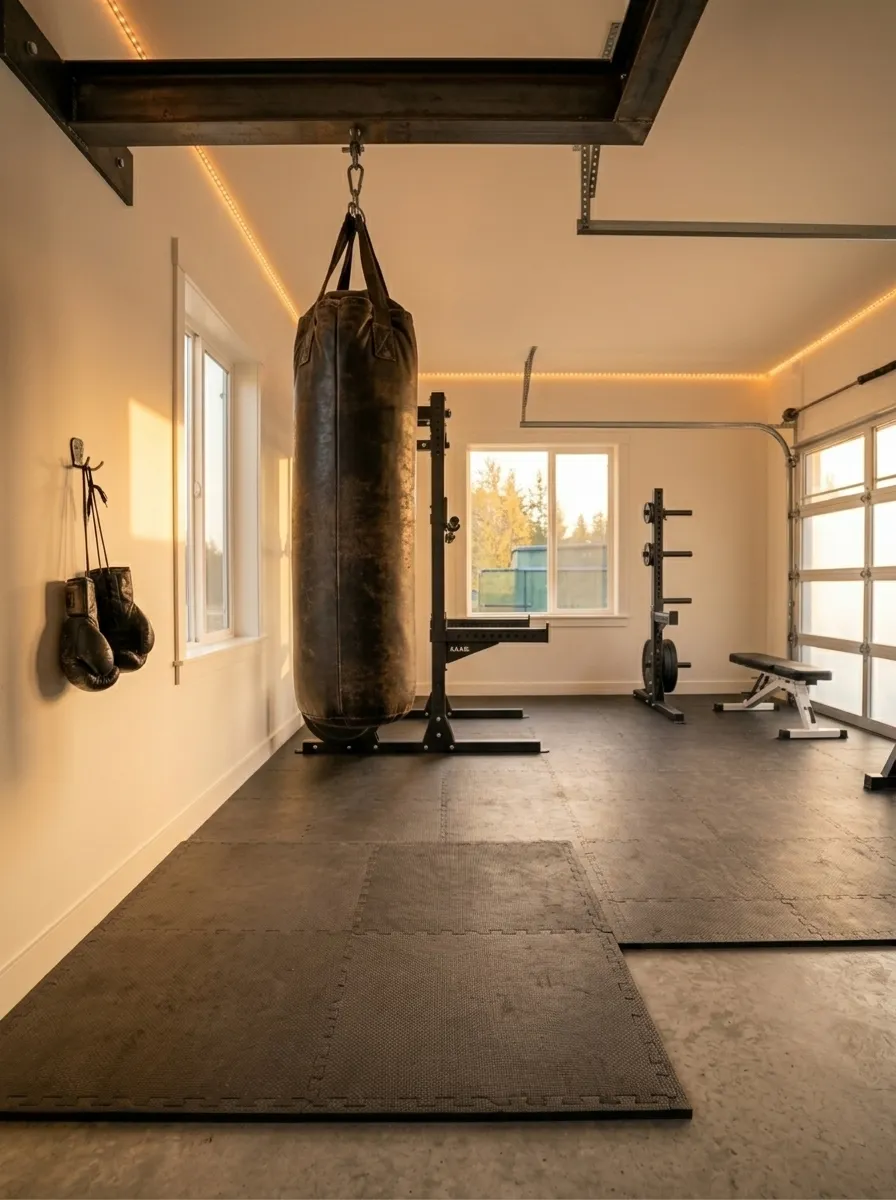
A punching bag hanging from the ceiling gives a home gym an instantly serious, athletic look. Even if you never box, the visual alone changes the entire energy of the room.
A standard heavy bag can be found online for fifty to one hundred dollars for a basic model. Hanging it properly is the key step. You need to find a ceiling joist or use a heavy-duty beam mount.
If you do not have a ceiling setup that works, a freestanding punching bag stand solves the problem. These hold the bag at the right height and can be moved around the room.
The bag becomes a functional decor piece. It signals that this space is for serious work. It also gives you a great option for cardio, stress relief, and upper body conditioning.
Pair it with a pair of boxing gloves hung on a nearby hook. The visual combination of the bag, gloves, and surrounding gym equipment feels raw and motivating.
Wrap the bag chain with a thin piece of rope or cover it with a decorative sleeve if the chain bothers the look. Small details like that matter in a well-thought-out space.
Even if you only use the bag once a week, having it there changes the character of your home gym completely.
Frame Your Personal Records on the Wall
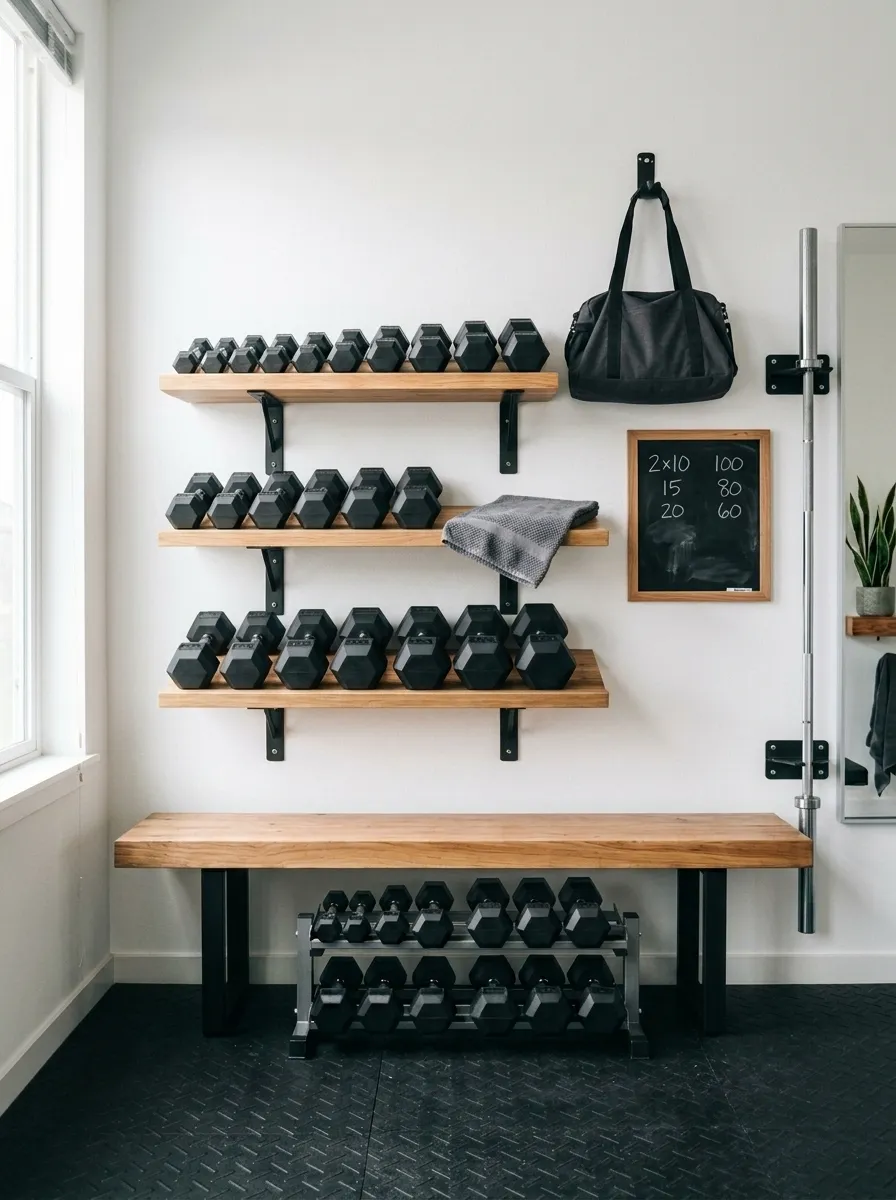
Your personal records are worth celebrating. Writing them down and putting them on the wall keeps your goals in front of you every single training session.
A simple chalkboard or whiteboard mounted near your main lifting area works perfectly. Write your current records: your heaviest squat, your fastest mile, your longest plank. Update them every time you beat one.
This turns your gym wall into a living record of your progress. Seeing last month’s numbers right in front of you is one of the most powerful reminders that you are improving.
You can buy a small chalkboard frame for five to ten dollars at most craft stores. Mount it at eye level so you see it naturally during rest periods.
Some people also frame their first race bib, a photo from a competition, or a screenshot of a fitness milestone. These personal items make the gym feel like yours in a way that no purchased decor can replicate.
The goal is to fill your gym with proof that you are capable. When you are tired mid-workout and considering stopping early, looking up at your best numbers reminds you what you have already done.
Progress is the most motivating thing in fitness. Make it visible.
Use Industrial Pipe Shelving for Gear Storage
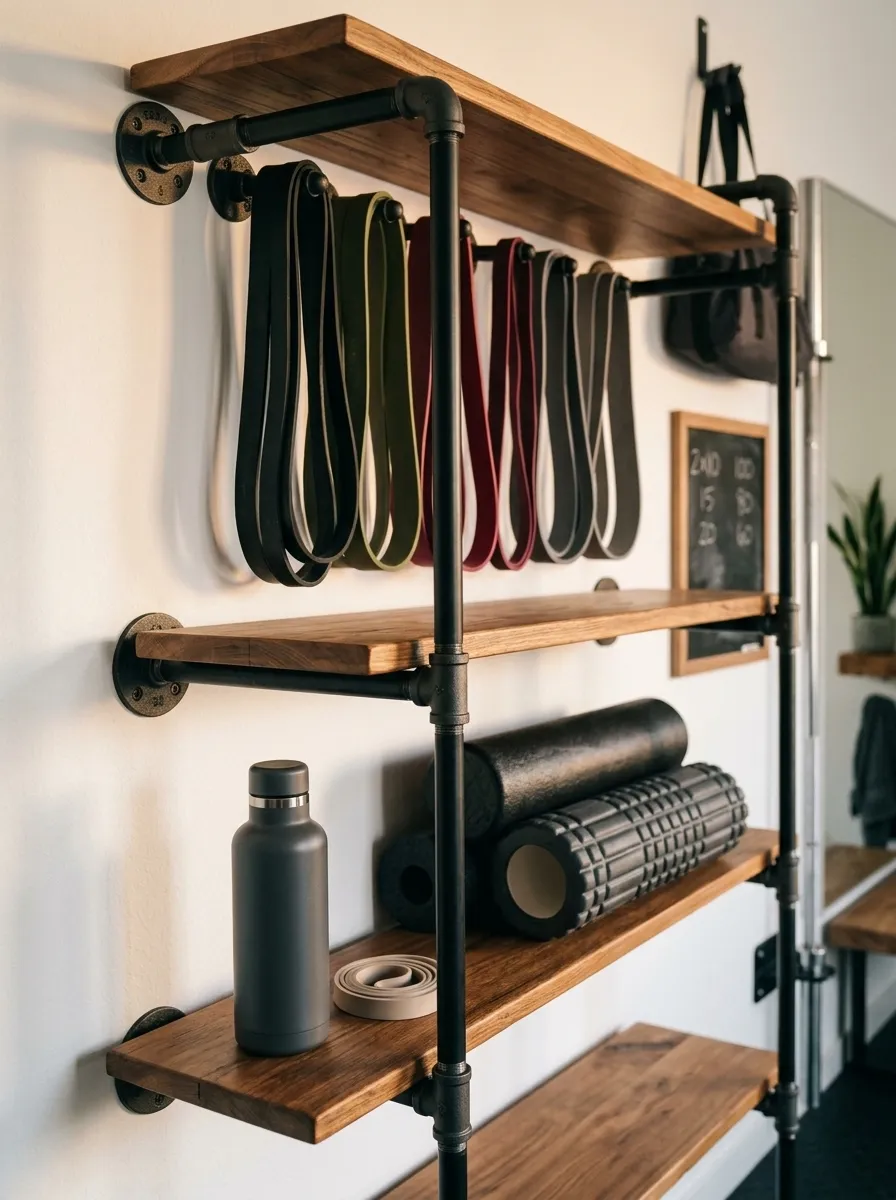
Industrial pipe shelving looks sharp in a gym environment. It gives off a raw, functional aesthetic that fits perfectly with weights and rubber flooring.
These shelves are made with black iron plumbing pipe and wooden planks. You can find full kits online or build them yourself by purchasing the components separately from a hardware store.
A basic three-tier shelf takes about an hour to put together and costs between forty and eighty dollars depending on size. The result looks like something from a high-end gym boutique.
Use the shelves to store your foam roller, resistance bands, jump rope, water bottle, and any other small gear. Organized accessories on a stylish shelf look intentional rather than cluttered.
You can also use the pipes to hang hooks for towels, gym bags, or jump ropes. This turns the shelving unit into a full storage station rather than just a flat shelf.
Paint the wood shelves a dark stain for a dramatic look. Or keep them light and natural for contrast against a dark wall. Either way, the black pipes give a strong visual anchor.
This type of shelving also holds a lot of weight. It is built for plumbing pipes, after all. Your gear is safe on it.
Add a Plant or Two for Life and Energy
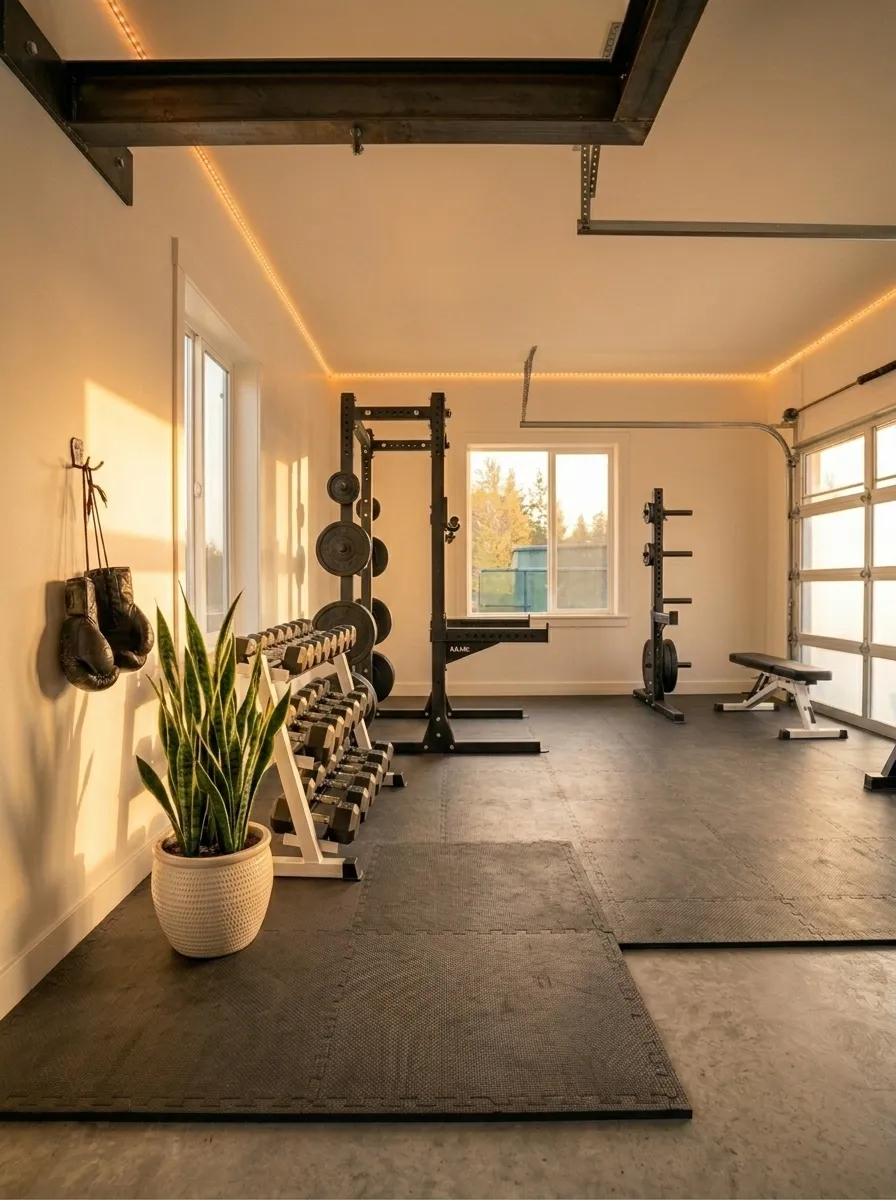
Plants in a gym might seem unusual. But they make the space feel alive and less sterile. A room with a plant in it simply feels better to be in.
Snake plants and pothos are both excellent choices for a gym. They thrive in a range of light conditions, do not need frequent watering, and grow well indoors. Both are very affordable.
A large snake plant in a corner near a window adds a dramatic visual element. The tall, upright leaves complement the vertical lines of gym equipment in a clean way.
If your gym does not get much natural light, pothos work in low-light conditions. Hang one in a macramé hanger on the wall for a textural element that softens the look of the space.
Real plants clean the air slightly and add humidity to a dry room. After a hard workout in a small space, that matters.
If caring for real plants is not realistic for you, high-quality faux plants now look very convincing. A quality artificial snake plant costs around twenty to thirty dollars and requires zero maintenance.
Even one plant changes the visual balance of a gym. It adds warmth, organic texture, and color that no paint or print can replicate.
Hang Action Sports Photography
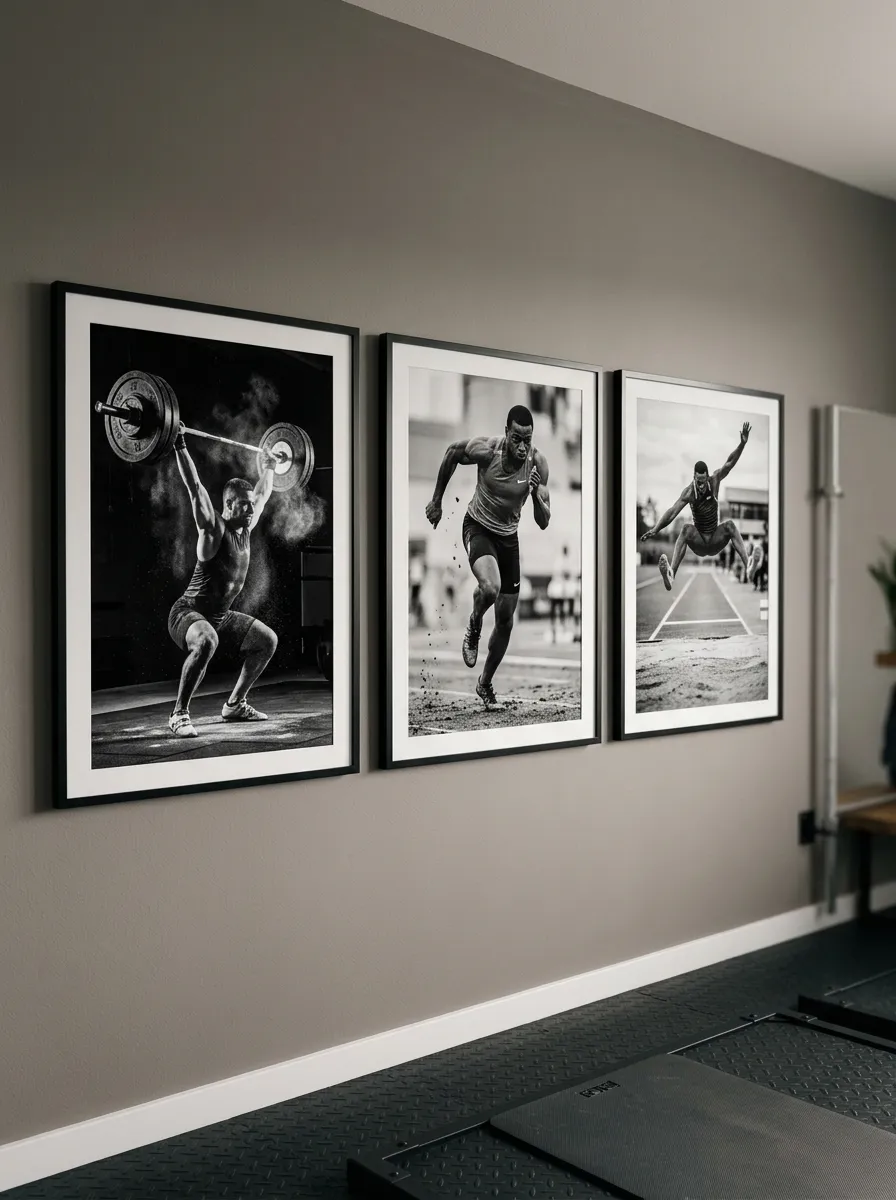
Sports photography on a gym wall creates energy. There is something about seeing elite athletes pushing through a lift or sprint that fires you up before your own session.
You do not need to buy expensive gallery prints. Sites like Unsplash and Pexels offer free high-resolution sports photography that you can download and print at home or through an online print service.
Get them printed at a local print shop or through an online service. A large twelve-by-eighteen-inch print typically costs between five and fifteen dollars. Frame it and you have a gym-quality piece of art.
Black and white photography works especially well in a gym setting. It feels dramatic without competing with the colors in the room.
Choose images that speak to your sport or training style. A powerlifter benefits from seeing world-class lifters at their peak. A runner might prefer marathon imagery. Personalizing the selection makes the wall feel curated rather than generic.
Hang them in a row or grid at a height where you see them while standing. You want these images in your line of sight during rest periods when your mind needs a push.
This is a high-impact, low-cost addition that completely changes the character of a home gym wall.
Create a Dedicated Stretching Zone
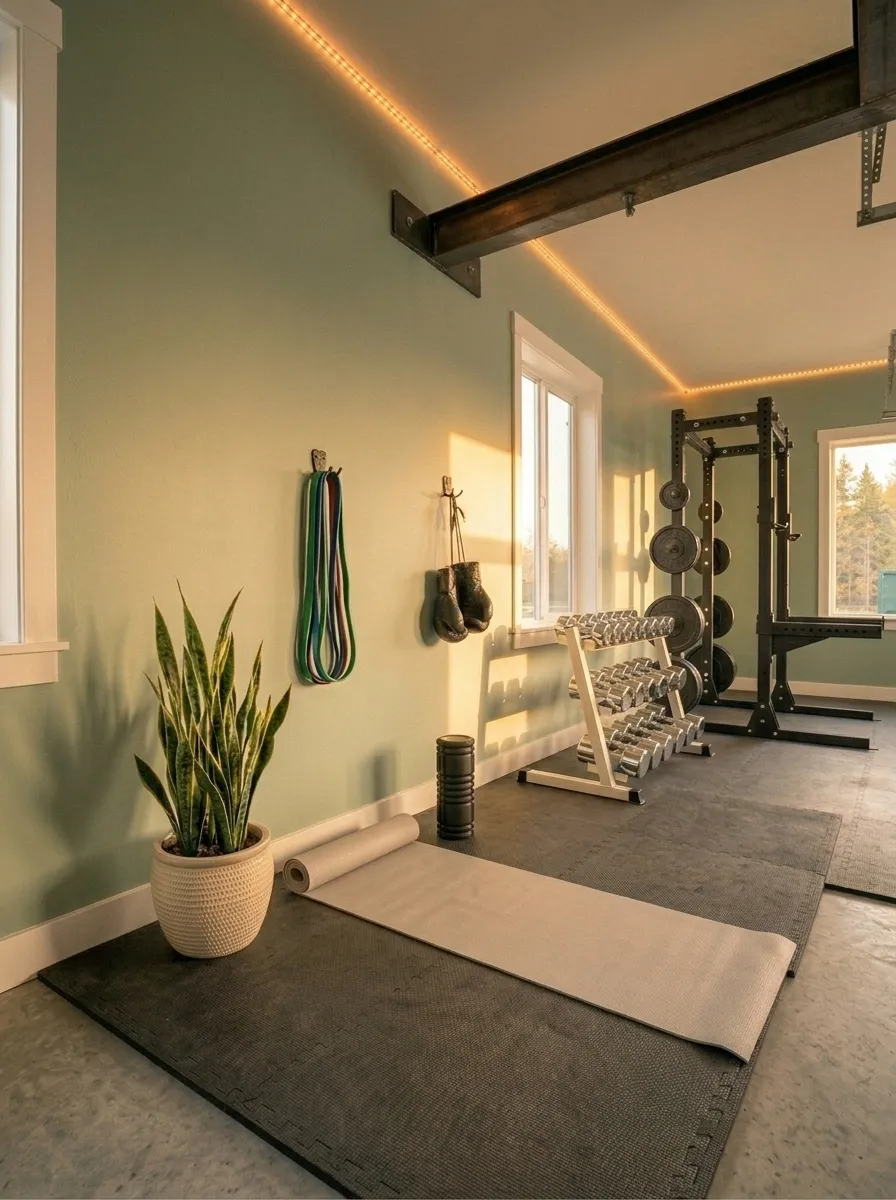
A dedicated stretching zone makes recovery feel as important as the workout itself. It signals that your gym is a full-service training space, not just a place for lifting.
Pick a corner or wall area and claim it specifically for mobility work. Roll out a yoga mat and leave it there permanently. This visual reminder encourages you to actually stretch instead of skipping it.
Mount a few hooks on the nearby wall for foam rollers, resistance bands, and lacrosse balls. Having everything within reach removes any excuse not to stretch.
You can paint this corner a different shade or add a plant here to make it feel calmer and more distinct from the main training area. The contrast between a high-energy lifting zone and a softer recovery zone makes both feel more purposeful.
A good quality yoga mat costs between fifteen and forty dollars. Foam rollers start at around ten dollars. Resistance bands are available in sets for under fifteen dollars.
Add a small Bluetooth speaker nearby for recovery playlists or guided stretching sessions. A dedicated audio setup in this corner makes the experience feel intentional and therapeutic.
Treating recovery as a feature of your gym, rather than an afterthought, leads to better long-term results and fewer injuries.
Install Wall-Mounted Pull-Up and Dip Bars
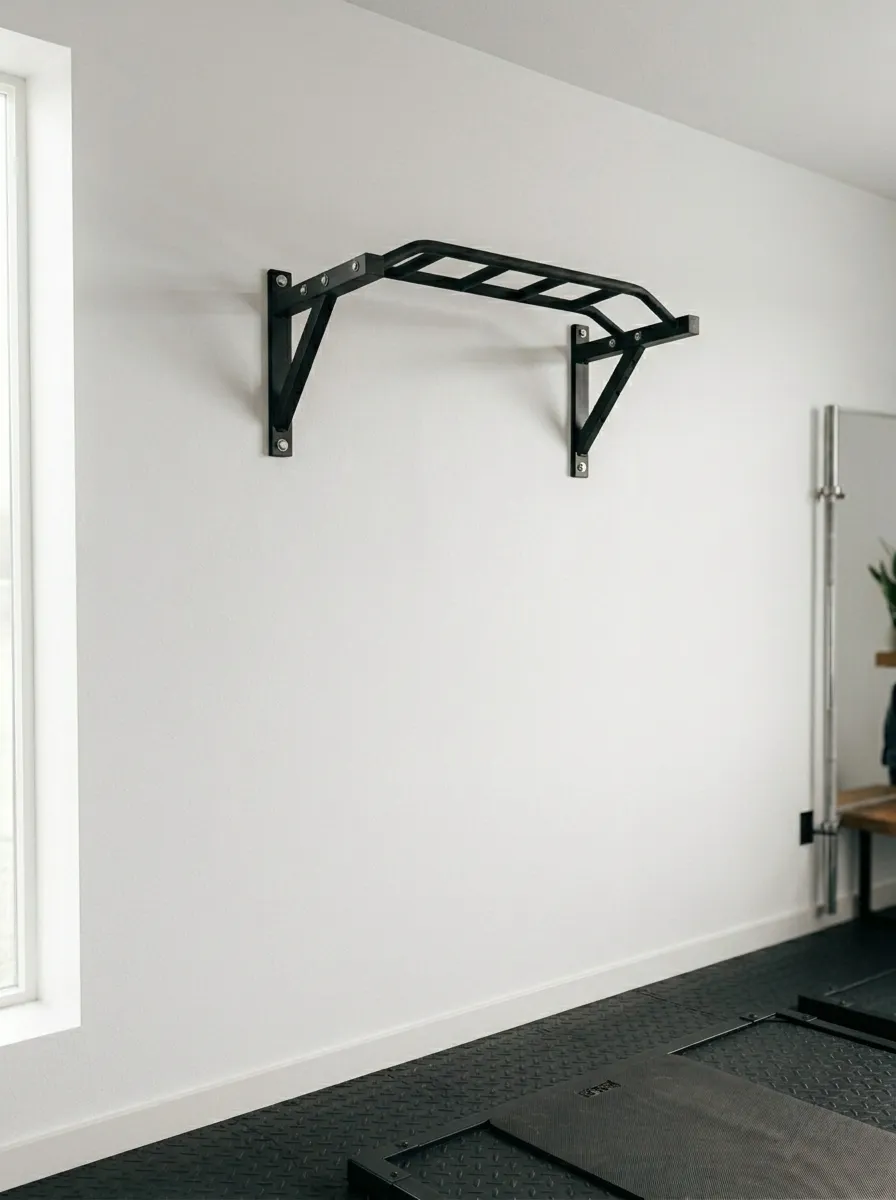
A wall-mounted pull-up bar is both a functional training tool and a strong visual statement in a home gym. It signals that serious bodyweight training happens in this space.
Wall-mounted bars are more stable than doorframe versions and they free up the doorway for actual use. They are mounted directly into the studs of your wall, making them very secure for heavy pulling exercises.
The cost varies widely. Basic wall-mounted pull-up bars start at around thirty to fifty dollars. More advanced versions with dip handles or multi-grip options run closer to eighty to one hundred fifty dollars.
Installation takes under an hour with a stud finder, drill, and the included hardware. Finding the wall studs is the most important step. The bar should be anchored into at least two solid studs.
Mount it at a height where your feet clear the floor comfortably when hanging. For most people, this means mounting it seven to eight feet from the floor.
Add a set of gymnastic rings to the bar for even more exercise variety. Rings can be stored by hanging them from the bar when not in use, which adds a striking visual element to the wall.
A pull-up bar on the wall makes your gym feel athletic and complete.
Use Cable Management to Clean Up the Look
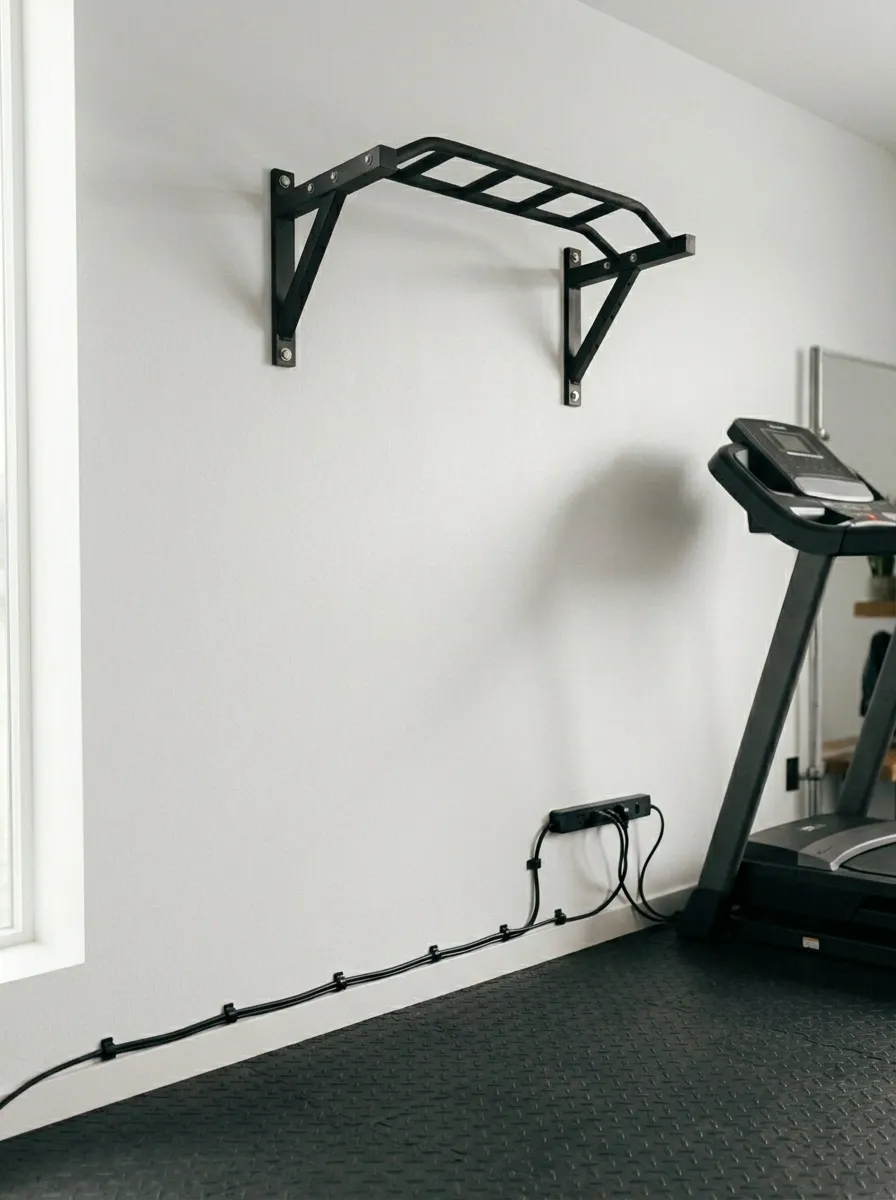
Messy cables ruin the look of any space. In a gym with multiple machines, a TV, a speaker, and LED strips, cables can quickly become chaotic.
Cable management is one of the easiest overlooked upgrades. It costs almost nothing and makes a huge difference in how clean and organized your gym looks.
Cable clips or adhesive cable raceways run along the base of the wall or along the top edge near the ceiling. They hold cables flat against the surface so they disappear visually.
You can find a pack of fifty adhesive cable clips for under five dollars online. White clips on a white wall are nearly invisible. This is the kind of detail that separates a gym that looks professional from one that just looks like a room with equipment.
Use velcro cable ties to bundle multiple cords together before routing them. This reduces the visual tangle and makes individual cables easier to manage.
If you have a TV mounted on the wall, run the power and HDMI cables through an in-wall cable management kit. These cost around fifteen to twenty-five dollars and create a completely wireless appearance.
Clean cable management is a form of gym decor. It shows intentionality and care in how the space is designed.
Mount a Smart TV or Monitor Facing Your Main Equipment
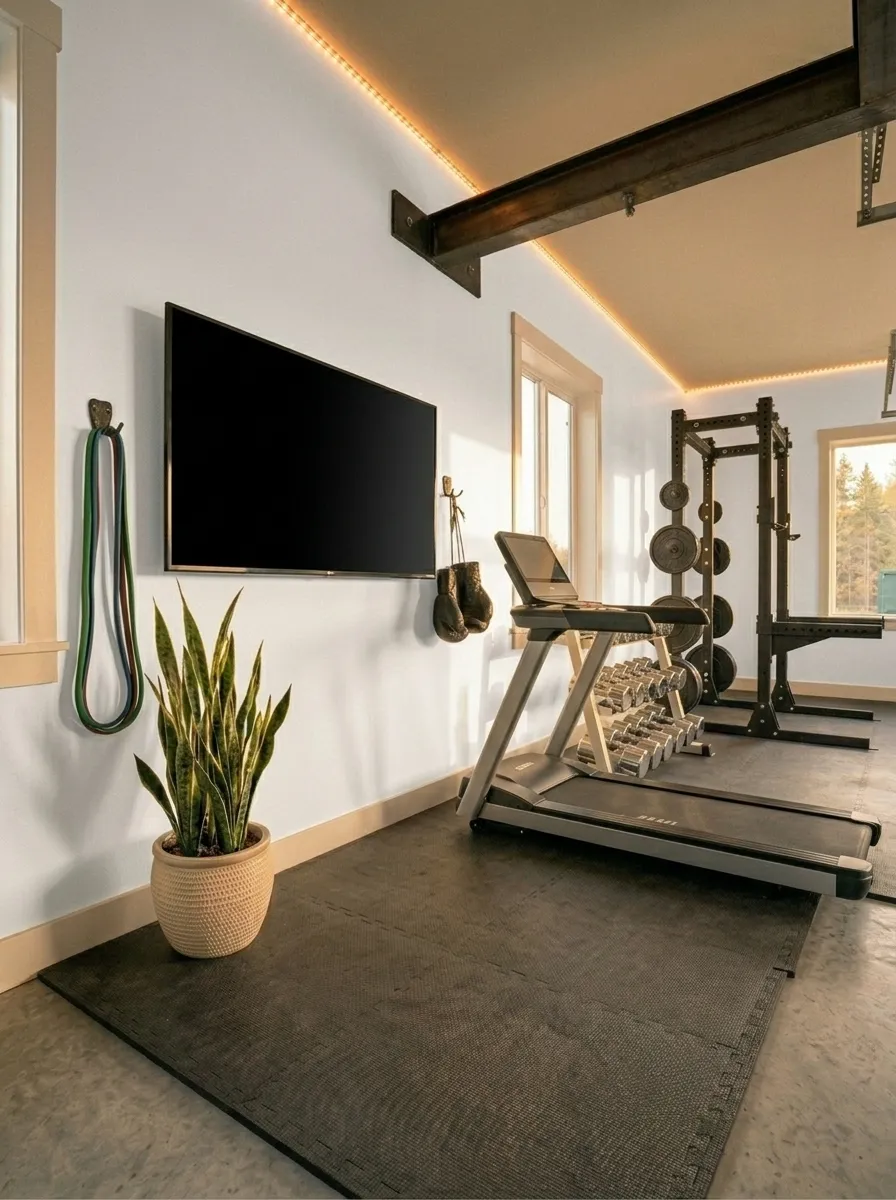
Having a screen in your gym changes how you train. You can follow workout videos, watch sports for motivation, stream your favorite show during cardio, or display your training plan.
A TV mount costs between fifteen and forty dollars. If you already have a spare TV, the setup is nearly free.
Position the screen at eye level relative to where you will be standing or training. If your main cardio equipment is a treadmill, mount the TV directly in front of it at the height you would view comfortably while walking or running.
For strength training areas, position the screen where you can glance at it between sets without turning away from your mirror or equipment.
Use a swivel TV mount so you can angle the screen toward different areas of the gym depending on what you are working on that day.
Connect a streaming stick like a Roku or Amazon Fire Stick so you can access YouTube workouts, fitness apps, or sports channels without needing a full smart TV.
Mount the TV into a stud and hide the cables with a raceway. The result looks intentional and built-in rather than just propped up.
A screen on the wall also serves as a visual anchor point, making the gym feel more complete and thought-out.
Paint or Tile the Ceiling for a Polished Finish
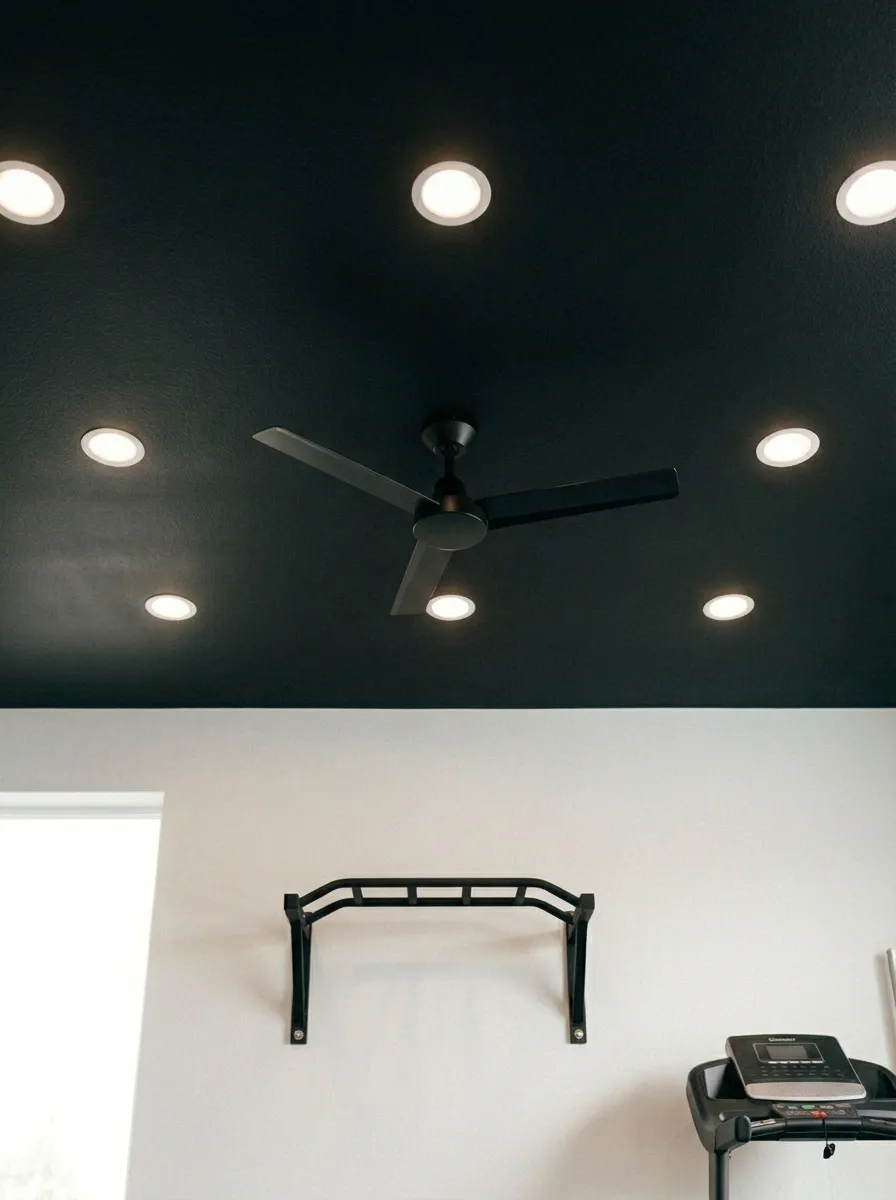
Most people focus entirely on the walls and floor. The ceiling is an easy win that almost nobody thinks about.
Painting your gym ceiling a dark color, typically black or charcoal, creates a dramatic and immersive feel. It makes the space feel intentionally designed rather than like a converted spare room.
This works especially well in basement gyms where ceiling height can feel oppressive. A dark ceiling actually draws the eye away from the low height and makes it feel more like a styled space than a box.
Use flat or matte finish paint on the ceiling for the best result. Matte absorbs light rather than reflecting it, which reduces glare and makes the room feel more controlled.
If you have exposed ductwork or pipes in a basement ceiling, paint everything the same dark color. When all the pipes and ducts are painted black alongside the ceiling, they stop looking messy and start looking industrial and intentional.
Add recessed LED lighting or a ceiling fan to complement the dark ceiling. A matte black ceiling fan above a dark rubber floor with industrial shelving creates a cohesive, high-end gym aesthetic.
This is a paint and roller project. The materials cost very little. The visual impact is significant.
Add a Chalkboard Wall for Tracking and Goals
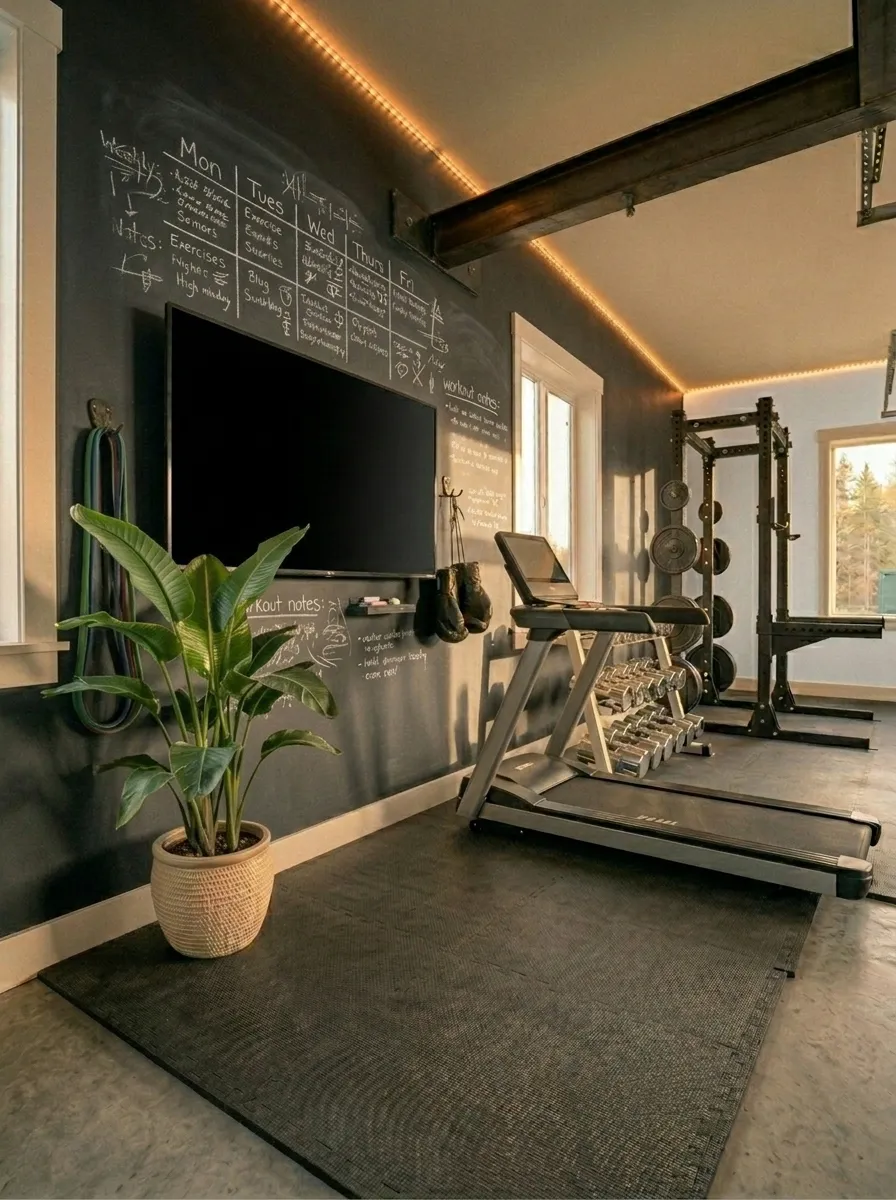
A chalkboard wall is one of the most functional and visually interesting things you can add to a home gym. It combines art, planning, and daily motivation in one surface.
Chalkboard paint comes in a can and is applied just like regular paint. Two coats on one wall creates a surface you can write on, erase, and rewrite as many times as you like. A quart of chalkboard paint typically costs around fifteen to twenty dollars.
Use it to write out the week’s training plan every Sunday. Draw a checklist of exercises. Write a goal you are working toward. Sketch out a new workout routine you want to try.
The wall becomes an interactive part of your gym. It changes regularly, which keeps the space from feeling static or stale.
You can also use it for tracking things like water intake, sleep, or workout streaks. A simple weekly habit tracker drawn in chalk takes two minutes and keeps you accountable.
For an upgraded version, frame a section of the chalkboard wall with simple molding to create a defined writing zone. This makes it look more intentional and less like a rough wall treatment.
Chalkboard walls work in any sized gym space. Even a small section of wall can hold enough information to keep you organized and focused.
Use Barbell Collars and Equipment as Display Objects
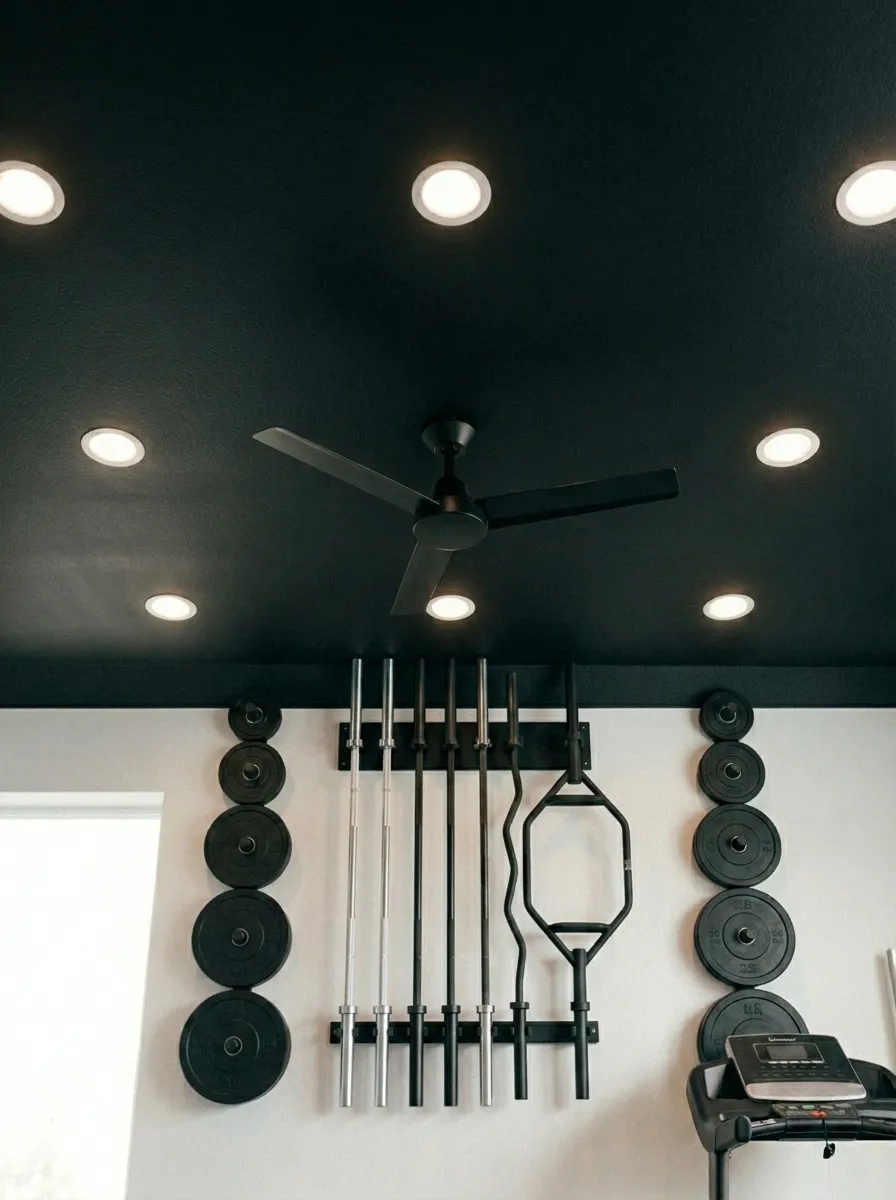
Your gym equipment itself is part of the decor. When it is organized and displayed well, it looks like a design choice rather than just stuff stored in a room.
A wall-mounted barbell rack holds one or more barbells horizontally against the wall when not in use. This keeps the bar off the floor, protects it, and looks like a deliberate display choice.
Weight plates stored by size on a plate tree or wall-mounted pegs create a visual progression from smallest to largest that is satisfying and easy to navigate during workouts.
Collars, clips, and attachments can be hung on simple hooks near the barbell rack. Keeping them nearby means you grab them naturally rather than searching the room.
The key to making equipment look good as decor is organization and consistency. When everything has a dedicated place and goes back there after each use, the gym looks sharp all the time.
Color can play a role here too. Some people choose equipment in one or two accent colors, like red and black or all matte black, so everything has visual cohesion.
Even if you bought equipment over time from different sources, organizing it by size, color, or type creates a curated look that feels intentional.
Well-displayed equipment turns function into form.
Hang a Wall Clock Built for Intervals
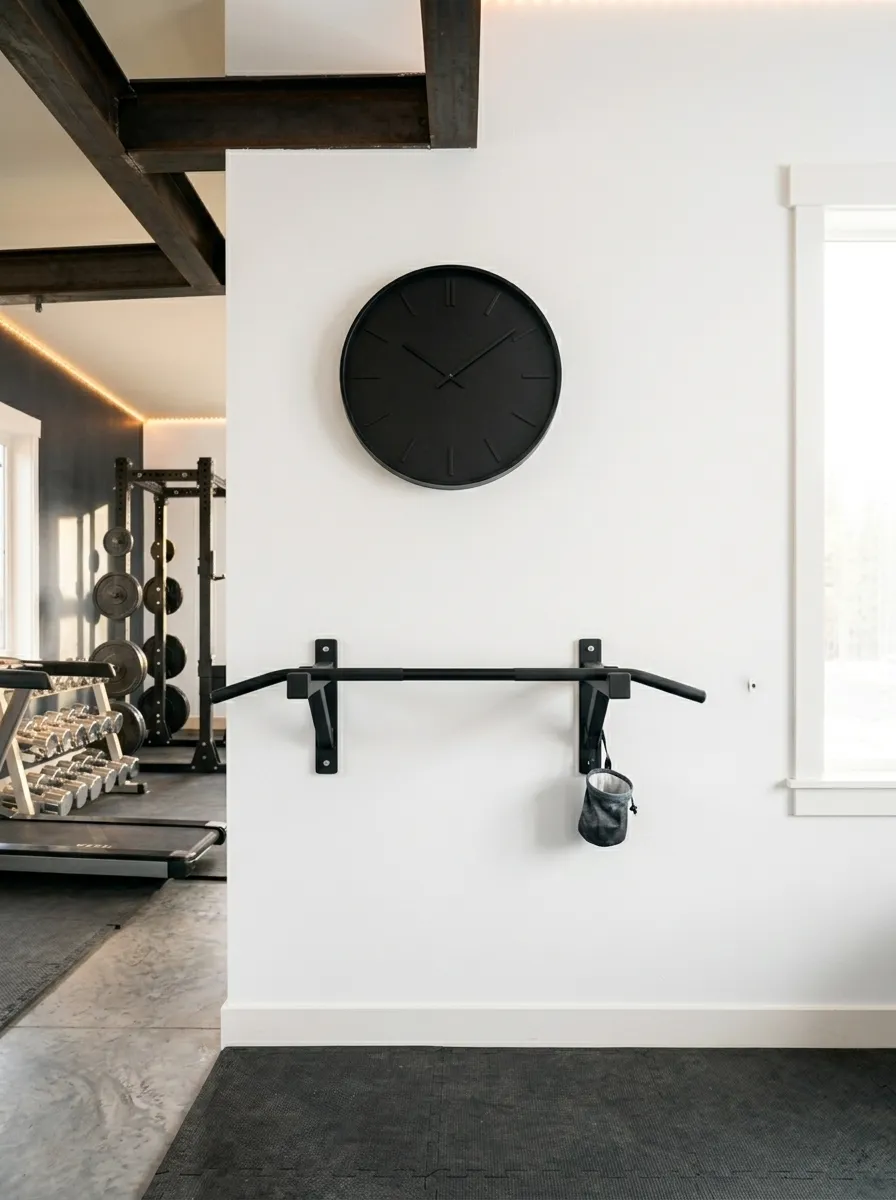
A wall clock in a gym is practical decor. You use it constantly during interval training, rest periods, and timed sets.
A large, easy-to-read clock mounted on the wall facing your main training area means you are never reaching for your phone mid-workout. This reduces distraction and keeps you in a training flow.
Look for clocks specifically designed for gyms or workout spaces. These typically have large numbers, minimal styling, and a sweep-second hand that makes timing intervals easy and precise.
Some gyms use interval timers instead of standard clocks. A programmable interval timer can be set for work-to-rest ratios and mounted on the wall like a clock. These start at around twenty dollars.
For a cleaner aesthetic, choose a clock with a matte black or white face and matching frame that coordinates with your gym’s overall color palette.
Mount it at eye level from where you train most frequently. You want to glance up and immediately know how much time has passed without any searching or squinting.
A well-placed clock also serves as a visual anchor point on a bare wall. In a gym where most walls are dedicated to mirrors or equipment, a clock fills space with purpose and function.
Time is one of your most important training variables. Make it visible.
Create a Motivational Mural with Wall Decals
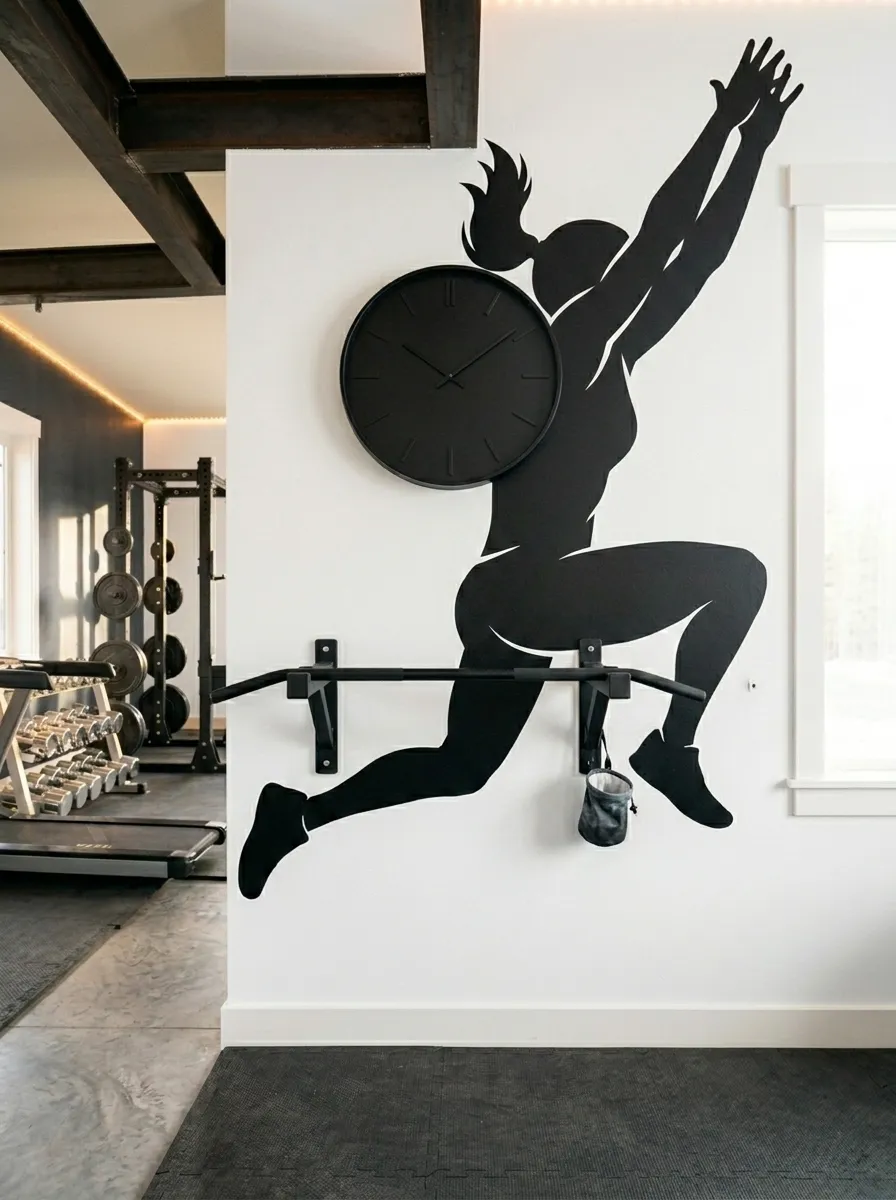
Wall decals are a low-commitment, high-impact way to add art and personality to a gym wall. They look great, peel off cleanly, and cost very little.
You can find athletic silhouette decals, inspirational graphic designs, and custom text decals on sites like Etsy, Amazon, and wall decal specialty shops. Prices start at around ten to twenty-five dollars for a full wall piece.
Large graphic decals work especially well on a neutral wall in a small gym. They create the impression of a mural without any painting skill or permanent commitment.
Athletic silhouettes showing lifters, runners, or fighters in motion add dynamic energy to an otherwise static wall. Position them on the wall you face most during training.
For a more personalized touch, order a custom decal with your name, a quote that matters to you, or a symbol related to your sport. Many Etsy sellers offer custom sizing and color options at reasonable prices.
The application is straightforward. Clean the wall, peel the backing, and smooth the decal flat with a credit card to remove air bubbles.
Removing them is equally simple. Most quality decals peel off without leaving residue or damaging paint.
Decals are perfect if you rent your space or simply do not want to make permanent changes to the walls.
Conclusion
Your home gym does not need to be expensive or elaborate to work well. Every single idea on this list is achievable on a realistic budget with a little time and effort. The goal is simple: build a space that you actually want to walk into every single day.
Start with one or two changes that feel most doable for your situation. Maybe that is rubber tiles and a mirror. Maybe it is a bold paint color and a chalkboard wall. Even small improvements compound over time into a space that feels genuinely yours.
The best gym in the world is the one you show up to consistently. When your home gym looks and feels good, showing up stops feeling like a chore and starts feeling like something you choose. Take that first step this weekend. Your future self will thank you every time you walk through that door.