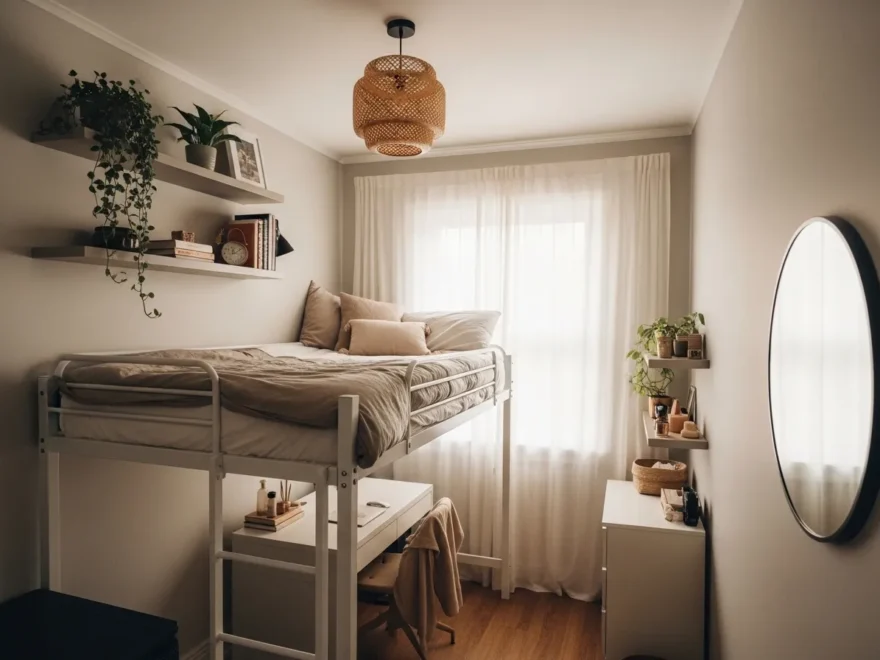
Small room decor ideas don’t have to feel like a closet. With the right choices smart furniture, clever lighting, and a few optical tricks even the tiniest space can feel open, airy, and totally livable. Whether you’re working with a studio apartment, a kids’ bedroom, or a cramped rental, there are dozens of simple, affordable ways to make every square foot work harder. These small room decor ideas are practical, budget-friendly, and easy to pull off on your own. No contractor required. If you’re also exploring gallery wall decor ideas, arranging artwork, photos, and framed prints thoughtfully can add personality and visual depth without taking up valuable floor space.
1. Paint the Walls a Light, Airy Color
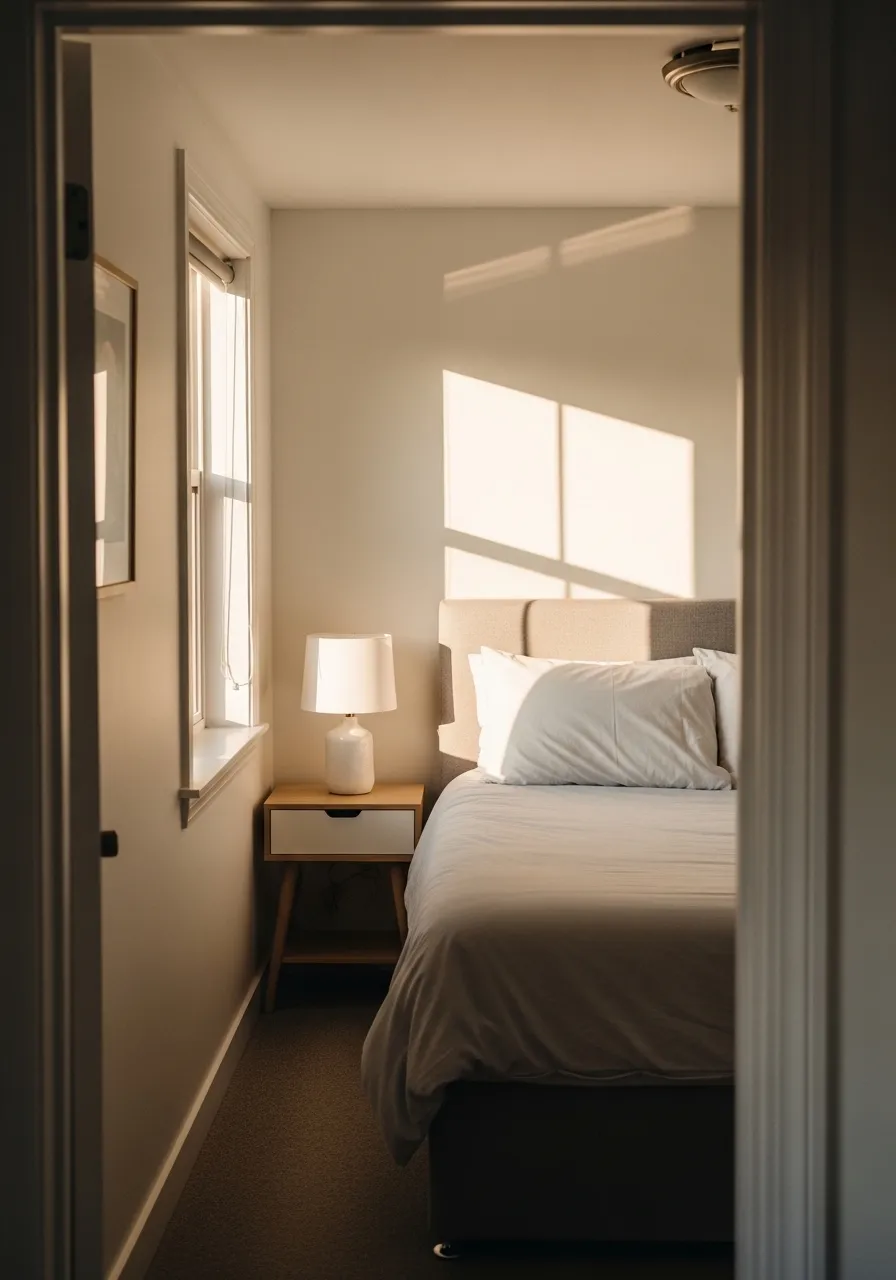
Light colors make walls feel like they’re stepping back.
White, cream, soft grey, and pale sage are your best friends in a small room. They reflect natural and artificial light, which makes the space feel larger than it is.
Dark walls absorb light and close a room in. Light walls push them out.
You don’t have to paint everything the same shade. Try painting the ceiling one shade lighter than the walls. This draws the eye upward and makes the room feel taller.
A gallon of quality paint runs about $30–$50. That’s one of the cheapest transformations you can make.
Pro tip: Use a flat or eggshell finish on walls it reduces glare and hides imperfections better than glossy finishes.
If you’re renting and can’t paint, try removable wallpaper in light tones. Peel-and-stick options from Amazon or Target are surprisingly convincing and easy to apply over a weekend.
2. Use Mirrors to Double the Space
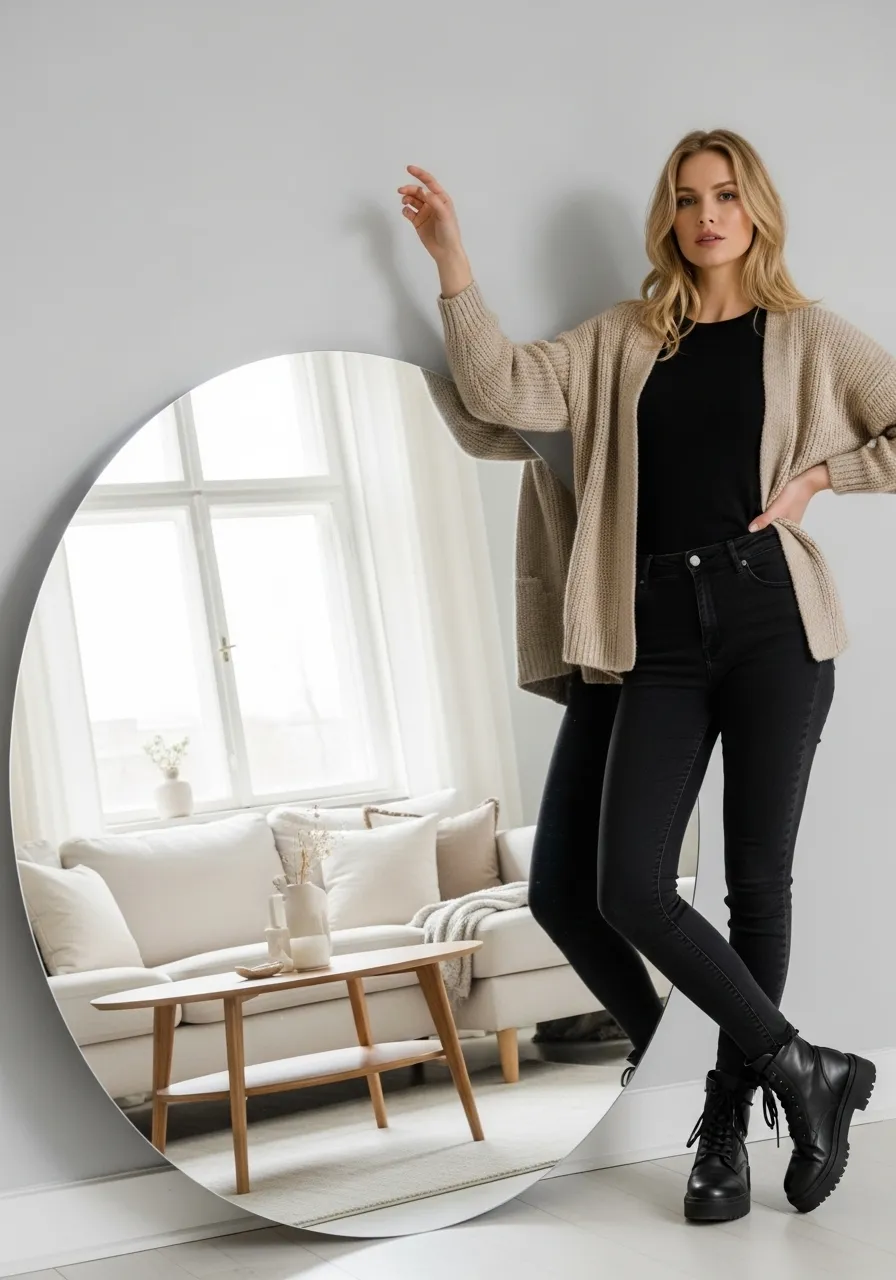
A mirror is the oldest trick in the small-space playbook and it still works every time.
Large mirrors reflect light and create the illusion of depth. A wall that ends with a mirror suddenly doesn’t feel like a wall anymore. It feels like an opening.
You don’t need a custom mirror. Thrift stores and IKEA have large mirrors for $20–$80. Lean one against the wall for a casual look, or mount it for something cleaner.
The best placement: across from a window. The mirror bounces natural light around the room.
Other mirror ideas:
- A gallery wall of small mirrors in mixed frames
- Mirrored furniture like a nightstand or dresser
- A full-length mirror on the back of a door
Avoid placing mirrors where they reflect clutter that doubles the chaos, not the space. Point them toward something pretty, like a window, a plant, or clean wall space.
3. Raise Your Curtains High
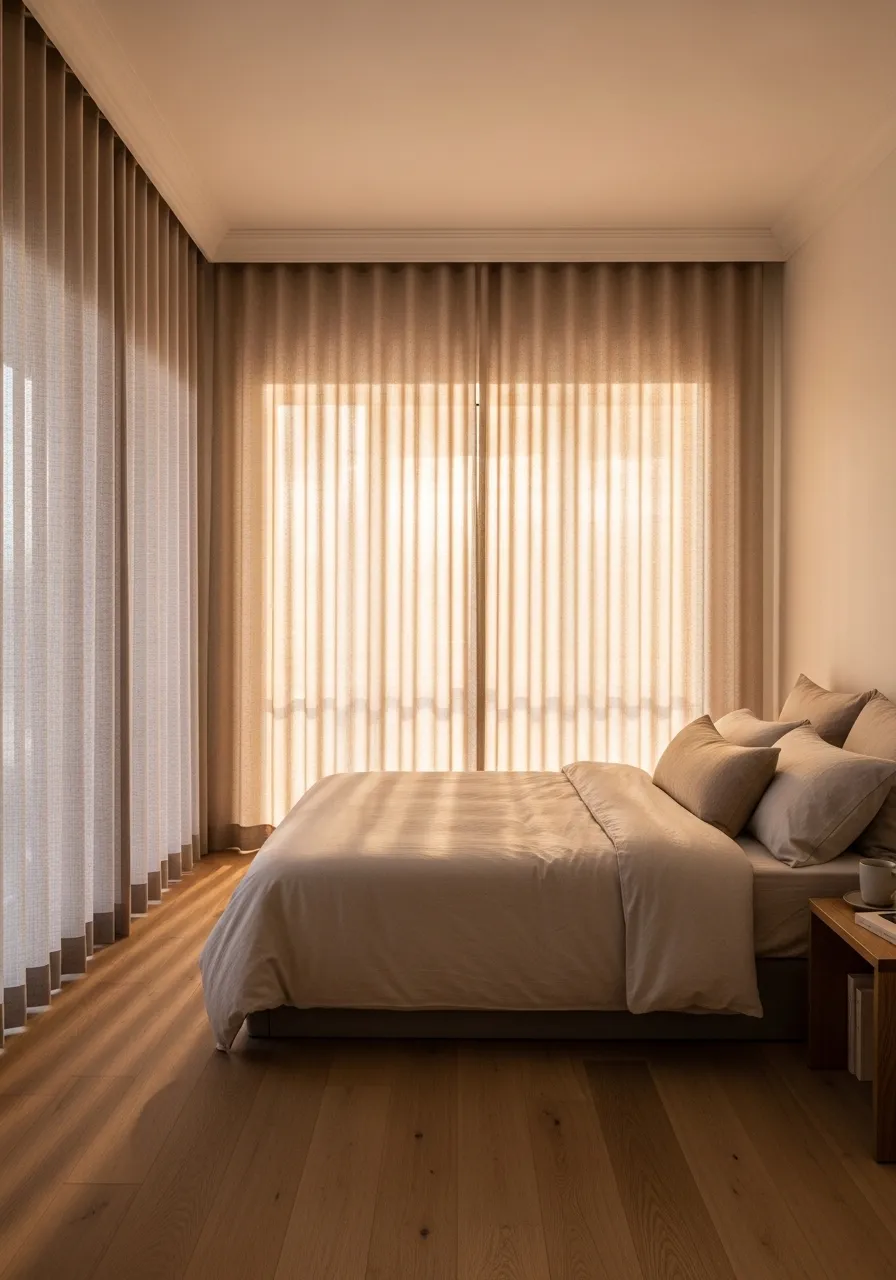
Most people hang curtains just above the window frame. That’s a mistake in a small room.
Hang your curtain rod as close to the ceiling as possible. Then let the curtains fall all the way to the floor. This tricks the eye into thinking the ceilings are much taller than they are.
It also makes windows look larger, which floods the room with more perceived light even when the curtains are closed.
Curtains don’t have to be expensive. IKEA’s LENDA or RITVA panels cost under $20 per pair and look clean and classic.
Go with light, sheer fabrics in white or off-white. Heavy, dark curtains will eat your light and make the room feel heavy.
If your curtains don’t quite touch the floor, they’ll look awkward and cut the room visually. Let them just brush the ground or puddle slightly it looks intentional and elegant.
This is a one-afternoon project. Buy longer curtain rods, reposition the brackets, and rehang. Budget: around $15–$40 total.
4. Invest in Multi-Functional Furniture
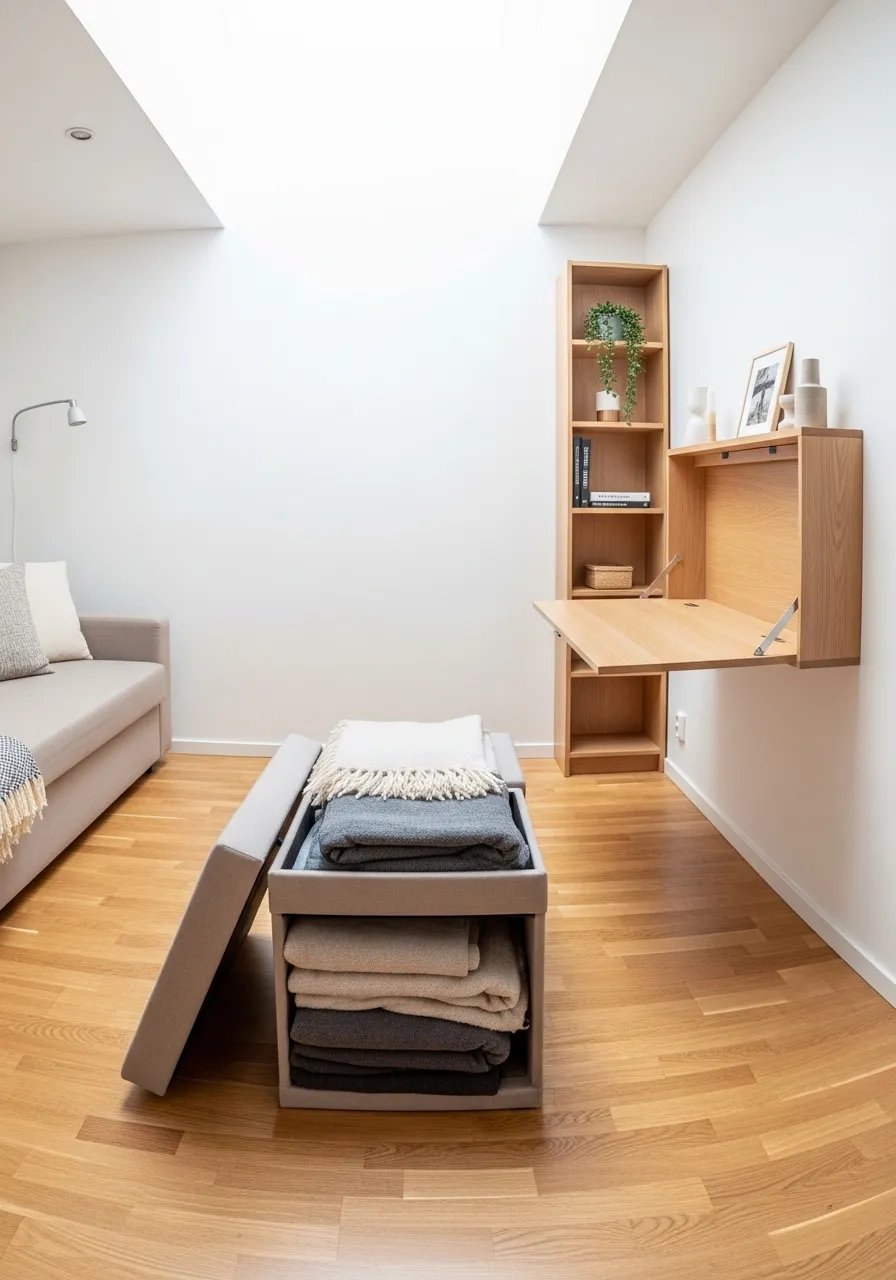
Every piece of furniture in a small room should earn its place.
If it only does one job, ask whether it deserves the floor space.
A storage ottoman replaces a coffee table AND a blanket chest. A daybed doubles as a sofa and a guest bed. A bench at the foot of the bed holds shoes, blankets, and bags.
Great multi-functional pieces to consider:
- Bed frames with built-in drawers underneath
- Fold-out dining tables that mount to the wall
- Nesting tables that tuck away when not in use
- A sofa with a pull-out bed for guests
You can find these at IKEA, Amazon, Wayfair, or Facebook Marketplace. Secondhand finds often have more solid construction than cheap new alternatives.
The goal isn’t to fill every inch — it’s to make every inch intentional.
One solid rule: If you bring something new into a small room, something else should leave. The room won’t grow, but the clutter won’t either.
5. Mount Your TV on the Wall
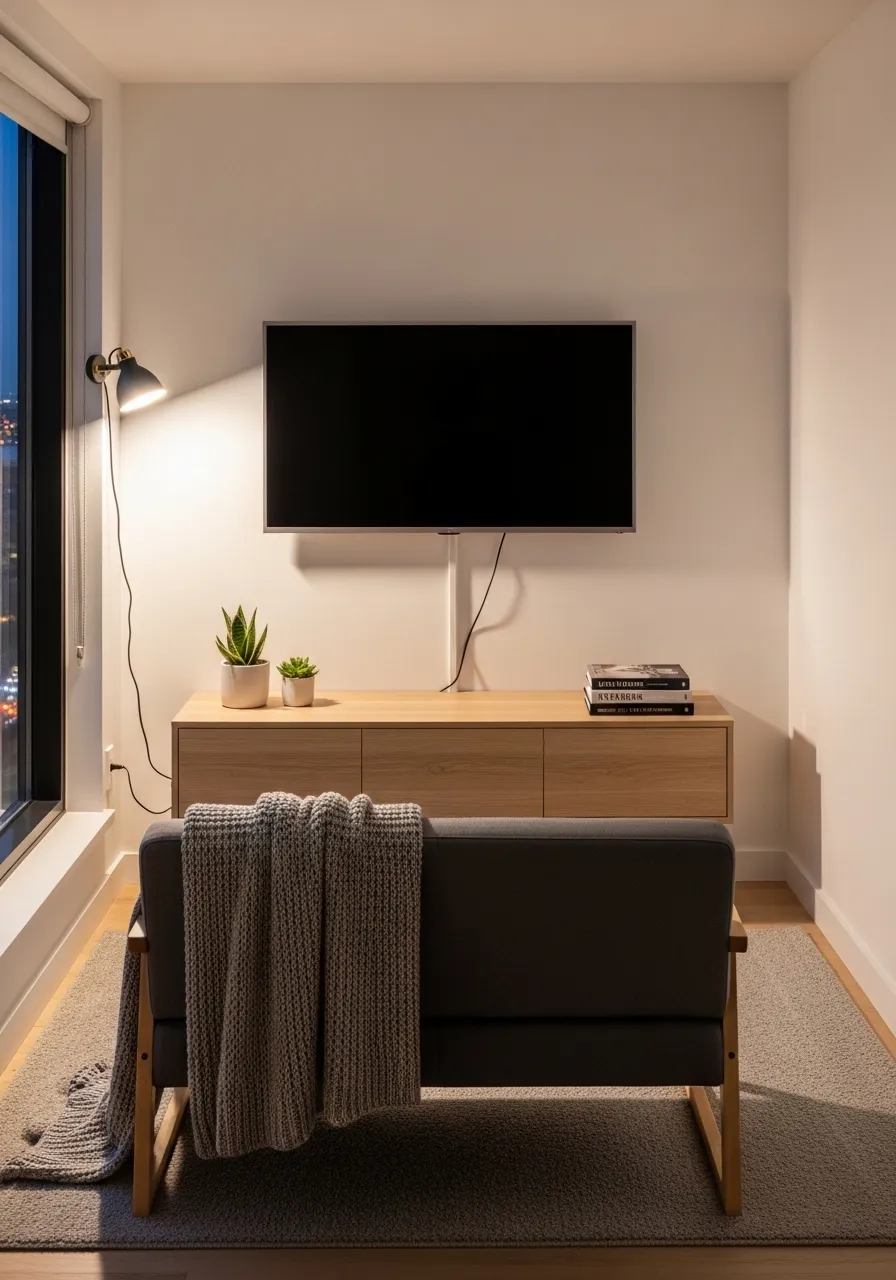
A TV stand takes up floor space. A mounted TV takes up zero.
Wall-mounting your TV frees up a significant chunk of floor area and makes the room feel cleaner and more open. It also removes the visual weight of a bulky entertainment unit.
TV wall mounts start at around $20–$30 on Amazon. Most TVs have standard VESA mounting holes, so compatibility is rarely an issue.
Once the TV is mounted, you have options:
- Use a slim floating shelf below it for your cable box or streaming device
- Run cables through a $10 cable management kit to keep things clean
- Go fully wireless with a streaming stick and Bluetooth soundbar
Hide the cords. Exposed cables ruin the clean look. Paintable cord covers stick to the wall and blend in seamlessly for under $15.
If you’re renting and can’t drill, look for no-drill TV mounts that use tension rods or furniture anchors — they actually work for most mid-sized TVs.
6. Use Vertical Space With Floating Shelves
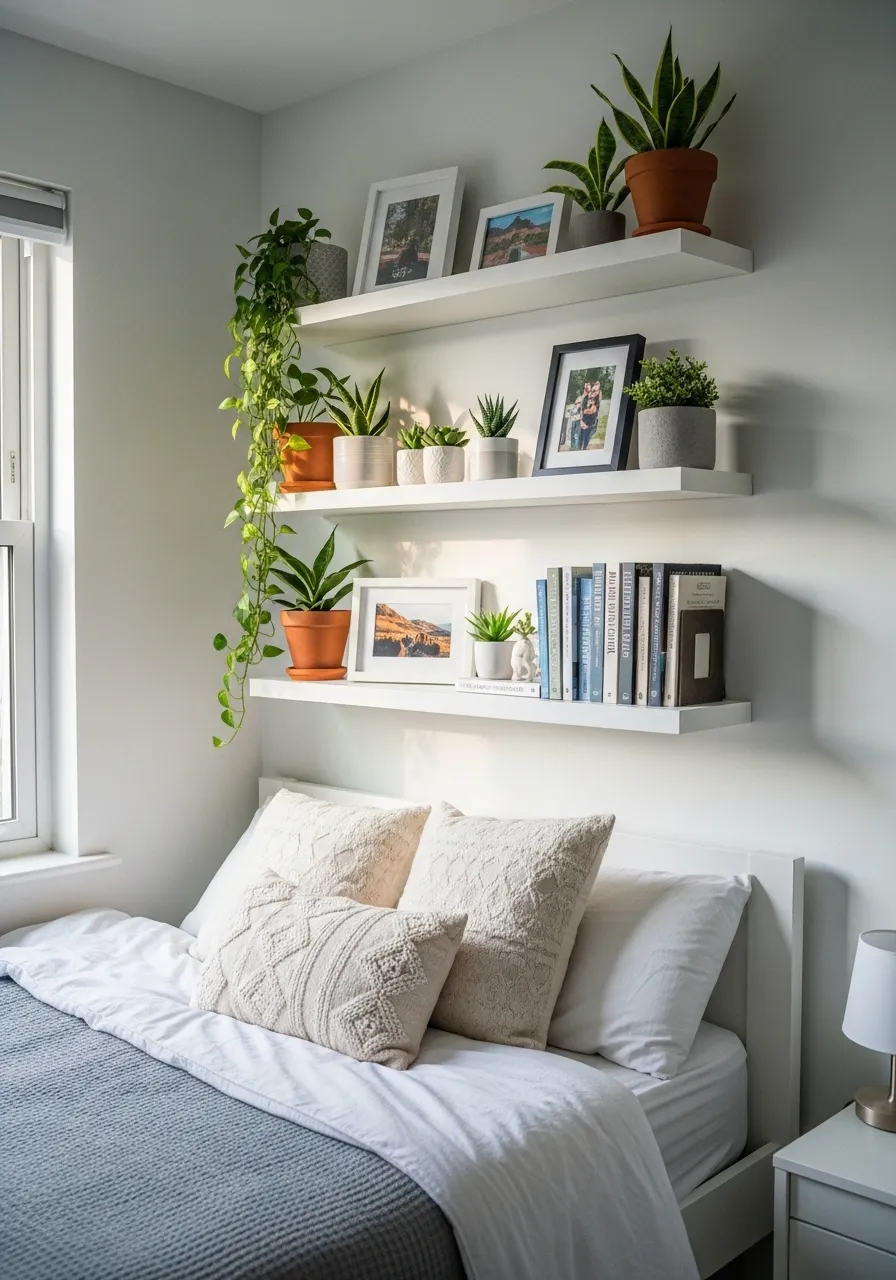
Most small rooms are used horizontally. The vertical space above eye level sits empty and wasted.
Floating shelves go up the wall instead of across the floor. That means storage and display without eating into your walking space.
They’re cheap, easy to install, and wildly flexible. A set of three shelves from IKEA or Amazon costs around $20–$40.
How to use them well:
- Books and magazines at eye level
- Plants and decorative items on upper shelves
- Everyday items like keys, sunglasses, and chargers on lower shelves
Don’t over-style shelves with too many items. Leave some breathing room. A shelf crammed with stuff looks chaotic — and in a small room, chaos feels suffocating.
Style tip: Group items in odd numbers (three plants, five books). It looks more intentional than even groupings.
Install shelves with proper wall anchors, especially if you’re going to put heavy books on them. A shelf that falls off the wall is worse than no shelf at all.
7. Choose a Bed Frame With Storage Underneath
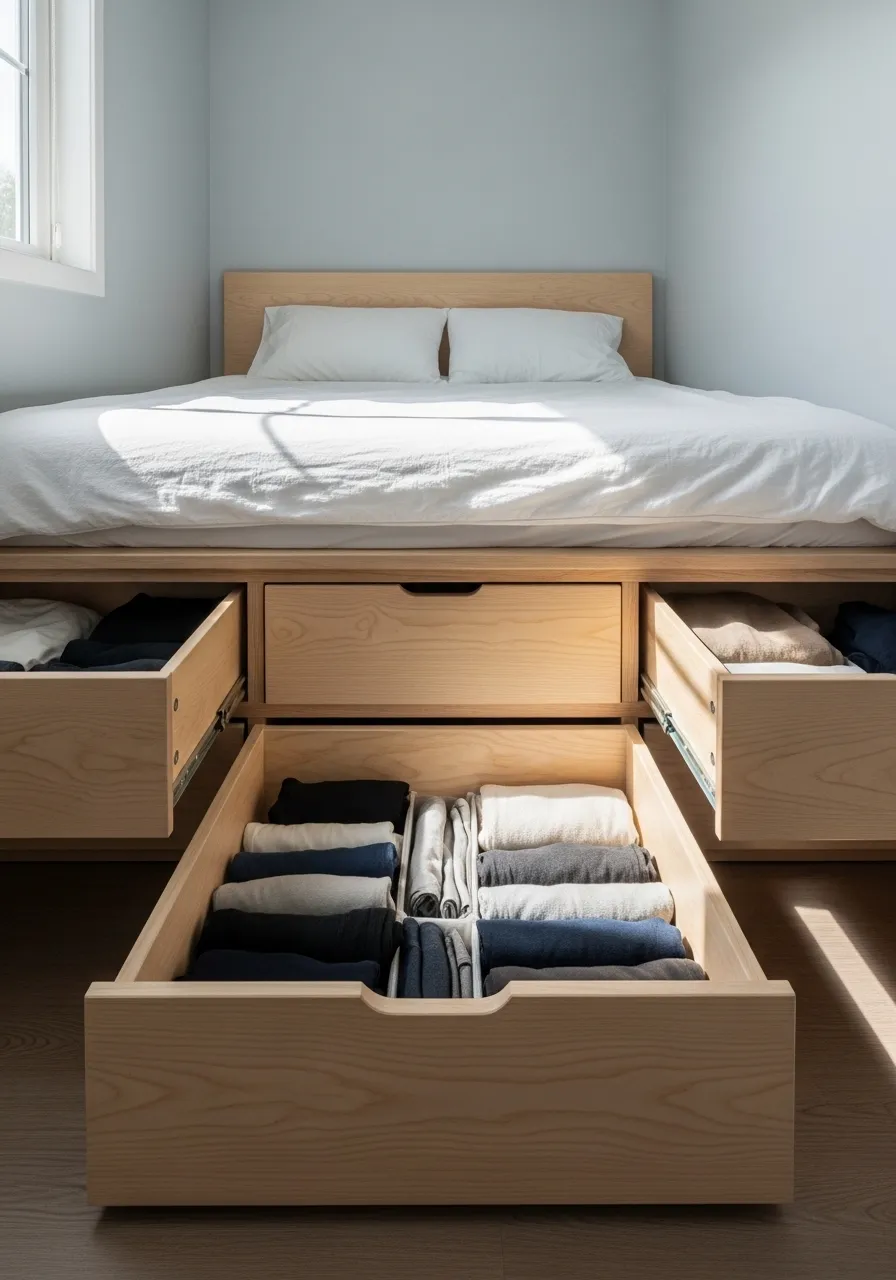
The area under your bed is prime real estate. Most people waste it.
A bed frame with built-in drawers gives you a dresser’s worth of storage without using any extra floor space.
You’re already sleeping in the room — you might as well store things there too.
Look for bed frames with drawers on the sides or at the foot. IKEA’s BRIMNES and HEMNES frames are popular, solid, and reasonably priced at $200–$400.
If you already have a bed frame without storage, use flat rolling bins that slide under the bed. Clear ones make it easy to see what’s inside. These run $15–$30 at Target or Amazon.
What to store under the bed:
- Off-season clothing
- Extra bedding and pillows
- Shoes in clear boxes
- Books you’ve already read
The key is keeping it organized. Shoved-under-the-bed chaos is no better than a cluttered floor. Use bins and labels so you can actually find things.
8. Go Low-Profile With Furniture
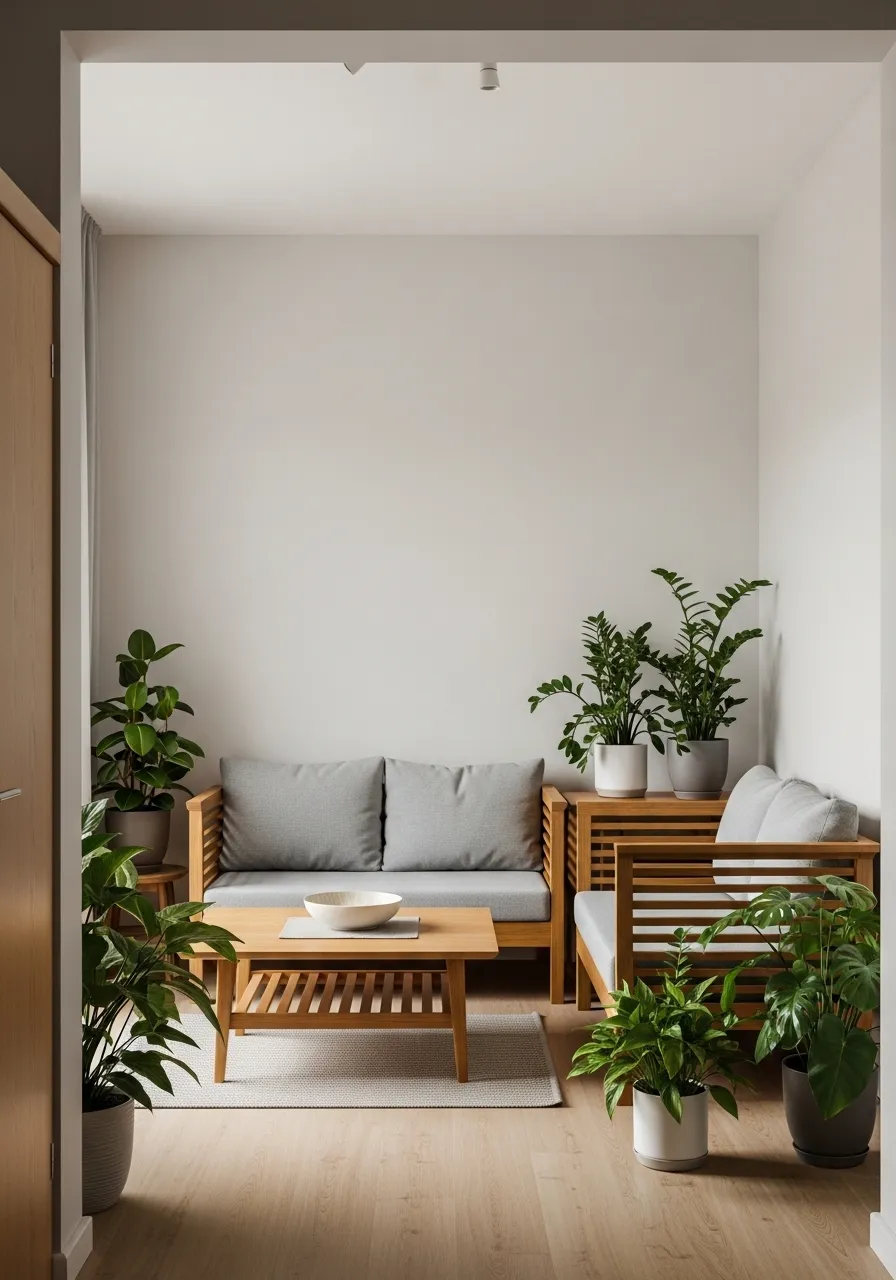
Tall furniture makes ceilings feel lower. Low furniture does the opposite.
When you keep furniture closer to the ground, the eye travels upward — and the room feels taller.
This is why low-profile beds, platform sofas, and coffee tables close to the floor work so well in small spaces. They create a sense of airiness above the furniture line.
You don’t need to replace everything. Even swapping a tall headboard for a low-slung one makes a noticeable difference.
Low furniture that works in small rooms:
- Floor cushions instead of armchairs
- Low media consoles instead of tall TV units
- Futons or platform beds without bulky headboards
- Coffee tables under 16 inches in height
Scandinavian and Japanese design styles naturally favor low furniture, which is why they’re so popular in small-space design. Look for inspiration from those aesthetics.
Budget tip: Floor cushions or poufs cost $20–$60 and replace seating without taking up much visual space. They stack or tuck away when guests aren’t visiting.
9. Remove the Closet Doors
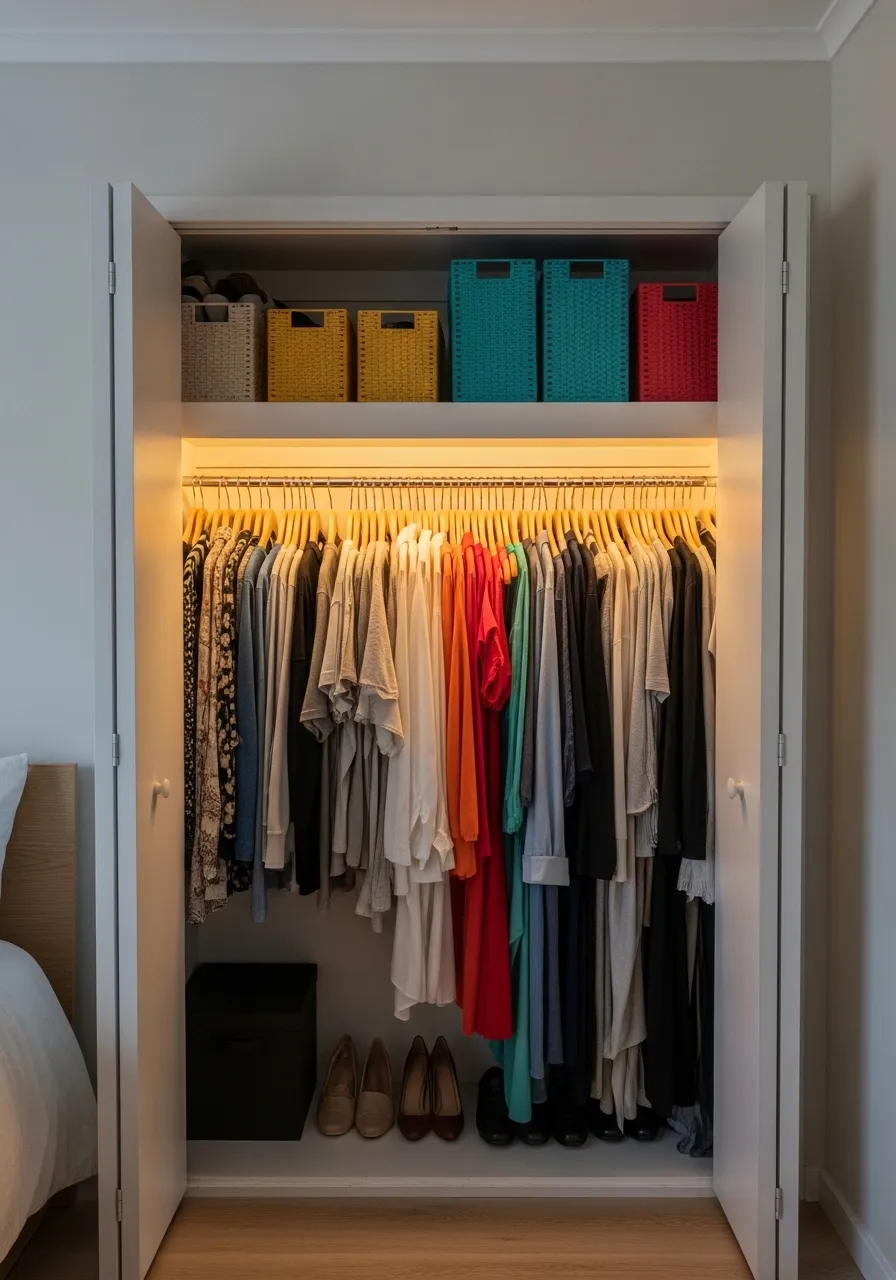
Closet doors take up swing space. In a small room, that matters.
Removing closet doors — especially bifold or sliding ones — instantly makes the room feel less cramped. Bifold doors especially are notorious for blocking access and interrupting the visual flow of a room.
Without doors, the closet becomes part of the room. That means you need to keep it organized and styled, but it also means you gain visual space.
What to do with an open closet:
- Use matching hangers for a cleaner look (velvet slim hangers, $10–$15 for a pack)
- Add a small curtain on a tension rod if you want the option to close it
- Install a simple light inside so it doesn’t look like a dark hole
- Use baskets or bins on the upper shelf for a styled, cohesive look
If the closet is messy, this idea will backfire. But if you’re willing to spend an hour organizing it, removing the doors is a free upgrade that makes a real difference.
10. Add a Large Area Rug
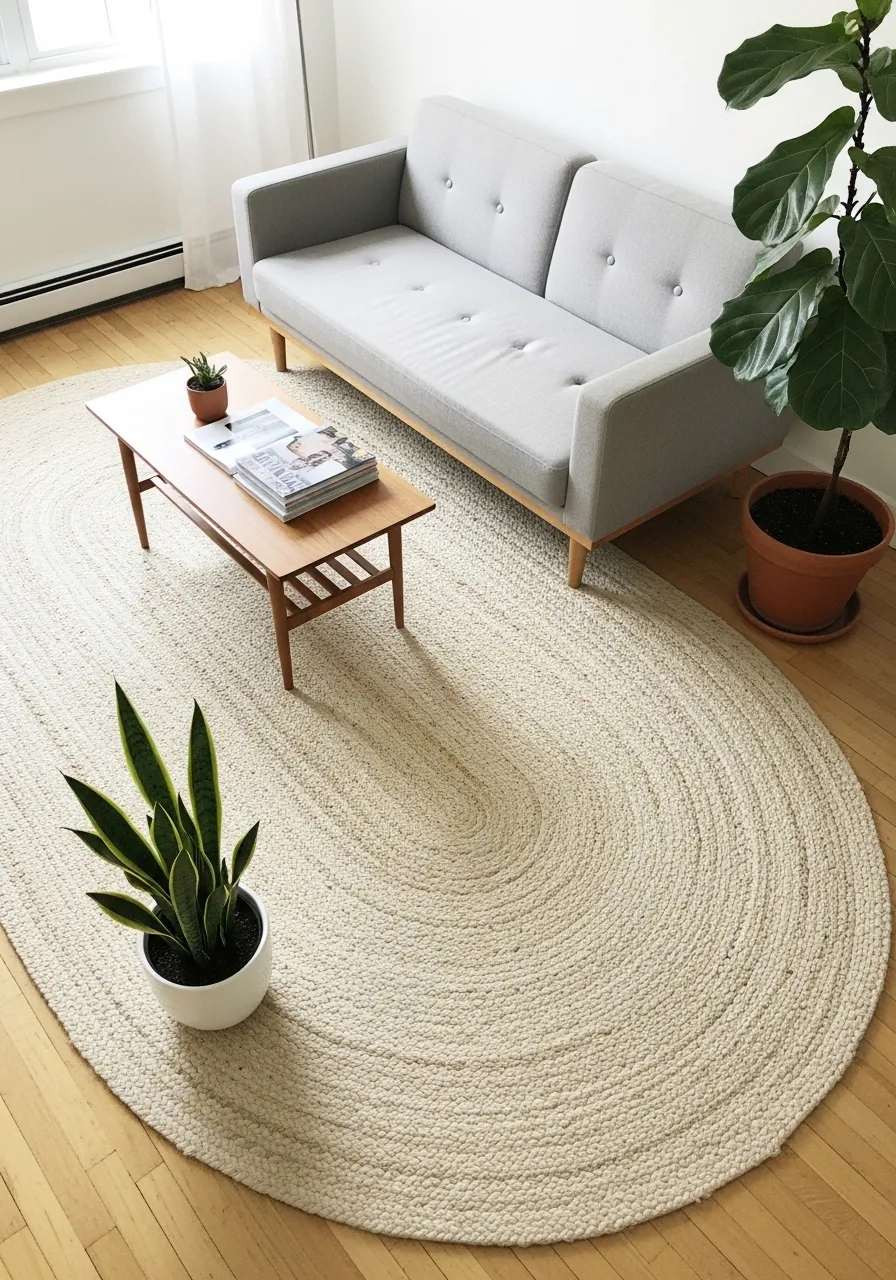
A room without a rug feels unfinished. A room with a too-small rug feels awkward.
The most common mistake in small rooms is using a rug that’s too small. A tiny rug floating in the middle of the floor actually makes the space feel smaller and more fragmented.
Go bigger than you think you need. In a living room, the front legs of your sofa and chairs should at least sit on the rug. Ideally, the rug fits under all the furniture.
Large rugs visually connect the furniture and define the room as one cohesive zone. That sense of order makes the space feel larger.
Affordable large rug sources:
- IKEA’s STOCKHOLM and SINDAL lines
- Amazon Basics rugs in neutral tones
- Ruggable washable rugs (great for renters)
- Thrift stores and Facebook Marketplace
Stick to light, neutral tones — cream, beige, warm grey, soft terracotta. Busy patterns in a small room add visual noise and make everything feel busier.
Budget: $50–$150 for a decent 8×10 rug.
11. Use Transparent Furniture
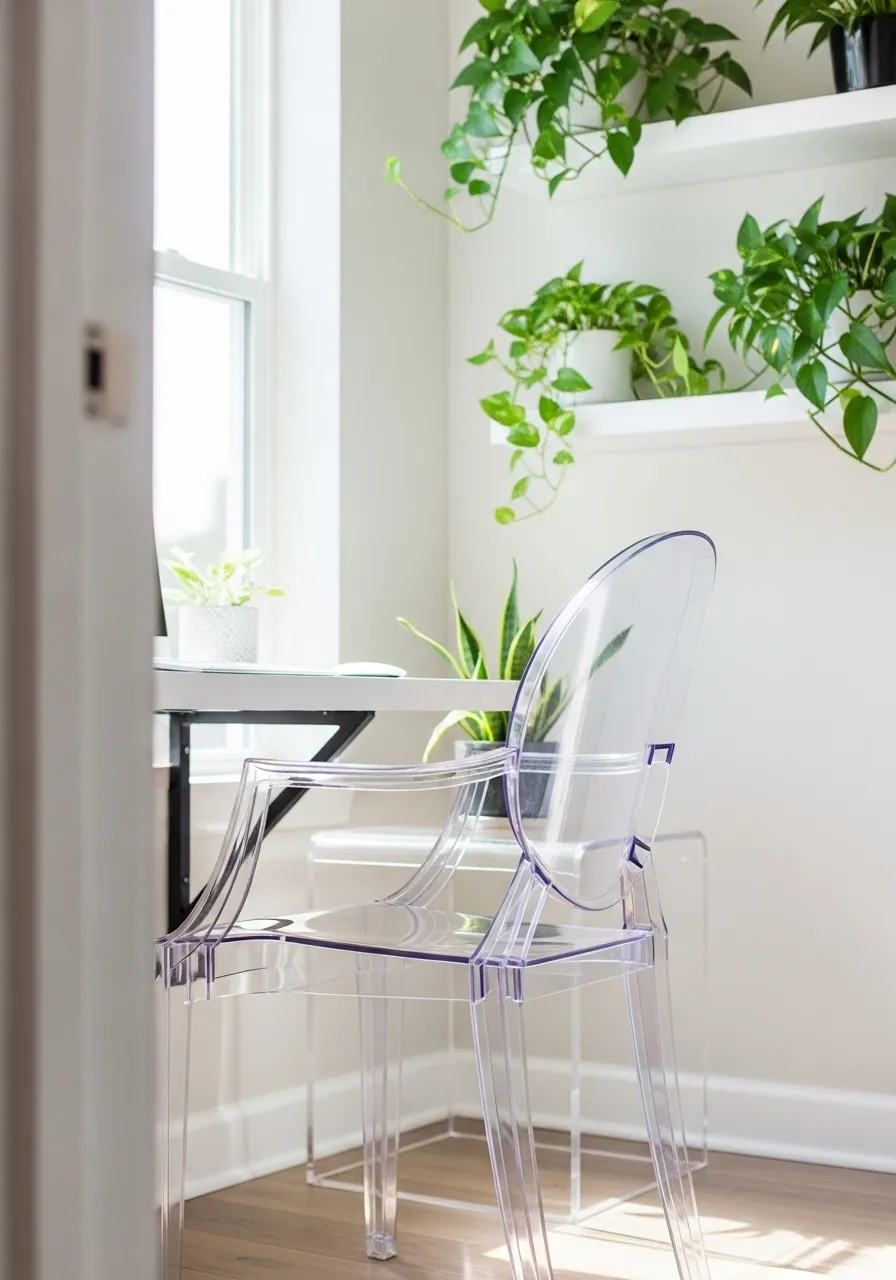
Clear furniture is practically invisible — which is exactly what you want in a small room.
Acrylic ghost chairs, lucite side tables, and glass coffee tables take up physical space but almost no visual space. Your eye passes right through them to the floor and walls behind, keeping the room feeling open.
This works especially well in small home offices and bedrooms where you need seating or surface area but can’t afford visual clutter.
Where to find affordable transparent furniture:
- IKEA’s TOBIAS chair (acrylic, around $80)
- Amazon for ghost chairs and acrylic side tables ($40–$100)
- Target’s occasional acrylic accent pieces
Pair transparent pieces with solid, grounded furniture — don’t go fully acrylic in a room, or it looks cold and sterile. Use one or two clear pieces to “disappear” items that would otherwise crowd the space.
Acrylic scratches easily, so handle it carefully and clean it with a microfiber cloth. Avoid rough surfaces.
Good uses for transparent furniture:
- Desk chairs
- Side tables and nightstands
- Coffee tables in living rooms
- Bar stools at a kitchen counter
12. Declutter Ruthlessly and Keep Surfaces Clear
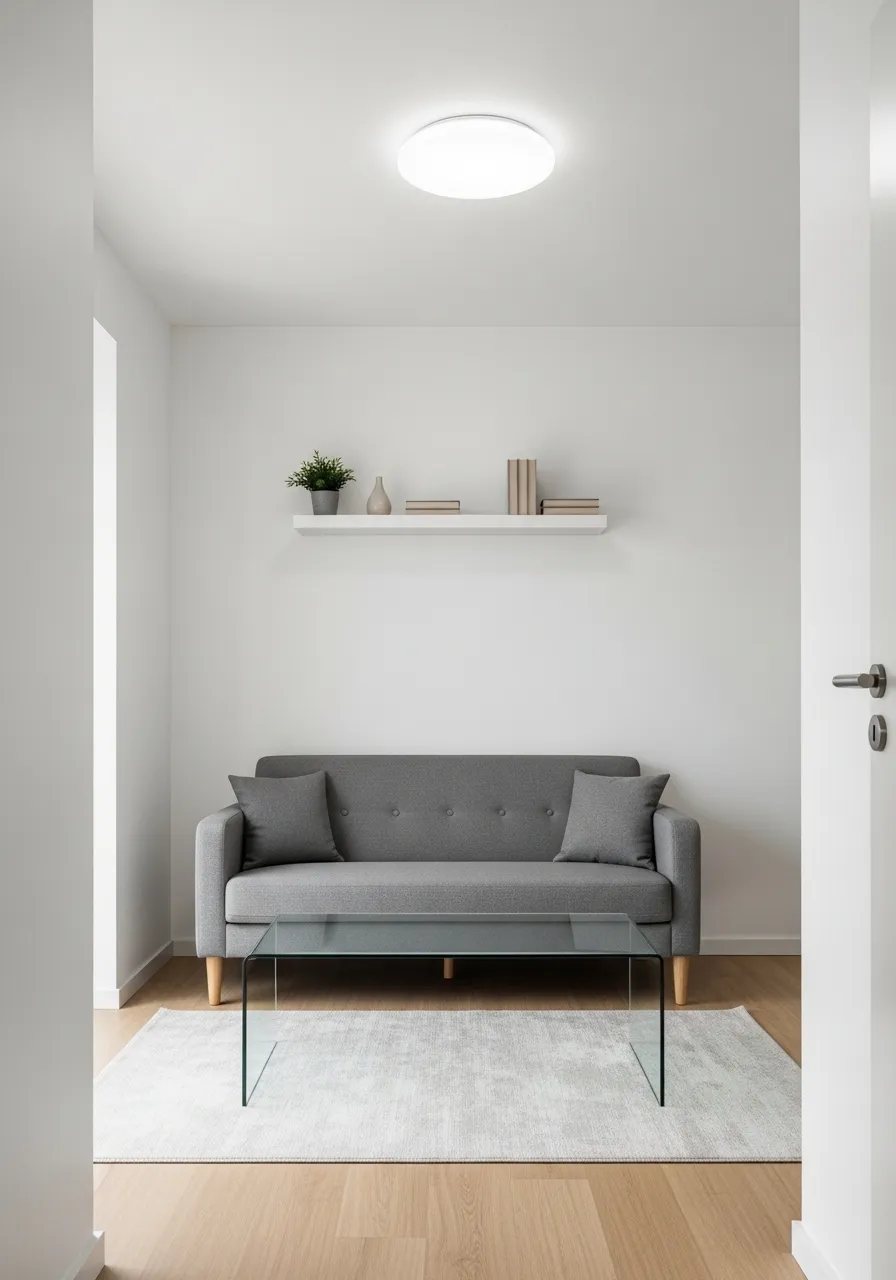
No decor trick works if the room is full of stuff.
Clutter is the number one enemy of a small space. Visual noise makes even a large room feel cramped. In a small room, it’s suffocating.
You don’t have to become a minimalist. But you do need to be intentional.
Start with surfaces. A clear coffee table, clear dresser top, and clear nightstand immediately make the room feel bigger. Put things away. Use storage.
Then go through what you actually own:
- Keep what you use or love
- Donate or sell what you don’t
- Find storage for what stays
The 20-minute declutter rule works well: set a timer, grab a box, and fill it with things you haven’t used in the last three months. Repeat every few weeks.
One-in, one-out policy: When something new comes in, something old goes out. This prevents the slow creep of clutter.
Designate a home for everything. Clutter usually happens because something doesn’t have a place to live. Fix the system, not just the symptom.
13. Try Built-In Bookshelves Around the Door Frame
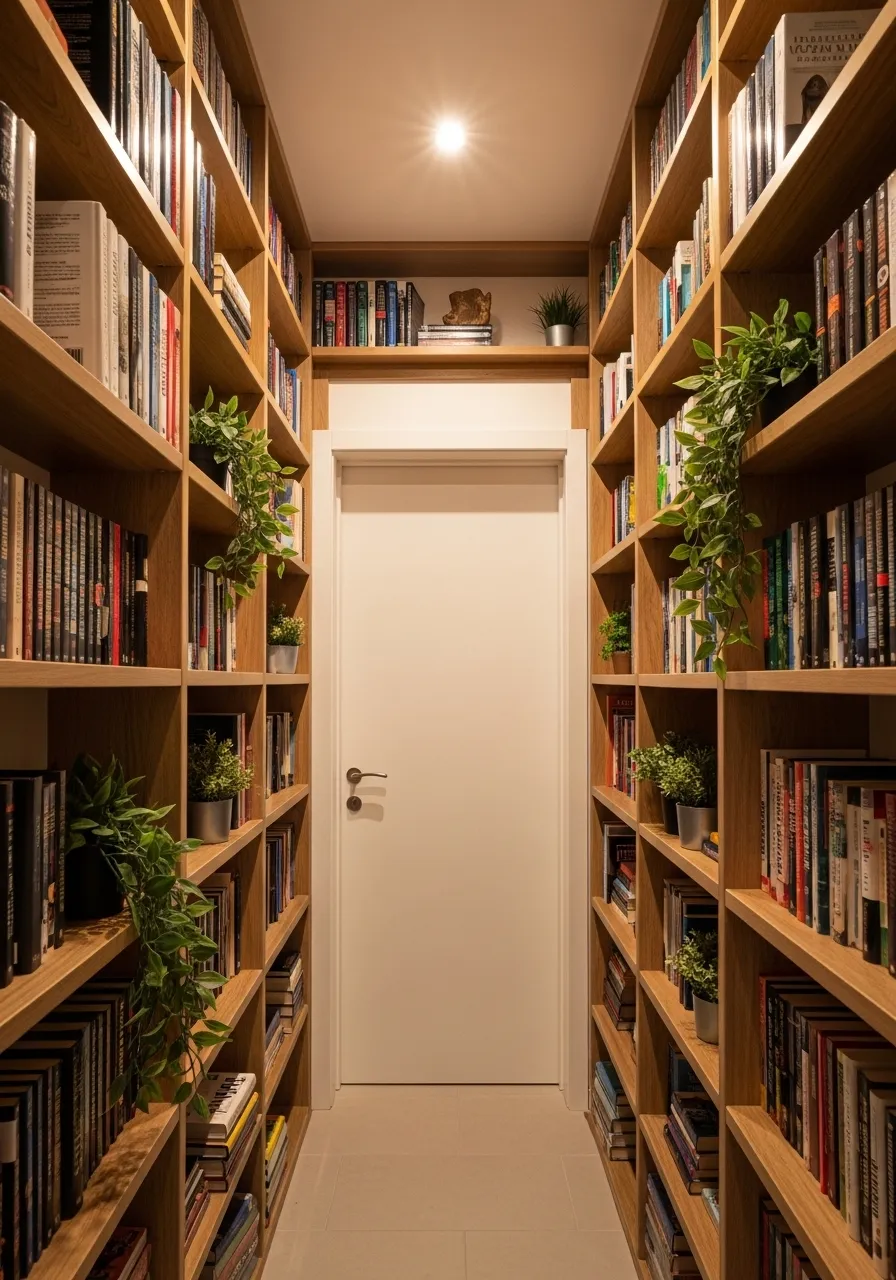
The space around your door frame is almost always wasted.
Building shelves that flank a doorway — from floor to ceiling — turns dead space into functional storage without eating into the room.
This looks custom and expensive but can be done with IKEA BILLY bookcases for under $200. Trim the top with crown molding to make it look built-in.
It works especially well in:
- Small living rooms where an entire wall is taken up by a door
- Bedroom doorways where you want a library feel
- Home offices where you need reference materials close by
DIY version: Two BILLY bookcases placed on either side of the door. Add trim at the top to connect them visually. Paint everything the same color as the wall to make it look seamless.
This also draws the eye toward the architectural detail of the door, which adds character to an otherwise plain room.
If you have crown molding already, matching it with your built-in shelves makes the whole thing look original to the house.
14. Layer Lighting Instead of Relying on One Overhead Light
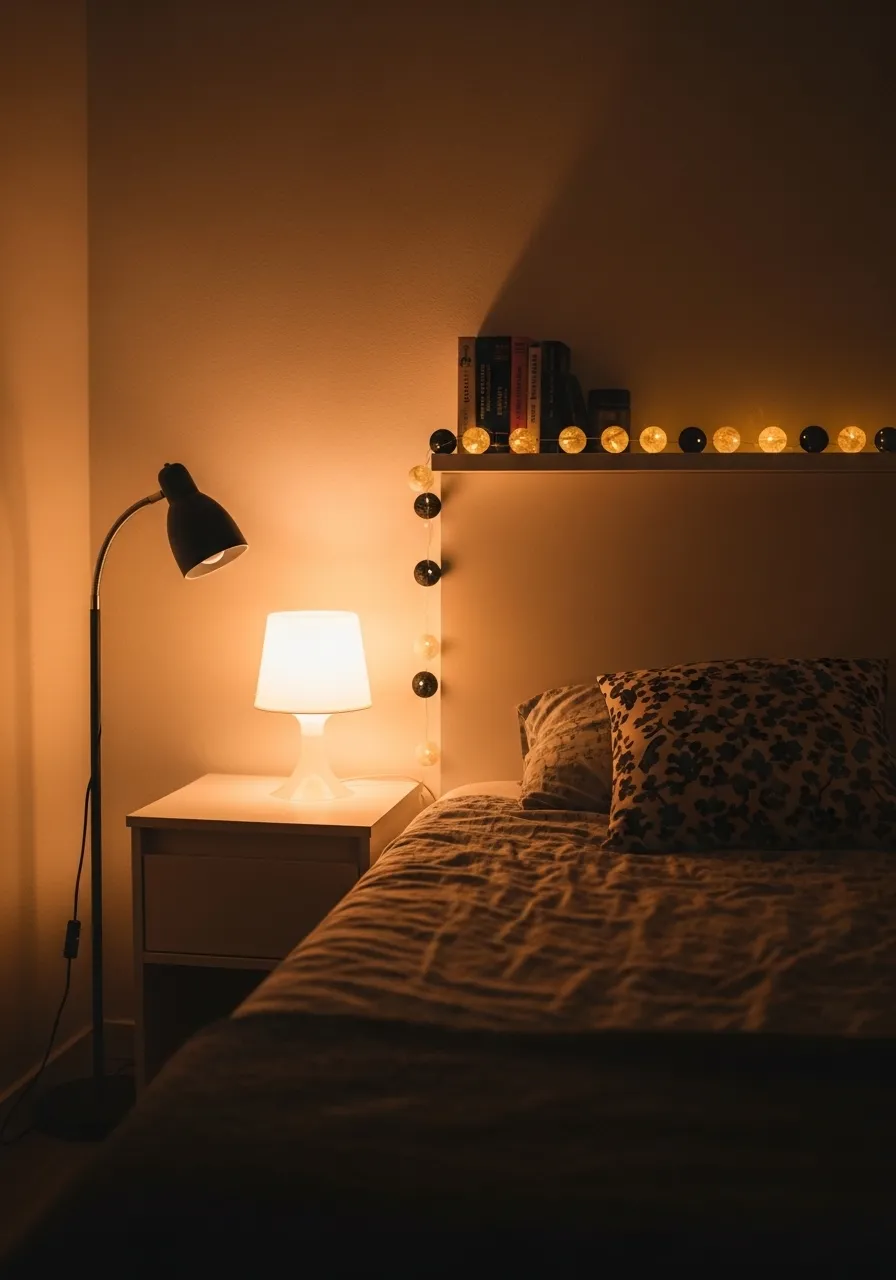
One overhead light in a small room flattens everything and makes the space feel institutional.
Layered lighting — a mix of ambient, task, and accent — makes a room feel warm, dimensional, and larger.
The trick is to spread light sources around the room rather than pushing it all from one central point.
Types of lighting to layer:
- Ambient: Overhead or a large floor lamp for general light
- Task: A desk lamp, reading lamp, or under-cabinet light for specific activities
- Accent: String lights, LED strips, candles, or small table lamps for warmth
Warm bulbs (2700K–3000K) make spaces feel cozy and inviting. Cool white bulbs make spaces feel clinical.
Budget lighting ideas:
- IKEA table lamps ($10–$30)
- Amazon warm LED strip lights ($15–$25)
- Clip-on reading lights ($12–$20)
- Thrift store lamps with new bulbs
Plug-in sconces also work well in small rooms — they go on the wall without any electrical work and free up nightstand or floor space.
Dimmable bulbs are worth the few extra dollars. The ability to control light intensity is one of the best mood tools in any room.
15. Use Wall-Mounted Nightstands
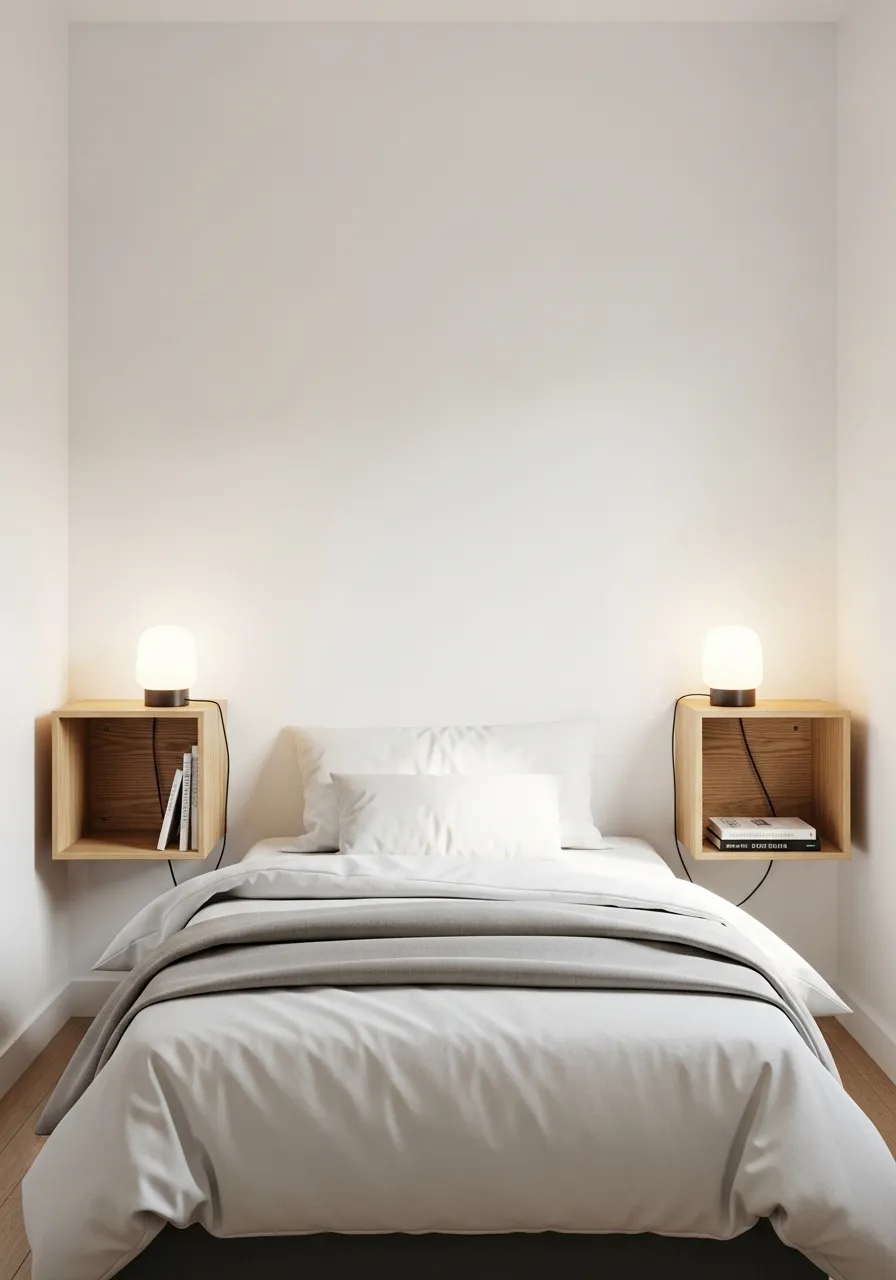
Regular nightstands take up floor space right next to the bed — one of the most valuable walkway zones in a small bedroom.
Wall-mounted floating nightstands do the same job while keeping the floor completely clear.
This is a $30–$60 fix. A simple floating shelf from Amazon, IKEA, or Home Depot works perfectly as a nightstand. Mount it at a comfortable reaching height — usually about level with the top of your mattress.
What to put on a floating nightstand:
- A small lamp (clip-on or compact)
- Phone charger
- A glass of water
- One book
Keep it to three or four items. A mounted shelf is small by nature, which forces a natural limit on nightstand clutter.
If you want something slightly deeper, IKEA’s LACK shelves ($8–$12) are solid, look clean, and come in multiple finishes.
For rentals, many floating shelves use drywall anchors rather than studs, so you can often hang them without leaving large holes. Patch kits fix small anchor holes when you move out.
16. Paint Your Ceiling a Deep Color
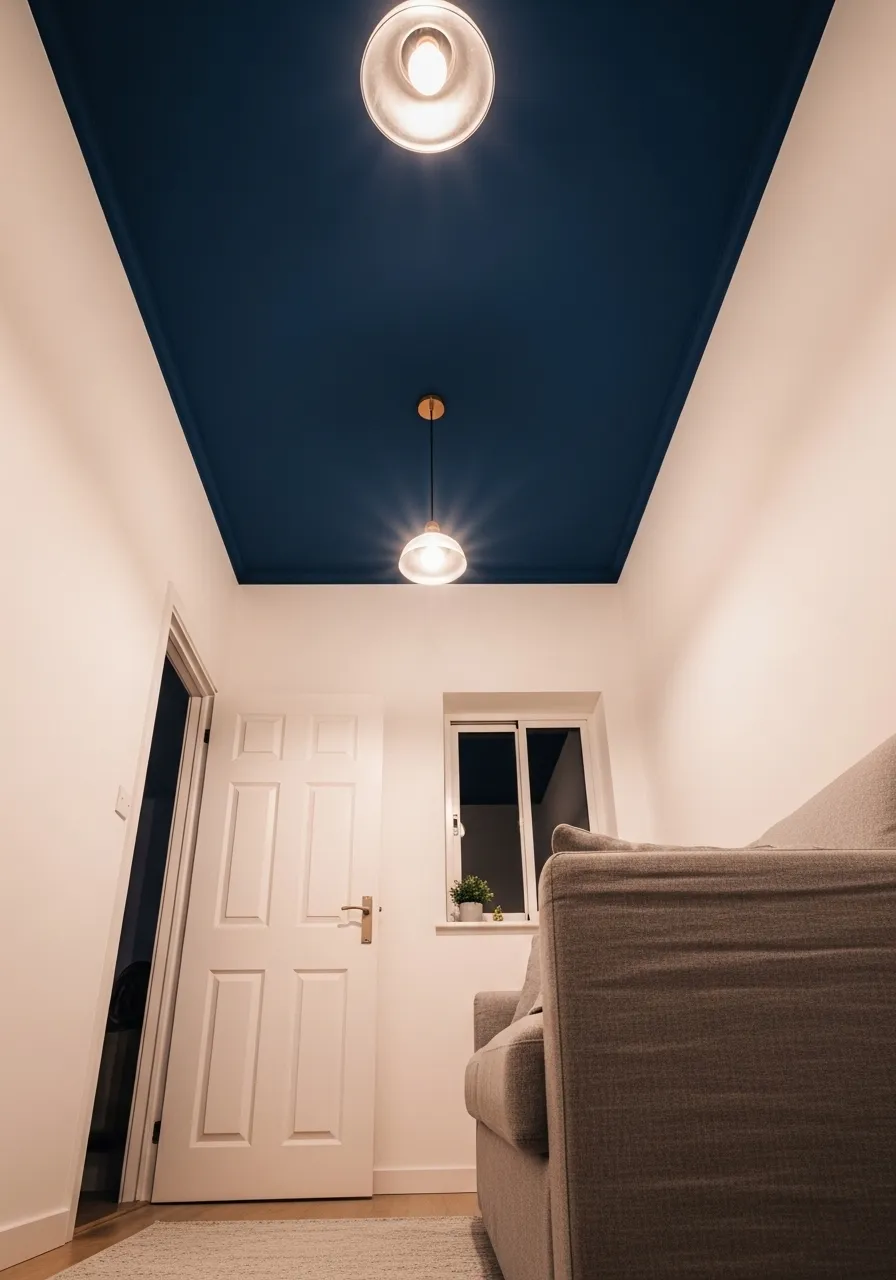
This sounds counterintuitive, but a dark ceiling can actually make a room feel cozier and more intimate — in a good way.
A dark ceiling draws the eye downward and inward, making the room feel like a defined, special space instead of a box with a lid on it.
This works best when:
- The walls are light or white (contrast is everything)
- The room has decent ceiling height (8 feet or more)
- The lighting is warm, not cold
Popular choices: navy blue, forest green, charcoal, deep terracotta.
This trick is popular in small dining rooms, bedrooms, and reading nooks. It creates atmosphere and depth that light colors can’t.
Cost: One can of ceiling paint in a deep shade. It’s the same price as any other paint — around $30–$50 per gallon. A small room ceiling usually only needs one can.
You don’t need to paint all four walls. Just the ceiling. Paint it a color you love.
Pair with: white walls, natural wood furniture, warm lighting, and light textiles.
17. Create a Reading Nook in a Corner
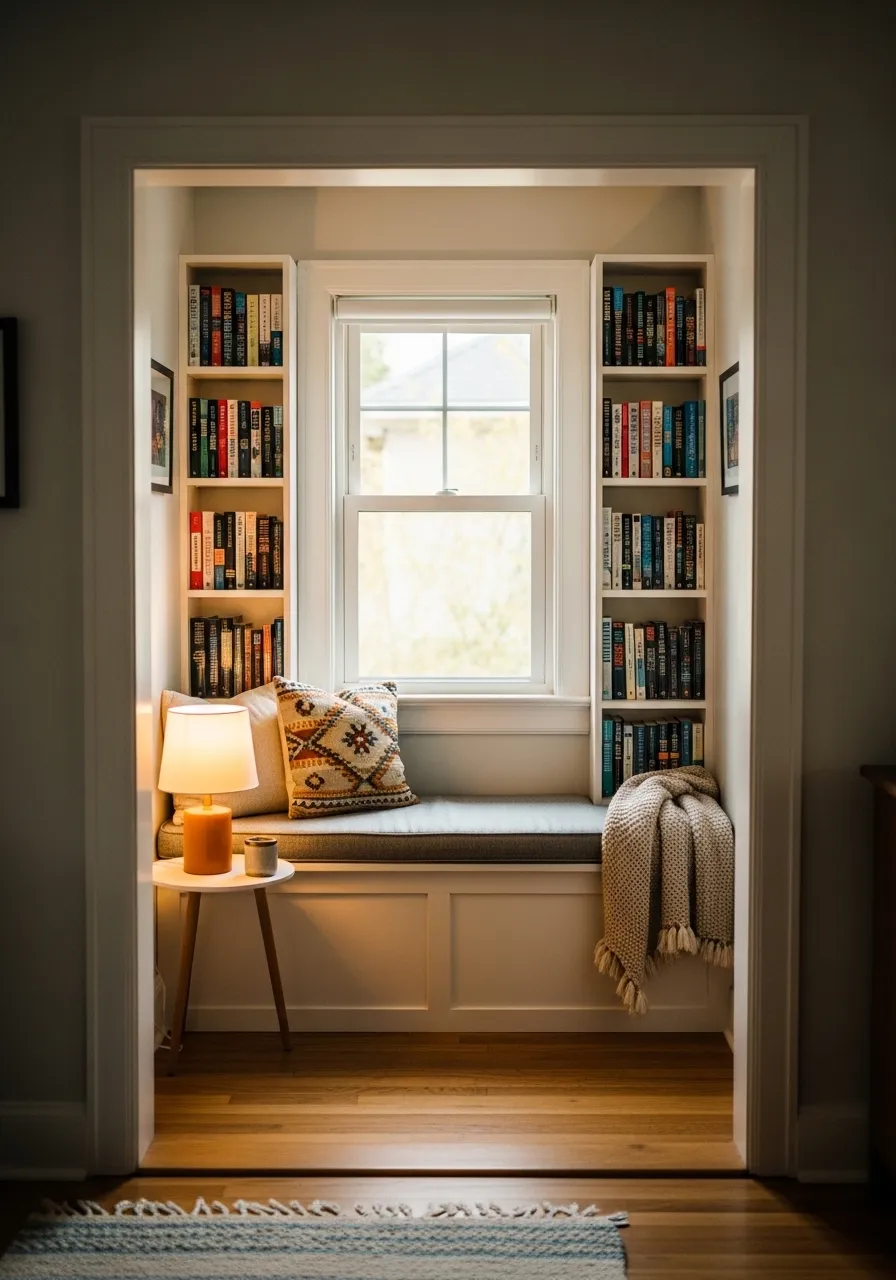
Dead corners are wasted space. A reading nook turns the corner into the best seat in the house.
A corner nook creates a sense of enclosure and purpose — which paradoxically makes a small room feel larger because every zone is intentional.
You don’t need built-in carpentry. A floor cushion, a stack of books, a small lamp, and a throw blanket can define a cozy corner for under $50.
To make it more permanent:
- Add two small IKEA KALLAX shelves flanking the corner for book storage
- Place a cushioned storage bench between them
- Hang a pendant light or plug-in sconce above
- Drape fairy lights for ambiance
This is one of those small-space moves that adds character without adding clutter.
The secret: Give the nook its own small rug. Even a 3×4 ft rug defines the zone and makes it feel intentional.
A corner nook also creates visual interest in a room that might otherwise feel like just a square with furniture in it. It adds layers.
18. Use a Glass or Acrylic Dining Table
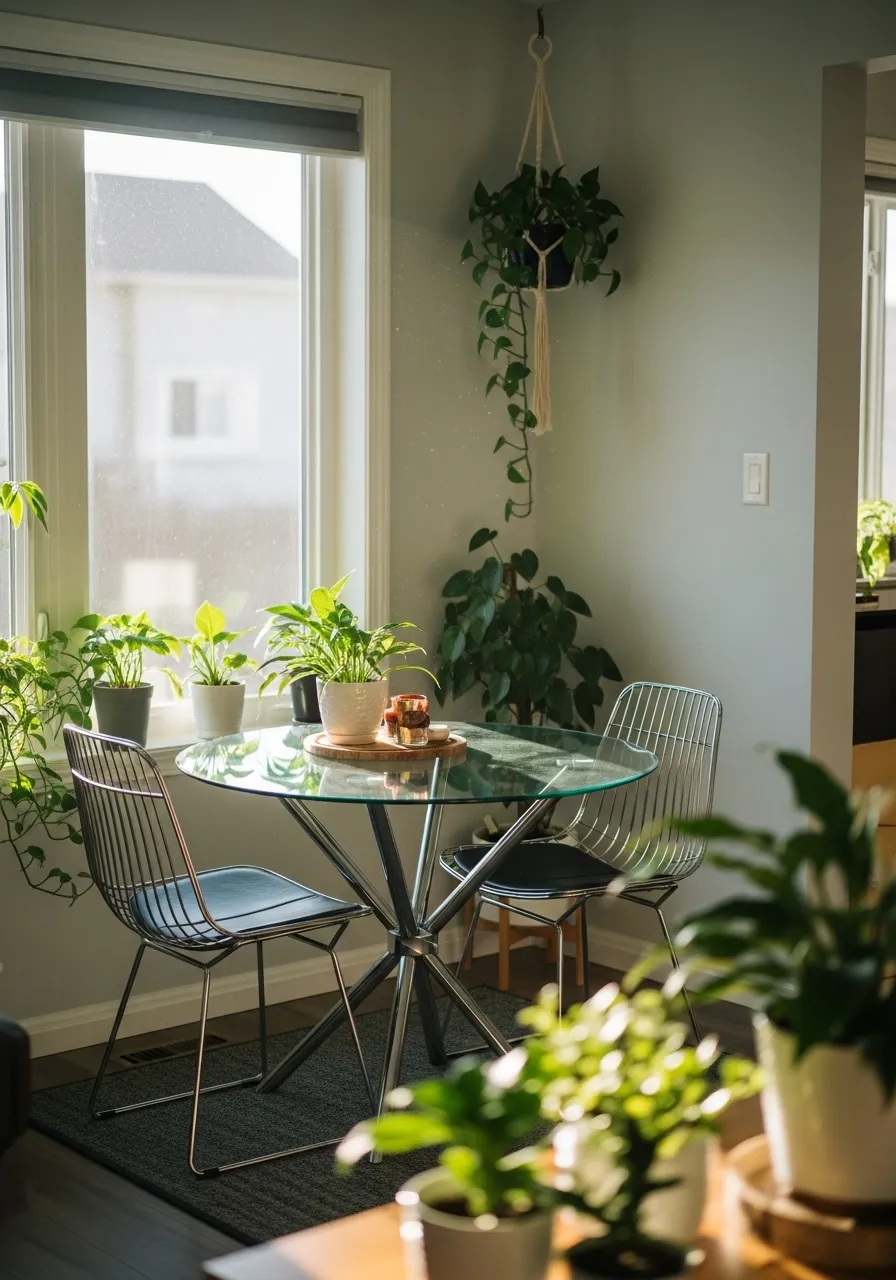
Dining tables in small rooms can dominate the entire space. Glass solves this.
A glass or acrylic dining table takes up the same physical area as a wooden one — but visually, it almost disappears.
The transparent surface lets light and sight lines pass through, which keeps the room feeling open even with furniture in it.
Round glass tables work especially well in small dining areas because:
- No sharp corners to bump into
- The eye follows the curve instead of stopping at a hard edge
- They seat fewer people, which suits smaller spaces
IKEA’s VITTSJÖ and GLIVARP tables are affordable glass-top options starting around $100–$200.
Pair with slim wire chairs or acrylic ghost chairs for the most open look.
Care tip: Glass tables show fingerprints and smudges easily. Keep a microfiber cloth nearby for quick wipe-downs. Tempered glass is safer and more durable than regular glass — always check before buying.
If glass feels too cold, a round wooden table in a light finish (white oak, blonde wood) is the next best thing.
19. Add a Plant (or Several)
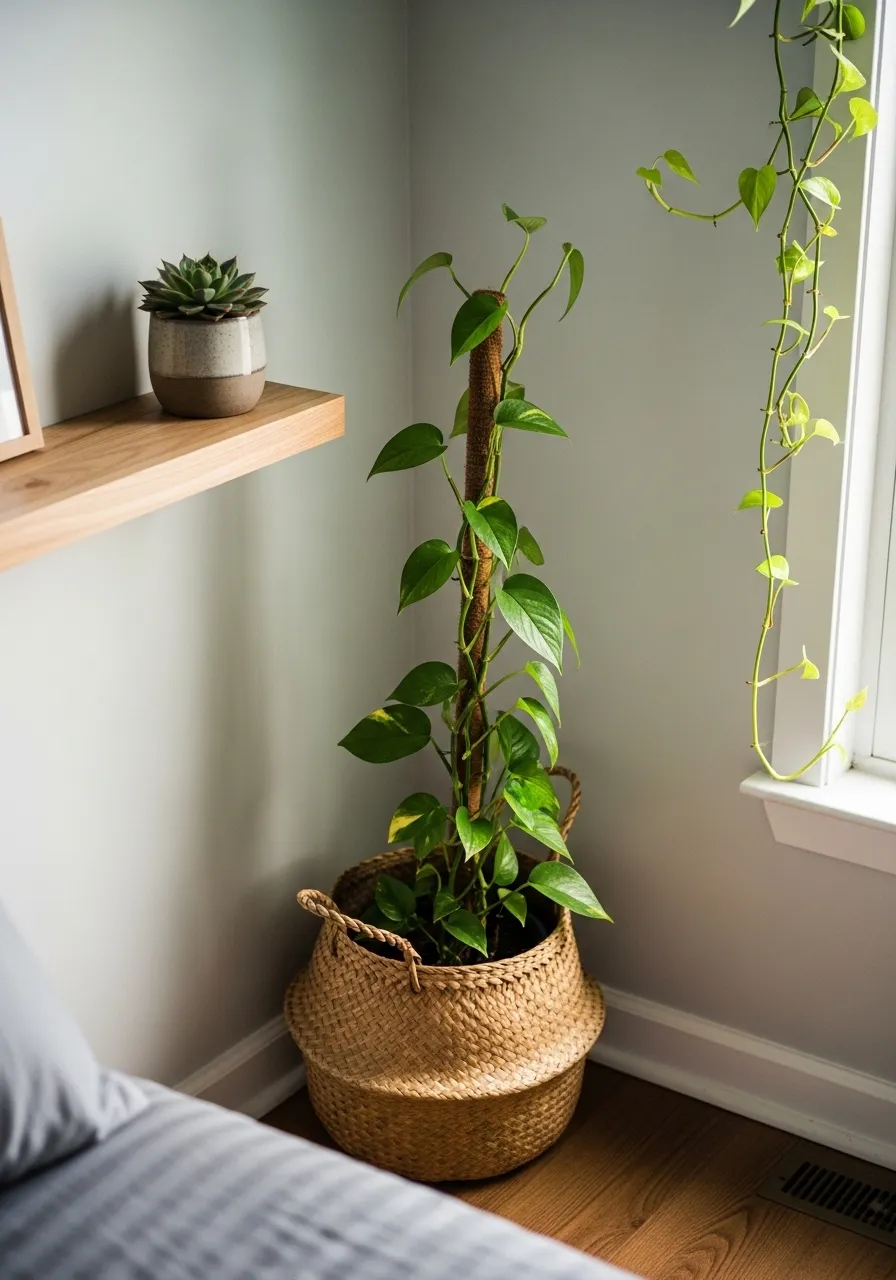
Plants add life, texture, and color without adding clutter — if you choose the right ones.
In a small room, plants draw the eye naturally and create visual depth. A tall plant in the corner makes the room feel like it extends further than it does.
They also filter air and improve mood, which is a bonus in any space.
Best plants for small rooms:
- Pothos — grows fast, hangs beautifully, nearly impossible to kill
- Snake plant — tall, sculptural, thrives on neglect
- ZZ plant — low light, low water, dramatic look
- Peace lily — flowers indoors, tolerates shade
- Small succulents — great for shelves and windowsills
Placement ideas:
- A tall snake plant in a bare corner
- Hanging pothos near the ceiling to draw the eye upward
- A trailing plant on a floating shelf
- Small succulents on a windowsill
You don’t need to spend much. Most of these plants cost $5–$20 at Home Depot, IKEA, or a local nursery. Propagate a cutting from a friend for free.
Use planters that match your room’s color palette. A white ceramic pot on a light shelf disappears. A bright orange pot shouts.
20. Embrace Minimalist Decor
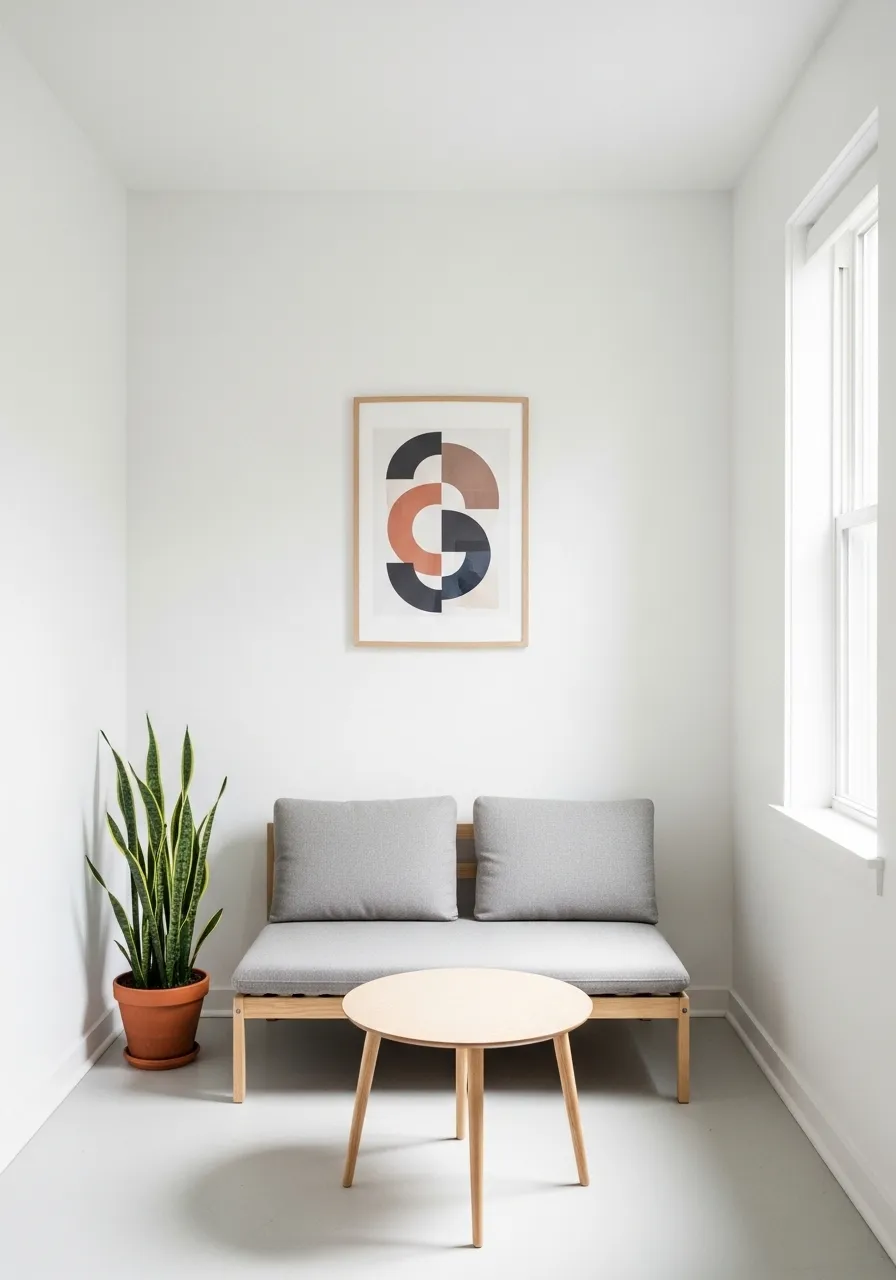
Less is genuinely more in a small room.
Every object you add to a small space takes up both physical and visual space. That vase. Those three throw pillows. The stack of magazines. The random candles.
It adds up fast.
Minimalist decor doesn’t mean cold or empty. It means intentional. Every piece earns its place.
How to edit down your decor:
- Remove everything from a surface, then put back only what you truly love
- Stick to a two- or three-color palette for all your accessories
- Choose one or two statement pieces rather than many small items
- Store seasonal decor when it’s not in use
The 80/20 rule for small rooms: Leave 80% of your wall space and 80% of your surface space clear. The 20% you do fill will stand out beautifully.
Budget impact: Minimalist decor actually saves money. You buy fewer things — but choose them more carefully.
21. Use Open Shelving in the Kitchen
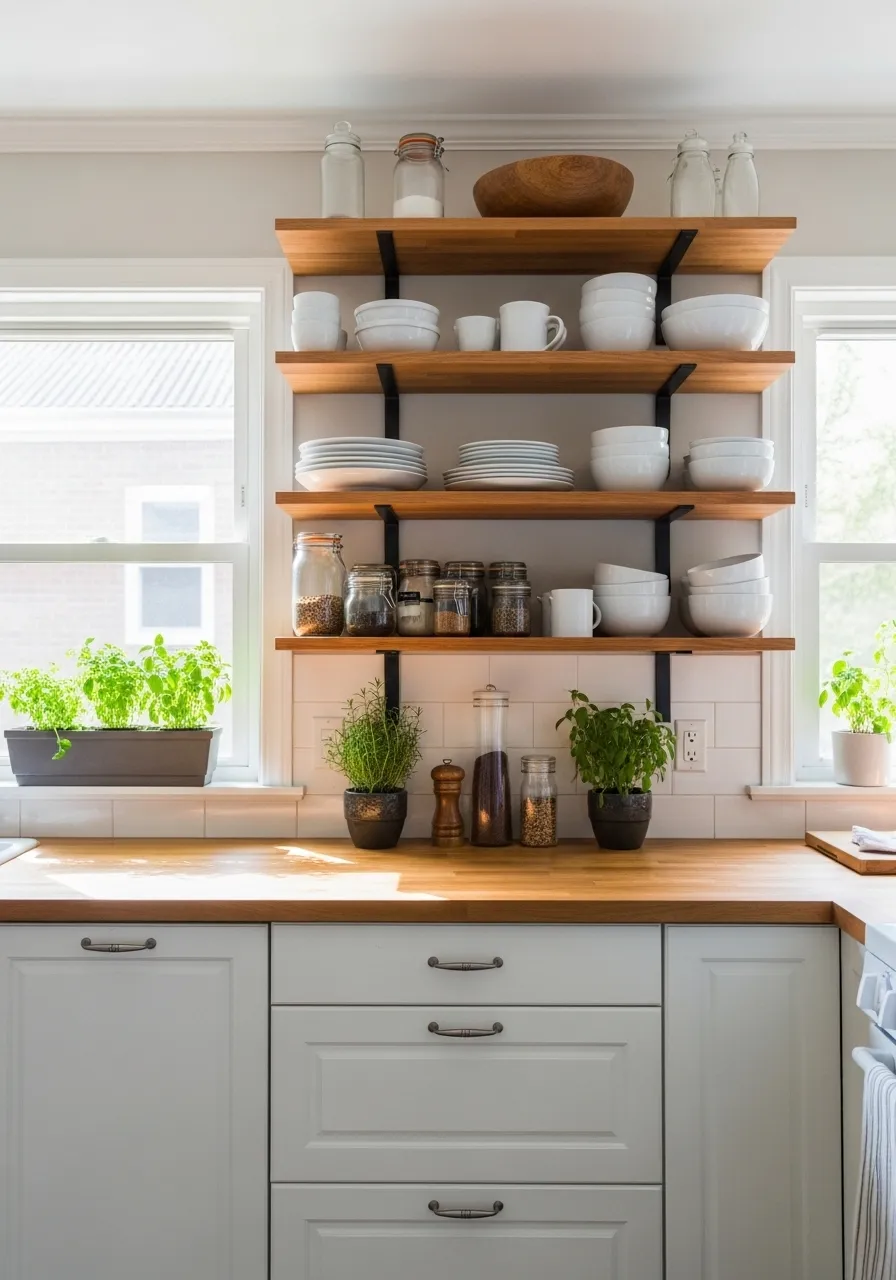
Upper kitchen cabinets are visually heavy. They feel like walls closing in.
Open shelves in place of upper cabinets make a small kitchen feel dramatically more open and airy.
You see through the space instead of hitting a solid wooden surface. The room feels like it continues beyond the counter.
This works best if:
- You’re willing to keep the shelves organized and styled
- You use your kitchen regularly (things that get used often look intentional, not dusty)
- You have a simple, consistent dishware collection
What to put on open shelves:
- Matching plates and bowls stacked neatly
- Clear glass jars for dry goods (pasta, rice, coffee)
- A few small plants or herbs
- One or two decorative pieces
Affordable option: Remove existing cabinet doors and paint the interior. Instant open shelving without buying anything new.
Use under-shelf hooks ($5–$10) to hang mugs and free up shelf space.
This isn’t for everyone — if your kitchen is chaotic, open shelves will show that chaos. But with a little organization, it’s one of the most effective visual tricks in a small kitchen.
22. Get Furniture on Legs
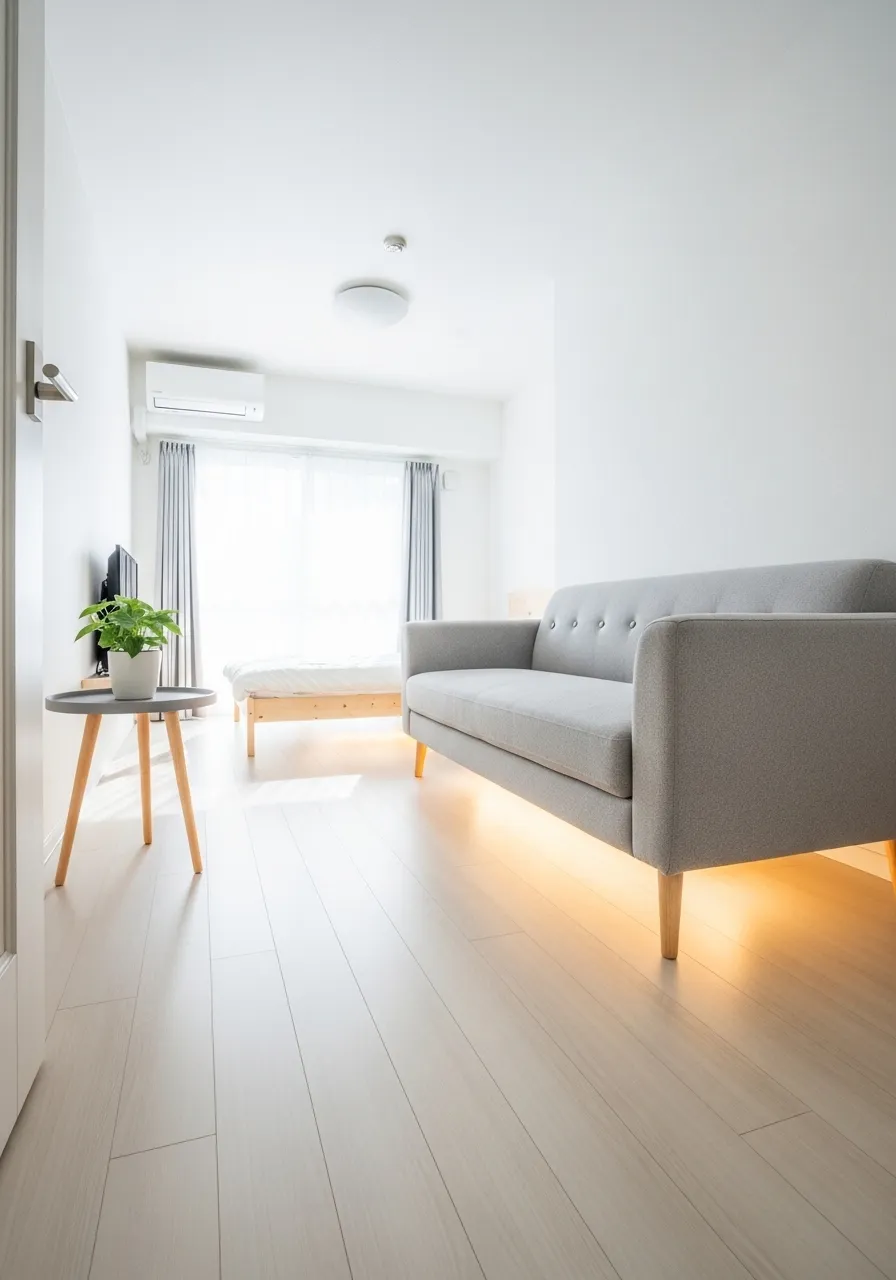
Furniture that sits flat on the floor looks heavy and blocks sight lines.
Furniture on legs lets light pass underneath, which makes the room feel airier and the floor feel larger.
This is a subtle but real effect. When you can see floor running under a sofa or dresser, the room feels less cluttered even if the furniture count is the same.
Look for:
- Sofas on raised wooden or metal legs
- Bed frames with visible legs (not platform frames that sit on the floor)
- Dressers and media consoles with tapered legs
- Side tables on hairpin or tapered legs
IKEA hack: Many IKEA sofas and beds have optional leg upgrades. Swap the stock legs for taller ones from a third-party seller (these are widely available on Etsy and Amazon for $20–$40 for a set).
Even a few extra inches of clearance under a sofa makes a measurable difference in how open the room feels.
Clean underneath regularly — the visibility that makes the room feel open also means dust bunnies are on display. A quick vacuum sweep under raised furniture once a week keeps it looking sharp.
23. Create Zones in a Studio Apartment
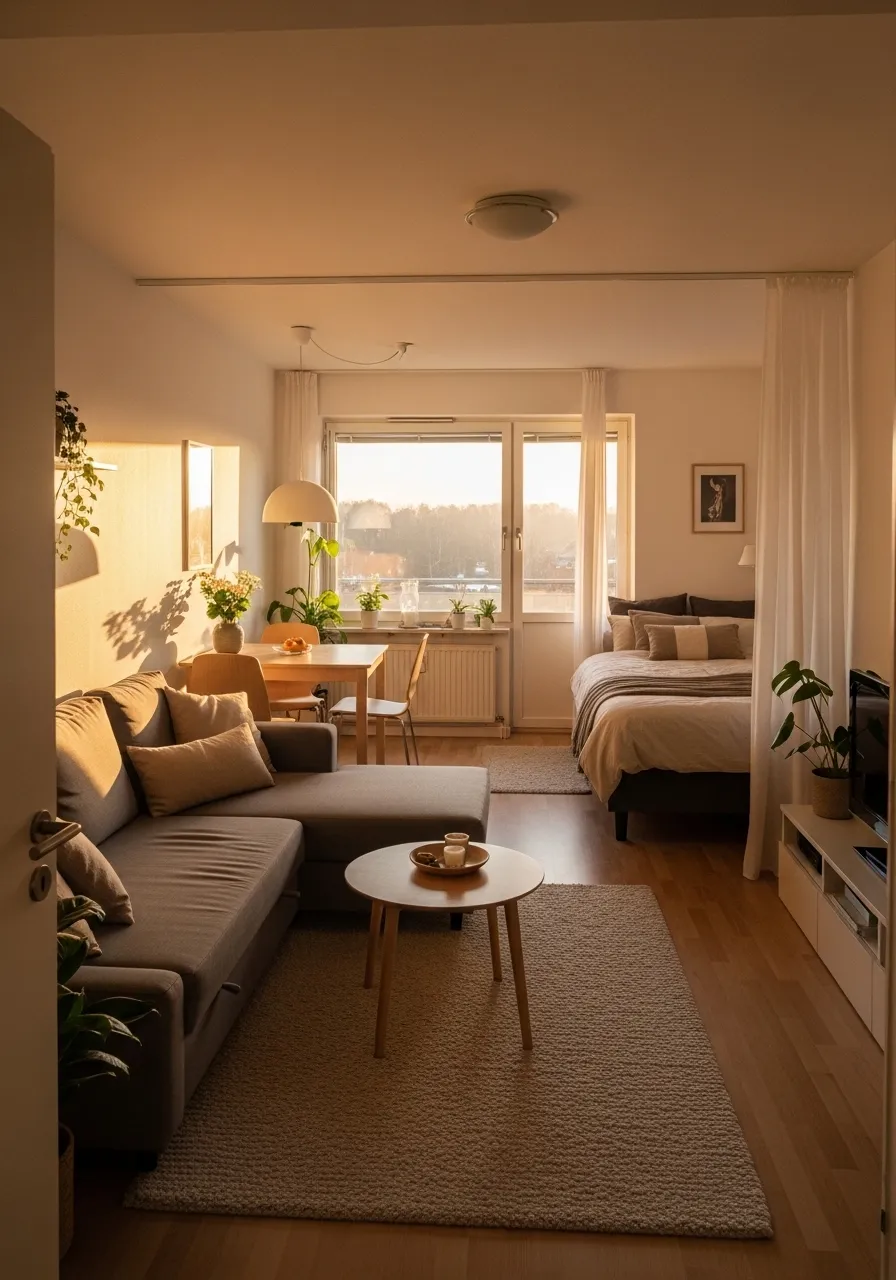
A studio apartment is one room trying to be several. Without clear zones, everything bleeds together and the space feels chaotic.
Defining separate zones makes a small space feel purposeful and, paradoxically, larger — because your brain processes multiple “rooms” instead of one messy area.
Tools for zone-defining:
- Area rugs — the most powerful zone divider
- Bookshelf dividers — open-back shelves that allow sight lines but define the edge of a space
- Curtain panels — a tension rod with a curtain creates a “wall” without blocking light
- Furniture arrangement — back of a sofa facing away from the bed creates a natural break
Suggested zones for a studio:
- Sleeping zone (the bed, nightstand, lamp)
- Living zone (sofa, rug, coffee table)
- Work zone (desk, chair)
- Dining zone (table for two near the window)
You don’t need walls to have zones. You need intention.
Color consistency: Let different zones share common colors so the space still reads as cohesive even when divided.
24. Add a Pegboard for Wall Organization
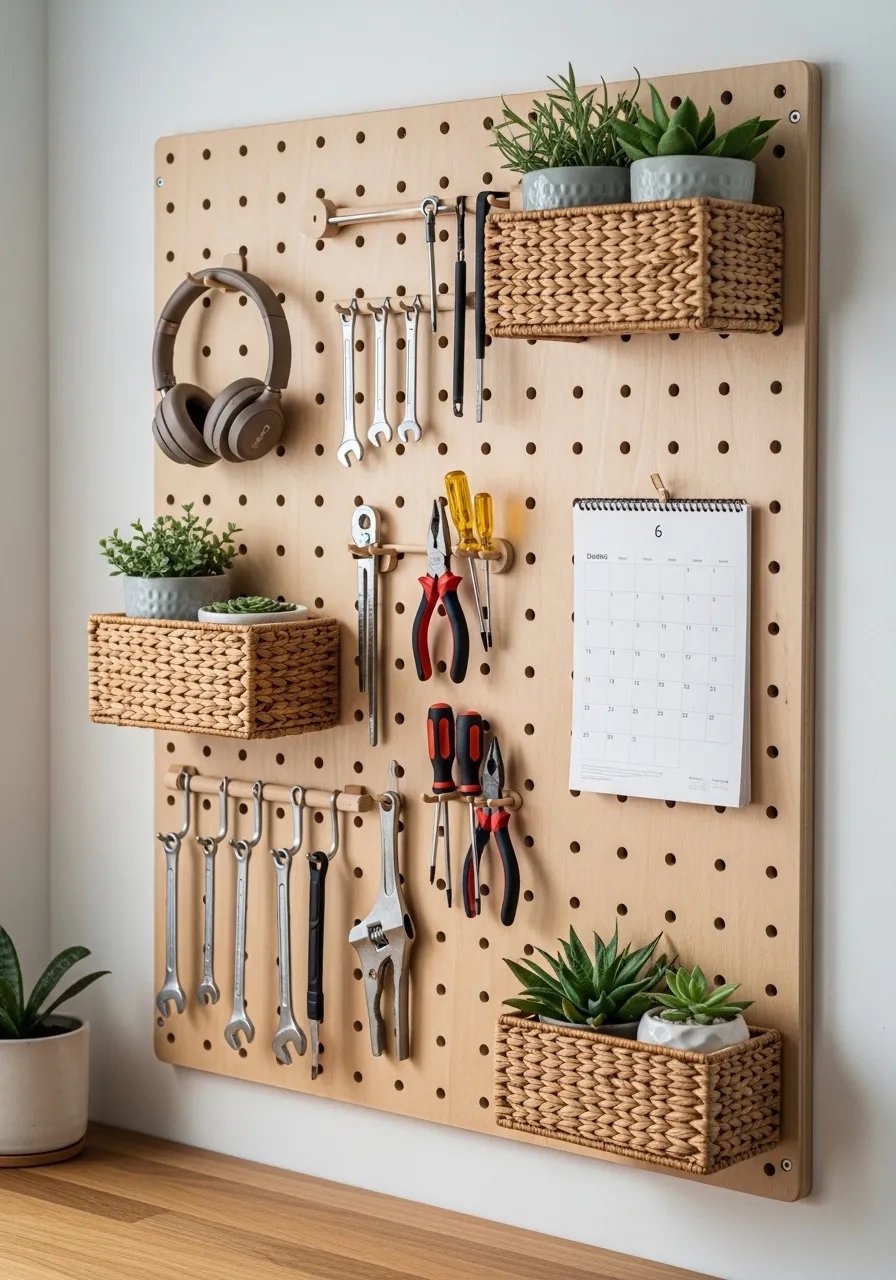
Pegboards turn any wall into vertical storage — and they look intentional when done well.
A pegboard takes things off counters and desks and puts them on the wall, freeing up flat surface space instantly.
Originally a workshop staple, pegboards have found their way into kitchens, home offices, entryways, and craft rooms with good reason.
IKEA’s SKÅDIS pegboard is the modern version — clean, white, and compatible with dozens of add-on accessories. It starts around $20–$30.
Where to use a pegboard:
- Home office: hang scissors, tape, chargers, headphones
- Kitchen: hang pots, spatulas, knives on magnetic strips
- Entryway: hang keys, bags, hats, umbrellas
- Craft room: organize tools, scissors, thread, glue guns
Paint the pegboard a solid color that matches the wall to make it blend in. Or paint it a contrasting color to make it a design feature.
Mix baskets, hooks, and shelves for maximum flexibility. Rearrange them as your needs change — no tools required.
This is one of the most flexible organization upgrades you can make for under $50.
25. Swap Heavy Curtains for Roller Blinds or Sheer Panels
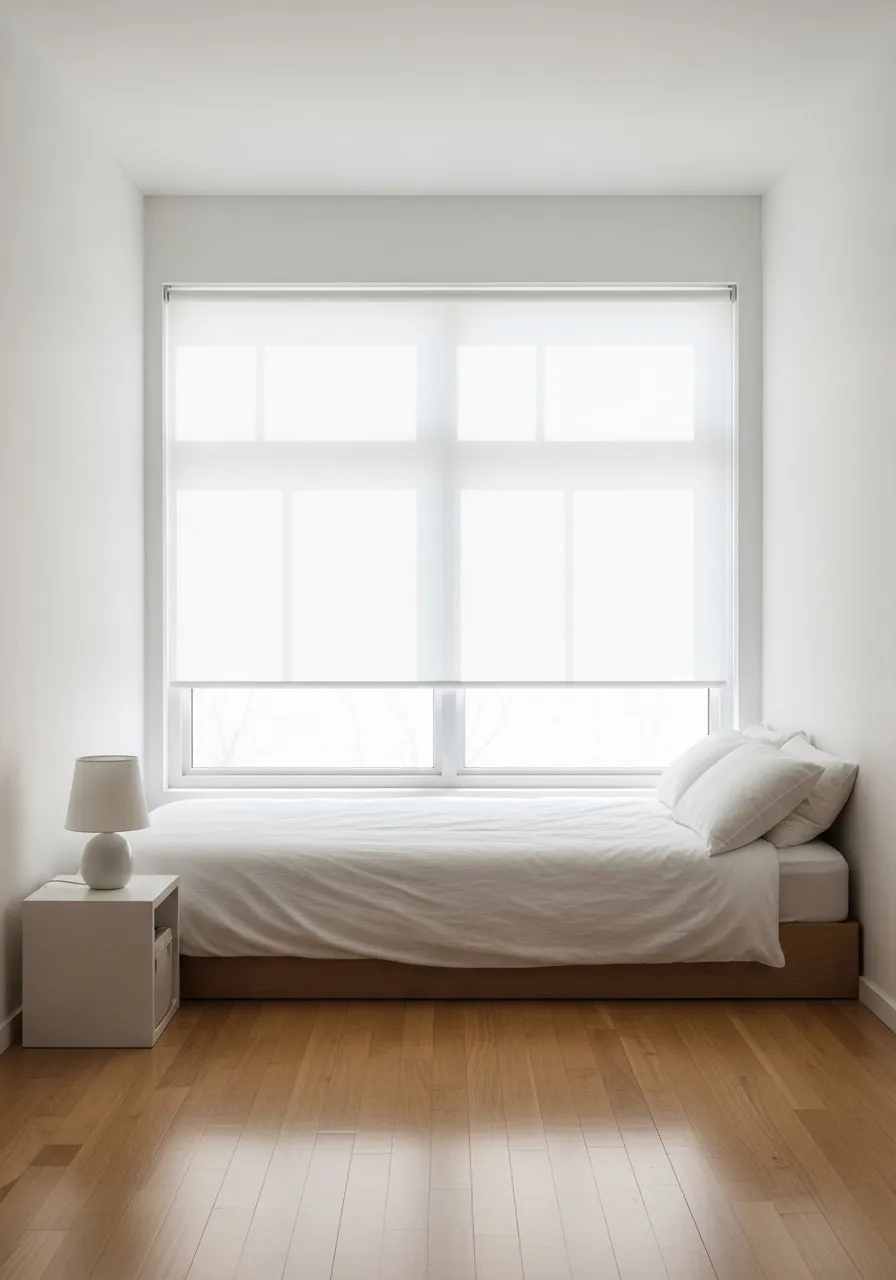
Heavy, dark curtains steal light and add visual bulk — two things a small room cannot afford.
Roller blinds or simple sheer panels keep windows feeling light and minimal while still giving you privacy when you need it.
Roller blinds are especially good for small rooms because when they’re rolled up, they almost disappear. No fabric bunching at the sides, no heavy rods, no visual weight.
Types to consider:
- Solar sheer roller blinds — filter light, maintain view, reduce glare
- Blackout roller blinds — for bedrooms where you want darkness without heavy curtains
- Simple sheer linen panels — airy, soft, affordable
You can find roller blinds at IKEA, Home Depot, and Amazon for $15–$50 depending on size.
For a polished look: pair roller blinds with a simple wooden or metal curtain rod and a sheer panel on each side for softness.
Avoid layered curtain sets (sheer plus blackout plus valance). That’s three layers of fabric in a room that already has no room for them.
Keep the treatment simple, and the window — and the room — will breathe.
26. Use a Sliding Barn Door Instead of a Swing Door
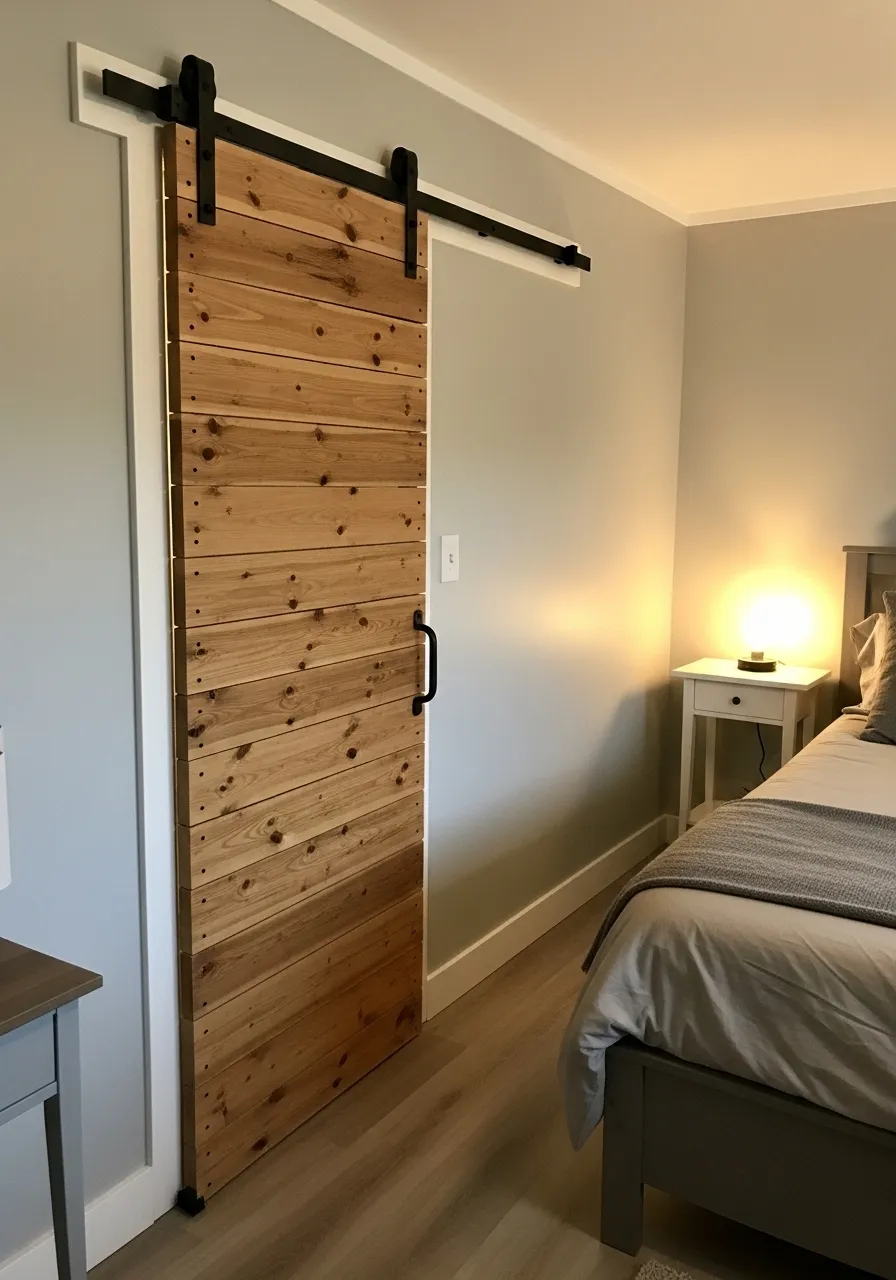
Interior doors swing open into a room. That swing takes up floor space you can’t use for anything else.
A sliding barn door — or a pocket door if you’re renovating — eliminates the swing entirely. The door slides flat against the wall. That reclaimed space can hold a small chair, a plant, or just breathing room.
Barn door hardware kits start at around $80–$150 on Amazon. A pre-made door panel costs $100–$250, or you can DIY one from plywood and stain it yourself for under $50.
Where barn doors work best:
- Bedroom to closet
- Bedroom to bathroom
- Small hallway bathroom
- Pantry or laundry room entrance
They add rustic character but also work in modern spaces when paired with sleek black hardware and a plain door panel.
Important: Barn doors don’t seal as tightly as traditional doors. For bathrooms, make sure you’re comfortable with slightly less soundproofing.
If a full barn door install feels like too much, even removing the interior door entirely (if privacy isn’t needed) opens up the room significantly.
27. Bring in a Statement Piece Instead of Many Small Items
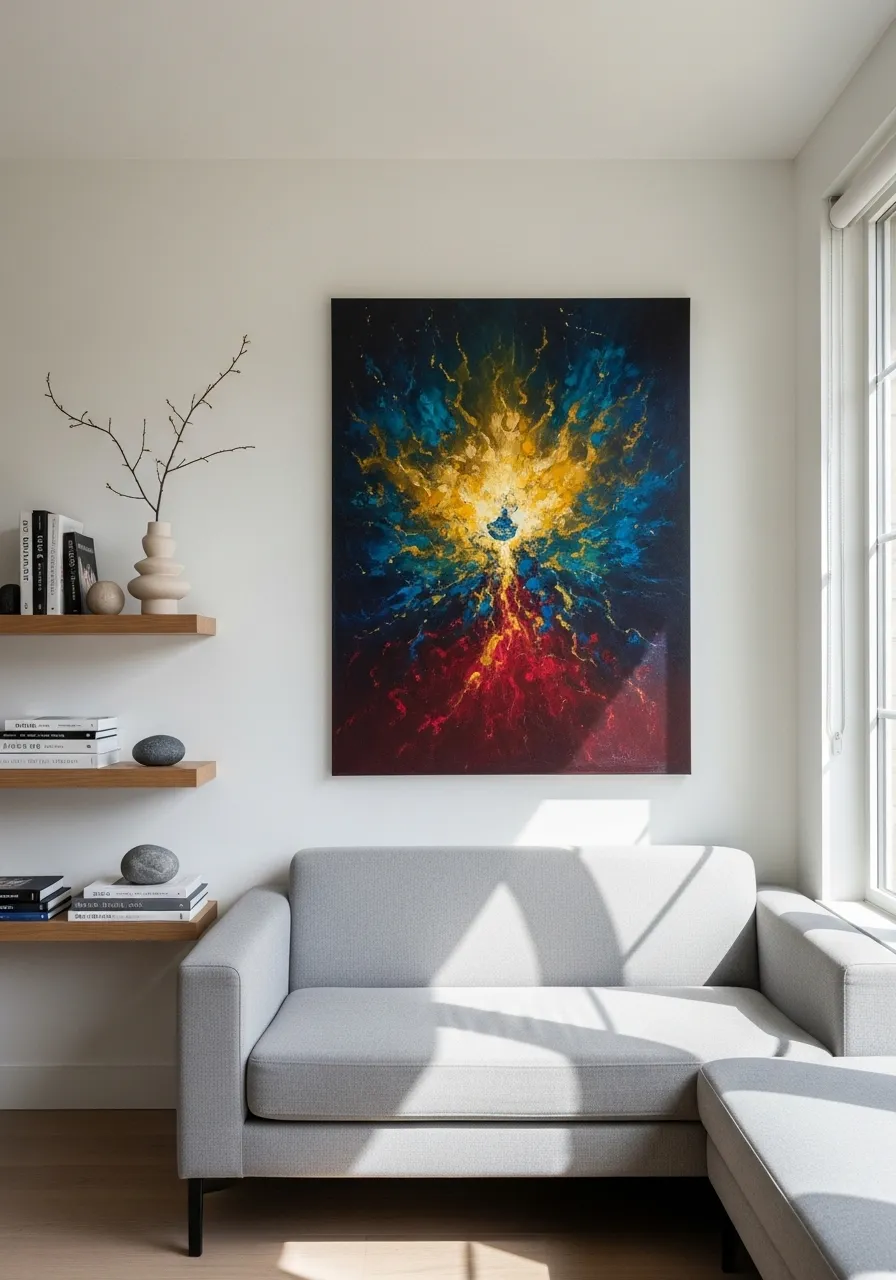
Small rooms suffer from the “gallery wall gone wrong” problem. Ten small frames. Seven little figurines. Four small candles. It becomes visual clutter that makes the room feel frantic.
One large, confident piece of art or decor makes a statement without the chaos of many small pieces.
A single large canvas above the sofa. One oversized vase on a shelf. A bold sculptural lamp. One large plant.
Why this works: The eye knows where to go. There’s a visual anchor. Everything else in the room supports it.
How to find affordable statement pieces:
- Large canvas prints on Amazon or Society6 ($30–$80)
- Oversized frames with free downloadable prints (print at a local copy shop)
- Thrift stores for large vases, lamps, or sculptural pieces
- IKEA’s art section for large, affordable prints
The rule: One focal point per visual zone. In the living room, pick the wall. In the bedroom, pick the bed wall. In the kitchen, pick the backsplash or open shelves.
Then let everything else step back.
Conclusion
Making a small room feel bigger isn’t about spending a lot of money or doing major renovations. It’s about making smarter choices with what you already have — and being selective about what you add.
Light colors, clear furniture, vertical storage, and ruthless editing will take you further than any expensive furniture purchase. Most of the ideas above can be done for under $100, and several cost nothing at all.
Start with one or two changes. Clear the clutter. Hang your curtains higher. Add a mirror. Mount a shelf. Each small shift adds up, and before long, you’ll walk into a room that feels completely different — even if it’s the exact same square footage.
Your space has more potential than you think. It just needs a little direction.