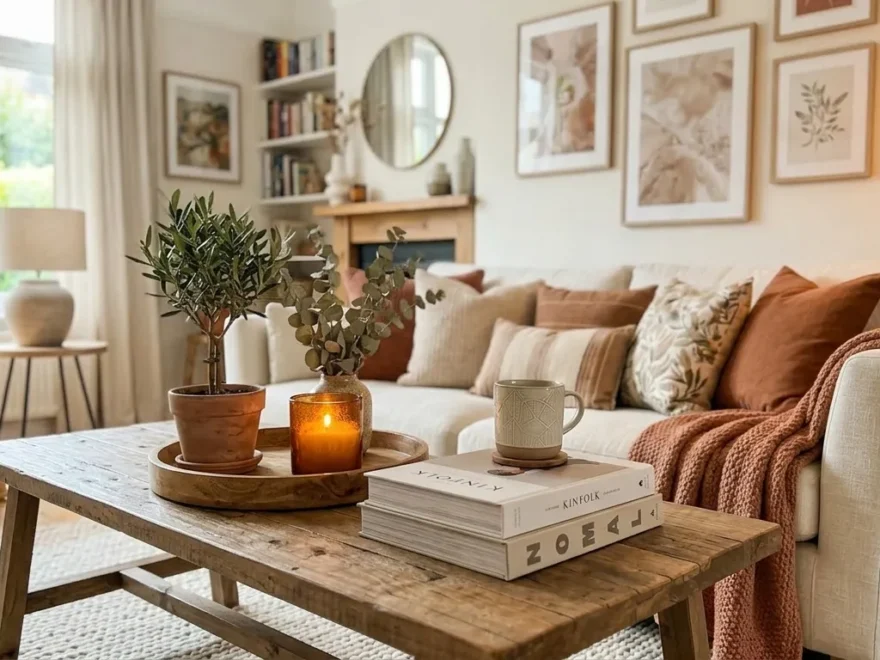
1. Layer Your Throw Pillows Like a Pro
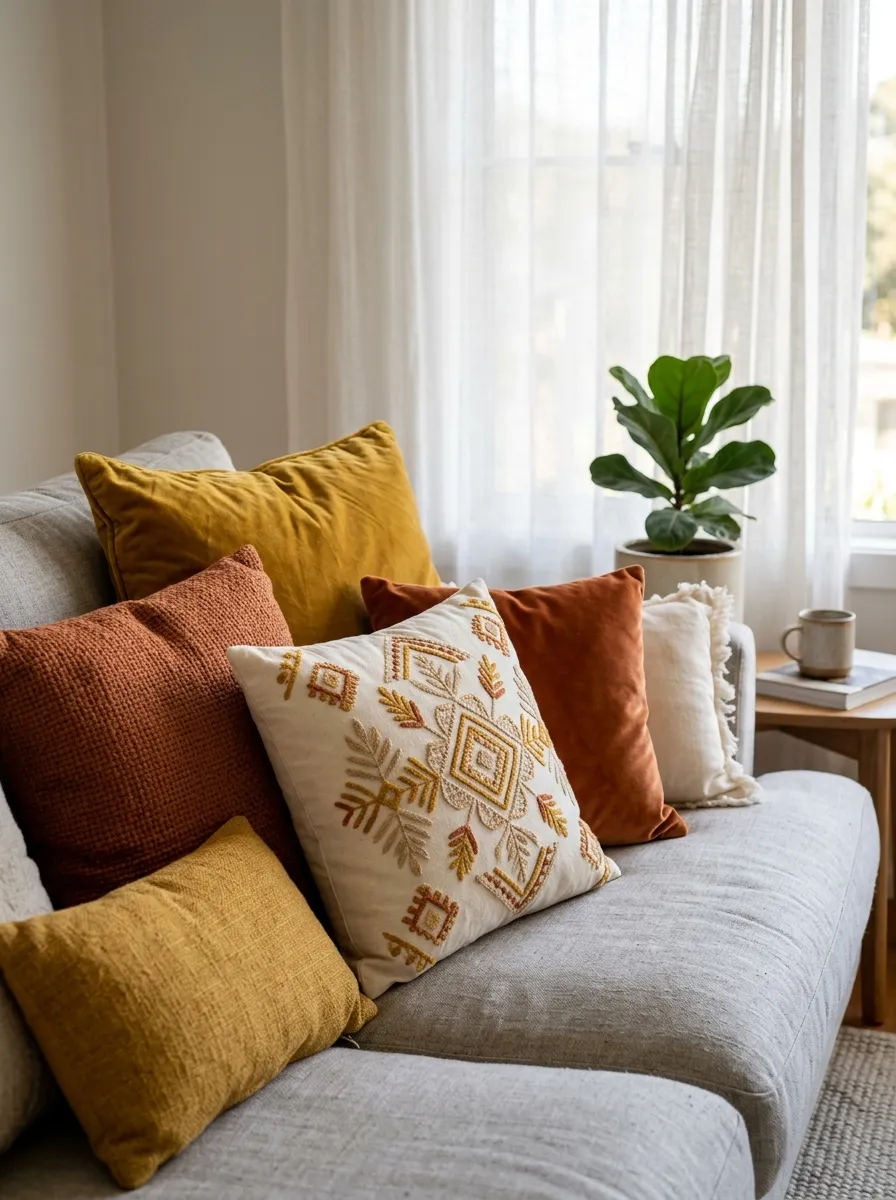
Throw pillows are one of the fastest ways to change the entire feel of a sofa. Most people buy a matching set and call it done. That approach looks flat and forgettable.
Instead, mix sizes. Use a large square pillow at the back, a medium rectangle in front, and a small accent pillow at the corner. Mix textures too. Velvet next to linen next to a chunky knit creates depth and visual interest.
Stick to a simple color rule. Pick two main colors and one accent. This stops the sofa from looking chaotic.
You can find great throw pillow covers at thrift stores, discount home shops, or even online marketplaces for very little money. Just swap the covers whenever you want a new look.
Budget tip: Buy plain insert pillows once and just rotate the covers seasonally. This saves money and keeps things feeling current without buying new pillows every time.
Guests always notice a well-styled sofa. It signals that you pay attention to detail. That impression sets the tone for the whole room.
2. Add a Statement Area Rug
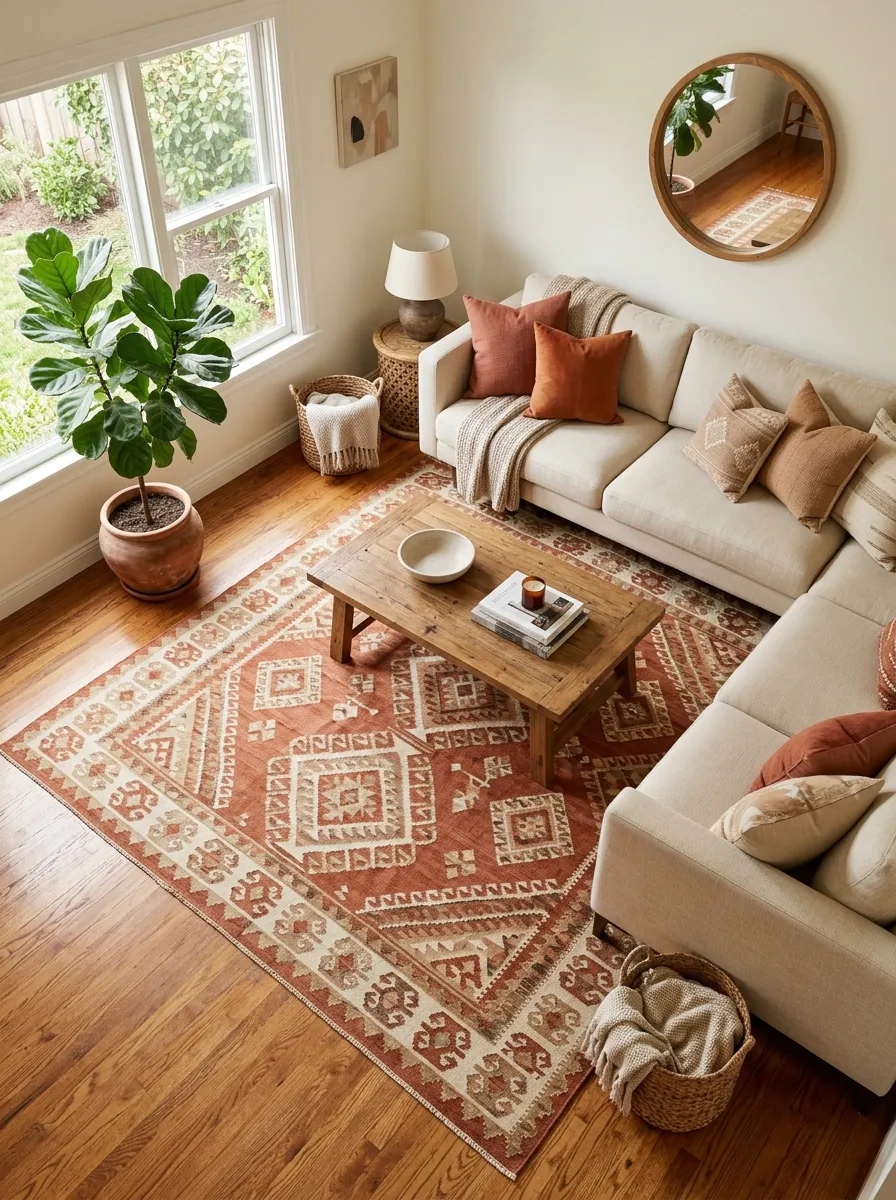
A rug does more than cover the floor. It anchors the whole room and pulls the furniture together into one cohesive space.
The biggest mistake people make is buying a rug that is too small. Your sofa legs should sit on the rug, or at the very least the front legs should touch it. A rug floating in the middle of a room with furniture hovering off it looks disconnected and awkward.
Go for a rug with some pattern or texture if your sofa and walls are neutral. A geometric print, a subtle stripe, or a vintage-inspired medallion design adds personality without overwhelming the space.
If your room already has bold colors, choose a solid or low-key textured rug that grounds things without competing.
Budget tip: Large rugs can be expensive, but you can find beautiful options at stores like IKEA, Amazon, or even Facebook Marketplace. Layering two smaller rugs, a jute base with a printed one on top, is also a trendy and affordable trick.
A good rug makes guests feel like they have walked into a real, thoughtfully designed room.
3. Create a Curated Coffee Table Display
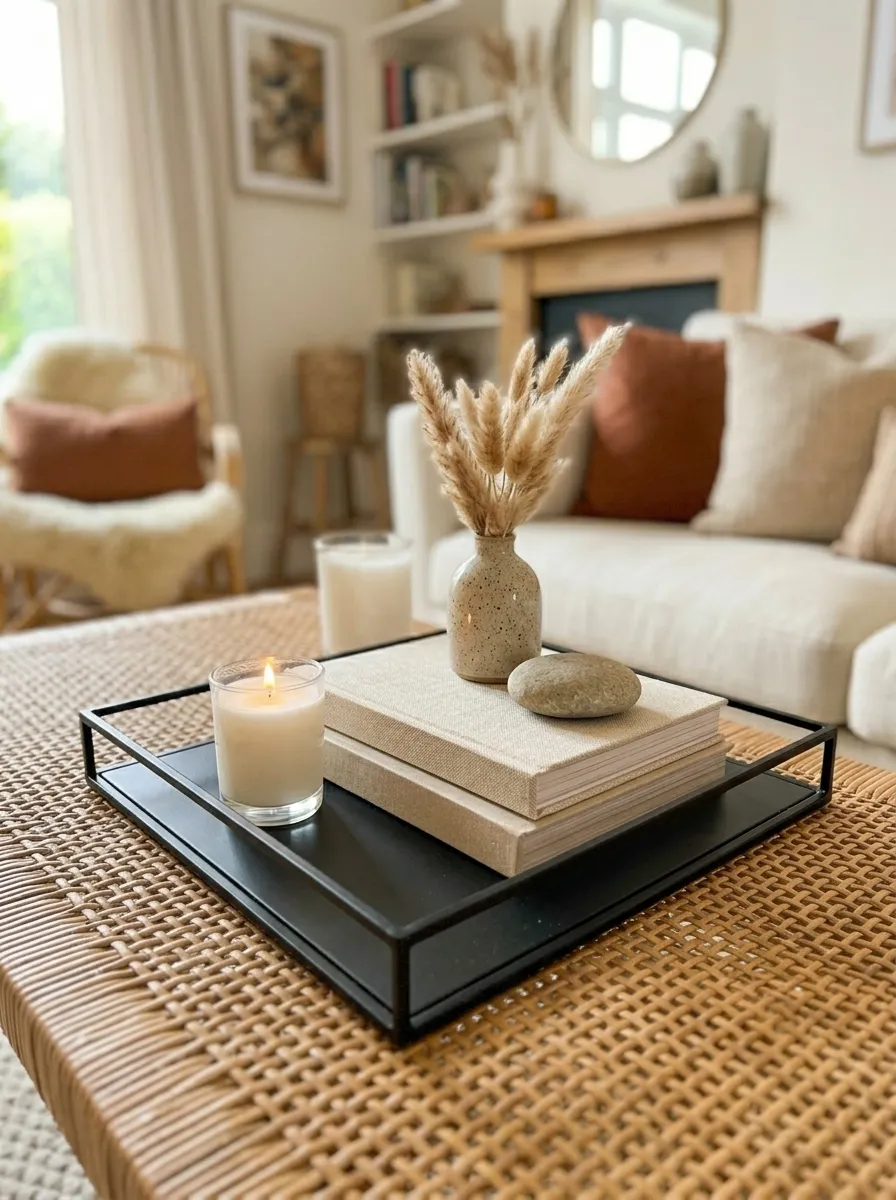
Your coffee table is the centerpiece of your seating area. Guests look at it constantly. A random remote control, a stack of old magazines, and a half-empty coffee mug is not the impression you want to make.
A simple and effective formula works really well here. Use a tray to contain everything. Inside the tray, place three to five items of varying heights. Think a candle, a small plant or dried botanicals, a decorative object, and a book or two with nice covers.
The tray does the organizing work for you. It makes the display look intentional even if it took you five minutes to put together.
Keep the rest of the table clear. Negative space on a coffee table looks sophisticated, not empty.
Budget tip: Repurpose items you already own. A pretty bowl, a candle from your bathroom, a book with a cover you love. Face the books spine down to show off plain covers if the titles do not fit your aesthetic.
Refresh this display once in a while to keep things from feeling stale. Small changes make a big difference to the overall feel of the room.
4. Use Warm Lighting Instead of Overhead Glare
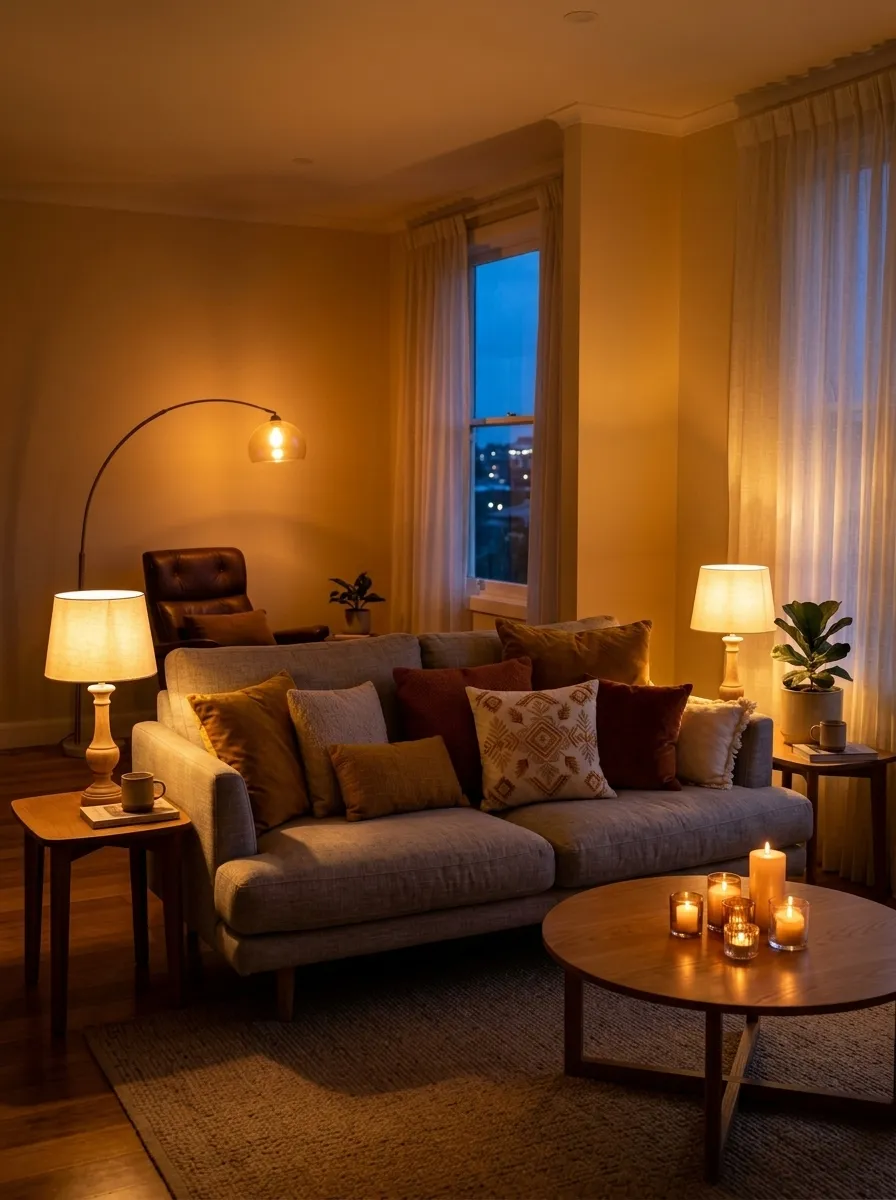
Lighting is the single most underrated element of a living room. Most apartments and homes default to one harsh overhead light. That creates flat, clinical lighting that drains warmth from any room.
Switch it up with layers. Use table lamps on side tables next to the sofa. Add a floor lamp in a corner to fill dark spots. Place a few candles on the coffee table or shelving for instant atmosphere.
Warm white bulbs, around 2700K to 3000K, create that golden glow that makes a space feel inviting. Avoid cool white or daylight bulbs in a living room unless you want it to feel like an office.
Dimmer switches are worth every penny if you can install them. Being able to lower the lights when guests arrive changes the entire energy of the room.
Budget tip: Smart bulbs like Govee or Wiz are affordable and let you adjust warmth and brightness from your phone. You do not need expensive fixtures. A simple thrifted lamp with a warm bulb does the job beautifully.
Good lighting tells guests this room was designed for comfort.
5. Hang Art at the Right Height
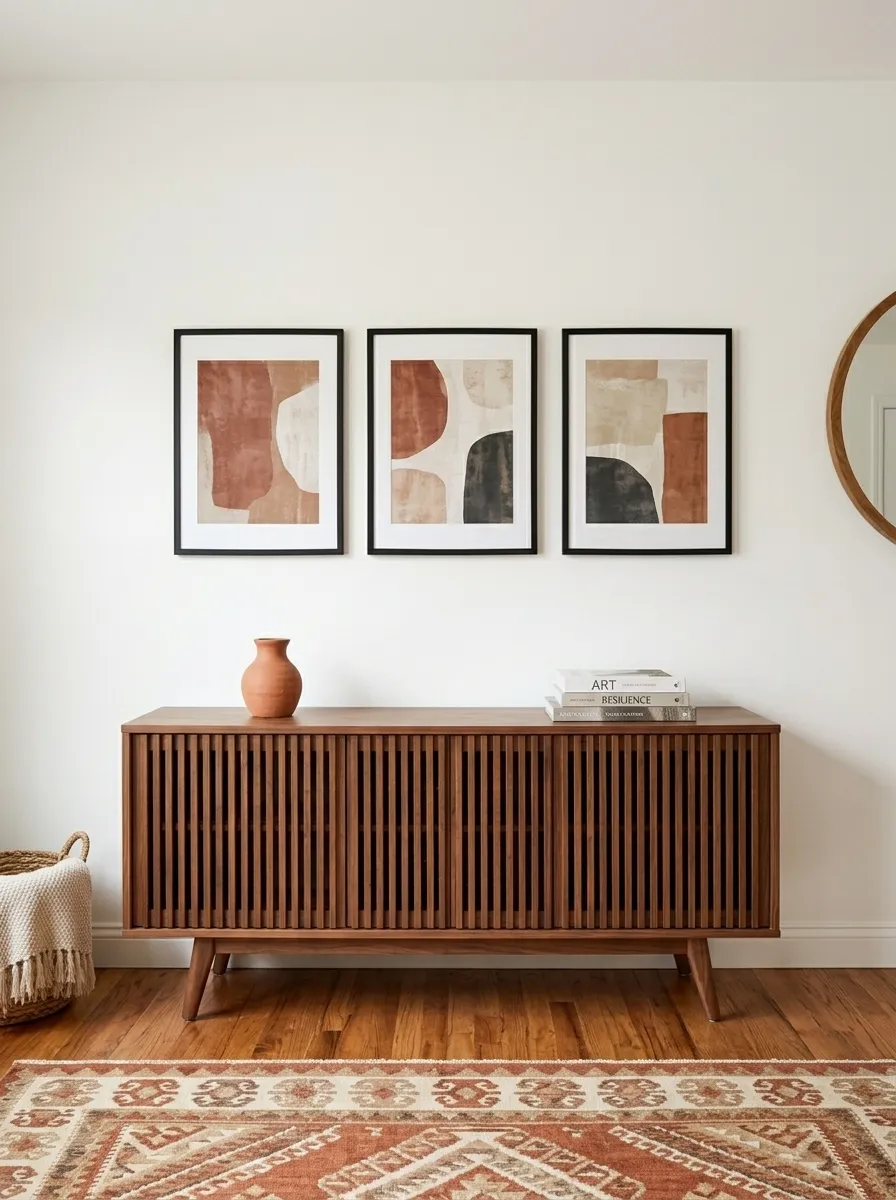
Art makes a room feel personal and lived in. But hanging it wrong, too high, too small, or randomly placed, does the opposite and makes walls look awkward.
The rule most designers follow is center your art at eye level, which is roughly 57 to 60 inches from the floor to the center of the piece. This is where galleries hang art and it works in homes too.
For a gallery wall, lay everything out on the floor first. Arrange until you love it, then transfer to the wall. Use paper templates taped to the wall to test placement before hammering anything.
Do not hang tiny art on a big wall. Scale matters. One large piece has more impact than five small ones crammed together.
Budget tip: Print digital art from Etsy or free platforms like Unsplash in large formats at a print shop. Frame them in affordable Ikea frames. You get high-impact art for a fraction of gallery prices.
Art gives guests something to talk about. It starts conversations and makes the room feel curated and intentional.
6. Bring in One Bold Accent Chair
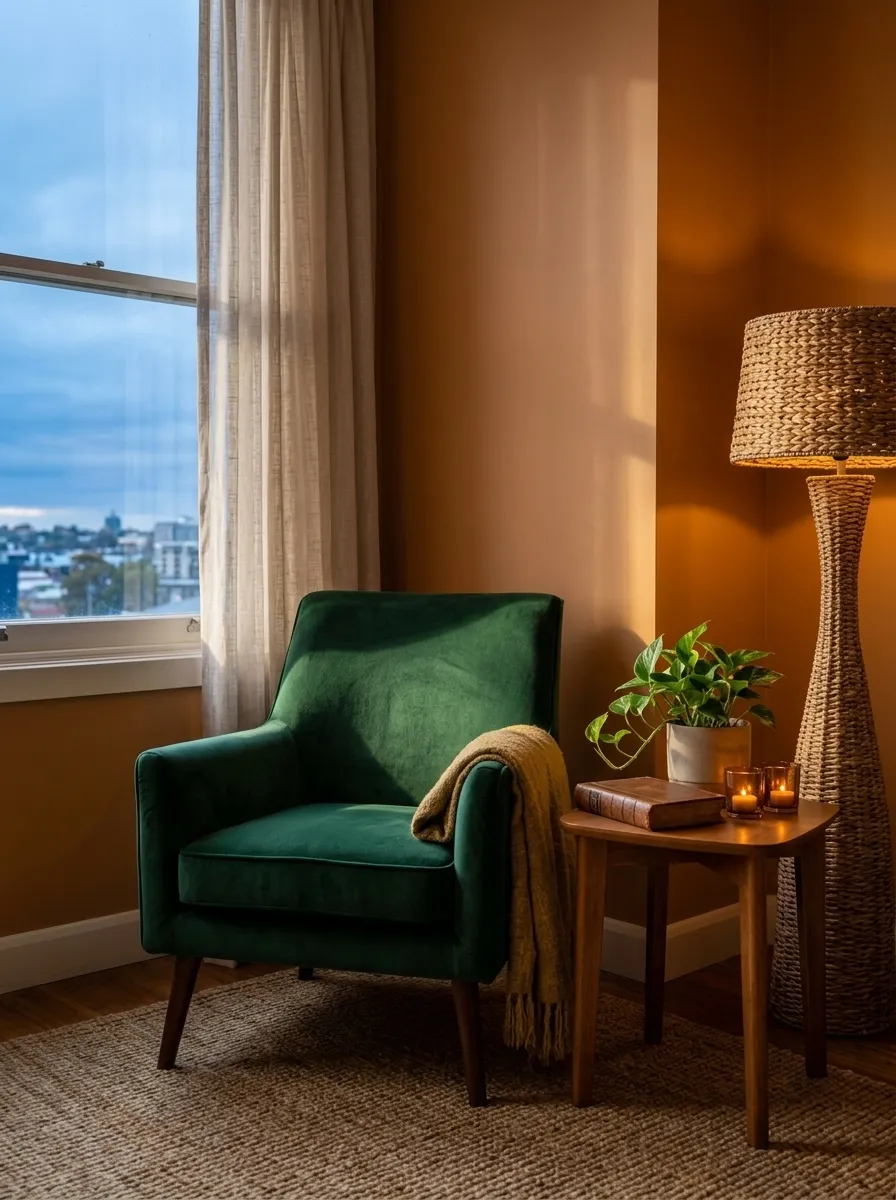
Every living room benefits from a chair that makes people stop and look. Not a matching chair from the same sofa set. A distinct piece that adds personality and contrast.
Think of it as a focal point in a corner. A velvet chair in a deep jewel tone like navy, forest green, or rust against neutral walls creates a striking visual moment without requiring you to redo the whole room.
This chair also adds extra seating for guests without cluttering the space. A well-chosen accent chair signals confidence in design choices.
Pair it with a small side table and a lamp to create a complete little reading nook moment. That corner becomes a destination, not just dead space.
Budget tip: Check Facebook Marketplace, thrift stores, and estate sales for accent chairs. Many need just a good clean or new legs to look amazing. Reupholstering a small chair is also a manageable DIY project and way cheaper than buying new.
A bold chair gives your room a personality that guests will remember long after they leave.
7. Style Your Bookshelf Like a Display, Not Storage
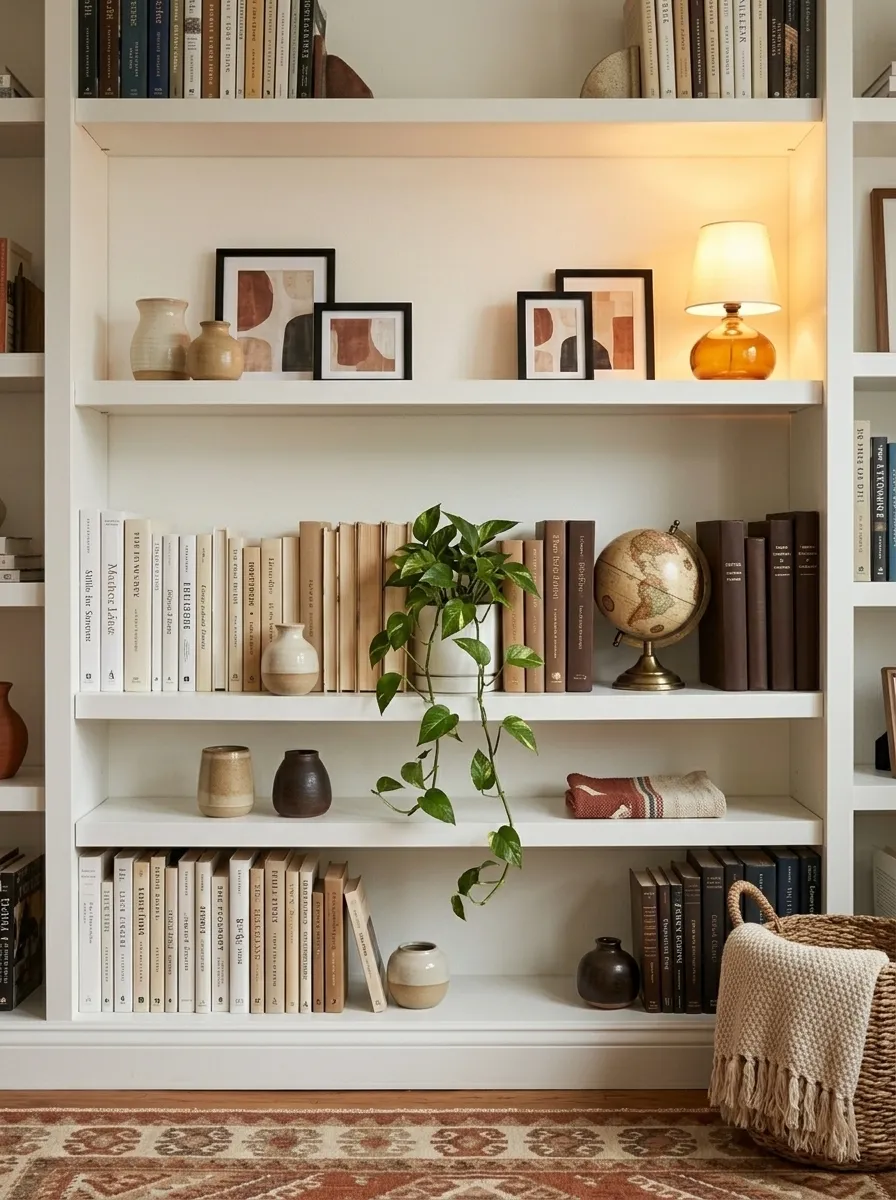
Most bookshelves look like storage, not decor. Books crammed in every which way, random objects shoved wherever they fit. With a few simple changes, your shelf can become one of the most impressive features in your living room.
Start by pulling everything off and editing. Keep only things you genuinely love or use.
Then think of the shelf in sections. Group books by color for a satisfying, curated look. Mix horizontal and vertical stacking to add rhythm. Leave some sections open and place a plant, a candle, or an art object there instead.
Break up the books with decorative objects at different heights. A small sculpture, a framed photo, a trailing plant. This prevents the shelf from looking like a wall of text.
Budget tip: Use items you already own. Repot a plant into a pretty pot, use a candle you already have, display a meaningful object. You do not need to buy new decor for this. Just rearrange and edit what you have.
A beautifully styled shelf tells guests a lot about who you are.
8. Add Greenery Without Killing Plants
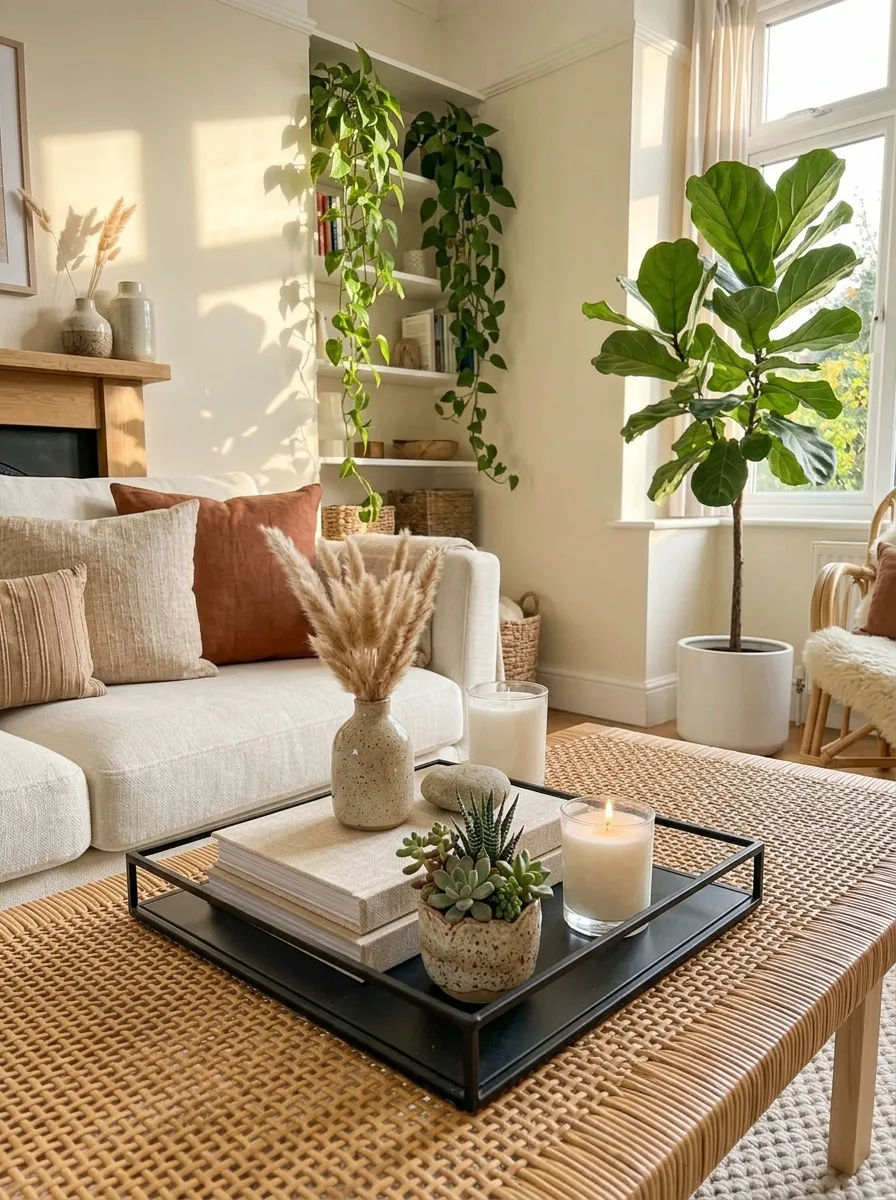
Plants make a living room feel alive. They add color, texture, and a sense of calm that no other decor element replicates. But many people avoid them because they worry about keeping them alive.
The trick is matching the plant to your actual light conditions and your actual lifestyle.
If you travel often or forget to water, go for a snake plant, ZZ plant, or pothos. These survive serious neglect and still look beautiful. If you have bright natural light, a fiddle leaf fig or monstera makes a dramatic statement.
One large floor plant in a corner has more impact than five small ones scattered around. It draws the eye up and adds architectural weight to the space.
Budget tip: Propagate from cuttings. Ask friends, neighbors, or local plant groups for cuttings of their plants. Pothos, philodendron, and spider plants propagate in water for free. You get a beautiful plant for nothing.
Guests always react positively to greenery. It makes a room feel cared for, warm, and full of life.
9. Use Mirrors to Open Up the Space
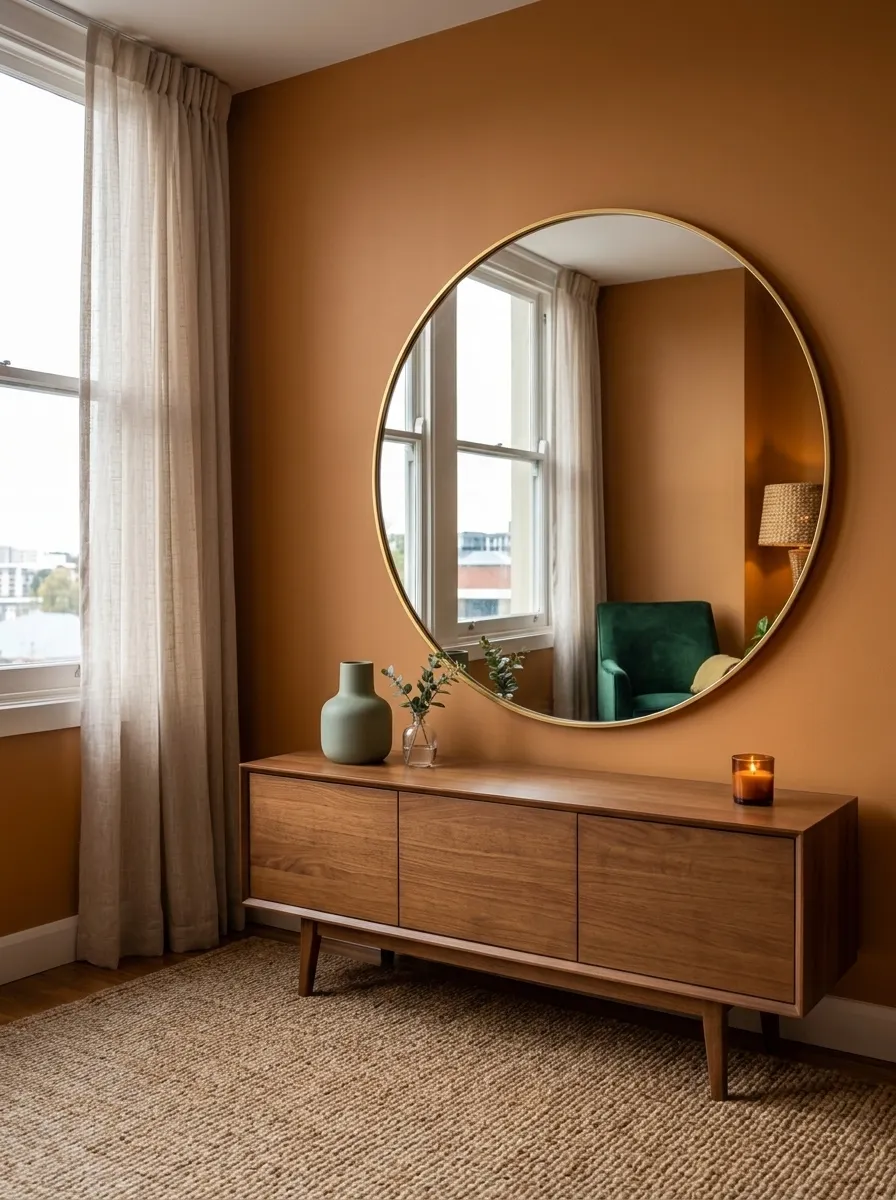
Mirrors are one of the best tools for making a small living room feel larger and more expensive. They reflect light, create depth, and add a decorative element at the same time.
A large round mirror with a statement frame hung above a console or credenza is one of the most classic and effective looks. It fills wall space beautifully and reflects the room back in a flattering way.
Lean a large floor mirror against a wall for a more casual and modern look. This is especially useful in rented spaces where drilling is limited.
Place mirrors opposite windows when possible to bounce natural light through the room.
Budget tip: Thrift stores and garage sales are full of mirrors. An ugly frame can be spray-painted gold, black, or white for under five dollars. The mirror inside is usually perfectly good. Upcycling a mirror is one of the most satisfying and affordable DIY decor wins.
Guests often comment on mirrors without knowing why. They just feel like the room is bigger and brighter.
10. Create a Focal Point With an Accent Wall
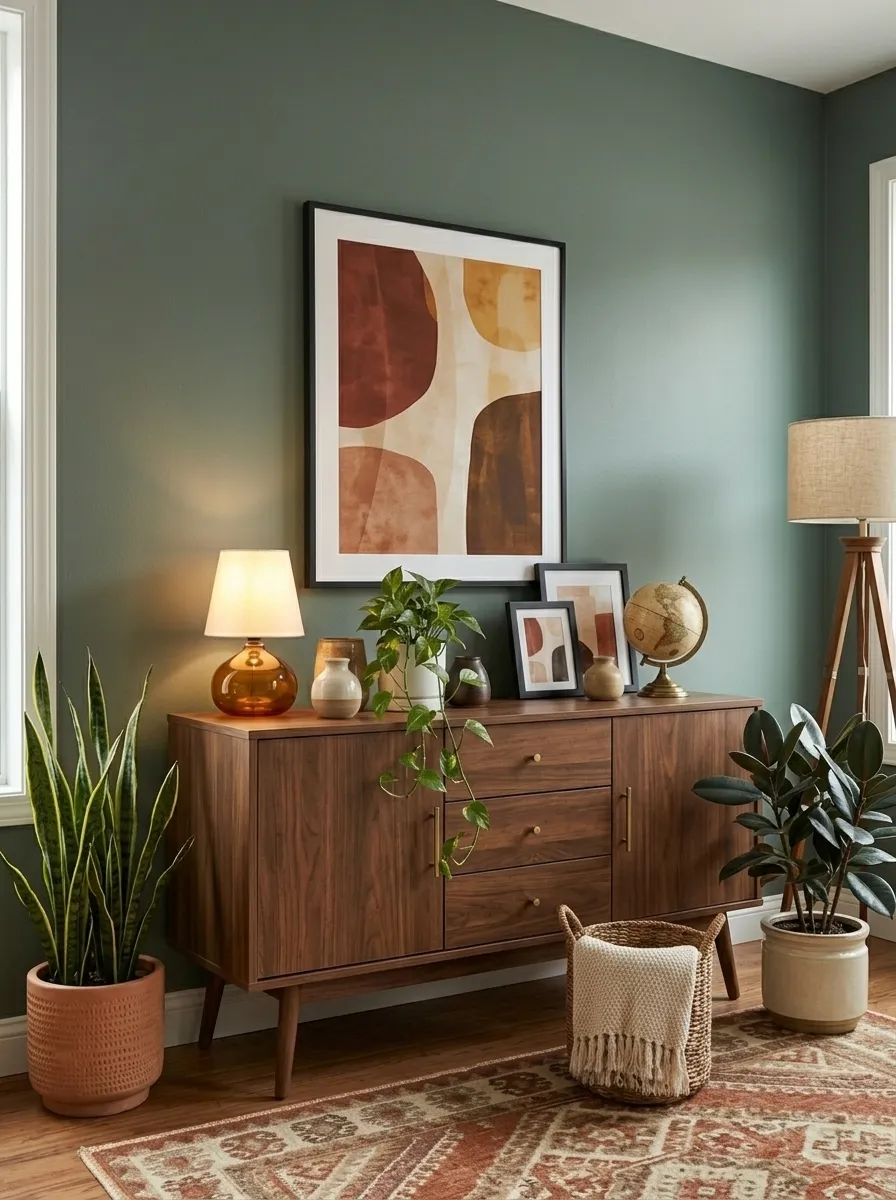
Every room benefits from one wall that grabs attention. This is your accent wall. It directs where the eye goes when someone walks in and gives the room a clear visual center.
You do not need expensive wallpaper to create this. A single wall painted in a rich, moody color does the job beautifully. Deep sage green, charcoal, navy, or terracotta all work well as accent wall colors.
Choose the wall that faces the room entrance or the wall behind the sofa for maximum impact.
Once you have the color, let that wall be the anchor. Hang your best art piece there or place your most attractive furniture in front of it.
Budget tip: Paint is the most affordable renovation you can do. A single wall takes one small tin of paint, which usually costs very little. Tape your edges well, use two coats, and the result looks professional.
An accent wall gives guests an immediate sense of intentional design when they walk through the door.
11. Layer Your Window Treatments
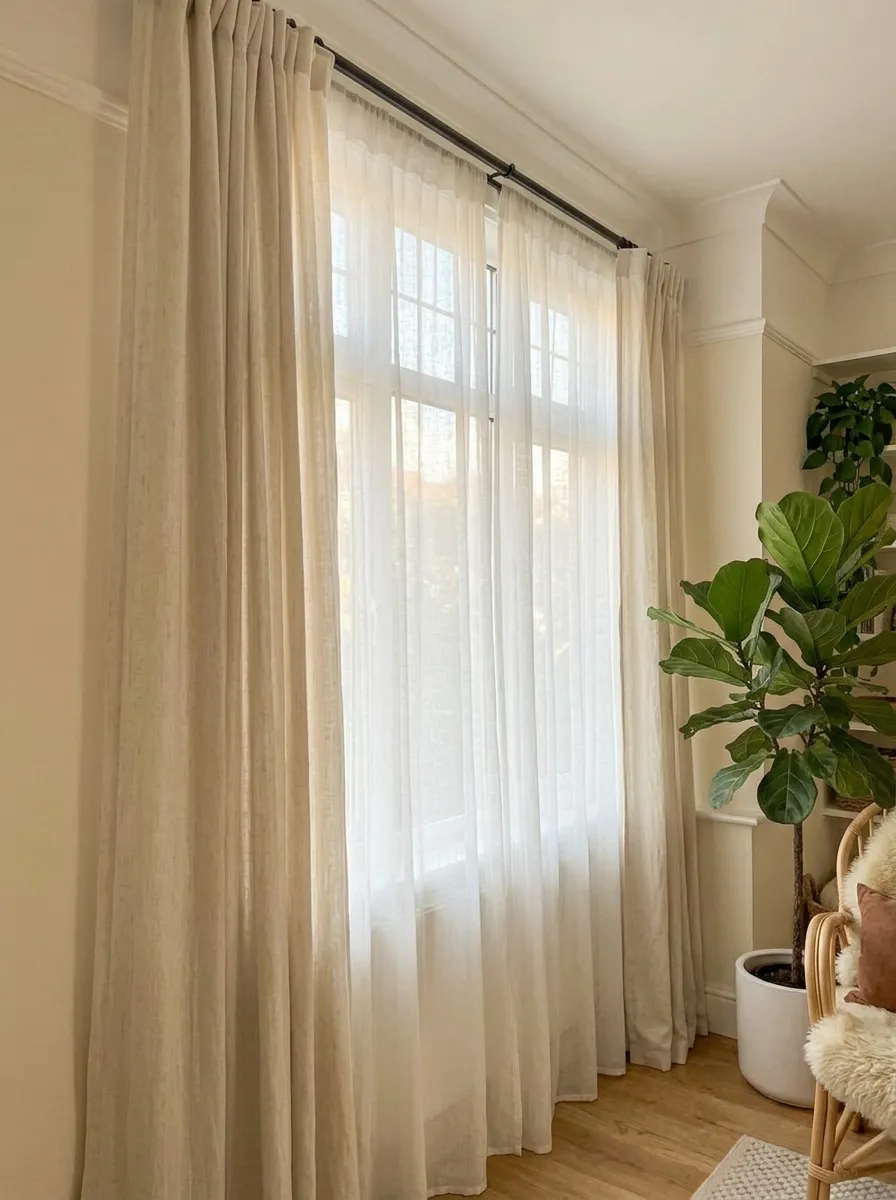
Most living rooms use one set of curtains and that is it. Layering window treatments is a designer trick that adds depth, warmth, and a sense of luxury to any window.
The classic approach is sheer panels closest to the glass to diffuse light, then heavier drapes on the outside that you can close for privacy or open wide to frame the window.
Always hang your curtain rod higher than the window frame. Mount it close to the ceiling to make your ceilings feel taller and your windows feel grander. This single change transforms how a room feels.
Make sure your curtains are long enough to reach the floor. Curtains that hang halfway down the wall look unfinished and dated.
Budget tip: IKEA’s LILL sheer curtains are extremely affordable and layer well with heavier panels from thrift stores or discount retailers. You do not need matching sets from the same collection. Mixing textures in a similar color palette works beautifully.
Well-dressed windows signal attention to detail that guests notice even if they cannot explain what looks so good.
12. Add a Decorative Tray on Your Console Table
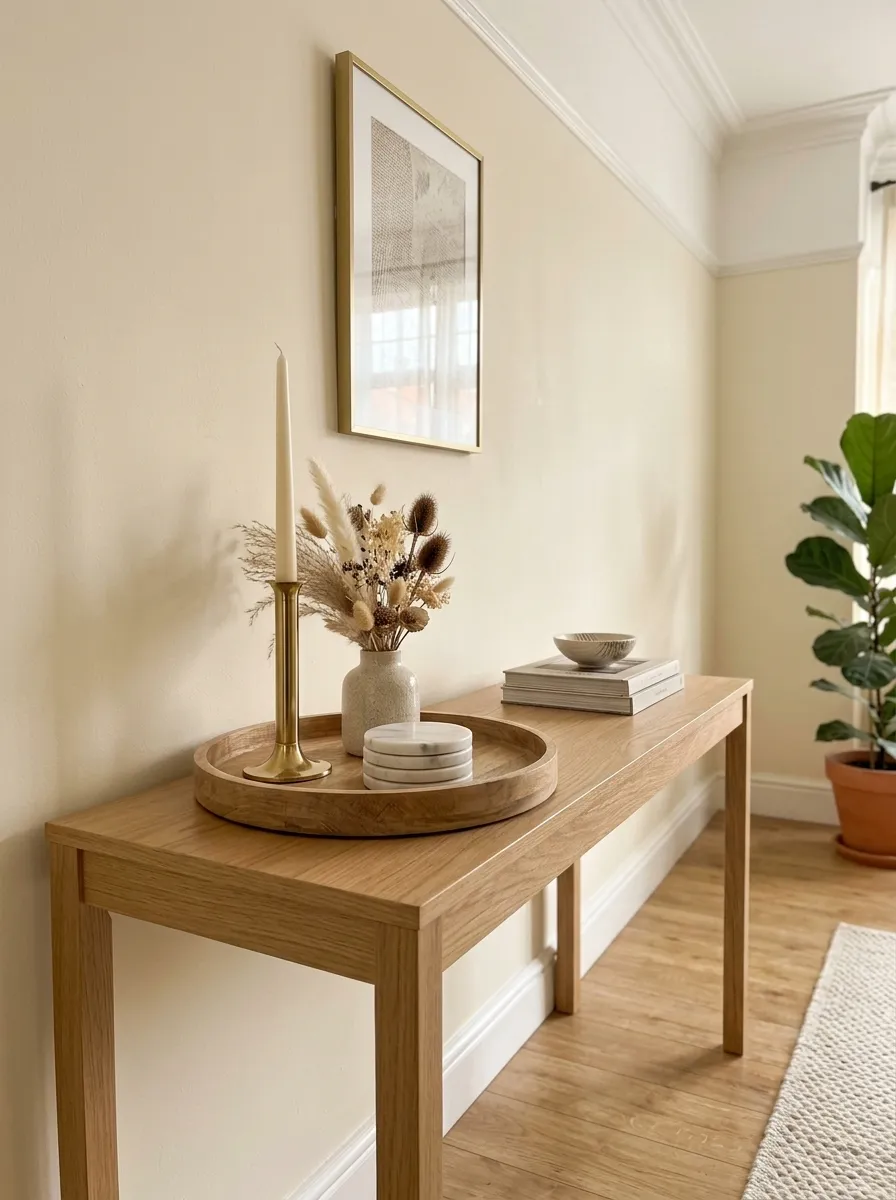
A console table behind the sofa or along an entryway wall is a great opportunity to create a styled moment that guests see immediately.
A tray on the console table organizes and focuses your decor. Without it, objects look scattered. With it, everything looks intentional.
The formula is simple. One tall element like a candle or vase, one mid-height element like a small sculpture or plant, and one low flat element like a stack of books or a decorative dish.
Keep the rest of the table clear so the tray reads as a display, not clutter.
Budget tip: Thrift stores almost always have trays in various materials. Wicker, wood, lacquer, metal. Pick one that matches your room’s overall palette and style. This costs almost nothing and adds a lot of polish.
A styled console table gives the room a sense of intentional flow. Guests see it as part of the overall story the room tells.
13. Swap Out Hardware on Furniture
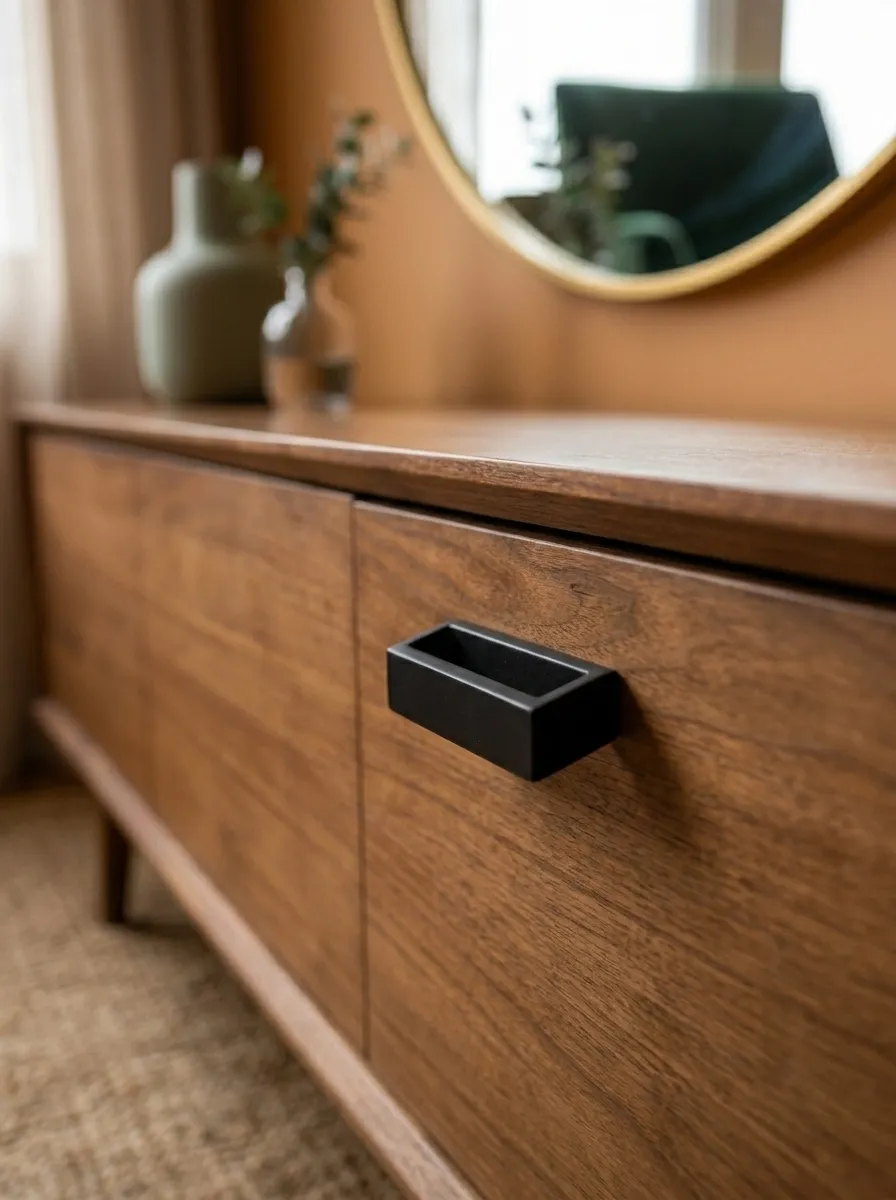
This is one of the easiest and cheapest upgrades most people overlook. Changing the handles and knobs on sideboards, consoles, cabinets, and dressers takes minutes and costs very little. The result looks like you bought brand new furniture.
Old brass hardware on a TV unit reads as dated. Swap it for matte black, brushed gold, or aged brass and the same piece feels completely different.
Match hardware finishes across the room where possible. If your light fixtures are brass, pull in brass hardware somewhere on your furniture. This kind of repetition creates a room that feels cohesive and designed.
Measuring before you buy is important since screws need to match the existing holes. Most hardware stores sell pieces in standard sizes.
Budget tip: Hardware stores and Amazon both sell drawer pulls and knobs in multi-packs for very little money. A set of ten matte black pulls usually costs under fifteen dollars. For the visual change it creates, this is one of the best return-on-investment decor moves you can make.
Guests may not consciously notice the hardware, but the room will feel more polished and put together.
14. Introduce Scent as Part of Your Decor
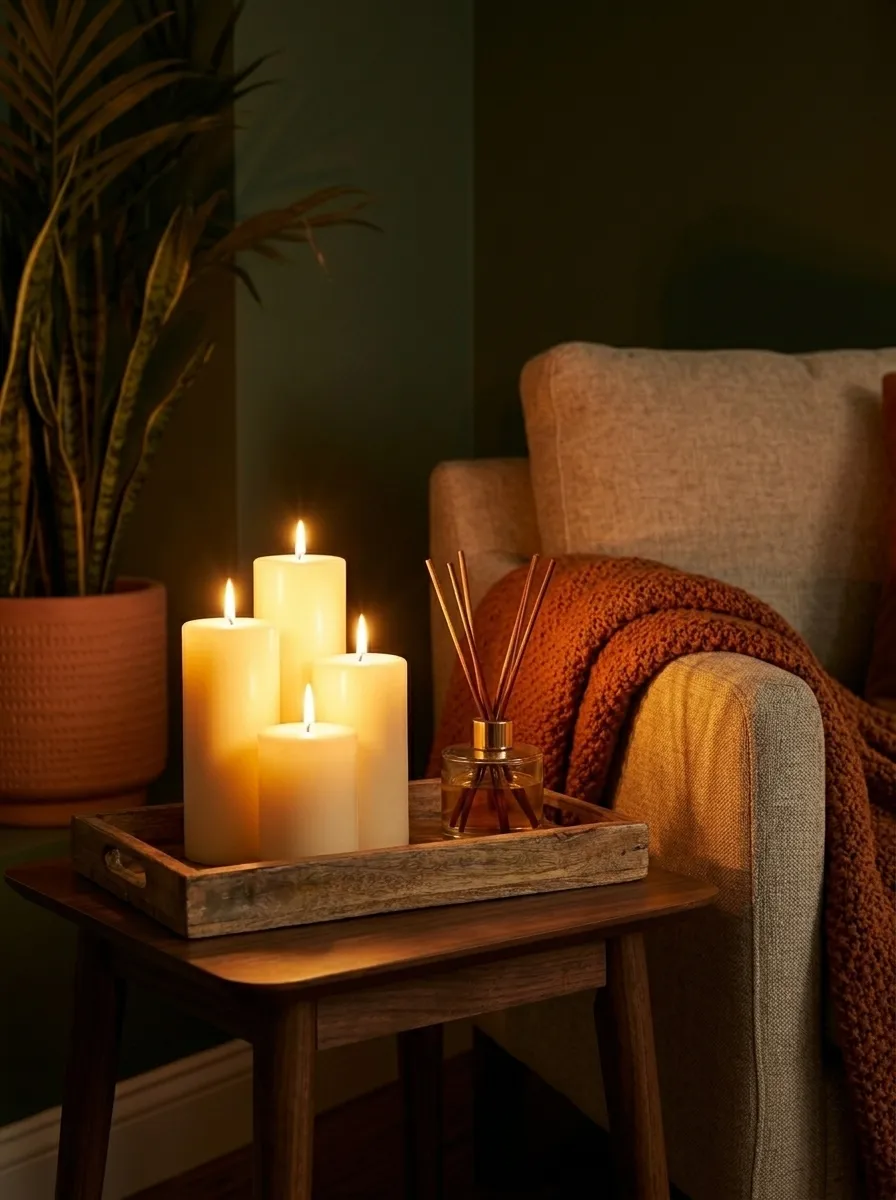
Guests experience your living room through more than just their eyes. Scent is one of the most powerful mood-setters, and most people do not think about it when decorating.
A room that smells warm and pleasant feels welcoming instantly. Something like cedar, vanilla, sandalwood, or fresh linen creates a calming and inviting atmosphere.
There are several simple ways to add scent. Candles are the most obvious. A reed diffuser works without any effort once set up. Linen sprays on cushions and curtains are a quick refresh before guests arrive.
Avoid overwhelming scents. The goal is a soft background note, not a perfume shop.
Budget tip: Essential oil diffusers are affordable and let you control the intensity. A few drops of lavender and cedarwood create a warm, calming scent for very little money. Alternatively, simmer cinnamon sticks and orange peel on your stove before guests arrive.
A beautifully scented room makes guests feel like they have been transported somewhere special. It is a finishing touch that is completely free to do with what you already have at home.
15. Use a Side Table to Anchor Every Seating Spot
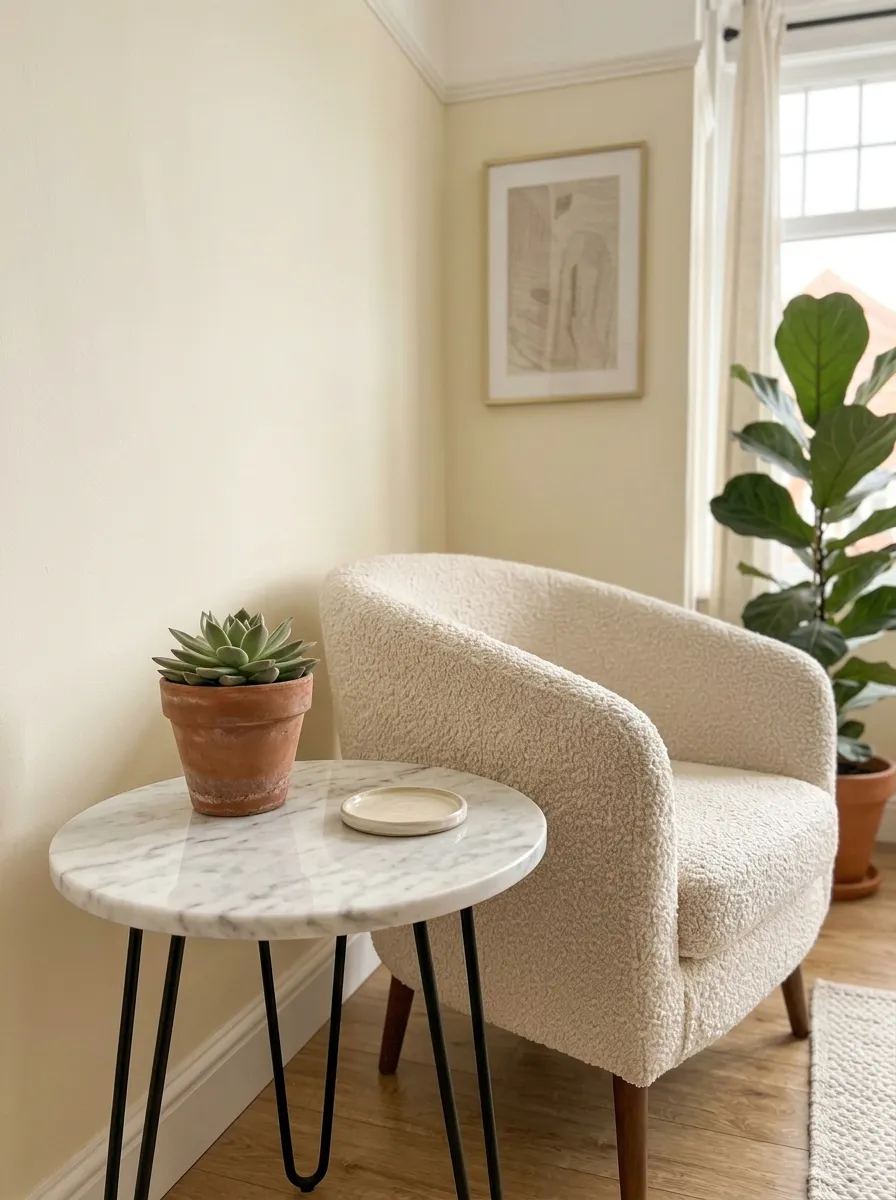
One of the small details that separates a thoughtfully designed room from a random collection of furniture is whether every seating spot has a surface nearby.
A guest sitting in an accent chair with nowhere to place their drink or phone is uncomfortable. A side table solves this instantly and looks great at the same time.
You do not need matching side tables. Mixing styles and materials actually looks more collected and intentional than a perfectly matched set from the same collection. A marble top table next to a wood stump stool next to a metal industrial piece all work together if the rest of the room is cohesive.