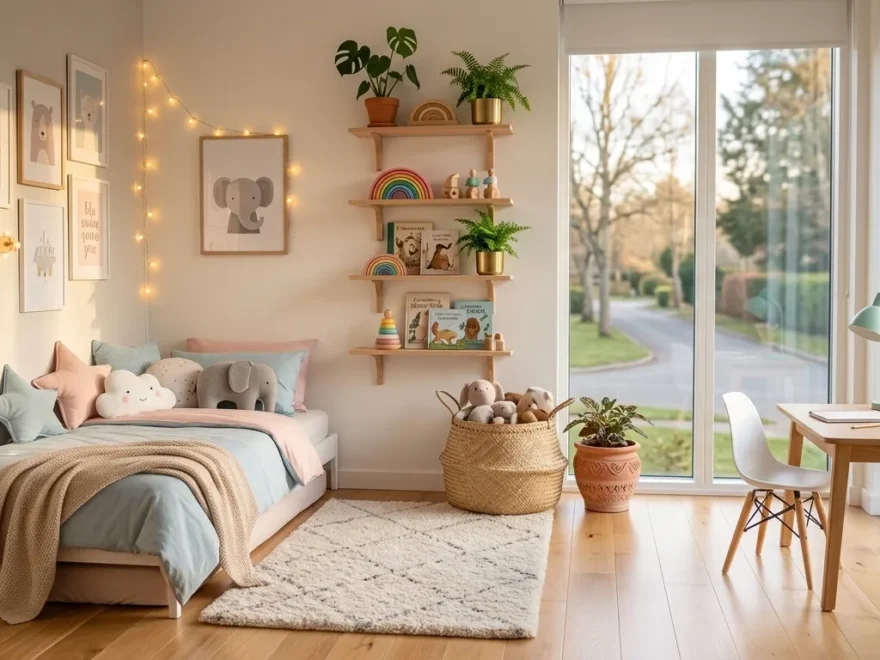
Walking into a child’s bedroom should feel like stepping into their world. A space that sparks imagination, encourages play, and still keeps things organized. Whether you’re decorating a toddler’s first big room or giving a school-age kid’s space a refresh, the right decor makes all the difference. Kids room decor ideas are affordable, practical, and genuinely fun. Many can be done over a weekend with supplies from your local craft store or a quick online order. If you’re also exploring modern room decor ideas, clean layouts, soft color palettes, layered textures, and simple lighting choices can help create a space that feels stylish, comfortable, and easy to personalize.
1. Glow-in-the-Dark Star Ceiling
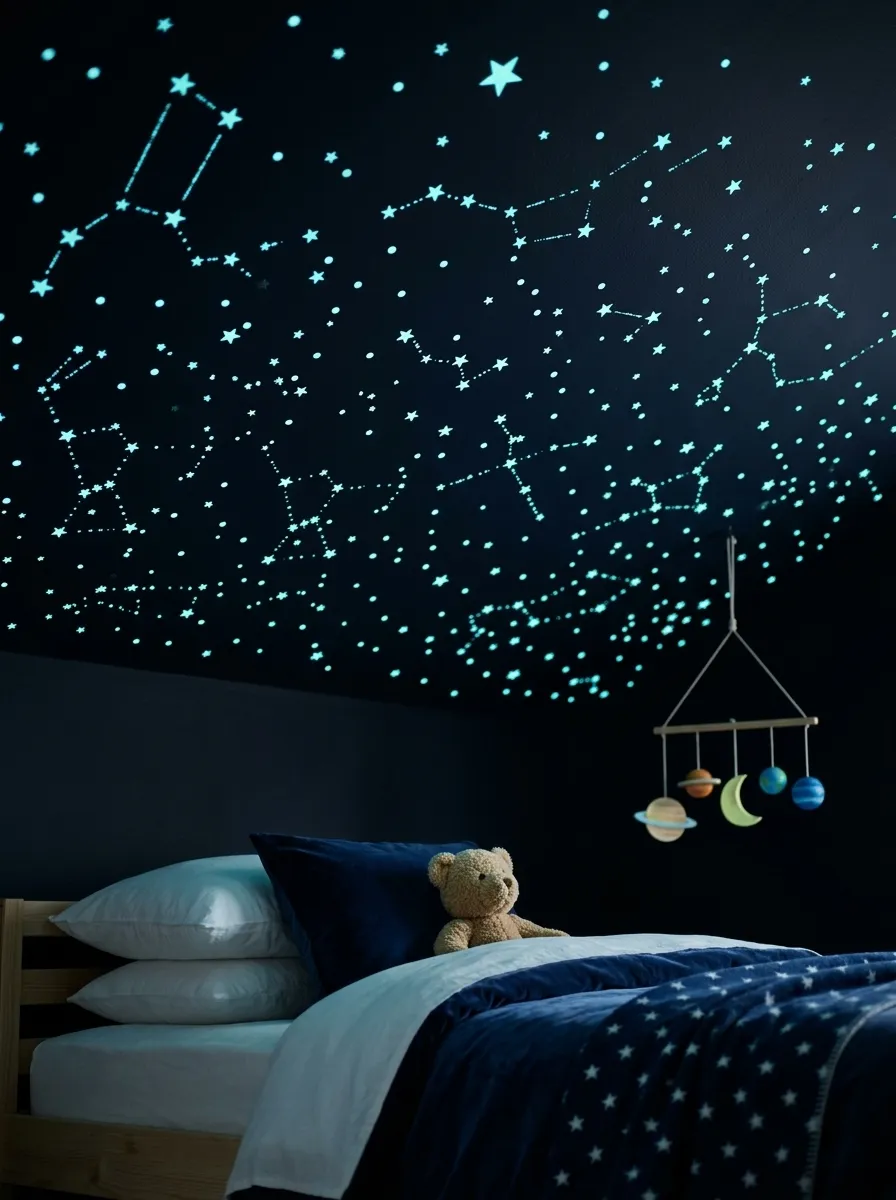
Kids absolutely love waking up or falling asleep under a sky full of stars.
Glow-in-the-dark star stickers are one of the easiest and most affordable decor upgrades you can make. A pack of 100 stickers usually costs under $10.
You can arrange them randomly or follow a real constellation map for an educational touch.
Stick them directly on the ceiling or even on the upper walls.
They charge from natural or artificial light during the day and glow softly at night.
No paint, no mess, no damage to the ceiling.
This works great for kids who are afraid of the dark. The soft glow is comforting without being bright enough to disrupt sleep.
For a budget upgrade, buy a few packs in different sizes. Mix large and small stars for a more realistic night sky effect.
You can also add planets or moon shapes from the same product line.
If your child is older, let them help stick the stars up. It becomes a fun activity and they feel proud of their room because they helped create it.
2. Themed Reading Nook
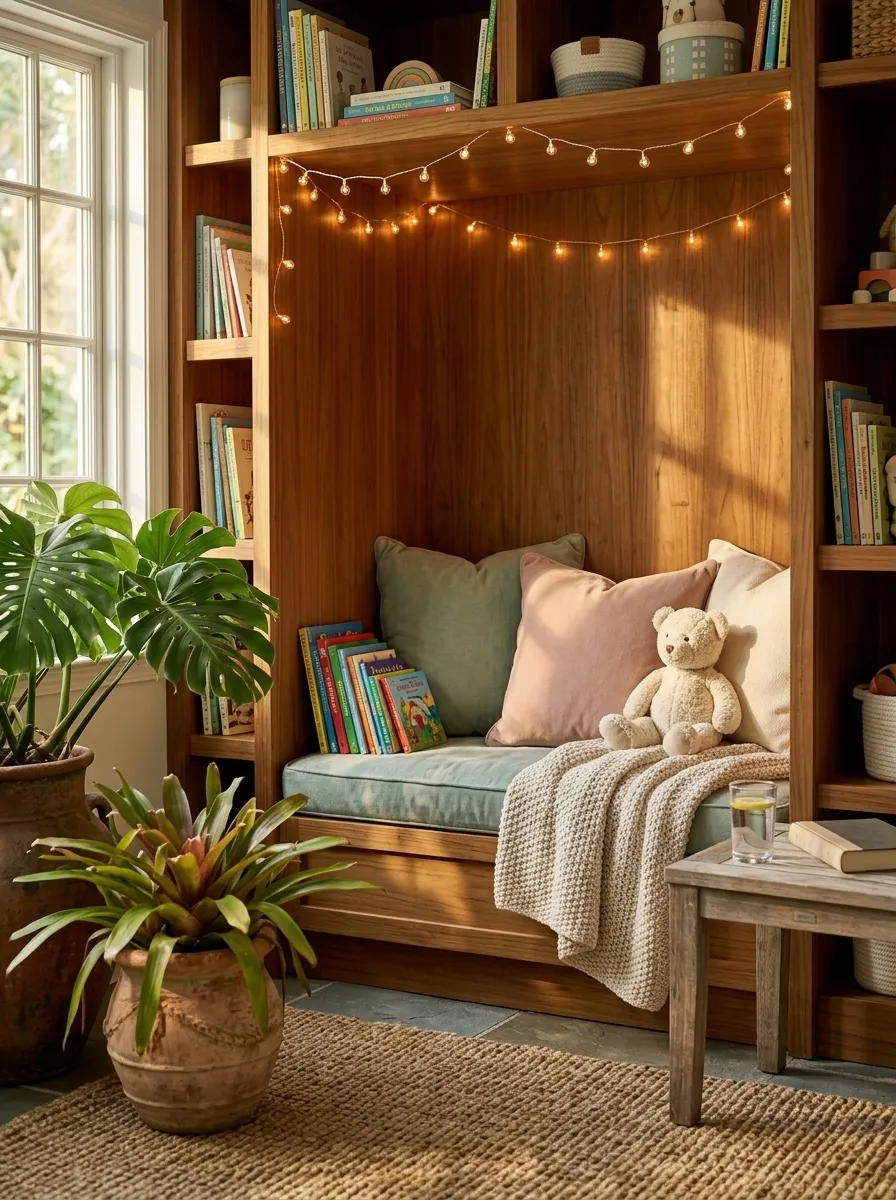
Every kid deserves a cozy corner that belongs just to them.
A reading nook does not have to be a big construction project. You can create one using a large IKEA bookshelf turned on its side, a window bench with cushions, or even a curtained-off corner of the room.
Add a few floor pillows, a soft blanket, and a small lamp or string lights.
The goal is to make the space feel secret and special.
Kids who have a designated reading spot tend to read more. It gives them ownership over a small part of their room.
For the walls of the nook, you can add removable wallpaper with a fun pattern like jungle leaves, stars, or geometric shapes.
Keep a small basket nearby to hold current books. This keeps things tidy and makes the nook feel purposeful.
Budget tip: Use cushions and throws from discount home stores. A tension rod and a simple curtain panel can frame the nook for under $15.
You do not need a dedicated room or built-in furniture to pull this off.
3. Chalkboard Wall Panel
A chalkboard wall gives kids a creative outlet right in their own room.
You do not need to paint an entire wall. A single panel or section works just as well.
Use chalkboard paint, which comes in small cans at most hardware stores, and apply it to one wall section, a wooden board, or even the back of a bookshelf.
Kids can draw, write, erase, and start over as many times as they want.
This keeps the room from feeling cluttered with too many toys. The wall becomes the entertainment.
It is also great for learning. Older kids can use it for math, spelling, or brainstorming.
Add a small ledge below the panel to hold chalk and an eraser. This keeps everything in one spot.
For a cleaner look, paint a rectangular section in the middle of the wall and frame it with thin wooden trim painted white. It looks like a real chalkboard you bought from a store.
Budget tip: A small can of chalkboard paint covers about 15 square feet and costs around $10 to $15.
4. Canopy Over the Bed
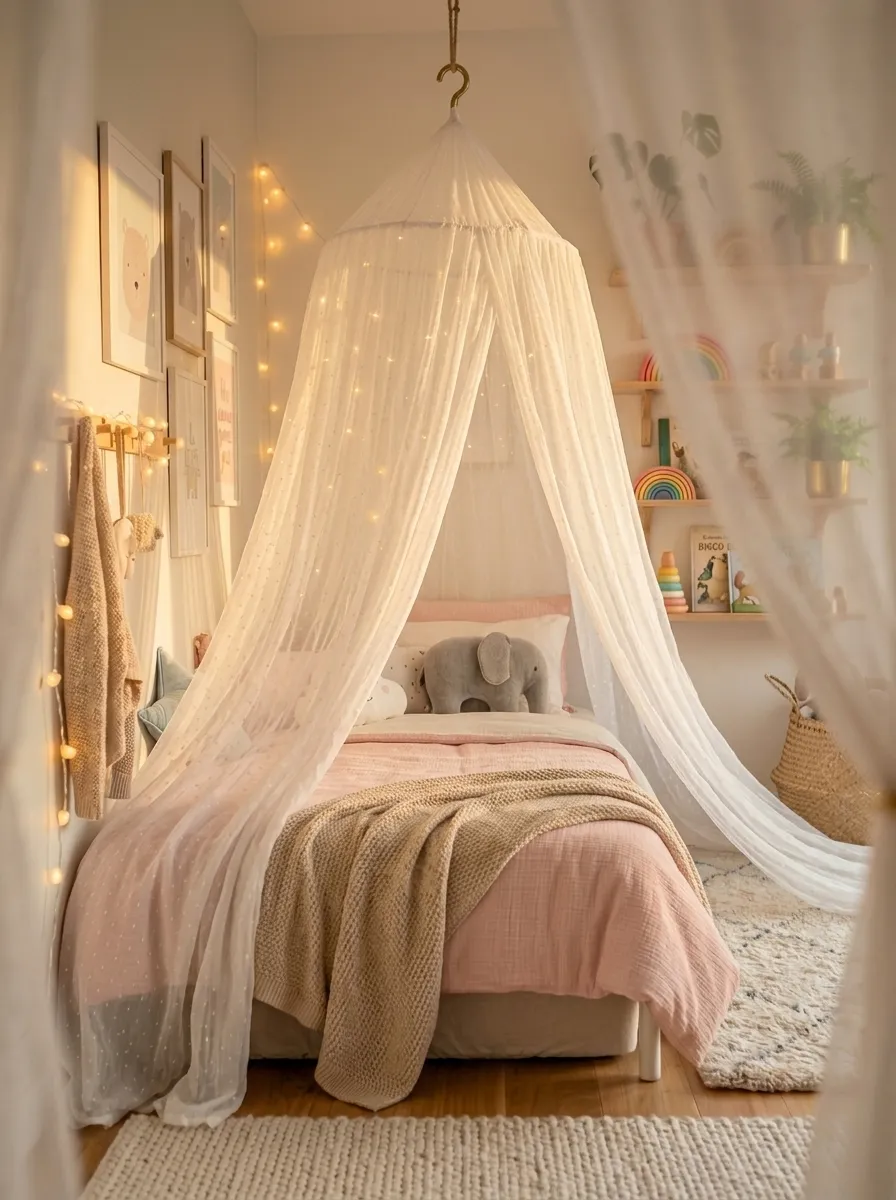
A canopy makes any bed feel like something out of a fairytale.
The good news is that this look costs very little to recreate at home.
All you need is a single ceiling hook and a few yards of sheer fabric or a ready-made canopy tent. Many are available online for under $20.
Kids feel like they have their own special sleep space.
Canopies work for any age. Toddlers love the cozy, enclosed feeling. Older kids think it looks cool and styled.
You can change the look seasonally. Swap white sheer fabric for something sparkly around the holidays or go with colorful fabric during summer.
For a DIY version, use an embroidery hoop as the top ring. Tie multiple panels of fabric to it and hang it from one hook. It looks more custom than any store-bought version.
Add a few string lights inside the canopy for an extra magical effect at night.
This is one of the easiest single-afternoon decor projects you can do for a child’s room with a big visual payoff.
5. Name Letters on the Wall
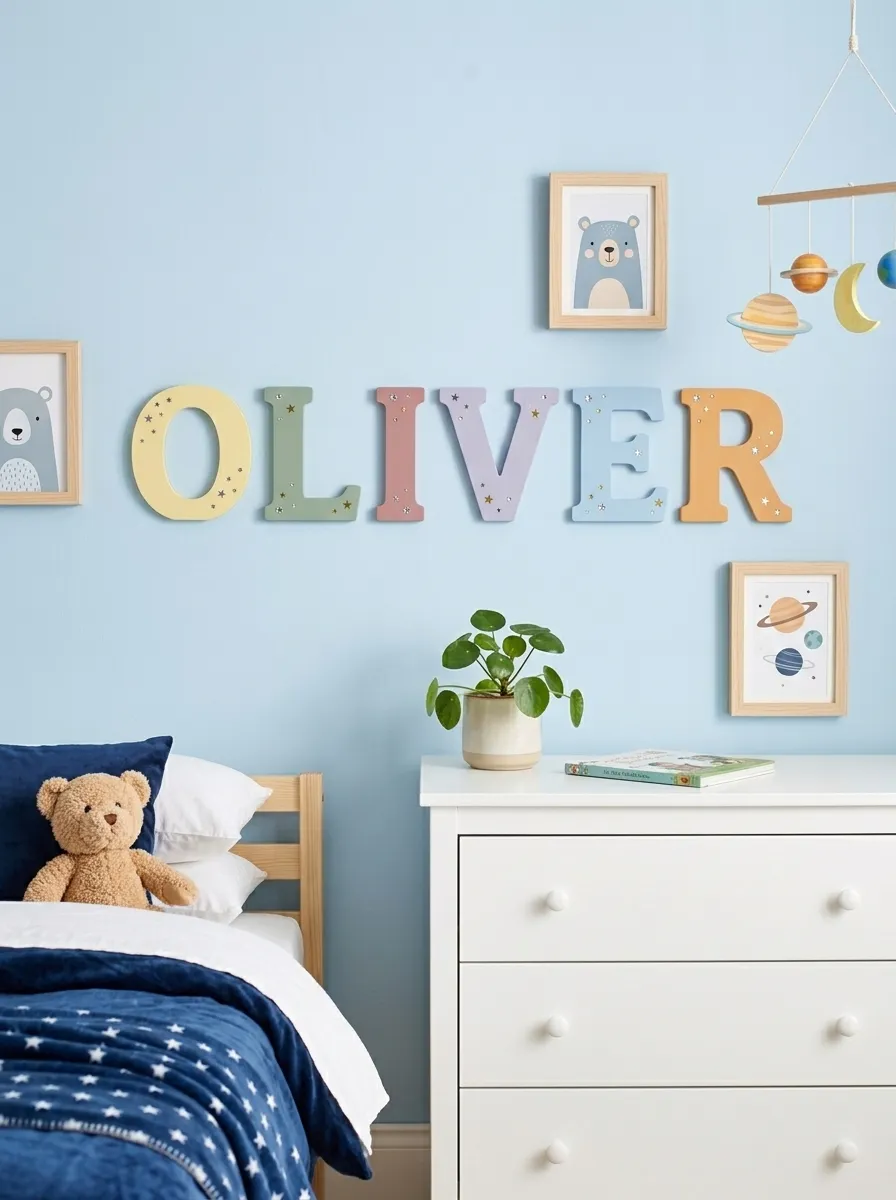
Personalized decor makes a child feel like the room was truly made for them.
Large name letters are one of the most popular kids room decor ideas for good reason. They are easy to make, affordable, and look great on any wall.
You can buy unpainted wooden letters at craft stores for about $1 to $3 each.
Paint each letter a different color or stick to a palette that matches the room.
Let your child help with the painting. Even small kids can do brush strokes with guidance. The imperfections make it more personal.
Once painted, add extras like glitter, stickers, washi tape stripes, or small wooden shapes glued on top.
Mount them on the wall above the bed, over a dresser, or along a bookshelf.
For a no-damage option, use removable adhesive strips on the back of each letter instead of nails.
You can also hang letters on a piece of rope or twine using small clips for a garland effect. This version requires zero wall holes.
Budget tip: Watch for craft store sales. Wooden letters often go 40 to 50 percent off.
6. Map Wall Mural or Poster
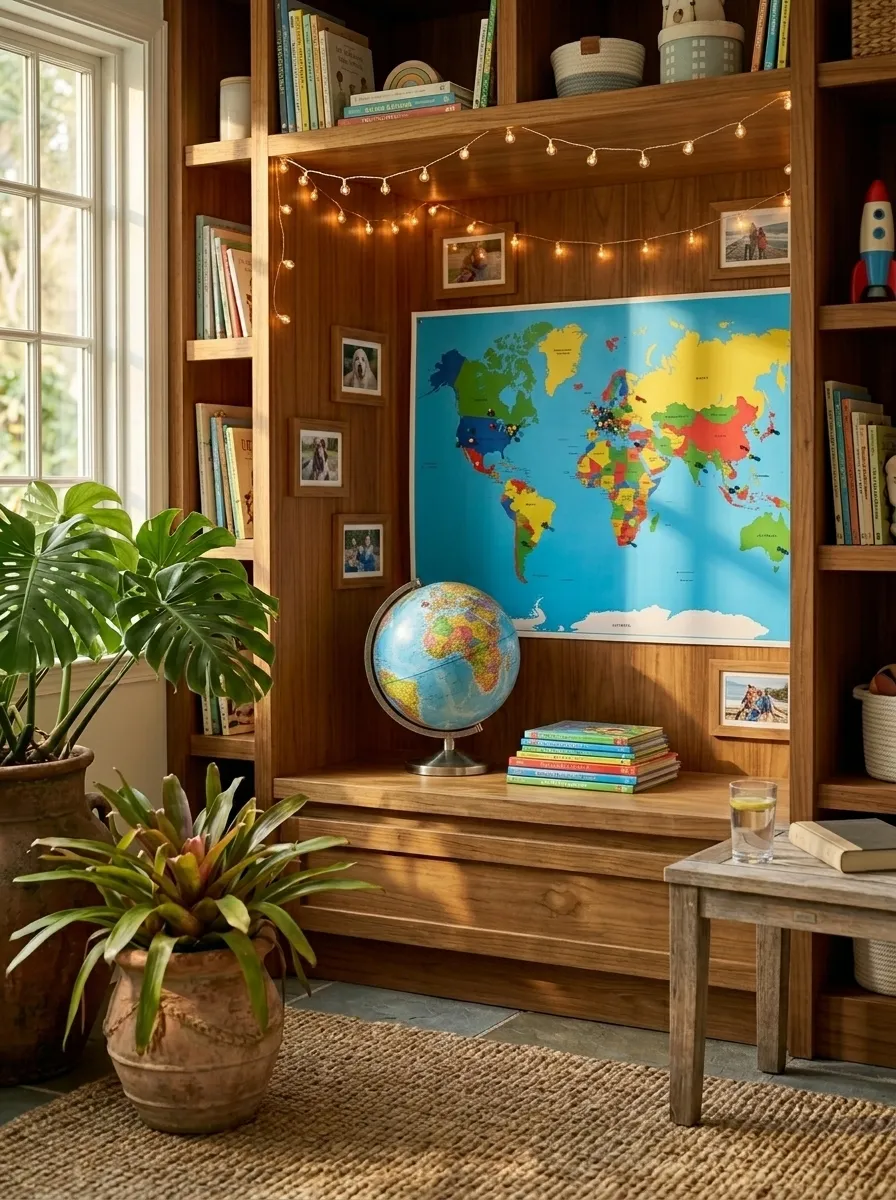
Maps spark curiosity and help kids learn about the world around them.
A large map poster is one of the most underrated kids room decor ideas. It is educational, attractive, and works for any age.
You can find giant world map prints for under $15 online. Some come in bright colors that work well with playful room themes.
Mount it at eye level for your child, not adult eye level, so they can actually look at it and interact with it.
Add pushpins to mark places your family has visited or dreams of going. This turns the map into a living part of the room.
For older kids, use a dry-erase map where they can write and erase notes.
You can also combine it with a reading nook theme. Surround the map with small travel-themed props like a suitcase shelf, a compass, or passport-style bookmarks.
Laminated map placemats can also serve as desk decor and double as learning tools during snack time or homework.
Budget tip: Print your own oversized map at a local print shop for a fully custom and affordable option.
7. Floating Cloud Shelves
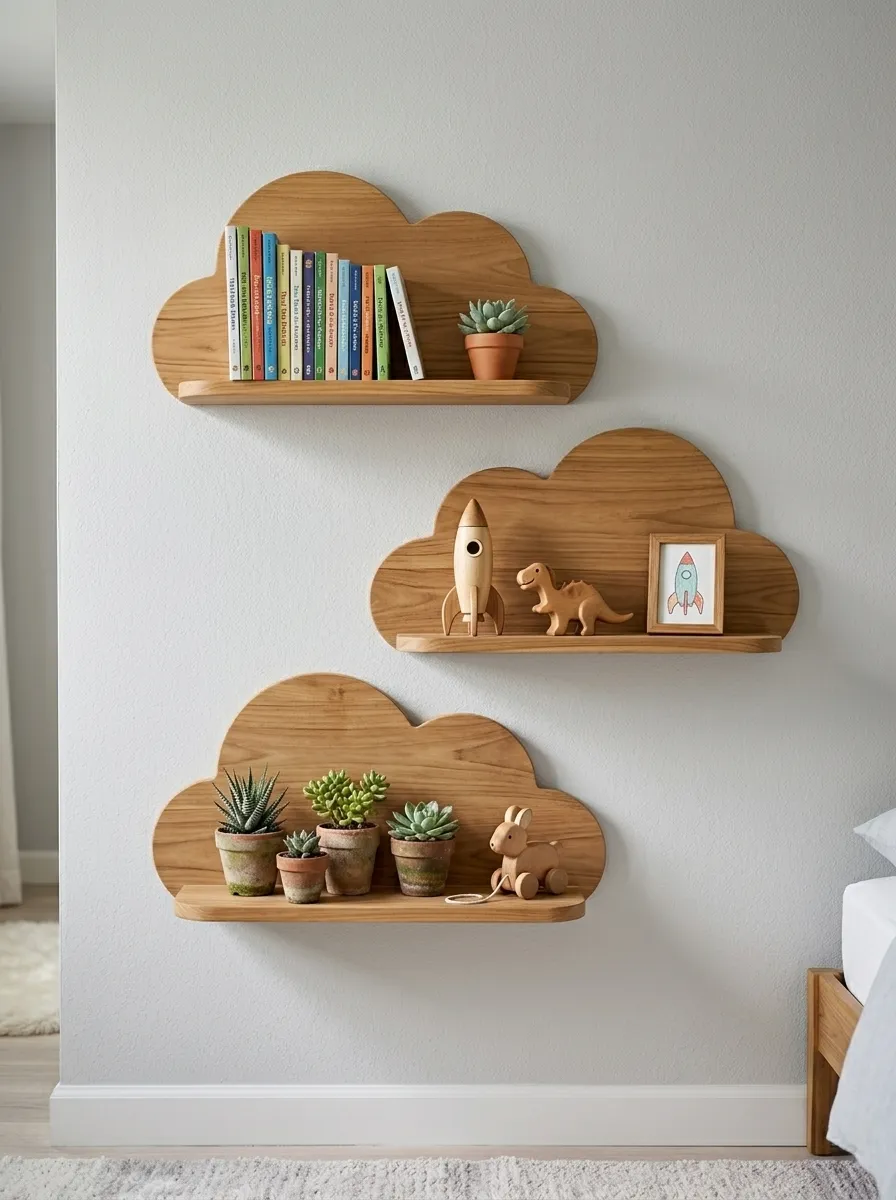
Cloud shelves are functional storage that also doubles as wall art.
They hold books, toys, small plants, and trinkets. And they look adorable on any wall, whether painted white, pastel, or natural wood tone.
You can buy ready-made cloud shelves from craft stores or online marketplaces for around $15 to $30 depending on size.
For a DIY version, trace a cloud shape onto a piece of plywood, cut it out with a jigsaw, sand the edges, and paint it white.
Mount it with standard shelf brackets hidden underneath.
Use these shelves to display your child’s favorite small figures or collectibles. It gets items off the floor without hiding them in bins.
For a cohesive look, install three clouds at slightly different heights to mimic a floating sky effect.
You can also string fairy lights along the wall between the clouds for a nighttime glow.
Kids love having a special place to show off things that matter to them. Cloud shelves give them that spot without adding visual clutter to the room.
8. Pegboard Organizer Wall
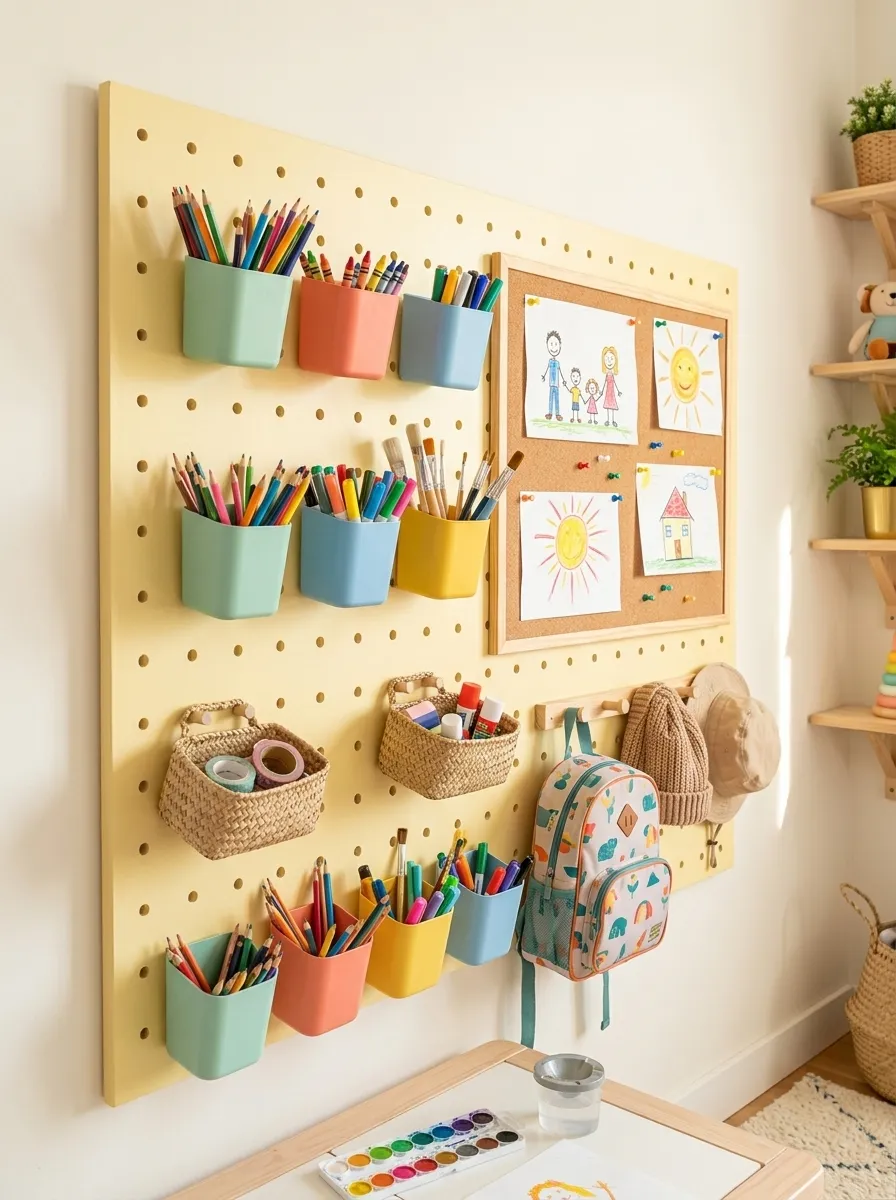
A pegboard wall keeps supplies organized and looks great at the same time.
Pegboards are incredibly practical for kids who love art, crafts, or have lots of small items that end up scattered everywhere.
Paint the board a fun color before hanging it. A bright yellow, mint green, or coral makes it feel like part of the decor rather than just storage.
Add hooks, small bins, dowel rods, and shelves in any configuration you want.
The layout is fully adjustable. You can rearrange accessories as your child’s needs change over time.
Use it to hold colored pencils, scissors, paint, notebooks, headphones, and small toys.
Hang it at your child’s height so they can actually reach and use it independently. This builds good habits around tidying up.
You can find pegboards at hardware stores for under $20. A pack of pegboard accessories is usually another $10 to $15.
Add a small corkboard section nearby to pin artwork, notes, or school papers.
This is one of those kids room decor ideas that solves a real problem while also looking intentional and well-designed.
9. DIY Painted Rainbow Mural
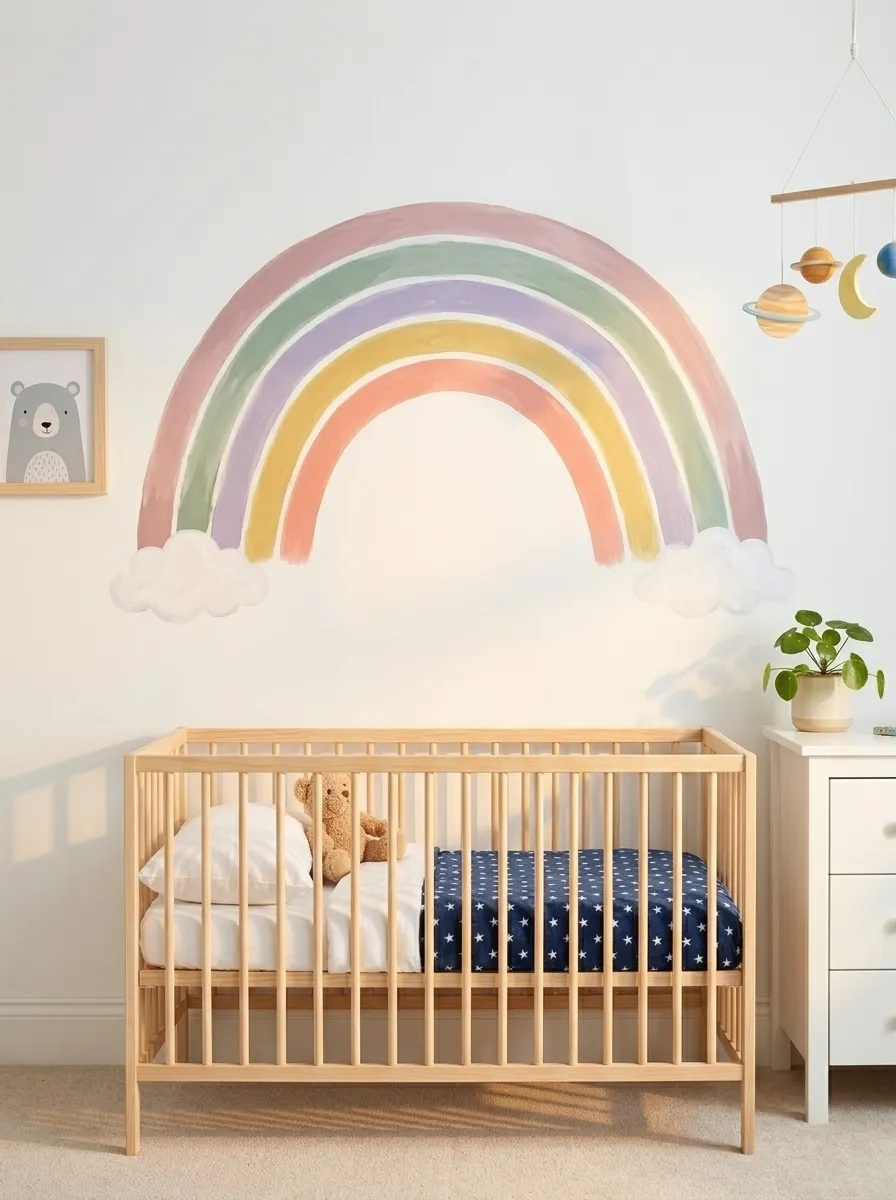
A painted rainbow is one of the most cheerful additions to any kid’s space.
The great part is you do not need to be an artist to pull it off. Rainbows are forgiving shapes. Slightly uneven bands actually look charming.
Use painters tape to mark out each color band before you start.
Stick with soft, muted pastel tones for a modern nursery look or go bold and bright for an older child’s playroom.
You only need a small amount of each paint color. Pick up sample pots at your hardware store to keep costs low.
A full rainbow mural can be completed in one afternoon with basic brushes and painter’s tape.
Paint it over the bed, above a dresser, or as a large focal piece on the main wall.
For a quicker version, use a rainbow removable wall decal. These come in many sizes and can be applied without any painting at all.
Add small painted clouds at the ends of the rainbow to frame the design.
Kids love the colors and parents love how bright and cheerful it makes the room feel without requiring expensive wallpaper or professional painters.
10. Loft Bed With Play Space Below
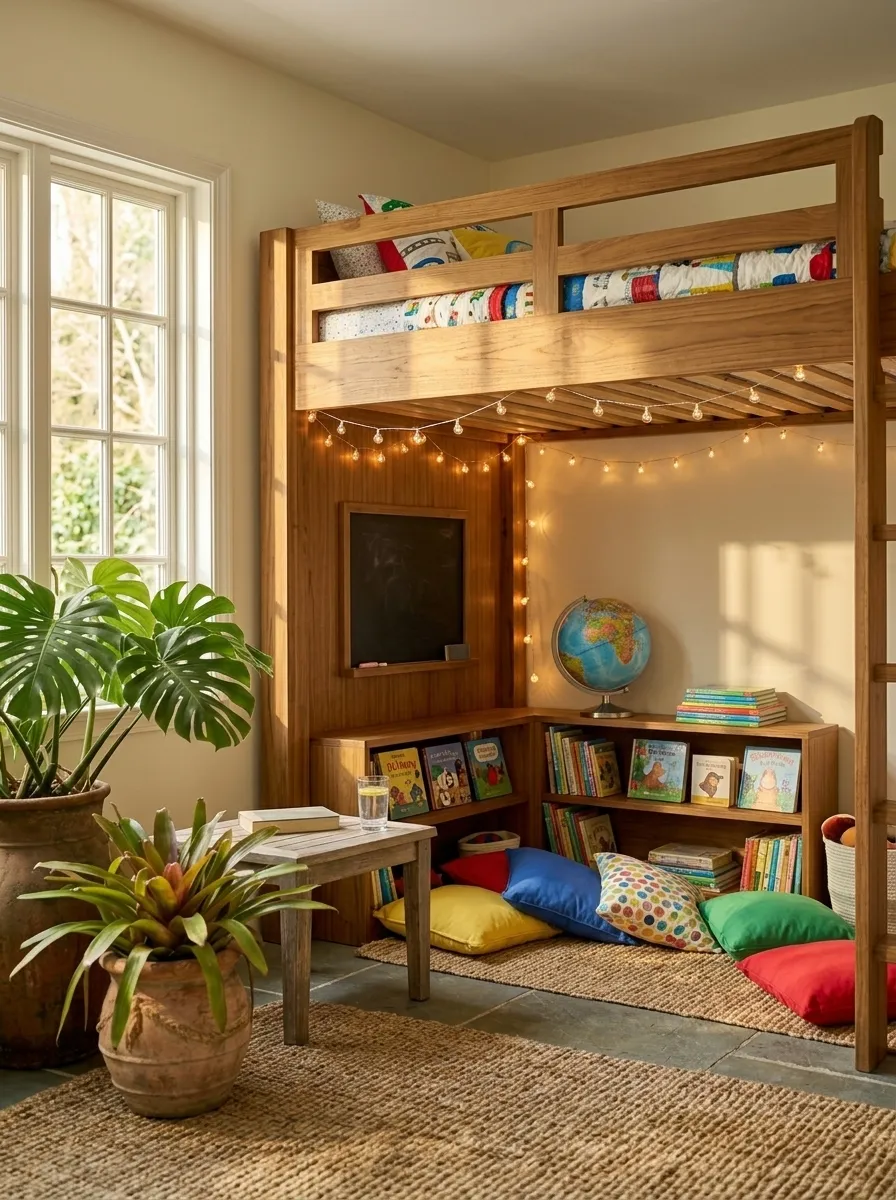
A loft bed turns one piece of furniture into two separate zones.
The sleeping area is up top. Below becomes whatever your child needs most: a reading corner, an art station, a pretend shop, or a fort.
This is one of the smartest kids room decor ideas for small rooms because it uses vertical space instead of spreading out across the floor.
You do not need a custom build. Many loft beds are available flat-pack from furniture retailers at reasonable prices.
Once you have the structure, the customization is up to you. Hang fabric curtains around the lower area to create a more enclosed, cozy feeling.
Add a small rug, floor cushions, and a clip-on lamp below.
Use the walls inside the lower section for a small chalkboard or pegboard.
If you are handy, a DIY loft bed can be built from basic lumber for significantly less than retail prices.
The loft structure also keeps the center of the room open for play, which most kids will appreciate far more than additional furniture.
11. Washi Tape Wall Patterns
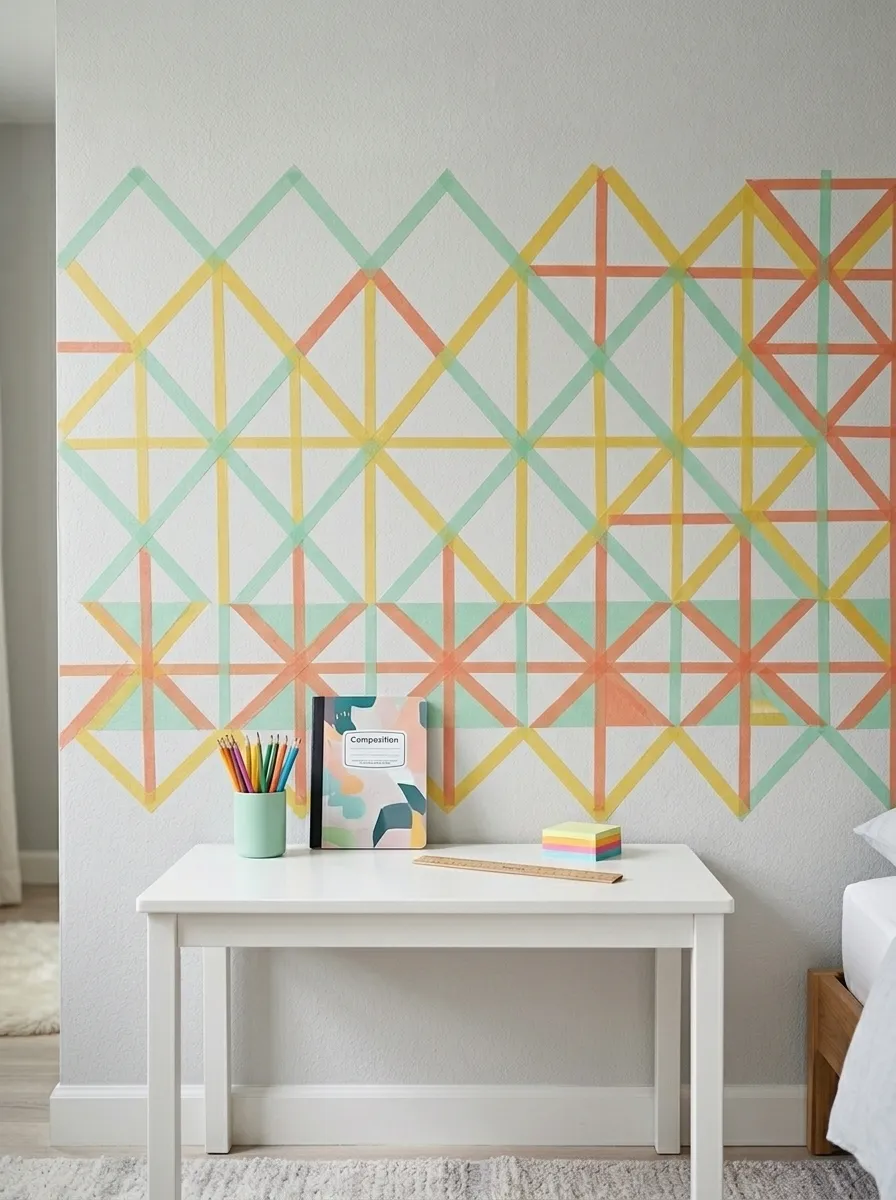
Washi tape is one of the most versatile and budget-friendly decorating tools for kids rooms.
You can use it to create wall art, frame artwork, make a calendar grid, or outline shapes directly on furniture.
A single roll costs $2 to $5 and the tape comes off walls cleanly without leaving residue.
Use multiple rolls in complementary colors to make geometric patterns. Triangles, chevrons, and grid patterns are all beginner-friendly designs.
Tape a large triangle shape above the bed as a simple tent or mountain silhouette. Fill it with a few peel-and-stick stars for a camping theme.
You can also use washi tape to create a fake headboard by taping a rectangular or arch shape on the wall directly behind the bed.
Kids can help pick the colors and even apply the tape themselves. It becomes a low-stakes creative activity.
The best part is that if they change their mind, you can peel it all off and start fresh without any damage to the walls.
Budget tip: Craft stores and dollar stores often carry washi tape packs with multiple rolls for under $6.
12. Gallery Wall of Kid’s Artwork
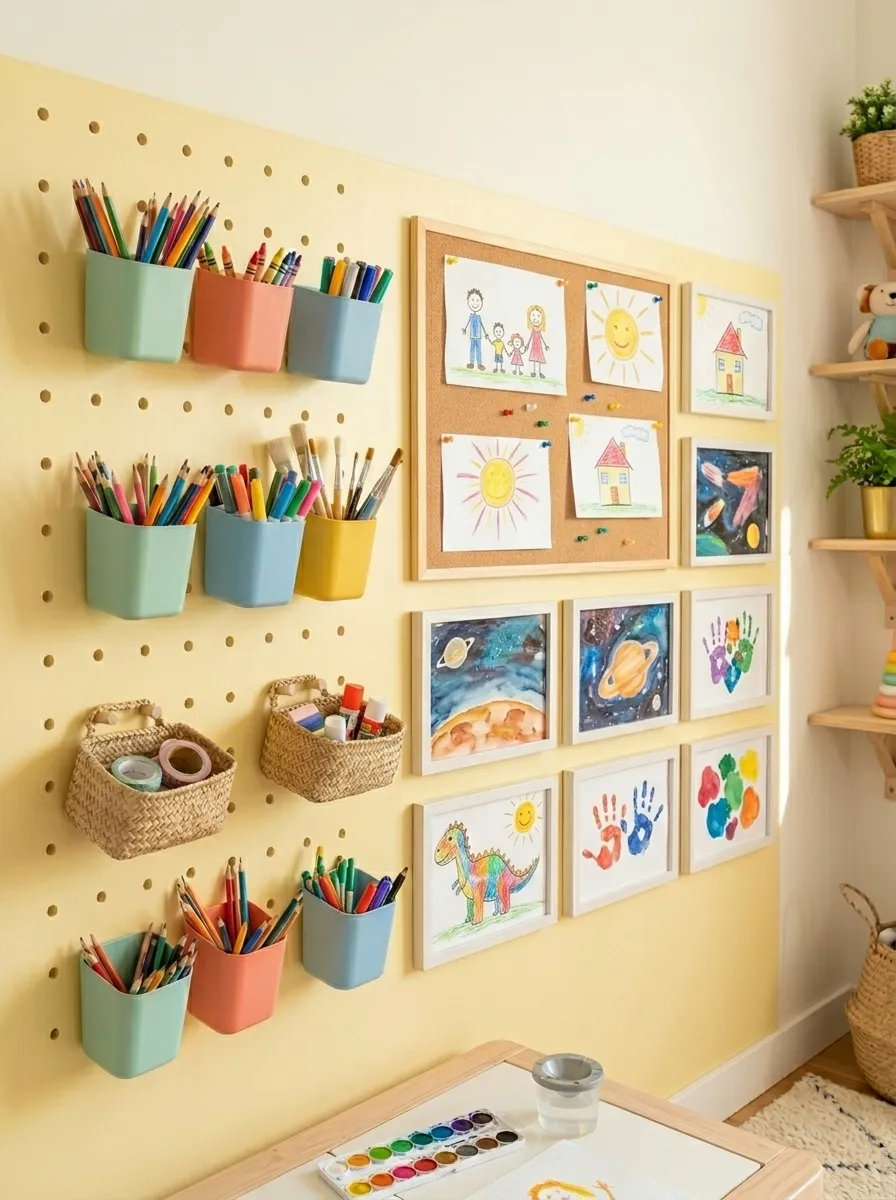
Framing your child’s own artwork gives the room a personal gallery feel.
Kids love seeing their creations treated like real art. It builds confidence and gives the room a completely one-of-a-kind look that no store can replicate.
Use identical simple frames for a clean, cohesive gallery wall look. White or black frames from dollar stores work perfectly.
Print or frame new pieces every few months to keep the gallery fresh and reflect your child’s growth over time.
Arrange frames in a grid for something structured or scatter them freely for a more casual feel.
To avoid lots of nail holes, use removable picture-hanging strips that hold frames firmly without wall damage.
You can also skip frames entirely. Use binder clips on a string of twine to create a rotating display line. Swap artwork in and out without any hardware.
Keep a small stack of frames with backing boards where new artwork goes temporarily. When a better piece comes along, rotate it in.
This is one of those kids room decor ideas that costs almost nothing and means more to a child than anything bought from a store.
13. Tent or Teepee Play Corner
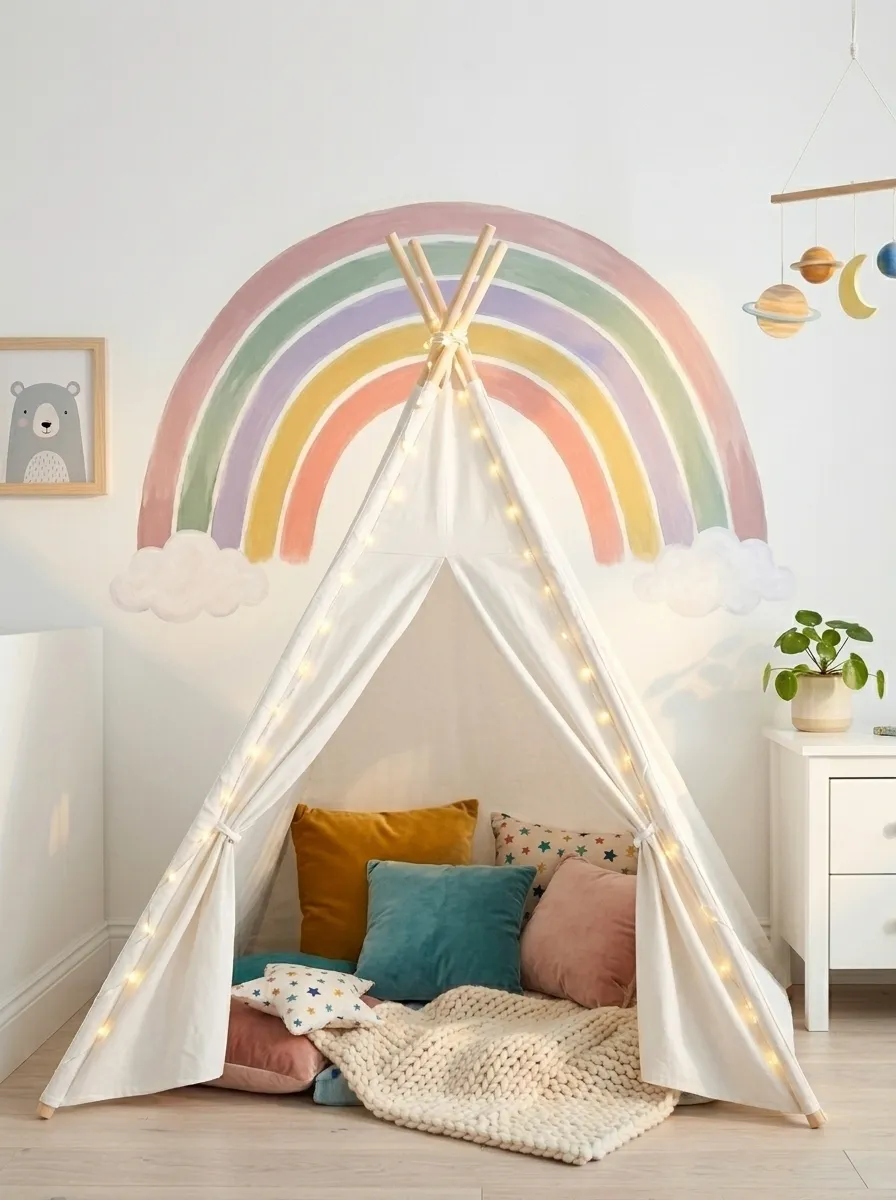
A teepee or play tent gives kids their own small world inside their room.
These fabric tents are widely available online in a range of styles. Cotton canvas versions with wooden poles are the most popular. They come in neutral tones or fun patterns.
Prices range from $30 to $80 depending on size and material.
Place the teepee in a corner to tuck it in neatly and give it a more sheltered feeling.
Add cushions, a small blanket, and a few books or stuffed animals inside. Keep a small battery-powered lamp or string lights nearby for cozy nighttime play.
Kids use teepees for reading, pretend play, resting, and just having their own space.
For a DIY version, use five wooden dowels tied together at the top with rope. Drape a large piece of fabric or an old sheet over the frame and secure it around the poles.
Total DIY cost can be under $15.
You can change the fabric seasonally to refresh the look without buying a whole new tent.
This piece of decor practically never gets ignored. Kids will use it every single day.
14. Colorful Bookshelf Organization
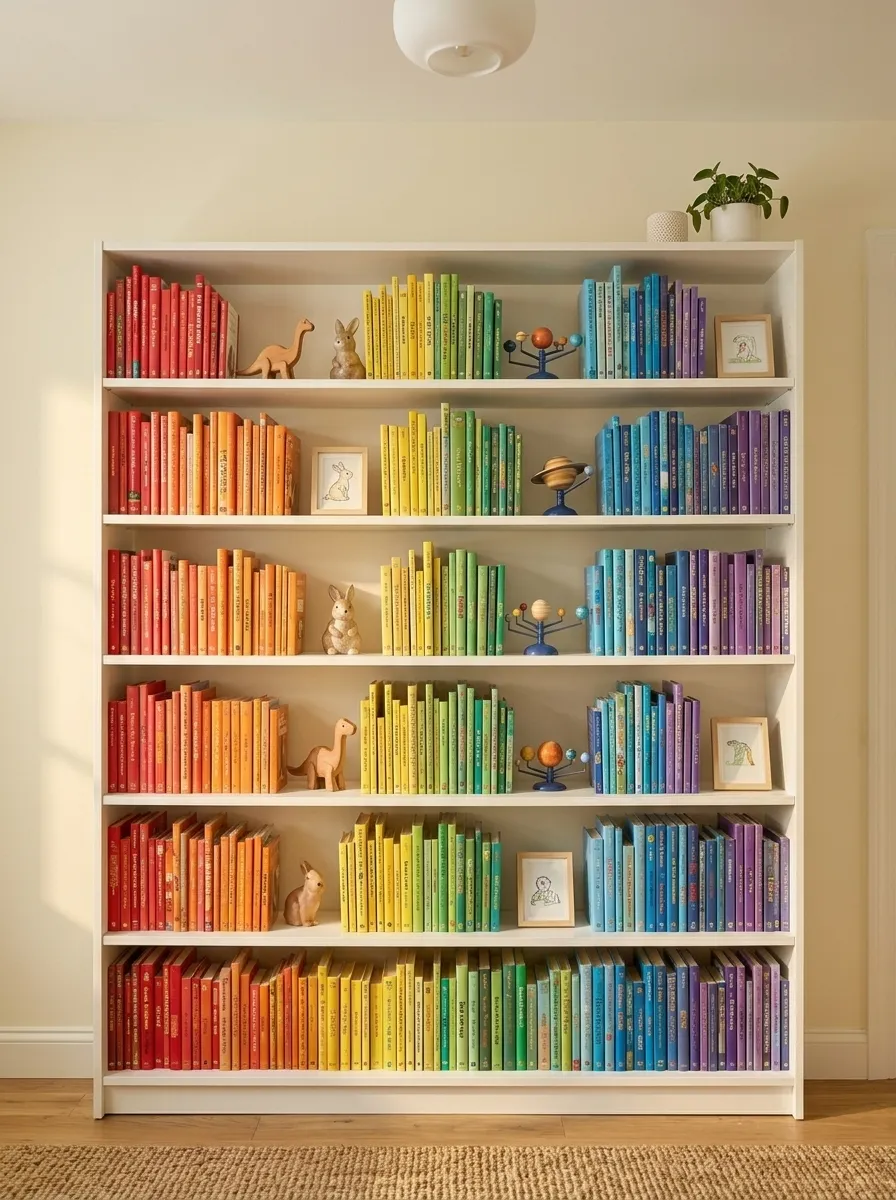
Organizing books by spine color is both practical and visually beautiful.
This technique works on any bookshelf. Group books by color from red through orange, yellow, green, blue, and purple. The result looks like a rainbow across your shelves.
Kids can maintain this system because it is simple. They just match the spine color to the right section.
Between book groupings, add small decorative items: a toy figure, a small plant, a framed photo, or a decorative letter.
Use a bookshelf with different-sized compartments for variety. IKEA KALLAX units with mix-and-match insert boxes work perfectly for kids rooms.
Paint the inside backs of shelves a different color for added depth and interest.
Label each section with small illustrated cards if your child is a beginning reader. This builds early literacy and keeps organization simple.
For a more layered look, place some books face-out instead of spine-out. This highlights favorite books visually and makes them easier for kids to find independently.
The colorful bookshelf becomes a visual centerpiece in the room rather than just storage. It makes books feel special and worth picking up.
15. Themed Bedding as the Room’s Anchor
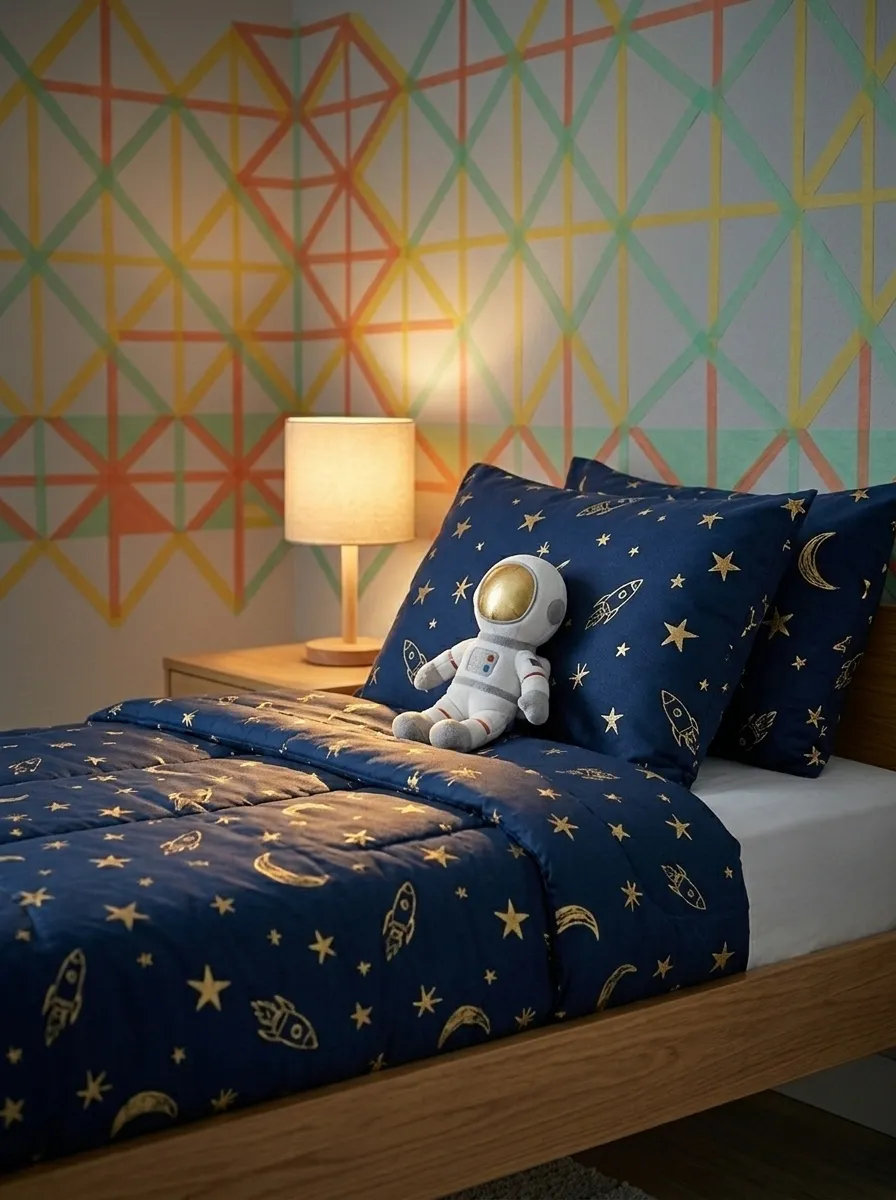
The bedding is usually the largest and most visible textile in a child’s room.
Choosing a strong theme for the bedding can anchor the whole room’s look without spending money on wallpaper or a full redesign.
Pick a theme your child actually loves right now, whether that is space, dinosaurs, rainbows, ocean animals, or woodland creatures.
Then pull two or three colors from the bedding into the rest of the room decor. Use those colors for wall art frames, a rug, a lamp shade, or a storage bin.
This makes the room feel intentionally designed without much effort.
Budget tip: Kids grow out of themes faster than adults expect. Buy affordable duvet covers rather than expensive full bedding sets. A duvet cover and a plain fitted sheet is all you need. Swapping just the cover in a year costs far less than replacing everything.
Add one or two accent pillows in matching or complementary patterns to add depth.
Keep the rest of the bedding simple. If the cover has a busy print, choose plain or striped pillow cases and a solid-colored throw blanket.
16. Window Seat With Storage Drawers
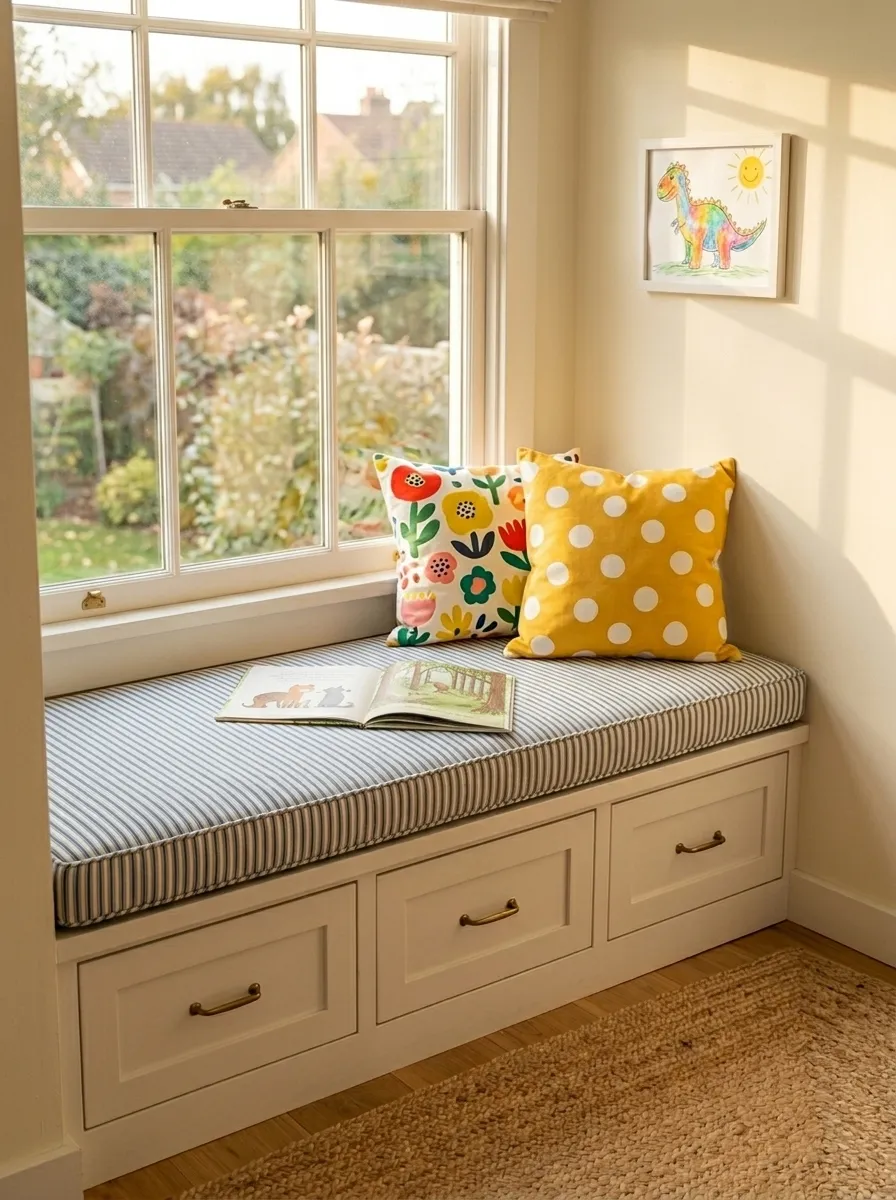
A window seat with storage underneath uses one of the most underutilized spaces in a bedroom.
If your child’s room has a window with a wall below it, a basic bench with drawers can be built in or placed there.
The seating becomes a natural reading or daydreaming spot. The storage below hides toys, extra blankets, or seasonal clothing.
This is a two-in-one solution that makes small rooms feel much more organized.
For a DIY version, two IKEA KALLAX units placed side by side under a window with a piece of plywood and a cushion on top creates a very similar effect.
Upholster the cushion with a fabric that matches the room’s color palette. Fabric is available at craft stores and most cushions can be recovered with basic sewing or fabric glue.
Add a few decorative pillows for color and comfort.
Use the drawer space strategically. One drawer for extra bedding, one for dress-up clothes, one for art supplies.
Budget tip: The full IKEA version of this build typically costs between $100 and $150 in materials, far less than a custom carpenter would charge.
17. Hanging Macrame or Fabric Wall Decor
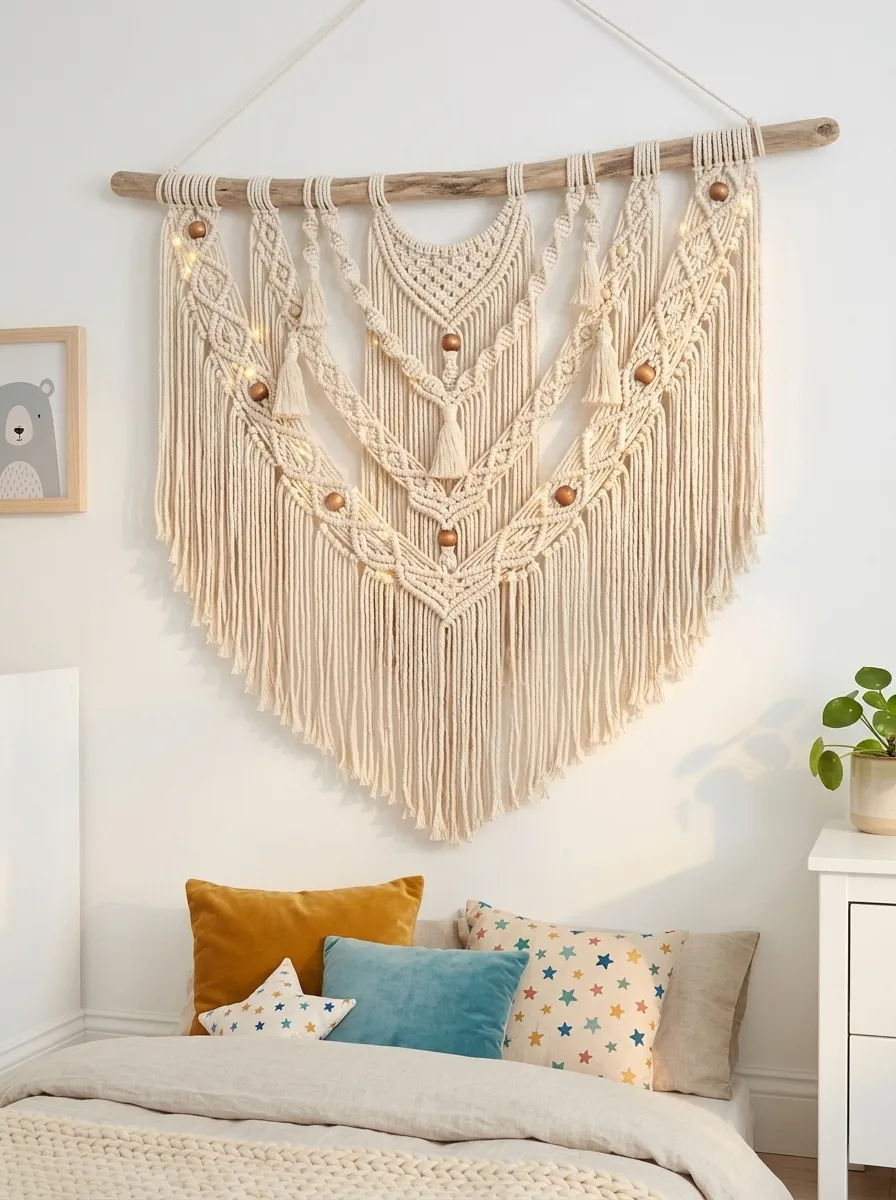
Macrame wall hangings add texture and warmth to any kids room without using paint or permanent fixtures.
These pieces look handmade and artisan even when bought affordably online.
You can find small macrame hangings for as little as $12 to $20. Larger statement pieces run $40 to $80 but become a true focal point.
For a DIY project, macrame is easier than it looks. The basic square knot is the building block for most designs, and beginner kits come with cord, a dowel, and easy instructions.
Kids can even make smaller macrame wall hangings as a craft activity. A mini version made by your child is a unique piece of personal decor.
Hang the piece on a simple nail or adhesive hook. Because macrame hangs flat against the wall, it does not require heavy-duty mounting.
Pair it with soft lighting below to cast interesting shadows through the knotted cord at night.
Macrame fits well in boho, natural, Scandinavian, or woodland themed rooms.
If macrame is not your style, fabric wall hangings in bold colors or printed patterns achieve a similar effect with the same ease of installation.
18. Functional Homework and Art Desk Zone
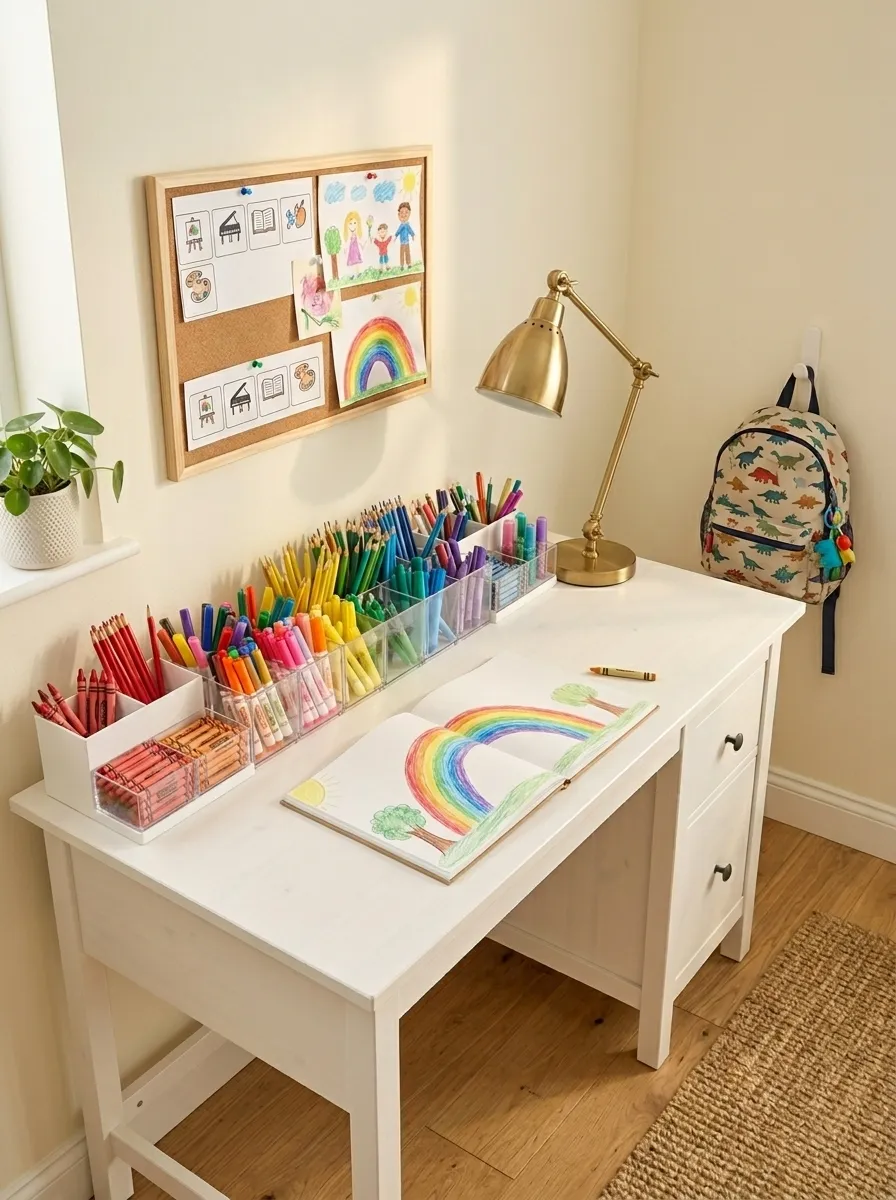
A designated desk zone gives kids a sense of routine and ownership over their learning space.
It does not need to be large. A small wall-mounted desk or a simple table and chair from a thrift store works perfectly.
The key is making the space functional and appealing so your child actually wants to use it.
Mount a small corkboard or magnetic board above the desk for pinning notes, schedules, and artwork.
Use small containers, mason jars, or pencil cups to organize supplies by type. Everything visible and accessible makes kids more likely to put things back.
Add a good lamp. Proper lighting reduces eye strain and makes homework feel less like a punishment.
Paint the chair in a fun color or add a small cushion for comfort.
If wall space is limited, a fold-down wall desk takes up zero floor space when not in use. These can be purchased or built with a piece of plywood, a piano hinge, and two folding brackets.
Budget tip: Look for secondhand desks at thrift stores. A coat of paint and new hardware transform even the oldest desk into something that feels brand new.
19. Nature-Themed Decor With Real Elements
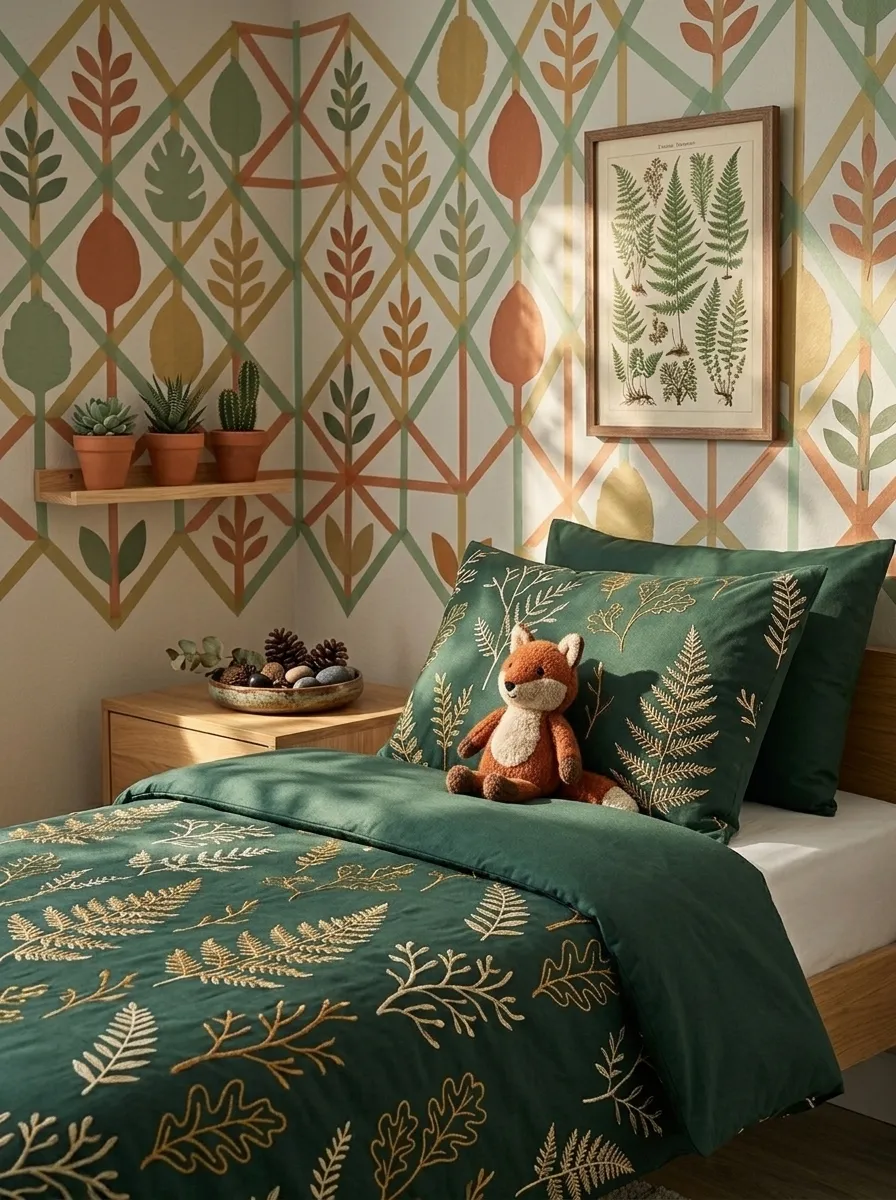
Bringing nature into a child’s room creates a calming and curious environment.
Real plants, natural textures, and earthy colors work together to make a space feel grounded and peaceful without feeling boring.
Start small with a few low-maintenance plants. Succulents, snake plants, and pothos are nearly impossible to kill and safe for most households.
Let your child pick the plant and give it a name. Caring for a plant teaches responsibility and gives kids a reason to check in on their room every day.
Pair plants with natural materials: a wooden shelf, a wicker basket, linen curtains, a jute rug.
Add framed botanical prints or pressed leaf artwork to the walls. These are easy to make yourself. Collect interesting leaves, press them between heavy books for a week, then frame them in simple frames.
Use river stones or pinecones collected on walks as small display objects on shelves.
A bug-catching kit, a small magnifying glass in a jar, or a nature journal on the desk reinforces the theme and encourages outdoor curiosity.
Budget tip: Most natural elements cost nothing at all. A walk in the park with your child can supply all the decor you need for a nature shelf.
Creating a kids room that your child loves does not require a big budget or professional design skills. It requires listening to what your child actually enjoys and then finding simple, affordable ways to bring that into their space. The ideas here cover every style, budget, and age group. Start with one or two changes that excite you most and build from there. Even small updates like framed artwork, star stickers on the ceiling, or a cozy reading nook can completely change how a child feels about their room. When kids love their space, they spend more time in it, take better care of it, and feel more settled and happy at home. That is worth every bit of effort.