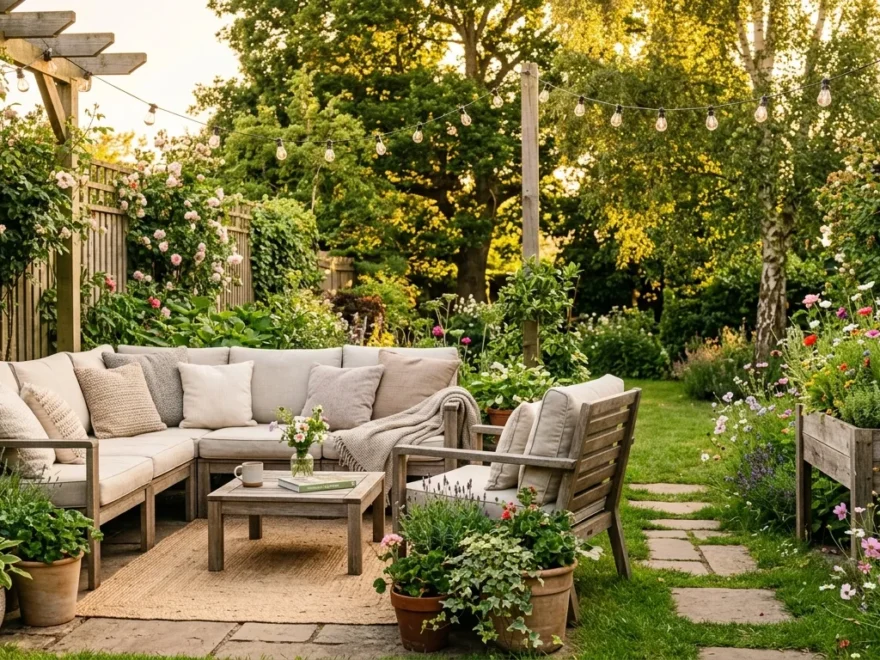
Your backyard is more than just a patch of grass behind your house. It is an extension of your living space, a place where you can breathe, relax, and feel at home. Whether you have a sprawling yard or a tiny concrete square, there are simple and affordable ways to turn it into a space you actually want to spend time in. This article walks you through 20 practical backyard decor ideas that work for different budgets, styles, and skill levels. No major renovations required. Just smart, simple choices that make a real difference. If you’re also exploring kids room decor ideas, playful colors, creative storage, cozy textures, and interactive elements can help create a space that feels fun, organized, and full of personality.
1. Add a String Light Canopy
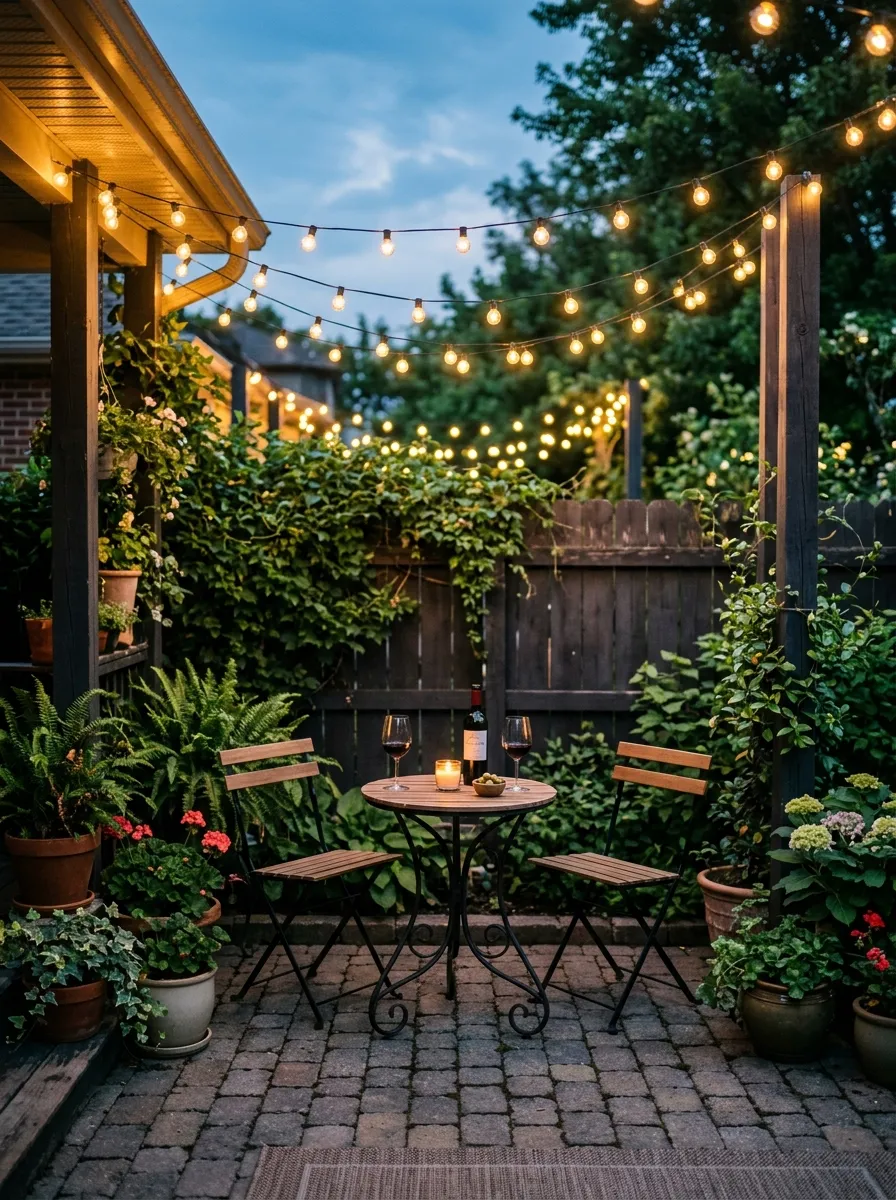
String lights are one of the easiest ways to change the entire mood of a backyard. They cost very little and take less than an afternoon to hang.
You can string them between two wooden posts, wrap them around a pergola, or zigzag them from your fence to your house wall. The result is an instant outdoor living room feel.
Warm white bulbs work best for a cozy, relaxed atmosphere. Cool white tends to feel more clinical, so save that for task lighting instead.
A simple DIY option is to use screw-in cup hooks on wooden surfaces and thread outdoor-rated string lights through them. You can find weatherproof string lights at most hardware stores or online for under $20 for a 50-foot strand.
Go for Edison-style bulbs if you want a more rustic or vintage look. Globe bulbs give a more modern feel.
The key is to hang them at a consistent height so the canopy looks intentional rather than messy. Use a measuring tape and mark your anchor points before drilling.
Once the sun sets, string lights do more decorating than any piece of furniture ever could.
2. Build a Simple DIY Fire Pit
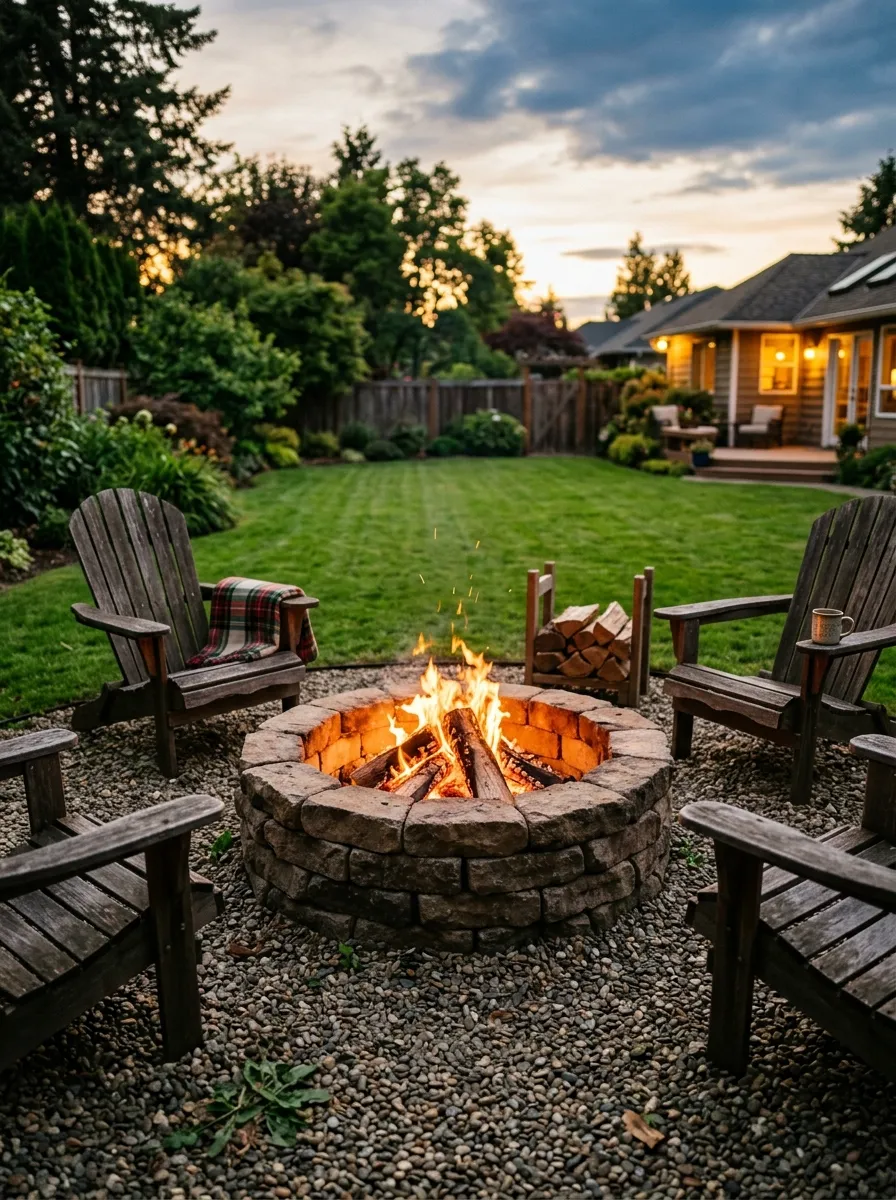
A fire pit creates a natural gathering point in any backyard. It gives people a reason to sit outside even when the weather gets cool.
You do not need a professional builder or a big budget. A basic fire pit can be built in a single Saturday afternoon using concrete retaining wall blocks from any home improvement store.
The basic method: Mark a circle on the ground, dig down about 6 inches, lay a gravel base for drainage, then stack two or three layers of blocks in a ring. No mortar required for a simple version.
The total cost for materials usually falls between $30 and $80 depending on block size and how wide you want the pit.
Keep the pit at least 10 feet away from any structures, fences, or overhanging branches. Always check local regulations before building.
Add a metal fire grate inside the ring to keep the wood off the ground and improve airflow. This helps the fire burn cleaner.
Surround the pit with gravel or pavers to create a tidy, defined sitting area. A few Adirondack chairs or even simple outdoor stools complete the setup without spending much.
3. Create a Vertical Garden Wall
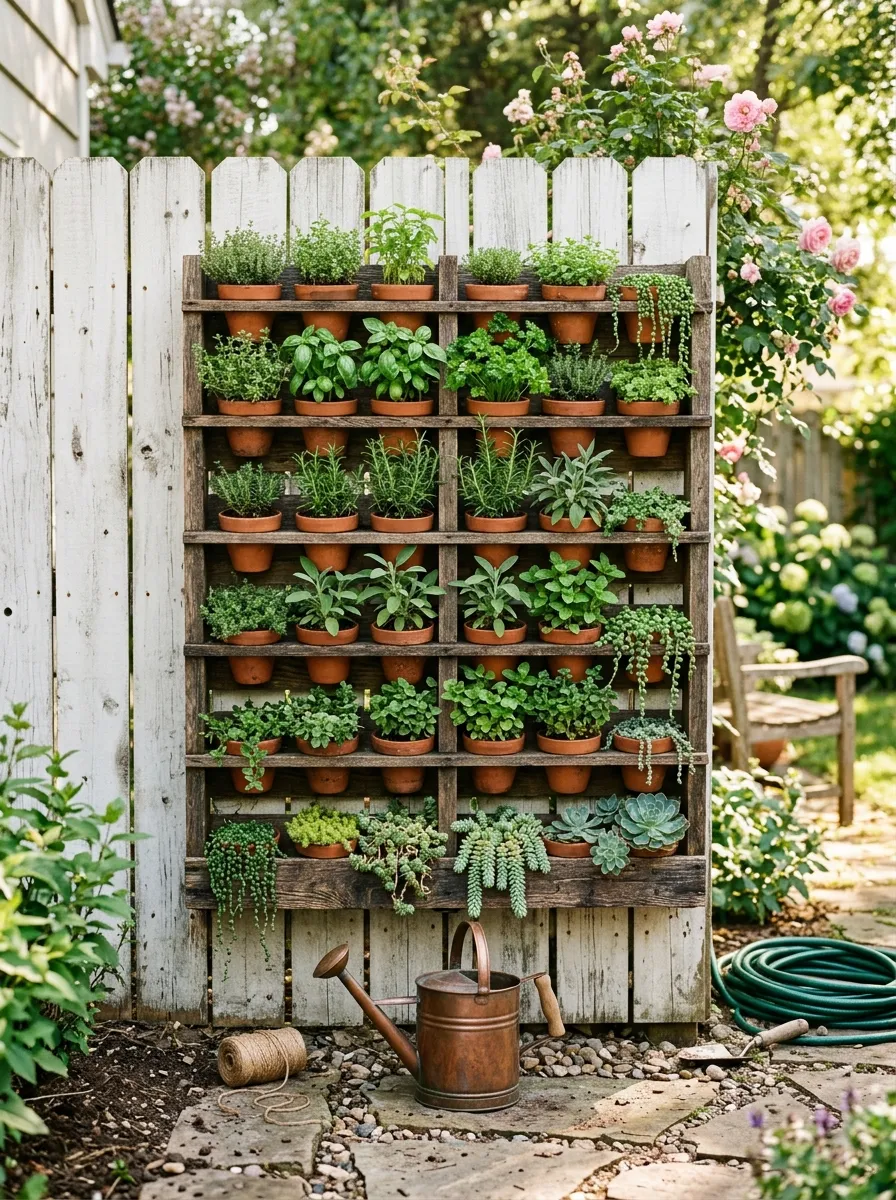
If ground space is tight, go vertical. A wall garden lets you grow plants, herbs, or flowers without taking up any floor space at all.
The simplest version uses a wooden shipping pallet. Sand it down, attach landscape fabric to the back and bottom, fill it with potting soil, and plant directly into the slats. Lean it against a fence or mount it to a wall.
You can also buy stackable planter pockets made of felt or fabric. These hang flat against any vertical surface and work well for herbs, succulents, or small flowers.
Great plants for vertical gardens:
Lettuce, mint, basil, strawberries, sedums, ferns, pothos
These all do well in shallow containers and tolerate varied light conditions.
Paint the pallet or wooden frame in a color that works with your fence or house exterior to make it look intentional rather than leftover.
Water vertical gardens more often than ground-level pots since they dry out faster. A simple drip irrigation kit can automate this and costs around $15 to $25.
This is a great weekend project that adds greenery, texture, and personality to any bare wall or fence panel.
4. Lay Down an Outdoor Rug
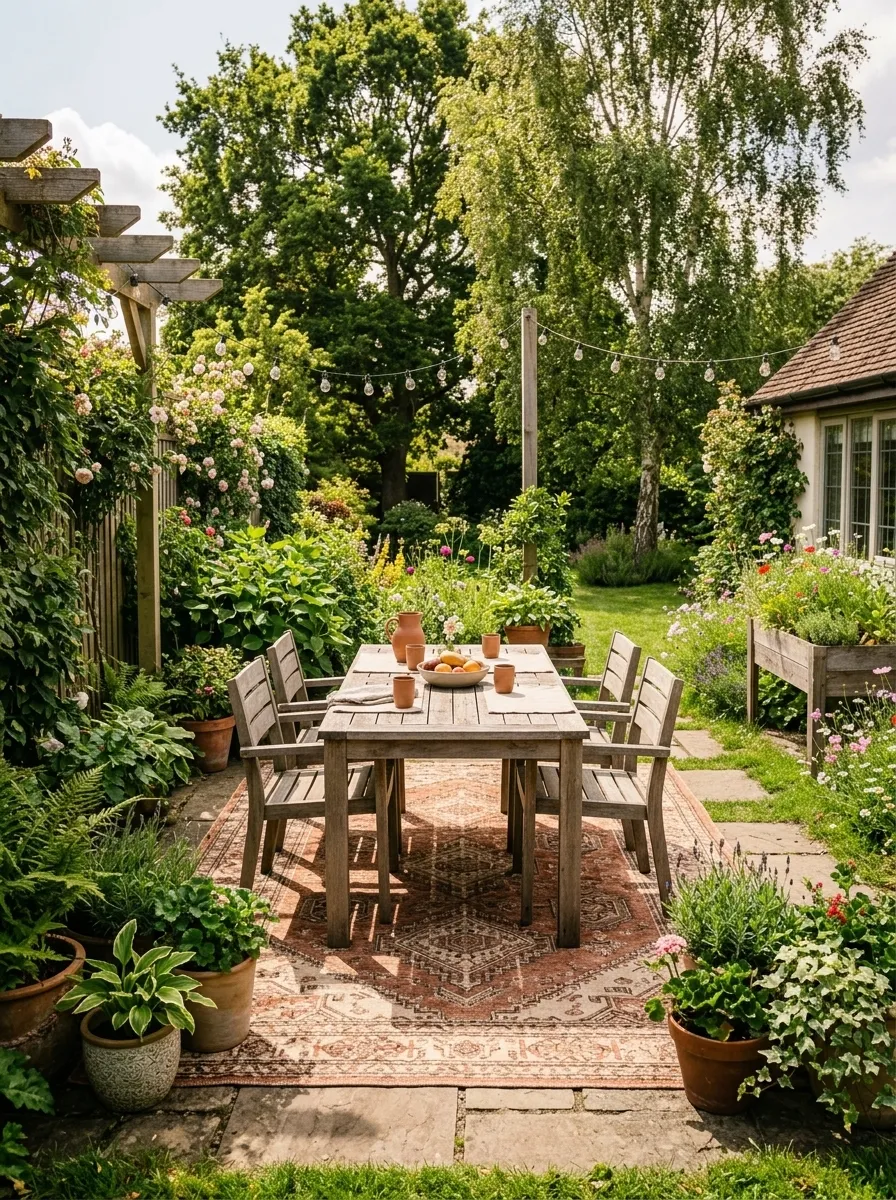
An outdoor rug is one of the most underrated backyard upgrades you can make. It instantly defines a space and makes it feel like a proper outdoor room.
Rugs create visual boundaries. When you place one under your seating area or dining table, it signals that this is a designated spot for relaxing or eating. It makes the space feel designed rather than random.
Look for rugs labeled “outdoor” or “UV-resistant.” These are made from polypropylene or similar materials that resist fading, mildew, and moisture. They also clean up easily with a garden hose.
You can find quality outdoor rugs at home stores, discount retailers, or online marketplaces for as little as $30 to $60 for a medium-sized option.
Choose a pattern or color that works with your existing furniture. Geometric patterns in earthy tones like terracotta, sand, or olive tend to work well in most backyards.
Size matters. Go bigger than you think you need. A rug that is too small looks like an afterthought. Aim for one where all the furniture legs sit on or just off the edge of the rug.
This single purchase can tie an entire seating area together in under five minutes.
5. Set Up a Hammock Corner
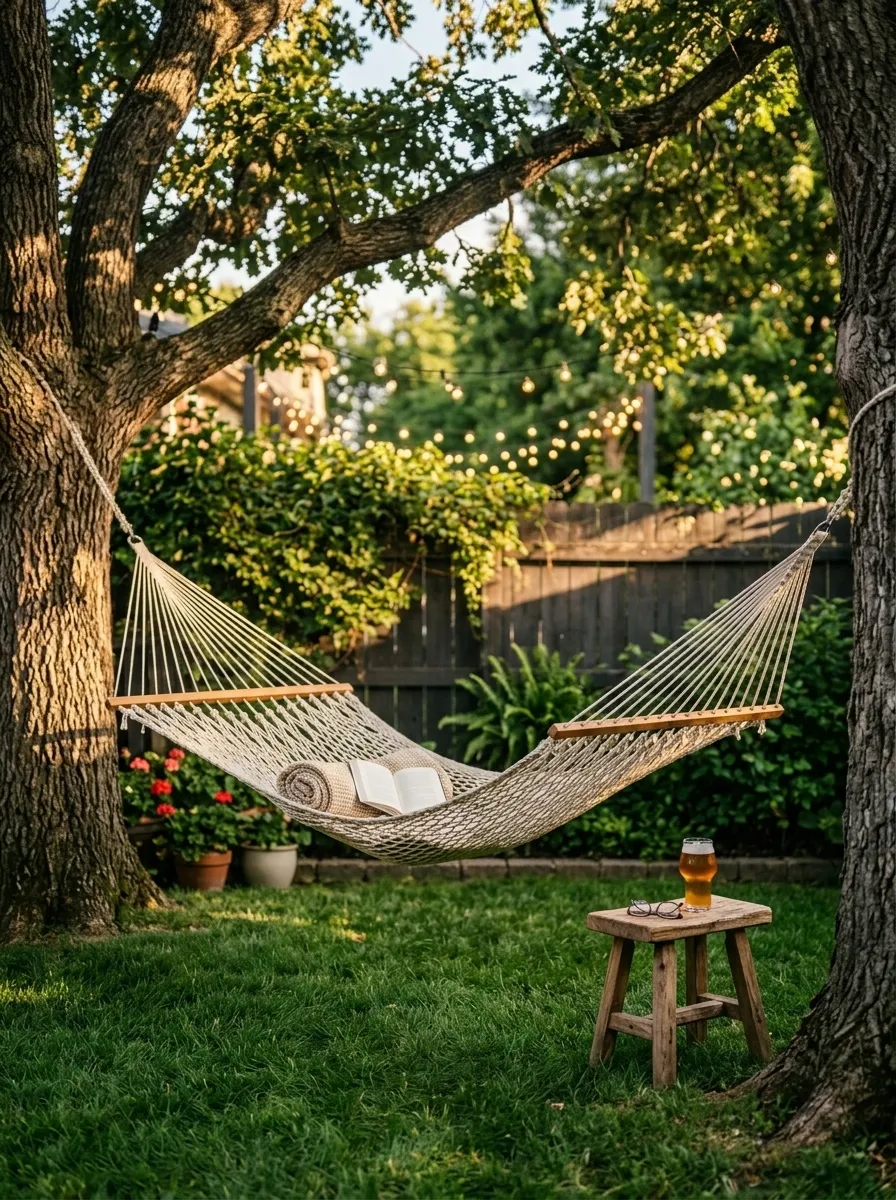
A hammock turns any corner of the backyard into an immediate relaxation zone. Few things say “slow down” like a gently swaying hammock on a warm afternoon.
If you have two trees roughly 10 to 15 feet apart, you already have everything you need. Wrap them with tree straps (never ropes, which damage bark) and hang a cotton or nylon hammock between them. The whole setup takes about 15 minutes.
No trees? A freestanding hammock stand works just as well. These come in metal or wood finishes and can be placed anywhere on a lawn, patio, or deck.
Brazilian-style cotton hammocks are soft, breathable, and affordable, often under $40. Rope hammocks look great but can leave marks on bare skin. Fabric hammocks with a spreader bar are easier to get in and out of.
Add a small outdoor side table or a crate next to the hammock to hold a book or a drink. A clip-on book light or a solar lantern hung overhead extends the usable hours into the evening.
Position it in a shaded area if possible. A hammock in direct afternoon sun gets very warm and less inviting than one under a canopy of leaves.
6. Use Container Plants Strategically
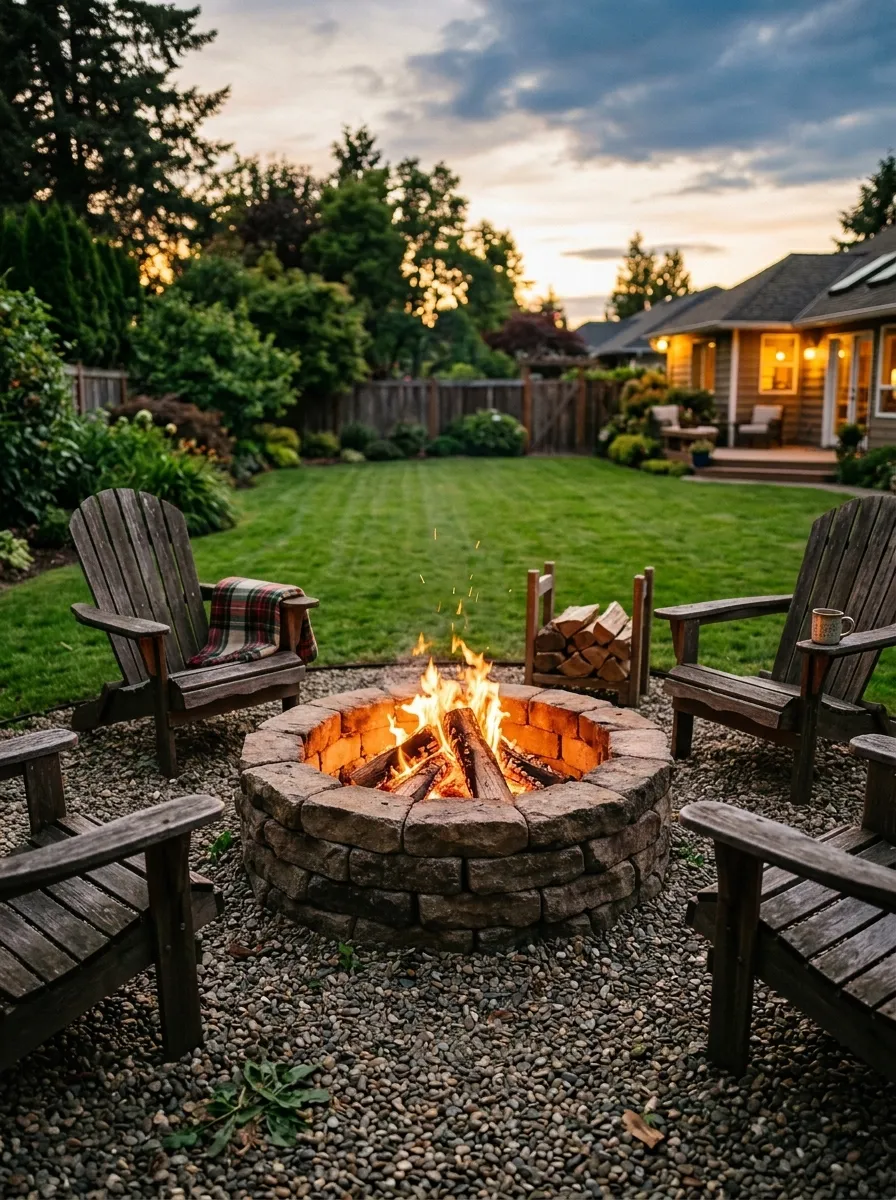
Container plants are one of the most flexible backyard decor tools available. You can move them, rearrange them, swap them seasonally, and spend very little doing it.
The key is grouping pots in clusters rather than spacing them out individually. A cluster of three to five pots of varying heights looks intentional and lush. A single pot in a corner just looks forgotten.
Use a mix of thriller, filler, and spiller plants in larger containers:
Thriller is the tall centerpiece (like a grass or a small shrub). Filler fills in the middle (like petunias or herbs). Spiller trails over the edge (like sweet potato vine or ivy).
This combination gives each container a professional, layered look without needing any design skills.
Terracotta pots are affordable and look great. Concrete, ceramic, and wooden planters add more visual weight and work well as statement pieces.
Save money by repurposing household items like colanders, wooden crates, old buckets, or even broken wheelbarrows as planters. Drill drainage holes in anything without them.
Cluster your containers near seating areas, along pathways, or flanking an entry gate for maximum visual impact with minimal cost.
7. Install a Simple Garden Pathway
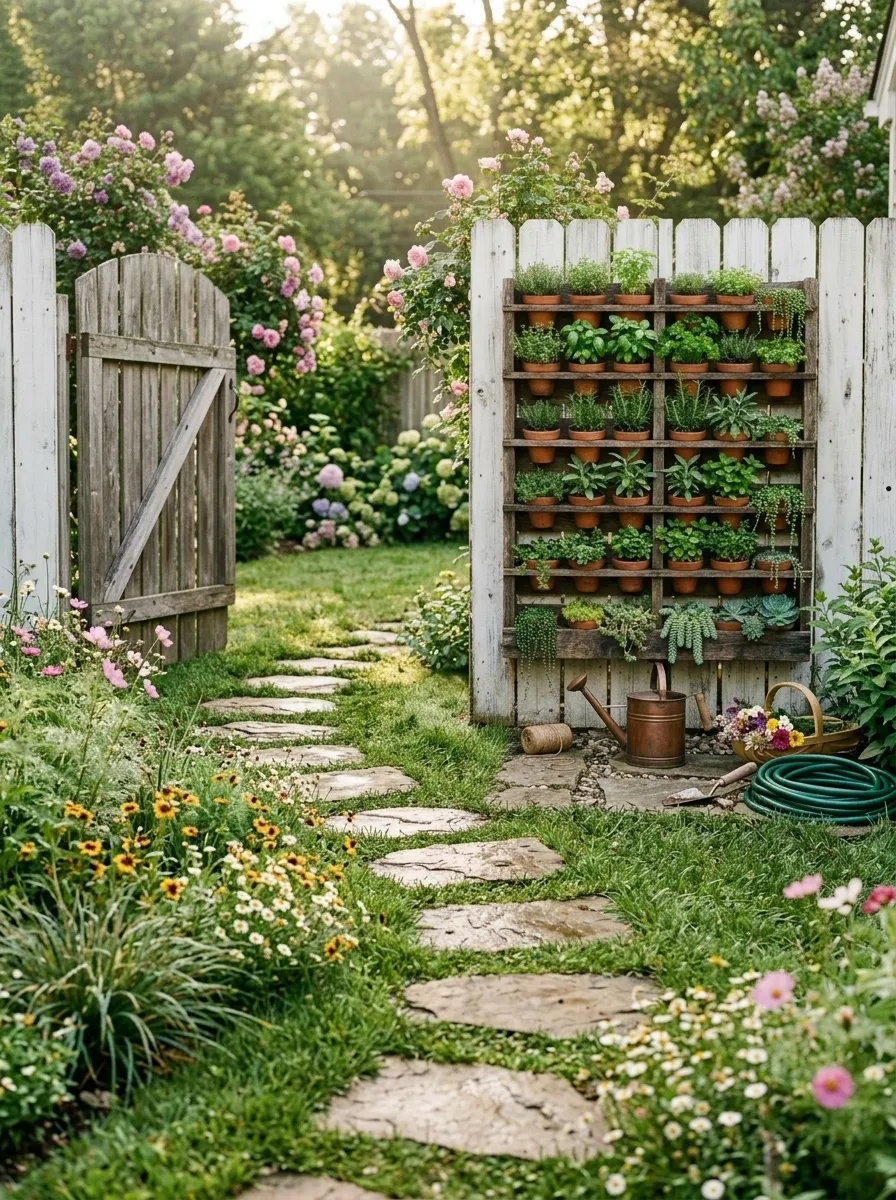
A pathway adds structure to a backyard and makes it feel more like a designed landscape than an open patch of grass.
You do not need professional landscapers for this. Stepping stones are one of the easiest DIY projects you can do in an afternoon.
Basic materials to use:
Flat natural stones, concrete pavers, reclaimed bricks, gravel, or even wood slices
Lay stepping stones by placing them where your feet naturally land as you walk. This ensures the spacing feels comfortable rather than awkward.
Dig each stone down slightly so the surface is flush with the lawn. This prevents tripping and makes mowing easier.
For a gravel path, mark the edges with landscape edging, remove the top layer of soil, add a weed barrier fabric, then pour gravel on top. This is very low maintenance once done.
A pathway does not need to be long. Even a short three-foot path from your patio to a garden bed makes the backyard feel more intentional and polished.
Edge the path with low-growing groundcovers like creeping thyme or moss for a soft, natural look that also reduces weeding.
8. Add a Bird Feeder or Bird Bath
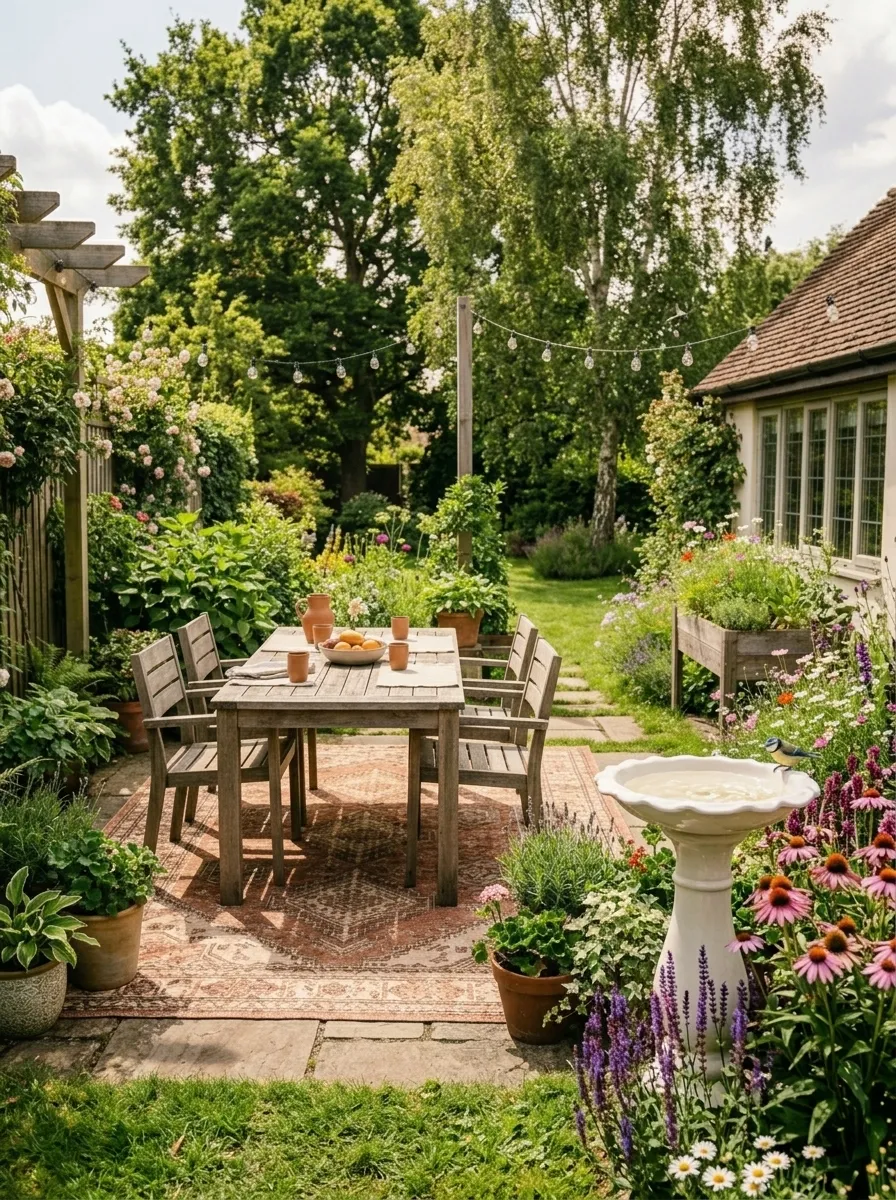
Adding wildlife elements to your backyard changes the experience entirely. It makes the space feel alive even when you are just sitting and watching.
A bird bath is one of the simplest additions you can make. It does not require electricity, plumbing, or any installation. You set it on a pedestal or flat surface, fill it with water, and birds find it within days.
Choose a shallow basin since birds prefer water that is only 1 to 2 inches deep. Keep it in a spot that gets some sun but also has nearby shrubs for birds to retreat to.
Bird feeders go one step further by attracting specific species depending on the seed you use. Sunflower seeds attract finches and chickadees. Suet cakes attract woodpeckers. Nyjer seed attracts goldfinches.
Hang feeders from a shepherd’s hook, a tree branch, or a mounted pole in an open area where predators cannot easily approach.
Clean bird baths every few days to prevent mosquito larvae and algae. A quick scrub with a brush and a rinse is all it takes.
The sounds of birds in the morning and afternoon add a calm, natural atmosphere that no speaker or fountain can fully replicate.
9. Create a Cozy Reading Nook
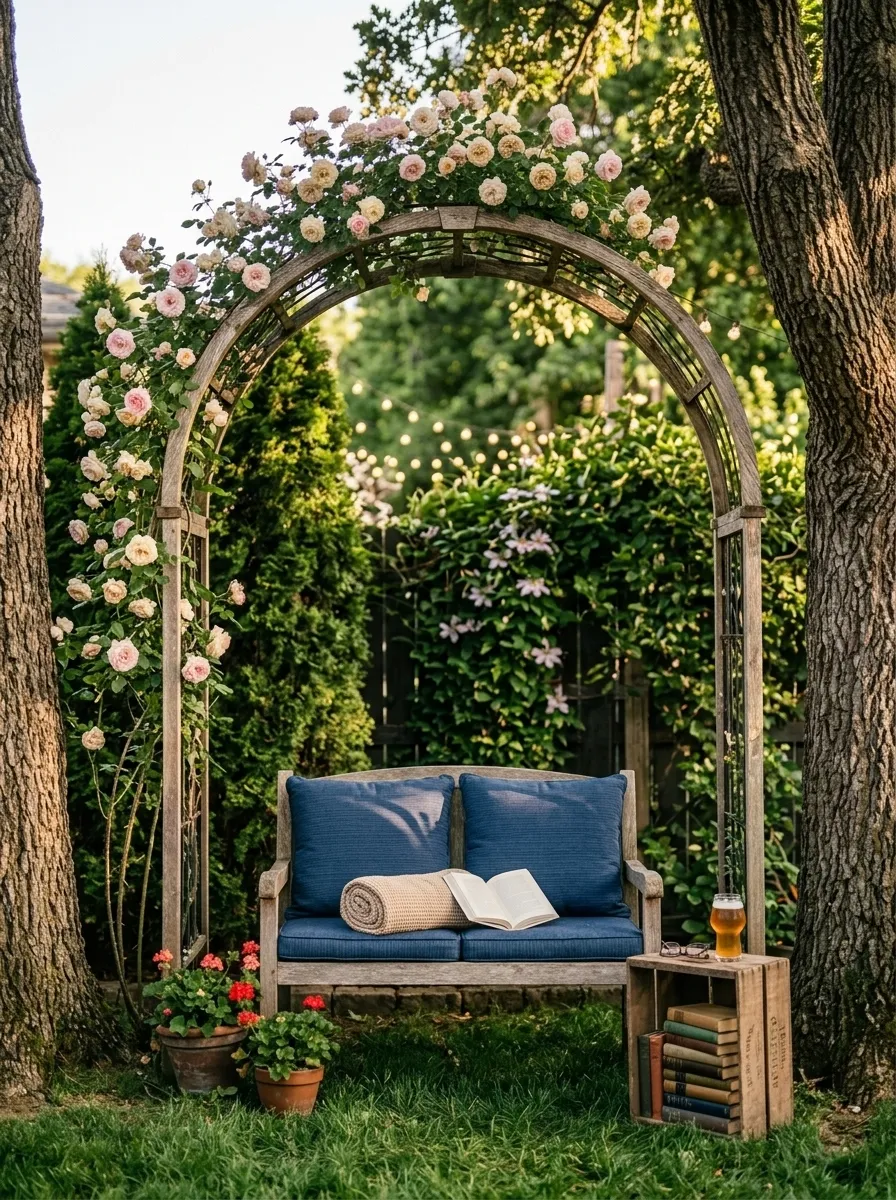
A dedicated reading nook gives your backyard a sense of purpose and personality. It signals that this is a place for quiet, intentional time outside.
You do not need a gazebo or a fancy pergola. A simple bench placed in a sheltered corner with a few cushions works perfectly well.
Location matters more than furniture. Find a spot that feels slightly separated from the main area, perhaps tucked behind a large shrub, under a tree, or in a corner where two fences meet. The sense of enclosure is what makes it feel like a nook.
Add a weather-resistant outdoor cushion to any wooden bench or chair. Look for cushions rated for outdoor use so they handle moisture without mildew.
A small side table or crate next to the seat gives you somewhere to rest a drink or a book. A solar lantern hung overhead extends reading time into the evening.
If the spot gets direct sun, add a shade sail or a large patio umbrella above it. These are affordable and easy to install with a few anchor points.
Climbing plants like clematis, jasmine, or roses trained onto a simple trellis behind the bench can turn a plain corner into something truly charming over one growing season.
10. Use Solar Powered Stake Lights Along Borders
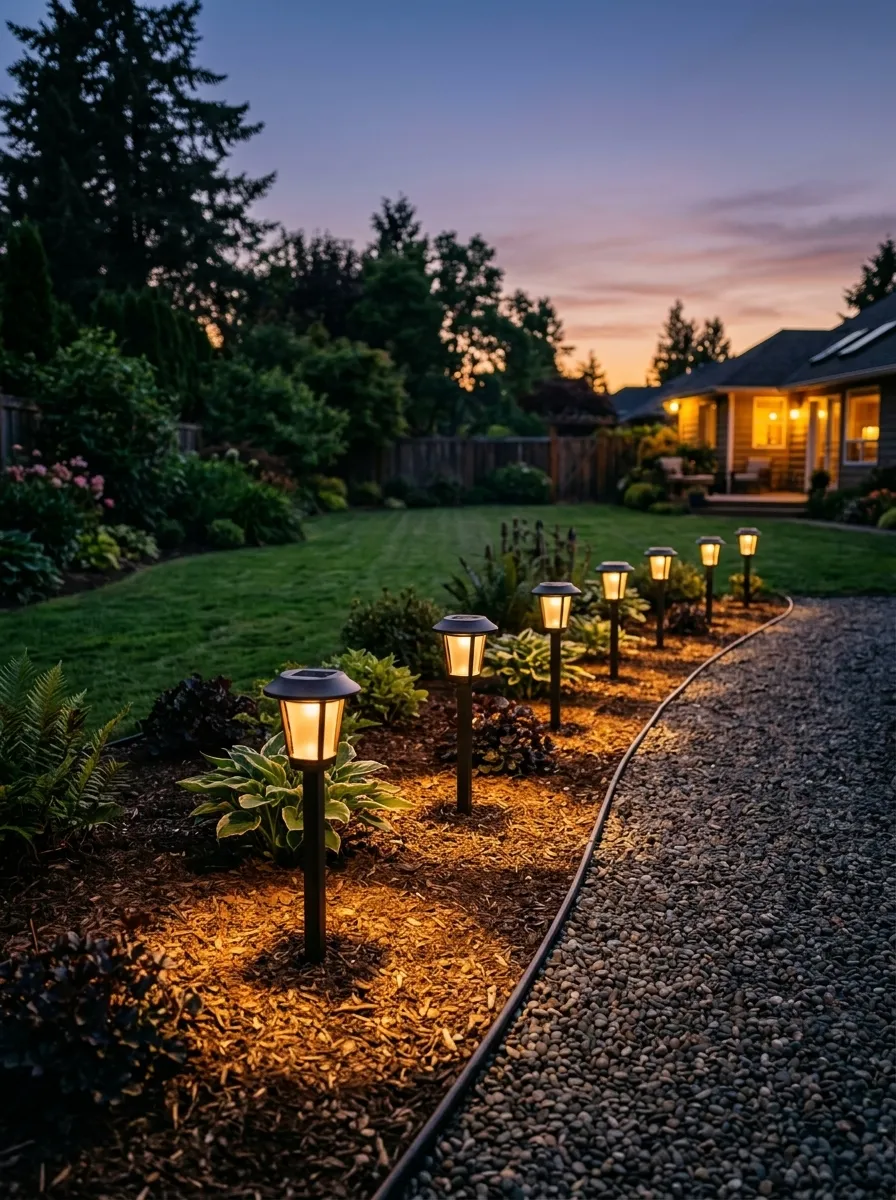
Solar stake lights are one of the most affordable and easiest ways to add nighttime character to a backyard. They charge all day and turn on automatically at dusk.
Place them along garden borders, pathways, driveways, or the edge of a lawn to create a warm, guided glow after dark. They add depth and make the yard feel much larger at night.
What to look for:
Choose stakes with warm amber or warm white LEDs rather than cool white. Warm tones create a cozier, more atmospheric feel. Cool tones tend to look harsh outdoors.
Stainless steel or powder-coated metal stakes hold up far better over time than cheap plastic ones. The extra few dollars are worth it.
Space them evenly for a clean, polished look. Inconsistent spacing looks messy. Use a tape measure and a consistent interval, usually 12 to 18 inches apart.
A set of 10 solar stake lights typically costs between $15 and $30, making this one of the best value-for-money backyard upgrades available.
No wiring, no electrician, no ongoing electricity cost. Once they are in the ground, they just work.
11. Hang an Outdoor Mirror
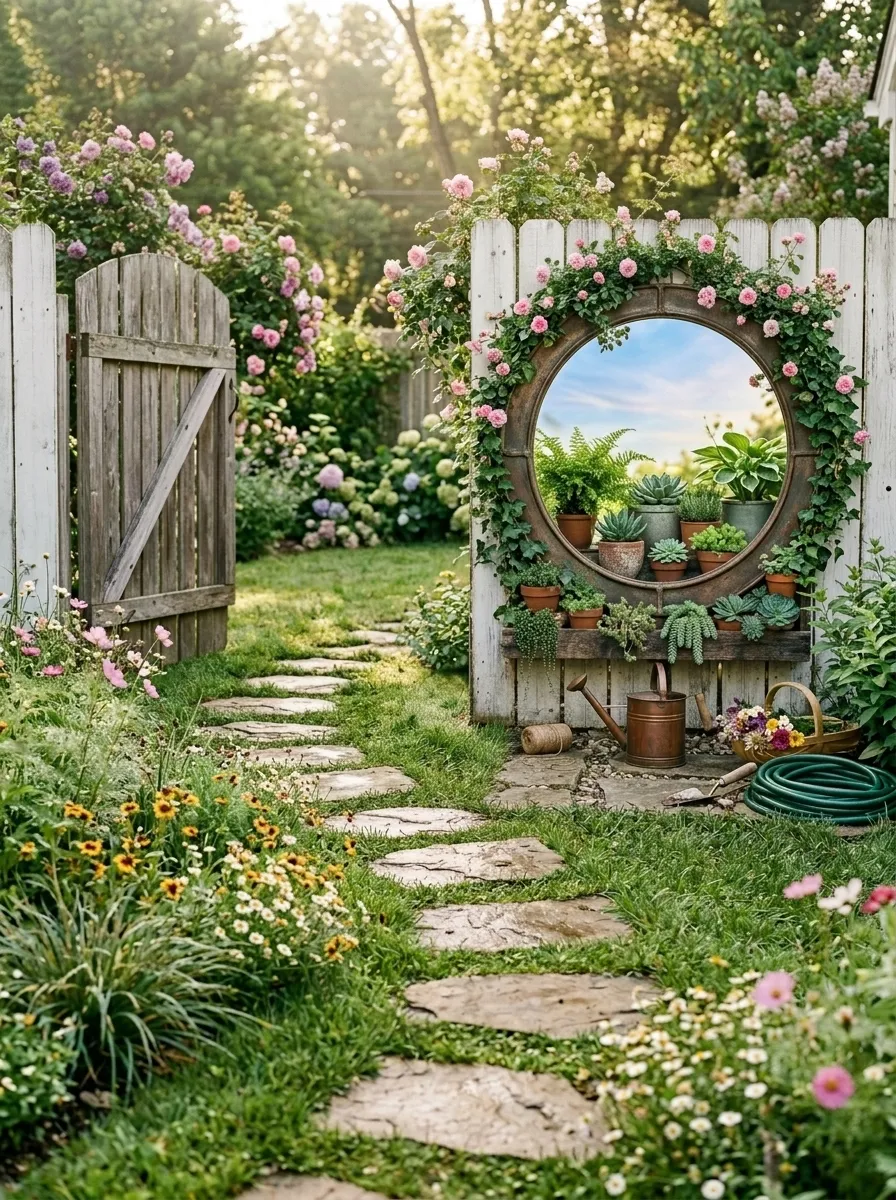
Mirrors are a designer trick for small indoor spaces, and the same principle works just as well outside. An outdoor mirror makes a backyard feel bigger by reflecting greenery and sky back into the space.
Mount a weather-resistant mirror on a fence, a garden wall, or between two posts. The reflection creates the illusion of depth, making a compact yard appear to extend further than it actually does.
Look for mirrors specifically designed for outdoor use. These have weatherproofed frames in materials like powder-coated steel, galvanized metal, or teak wood. Regular indoor mirrors can rust and delaminate when exposed to moisture.
Round mirrors with an arched or circular metal frame have been very popular in garden design. They tend to look more intentional than square or rectangular options.
Placement tip: Position the mirror so it reflects something attractive, like a garden bed, a flowering climber, or a patch of blue sky. Avoid angles that reflect bare concrete or a utility area.
Frames in black, aged bronze, or natural metal tones work with most outdoor color schemes and weather to a beautiful patina over time.
This one addition can make a small or narrow backyard feel significantly more open without any physical expansion.
12. Set Up a DIY Outdoor Movie Zone
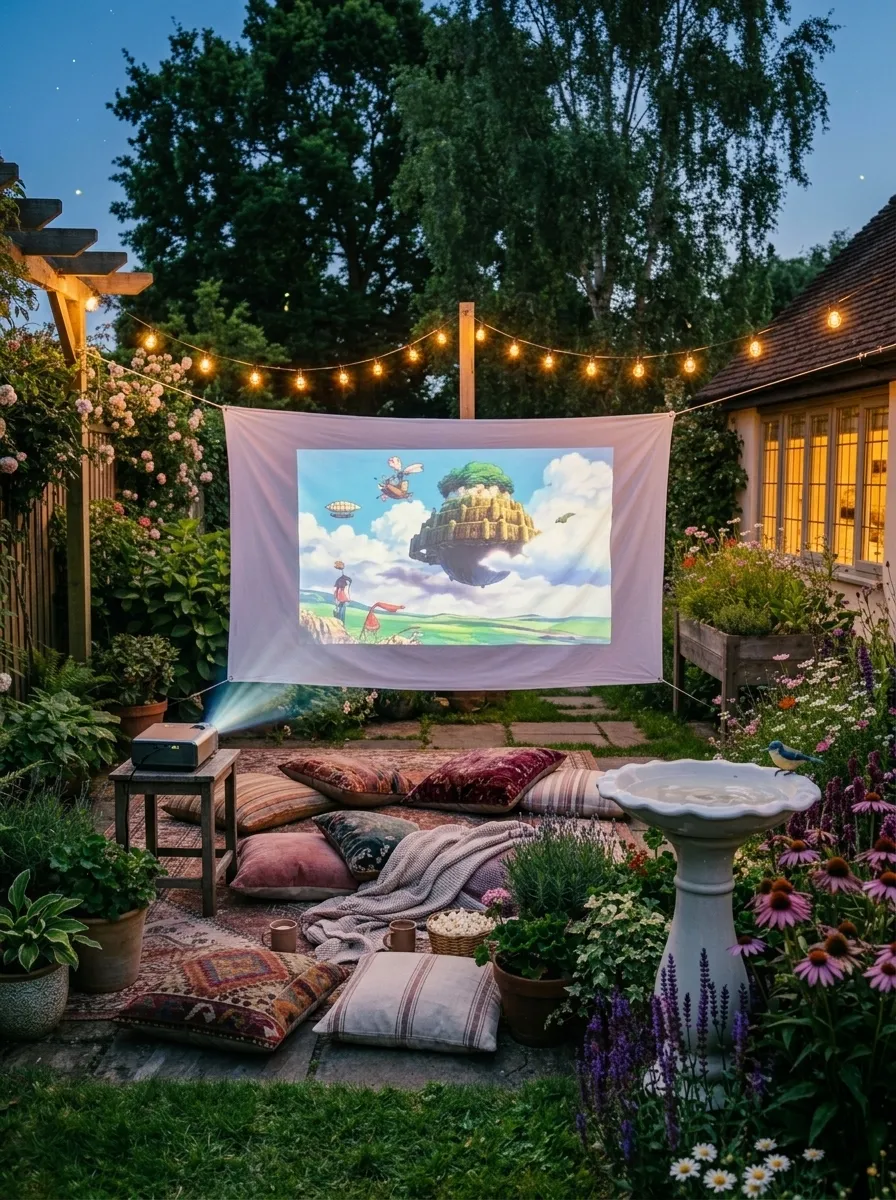
An outdoor movie setup turns your backyard into the most popular spot in the neighborhood on a warm evening. And it costs far less than you might think.
The basic setup requires three things: a white screen or sheet, a projector, and something comfortable to sit on. That is it.
Screen options:
A simple white bedsheet stretched between two posts works fine. A purpose-made outdoor projector screen gives a sharper image. You can also project against a white fence or a painted wall.
Budget-friendly mini projectors start around $60 to $80 and connect to phones, laptops, or streaming sticks via HDMI or Bluetooth. Sound can come from a portable Bluetooth speaker.
For seating, pile up outdoor cushions, use folded blankets, or drag out lightweight lawn chairs. Bean bags are another affordable option.
String lights around the perimeter keep the space functional without washing out the projected image too much.
Set up away from street lights or other light sources that could reduce picture quality. Outdoor movie nights work best once it is fully dark, which is usually around 30 to 45 minutes after sunset.
This is also a great activity for kids, group dinners, or casual weekend get-togethers.
13. Build a Simple Raised Garden Bed
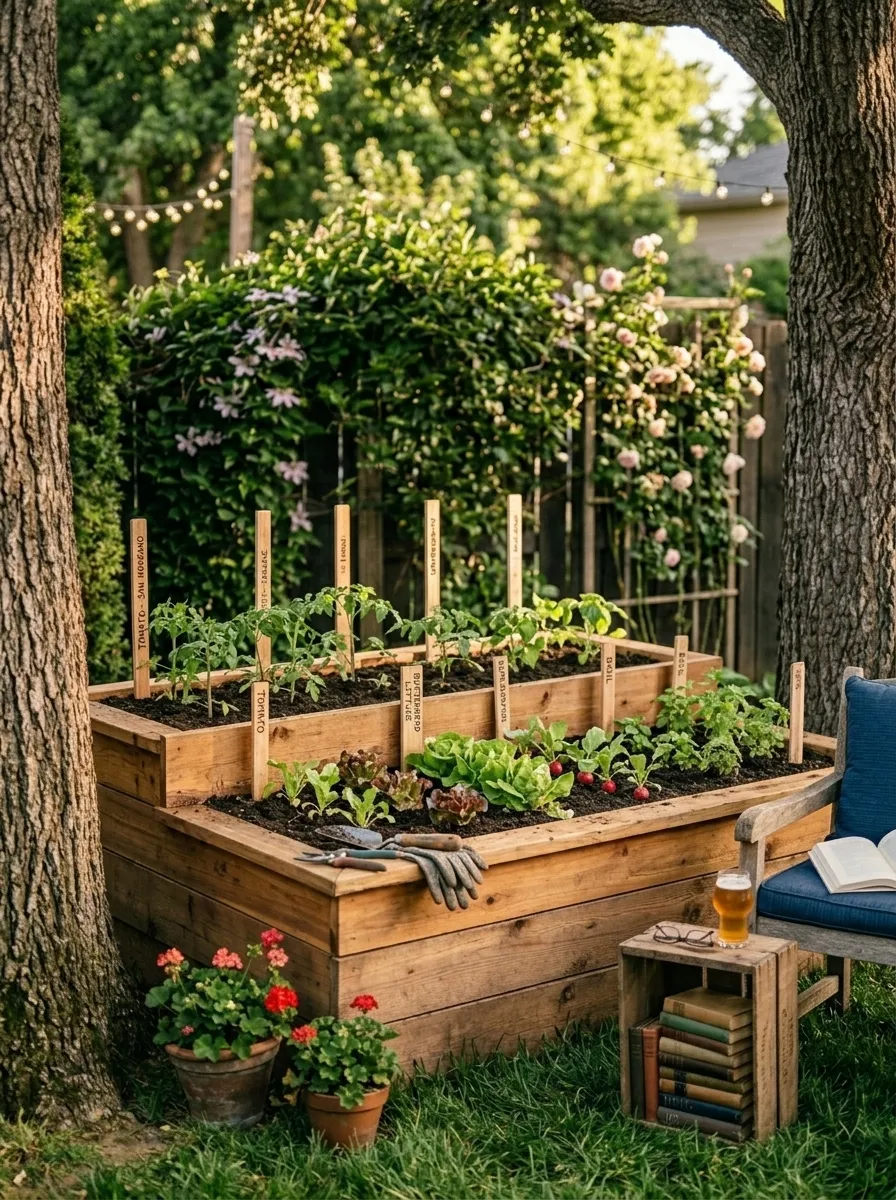
A raised garden bed adds structure, greenery, and a sense of productivity to any backyard. It also gives you homegrown vegetables, herbs, or flowers without needing a large or particularly good patch of soil.
You can build a basic raised bed using untreated cedar boards, which naturally resist rot. A simple rectangle shape (4 feet by 8 feet is a classic size) requires only a few cuts and basic screws.
Materials for a basic 4×8 bed:
Four cedar boards at 2×6 or 2×8 dimensions, corner brackets or simple butt joints, and exterior wood screws. Total material cost: around $40 to $60.
Place the bed in a spot that gets at least 6 hours of direct sunlight per day. Fill it with a mix of topsoil, compost, and perlite for excellent drainage and plant health.
Paint or stain the exterior of the bed in a color that works with your outdoor palette. Charcoal, white, and natural wood tones all work well.
Even a single raised bed growing tomatoes, herbs, or lettuce adds visual texture, practical function, and a living element that changes and grows with the seasons.
14. Add a Water Feature
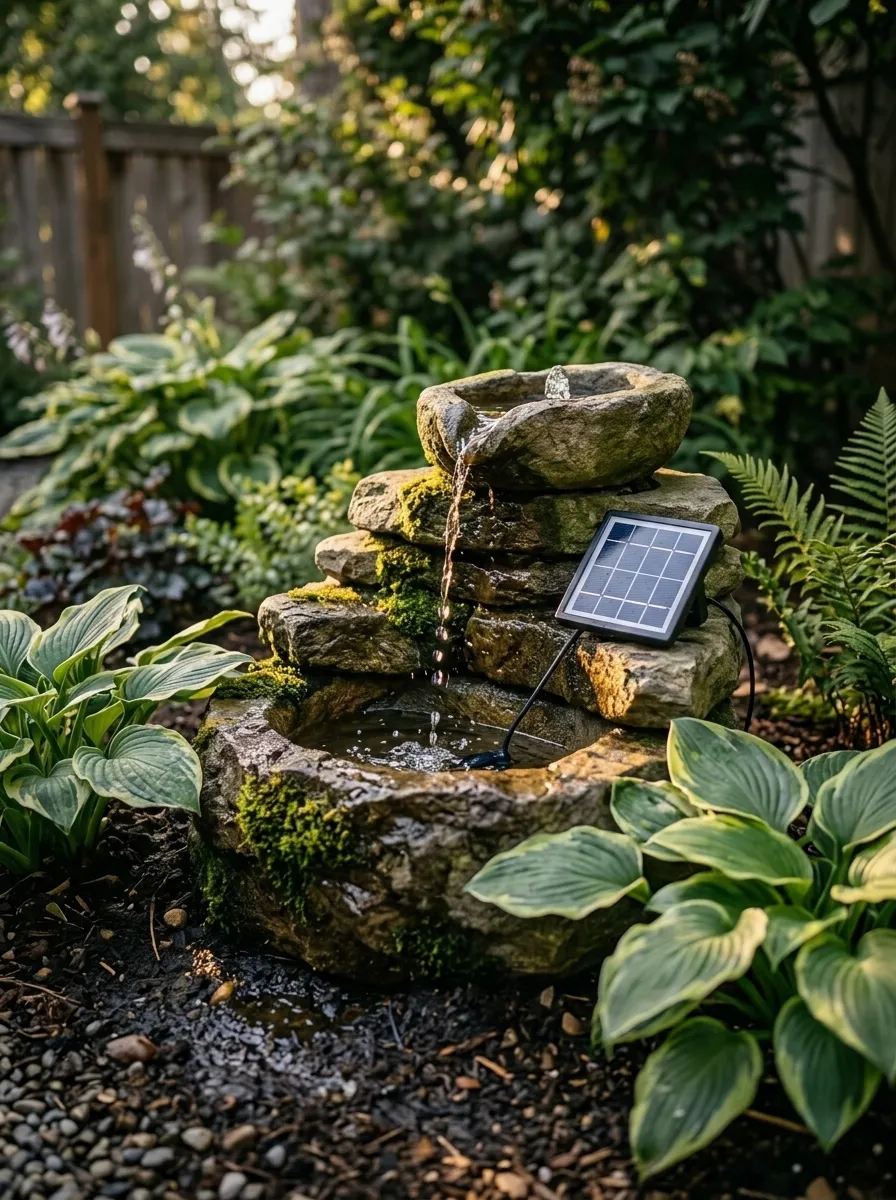
The sound of moving water has a genuinely calming effect. It masks neighborhood noise, adds sensory depth to the space, and makes a backyard feel like a true outdoor retreat.
You do not need to install plumbing or dig a pond. Self-contained solar fountains sit in a basin of water and pump water in a loop using a small solar panel. No wiring needed.
These come in a wide range of styles from stacked stone to ceramic pots to bamboo spouts. Prices start around $30 to $50 for basic models and go up for larger decorative options.
Place your water feature in a partially shaded spot to reduce evaporation and algae growth. Top it up with water every few days during hot weather.
For a slightly more ambitious DIY version, you can repurpose a large ceramic pot or barrel, seal the drainage hole, add a small submersible pump (available for under $20), and stack decorative rocks inside to direct the water flow.
Surround the base of the feature with moisture-loving plants like hostas, ferns, or astilbe for a cohesive, lush look.
Even in a small space, the sound of trickling water changes the atmosphere of the entire yard.
15. Style Your Fence with Planters and Art
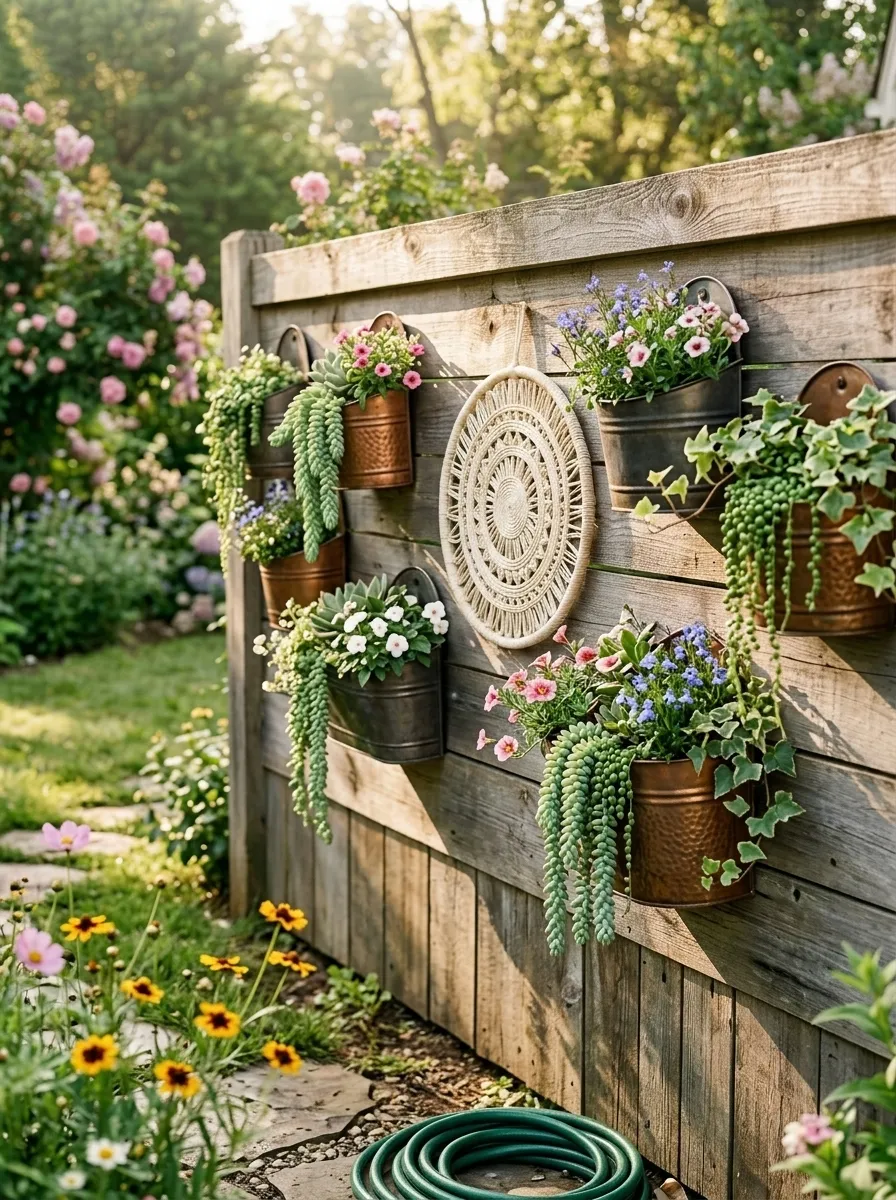
Most backyard fences are large blank surfaces that get completely ignored. With a small amount of effort, they can become a genuine focal point.
Wall-mounted planters are one of the simplest fence upgrades. These attach with screws or hooks and can hold herbs, trailing plants, or small flowers. A row of three to five evenly spaced planters looks clean and intentional.
Galvanized metal, powder-coated steel, and woven wicker all work well as fence planters in outdoor conditions.
Beyond plants, outdoor wall art can add personality. Look for pieces made from weatherproof materials like sealed wood, powder-coated metal, or outdoor-rated resin. Abstract shapes, botanical prints, and geometric patterns all look great against a wooden or masonry fence.
You can also add horizontal wooden slats to the front of a basic fence panel. This gives an updated, modern look and creates a surface for mounting hooks, lanterns, or art pieces.
DIY fence art ideas:
Paint a section of fence in a contrasting color as a backdrop for your plants. Create a mosaic using broken tiles or river stones pressed into outdoor grout along the bottom rail.
Your fence is essentially a large canvas. It just needs a little attention.
16. Create an Herb Garden in Repurposed Containers
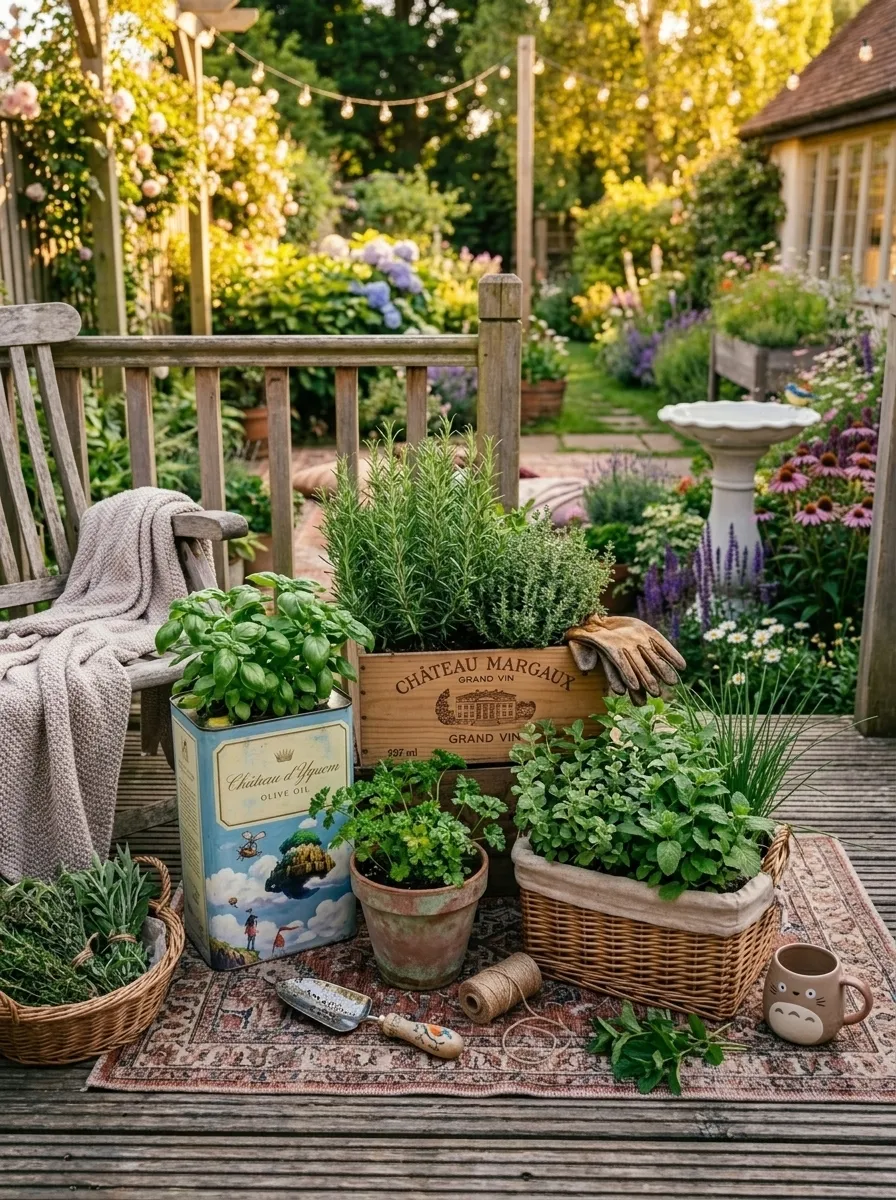
A dedicated herb garden does double duty. It adds greenery and texture to your backyard, and it also gives you fresh ingredients within arm’s reach of your kitchen door.
The best part? Herbs grow well in almost any container as long as it has drainage holes.
Repurposed containers that work well:
Old tin cans (paint them with chalk paint for a matte finish), wooden wine crates, colanders, bread bins, vintage buckets, or even old rain boots.
Drill drainage holes in anything that does not already have them. Use well-draining potting mix rather than garden soil, which compacts too much in containers.
Group your herb containers together in a cluster on your patio, deck, or near the back door. Visual groupings look more designed than scattered single pots.
Easy herbs to start with:
Basil, mint (keep this in its own container as it spreads aggressively), parsley, chives, thyme, and rosemary.
Label each container with a small painted rock, a metal tag, or a chalk-painted stick for a charming, practical touch.
This project can cost almost nothing if you already have containers at home. A few packets of seeds or seedlings from a garden center is all the additional investment needed.
17. Build or Buy a Pergola for Shade and Structure
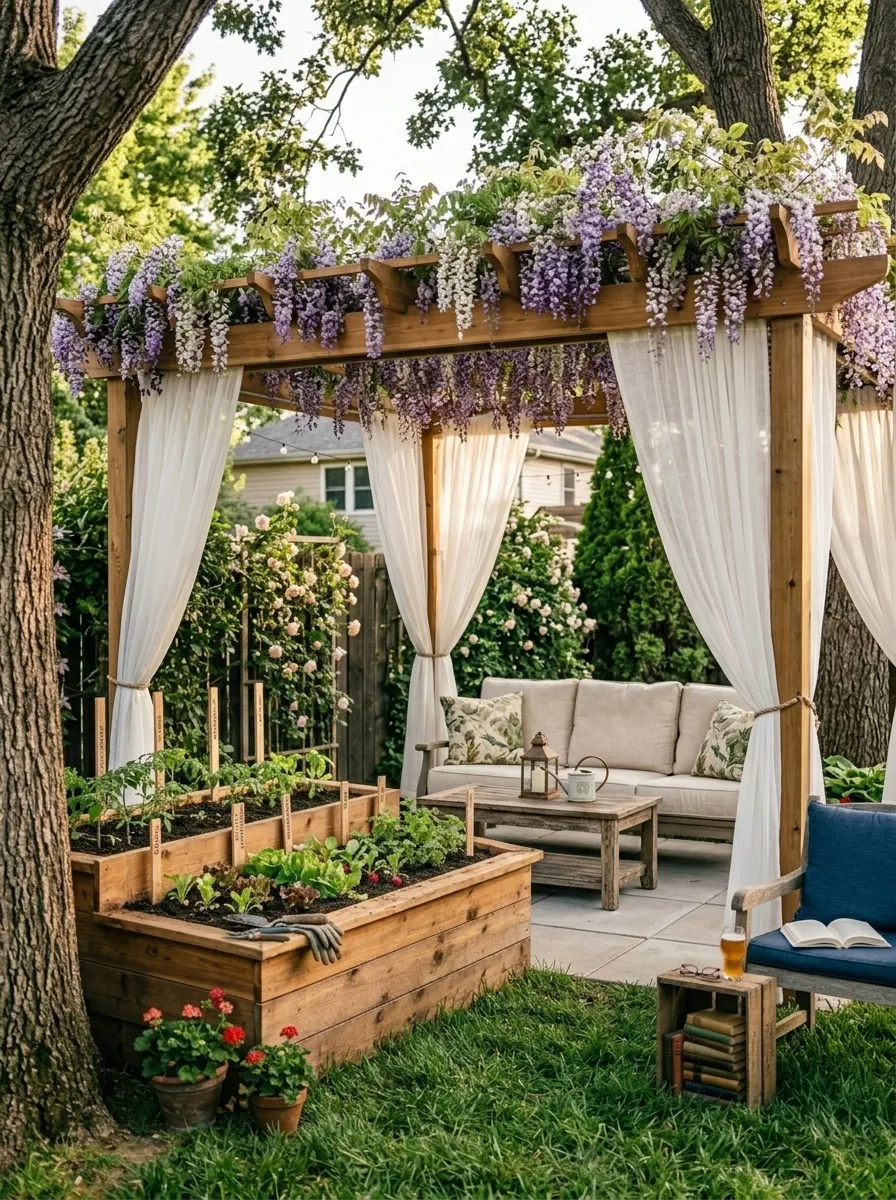
A pergola adds architectural structure to a backyard that no amount of plants or furniture can replicate. It creates a defined overhead frame that makes the space feel like an outdoor room with a ceiling.
You can build a basic pergola yourself. A four-post, open-roof structure using pressure-treated lumber is one of the more manageable DIY projects for a weekend builder. Plans are available for free online, and the materials for a basic 10×10 pergola run around $300 to $500.
If building feels like too much, prefabricated pergola kits come flat-packed with pre-cut components and full instructions. Kits start around $200 for small versions and go up from there.
Train climbing plants like wisteria, clematis, or grapevine up the posts and across the top. These provide natural shade, fragrance, and seasonal change.
Hang lightweight outdoor curtains from the sides for privacy and shade. These are sold specifically for outdoor use and clip directly onto pergola beams.
Add string lights inside the frame for evening atmosphere. Attach a ceiling fan for warm days if you have access to an outdoor-rated electrical outlet nearby.
A pergola changes the entire character of a backyard. It makes even simple furniture look like it belongs to a well-designed outdoor living space.
18. Add Texture with Outdoor Throw Pillows and Blankets
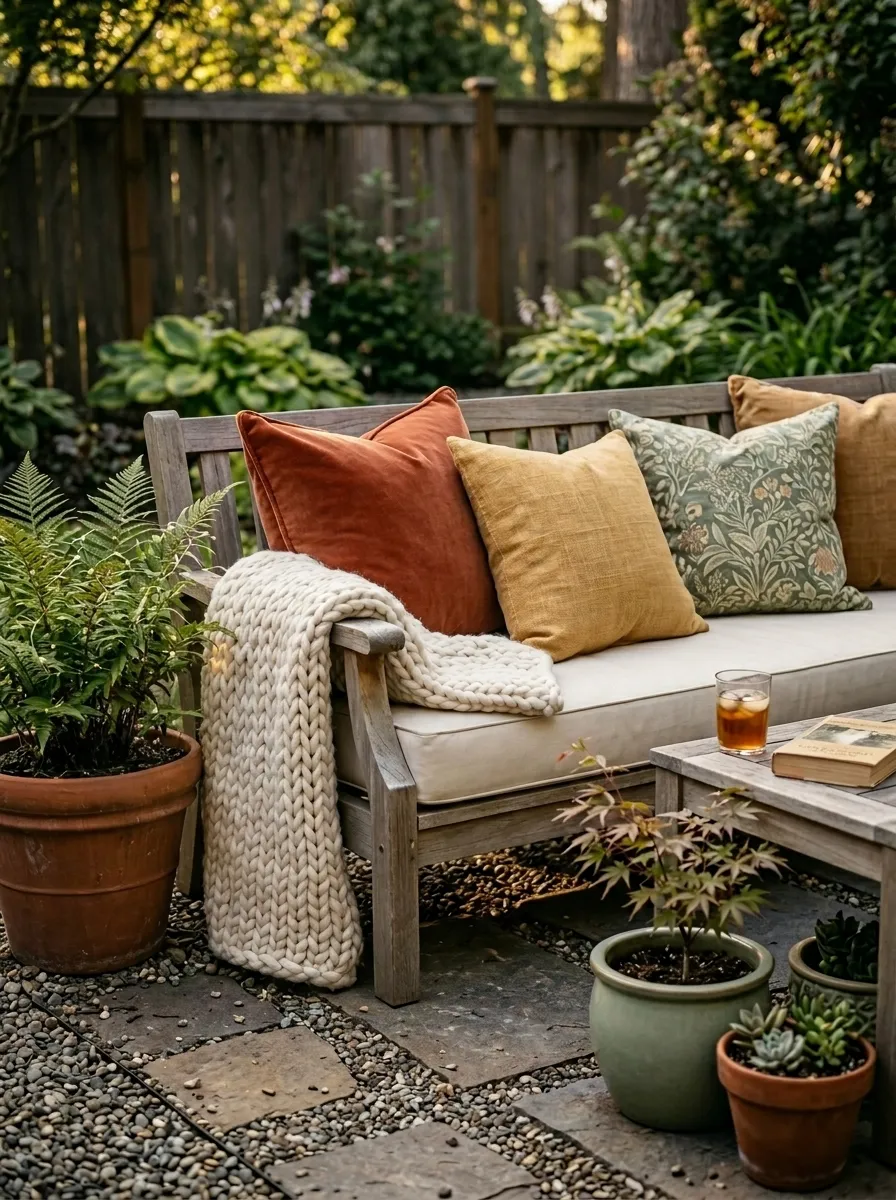
Outdoor textiles are one of the fastest ways to add warmth and personality to patio furniture. They are also one of the most affordable upgrades you can make.
Throw pillows come in weatherproof fabrics like Sunbrella or olefin that resist fading, moisture, and mildew. These look and feel similar to indoor cushions but handle outdoor conditions without deteriorating.
Choose two or three colors that work together. A simple rule is to pick one neutral (like sand, cream, or gray), one warm tone (terracotta, mustard, rust), and one natural tone (olive, sage, forest green). Mix textures between solid fabrics, subtle patterns, and woven weaves.
Outdoor blankets or throws add a layer of coziness to evenings when the air gets cool. Acrylic knit and cotton canvas blankets work well outside. Avoid wool, which absorbs moisture and takes a long time to dry.
Keep a weatherproof storage box or basket near your seating area to store pillows and blankets overnight. This protects them from dew and makes them easy to grab when needed.
You can often find outdoor pillows at discount home stores for $6 to $15 each. Buying three or four gives you the layered, styled look you see in magazine shoots.
19. Use a Daybed or Outdoor Chaise Lounge
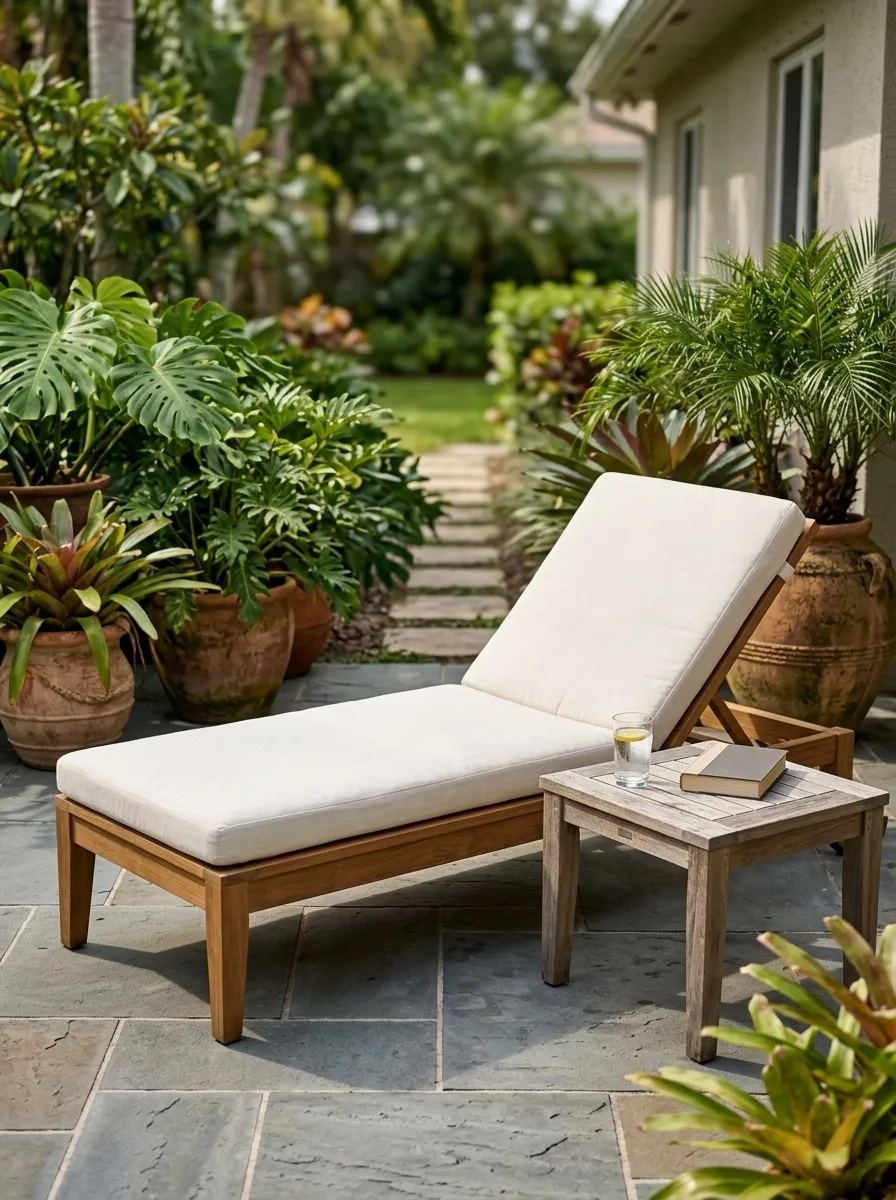
If your goal is genuine relaxation, nothing beats a dedicated place to lie down in the backyard. A daybed or chaise lounge invites proper rest outdoors, not just sitting upright in a chair.
Teak and eucalyptus wood are the most durable natural materials for outdoor loungers. They hold up to rain and sun without warping or rotting the way pine or untreated wood does.
Powder-coated aluminum frames are another excellent option. They are lightweight, rustproof, and come in a wide range of styles from traditional to very minimal.
Look for a chaise with an adjustable back so you can sit upright, recline partially, or lie completely flat, depending on your mood.
Cushion thickness matters. Anything under 3 inches tends to feel too firm for true lounging. Look for cushions that are at least 4 inches thick and made from quick-dry foam.
If a full-size teak lounger is outside the budget, look for simpler wooden sun beds at discount furniture stores, or even repurpose an old door mounted on two wooden sawhorses with a thick foam cushion bolted on top.
Position your lounger in a spot that gets some shade in the hottest part of the day so it remains usable during warm afternoons rather than just in the morning and evening.
20. Define Zones with Outdoor Lanterns and Candles
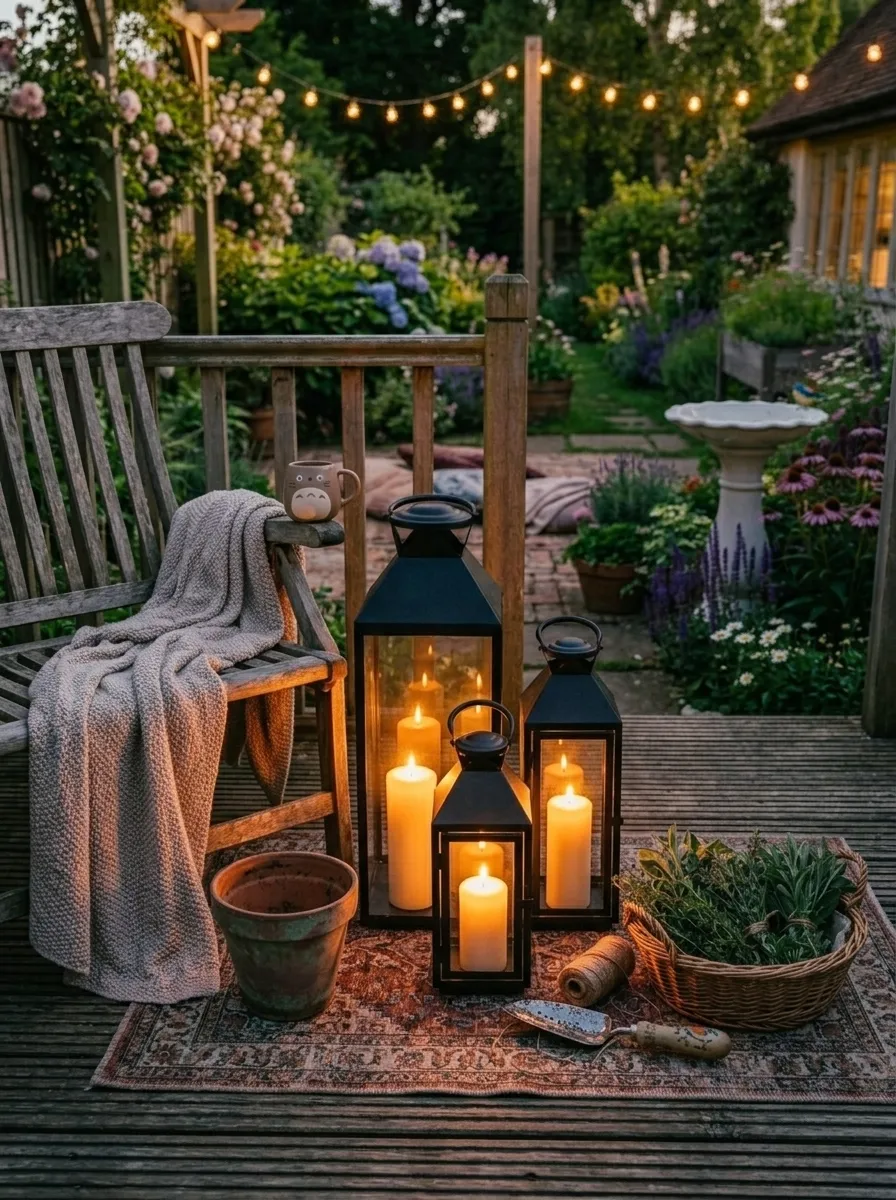
Lanterns and outdoor candles are one of the most affordable ways to create atmosphere and define specific zones within a backyard.
A cluster of three lanterns in varying heights placed beside a seating area creates a visual anchor point that feels designed and intentional. Use the rule of odds since groups of three or five always look more natural than even-numbered groupings.
Material options for outdoor lanterns:
Powder-coated steel (very durable), galvanized metal (great for a rustic or industrial look), rattan or woven bamboo (best for covered areas), and solid teak or cedar (weathers beautifully over time).
Use large pillar candles inside for a natural flame effect, or switch to LED flameless candles that look nearly identical but never blow out in a breeze and pose no fire risk.
Citronella candles in lanterns do double duty by providing ambiance and deterring mosquitoes during evening hours.
Scatter smaller votive lanterns along a pathway, on steps, or along the edge of a raised bed to guide movement through the yard at night.
Position taller lanterns on either side of a seating area like a pair of natural bookends. This frames the space without requiring any installation or permanent fixtures.
Lanterns can be moved, swapped, and rearranged anytime. They are one of the most flexible decor items you can own.
Conclusion
Transforming your backyard does not require a massive budget or a complete renovation. As these 20 ideas show, the most impactful changes often come from small, thoughtful decisions. A string of lights here, a cluster of potted plants there, a cozy rug under your furniture, or a simple fire pit in the corner. Each addition builds on the last, and before long, your backyard starts to feel like a genuine extension of your home rather than just unused space.
The key is to start with what feels most achievable for your current budget and skill level. Pick one idea from this list, complete it, and then move to the next. Progress compounds quickly. What starts as a single outdoor rug or a bird bath can grow into a fully styled outdoor retreat over the course of a season.
Your backyard deserves attention. And with these practical, wallet-friendly ideas, giving it that attention is entirely within reach.