Hidden doors turn an ordinary house into a place people talk about long after they leave. A wall that looks solid one moment and opens into a cozy nook the next feels like a small piece of magic tucked into daily life. Homeowners are adding these secret passageways not just for surprise but for real function, since a hidden door can conceal a pantry, a home office, or extra storage without breaking the flow of a room. This list walks through creative, budget-friendly ways to design, build, and decorate a hidden door so it blends into your space while still delivering that unmistakable wow moment. Whether you want a bookshelf that swings open or a mirror that hides a closet, there’s an idea here that fits almost any home and almost any budget. If you’re also exploring indoor swing decor ideas, a thoughtfully styled swing with cozy cushions, soft lighting, and complementary decor can create a relaxing focal point that adds charm, comfort, and personality to any room.
1. Bookshelf Door That Swings Into a Reading Nook
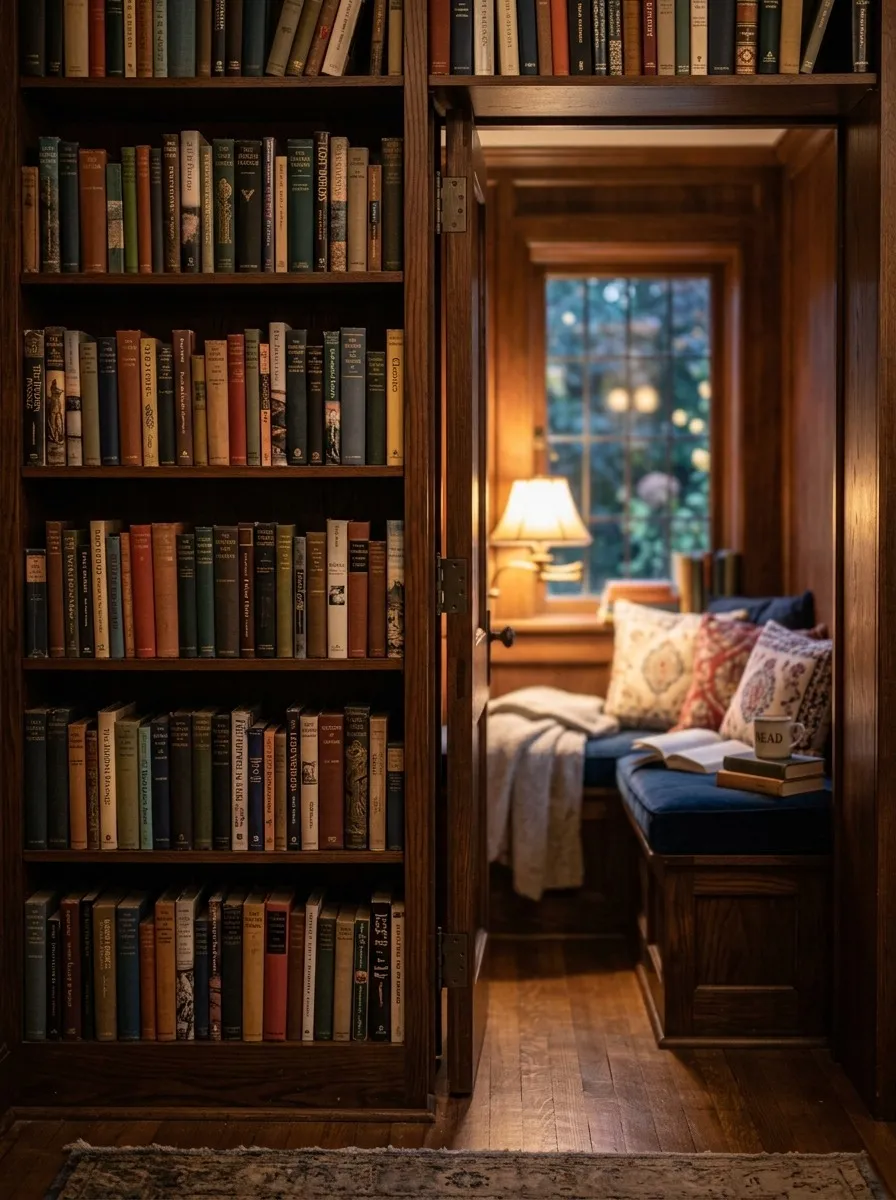
A bookshelf door is the classic hidden door idea, and it still works because it looks completely normal from across the room. Fill the shelves with real books, a few plants, and some framed photos so nobody suspects a thing. You can build this using a heavy duty pivot hinge kit ordered online for under two hundred dollars. Attach the shelf unit to the hinge, mount it flush against the wall opening, and add a magnetic catch so it stays shut when closed. Keep the top two shelves shallow so books don’t spill during the swing. Behind the door, a small reading nook with a cushion and a reading lamp turns unused space into a cozy retreat. Paint the interior a color that contrasts gently with your main room so the reveal feels intentional. This project works in a living room, hallway, or even a kids’ bedroom. Skip fancy hardware and use simple casters on the bottom edge for extra support if the shelf carries a lot of weight. The result looks like straight out of a novel, and guests rarely guess it’s a door until you show them.
2. Mirror Door Leading to a Private Closet
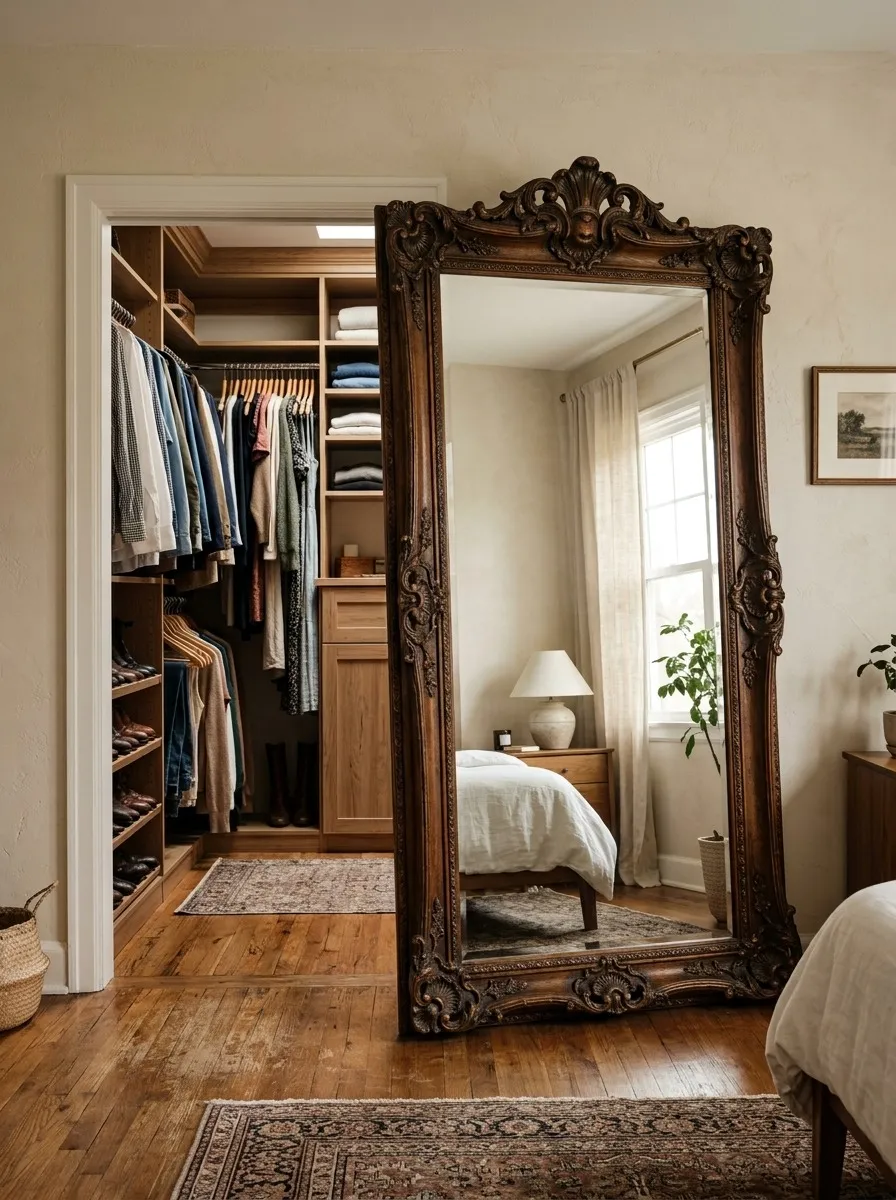
A mirror door is a smart pick for bedrooms because mirrors already belong there. Mount a full length mirror on a lightweight door frame and attach it to the wall using a pivot or barn door track. Choose a frame with some weight to it so the mirror doesn’t feel flimsy when it swings. This hides closets, small offices, or even a laundry stack without adding visual clutter to the room. Budget tip: buy an unfinished mirror frame from a home store and paint it yourself instead of ordering a custom one. Add felt pads along the door edge so it closes quietly and doesn’t scratch the frame. Behind the mirror, keep your storage organized with simple shelving or a rod, since the space will get seen occasionally when the door swings open. This idea also works well in small apartments where every inch of wall space needs to pull double duty. A mirror door gives your room extra light bounce during the day while quietly hiding what you don’t want on display.
3. Wallpapered Panel Door That Vanishes Into the Wall
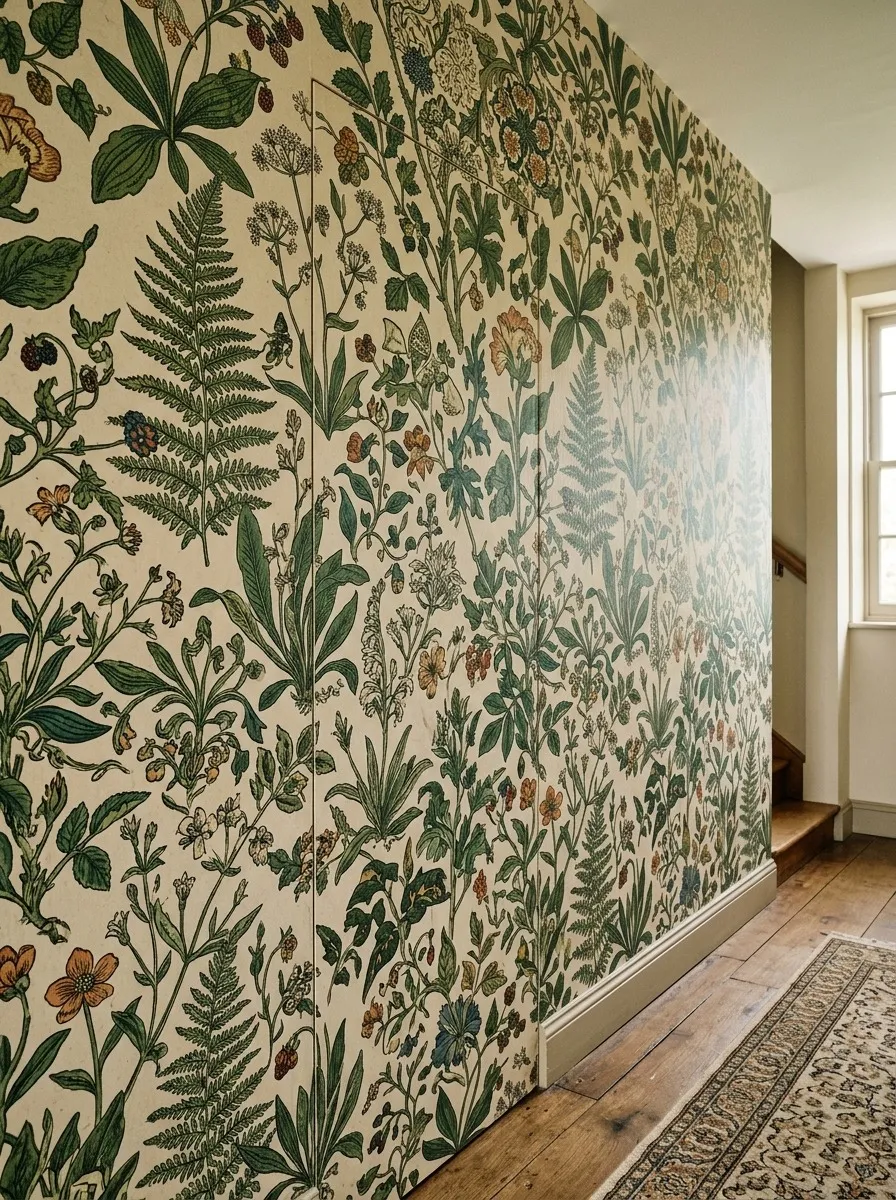
The trick to a truly invisible hidden door is matching the wallpaper pattern exactly across the seam. Buy an extra roll of your wallpaper and wrap it around a flush panel door so the pattern lines up with the surrounding wall. Skip the trim and handle entirely, using a push to open magnetic latch instead so the surface stays smooth. This works best with busy or repeating patterns like florals, stripes, or geometric prints since small seam gaps disappear into the design. A budget approach is to use peel and stick wallpaper, which costs less and is easier to trim precisely. Hang the paper a few inches past the door edges and trim carefully with a sharp blade for a clean match. This idea suits hallways, home offices, or a hidden pantry off the kitchen. Add a small recessed pull on the underside edge if you want a manual grip option. Once finished, the door practically disappears, and most people won’t notice it until you point it out.
4. Fake Fireplace Front Hiding a Storage Room
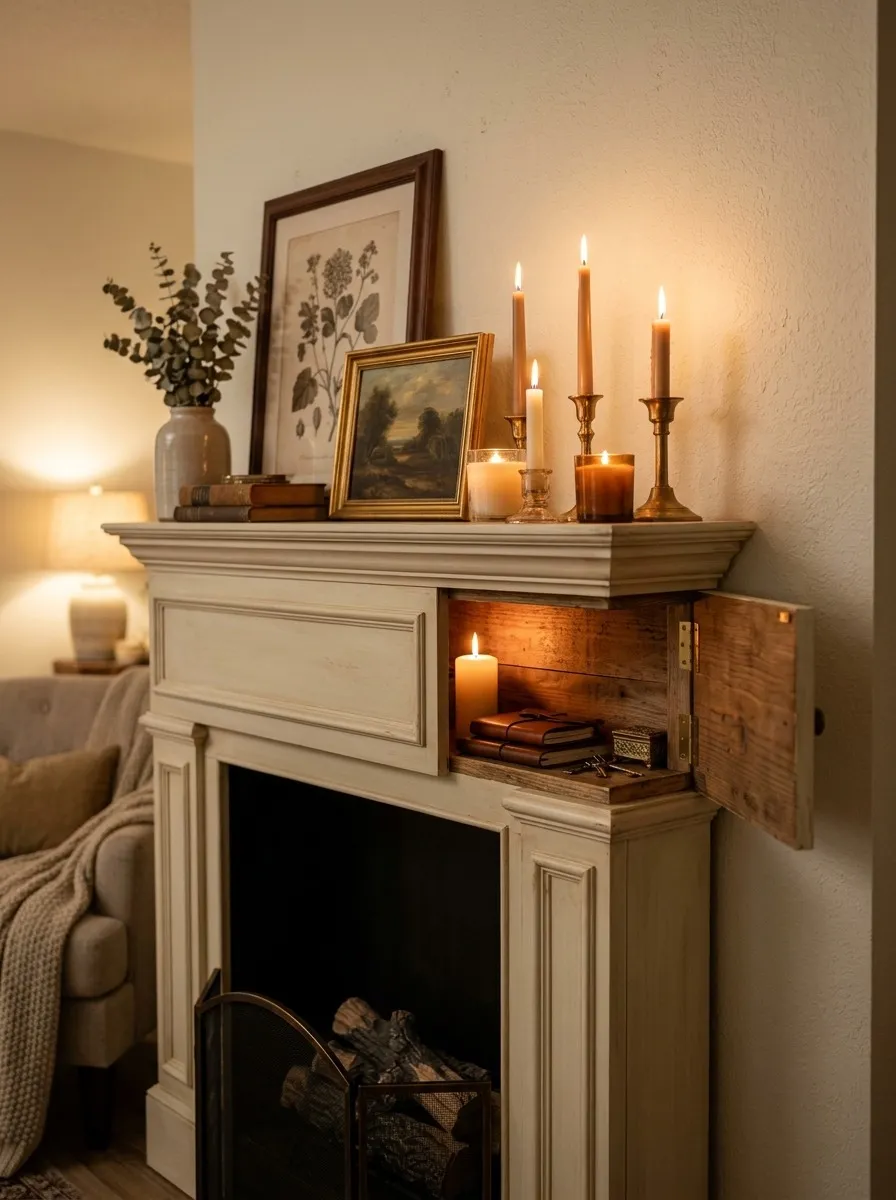
Not every fireplace needs a real flame to feel warm and inviting. A faux fireplace front can double as a hidden door leading to a small storage room or utility closet. Build a simple mantel frame from MDF board, paint it white or a stone gray finish, and attach it to a door frame with a piano hinge along one side. Style the mantel top with candles, a mirror, or framed art to keep the look grounded and cozy. This idea works especially well in living rooms or basements where a real fireplace isn’t practical but the classic look is still wanted. Budget tip: source a used mantel surround from a salvage shop or online marketplace instead of building one from scratch. Add a faux log insert or LED candle set inside the opening for a realistic touch when the door is closed. Behind the door, this space is perfect for holiday decorations, tools, or overflow pantry items. The fireplace look adds charm to a room while giving you smart, low profile storage nobody will suspect.
5. Hidden Door Behind a Gallery Wall
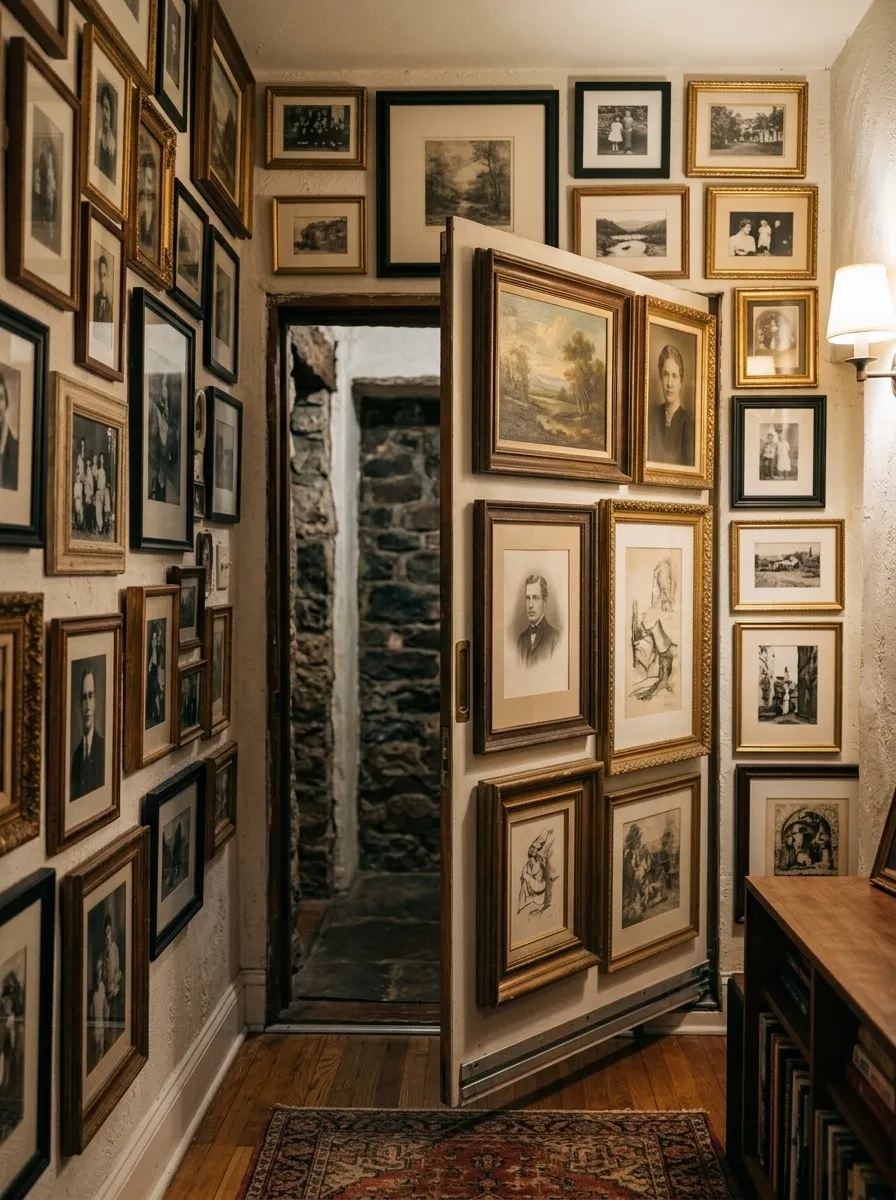
A gallery wall is one of the easiest ways to disguise a door because frames naturally break up a flat surface. Mount lightweight frames directly onto the door panel itself instead of the wall, so the whole cluster moves together when the door opens. Use a mix of empty frames, family photos, and small prints to keep the eye distracted from the seam. A magnetic touch latch keeps the door closed without visible hardware. Budget tip: buy a bundle of mismatched frames from a thrift store and spray paint them one unified color for a cohesive look. Keep the frame arrangement slightly asymmetrical so the door blends naturally into the pattern rather than looking like a perfect grid. This works great for hallway closets, a home office nook, or even a wine storage room. Hang a curtain or drape nearby to add visual softness and further disguise the door’s outline. Once the frames are up, this hidden door becomes just another piece of your home’s personality.
6. Barn Door Style Hidden Pantry Entrance
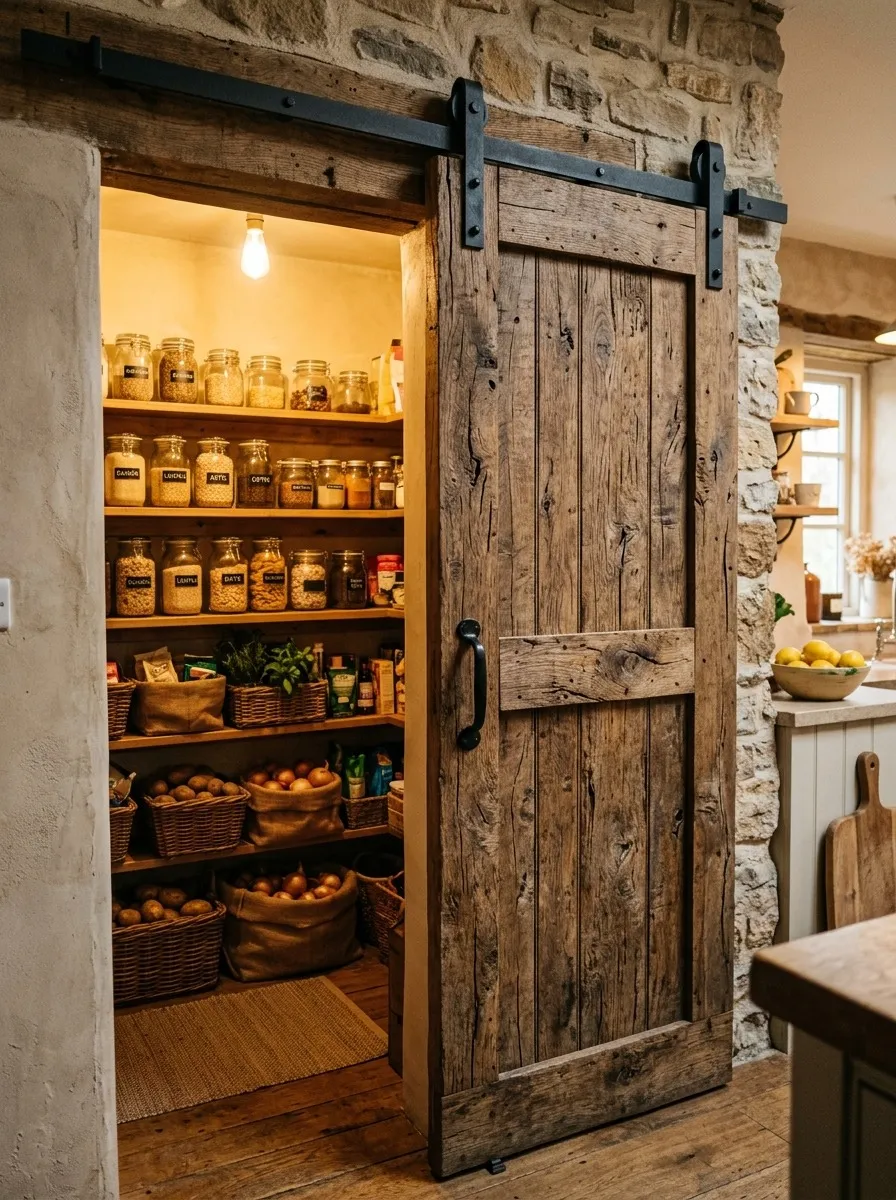
Barn doors already have a hidden charm to them, and turning one into a pantry entrance keeps kitchen storage out of sight but still stylish. Use reclaimed wood planks or a pre made barn door kit to build the panel, then mount it on a sliding track above the doorway. This style skips the swing space a regular door needs, which is perfect for tight kitchen layouts. Budget tip: build the door frame from cheap pine boards and stain them to look like reclaimed wood instead of buying salvaged material. Add black iron hardware for a farmhouse touch that also acts as a natural handle. Behind the door, organize the pantry with clear jars and labeled baskets so everything stays tidy when guests peek inside. This idea works well for kitchens, mudrooms, or laundry areas where you want doors that don’t swing into walking paths. A barn door hidden pantry gives your kitchen a rustic character while keeping clutter tucked neatly away.
7. Hidden Wine Cellar Behind a Bookcase

A hidden wine cellar behind a bookcase feels like something out of an old movie, and it’s more achievable than most people think. Convert an under stair space or a small basement corner into a cool, dark storage area, then build a bookcase door using the same pivot hinge method as the reading nook idea. Line the interior walls with simple wooden wine racks, which you can buy affordably from home stores or build using scrap lumber. Add a small dimmable light fixture inside for ambiance without harsh glare on the bottles. Budget tip: skip climate control systems unless you’re storing expensive vintages, since a cool closet works fine for everyday bottles. Keep the bookcase stocked with real books on the front facing shelves so the disguise holds up under a casual glance. This idea works especially well in homes with unused understair space or a small mechanical closet that needs a second purpose. A hidden wine cellar adds a layer of surprise to dinner parties and gives your favorite bottles a proper home.
8. Sliding Panel Door Disguised as Wood Paneling
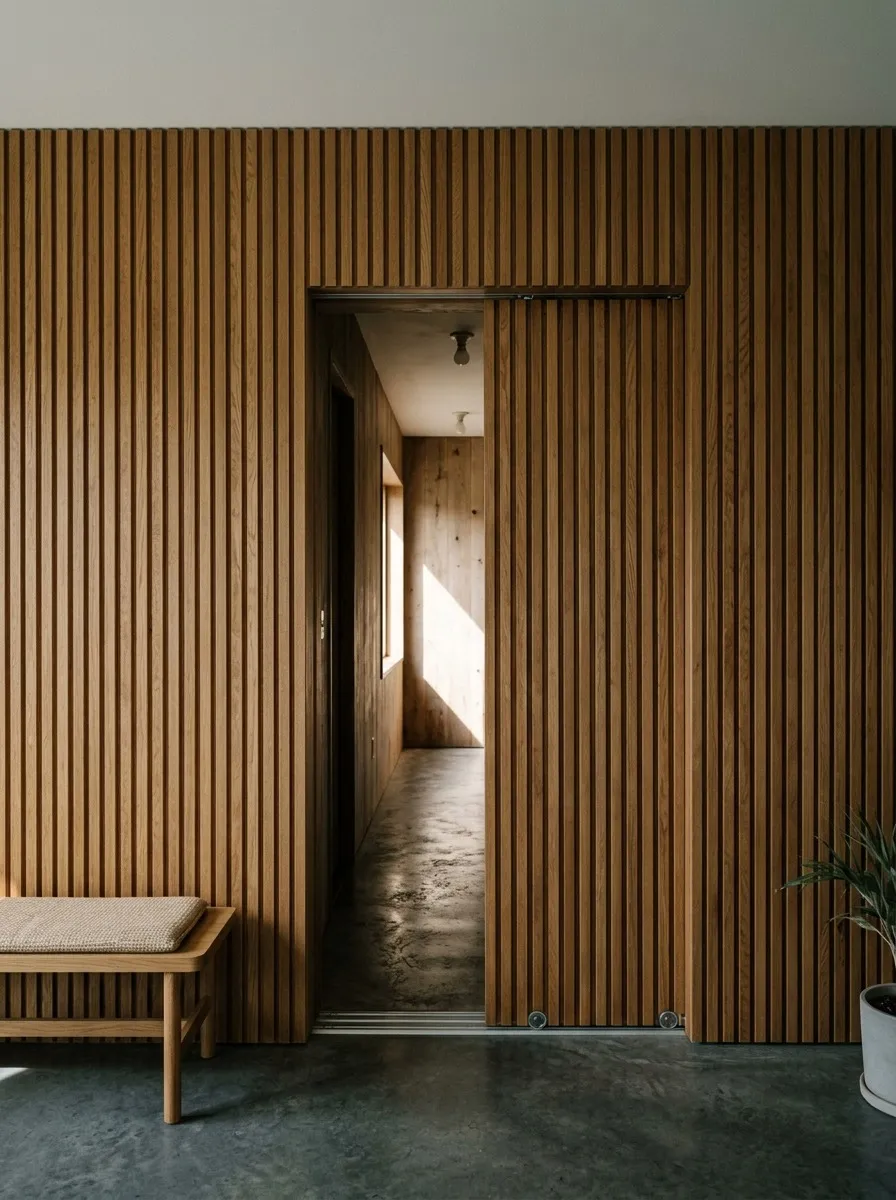
Wood slat paneling is a popular design trend right now, and it happens to be perfect for hiding a sliding door. Install vertical wood slats across an entire wall, including the door panel, so the lines run continuously and disguise the seam. Mount the door on a barn door style track hidden behind a small header piece painted to match the wall. Budget tip: use thin lattice strips or pine furring strips instead of pricier slat panel kits, then stain them all the same tone for a seamless look. This style works well in modern homes, offices, or media rooms where clean lines matter. Behind the door, this space can hide a home theater closet, extra seating, or even a small guest room. Keep the slats evenly spaced across the whole wall so the eye doesn’t catch on the door’s edges. A sliding panel door disguised this way gives your space a designer look while keeping storage or extra rooms completely out of view.
9. Hidden Door Painted to Match Wall Color Exactly
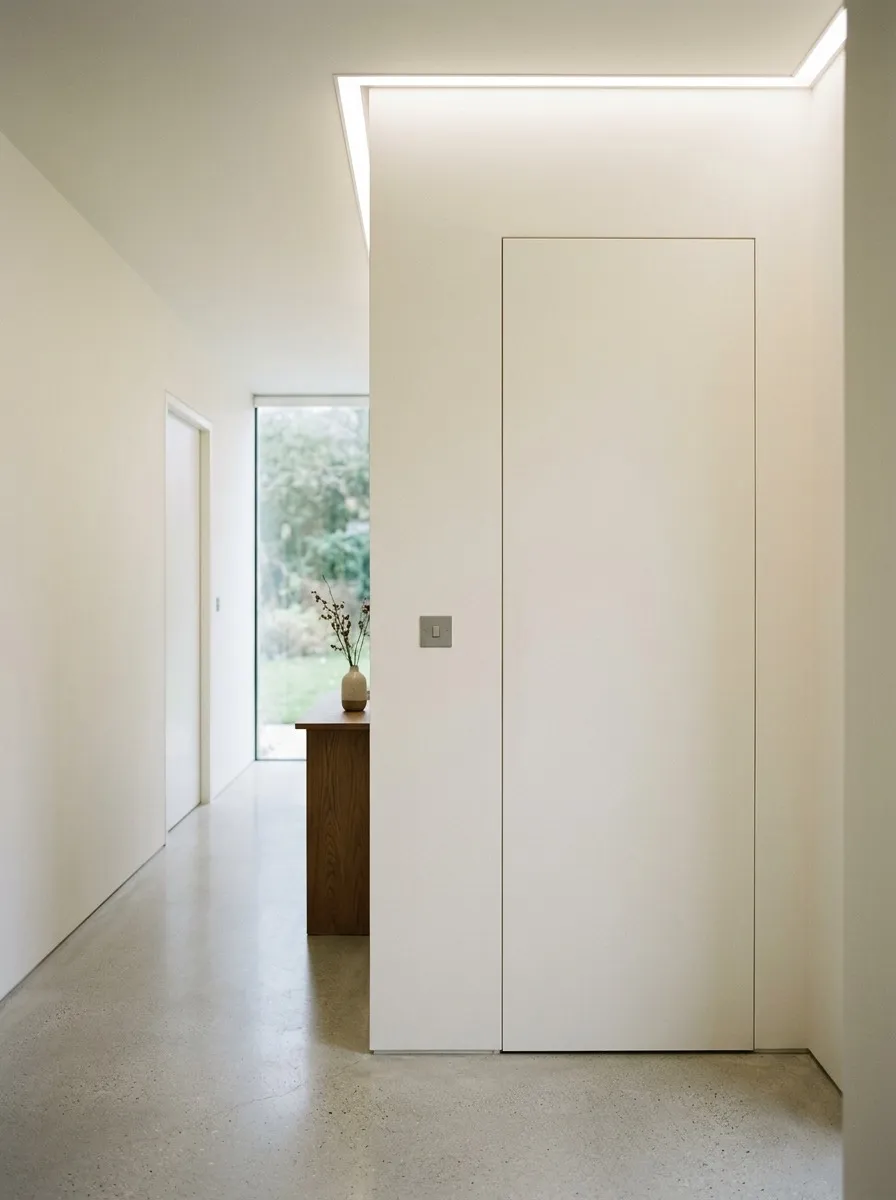
Sometimes the simplest disguise works best. Painting a flush door the exact same color and finish as the surrounding wall makes it disappear almost completely. Remove the door trim, fill any gaps around the frame with spackle, and sand the surface smooth before painting. Use the same paint batch for both the wall and the door to avoid any subtle color mismatch. Budget tip: this is one of the cheapest hidden door ideas since it only requires paint, spackle, and a magnetic latch instead of new hardware or materials. Skip the handle entirely and install a push to open mechanism so the surface stays completely flat. This idea works in hallways, home offices, or anywhere you want a door to blend into a plain wall rather than stand out with decorative elements. A hidden door like this feels modern and clean, and it’s especially effective in homes with minimalist interior styles where visual simplicity is the whole point.
10. Curtain Covered Hidden Doorway
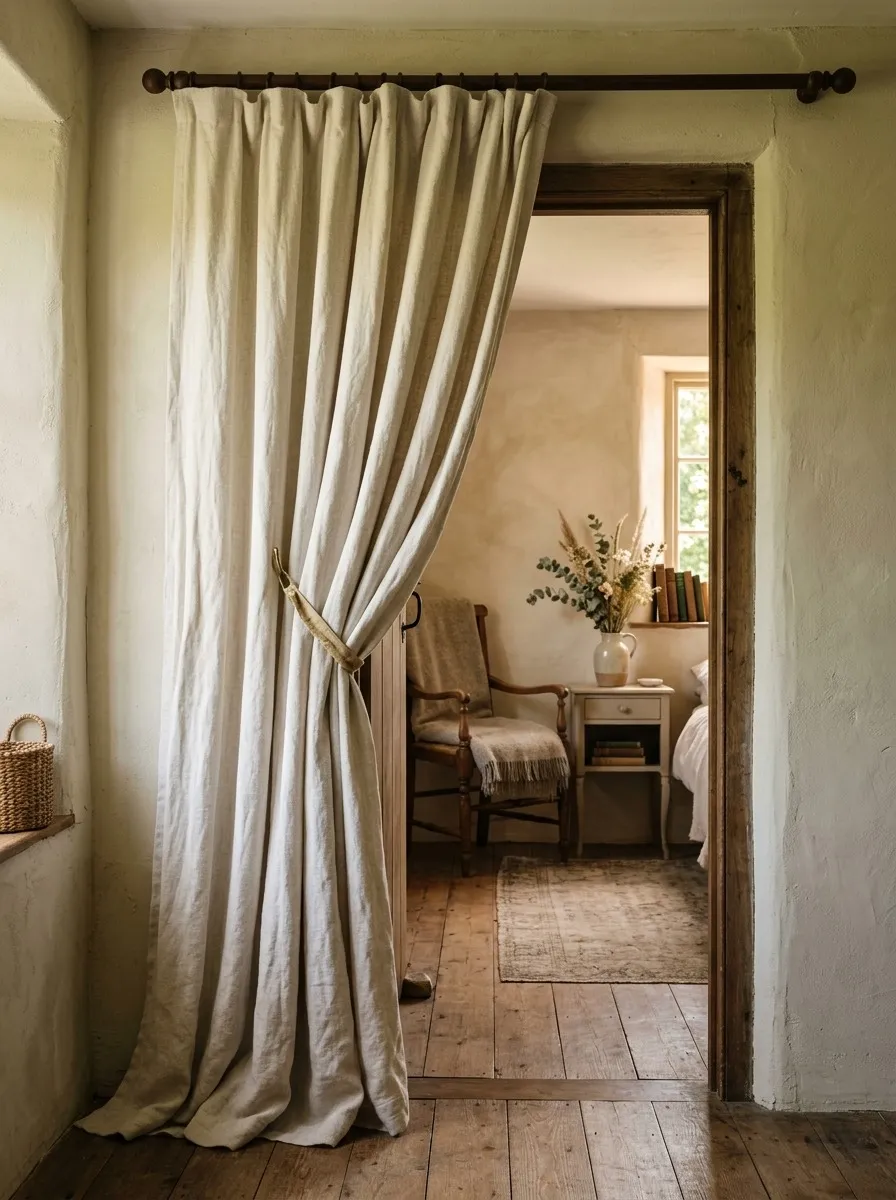
A curtain covered doorway is the easiest hidden door idea on this list, and it costs almost nothing to set up. Mount a curtain rod above the doorway and hang a heavy linen or velvet curtain that matches your room’s color palette. This softens the look of a plain doorway while adding a layer of mystery to what’s behind it. Budget tip: repurpose curtains you already own or find affordable ones at a discount home store instead of buying custom drapery. Choose a fabric with some weight so it hangs cleanly and doesn’t billow with every breeze. This works well for closets, small offices, or a reading nook you want to keep partially private without a solid door. Layer the curtain with a decorative tieback so you can open it fully during the day and let it fall closed in the evening. A curtain covered hidden doorway gives your home a soft, romantic touch while still functioning as a practical divider between spaces.
11. Hidden Door Behind a Freestanding Wardrobe
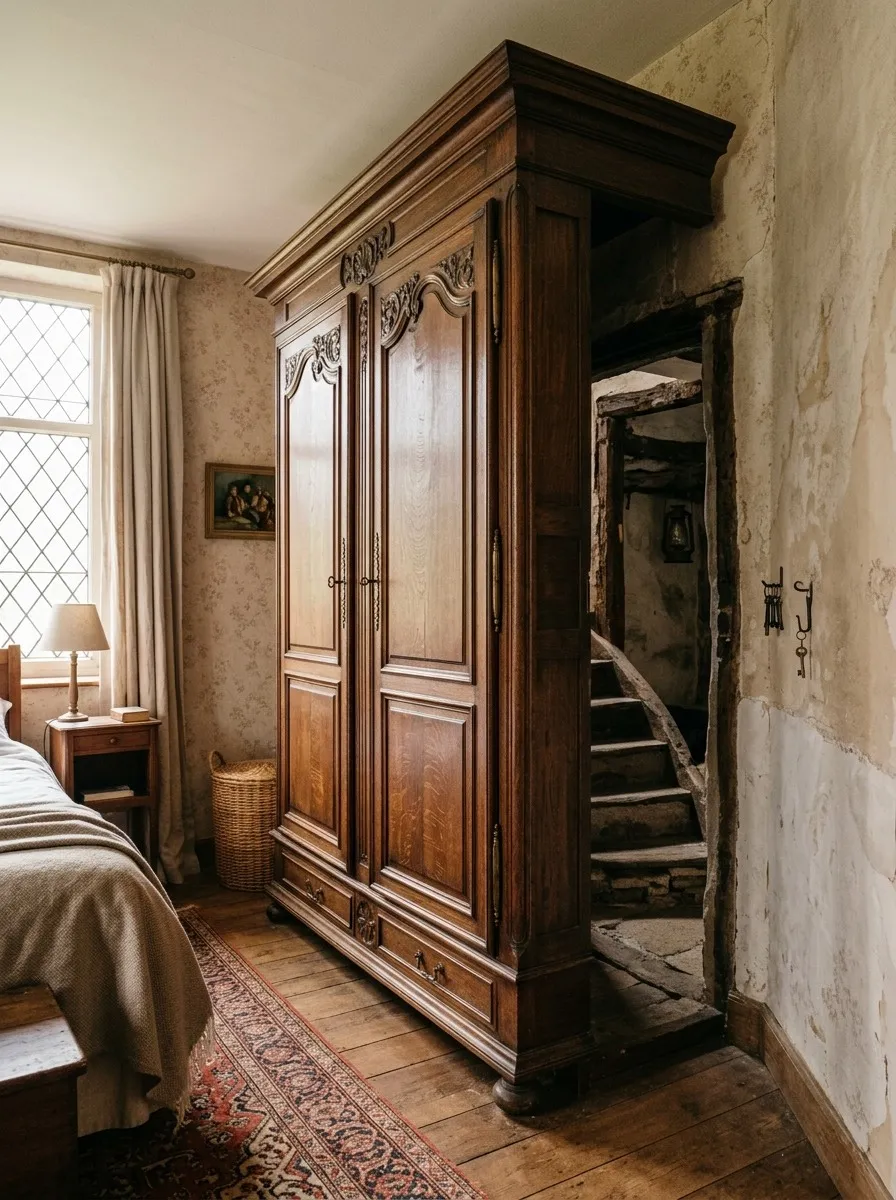
A freestanding wardrobe is one of the simplest hidden door setups because it doesn’t require building anything into the wall. Position a wardrobe with a removable or hinged back panel in front of an existing doorway, and cut a matching opening if needed. This idea works great for connecting two bedrooms or hiding access to a small storage attic. Budget tip: find a secondhand wardrobe from a thrift store or online marketplace instead of buying new furniture, since older pieces often have solid wood construction that holds up well to modification. Keep clothes or linens on the front facing rows so the wardrobe still functions normally when closed. Add a small light inside the wardrobe interior so it’s easy to see the hidden opening in low light. This classic idea works especially well in kids’ rooms for a playful secret passage feel, or in guest rooms where extra storage access needs to stay discreet.
12. Hidden Door With a Faux Window Backdrop
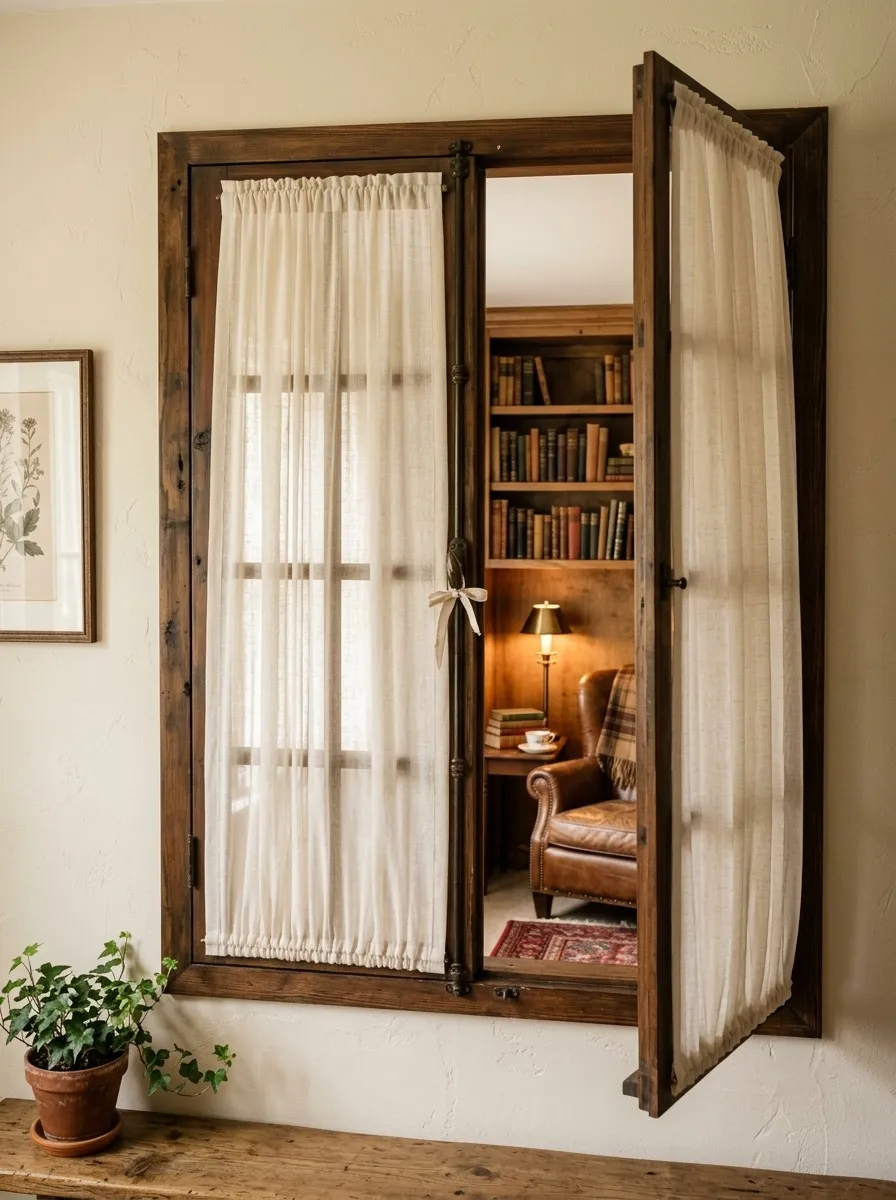
A faux window disguise adds charm to an interior wall while hiding a door in plain sight. Build or buy a decorative window frame, add real curtains, and mount it on a hinged door panel. Behind the frame, install a small LED light panel that mimics daylight so the window looks convincing even without a real view. Budget tip: use an old window frame salvaged from a renovation project instead of buying a new decorative one. This idea works especially well in interior rooms or basements that lack natural light, since the faux window adds visual depth to a windowless wall. Hang sheer curtains loosely so they move slightly when the door opens, adding to the illusion. This hidden door style suits home offices, media rooms, or a hidden pantry space off the kitchen. A faux window backdrop gives a room a lighter, airier feel while keeping a functional hidden door tucked neatly into the design.
13. Chalkboard Wall Hiding a Kids’ Playroom Entrance
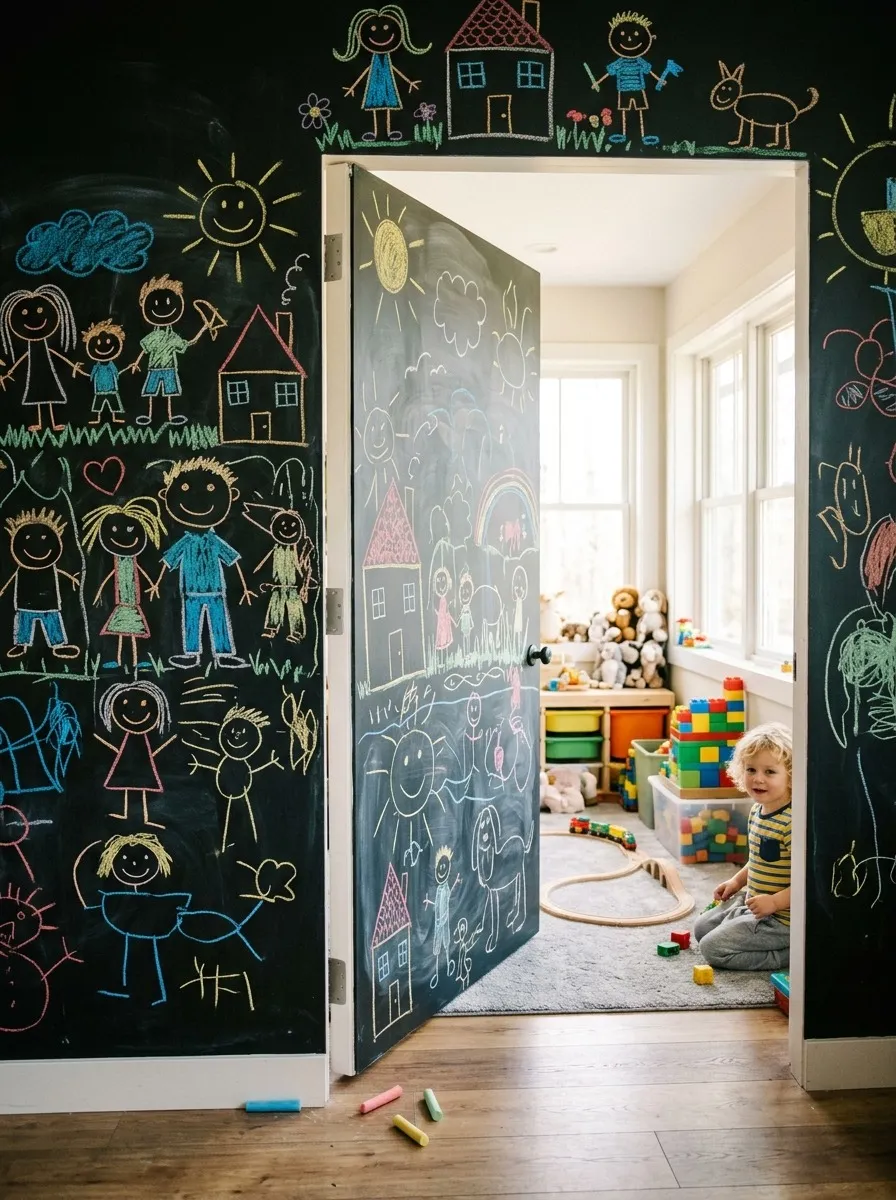
Kids love secret doors, and a chalkboard wall makes the perfect disguise for a playroom entrance. Paint a full wall panel with chalkboard paint, mount it on a sturdy hinge, and let your kids decorate the surface with their own drawings. This keeps the door constantly changing in appearance, which adds to the fun and the disguise. Budget tip: chalkboard paint is inexpensive and available at most hardware stores, making this one of the most affordable hidden door projects on this list. Use a childproof magnetic latch so the door stays secure but is still easy for kids to open with a little push. Behind the door, keep the playroom bright and organized with bins and shelving at kid height. This idea works well in basements, spare bedrooms, or converted closets. A chalkboard hidden door turns a simple wall into an interactive canvas while giving kids their own secret space to enjoy.
14. Hidden Door Disguised as a Built In Bookshelf Wall
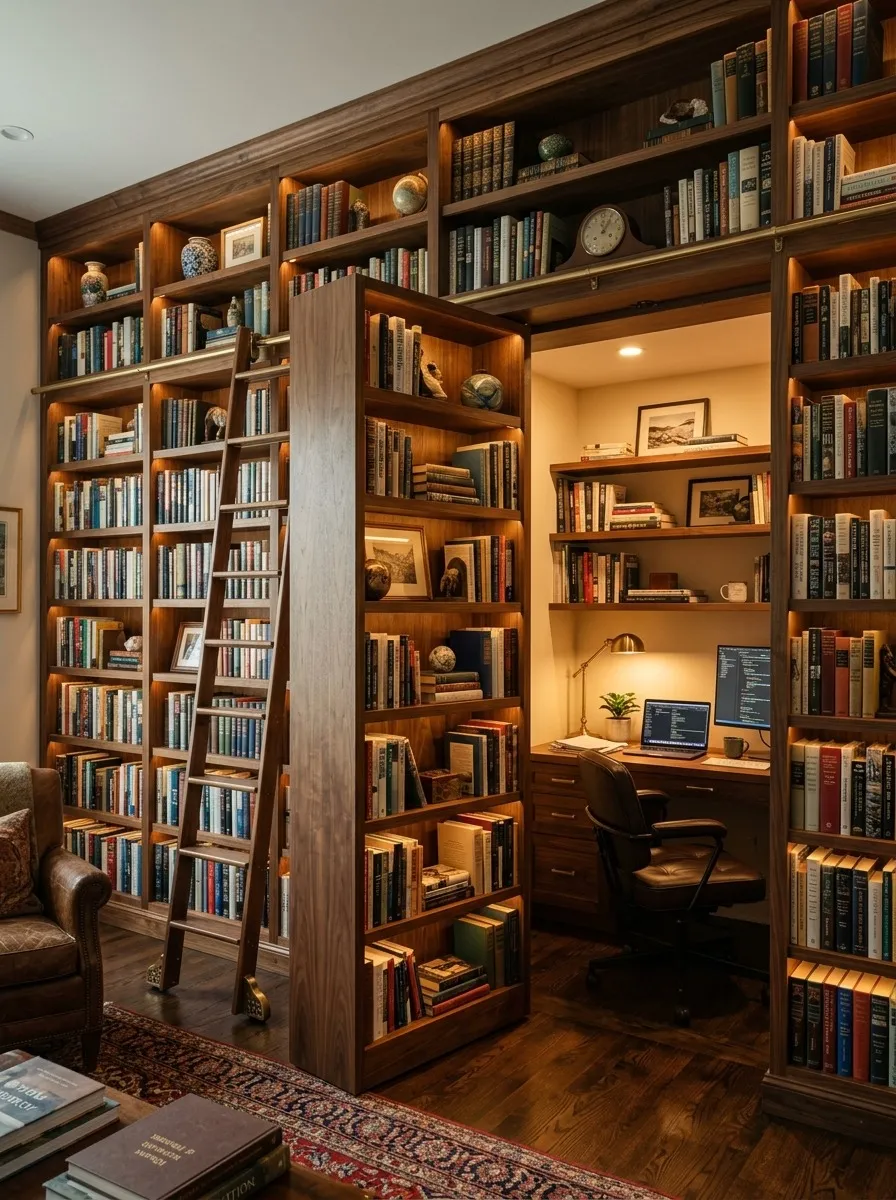
Built in bookshelves that span an entire wall make excellent hiding spots for a full sized door. Unlike a standalone bookshelf door, this version uses the surrounding built ins to frame the hidden panel so it blends in even more convincingly. Work with a local carpenter or use a modular shelving kit to build the surrounding shelves, then fit the door section with matching trim and shelf depth. Budget tip: use stock shelving units from a home store instead of custom millwork, and paint everything the same trim color for a unified built in look. Style the shelves with a mix of books, boxes, and small decor pieces, keeping the door section slightly less cluttered so it swings freely. This idea works beautifully in home libraries, offices, or living rooms where a hidden office or storage room adds function without disrupting the room’s design. A built in bookshelf wall with a hidden door feels custom and intentional, even on a modest budget.
15. Hidden Door Under a Staircase
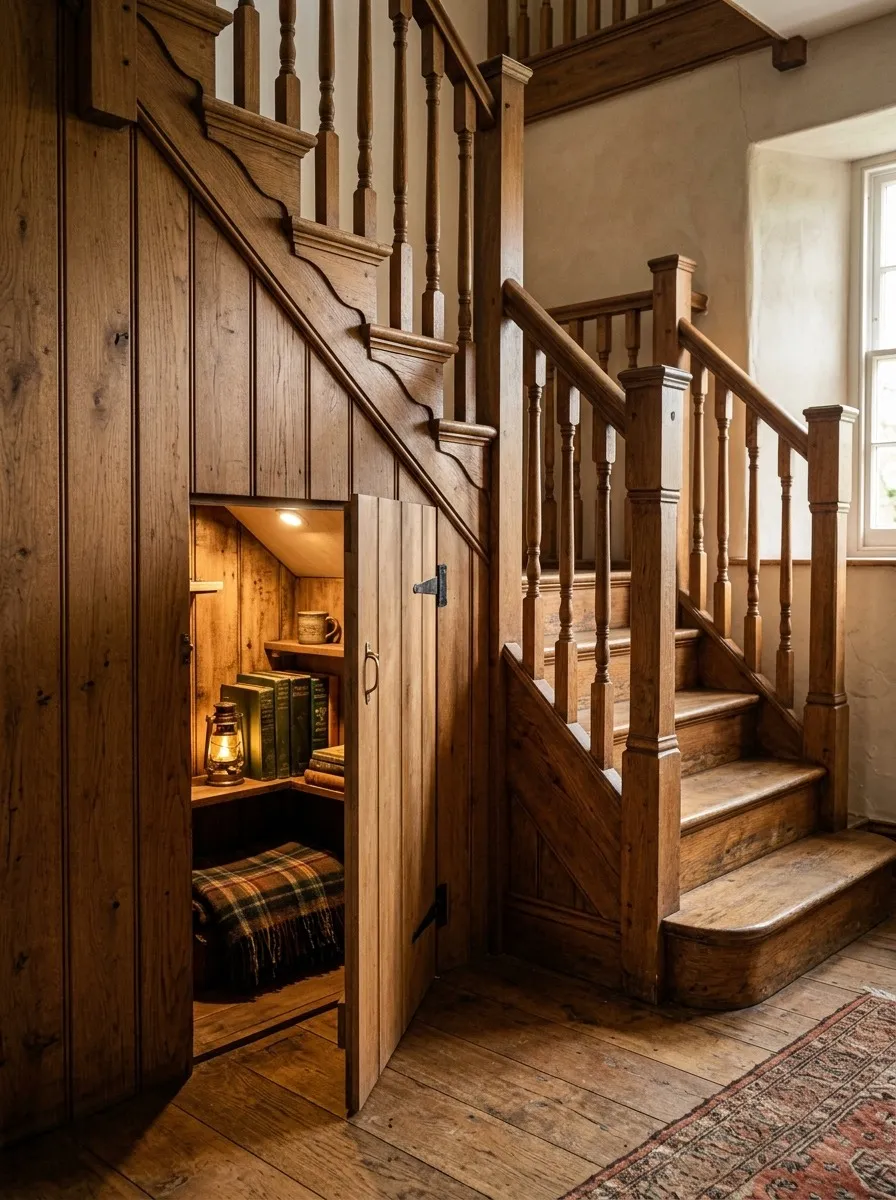
The space under a staircase is often wasted, but a hidden door can turn it into a functional nook. Build a small flush door into the understair paneling, matching the wood tone and trim style of the staircase itself. This works well for shoe storage, a small reading corner, or even a compact home office for kids doing homework. Budget tip: use leftover baseboard trim and matching paint from your staircase project to keep material costs low. Add a simple touch latch instead of a visible handle so the door blends into the paneling completely. Line the interior with a small rug or cushion if you’re turning it into a reading nook, or install shelving if it’s for storage. This idea works in almost any home with a staircase, and it’s especially popular in smaller houses where every inch of space needs a purpose. A hidden door under the stairs adds charm and function to an area that would otherwise sit empty.
16. Hidden Door Behind a Pegboard Display Wall
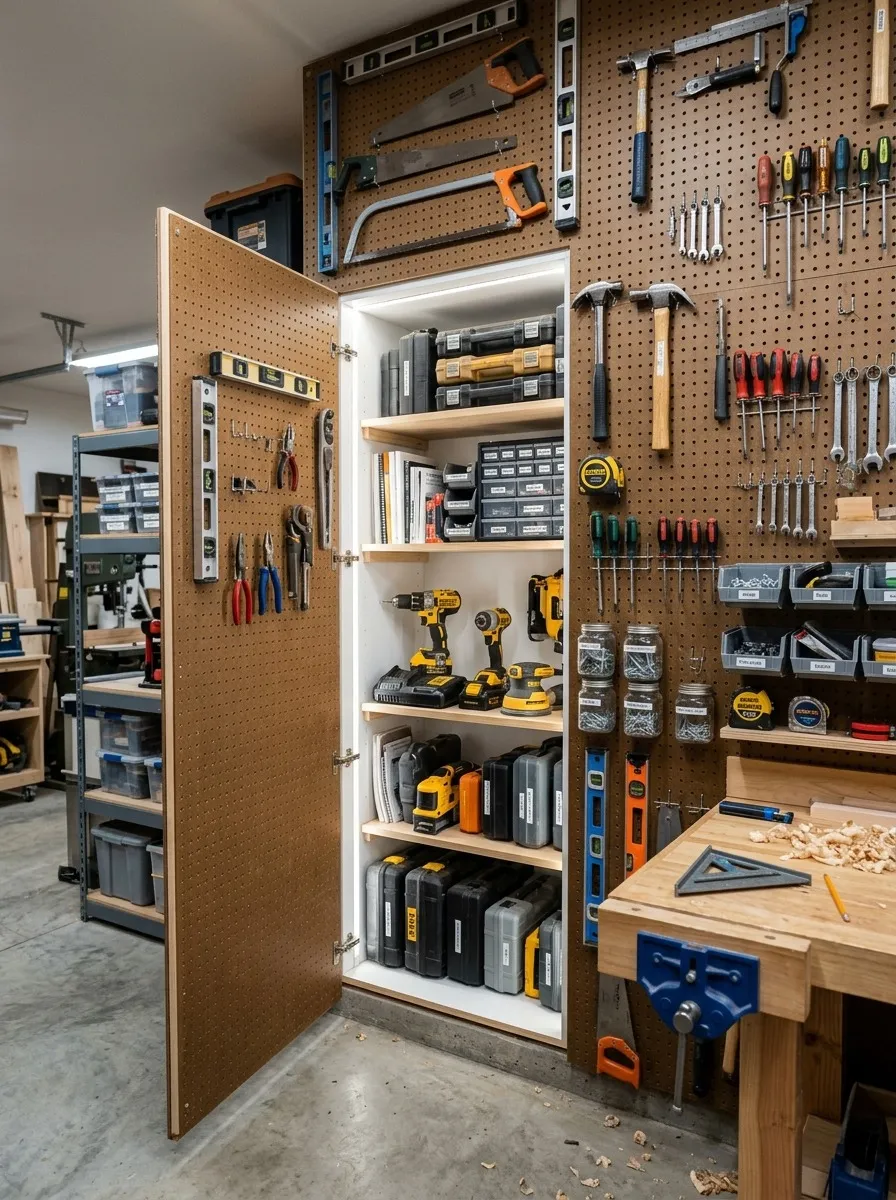
A pegboard wall isn’t just for garages and workshops, it also makes a clever disguise for a hidden door. Mount a pegboard panel onto a hinged door frame and hang tools, small baskets, or plant holders across the surface to keep it looking purposeful. This idea works especially well in home offices, craft rooms, or garages where a hidden storage closet needs to stay out of sight. Budget tip: pegboard sheets are one of the cheapest building materials available, making this an affordable weekend project. Use metal pegboard hooks to hold lightweight items so the door doesn’t become too heavy to swing easily. Behind the door, store bulkier items like seasonal decorations or tools that don’t need daily access. Paint the pegboard a bold color to make it a design feature rather than something to hide. A pegboard hidden door blends practicality with a bit of visual surprise, especially in creative or hands on spaces.
17. Hidden Door With a Living Green Wall Front
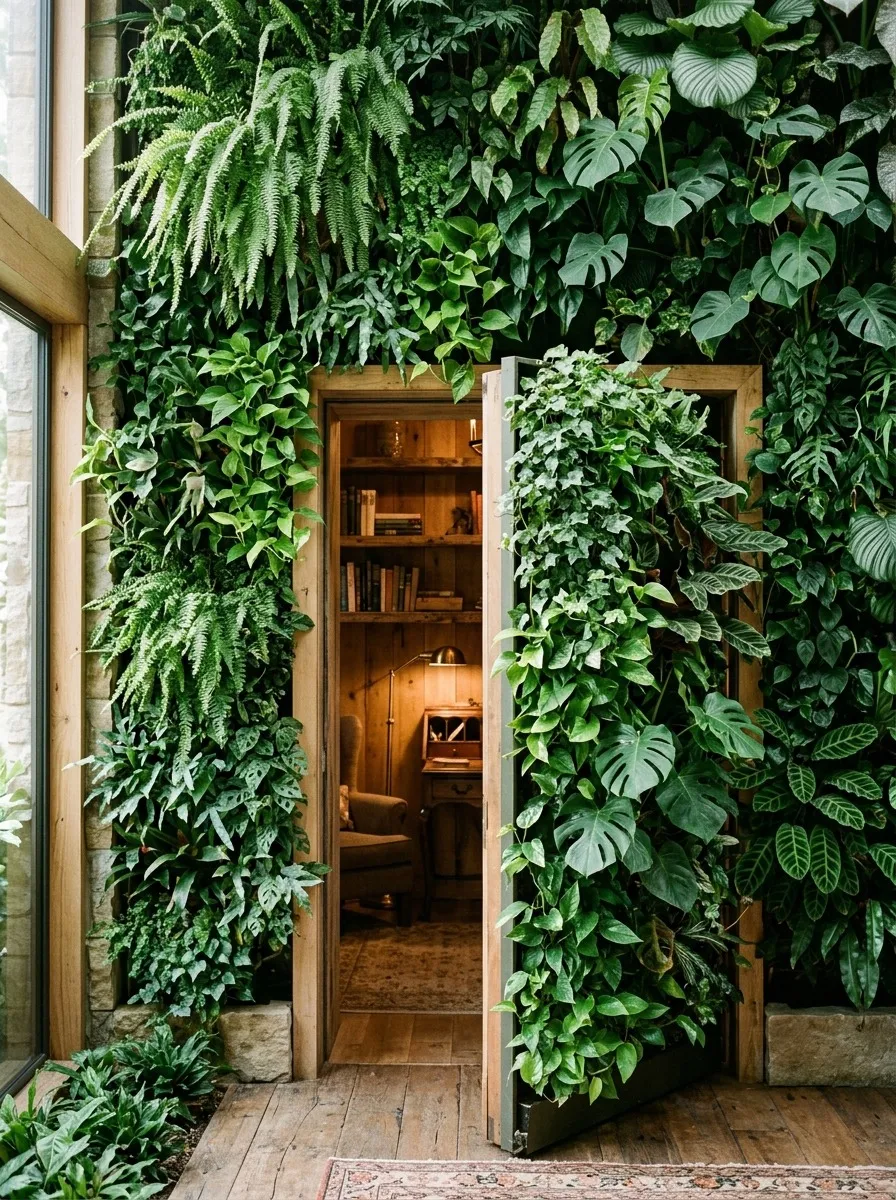
A living green wall makes for one of the most striking hidden door ideas, turning a plain doorway into a small indoor garden feature. Mount a lightweight frame with faux or real low maintenance plants onto a hinged door panel, keeping the weight balanced so it swings smoothly. Budget tip: use artificial greenery panels from a craft store instead of real plants if you want a low upkeep version that still looks vibrant year round. This idea works especially well in sunrooms, home offices, or entryways where a burst of greenery adds warmth to the space. If using real plants, choose trailing varieties like pothos or ferns that don’t need much light and can handle occasional movement. Behind the door, this space can hide a small mudroom, coat closet, or garden tool storage area. A living green wall hidden door brings a refreshing natural element into your home while cleverly disguising a functional entryway.
18. Hidden Door Behind a Tapestry or Woven Wall Hanging

A woven tapestry adds texture and warmth to a room while doubling as an easy hidden door cover. Hang a large tapestry or macrame wall hanging over a plain door using a simple rod or clips along the top edge. This idea requires almost no construction work, making it one of the most beginner friendly hidden door projects on this list. Budget tip: shop secondhand stores or online marketplaces for affordable tapestries instead of buying new ones, since vintage pieces often add more character for less money. Choose a pattern that matches your room’s existing color scheme so the tapestry looks like an intentional design choice rather than a cover up. This works well for closets, small offices, or a reading nook you want to keep partially hidden from the main living space. A tapestry covered hidden door adds a cozy, bohemian touch to any room while keeping the space behind it private and out of view.
19. Hidden Door Disguised as a Kitchen Cabinet Panel
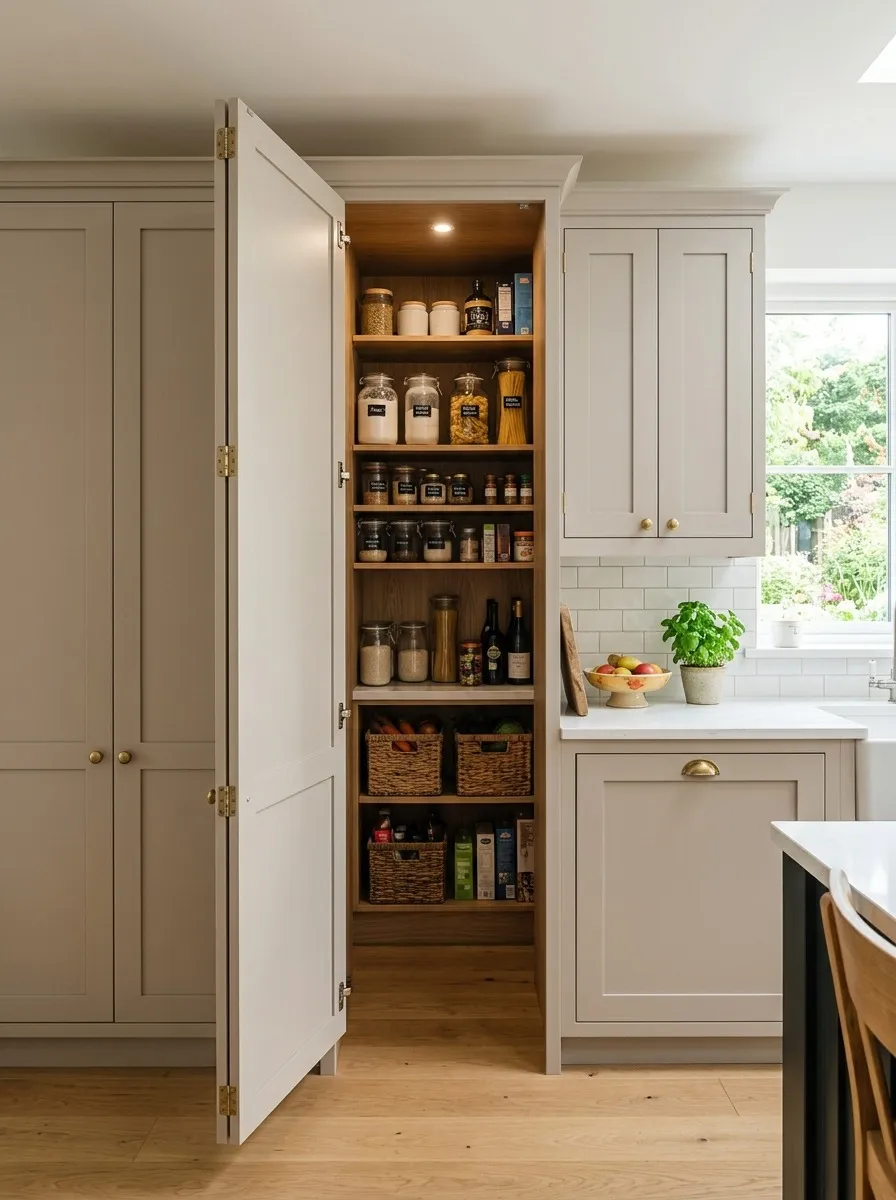
Kitchens are full of cabinet panels, which makes them a perfect place to disguise a hidden door. Match the door panel to your existing cabinetry, including the same paint color, hardware, and trim style, so it blends seamlessly into the row. Budget tip: if you’re renovating anyway, ask your cabinet installer to build one panel as a functional door instead of ordering custom hidden door hardware separately. This idea works well for hiding a pantry, a small laundry closet, or even a compact home office tucked behind the kitchen wall. Use the same cabinet pulls or knobs as the rest of the kitchen so the door doesn’t stand out. Behind the panel, keep shelving organized and accessible since kitchen storage tends to get frequent use. This hidden door idea is especially practical for open concept kitchens where extra storage needs to stay visually consistent with the rest of the cabinetry. It’s functional, affordable, and blends in without any extra design effort.
20. Hidden Door Behind a Bold Accent Wall
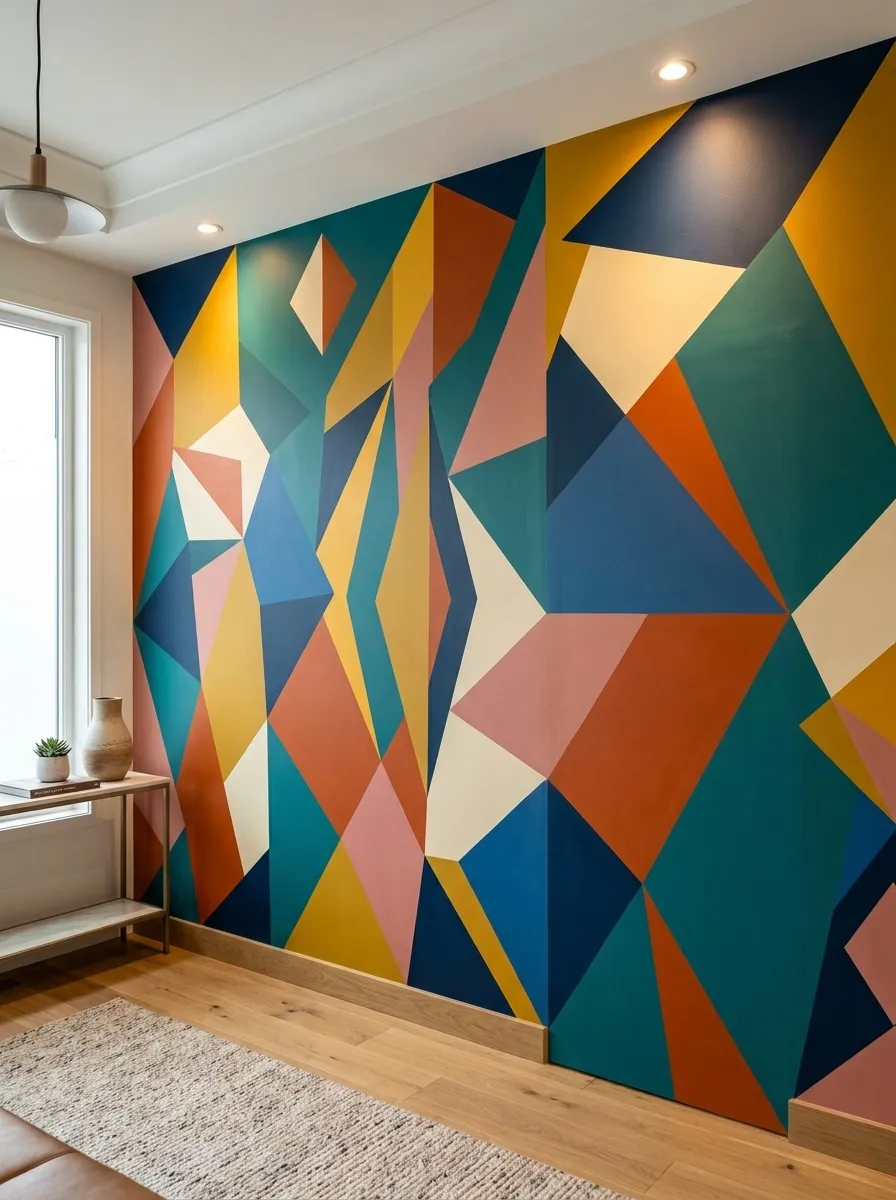
A bold accent wall with a strong pattern or color block design is a clever way to hide a door in plain sight. Paint the door the exact pattern as the wall, lining up shapes, stripes, or color blocks precisely across the seam. This works especially well with geometric or color block designs since the human eye struggles to spot a break in a repeating pattern. Budget tip: use painter’s tape to create clean geometric lines yourself instead of hiring a professional muralist, keeping this project affordable and doable in a weekend. Skip the door handle and use a push to open latch so the surface stays flush and uninterrupted. This idea works well in home offices, hallways, or living rooms where a bold design statement is already part of the room’s style. Behind the door, this hidden space can serve as storage, a small nook, or access to another room. A bold accent wall hidden door combines striking design with clever function.
21. Hidden Door With a Vintage Map or Art Print Cover

A large vintage map or oversized art print makes a beautiful and functional cover for a hidden door. Mount the print on a rigid backing board attached to a hinged door frame, and frame the edges lightly so it looks like a piece of wall art rather than a door. Budget tip: print a large scale map or art piece at a local print shop for a fraction of the cost of a custom framed original. This idea works especially well in home offices, studies, or hallways where a large art piece already fits the room’s style. Choose a print with rich detail and color so it holds attention and distracts from the seam around the door edges. Behind the door, this space can hide file storage, a small closet, or extra shelving. A vintage map or art print hidden door adds personality and travel inspired charm to a room while discreetly hiding what’s behind it.
22. Hidden Door Using a Rotating Bookcase Mechanism

For a true showstopper, a rotating bookcase mechanism takes the classic hidden door concept to the next level. Instead of swinging open like a regular door, the entire bookcase spins on a center pivot, revealing a hidden room on the opposite side while keeping books displayed the whole time. This project requires a sturdy center pole and a balanced weight distribution kit, which you can find through specialty hidden door retailers online. Budget tip: this is a higher investment project, so consider it for a single statement piece rather than multiple doors throughout the house. Balance the books and decor evenly across both sides of the shelf so the rotation stays smooth and doesn’t strain the pivot mechanism. This idea works best in home libraries, studies, or entertainment rooms where the reveal itself becomes part of the room’s appeal. A rotating bookcase hidden door is one of the most memorable design features you can add to a home, combining function with genuine theatrical flair.
Conclusion
A hidden door turns an everyday wall into a small piece of storytelling for your home. Whether you go with a simple curtain covered doorway or invest in a full rotating bookcase mechanism, each idea on this list proves that hidden doors don’t have to be expensive or complicated to pull off. Start small with paint, wallpaper, or a repurposed piece of furniture, then build up to bigger projects as your confidence and budget allow. The best part about these ideas is how personal they can be, since every hidden door reflects the style and personality of the person who built it. Pick the concept that fits your space, gather a few affordable materials, and give your home that unexpected moment of surprise that guests will remember long after they leave.