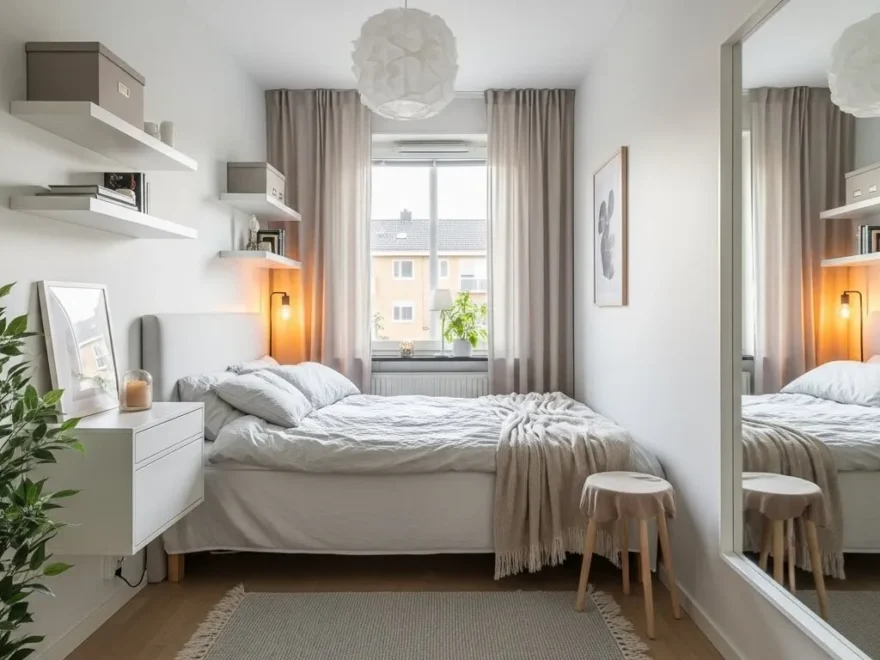
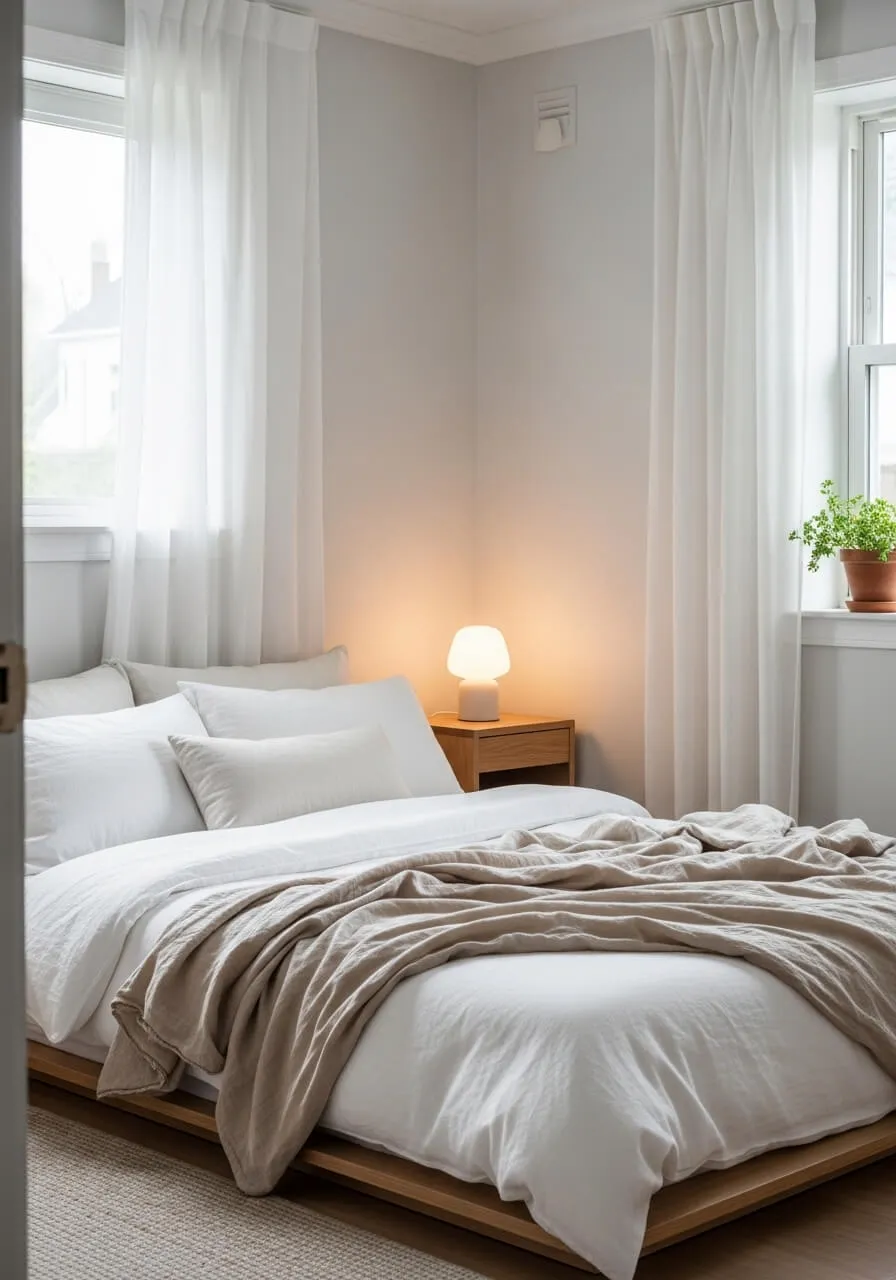
Here is exactly how to decorate a small bedroom without making it feel tight.
Choose Colors and Light That Open the Room Up
Color is the first and most powerful tool available when decorating a small bedroom and the right choices can make the walls feel like they are physically further apart than they actually are.
Light, neutral tones are the foundation of any small bedroom that feels spacious. Warm whites, soft creams, light greige, and pale sage green all reflect light around the room rather than absorbing it, which creates an immediate sense of openness and airiness. Dark colors do the opposite by pulling the walls inward and making the ceiling feel lower than it is.
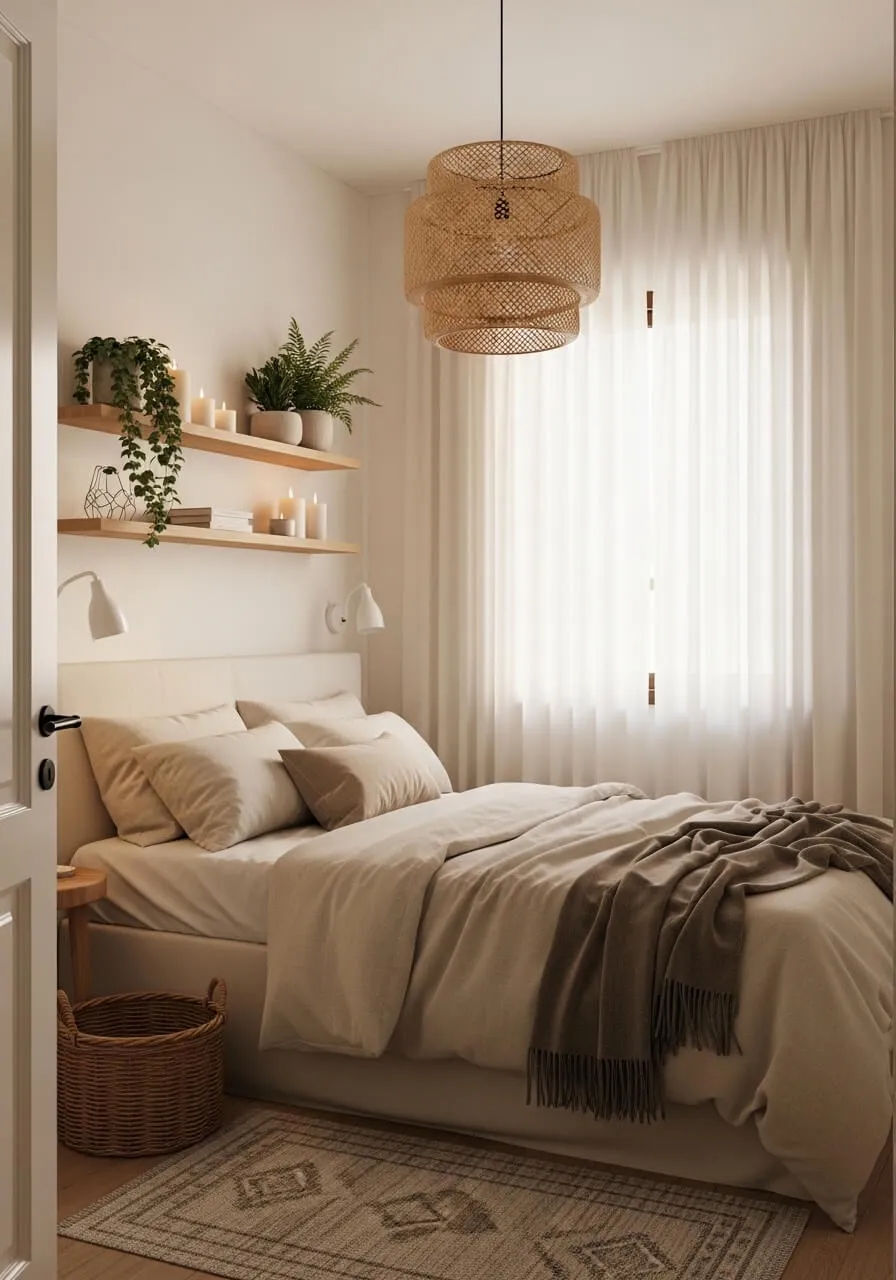
Paint the ceiling the same color as the walls or one shade lighter. Most people paint only the walls and leave the ceiling white which actually draws attention to where the wall ends and the ceiling begins, making the room feel boxier. Keeping the ceiling color consistent with the walls makes the boundaries between surfaces less visible and the room feels taller and more open as a result.
Maximize natural light wherever possible. Swap heavy curtains for sheer linen panels that let daylight pass through. If privacy is needed, use a light filtering blind underneath sheers rather than heavy blackout drapes that block all the light and close the room in visually.
Place a mirror on the wall opposite the window. A large mirror reflects the natural light from the window back into the room and doubles the sense of space. It is one of the simplest and most effective small room tricks available and it costs very little to implement.
Choose Furniture That Works for the Space
The furniture choices in a small bedroom determine more than anything else whether the room feels comfortable or overcrowded. A few principles applied consistently make a significant difference.
Scale matters more than anything. Oversized furniture in a small room is one of the most common decorating mistakes. A bed with a towering headboard, a large armoire, and a bulky dresser in a small room leave no visual breathing room. Every piece of furniture should be proportionate to the room size rather than being chosen purely for aesthetics in isolation.
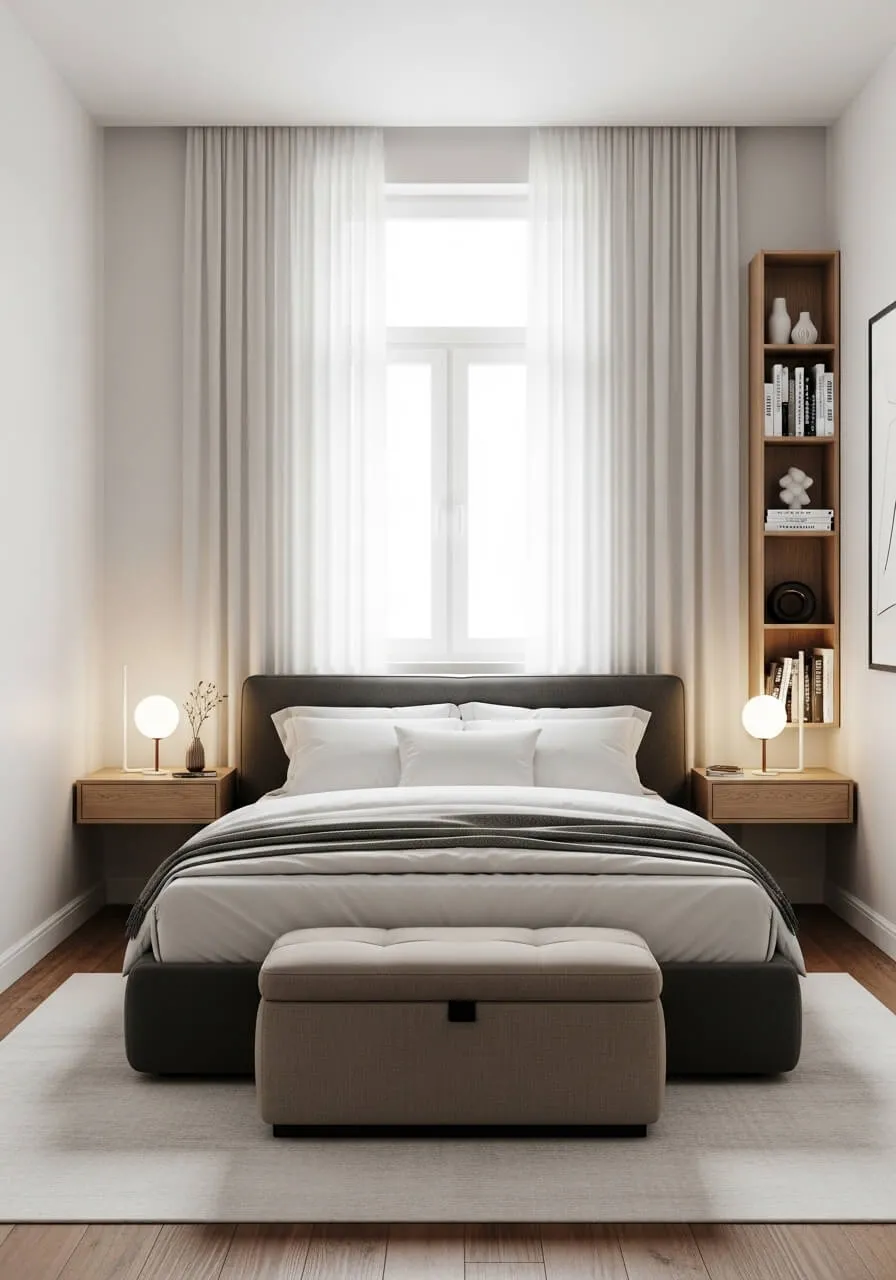
Choose furniture with legs rather than pieces that sit directly on the floor. A bed frame with legs, a side table with slender legs, and a bench that sits above floor level all allow the eye to see the floor underneath which creates a sense of more floor space and a lighter, less heavy feel throughout the room.
Use floating shelves instead of bulky floor-standing furniture wherever possible. A floating shelf above the bed for books, plants, and a lamp replaces the need for a large nightstand and keeps the floor area around the bed completely clear. Clear floor space is what makes a small room feel bigger than it actually is.
Mirrors on wardrobe doors or a full-length mirror leaning against a wall both add depth and reflection that visually expand the room without taking up any additional floor space.
Keep It Organized and Visually Calm
A small bedroom that is cluttered feels significantly smaller than a small bedroom that is tidy and intentional. Visual calm is what makes a compact space feel restful and spacious rather than stressful and tight.
Use storage that is hidden rather than displayed. Under-bed storage boxes, ottomans with storage inside, and wardrobes with clean closed fronts all keep possessions out of sight. Every item sitting out in a small room competes for visual space and makes the room feel busier and more cramped than it actually is.
Keep surfaces like the dresser top and nightstand to a minimum. Choose one or two intentional items for each surface, a lamp, a small plant, a candle, and leave the rest clear. A surface with too many items on it makes the whole room feel chaotic regardless of how well everything else is styled.
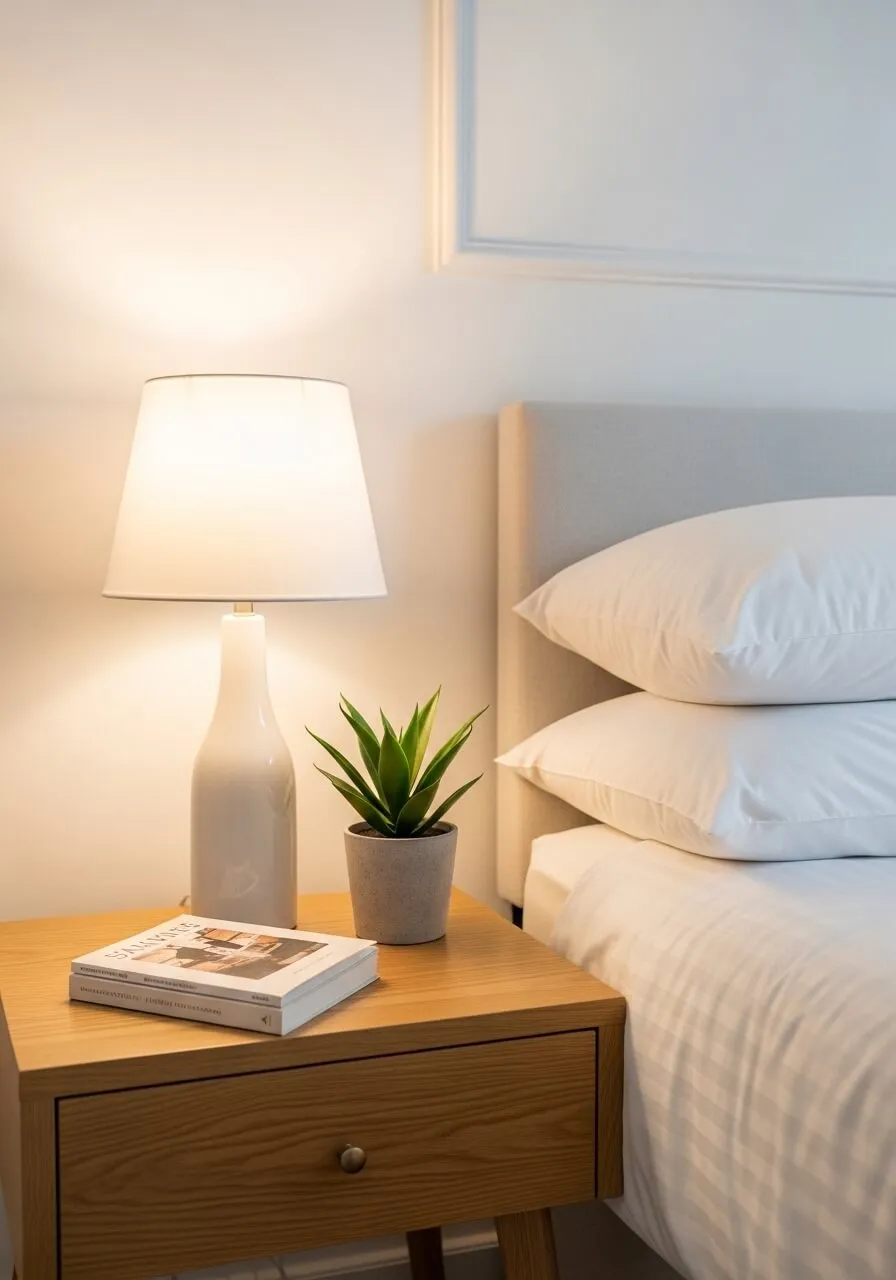
Stick to a simple, cohesive color story throughout the room. When every item in the room is a different color, pattern, or material the room looks cluttered even when it is actually tidy. Choosing two or three colors and repeating them across the bedding, curtains, and accessories creates a visual harmony that makes the room feel organized and intentional.
Frequently Asked Questions
What colors make a small bedroom look bigger? Light, warm neutrals work best for making a small bedroom feel more spacious. Warm white, soft cream, light greige, and pale sage green all reflect light around the room and push the walls back visually. Painting the ceiling the same color as the walls rather than leaving it stark white also removes the visual boundary between walls and ceiling which makes the room feel taller and more open.
What size bed should I put in a small bedroom? A full or double bed is usually the most practical choice for a truly small bedroom as it leaves enough space on at least one side for a narrow nightstand and a clear pathway. A queen bed can work in a slightly larger small room if the rest of the furniture is kept minimal and low-profile. Avoid a king size bed in any room where it leaves less than two feet of clearance on either side as it makes moving around the room feel impossible.
How do I make a small bedroom feel less cluttered? The most effective approach is to move as much storage as possible out of sight. Use under-bed storage, closed wardrobes, and storage ottomans rather than open shelves and visible boxes. Limit what sits on each surface to one or two intentional items only. Stick to a consistent color palette throughout the room so even when items are visible they look cohesive rather than chaotic.
Should I use dark or light curtains in a small bedroom? Light curtains almost always work better in a small bedroom. Sheer linen or cotton panels in white, cream, or a soft natural tone let daylight into the room and keep the walls feeling open and airy. Heavy dark curtains absorb light, close the walls in visually, and make the room feel smaller and heavier. If you need privacy or blackout coverage, layer a light-filtering blind behind sheer panels rather than replacing the sheers with heavy drapes.
Make Your Small Bedroom Feel Like a Sanctuary
A small bedroom styled with intention feels far more comfortable and beautiful than a large bedroom filled carelessly. It is about making every single choice count, from the color on the walls to the lamp on the nightstand. Start with one change from this guide, whether it is hanging sheer curtains, clearing a surface, or swapping a bulky piece of furniture for something more proportionate. Small changes add up quickly in a small space. Save this guide and come back to it the next time you are ready to refresh your bedroom.