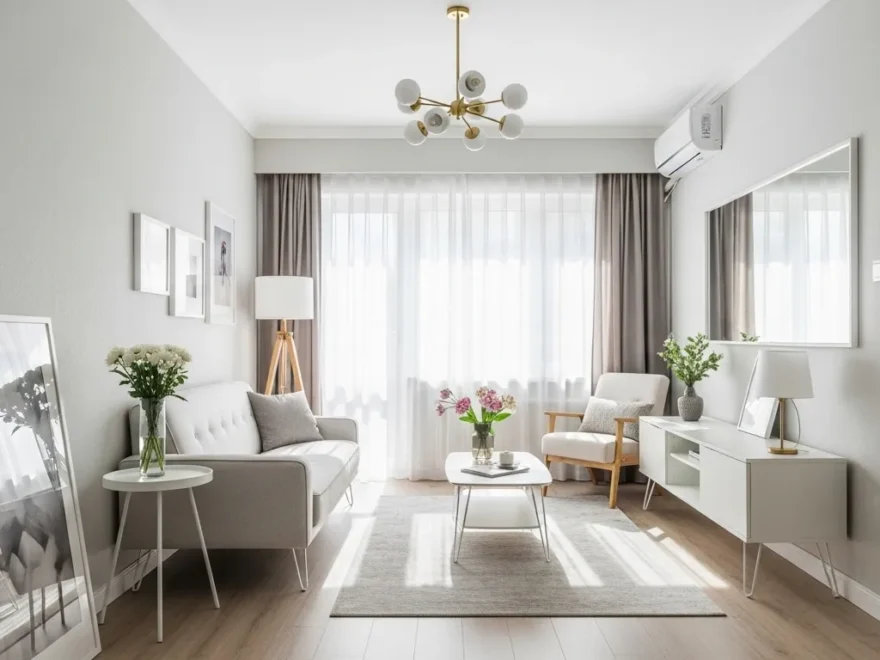
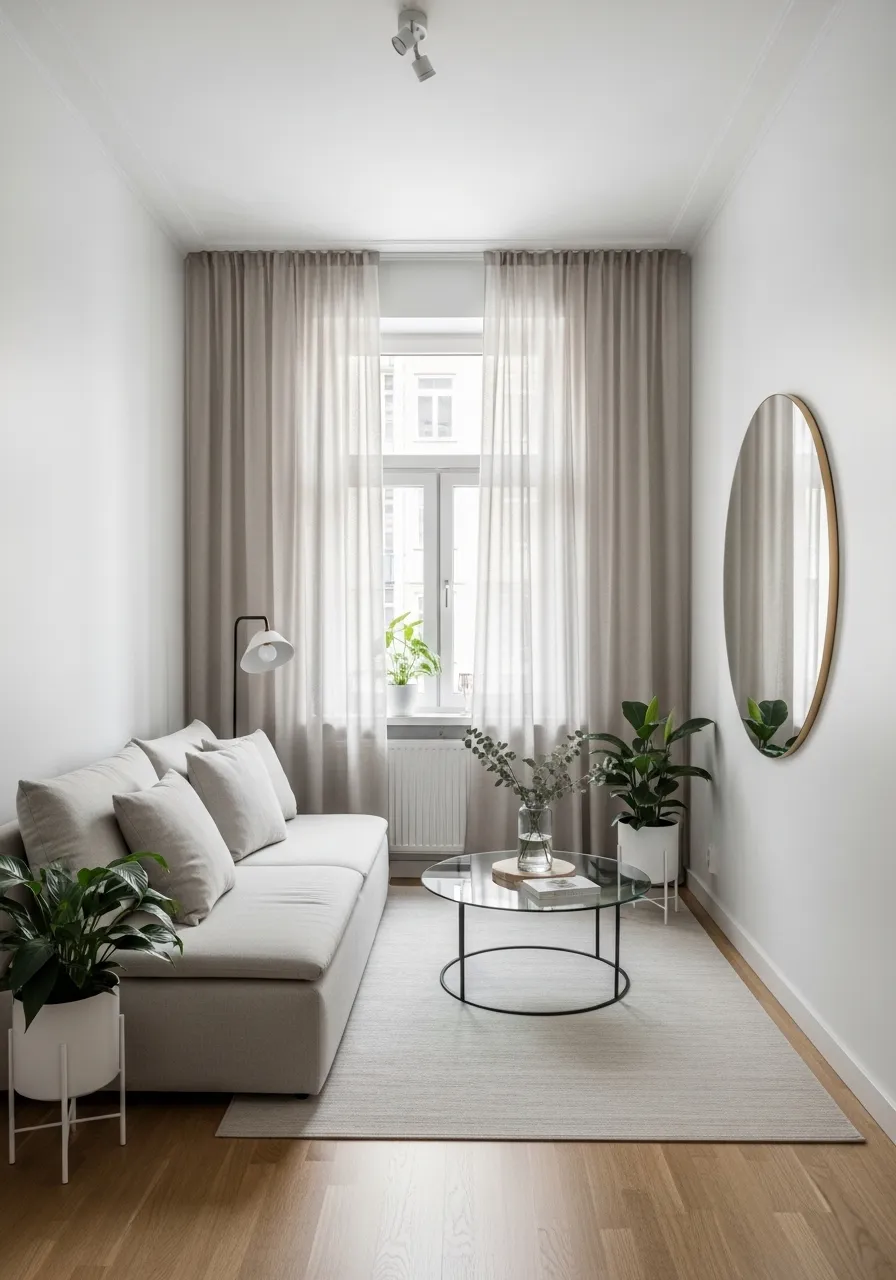
Here are the most effective and simple decor hacks that make any room look noticeably bigger starting today.
Use Color, Light, and Mirrors to Visually Expand the Space
Color is the first and most powerful tool for making a room feel larger and the principles behind it are straightforward once you understand what the eye is responding to.
Light colors on the walls, ceiling, and floors reflect light around the room rather than absorbing it. This reflection creates the illusion of more space by making the boundaries of the room, the walls, ceiling, and floor, feel less defined and further away. Warm white, soft cream, pale greige, and light sage green are among the most effective choices for this purpose. The closer the ceiling color is to the wall color, the taller the room will feel because the eye cannot easily detect where one surface ends and the other begins.
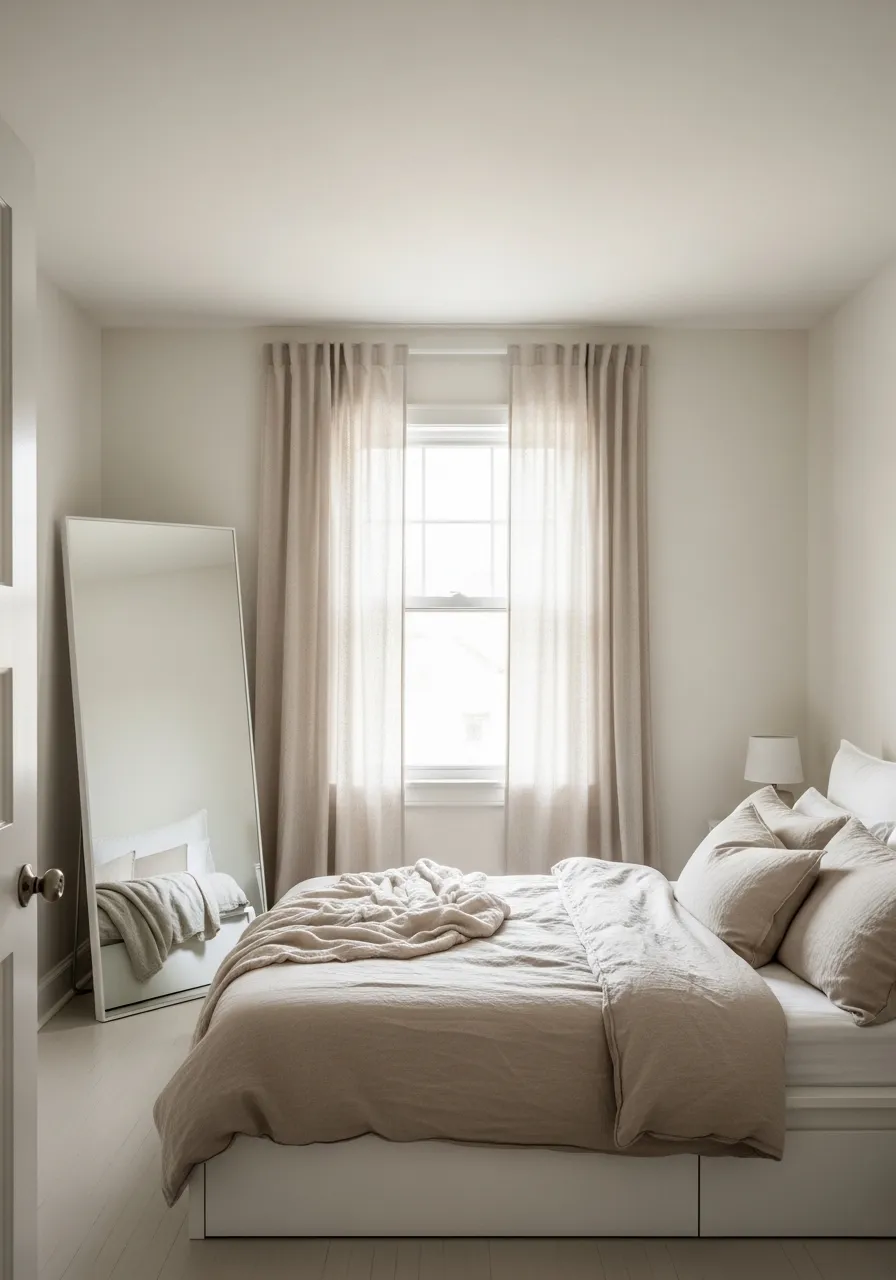
Dark colors do the opposite. They absorb light and pull the walls visually inward which makes a small room feel smaller and more enclosed. Dark accent walls are a popular design trend but they are best reserved for larger rooms where the drama they create does not come at the cost of feeling cramped.
Mirrors are the single most effective decor hack for making a room look bigger and they work on a simple principle. A mirror reflects whatever is in front of it which means it visually doubles the space it faces. A large mirror on the wall opposite a window reflects the natural light and the view from the window back into the room creating what feels like a second window and significantly more depth. A full-length mirror leaning against a wall, a large round mirror above a console, or a collection of smaller mirrors grouped together on a wall all deliver the same space-expanding effect at a range of price points.
Maximize natural light wherever possible. Swap heavy curtains for sheer linen panels or light filtering blinds that let daylight pass through. Remove anything from windowsills that blocks the light. Natural light makes every surface in a room look brighter, cleaner, and further away which directly translates into a greater sense of space and openness.
Choose Furniture and Layout Wisely
The furniture in a small room determines more than anything else whether the space feels livable and open or crowded and tight. A few principles applied consistently make an enormous difference.
Scale is everything in a small room. Oversized furniture dominates a small space and leaves no visual breathing room. Choose furniture pieces that are proportionate to the room rather than pieces you love in isolation that are simply too large for the space they need to fit into. A sofa with a lower profile, a coffee table with a smaller footprint, and side tables with slim legs all take up less visual space than their bulkier counterparts.
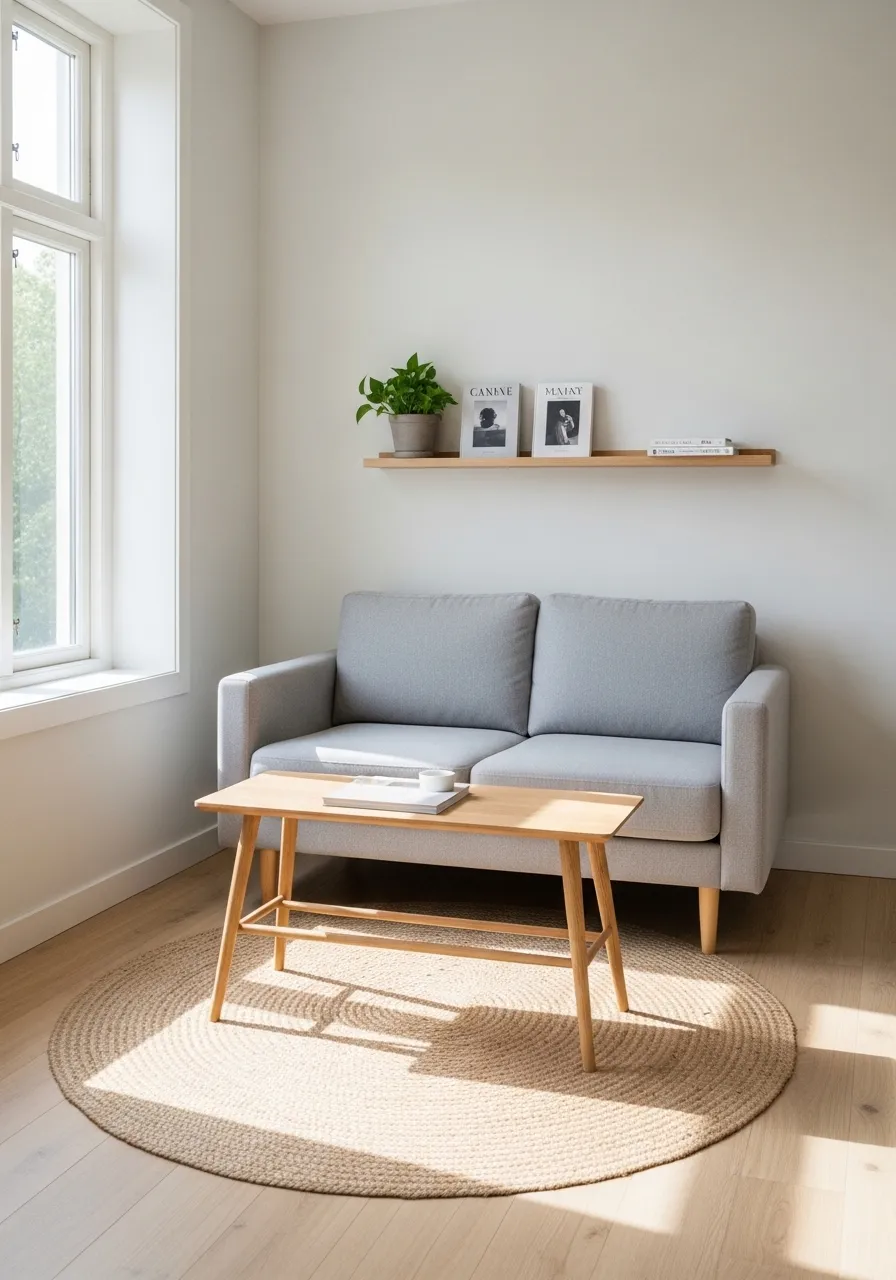
Choose furniture with legs rather than pieces that sit directly on the floor. When the eye can see the floor beneath a sofa, a chair, or a side table, the floor reads as continuous and uninterrupted which makes it appear larger. Furniture that sits flush to the floor creates a visual barrier that cuts the floor space into segments and makes the room feel more closed off and smaller as a result.
Use multifunctional furniture to reduce the total number of pieces in the room. An ottoman with storage inside, a sofa bed in a guest room, a coffee table with drawers, and wall-mounted shelves instead of floor-standing bookcases all reduce the furniture footprint without reducing the functionality of the room. Fewer pieces on the floor means more visible floor space and more visible floor space is the single clearest signal to the eye that a room is spacious.
Keep the center of the room as clear as possible. Pushing furniture toward the walls rather than clustering it in the center opens up the middle of the room and creates a clear sightline from one end to the other which makes the room feel longer, wider, and more open.
Use Vertical Space, Curtains, and Clever Styling
Once the color, light, mirrors, and furniture are addressed, a few additional styling details push the sense of space even further without requiring any major changes.
Hang curtains as high and as wide as possible. Mounting curtain rods as close to the ceiling as the wall allows and extending the rod several inches beyond the window frame on each side creates the impression of taller, wider windows. Taller windows make ceilings feel higher. Higher ceilings make rooms feel bigger. This one change alone makes a noticeable difference in how spacious a room feels and it costs almost nothing to implement.
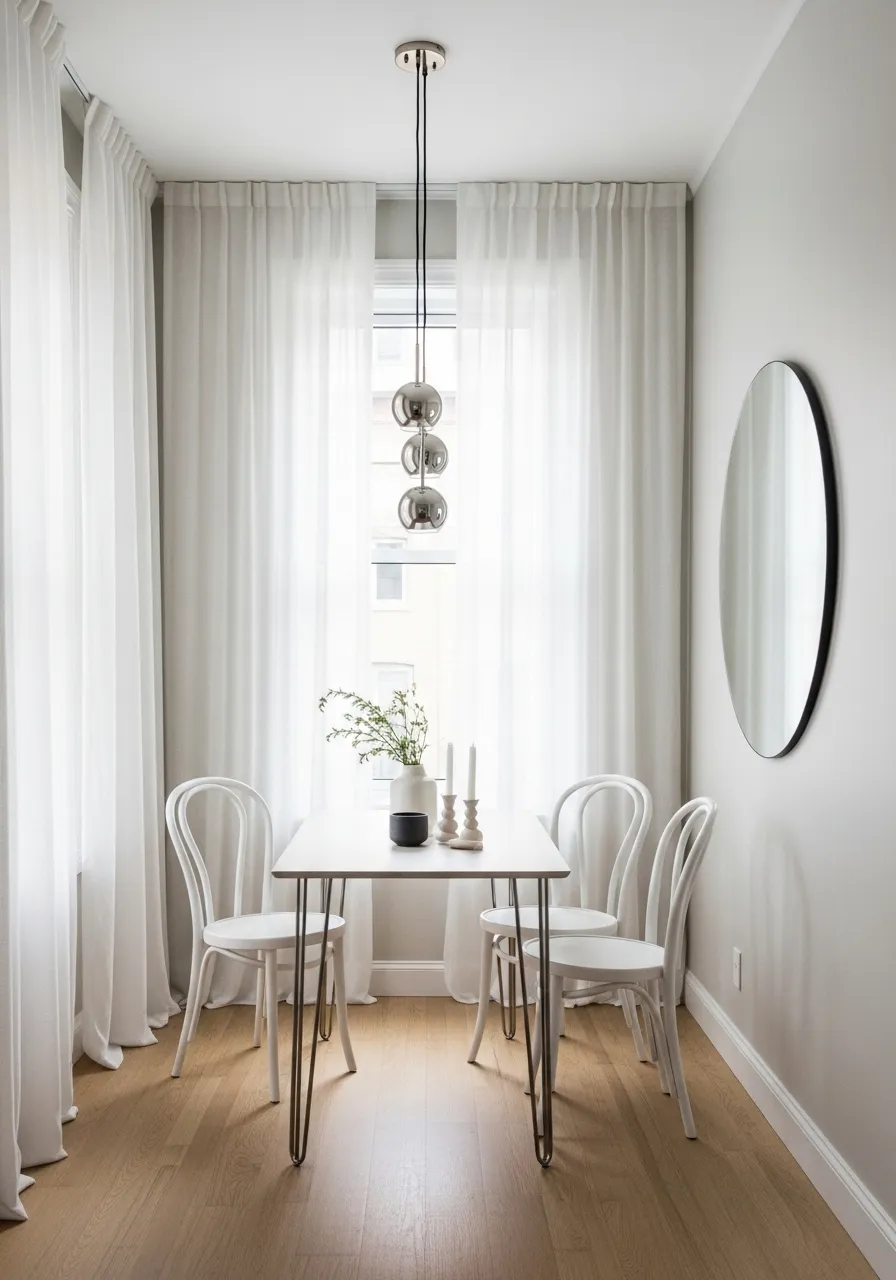
Use vertical space on the walls rather than spreading things across the floor. Tall bookshelves that draw the eye upward, a gallery wall that extends toward the ceiling, and floating shelves mounted high on the wall all direct attention upward, which makes the ceiling feel higher and the room feel taller. A room that feels tall also feels more spacious because the eye perceives volume in all three dimensions rather than just floor area.
Keep surfaces clutter-free. Clutter on counters, coffee tables, and shelves creates visual noise that makes a room feel busy and cramped, regardless of its actual size. Edit every surface down to only what genuinely needs to be there and store everything else out of sight. A tidy room always feels bigger than a cluttered one of the same dimensions.
Frequently Asked Questions
What colors make a small room look the biggest? Warm whites, soft creams, and light greige tones are consistently the most effective colors for making a small room feel larger. These tones reflect light rather than absorbing it, which makes the walls feel further away and the room feel more open. Painting the ceiling the same color as the walls removes the visual break between them and makes the room feel taller. For rooms with very little natural light, choosing a warm white with yellow undertones rather than a cool, stark white prevents the room from feeling cold and flat.
Does dark furniture make a small room look smaller? Dark furniture can make a small room feel heavier and more closed in if there is too much of it. However, a single dark furniture piece used as a statement in an otherwise light and airy room can add depth and drama without making the space feel smaller. The key is balance. If the walls, floors, and ceiling are light and reflective, one or two darker furniture pieces add visual interest without overwhelming the sense of space. Avoid filling a small room with multiple large, dark furniture pieces, as the cumulative effect makes the room feel significantly smaller and heavier.
Where should I place a mirror to make a room look bigger? The most effective placement for a space-expanding mirror is on the wall directly opposite a window. This position allows the mirror to reflect natural light and the view from the window back into the room, creating the impression of a second window and significantly more depth. A large mirror above a fireplace or console table also works well by reflecting the room back and adding perceived depth. Avoid placing mirrors where they only reflect blank walls or the backs of furniture, as this adds no visual depth and delivers little of the space-expanding benefit.
Does removing furniture make a small room feel bigger? Removing unnecessary furniture pieces almost always makes a small room feel noticeably bigger. Every piece of furniture on the floor occupies visual space and reduces the amount of visible floor area. Since visible floor area is one of the strongest signals of spaciousness, reducing the number of furniture pieces in a small room directly increases the sense of space. A small room with three well-chosen, proportionate pieces of furniture will almost always feel more spacious and more beautiful than the same room filled with five or six pieces, even if those pieces are individually attractive.
Start Making Your Room Feel Bigger Today
Every room has more potential than it appears to at first glance, and the right decor choices reveal that potential without any structural changes or major investment. Start with the color on your walls, add a large mirror opposite the nearest window, swap heavy curtains for sheer ones hung at ceiling height, and clear every surface of anything that does not genuinely need to be there. These four changes alone will make your room feel measurably larger and more beautiful within a single afternoon. Save this guide and come back to it every time you want to take the next step.