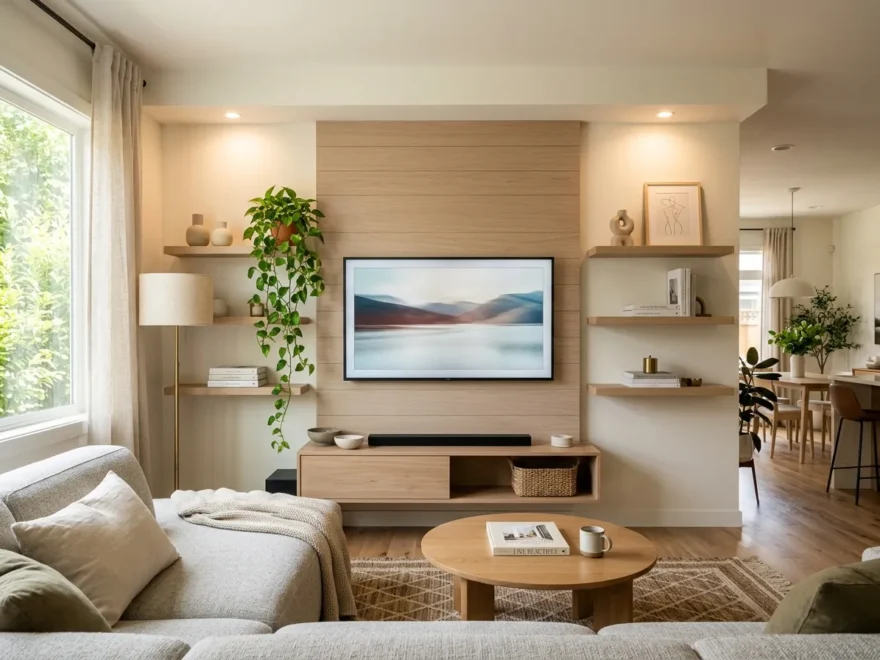
1. Mount the TV on a Painted Accent Wall
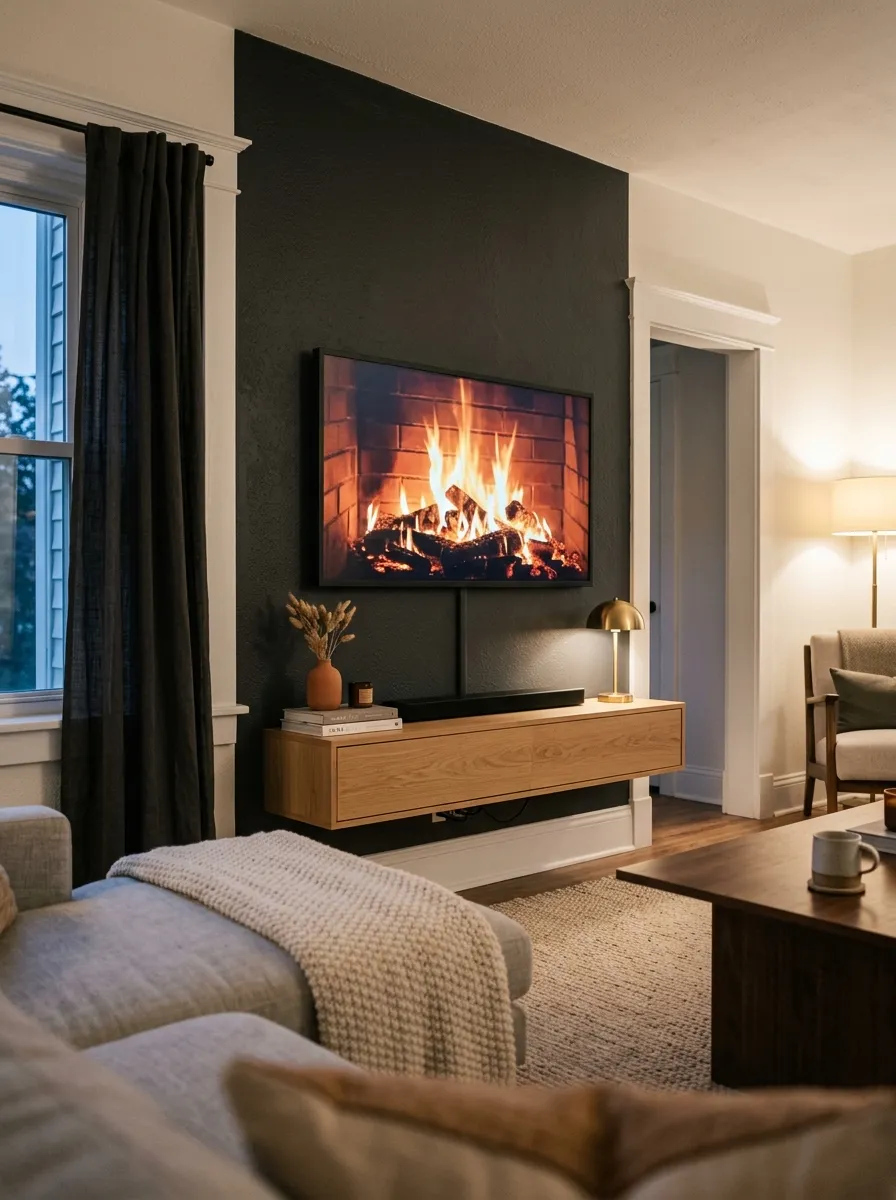
Painting just the wall behind your TV is one of the easiest and most affordable changes you can make.
Pick a color that is two to three shades deeper than the rest of your room. This creates instant contrast and makes the TV feel like it belongs there rather than floating awkwardly on a plain wall.
Deep navy, warm charcoal, forest green, and terracotta are all popular choices right now. You can grab a small sample pot first to test it out before committing to a full gallon.
This works in rentals too. Use removable peel-and-stick paint panels or a large-format peel-and-stick wallpaper to get the same effect without losing your deposit.
The whole project takes a weekend and costs around $30 to $60. That is a serious visual upgrade for very little money.
Pair it with a simple floating shelf below the TV and a couple of small decor pieces, and the whole wall starts to look intentional.
One tip: keep the furniture and accessories on this wall fairly light in color. That contrast is what makes the accent wall pop and the room feel balanced.
2. Add Floating Shelves Around the TV
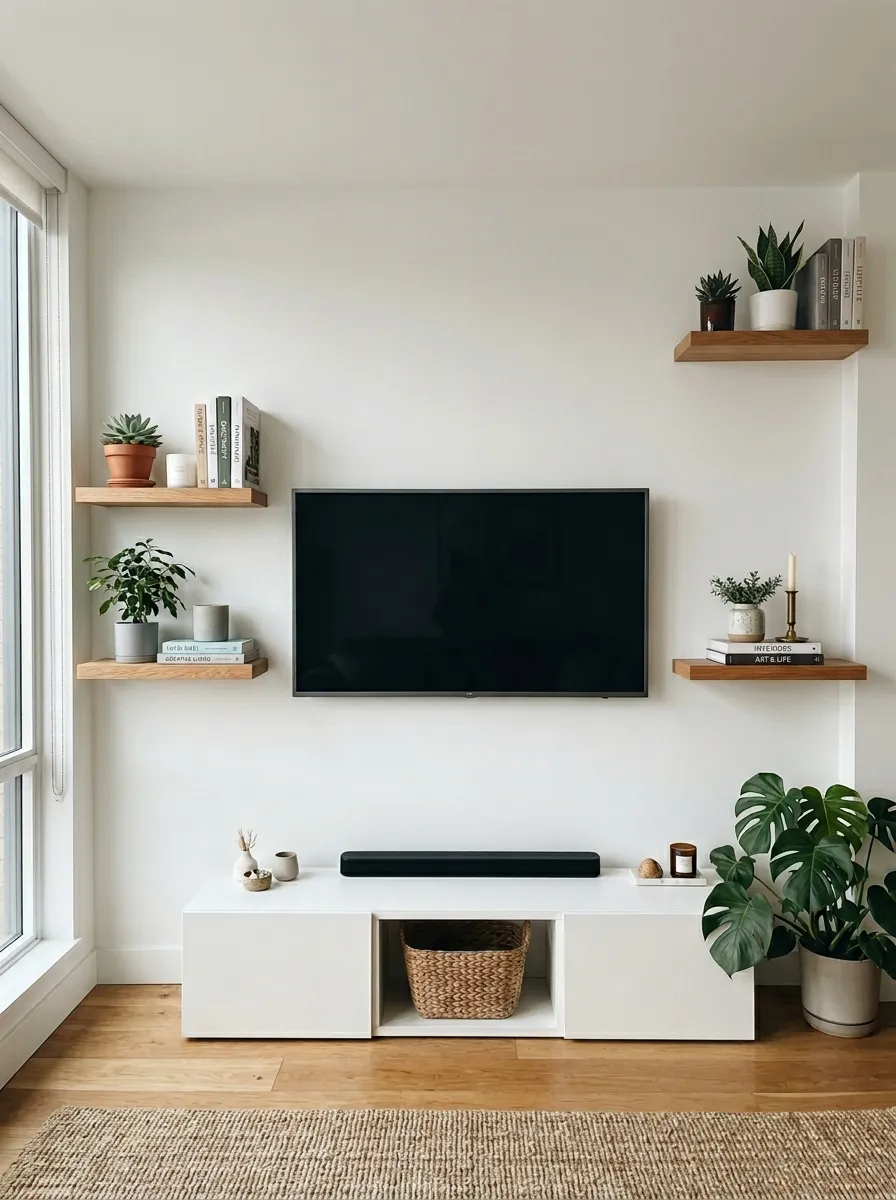
Floating shelves are a game-changer for TV walls. They fill the empty space around the screen without crowding it.
You do not have to go big. Two to three small shelves on either side of the TV are enough. Keep them staggered at different heights so the wall has visual rhythm.
What to put on them: small plants, a candle or two, a framed photo, a few books stacked horizontally. Less is more here. If a shelf looks cluttered, remove one item.
Budget option: IKEA LACK shelves cost around $8 to $15 each and come in multiple finishes. They are easy to install and hold plenty of weight for light decor.
DIY option: Buy unfinished pine boards from a hardware store, sand them smooth, and stain or paint to match your room. Add basic shelf brackets and you have a custom look for under $25 total.
The key is symmetry or intentional asymmetry. Either works — just be deliberate about it. Random-looking shelves make the wall feel messy. Planned arrangements make it look styled.
Also think about what is behind the TV. If your cables are visible, tackle that first. Shelves will not help if messy cords are stealing all the attention.
3. Run Cables Through the Wall or Use a Raceway

Exposed cables are the number one thing that make a TV wall look messy. Fixing this one issue makes a bigger difference than almost any decor change.
The cleanest option is running cables inside the wall using an in-wall cable management kit. These kits cost $20 to $40 at most hardware stores. They include two wall plates — one behind the TV and one near the outlet. Your cables run invisibly between them.
If you rent or do not want to cut into drywall, use a cable raceway instead. These are slim plastic channels that mount on the wall surface and paint to match. They are barely noticeable and cost about $10 to $20.
Paint the raceway the same color as your wall. This makes it almost disappear.
Another option: use cord-concealing TV stands or media consoles with built-in cable channels. All wires feed into the back of the unit and stay out of sight.
Once your cables are hidden, the whole wall feels cleaner. Everything else you add — shelves, art, plants — actually gets noticed instead of competing with a tangle of black cords.
This is the first fix. Do it before anything else.
4. Frame the TV with Shiplap or Wood Panels
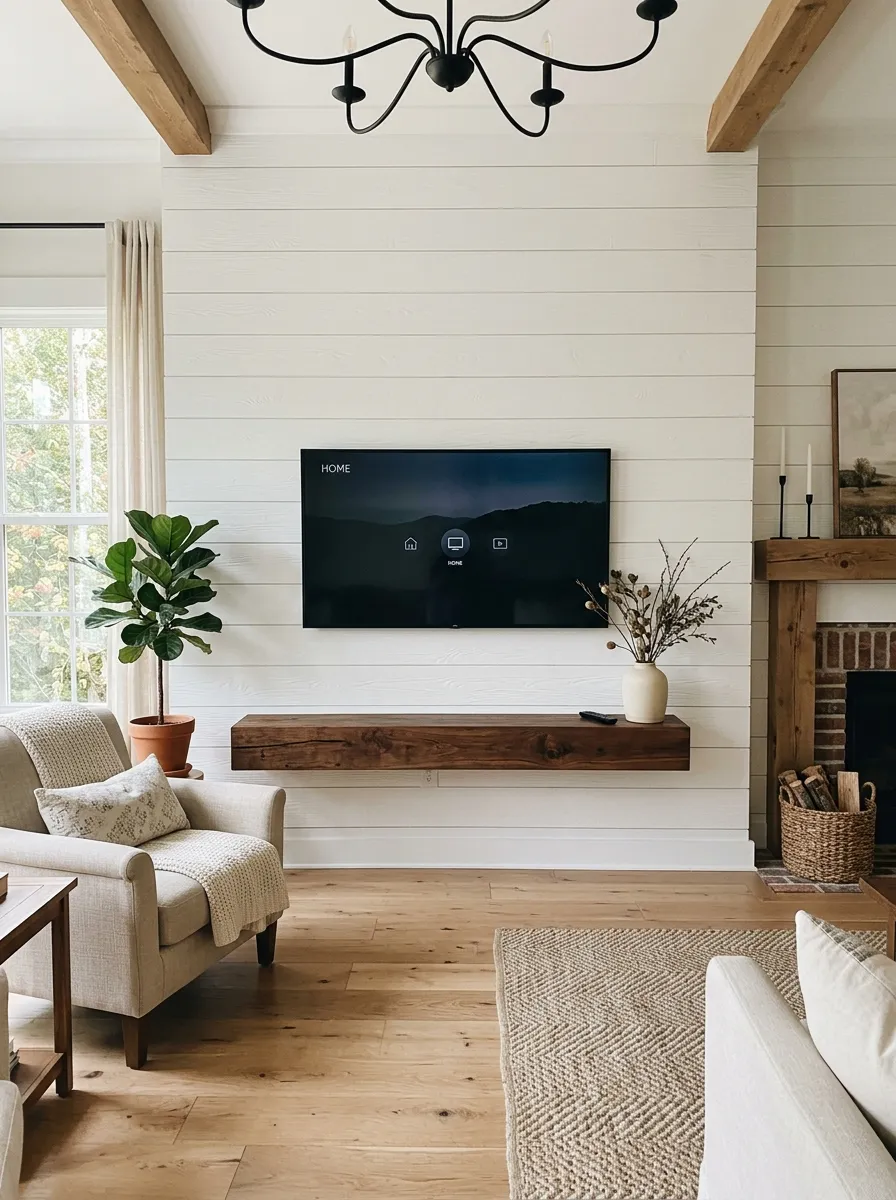
Wood paneling behind the TV adds warmth, texture, and a custom built-in feel — even if you put it up yourself in a single afternoon.
Shiplap is the most popular option. It is horizontal planks with small gaps between them. You can buy real shiplap boards or MDF shiplap panels at home improvement stores. MDF panels are cheaper and much easier to install — they come in 4×8 sheets with the grooves already cut in.
Cost: around $50 to $150 depending on the size of your wall and whether you choose real wood or MDF.
Paint it white for a farmhouse look. Leave it natural for a Scandinavian feel. Stain it dark walnut for something more dramatic.
Install it yourself with construction adhesive and a few finishing nails. No major carpentry experience needed.
The paneling frames the TV without literally surrounding it in a frame. It gives context to the screen and makes the whole wall feel purposeful.
Pair with a simple floating media console or a low sideboard below. Add one or two accessories and stop there. The wood does most of the work.
5. Create a Gallery Wall Around the TV
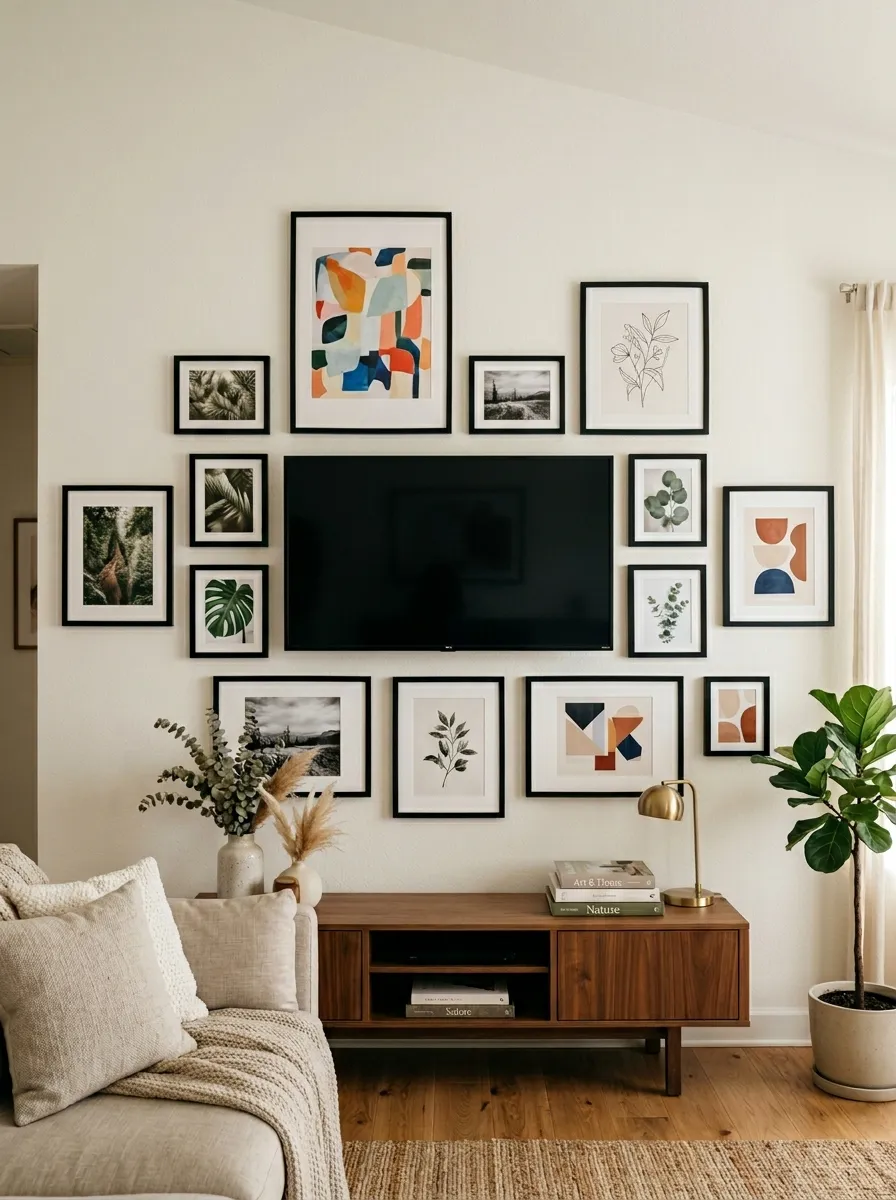
A gallery wall around your TV makes the screen look like one element of a curated collection rather than the only thing on the wall.
The secret to making this look clean is consistency in frames. Pick one frame color — all black, all white, or all natural wood — and stick to it. Mixing frame styles creates visual chaos.
Keep all the art on the same horizontal center line as the TV. This ties everything together and prevents it from looking random.
Start by laying everything out on the floor first. Adjust until you like the arrangement, then trace each frame on paper, cut them out, and tape them to the wall. This lets you plan without putting unnecessary holes in the wall.
Budget tip: Print free downloadable art from sites like Unsplash or use your own photos. Print at a local copy shop for $1 to $5 per piece. Frame at IKEA or a dollar store.
Keep the sizes varied — a mix of 5×7, 8×10, and 11×14 works well. The TV anchors the center, and the smaller frames surround it without fighting for attention.
Leave some breathing room between pieces. Cramming frames too close together just looks busy.
6. Install a TV Console with Legs for an Airy Feel
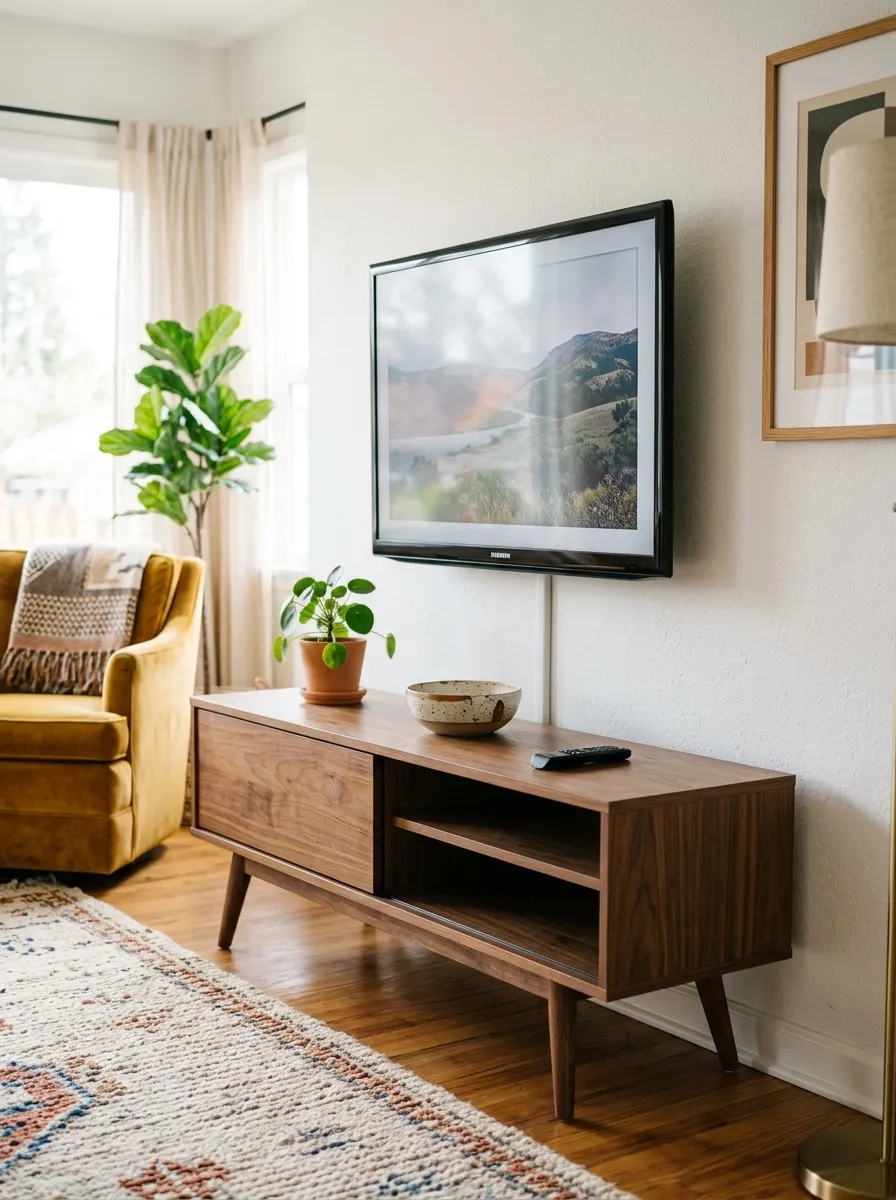
A low console with visible legs makes the whole TV setup feel lighter and less heavy.
Bulky, closed media cabinets tend to make a TV wall look dense and outdated. Swapping in a console that sits on tapered or hairpin legs instantly modernizes the look.
The gap between the floor and the console creates visual breathing room. It makes the room feel taller and less cluttered.
This works especially well in smaller rooms. The eye travels under the furniture, which tricks the brain into perceiving more floor space.
What to look for: A console that is roughly two-thirds the width of your TV. Not wider, not much narrower. Proportions matter here.
Budget option: Thrift stores often carry solid wood dressers or sideboards for $20 to $60. Replace the existing legs with hairpin legs from Amazon or a hardware store — a set of four costs around $20 to $30. Sand and repaint the dresser and you have a custom piece.
Keep the surface of the console minimal. One plant, one candle, one decorative object. That is usually enough. The clean surface underneath a mounted TV is part of what makes the whole wall look polished.
7. Use a Large Piece of Art Behind or Beside the TV
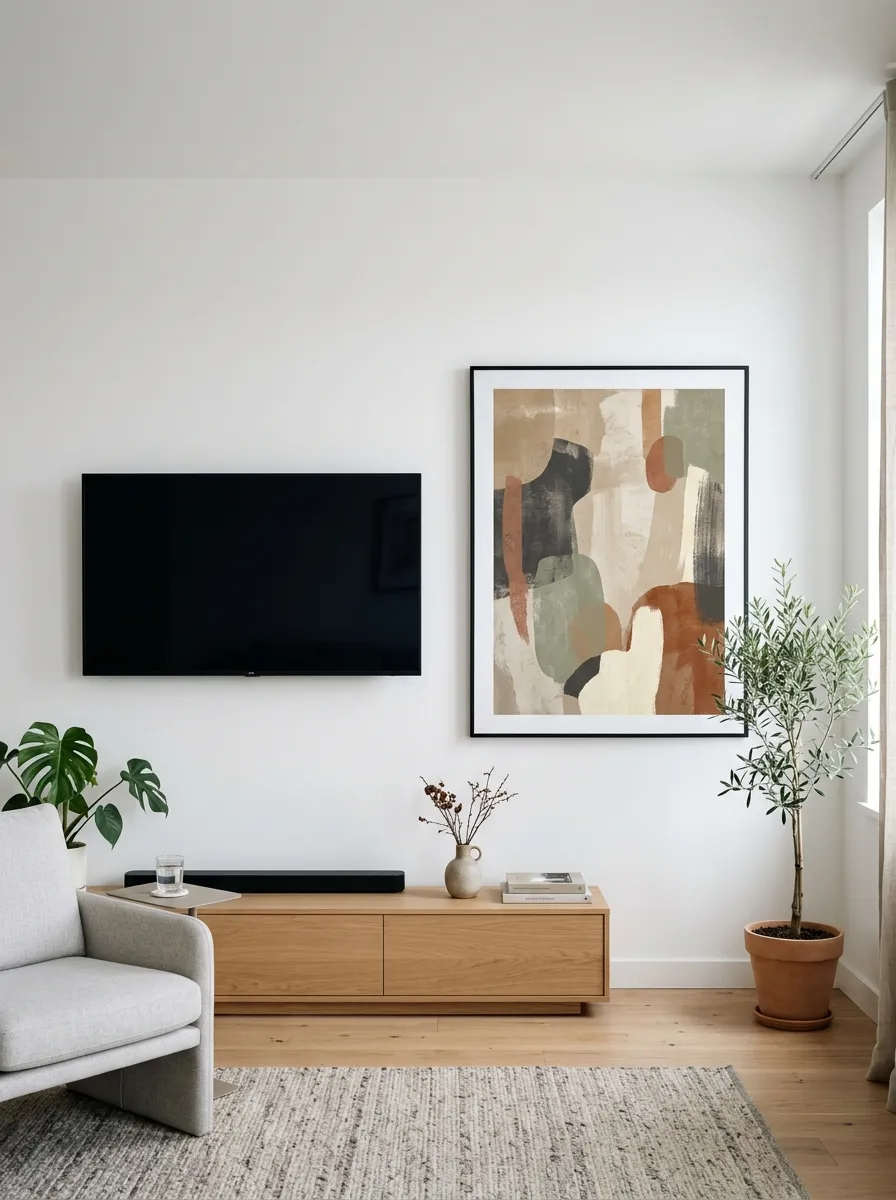
One large piece of art next to your TV does more visual work than a dozen small ones.
Scale matters on a TV wall. Small art pieces placed near a big screen almost always look out of proportion. They get lost. A large print — 24×36 inches or bigger — holds its own against the TV and gives the wall balance.
Position it to one side of the TV rather than directly above. Art above the TV often ends up too high to view comfortably, and it competes with the screen.
Budget tip: Large art prints do not have to be expensive. Sites like Society6, Desenio, and Redbubble sell poster-size prints for $15 to $40. You can also print large-format art yourself at office supply stores for as little as $5 to $10 in black and white.
For a frame, go thin and simple. A black or white metal frame from IKEA (the RÖDALM or SILVERHÖJDEN styles) costs $10 to $25 and works for almost any print.
The art should feel like it is in conversation with the TV, not competing with it. Choose something with calm colors — muted tones, earthy hues, soft abstracts — so it does not visually clash with whatever is on the screen.
8. Add a Plant Shelf or Plant Ledge Beside the TV
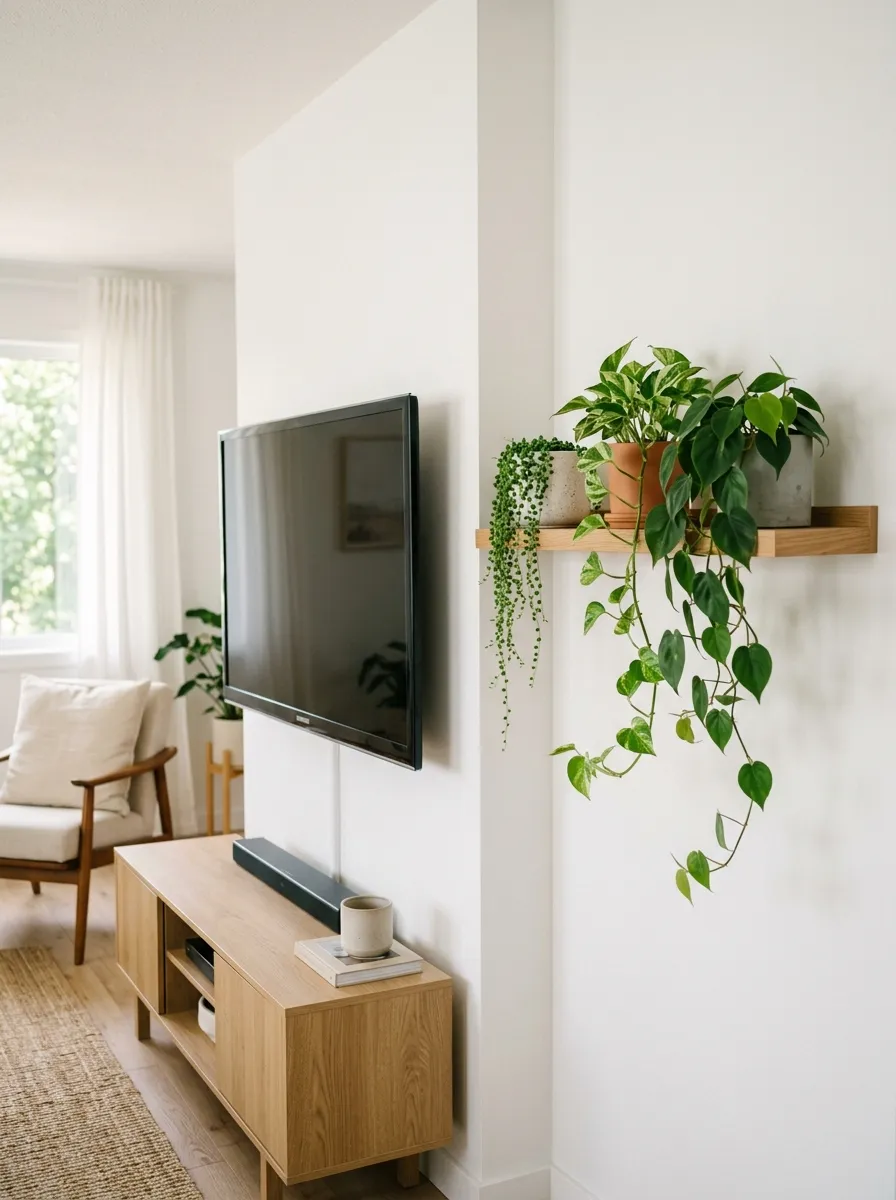
Plants bring life to a TV wall in a way nothing else quite does. And you do not need a lot of them.
A single narrow shelf mounted to the side of the TV — holding two or three small trailing plants — immediately makes the space feel fresher and more lived-in.
Good plant choices for low-light TV walls: pothos, heartleaf philodendron, snake plants, and ZZ plants. These are hard to kill and do fine without direct sunlight.
Trailing plants work especially well here. Let the vines drape naturally off the shelf for an organic, relaxed look.
Budget option: IKEA MOSSLANDA picture ledges ($9 to $12) double perfectly as plant shelves. They are narrow, clean, and take up minimal wall space.
Another option is a simple wall-mounted pot — the kind with a single bracket and a round ceramic pot. These cost $5 to $15 at most home stores or online. Mount one or two at different heights beside the TV.
Keep the pots consistent in material or color. All terracotta, all white ceramic, or all black matte creates a cohesive look. Mixing random pot styles and colors quickly turns tidy into chaotic.
One healthy, well-placed plant beats five scraggly ones every time.
9. Install Recessed Shelving in the Wall
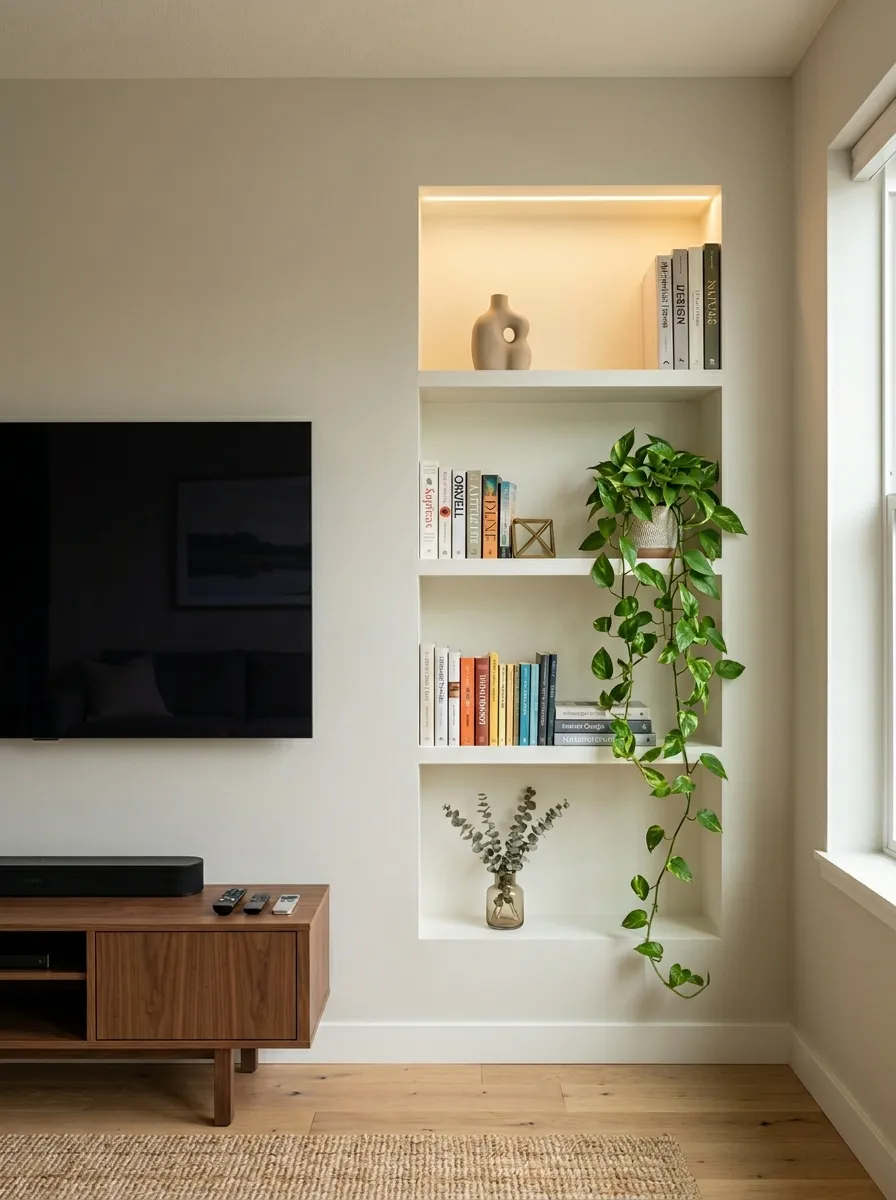
A recessed shelf built into the wall looks custom and expensive — and it can be done on a modest budget if you do it yourself.
The idea is simple: remove the drywall between two wall studs, frame out a box, and finish the interior with paint or a contrasting wallpaper. You end up with a built-in niche that sits flush with the wall.
Cost: $50 to $150 in materials if you DIY. This is a half-day project for someone comfortable with basic drywall work.
The niche can hold books, a speaker, small plants, candles, or decorative objects. Because it sits inside the wall, it creates depth and dimension without adding anything that sticks out into the room.
Position the niche to one side of the TV at the same height. Or create two matching niches flanking the TV for a symmetrical built-in look.
Add a small LED strip to the inside top edge of the niche for soft ambient lighting. This is a cheap and effective touch — LED strips cost $10 to $20 and are easy to install with adhesive backing.
This is one of those changes that makes guests think you had it professionally designed. The built-in look reads as architectural, not decorative.
10. Use Peel-and-Stick Wallpaper for an Easy Feature Wall
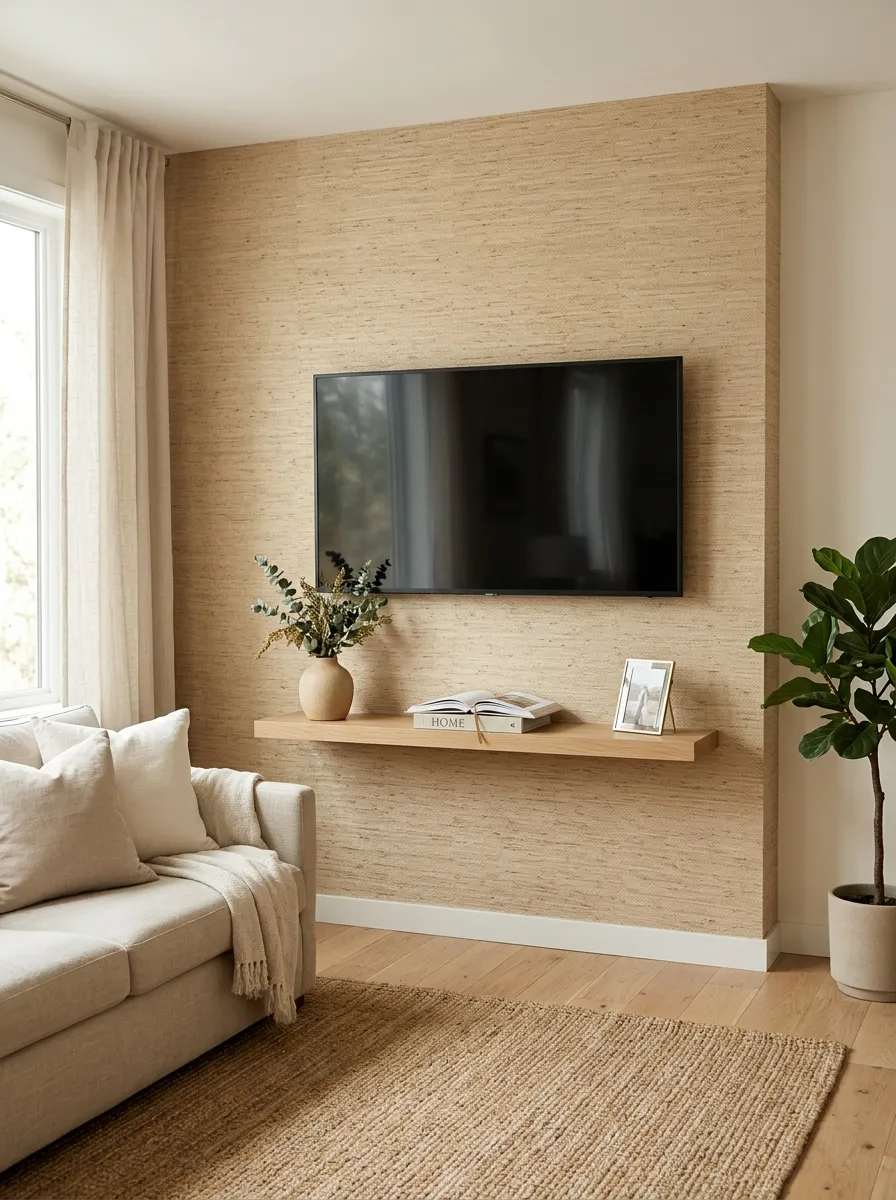
Peel-and-stick wallpaper has come a long way. Today’s versions look surprisingly realistic — grasscloth, linen, marble, geometric patterns — and they come off cleanly without damaging the wall underneath.
This makes them perfect for renters or anyone who wants a feature wall without a long-term commitment.
Apply it behind the TV only. You do not need to cover the whole room. One accent wall takes about one to two rolls, which costs $30 to $80 depending on the brand.
Best textures for a TV wall: subtle linen, soft grasscloth, tone-on-tone geometric, or a light wood grain. Avoid busy patterns that compete with what is on the screen.
The key to a clean result is careful application. Use a squeegee to remove air bubbles as you go. Trim edges cleanly with a sharp utility knife. Take your time on the first panel and the rest gets easier.
Some good brands: NuWallpaper, RoomMates, Tempaper, and Chasing Paper. All are available on Amazon or at Target.
The wallpaper turns a plain painted wall into a textured, intentional backdrop. It costs less than repainting and takes less skill. For a TV wall upgrade, this is one of the most accessible options available.
11. Try LED Backlighting Behind the TV
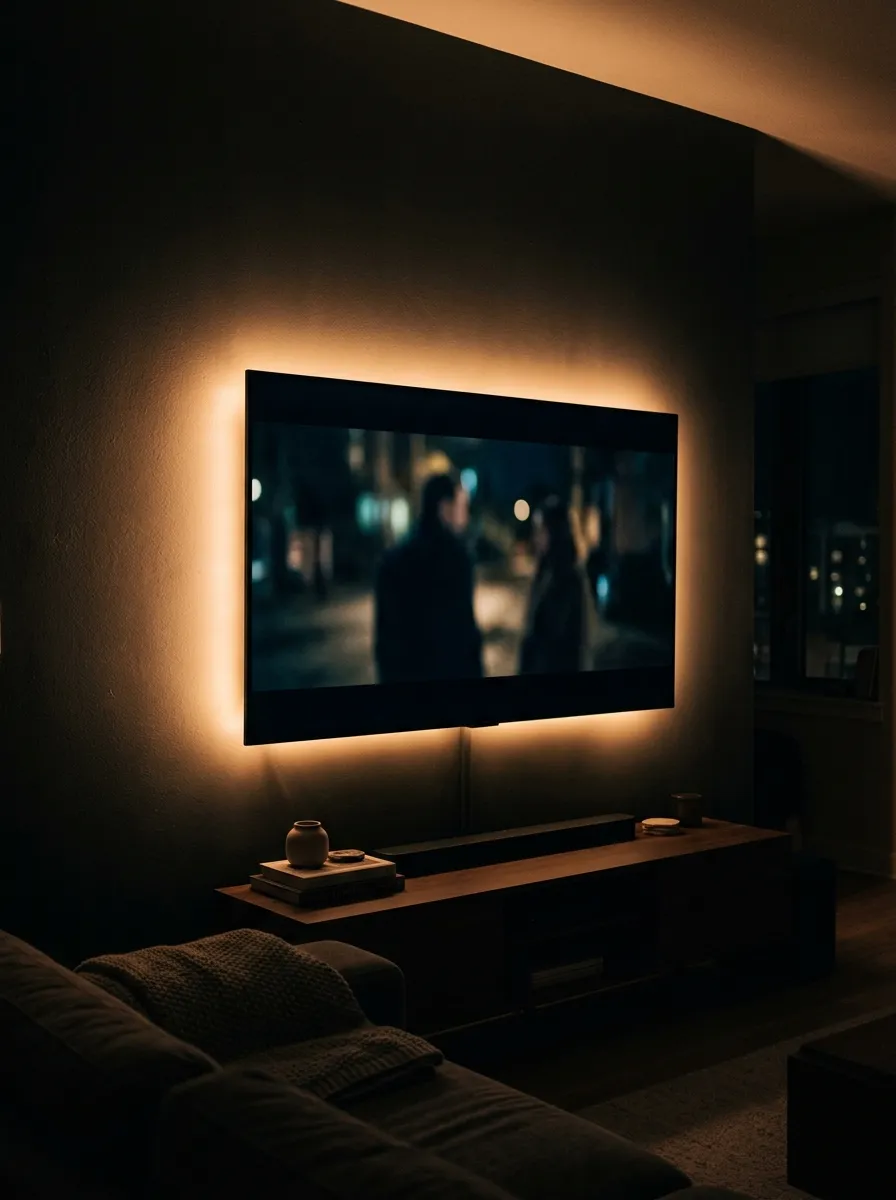
LED strips behind the TV are a low-cost change that completely transforms how the wall feels at night.
You stick the LEDs directly to the back edges of the TV. The light spills onto the wall behind the screen and creates a soft, glowing halo. It looks like something from a high-end home theater setup.
Why it works: The backlight reduces eye strain when watching TV in a dark room, and the glow adds ambient warmth that makes the whole space feel cozy.
Cost: $10 to $25 for a quality LED strip kit. Most come with a remote control and multiple color options. Look for “TV bias lighting” or “LED backlight strip” on Amazon — the Govee and Philips Hue Play options are popular and reliable.
Stick-on installation takes about 10 minutes. Peel the backing, press the strips to the back of the TV frame, and plug into a USB port on the TV itself so the light turns on and off with the screen.
For a clean look, choose warm white or a soft amber tone. Bright RGB cycling colors look fun but can clash with your decor.
This is a small detail that people always notice and ask about. For less than $20, it makes a significant visual impact.
12. Hang a Woven or Textile Wall Hanging Near the TV
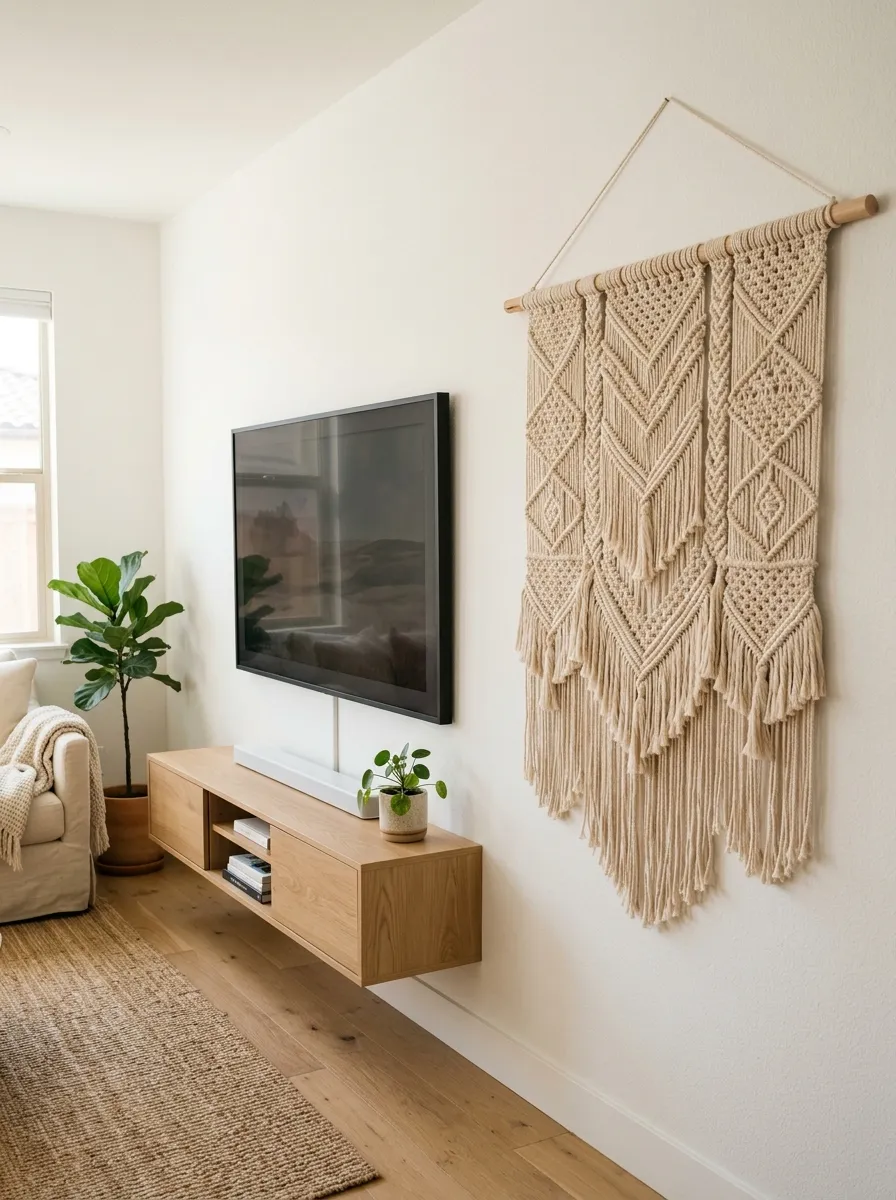
Textile art adds something to a TV wall that prints and plants cannot — softness and dimension.
A woven wall hanging, macramé piece, or fabric tapestry introduces texture and warmth without making the wall feel busy.
Position it to one side of the TV rather than above it. It fills the empty wall space, adds visual interest, and balances the hard rectangular shape of the screen.
What to look for: simple patterns, natural materials (cotton, jute, wool), neutral colors. You want something that adds warmth without screaming for attention.
Budget option: Macramé wall hangings are widely available on Etsy for $20 to $60. Or make your own — beginner macramé kits cost $15 to $25 and basic knot patterns are easy to learn in an afternoon.
Another option is a simple woven tapestry. World Market, IKEA, and H&M Home all carry affordable options starting around $20 to $30.
Keep the rest of the wall relatively clean when you add a textile piece. The texture itself is the statement. It does not need much supporting cast.
The softness of woven fibers also helps with acoustics — a small but nice bonus in a room where sound quality matters.
13. Build a Simple DIY TV Frame
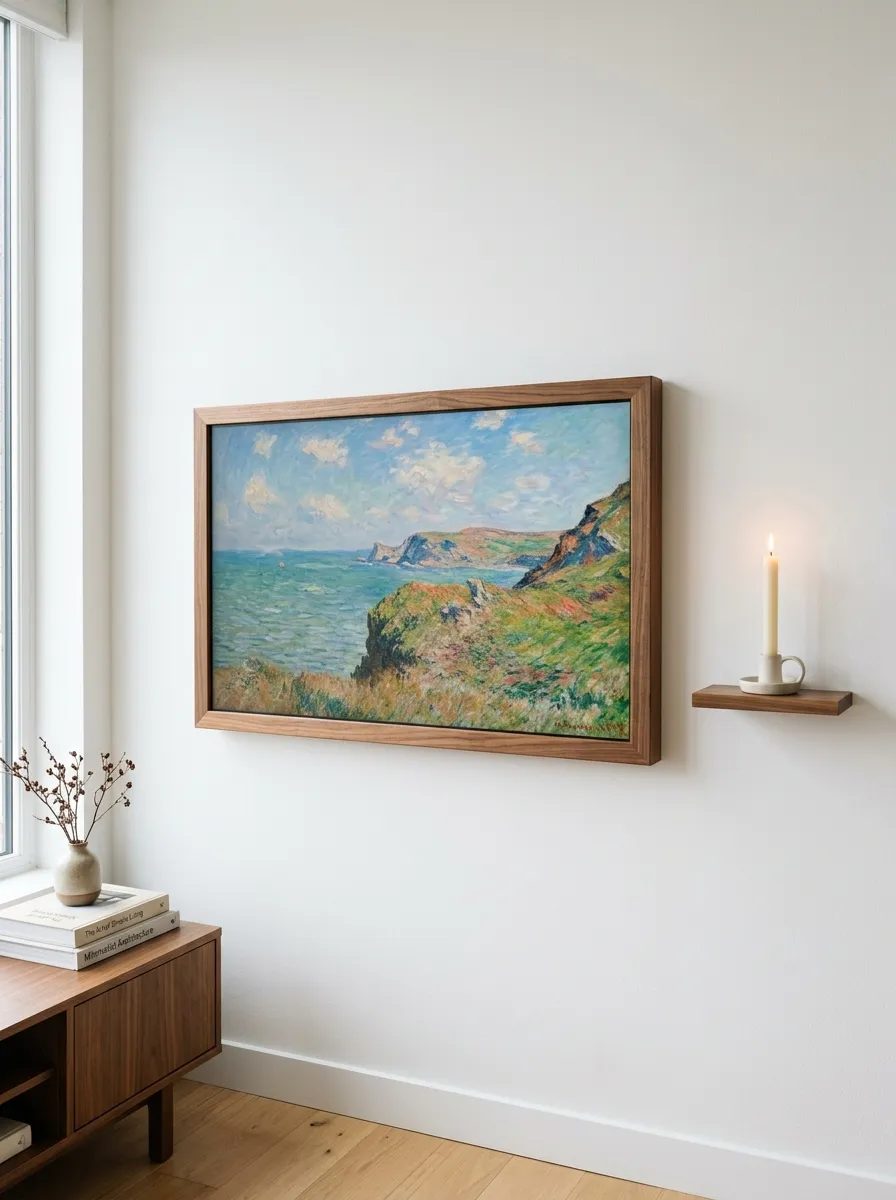
A frame around the TV makes it look more like a piece of art and less like a black rectangle dominating the room.
Samsung sells the Frame TV specifically for this purpose, but you can achieve the same effect yourself for much less.
DIY approach: Buy thin wooden molding or picture frame strips at a hardware store. Cut them to fit around your TV using a miter box (cost: $10) for clean 45-degree corners. Glue or nail together and mount around the screen. Total material cost: $20 to $40.
Paint or stain the frame to match your room. A black frame helps the TV disappear into the wall. A white or natural wood frame makes it look more like a gallery piece.
The frame does not have to be thick. A 1.5 to 2-inch wide molding is enough to visually define the TV and change how it reads in the room.
For an even simpler version, use foam crown molding — it is lightweight, paintable, and cuts with a regular utility knife.
This is one of those changes that looks like it cost far more than it did. Guests often assume it is a Samsung Frame TV and are surprised to learn the frame is homemade.
14. Use a Projector Instead of a TV for a Cleaner Wall
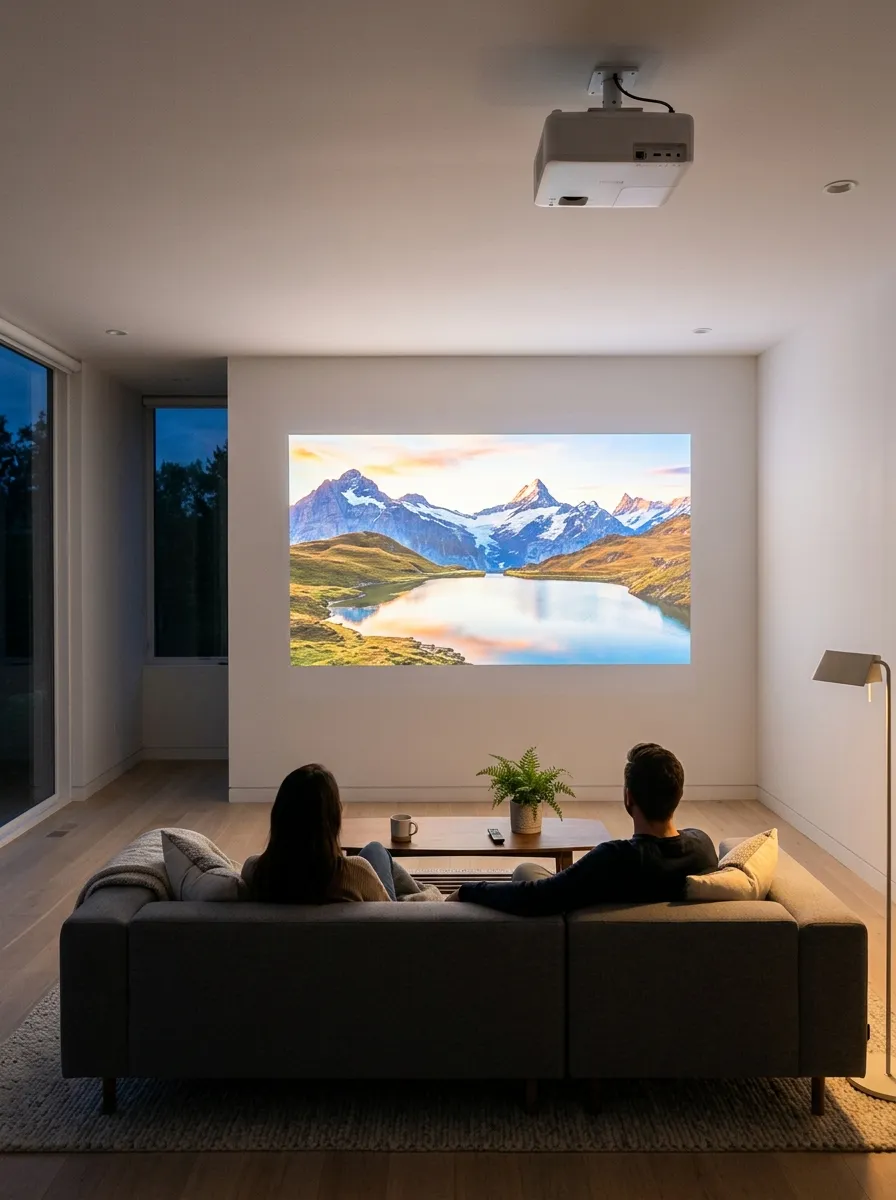
If you find the TV itself to be the clutter problem, removing it entirely is a real option.
A ceiling-mounted mini projector and a smooth white or light gray wall gives you a big screen experience — with zero black rectangle on your wall when the show is over.
Modern mini projectors have improved dramatically. The XGIMI Halo, BenQ GP20, and Anker Nebula are popular compact options that project bright, clear images in most room conditions. Prices range from $200 to $600.
When the projector is off, your wall is just a wall. You can hang art on it, decorate around it, or leave it completely bare. The room has a completely different feel.
This works especially well in living rooms that you also use for other purposes — reading, working, socializing. The TV is not the permanent focal point; it only appears when you want it.
Practical note: You will need a slightly dim room for the best picture quality. Blackout curtains or blinds help if your room gets a lot of direct sunlight.
This is the most dramatic change on this list. But if a clean, tech-free-looking living space is the goal, it is the most effective solution.
15. Add a Thin Ledge Below the TV for Rotating Decor
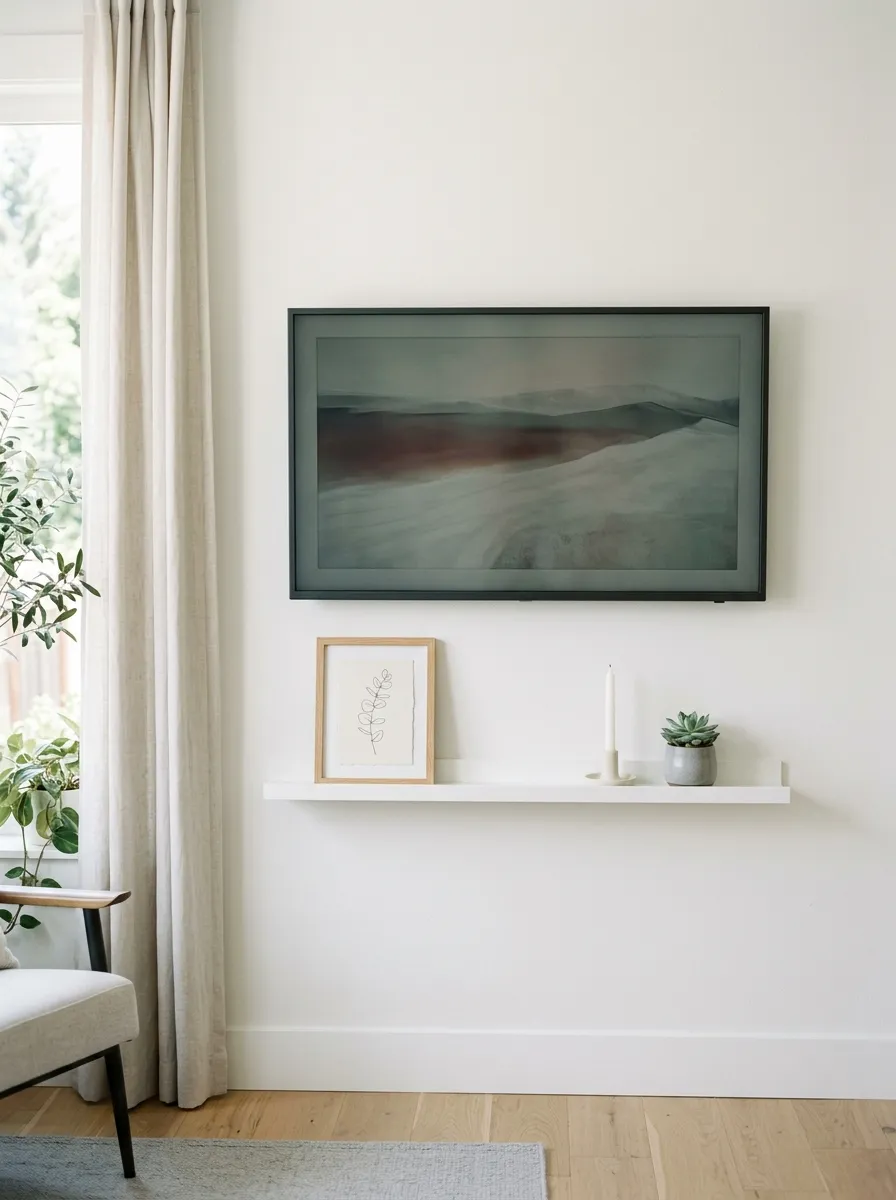
A picture ledge — a shallow shelf with a small raised lip — mounted directly below the TV is one of the most practical decor tools on this list.
It gives you a place to prop small framed art, candles, plants, and objects without drilling additional holes. You can rotate the items on the ledge whenever you want a fresh look without touching anything else.
IKEA MOSSLANDA is the go-to option here. It costs $9 to $12, comes in white and wood tones, and is deep enough to hold most small objects securely.
Mount it at the same height where a TV stand shelf would be — about 12 to 18 inches below the bottom of the TV. This fills the visual gap between the screen and the floor without needing a full console.
What to style on it: a small framed photo, one or two tapered candles, a tiny plant, a stack of two small books. That is usually enough. Three to five objects max.
The ledge works especially well if you have already solved your cable management problem. Without cords to hide, you do not need a large media console — the ledge handles the decorative job on its own.
Seasonal updates are easy too. Swap in autumn-colored objects in October, clean white objects in January, and the wall feels current without any major effort.
16. Install Sconce Lights on Either Side of the TV
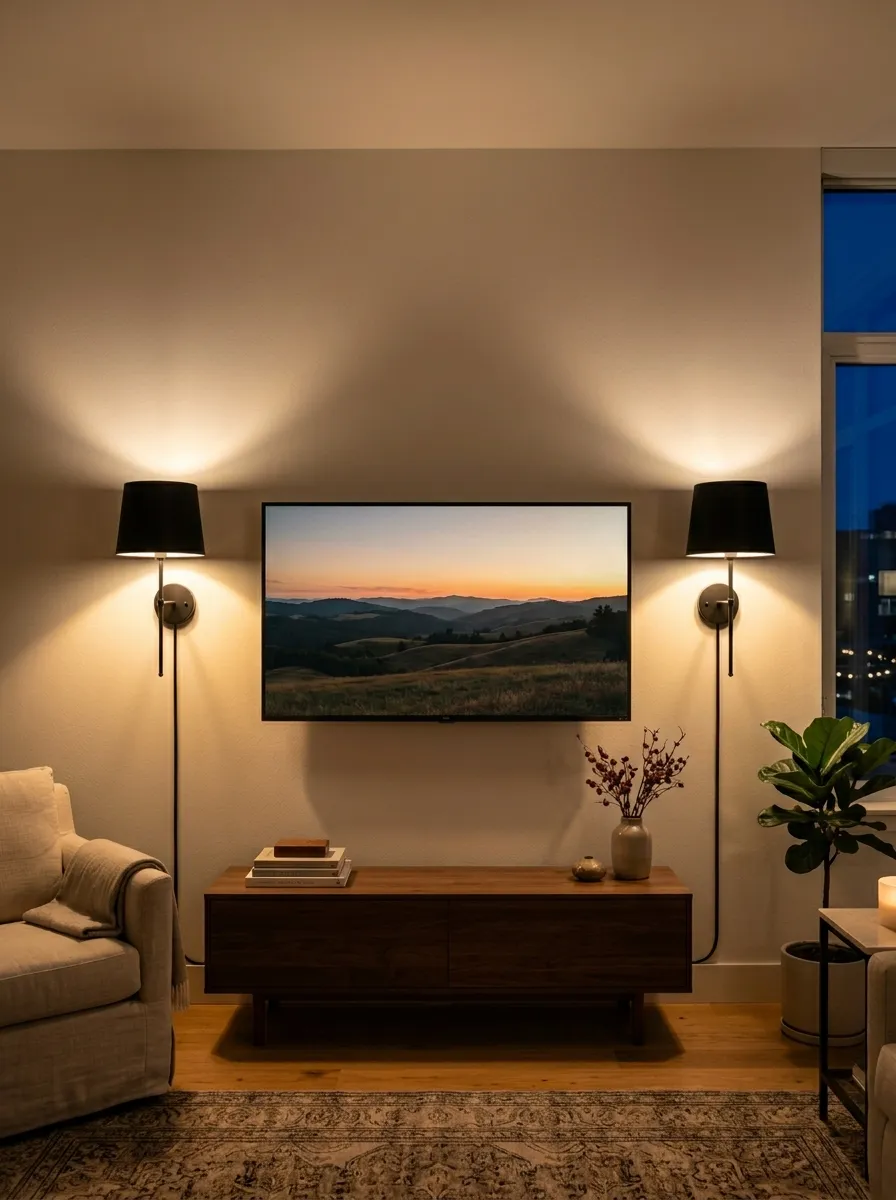
Wall sconces on either side of the TV accomplish two things at once: they light the room beautifully and they visually frame the screen.
This is a classic design trick used in high-end interiors. The sconces become part of the TV wall composition, not just functional lights.
Plug-in sconces are the easiest option. They do not require an electrician — just mount on the wall and plug into a nearby outlet. Drape the cord behind a thin raceway or tuck it behind furniture.
Cost: $30 to $80 per sconce depending on the style. Look for matching pairs.
What style works: Simple drum shades, minimalist black arms, or clean brass designs all look intentional. Avoid overly ornate or rustic styles unless that matches the rest of your room.
Mount the sconces at roughly eye level when seated — about 48 to 60 inches from the floor. This puts the light at the right height for the room.
Use bulbs with a warm color temperature — 2700K to 3000K. This creates a soft, amber glow that makes the whole space feel more inviting.
Once the sconces are up, you may find you barely need your overhead lights. The wall-level lighting creates a completely different atmosphere.
17. Mount the TV Inside a Built-In Bookcase
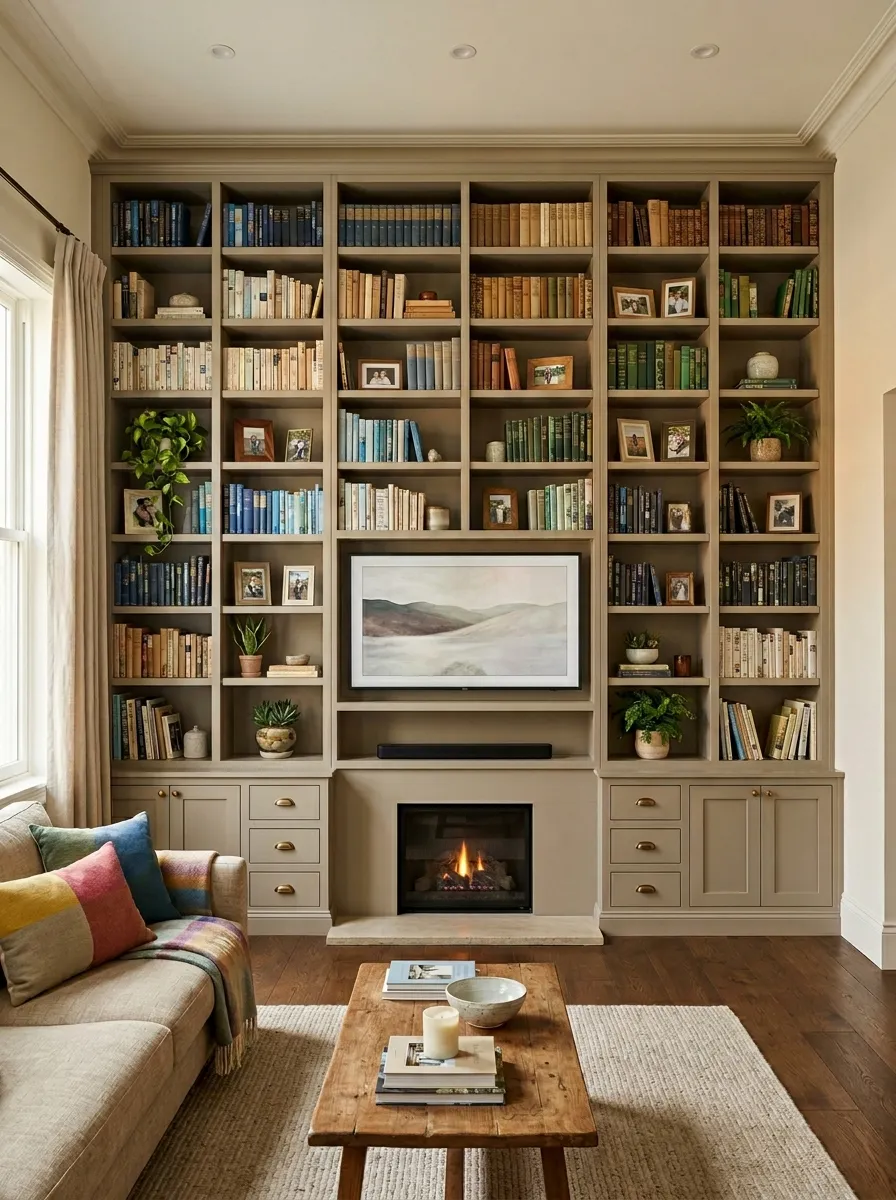
[Image Prompt: A floor-to-ceiling built-in bookcase with a flat-screen television integrated into the center section, surrounded by open shelves filled with neatly arranged books, small framed photos, and a few potted plants. The bookcase is painted a warm greige, the TV recessed slightly. Shot straight-on, wide angle, full bookcase visible, soft interior lighting, cozy and architectural feel.]
Surrounding the TV with built-in shelving makes it look like a planned architectural feature rather than a screen mounted on a blank wall.
Full floor-to-ceiling bookcases with the TV integrated into the center section are common in professionally designed interiors. But you can replicate this look with freestanding units positioned strategically.
IKEA Billy bookcases are the budget-friendly classic here. Buy two matching units, place them on either side of the TV, and mount the TV on the wall between them. Paint all three sections — bookcases and wall behind TV — the same color. This unifies everything into what looks like a single built-in unit.
Total cost for this IKEA hack: $200 to $400 depending on the size and number of bookcases used.
Fill the shelves with books, plants, artwork, and objects. Keep roughly 30 to 40 percent of the shelf space open — visible breathing room stops it from feeling like storage.
Key styling tip: Alternate between horizontal book stacks and upright stacks. Add one non-book item for every three to four books. This keeps the shelves feeling curated rather than utilitarian.
The bookcase approach works especially well in living rooms that also serve as home offices or reading spaces. The TV becomes one piece of a larger functional and visual story.
18. Create a Minimalist TV Nook with Dark Paint
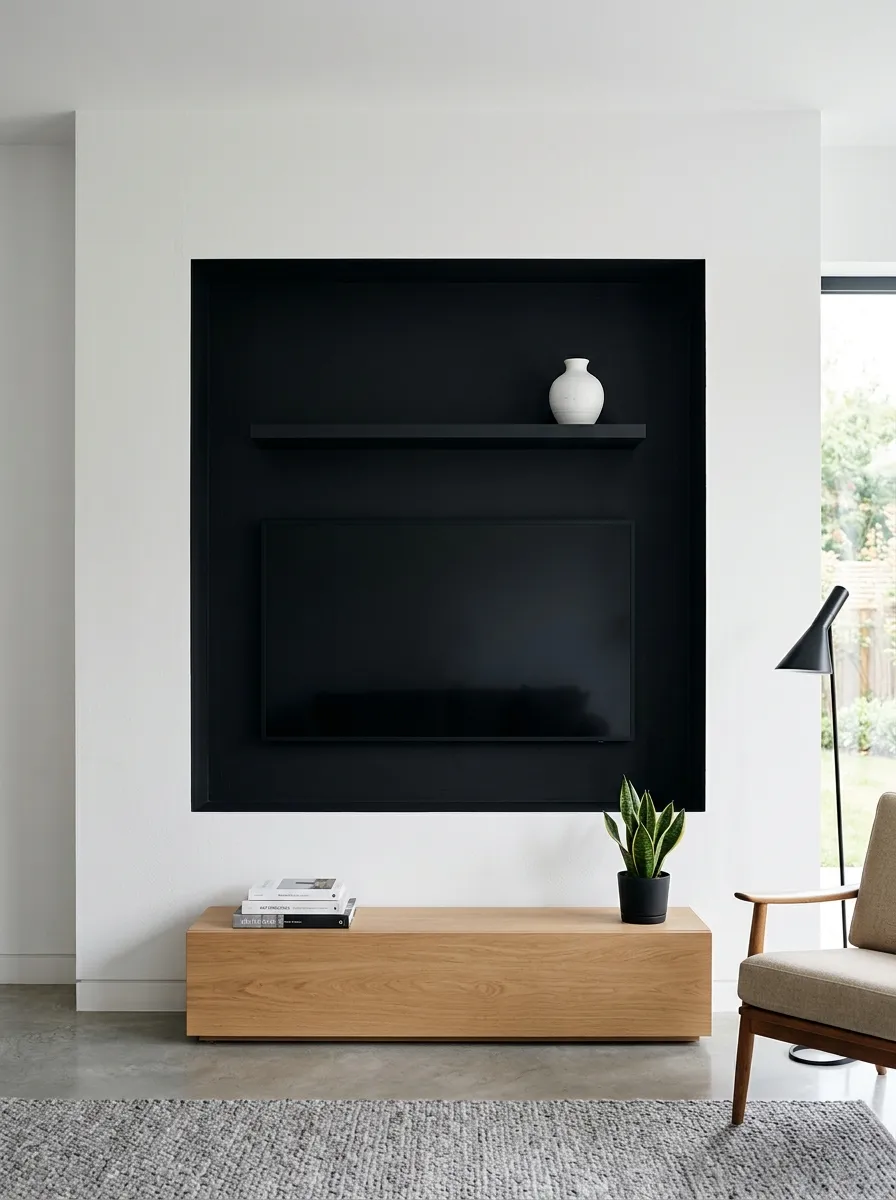
Painting the inside of a recessed nook or even just a defined rectangular area behind the TV in deep matte black or very dark charcoal makes the TV practically disappear.
The screen’s dark bezel blends into the dark wall. Suddenly the TV is not the visual anchor of the room anymore — it is just there when you need it.
This is a trick interior designers call “hiding in plain sight.” The TV does not go away. It just stops competing for attention.
You can create this effect without a physical nook. Simply paint a rectangle on a flat wall — roughly the same proportions as the TV, slightly larger — in a deep dark color. The TV mounts in the center of this rectangle.
Cost: A quart of matte dark paint costs $10 to $20. This is one of the cheapest changes on the list.
Keep the decor in and around this zone very minimal. One or two small objects. Nothing bright or busy. The power of this look is restraint.
When the TV is on, you see the screen. When it is off, you see a calm, dark rectangle that reads more like a design choice than a piece of consumer electronics.
19. Style the Media Console Like a Tabletop Vignette
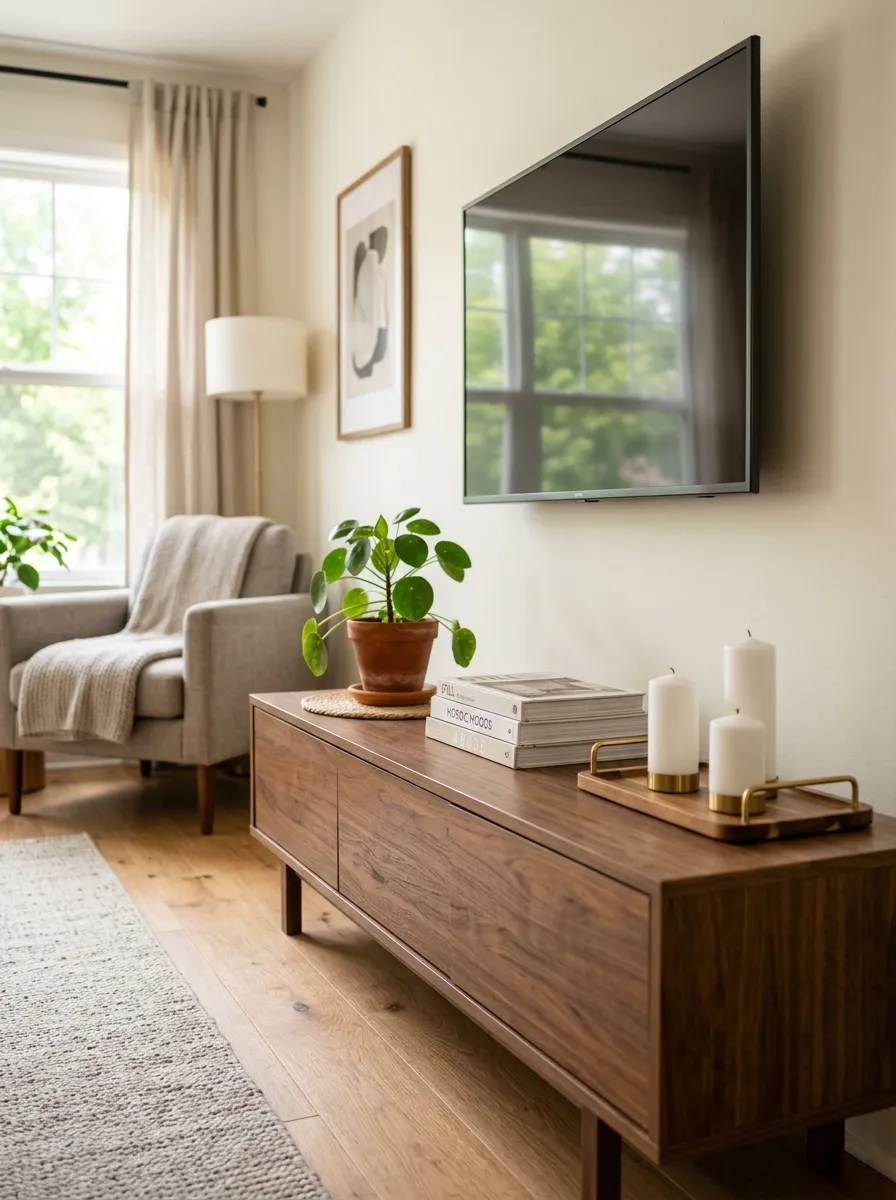
The surface of your media console is prime real estate for making the TV wall look styled and intentional.
Most people put a cable box, game controllers, and random remotes on the console and call it done. That is understandable — but it is also what makes TV walls look messy.
The goal is to treat the console surface like a tabletop vignette: a small, intentional arrangement of a few carefully chosen objects.
A good formula: one plant (adds life), one tray (corrals small items), one stack of books (adds height and color), and one candle or sculptural object (adds interest). That is usually four items total — and one of them hides the clutter inside it.
Put remotes and controllers in the tray or a small basket inside the console. Out of sight, easily accessible.
Height variation matters. Put your tallest object (plant or candle) at one end, medium-height items in the middle, and lowest items at the other end. This creates a gentle arc that is pleasing to look at.
This takes 20 minutes and costs nothing if you already have the objects at home. It is one of the most immediate upgrades you can make to your TV wall without spending a dollar.
20. Use Symmetry as Your Core Design Principle
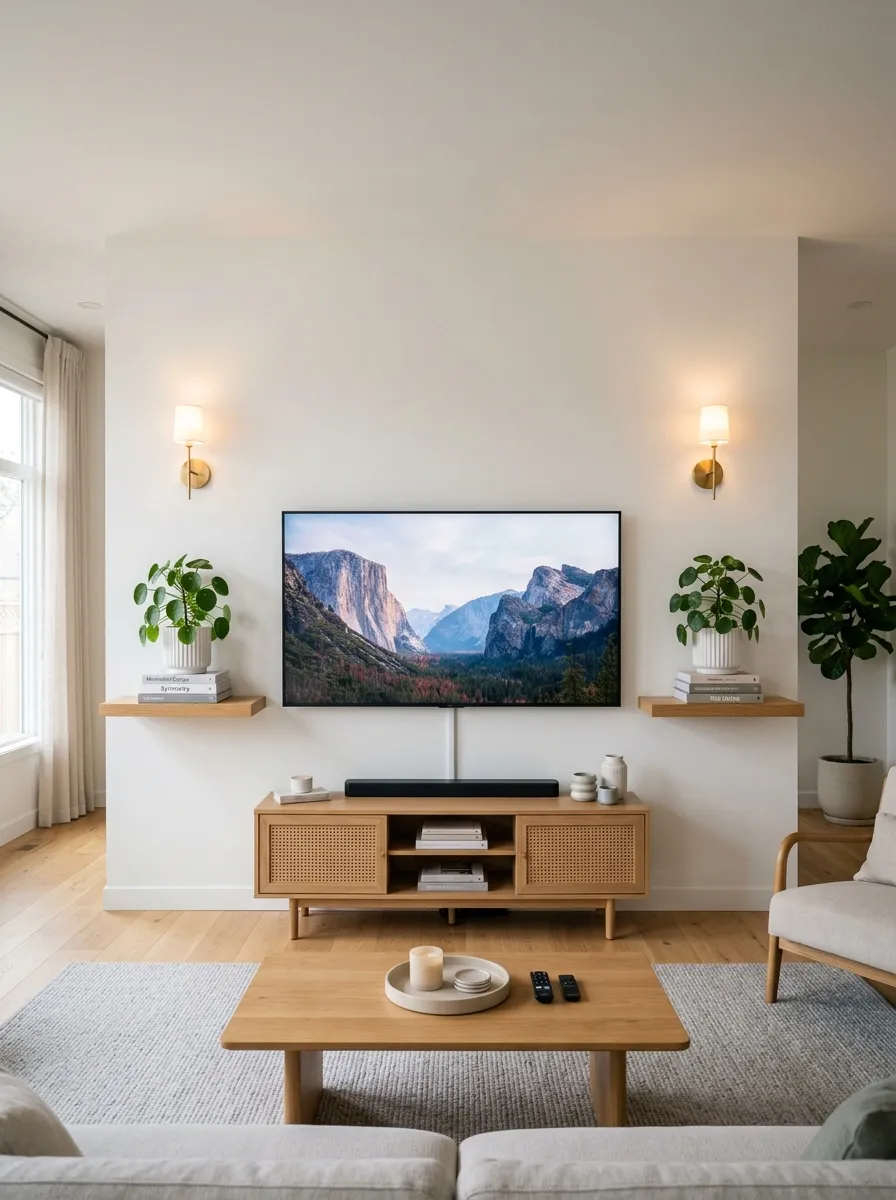
When in doubt about how to style your TV wall, choose symmetry. It is the simplest, most foolproof design principle available.
A symmetric TV wall means everything on the left mirrors what is on the right. Same shelf on each side. Same plant in the same type of pot. Same sconce light. Same number of objects.
This creates instant visual calm. The eye reads symmetrical arrangements as orderly and intentional. It does not require a large budget or strong design instincts — just matching pairs and a measuring tape.
How to execute it:
Mount the TV exactly in the center of the wall. Measure carefully.
Place matching floating shelves at the same height on both sides.
Use the same decorative objects on each shelf or objects of similar visual weight.
Add matching lighting on each side if the wall is wide enough.
Budget approach: Buy two of the same small shelf ($8 to $15 each at IKEA), two of the same small plant in matching pots ($5 to $10 each at a grocery store), and one matching pair of wall sconces ($30 to $60 each). Total investment: under $150.
The result looks considered and designed, even if you spent a single afternoon putting it together. Symmetry is the shortcut to a professional-looking TV wall, and it costs almost nothing extra to achieve.
Your TV Wall Can Look Great Without Spending Much
The biggest takeaway from all 20 of these ideas is simple: small, deliberate choices beat big, expensive overhauls every time.
You do not need to renovate. You do not need to hire anyone. And you definitely do not need to spend thousands of dollars.
Start with cable management, hide those cords. Then pick one or two ideas from this list that match your current space, your budget, and your taste. Add a ledge. Hang one large piece of art. Paint the wall a deeper color. Add a trailing plant on a small shelf.
Each small step makes the next one easier. Before long, your TV wall looks like you actually thought about it because you did.
The best TV wall decor is not the most elaborate one. It is the one that makes the room feel calm, balanced, and like it belongs to someone who cares about their space. You can get there with a few afternoons, a trip to a home store, and a willingness to edit rather than add.
Pick one idea and start today.