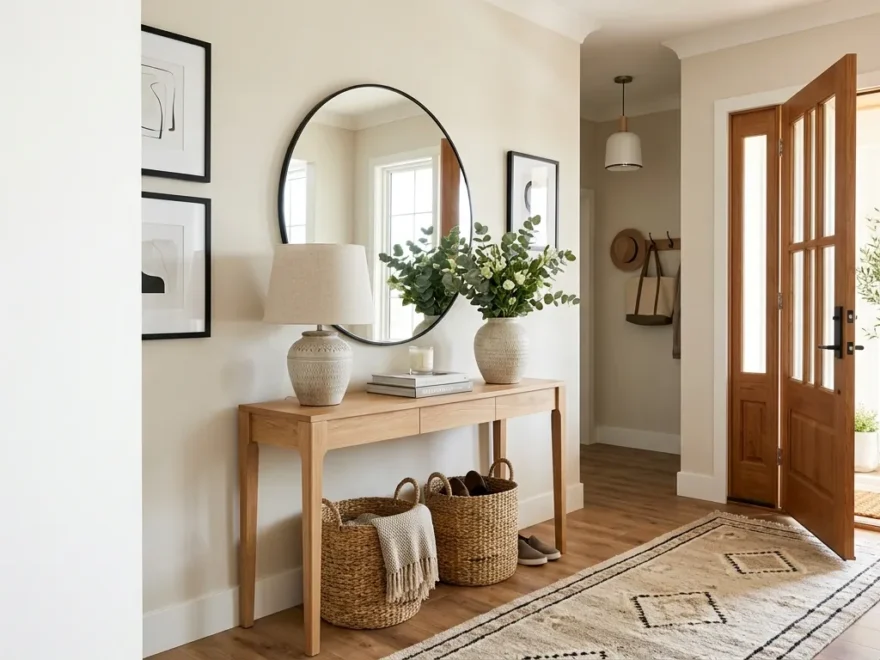
Your front door opens into more than just a hallway. It sets the mood for everything that comes after. Guests form an opinion in the first few seconds, and that opinion often starts with what they see in your entryway. A well styled entrance says something about who you are before you say a single word. This list is packed with simple, affordable ways to turn a plain entryway into a space that feels warm, organized, and full of personality. Whether you’re working with a tiny apartment hallway or a full sized foyer, these ideas will help you get a great first look without spending a fortune.
1. Add a Statement Mirror
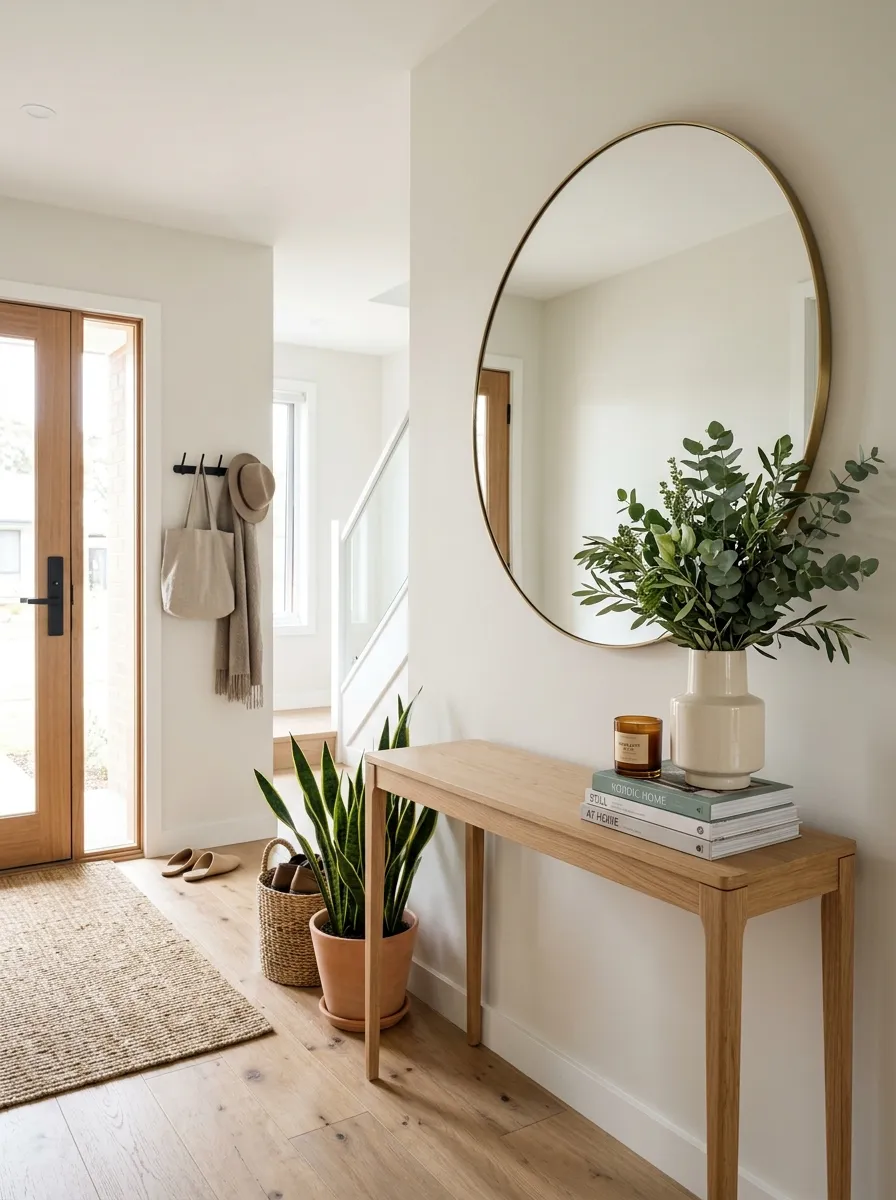
A mirror does double duty near your front door. It reflects light and makes a small space feel larger. It also gives you and your guests one last check before heading out.Pick a mirror with a shape that stands out. Round, arched, or sunburst styles add personality without much effort. Hang it at eye level so it feels natural to glance at.
Budget tip: Thrift stores and yard sales often have solid wood or metal frame mirrors for a few dollars. A coat of spray paint can update an old frame in an afternoon.
If you already own a plain mirror, try wrapping the frame in rope or thin wood trim for texture. This is a weekend project that costs less than ten dollars and gives the piece a custom look.Placement matters too. Position the mirror across from a window if possible. This bounces natural light into the hallway and brightens the whole area during the day.
2. Set Up a Small Console Table
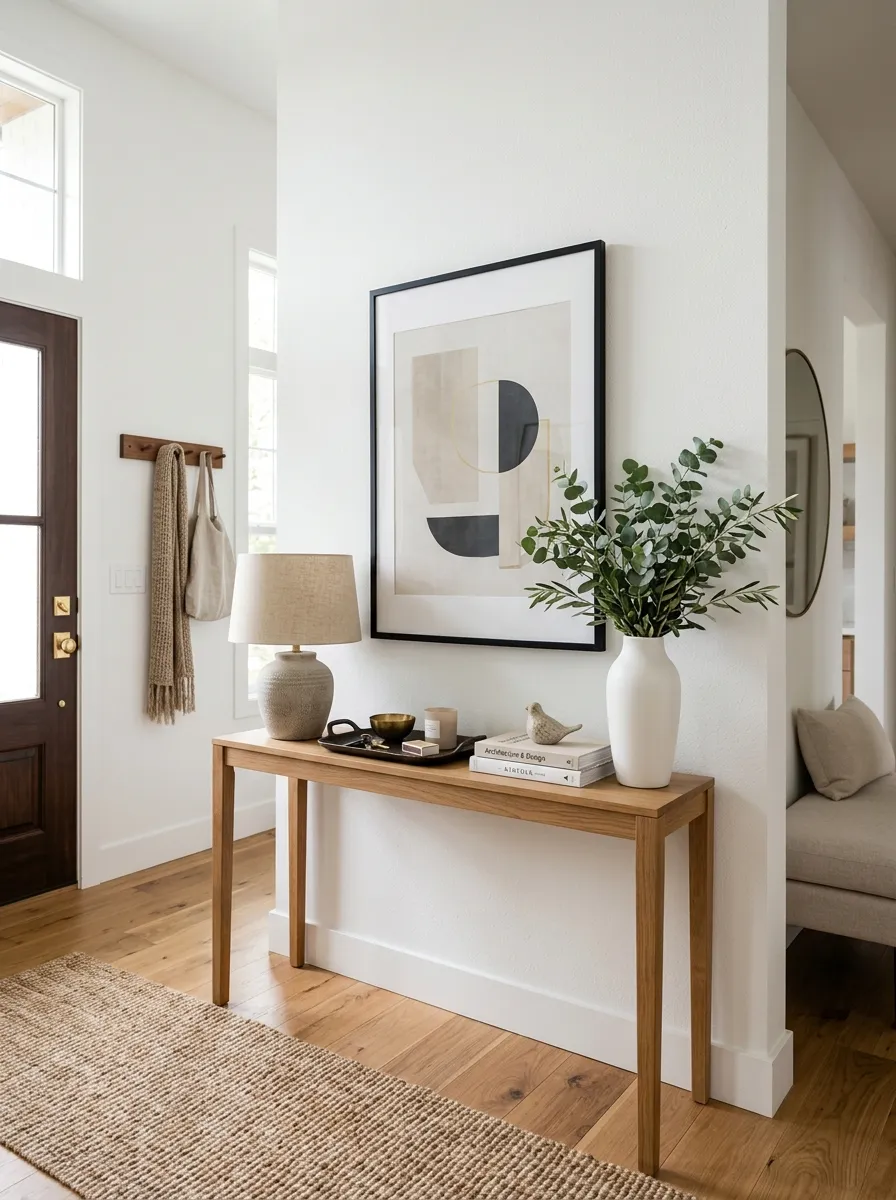
A console table anchors the entryway and gives you a spot to drop keys, mail, or sunglasses. It also creates a surface for styling with small decor pieces.Choose a table that fits the width of your space. Narrow tables work well in tight hallways, while wider ones suit open foyers.
Budget tip: Secondhand furniture shops often carry console tables at low prices. A simple wipe down and new drawer pulls can make an old piece look brand new.
If space is tight, a slim floating shelf works as a stand-in for a console table. It takes up almost no floor space and still gives you a spot to style. Keep the top simple. A tray, a small lamp, and one decorative object is plenty. Too many items make the space feel cluttered instead of welcoming. This is one of the easiest sitting room decor ideas to maximize style in a small space without sacrificing functionality or comfort.
3. Layer a Textured Rug
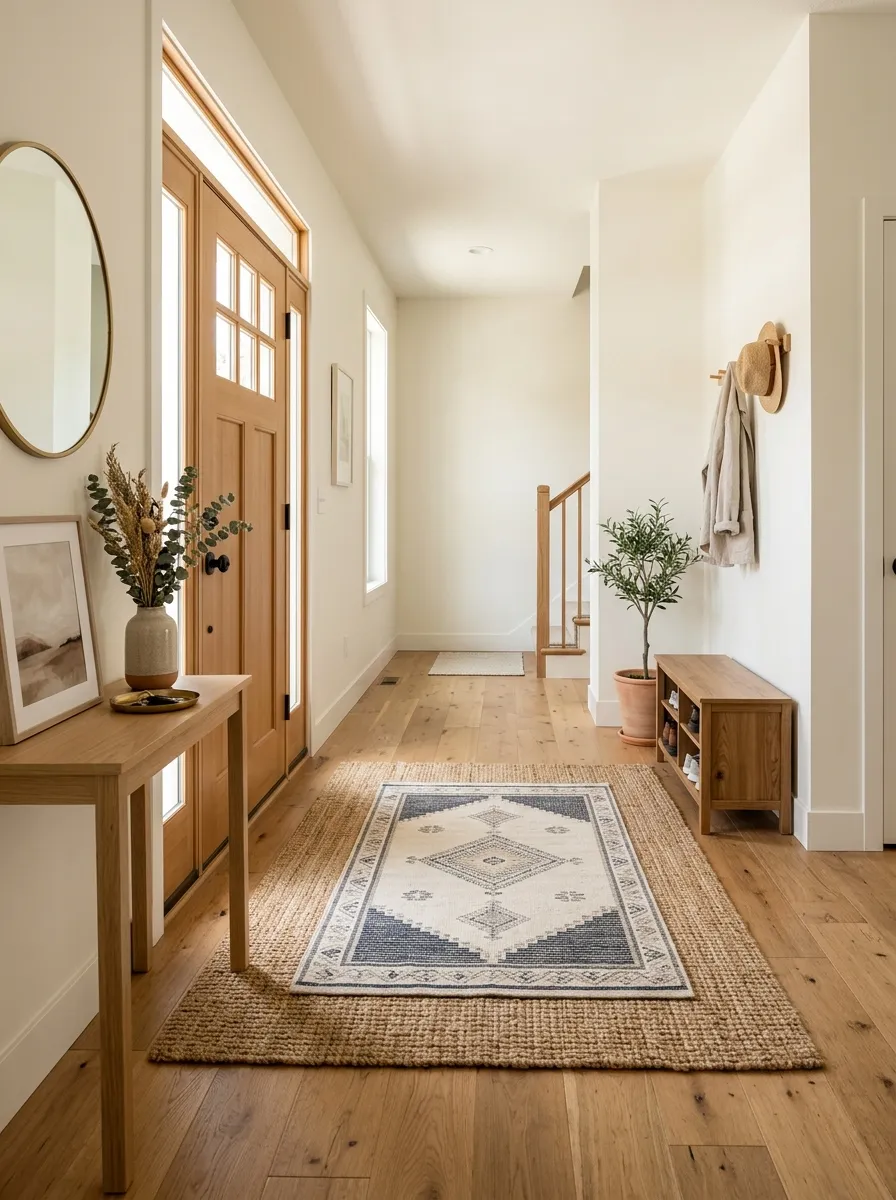
A rug softens the entryway and adds warmth underfoot. It also helps trap dirt and moisture before it spreads into the rest of the house.Look for a durable material like jute or a flat weave cotton. These handle foot traffic better than plush styles.
Budget tip: Discount home stores often carry entryway sized rugs under thirty dollars. Layering a smaller printed rug over a plain jute base is an easy way to add pattern without buying an expensive piece.
Size matters here. The rug should be large enough that both feet land on it when someone steps through the door.Rotate the rug every few months if it gets heavy foot traffic. This keeps wear even and extends its life. Washable rugs are a practical pick for entryways since spills and mud are common in this spot.
4. Install Wall Hooks for Coats and Bags
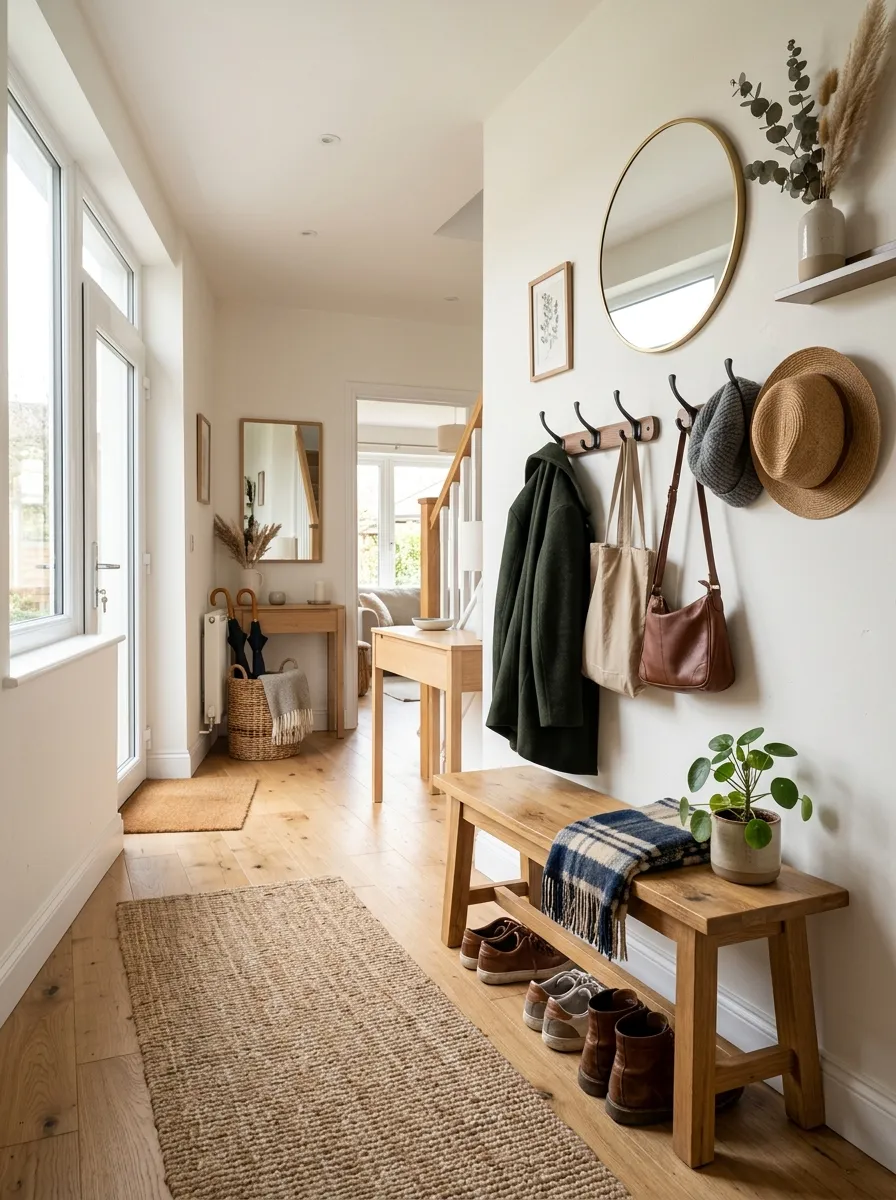
Wall hooks keep coats, bags, and scarves off the floor and off chairs. This one change can make an entryway look tidy in seconds.Choose hooks that match your hardware finish, like brass, black, or brushed nickel, for a cohesive look.
Budget tip: A pack of basic hooks from a hardware store costs very little and takes minutes to install with a drill. Wood scrap can even be turned into a rustic hook rail with a few screws.
Mount hooks at different heights if multiple people share the space. Lower hooks work well for kids so they can hang up their own things.Grouping three to five hooks in a row looks intentional and neat. Spacing them evenly, about six inches apart, keeps the layout clean and functional rather than random.
5. Bring in a Live Plant
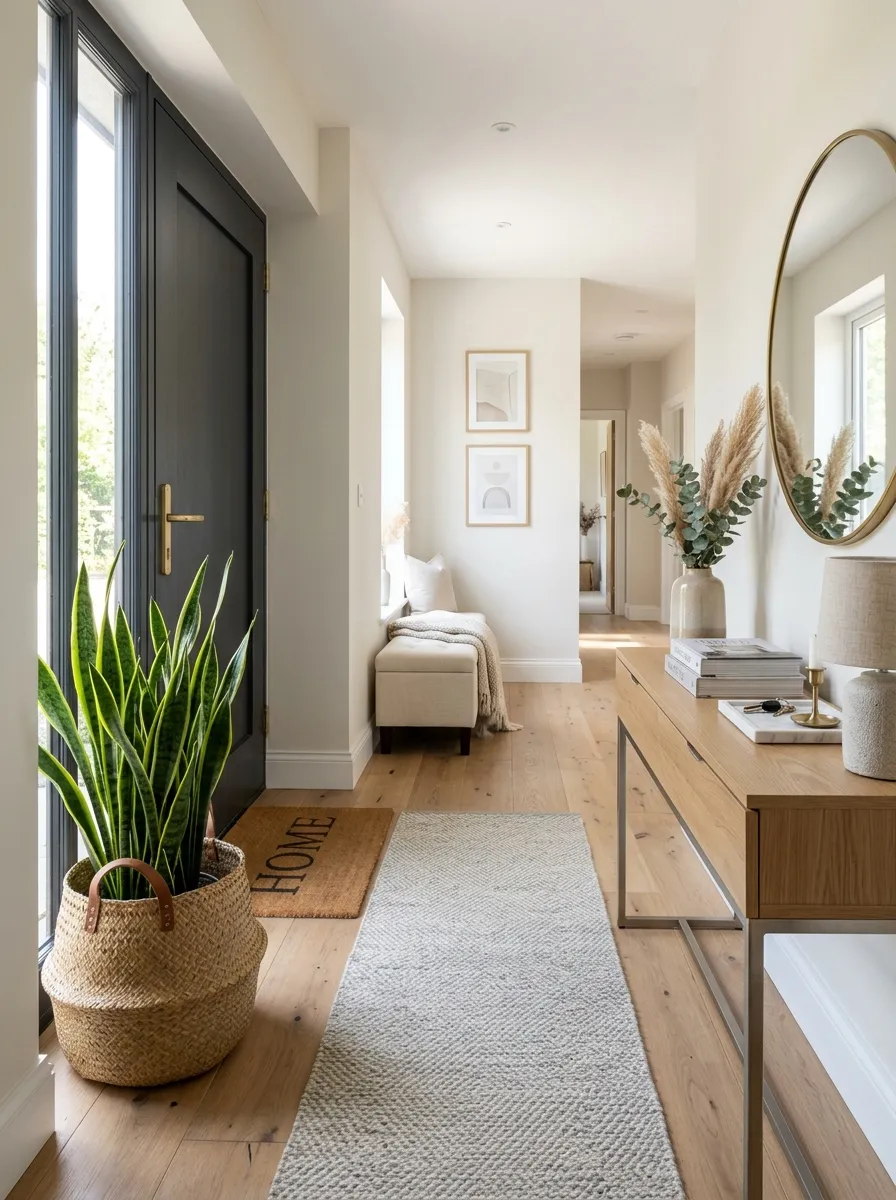
Plants add life and color to an entryway. Even one plant can soften a space that feels bare or sterile.Pick a low maintenance option like a snake plant or pothos if your entryway gets limited light.
Budget tip: Many hardware stores sell small potted plants for under ten dollars. Propagating a cutting from a friend’s plant is a free way to fill an empty corner.
Place the plant on the floor in a woven basket planter for texture, or set a smaller pot on your console table.Rotate the plant toward the light source every week or two if your entryway only gets light from one direction. This keeps growth even and the plant looking full rather than leaning to one side.
6. Hang a Gallery of Framed Art
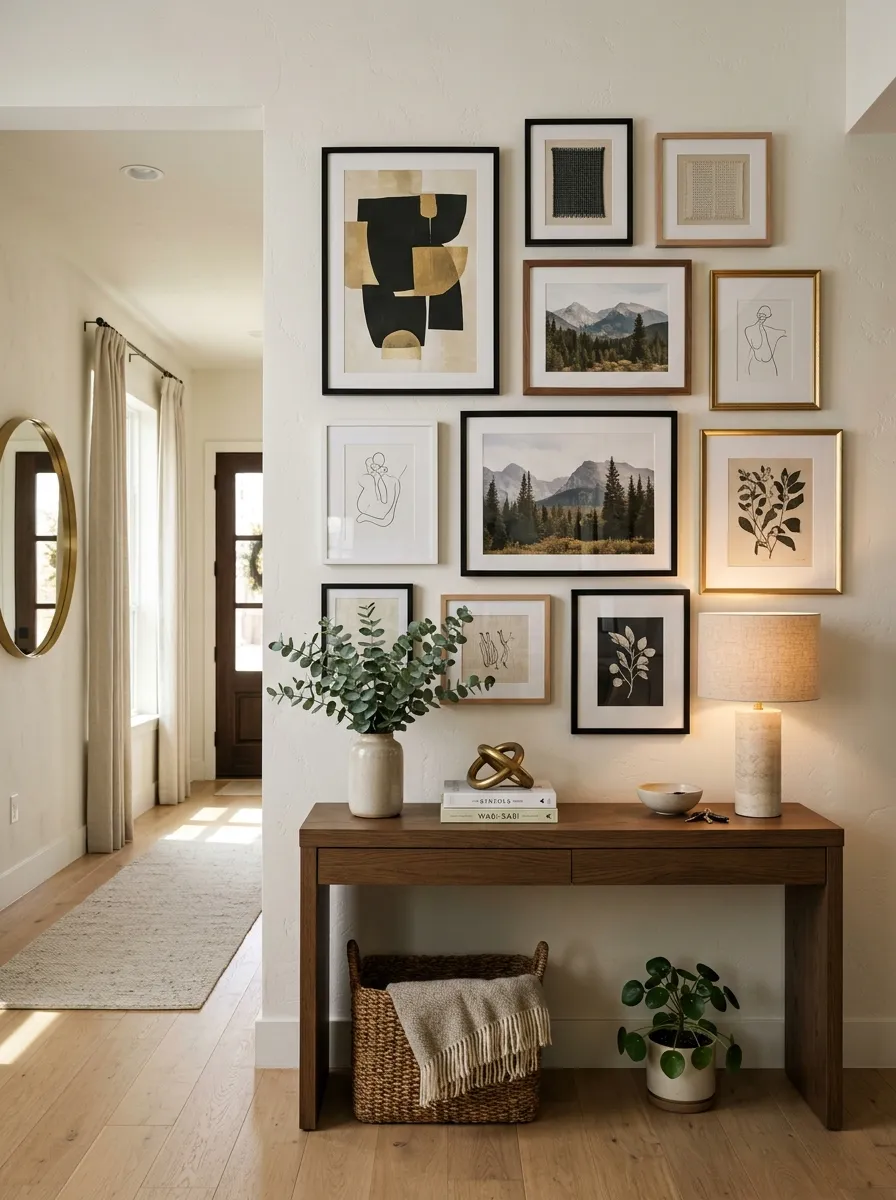
A cluster of framed pieces turns a blank wall into a visual focal point. It also gives the entryway a personal touch right away.Mix frame sizes and finishes for a collected look, or keep everything matching for a cleaner style.
Budget tip: Print free digital art from online archives and frame it in inexpensive frames from a discount store. Old family photos also work well here and cost nothing extra.
Lay the frames out on the floor first to plan the arrangement before hammering any nails. This saves your wall from extra holes.Keep about two to three inches between frames for a balanced gallery wall. A single large piece of art also works if you prefer a simpler, less busy look.
7. Add a Bench for Sitting
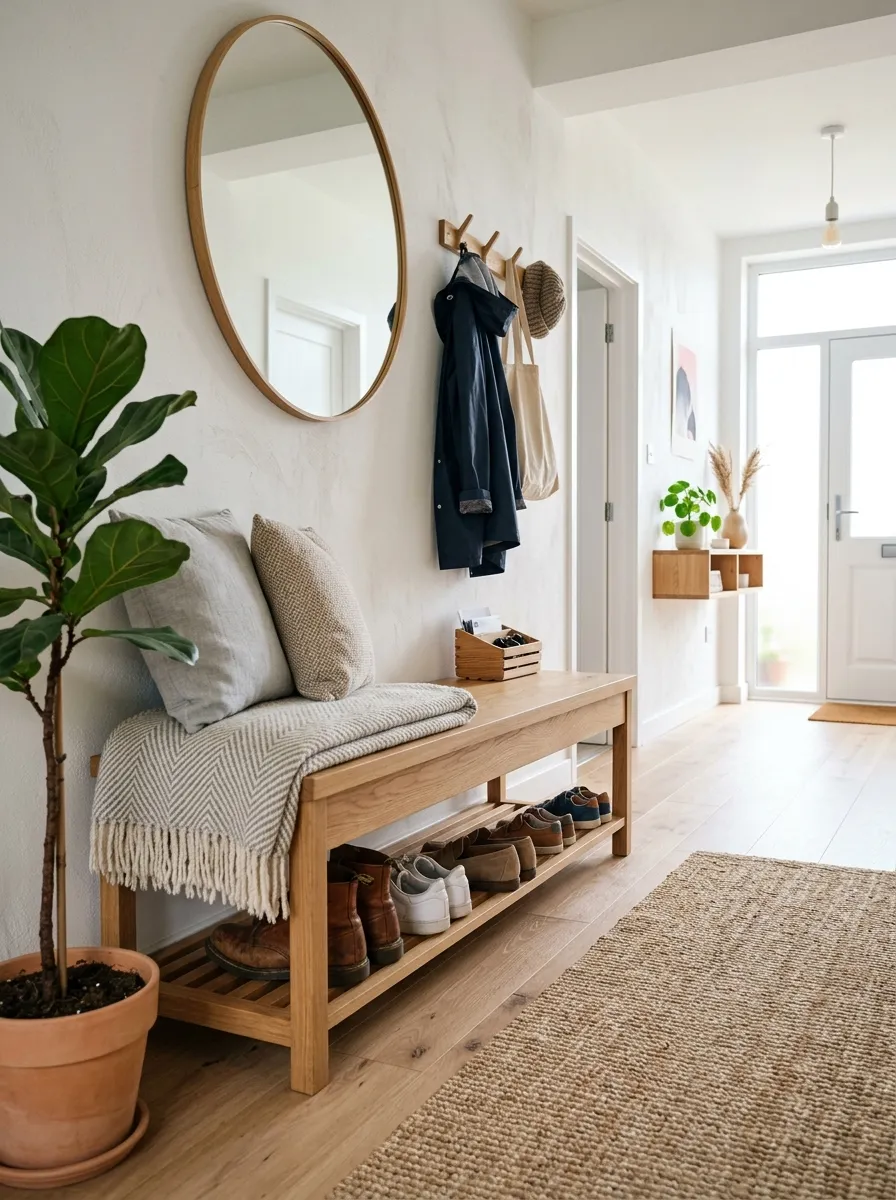
A bench gives you a spot to sit while putting on shoes. It also adds a furniture piece that breaks up empty floor space.Small entryways can use a narrow bench, while larger foyers can fit a longer style with storage underneath.
Budget tip: An old wooden stool or a repurposed low dresser can serve as a bench substitute. A cushion on top adds comfort for very little cost.
Storage benches are worth the small extra investment if you have room. They hide shoes and bags while still giving you a place to sit.Add a folded throw or a small pillow on top for softness. This makes the bench feel finished and adds a pop of color to the space.
8. Style a Decorative Tray
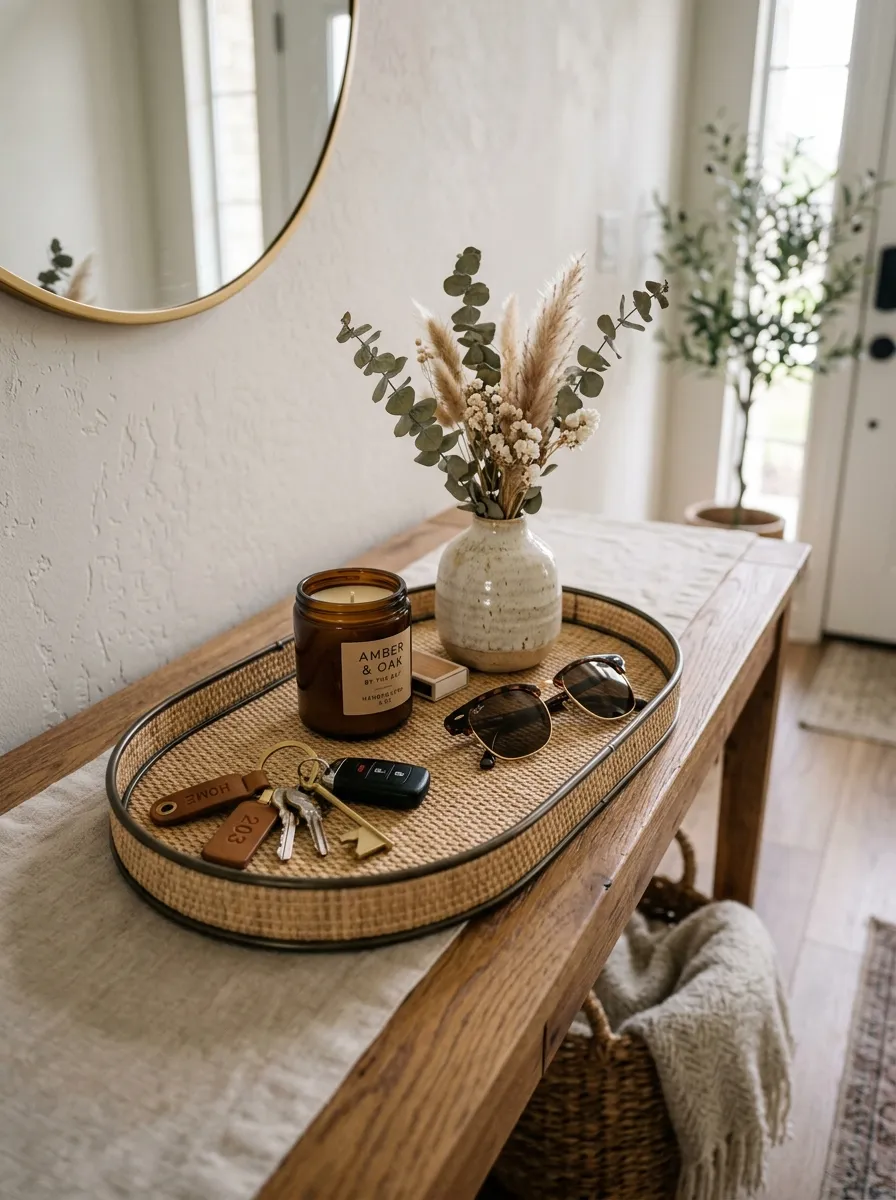
A tray keeps small items like keys, sunglasses, and mail from spreading across your console table. It also adds a styled layer to the surface.Wood, marble, or woven trays all work well and suit different design styles.
Budget tip: A thrift store serving tray can be repurposed for this exact use. A quick clean and it’s ready to go.
Group the tray with one or two small objects, like a candle or a small dish for coins. Keeping the arrangement simple avoids visual clutter.Empty and wipe down the tray once a week. This keeps it from turning into a dumping ground for random items and keeps the surface looking styled rather than messy.
9. Add a Runner in a Long Hallway
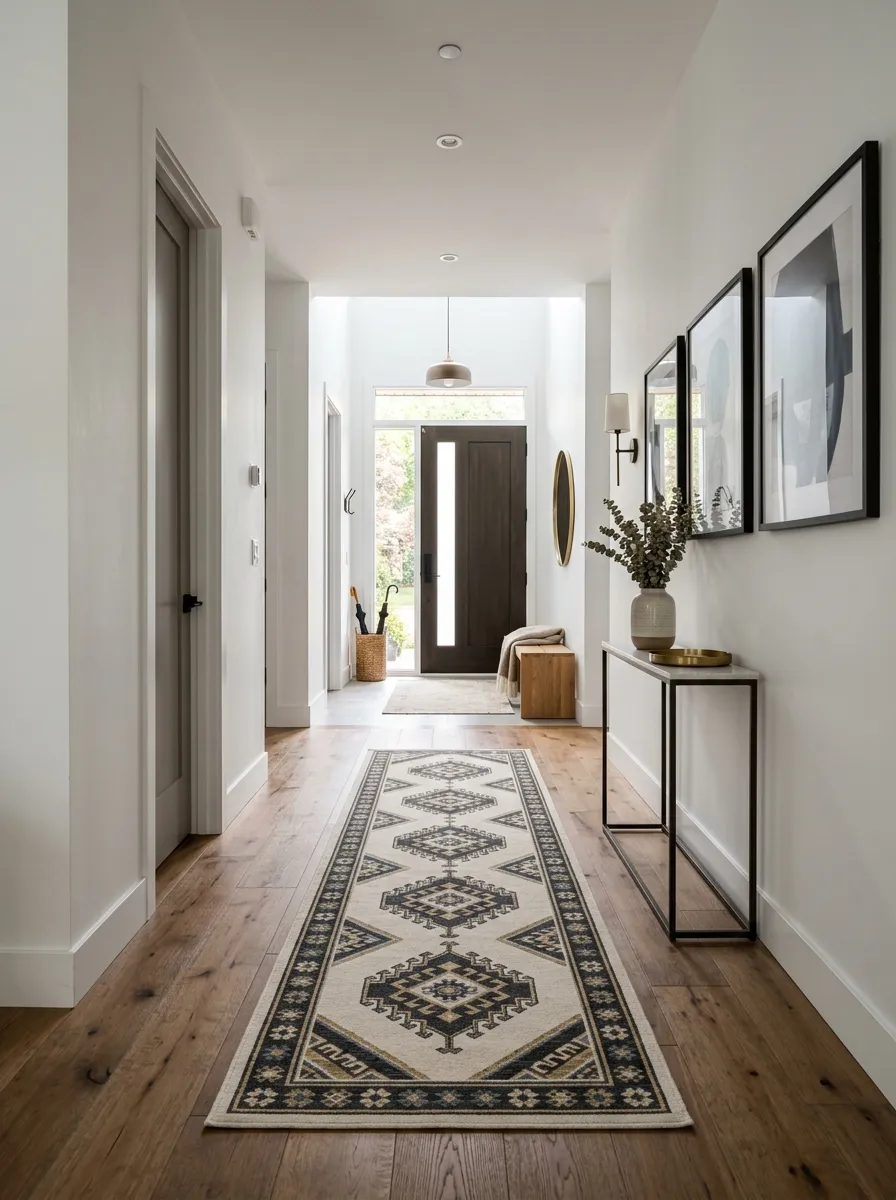
A runner rug guides the eye down a long hallway and adds pattern to an otherwise plain floor. It also protects flooring from scuffs.Choose a pattern that hides dirt well, like a busy print or a darker tone.
Budget tip: Many stores sell runners by the foot, letting you buy exactly the length you need without paying for a fixed size that might not fit.
Leave a few inches of flooring visible on each side of the runner. This creates a framed look rather than covering the floor edge to edge.Non slip pads underneath keep the runner from shifting with daily foot traffic. This small addition also makes the rug safer to walk on, especially for kids or older family members.
10. Use a Round Table for Small Spaces
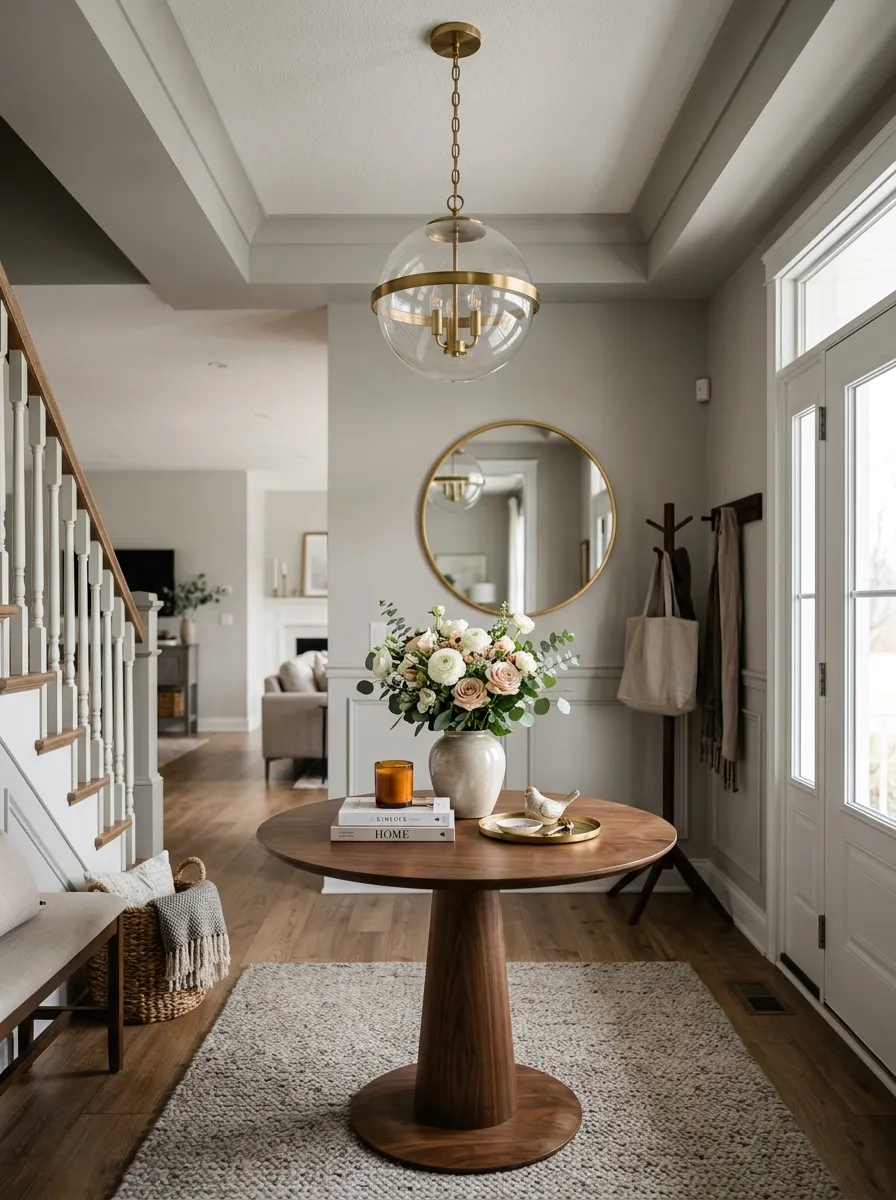
A round table takes up less visual space than a square or rectangular one. This makes it a smart pick for narrow entryways where corners can feel tight.Pedestal style round tables are especially space saving since they have no wide legs to bump into.
Budget tip: An old side table from a bedroom or living room can be repurposed as an entryway table. A round mirror or a small vase on top completes the look.
Center the table under a light fixture if you have one, so the space feels balanced from top to bottom.Add a single tall item, like a vase with dried branches, to draw the eye upward. This makes a small round table feel more substantial without adding bulk.
11. Install a Stylish Light Fixture
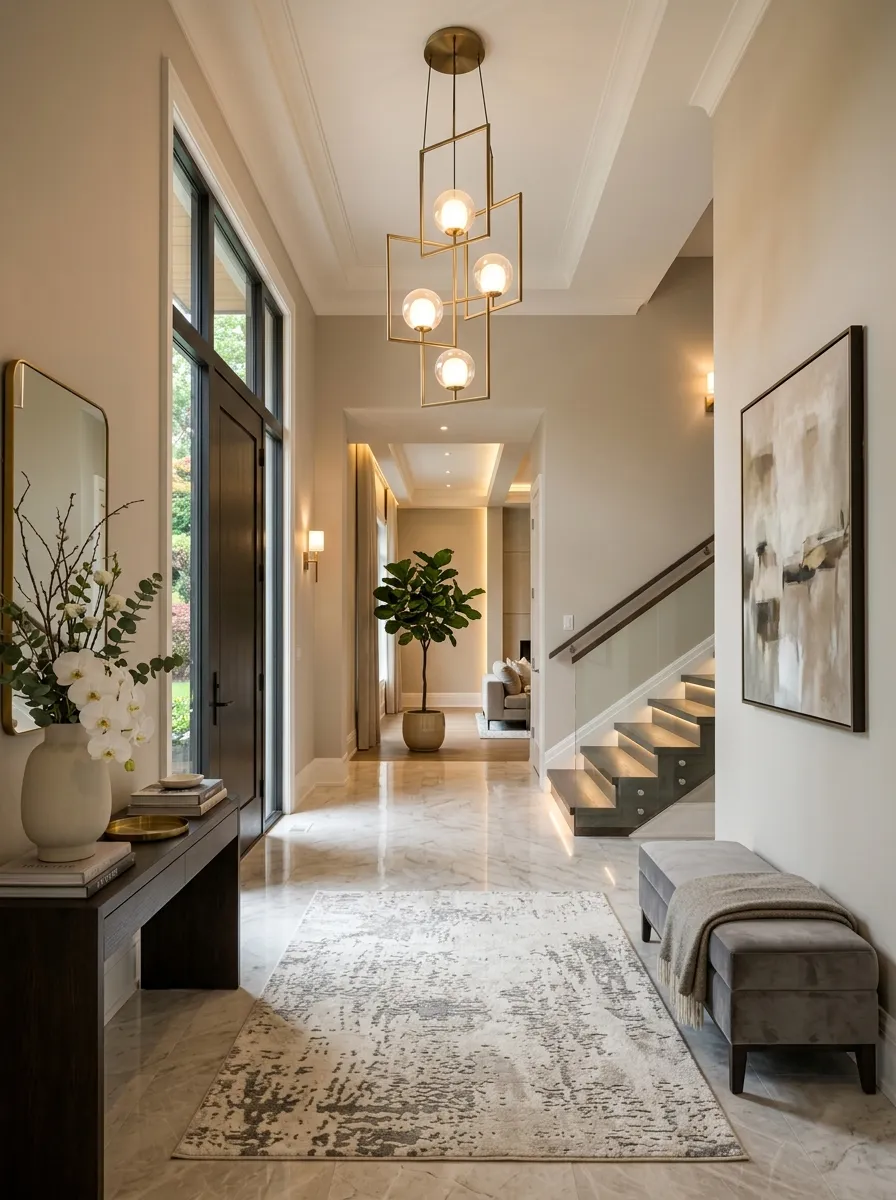
Lighting sets the mood the moment someone steps inside. A dated or dim fixture can make even a well decorated entryway feel flat.A pendant light or a small chandelier adds a design moment overhead without taking up floor space.
Budget tip: Swapping just the shade or globe on an existing fixture is a low cost way to update the look. Spray paint also works well on metal fixtures that feel outdated.
Warm white bulbs create a cozier feel than cool white or daylight bulbs, which can feel harsh in a small entry space.Add a dimmer switch if your wiring allows it. This lets you adjust brightness for daytime versus evening, giving the entryway a different feel depending on the time of day.
12. Display a Seasonal Wreath
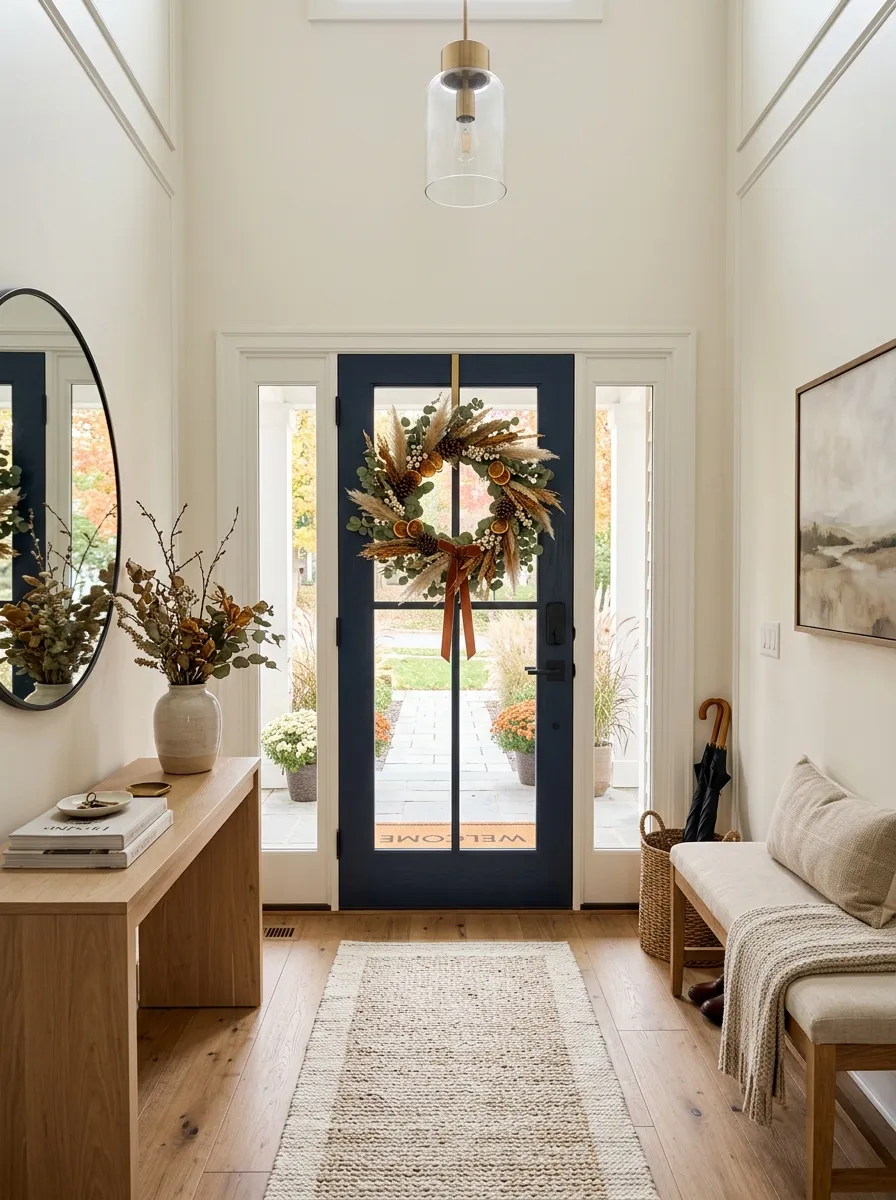
A wreath on the inside of your door or above your console table brings a rotating pop of color and texture. It also signals the season without needing a full decor overhaul.Dried florals, greenery, or simple ribbon wreaths all work well indoors.
Budget tip: Making your own wreath from a foam or wire base and dollar store greenery costs a fraction of a store bought version.
Swap the wreath every few months to match the season. This keeps the entryway feeling current and gives you a simple styling task to look forward to.Hang the wreath with a small removable hook so you avoid damaging the door or wall. Command style hooks work well for this and leave no marks behind.
13. Add a Basket for Shoe Storage
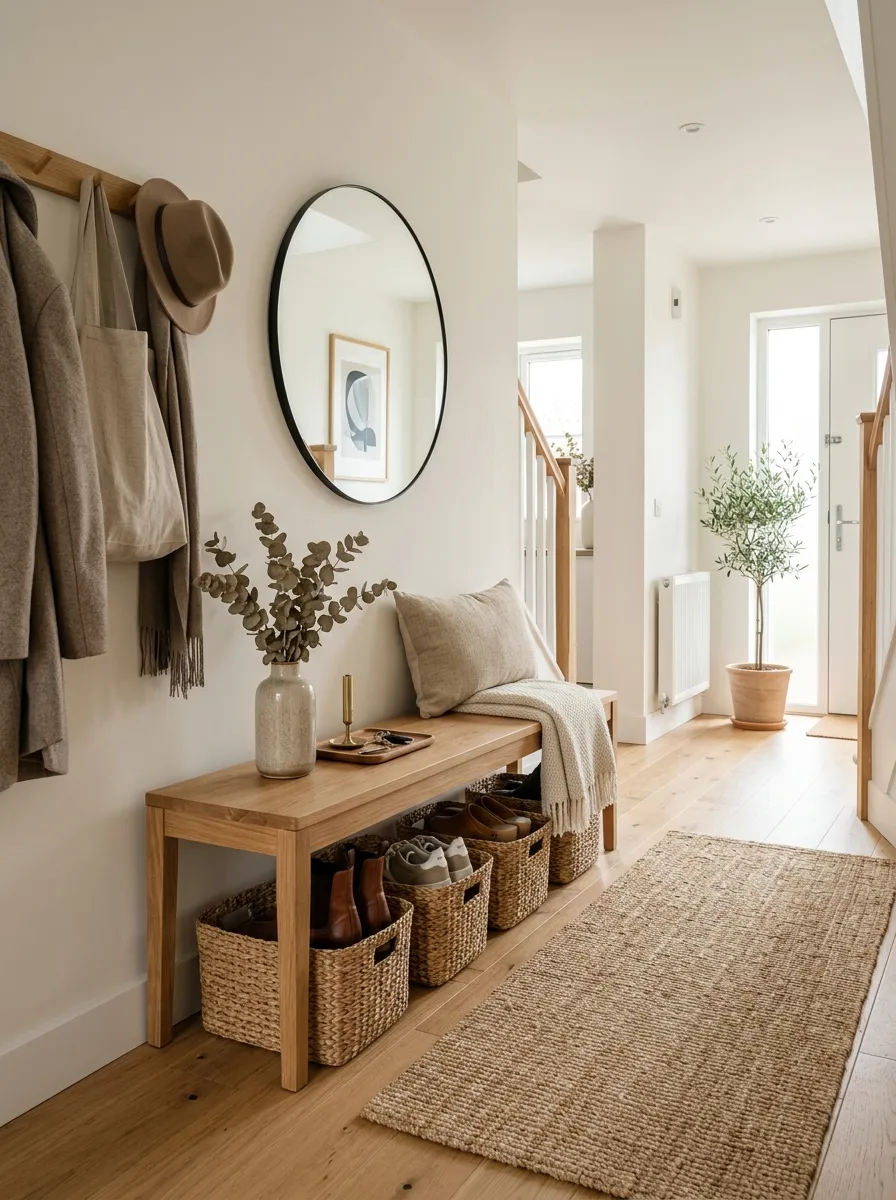
Shoes piling up by the door can make even a styled entryway look messy fast. A basket solves this problem while adding texture to the space.Woven baskets in natural tones fit most design styles and hide contents from view.
Budget tip: Baskets from thrift stores or repurposed laundry baskets work just as well as new decor store versions.
Pick a basket size that matches your household. A single basket works for one or two people, while larger families may need two or a low shelf with several baskets.Place the basket in a corner rather than directly in the walking path. This keeps the entryway functional and avoids tripping hazards for anyone stepping through the door.
14. Use Wallpaper on an Accent Wall
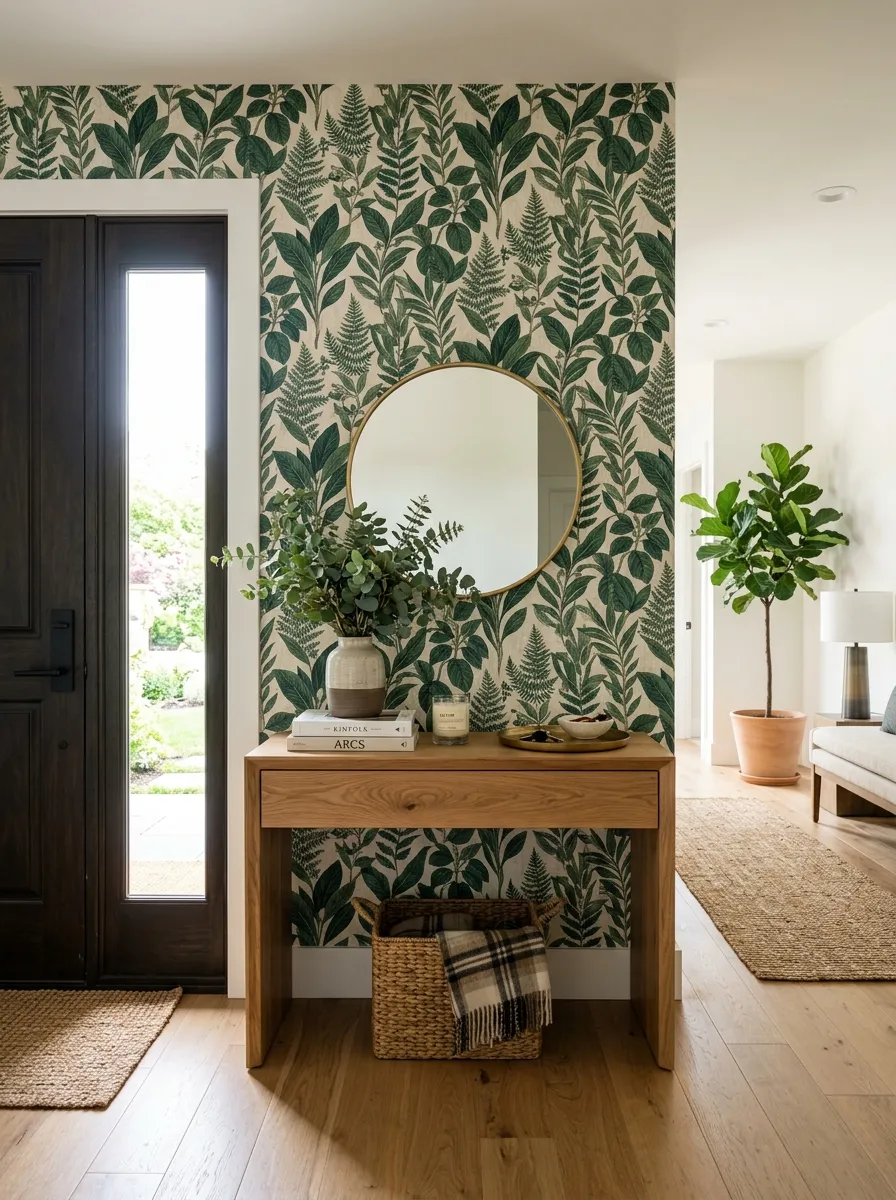
Wallpaper on just one wall in the entryway adds pattern and depth without covering the whole space. It works well since entryways are often small enough to make wallpaper affordable.Bold prints or textured styles both work here since entryways are usually viewed briefly rather than lived in for hours.
Budget tip: Peel and stick wallpaper is a renter friendly option that costs less than traditional rolls and comes off cleanly later.
Measure the wall carefully before ordering to avoid running short mid project. Buying a bit extra covers mistakes during application.Apply wallpaper on a dry, mild weather day for the best adhesion. Smoothing out air bubbles with a credit card or plastic scraper as you go keeps the finish looking clean and professional.
15. Add a Small Table Lamp
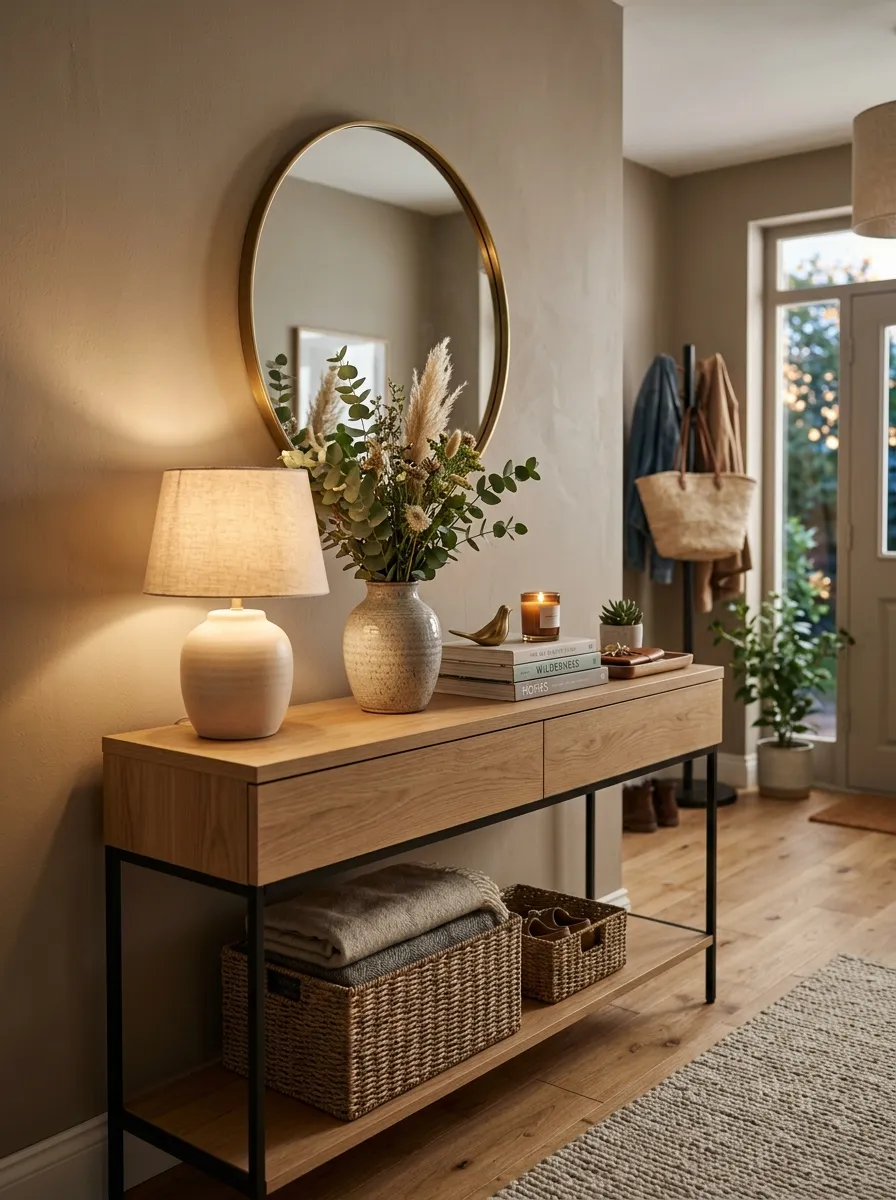
A table lamp adds a softer light source than an overhead fixture alone. It also gives your console table a cozy, layered look.Choose a lamp with a warm toned shade to keep the light welcoming rather than clinical.
Budget tip: Thrift stores often carry lamps for a few dollars. A new shade or a coat of paint on the base can transform an old lamp completely.
Keep the lamp cord tucked behind the table or along the wall using small adhesive clips. This keeps the setup looking tidy rather than tangled.Turn the lamp on with a smart plug or timer so it’s already lit when you arrive home in the evening. This small touch makes the entryway feel warm the moment you walk in.
16. Create a Drop Zone for Keys and Mail
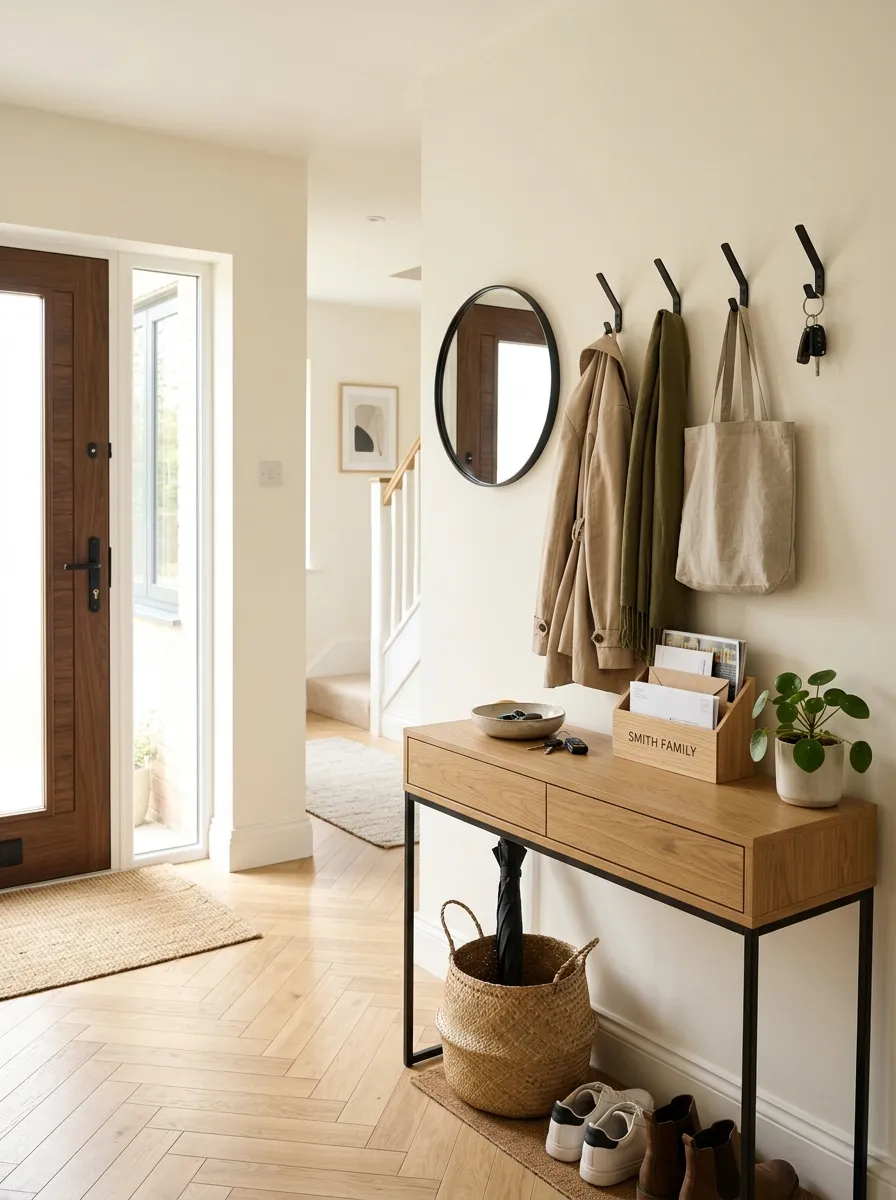
A designated spot for keys and mail saves time and stops small clutter from spreading through the house. This is one of the most practical entryway upgrades you can make.A small dish, a wall mounted mail sorter, or a labeled basket all work for this purpose.
Budget tip: Repurpose a small bowl you already own instead of buying a new key dish. A binder clip mounted to the wall can even hold mail in place for free.
Sort mail immediately when you walk in rather than letting it pile up. This turns a five second habit into a permanent decluttering solution.Add a small notepad and pen to the drop zone for quick notes or reminders. This turns the spot into a mini command center for the whole household.
17. Hang Curtains Over a Window
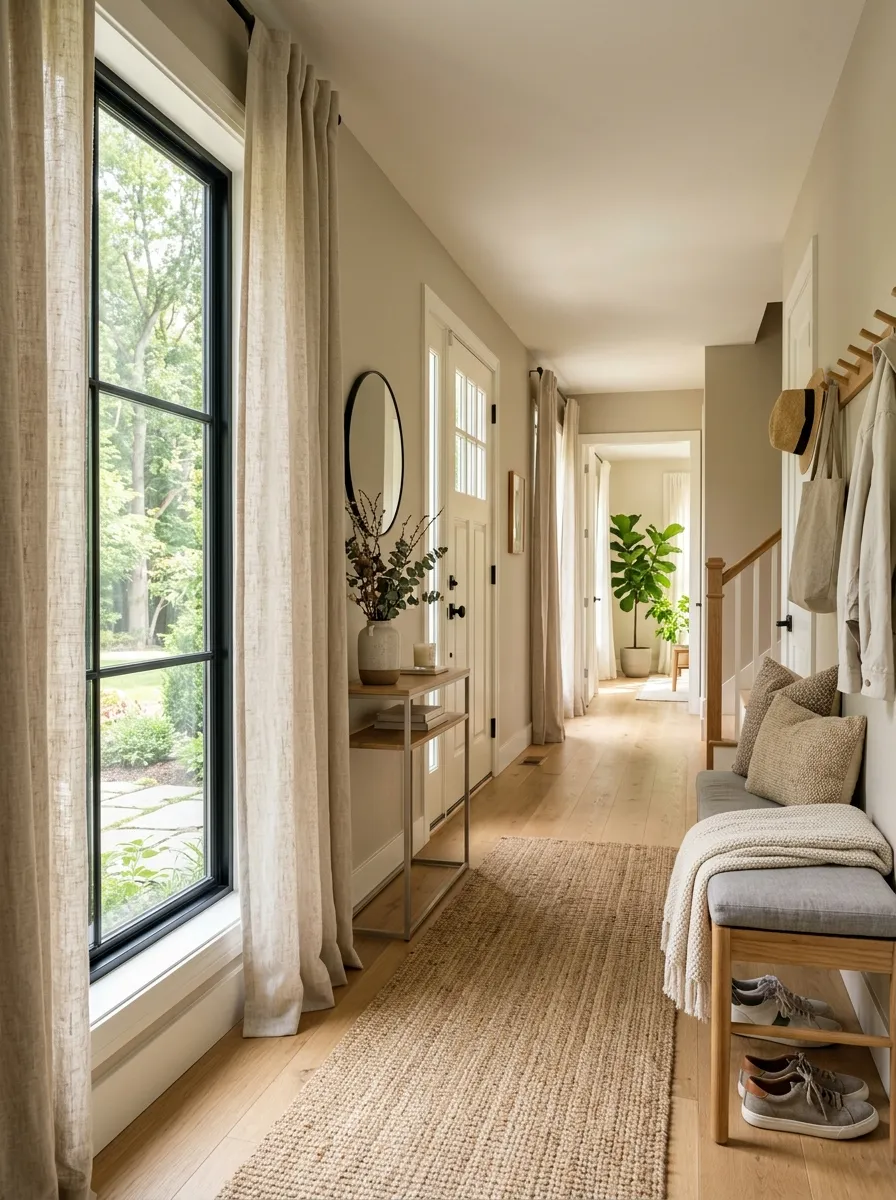
If your entryway has a window, curtains soften the space and add privacy. They also introduce fabric texture that balances out hard surfaces like flooring and walls.Light, airy fabrics keep the space feeling open, while heavier fabrics add a cozier, formal feel.
Budget tip: Fabric remnants from a craft store can be hemmed into simple curtain panels for less than a store bought pair.
Hang the curtain rod a few inches above the window frame rather than directly on it. This makes the window look taller and the whole entryway feel more spacious.Tie backs made from ribbon or rope add a decorative touch while keeping the curtains open during the day when natural light matters most.
18. Add a Bold Front Door Color
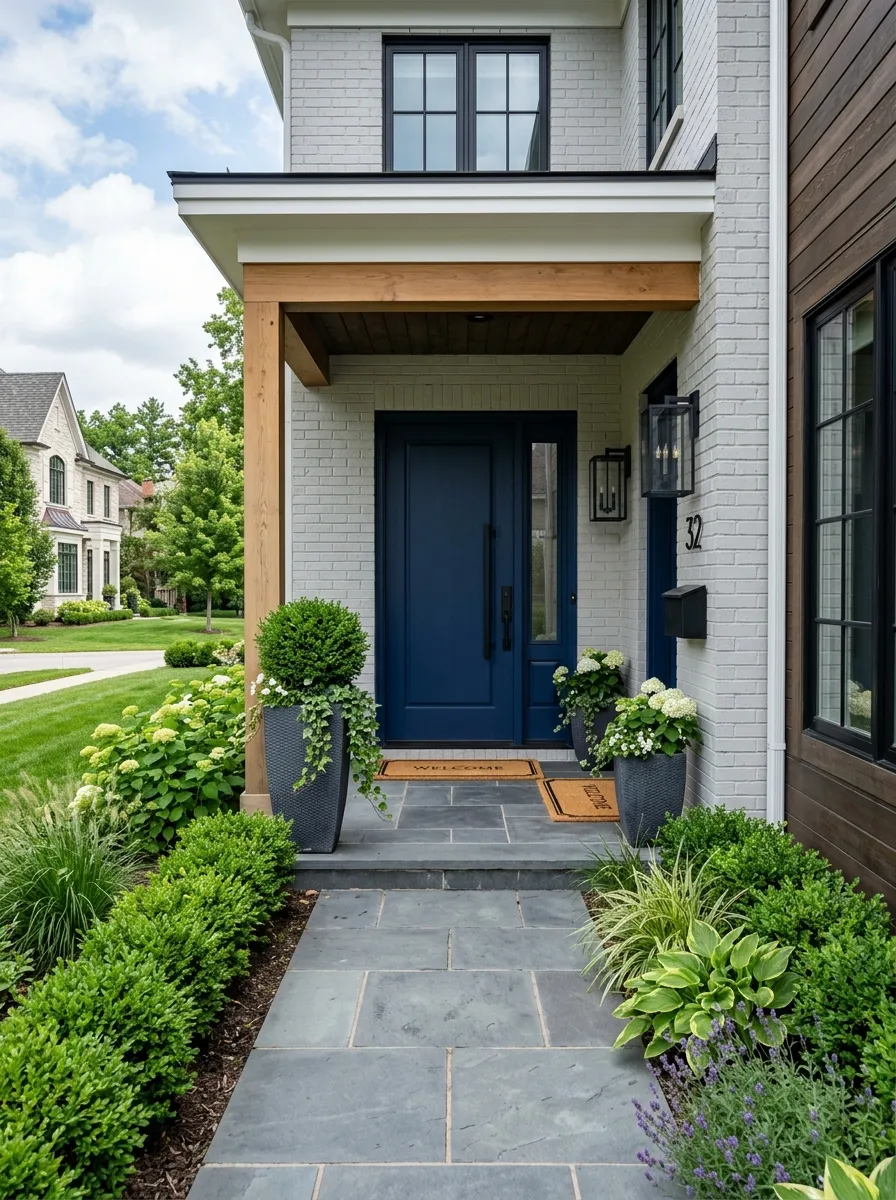
The color of your front door is often the very first thing a visitor notices, even before they step inside. A bold shade adds personality and makes a small entry area feel intentional.Deep blue, forest green, or classic black are popular choices that pair well with most home exteriors.
Budget tip: A quart of exterior paint is often enough for a single door and costs far less than replacing the door altogether.
Clean and lightly sand the door before painting for the best finish. Two thin coats look better than one thick coat that may drip or peel later.Update the door hardware at the same time if your budget allows. New handles or a house number plaque finish off the look for a small extra cost.
19. Style Open Shelving
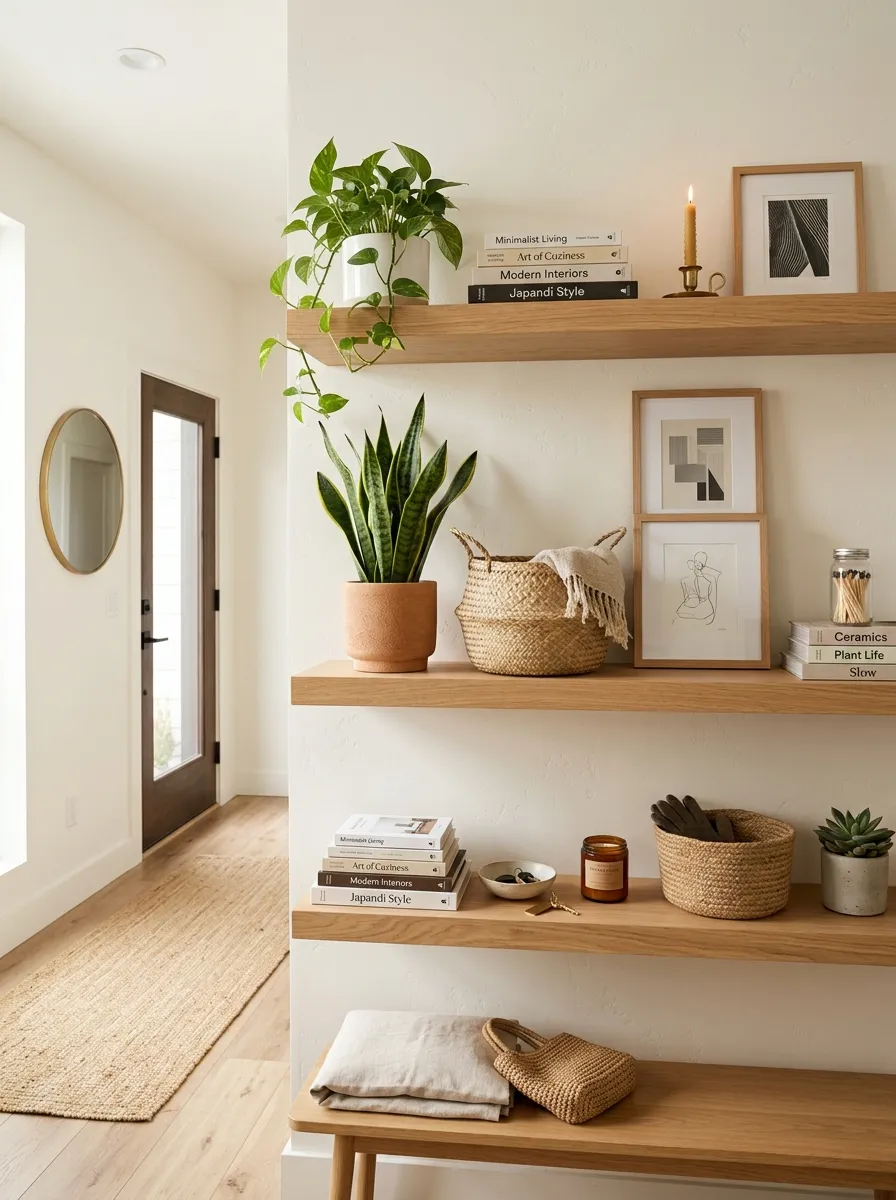
Open shelves near the entryway give you a spot to display small decor items and everyday essentials at the same time. They work especially well in tight spaces where a full table won’t fit.Keep the shelf styling simple with a mix of one plant, one framed piece, and one functional object like a basket.
Budget tip: A single floating shelf and basic brackets from a hardware store cost very little and take under an hour to install.
Leave some empty space on the shelf rather than filling every inch. A little breathing room makes the display feel calm rather than cluttered.Rotate items on the shelf seasonally. Swapping in a small pumpkin in fall or a vase of fresh flowers in spring keeps the space feeling current with almost no cost.
20. Add a Scented Candle or Diffuser
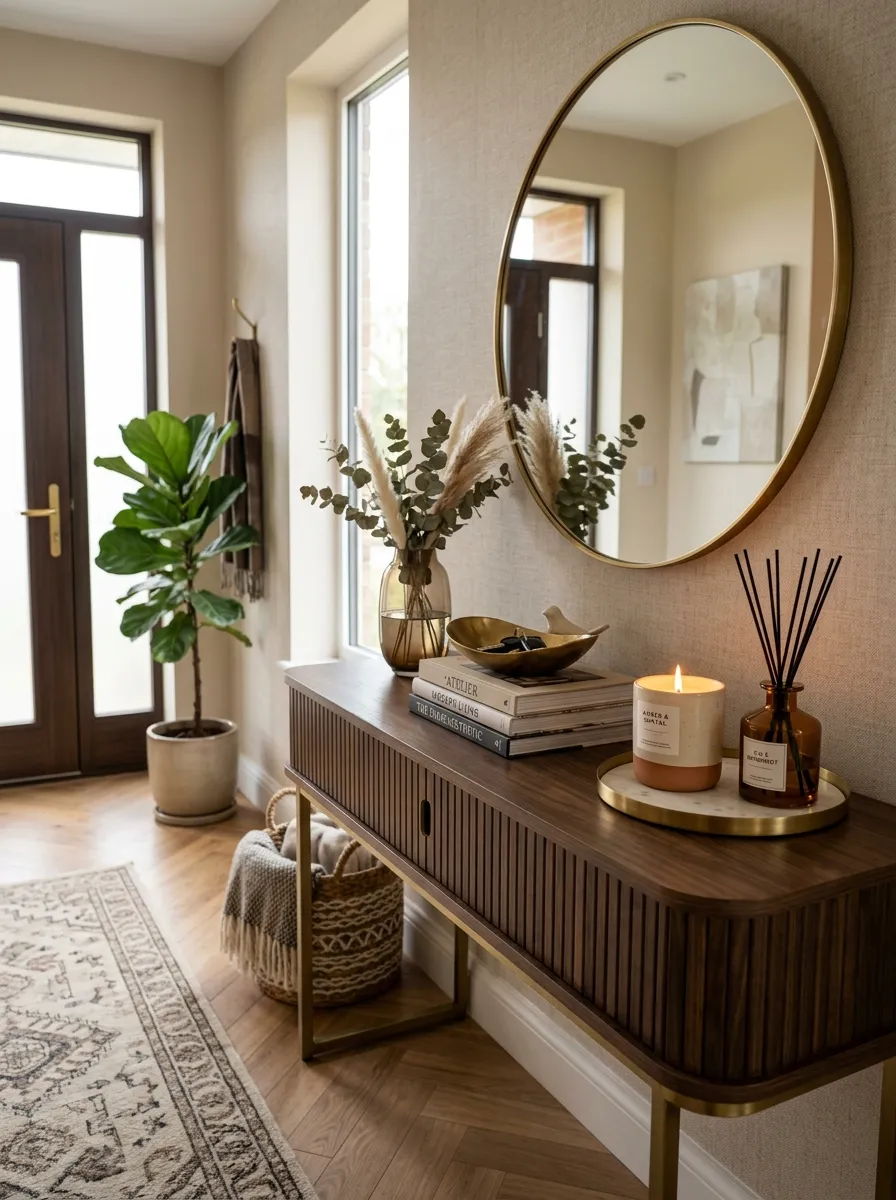
Scent is part of the first impression too, even if it’s easy to overlook. A subtle fragrance near the entryway sets a welcoming tone before guests even see the decor. Light, clean scents like citrus or fresh linen work well since they feel neutral rather than overpowering.
Budget tip: A reed diffuser made from a small bottle and bamboo skewers costs very little and lasts for weeks without electricity.
Place the candle or diffuser on your console table or tray rather than the floor, where it can be easily bumped or knocked over. Swap the scent with the seasons, using warmer notes like cinnamon in winter and lighter florals in spring, to keep the entryway feeling fresh year-round.
21. Use Vertical Storage for Small Entryways
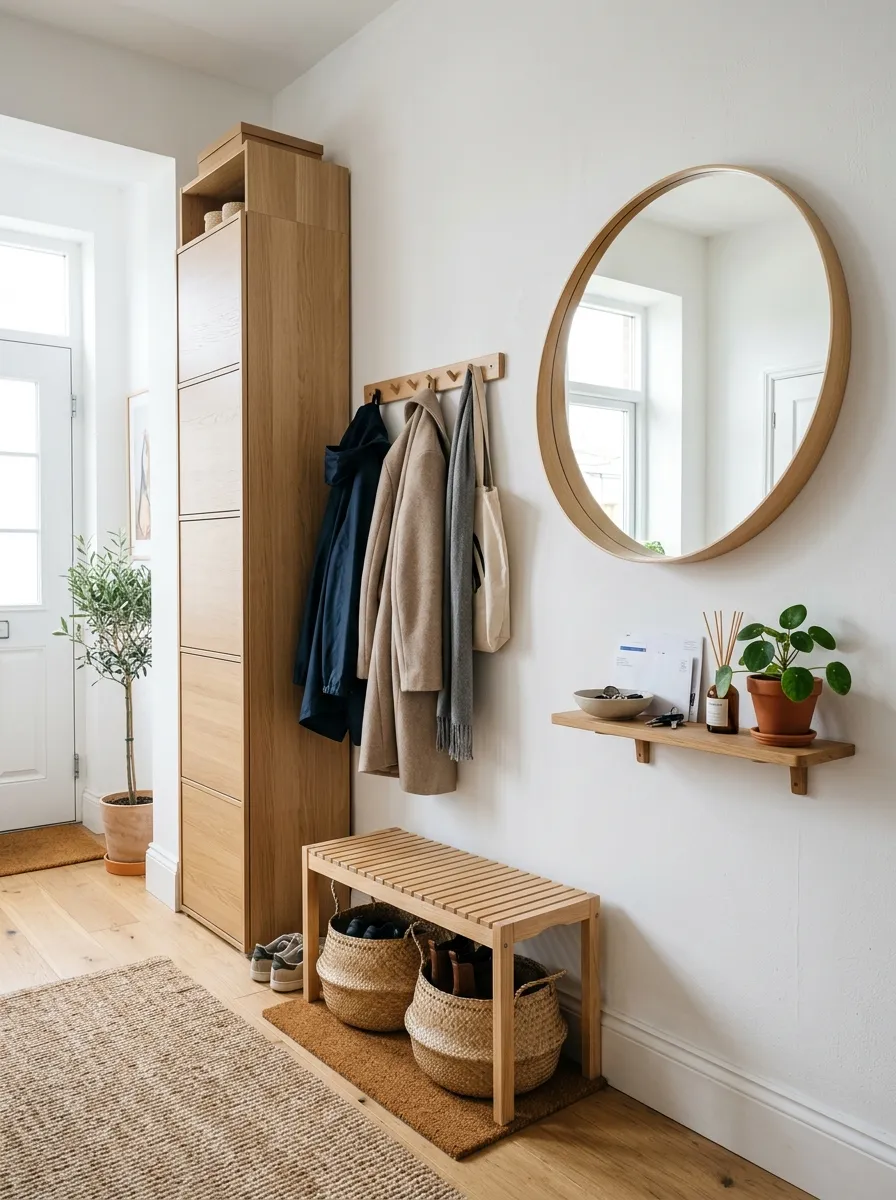
When floor space is limited, going vertical solves a lot of storage problems. Tall, narrow furniture pieces make use of wall height instead of eating up walking room. A slim cabinet or a tall coat rack works well in hallway-style entryways where space is at a premium.
Budget tip: An unused bookshelf turned sideways or upright can double as narrow storage for shoes, bags, and small baskets.
Measure your space carefully before buying vertical furniture, since even a few extra inches can make a hallway feel tight.Add a small mirror or art piece on top of the vertical piece to draw the eye upward. This makes ceilings feel higher and the whole entryway feel more open.
22. Personalize with a Family Touch
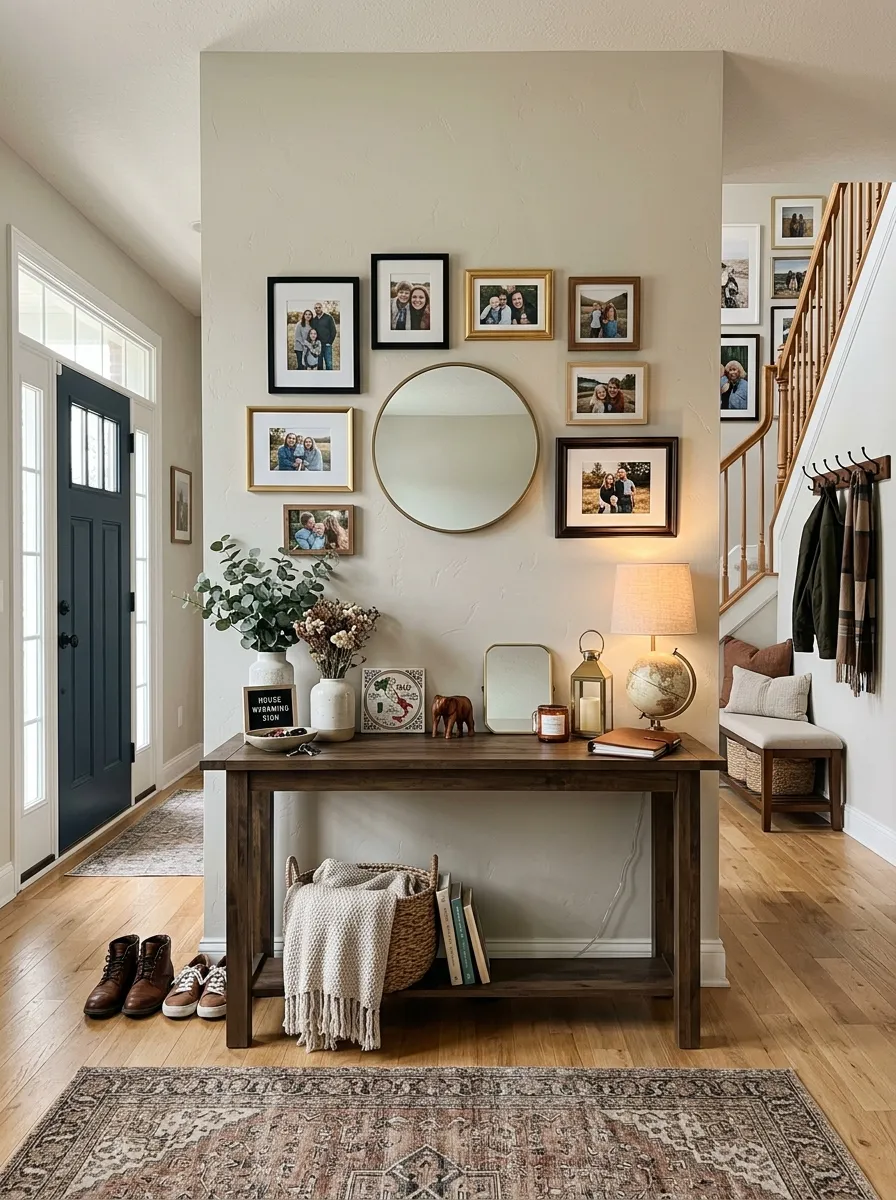
A personal object, like a framed photo, a child’s artwork, or a travel souvenir, makes an entryway feel like home rather than a showroom. This is one of the easiest upgrades since it usually costs nothing at all.
Budget tip: Reuse frames you already own and simply rotate what’s inside them every few months to keep the display feeling current.
Choose one or two personal items rather than filling the whole space. This keeps the entryway looking curated instead of like a memory wall. Update the display around holidays or family milestones. A small change like this keeps the entryway feeling lived in and connected to your actual life, not just a styled photo.
Conclusion
A great entryway does not require a big budget or a full renovation. Small, thoughtful changes like a styled tray, a bold front door color, or a simple basket for shoes can completely change how your home feels the moment someone walks in. Start with one or two ideas from this list and build from there. Over time, these small updates add up to an entryway that feels warm, organized, and truly welcoming, giving every guest a great first look at your home.