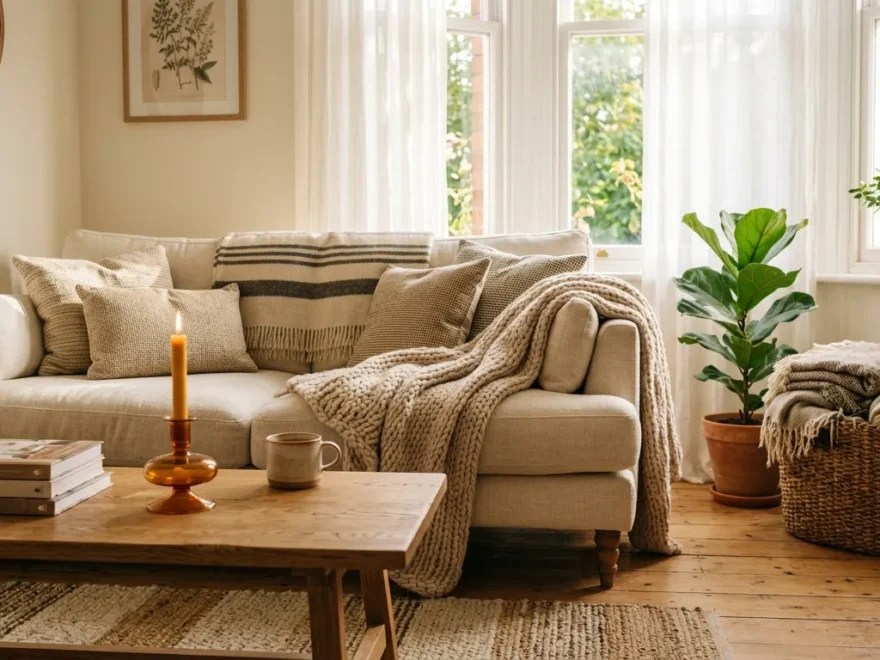
A sitting room should feel like a hug after a long day. It’s the spot where you kick off your shoes, sink into the cushions, and let your shoulders drop. Getting that feeling doesn’t take a full renovation or a designer budget. Small changes to texture, light, and layout can turn a plain room into a space you actually want to spend time in. Below are 17 practical ideas you can try this weekend, whether you’re working with a spare closet’s worth of decor or starting from scratch. Each one is built around comfort first and style second, so your room looks good and feels even better.
1. Layer Soft Textiles for Instant Warmth
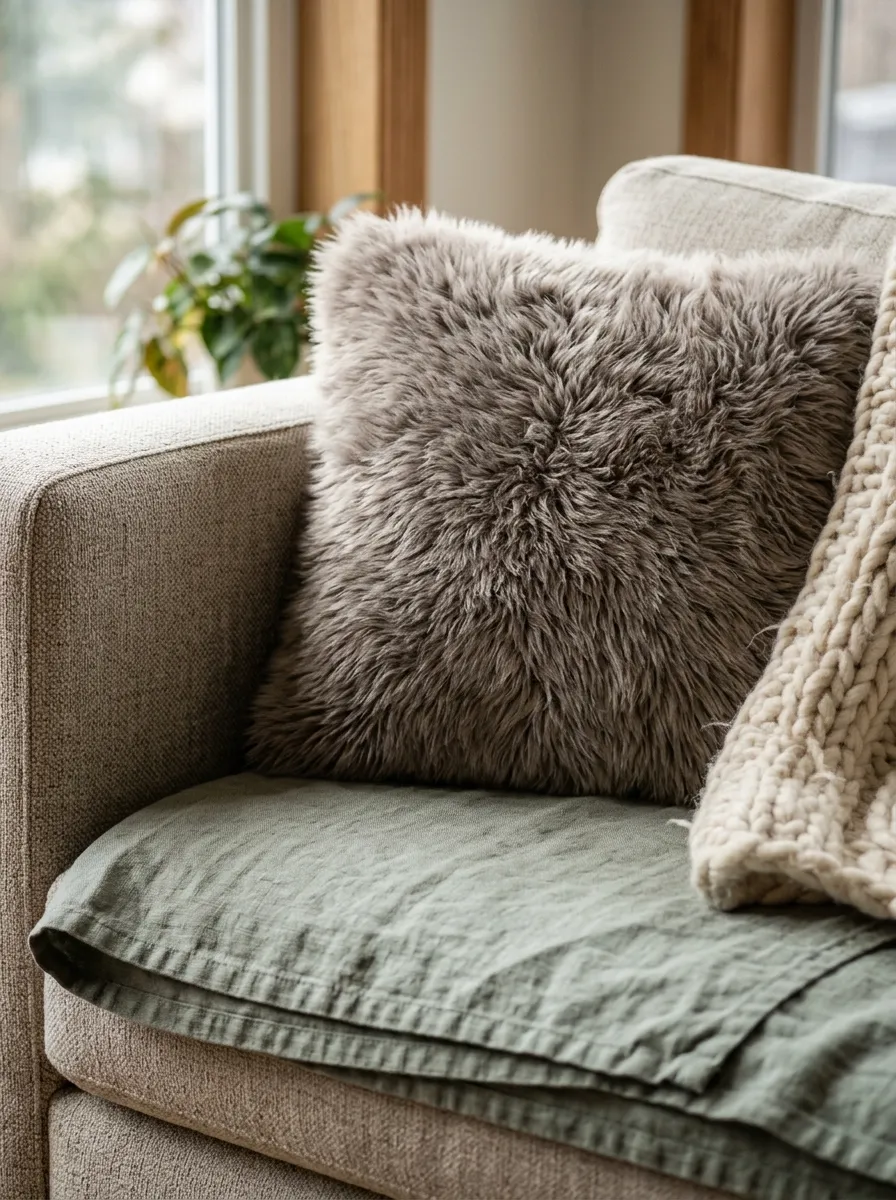
The fastest way to make a sitting room feel warmer is to add layers of soft fabric. Start with your sofa or chair. Drape a knit throw over one arm. Add two or three cushions in different fabrics like linen, velvet, and wool. Mix textures rather than matching them exactly. A rough weave next to something smooth creates visual interest and makes the seat look inviting. You don’t need new furniture for this. A single throw blanket from a discount store can change how a whole room feels. For a DIY option, sew simple envelope cushion covers from remnant fabric. It takes under an hour and costs a fraction of store bought covers. Rotate your textiles with the seasons too. Heavier wool and flannel in colder months, lighter cotton in warmer ones. This keeps the room feeling current without buying anything new twice a year. The goal is a seat that looks like it’s asking you to sit down, not one that looks too neat to touch.
2. Add a Reading Nook with a Comfortable Chair
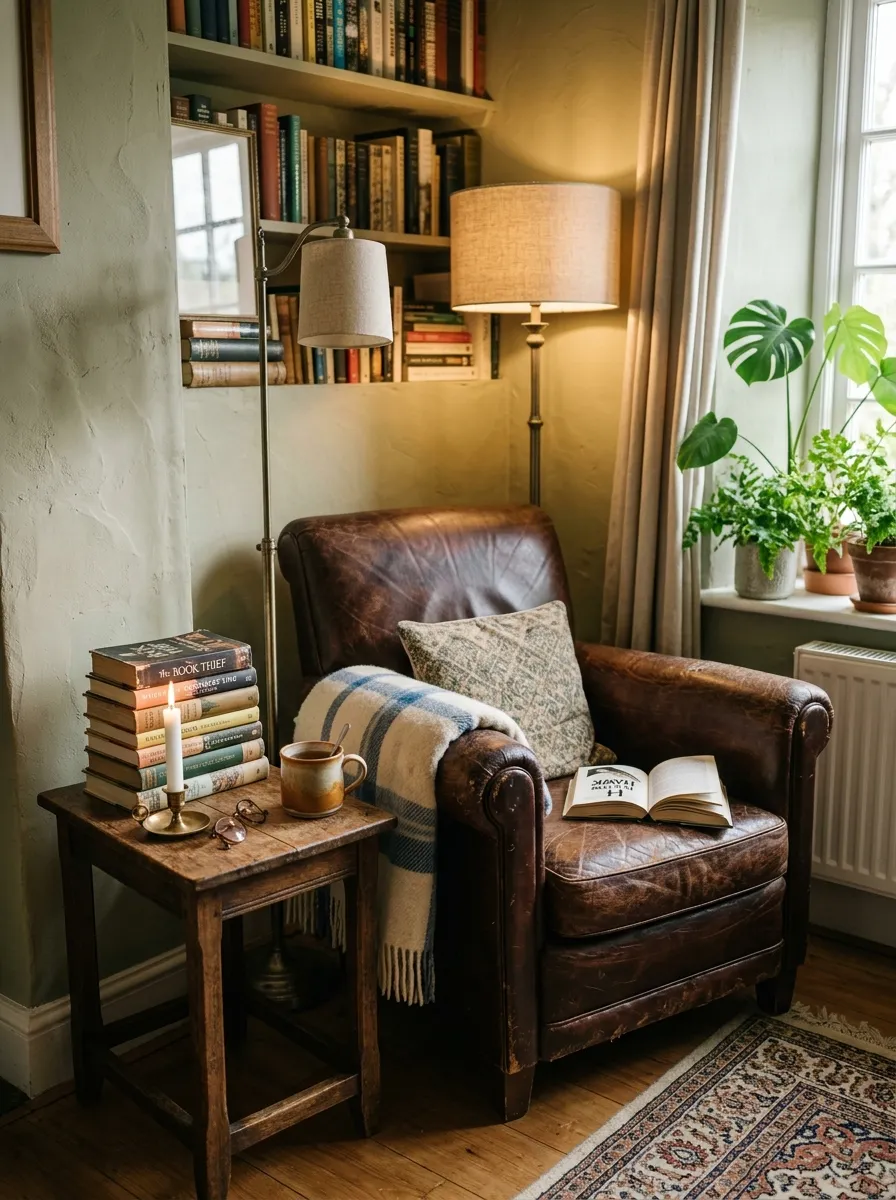
Every sitting room benefits from one chair that exists purely for slowing down. Pick a corner near a window if you can. Add a chair with a bit of give in the cushion, not something stiff. A small side table next to it holds a lamp, a book, and a cup of tea within arm’s reach. If you’re on a budget, check secondhand shops for an armchair with good bones and reupholster it yourself with a staple gun and a few yards of fabric. A thrifted chair can look brand new for under fifty dollars this way. Add a small footstool or ottoman so your feet have somewhere to rest. Keep the space free of clutter so it stays inviting rather than becoming a dumping ground for mail and laundry. If you enjoy creating cozy spaces, many of these same principles also work for balcony decor ideas, where a comfortable chair, soft lighting, and a small table can transform even the smallest outdoor corner into a relaxing retreat. A reading nook doesn’t need much square footage. Even a two-foot-by-two-foot corner works if the chair and light are right. The point is having one spot in the house that’s just for you.
3. Use Warm Lighting Instead of Harsh Overheads
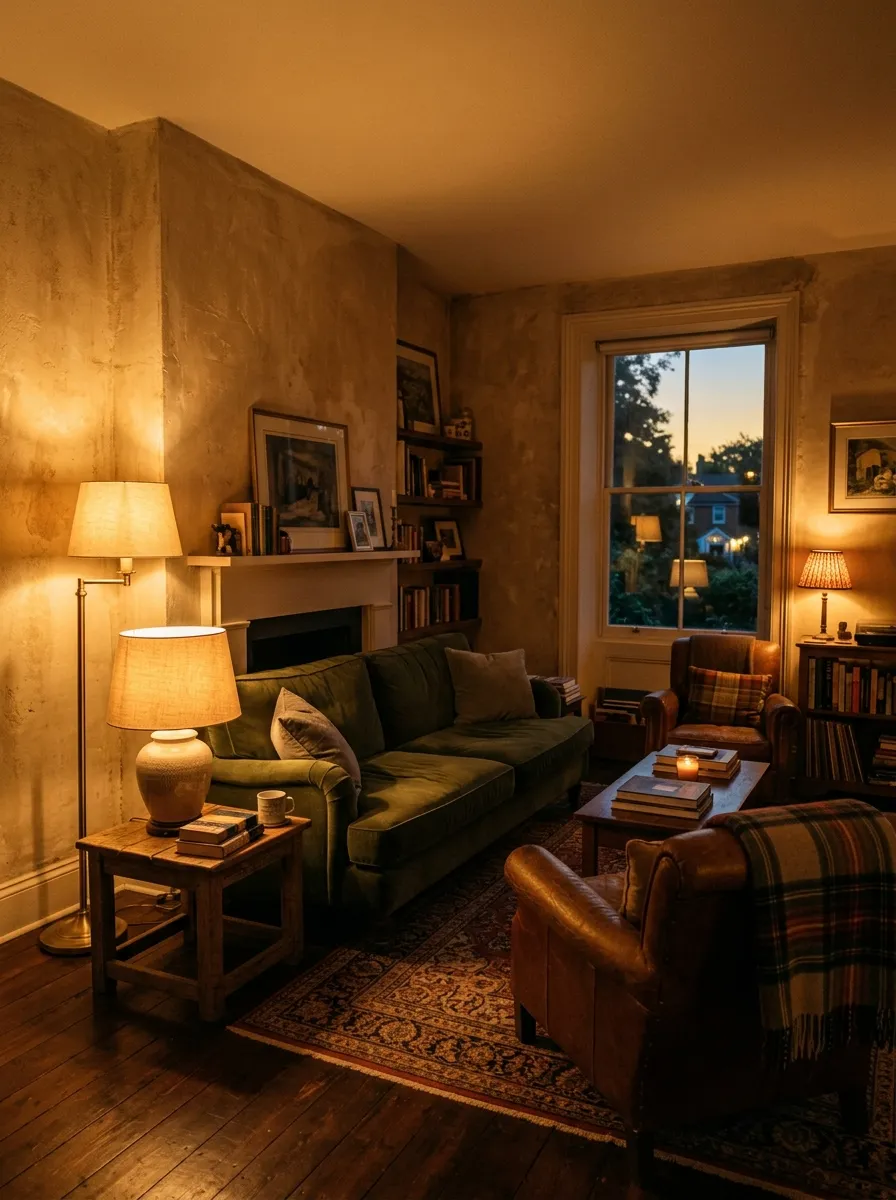
Overhead lighting tends to flatten a room and make it feel more like an office than a living space. Swap that single bright bulb for a few smaller light sources instead. Place a table lamp on each side of the sofa, add a floor lamp in a reading corner, and consider a small plug in sconce near art or shelving. Warm bulbs, around 2700K, give off a golden glow that feels calmer than cool white light. This is one of the cheapest updates you can make. A basic lamp costs less than dinner out, and swapping bulbs takes two minutes. For a budget-friendly touch, add a dimmer switch to your main light so you can adjust brightness depending on the time of day. String lights along a shelf or behind a plant also add a soft glow without much effort. The layered light approach means no single source has to do all the work, and the room feels warmer the moment you walk in.
4. Bring In a Plush Area Rug
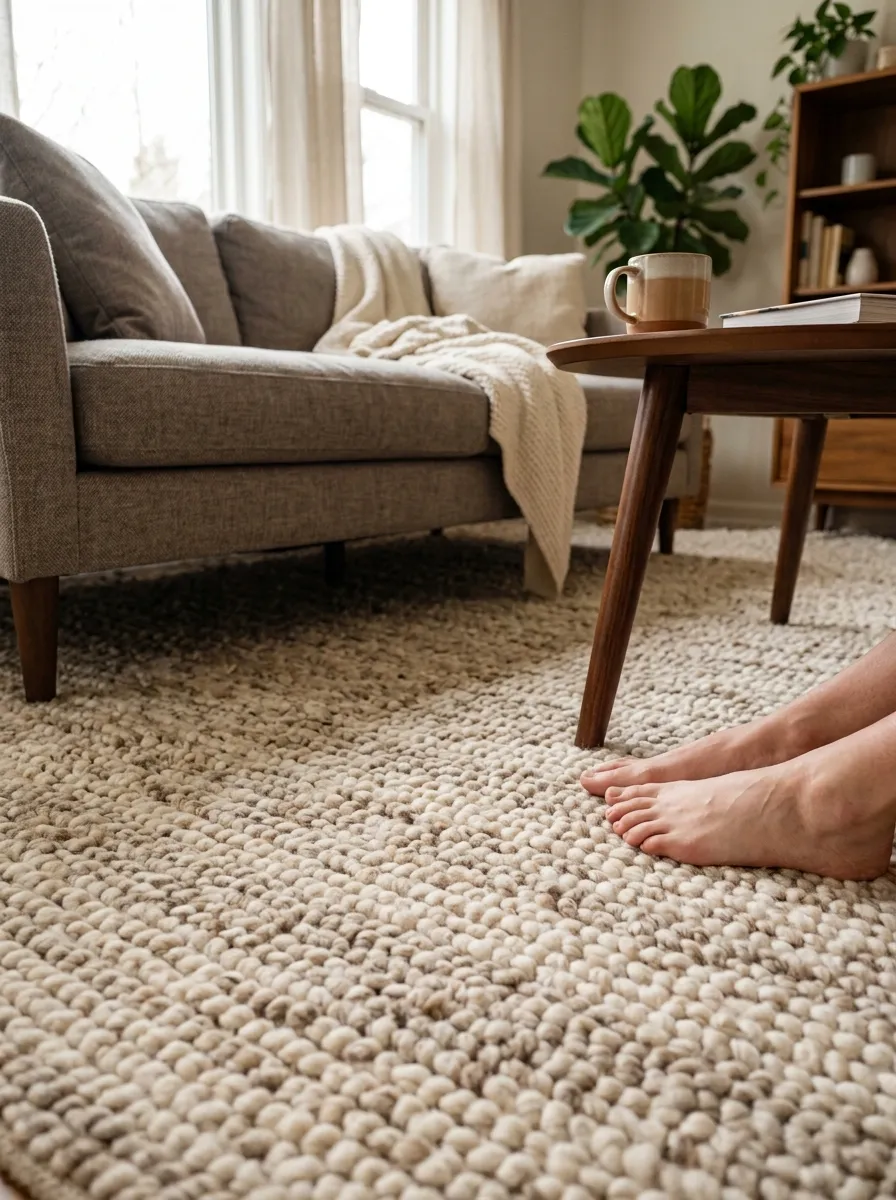
A bare floor makes a room feel unfinished no matter how nice the furniture is. A thick rug under your seating area grounds the space and adds softness underfoot. Choose something with a bit of pile if you like walking around barefoot. Wool and shag rugs feel warmest, while flatweave options are easier to clean if you have pets or kids. Size matters here. A rug that’s too small will make your furniture look like it’s floating. Aim for at least the front legs of your sofa and chairs to sit on the rug. If a large rug is out of budget, layer a smaller patterned rug over a large plain jute one for a similar effect at a lower cost. Secondhand shops and online marketplaces often have barely used rugs at a fraction of retail price. A rug pad underneath adds extra cushioning and keeps things from sliding, which makes the floor feel even softer when you walk across it.
5. Mix Patterns with Throw Pillows
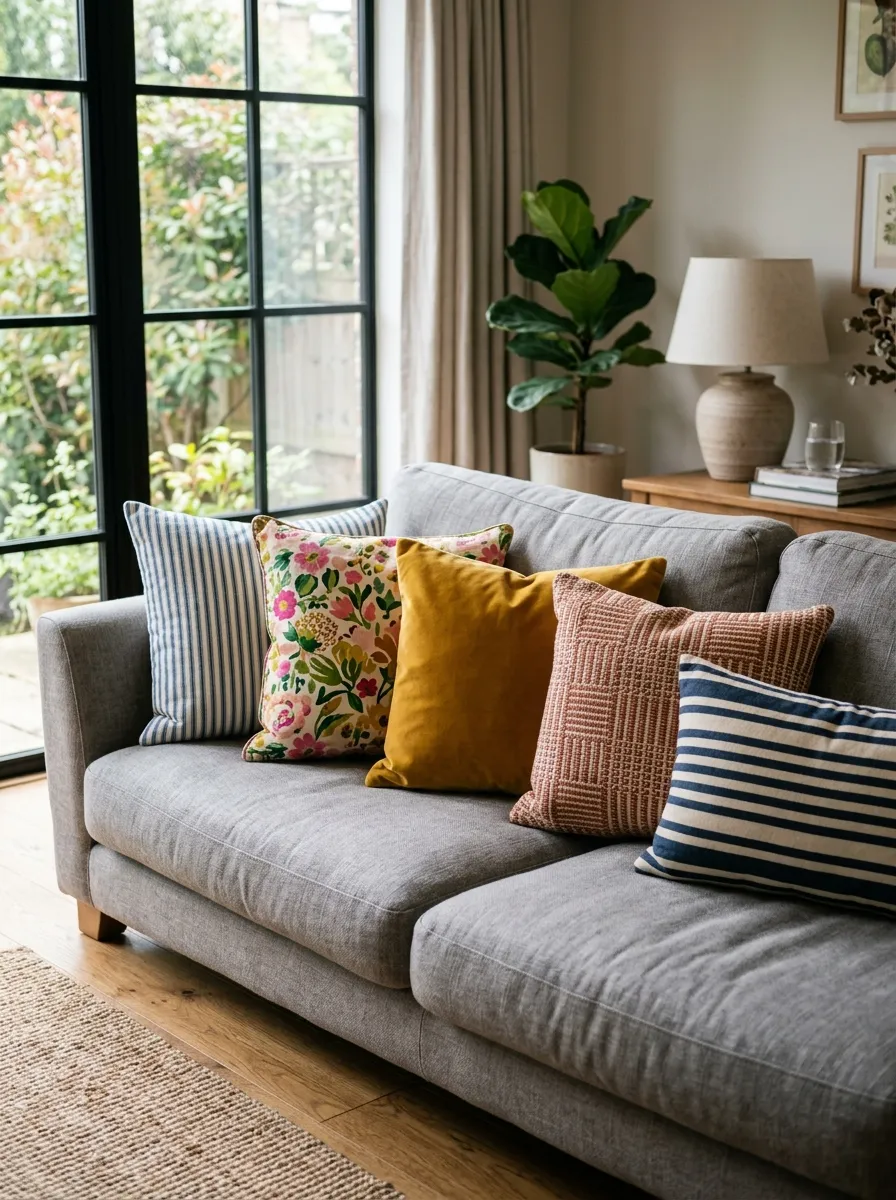
Pillows are one of the easiest and cheapest ways to change the personality of a room. Instead of matching every pillow exactly, mix two or three patterns in a shared color family. A striped pillow next to a floral one next to a plain textured one works if the colors relate to each other. Odd numbers tend to look more relaxed than even pairs. Five pillows on a three seat sofa, arranged unevenly, feels more lived in than four lined up like soldiers. For a DIY project, buy plain pillow inserts and sew simple covers from fabric scraps or old clothing you no longer wear. A worn flannel shirt can become a small accent pillow in an afternoon. Swap covers seasonally to refresh the room without buying new pillows each time. Keep one or two solid colors in the mix so the patterns don’t compete with each other. The result is a sofa that looks curated rather than store bought.
6. Create a Gallery Wall of Personal Photos
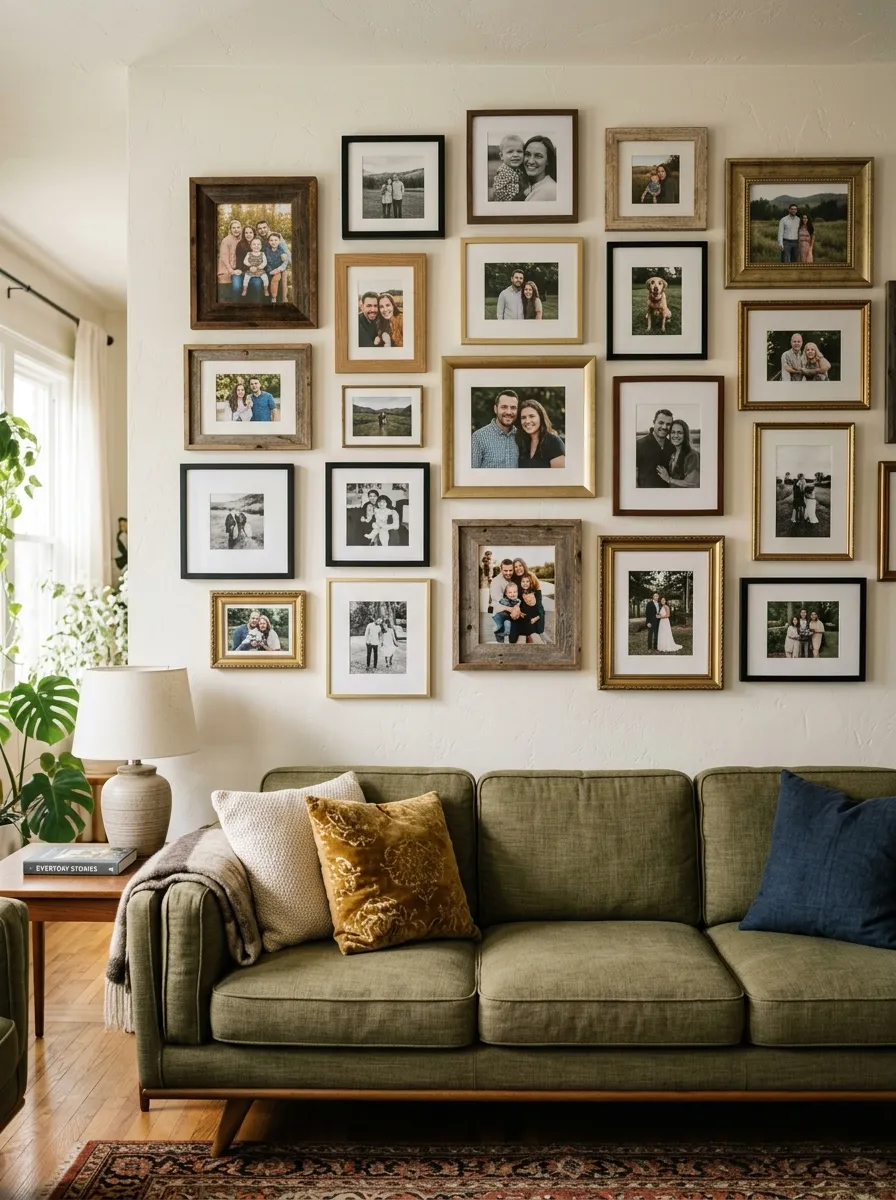
Nothing personalizes a room faster than photos of people and places you love. Choose a wall above your sofa or behind a chair and start collecting frames. They don’t need to match. Mix wood, metal, and painted frames for a collected over time look. Lay the photos out on the floor first to plan the arrangement before you put a single nail in the wall. Start with the largest photo near the center and build outward. For a low cost option, print photos at a local pharmacy or drugstore kiosk for a few cents each and buy frames from a discount or secondhand store. You can also frame postcards, concert tickets, or pressed flowers alongside photos for variety. Leave two to three inches of space between frames so the wall doesn’t feel crowded. A gallery wall takes an afternoon to plan and hang, but it’s one of the few decor choices that will never feel dated, since it changes as your life does.
7. Add Floating Shelves for Books and Trinkets
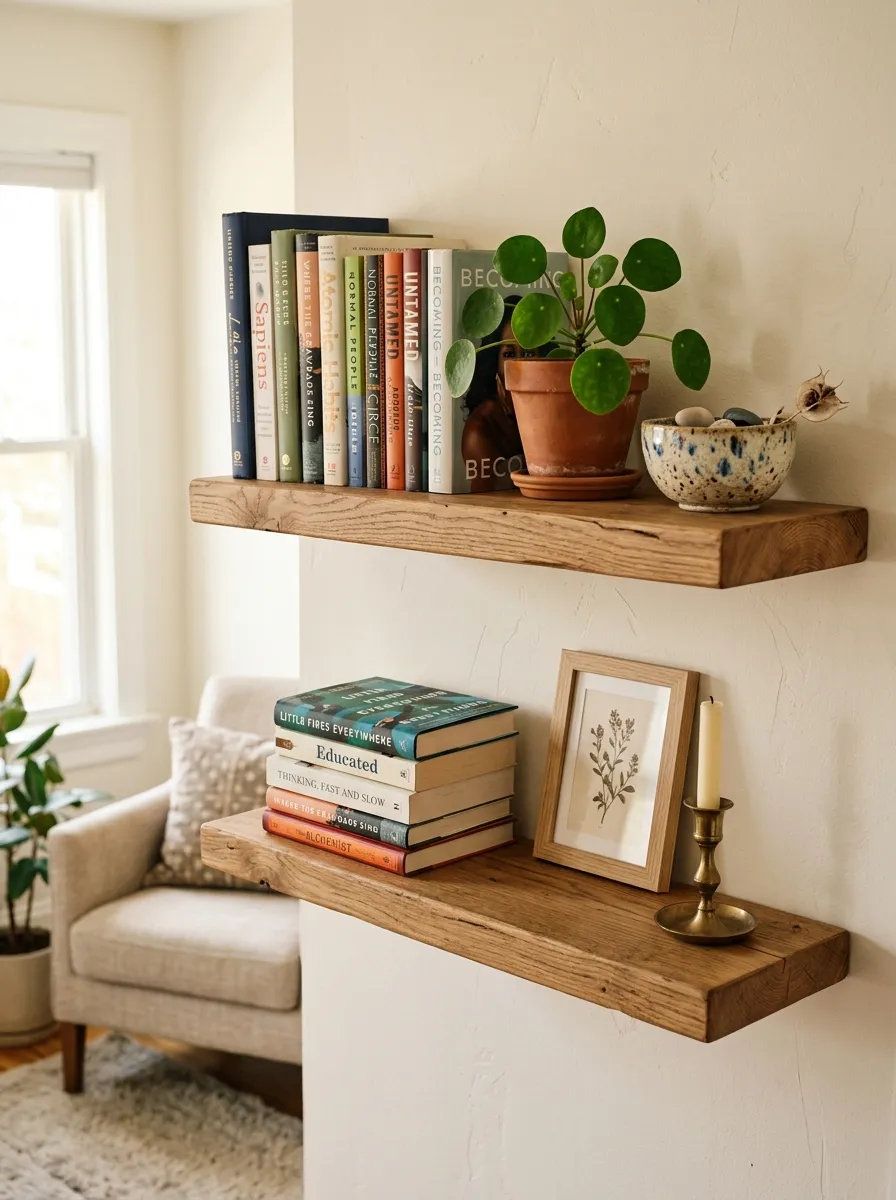
Empty walls can make a room feel unfinished, and floating shelves fix that without taking up floor space. Install one or two shelves at different heights near your seating area. Style them with a stack of books, a small plant, and one or two personal objects. Avoid overfilling the shelf. Leaving some open space actually makes the items you do display stand out more. Floating shelf brackets are inexpensive and simple to install with a drill and a level. If you rent and can’t drill into walls, look for tension mounted or adhesive shelf options instead. Group items in odd numbers, like three, and vary the height using a small stack of books under a shorter object. Rotate what’s on the shelf every few months using things you already own from other rooms. This keeps the display feeling fresh without spending anything. A well styled shelf turns a blank wall into a spot that reflects what you actually care about.
8. Use Candles for Ambient Glow
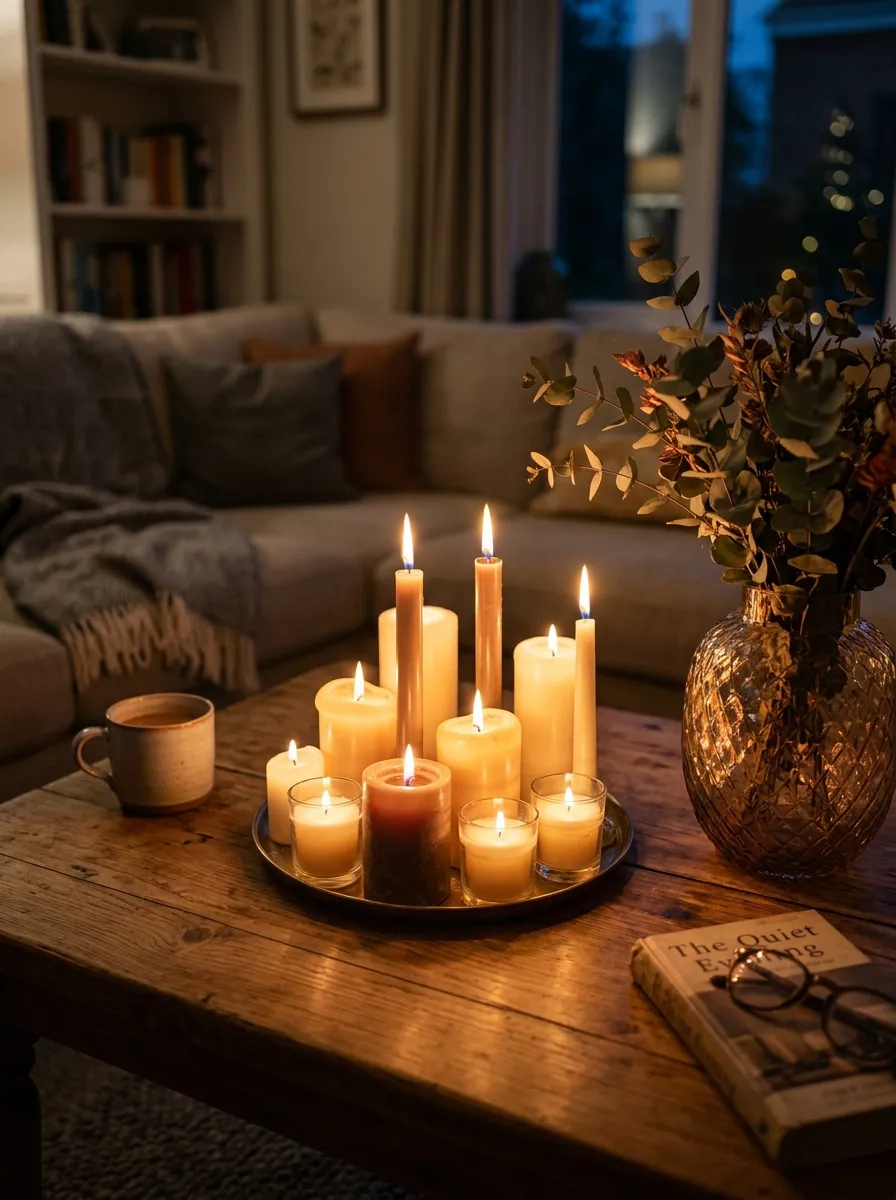
Candlelight does something overhead bulbs can’t. It flickers, it warms the room’s color, and it slows everything down. Group a few candles of different heights on your coffee table or mantel rather than scattering single candles around the room. Unscented candles work well if you’re sensitive to fragrance, while a lightly scented one near your seating area can add a subtle layer to the space. Budget candles from a grocery store work just as well as expensive ones for this purpose, since the effect comes from the light, not the label. For safety, keep candles away from curtains and off the edges of shelves. Battery powered flameless candles are a solid substitute if you have pets or small children in the house, and many now flicker realistically enough that guests won’t notice the difference. Light a few candles when you sit down in the evening instead of turning on the main light. The room will instantly feel calmer and more like a place to unwind.
9. Hang Curtains That Frame the Room Softly
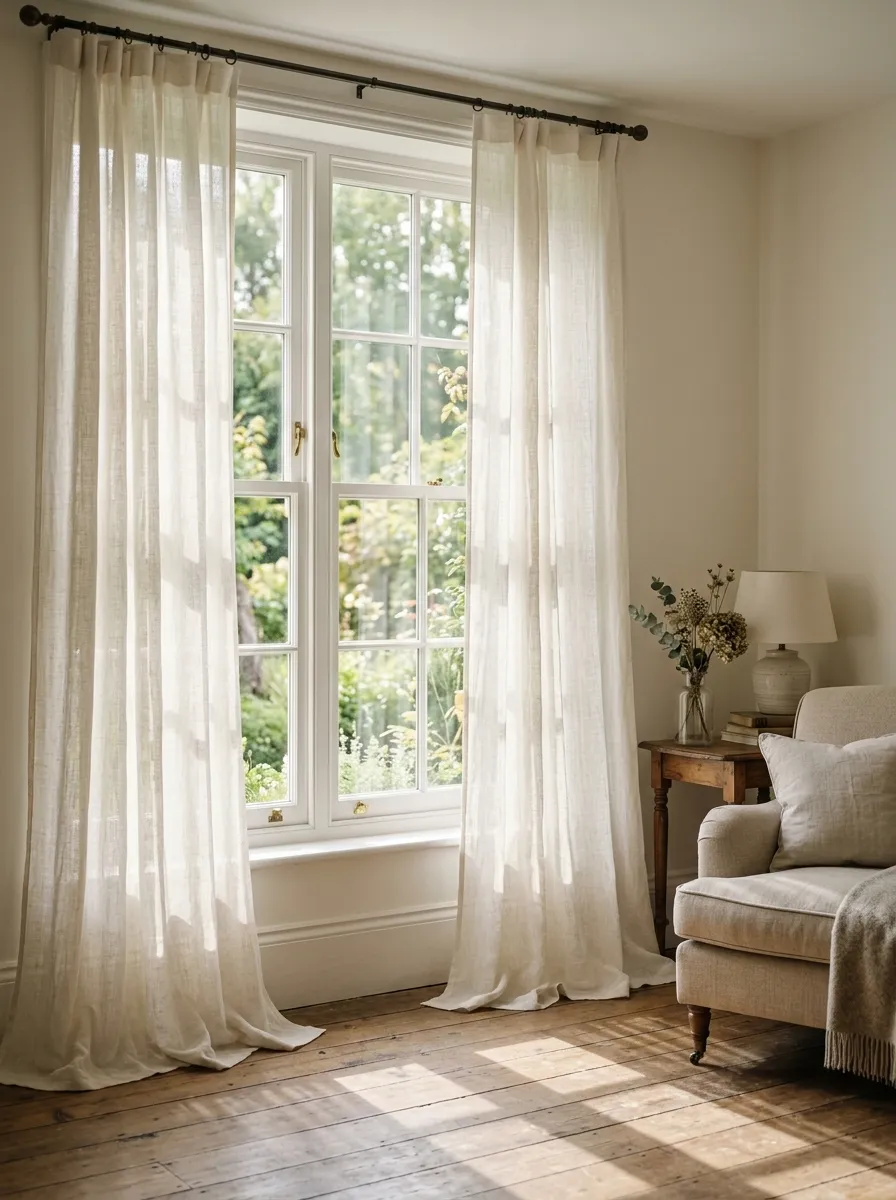
Curtains do more than block light. They soften hard window edges and add a sense of height to a room when hung correctly. Mount the curtain rod as close to the ceiling as you can, even if it’s above the window frame itself. This trick makes ceilings look taller and windows look larger than they are. Choose a fabric with some movement, like linen or cotton, rather than something stiff. Sheer curtains let in soft light during the day, while a heavier layer behind them adds warmth at night. If new curtains aren’t in the budget, check thrift stores for fabric or bedsheets you can hem into curtain panels yourself. A simple no sew option is using fabric clips to attach flat sheets directly to the rod. Let the curtains puddle slightly at the floor or hang just above it for a relaxed, unfussy look. The right curtains make a window feel like part of the room’s design instead of an afterthought.
10. Add Greenery with Low Maintenance Plants
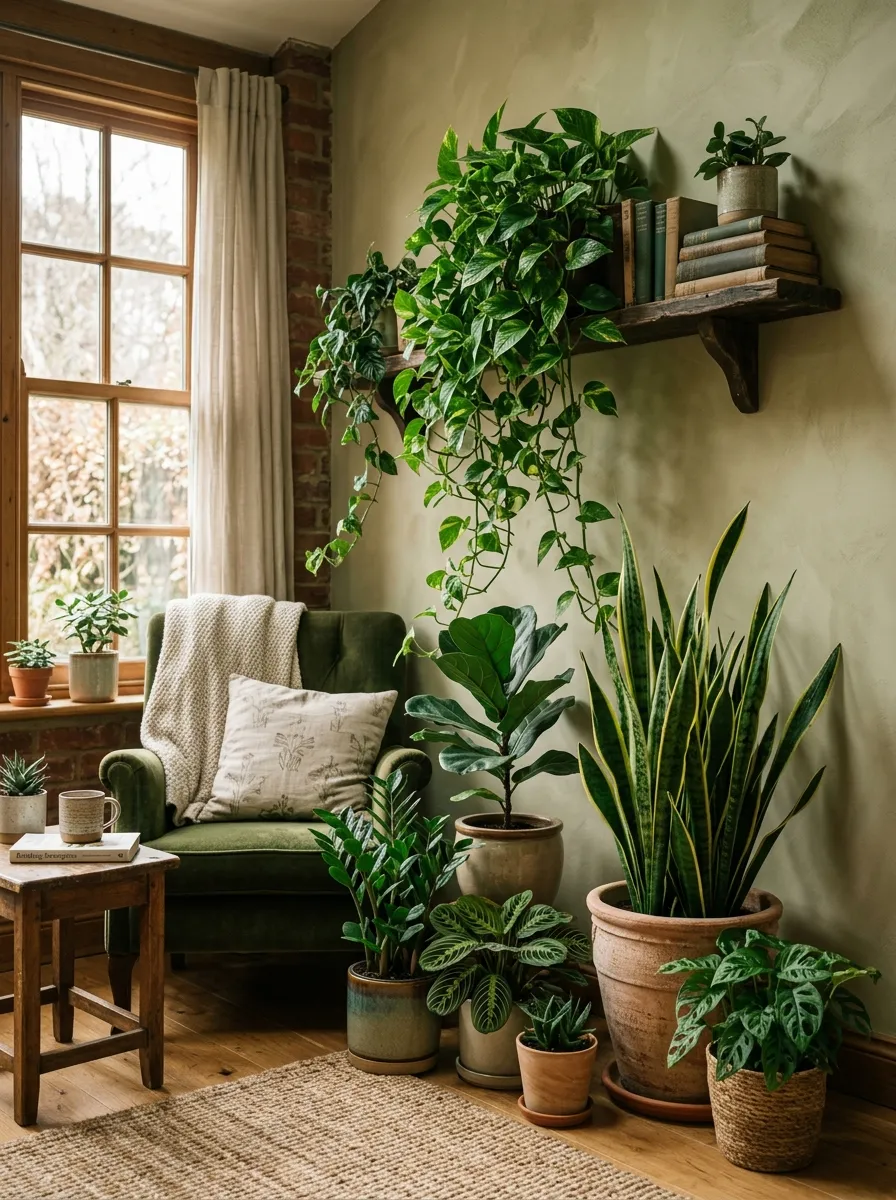
Plants bring life into a room in a way that decor alone can’t. If you don’t have a natural green thumb, start with low maintenance options like snake plants, pothos, or ZZ plants. These tolerate low light and irregular watering, which makes them forgiving for beginners. Group plants of different heights together rather than spacing them evenly around the room. A tall plant in a floor pot, a trailing one on a shelf, and a small one on the coffee table creates layers similar to how you’d arrange pillows or books. For a budget-friendly approach, propagate cuttings from a friend’s plant instead of buying new ones. Many common houseplants root easily in a glass of water on a windowsill. Thrifted pots and baskets work just as well as new ones for housing your plants. Even a single healthy plant near your seating area adds color and softens hard furniture lines. Living greenery gives a room a sense of care that artificial decor can’t quite match.
11. Set Up a Cozy Blanket Basket
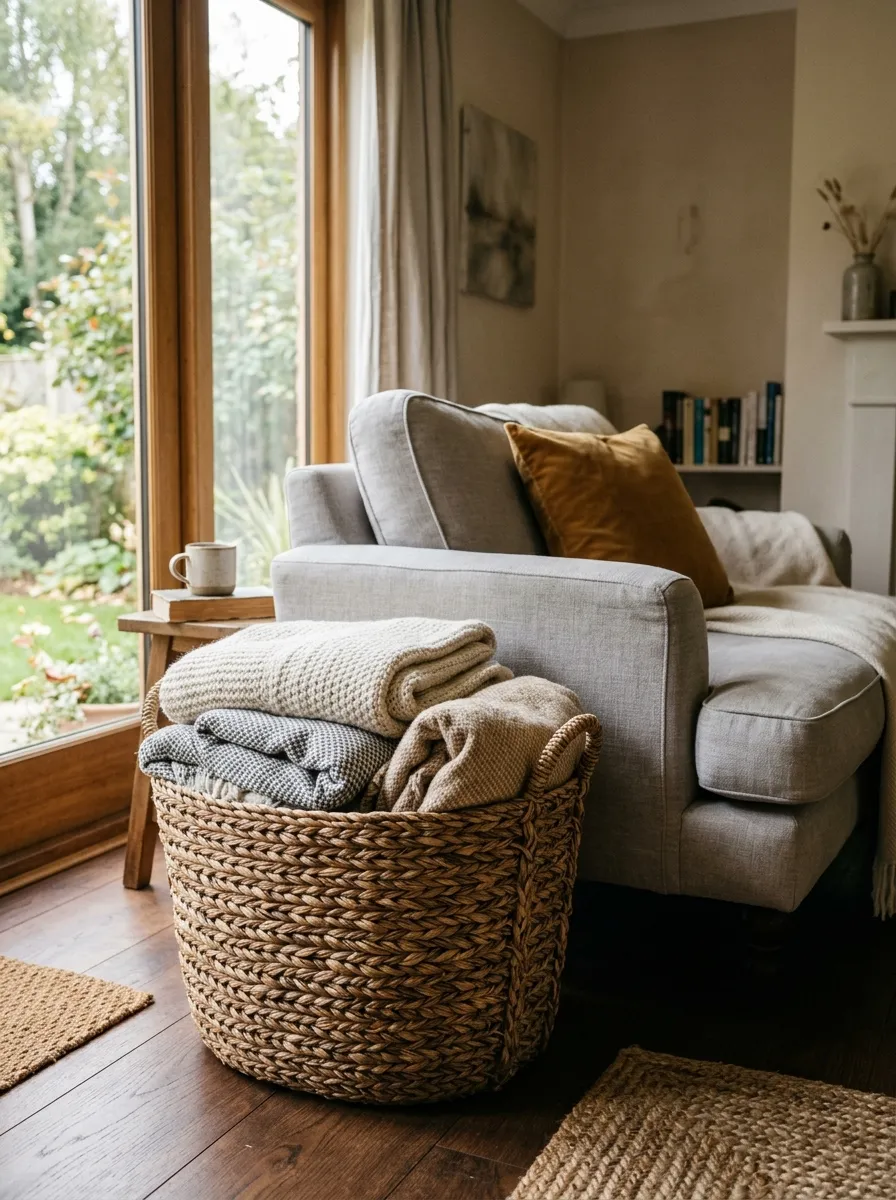
A basket of blankets by the sofa does double duty. It keeps extra throws handy for chilly evenings and adds texture to the floor without taking up much space. Choose a woven basket in a natural material like seagrass or rattan for warmth, or a fabric bin if you prefer a softer look. Fold two or three blankets loosely inside rather than stacking them flat, since a relaxed fold looks more inviting than a tight one. This is also a smart way to store blankets you don’t use daily without hiding them in a closet. Secondhand baskets are easy to find and often cost very little, and a chipped or worn one can be touched up with a coat of paint if needed. Keep the basket within reach of your main seating spot so grabbing a blanket doesn’t require getting up and searching a closet. It’s a small addition, but it signals to anyone walking into the room that comfort is the priority here.
12. Choose a Warm Color Palette
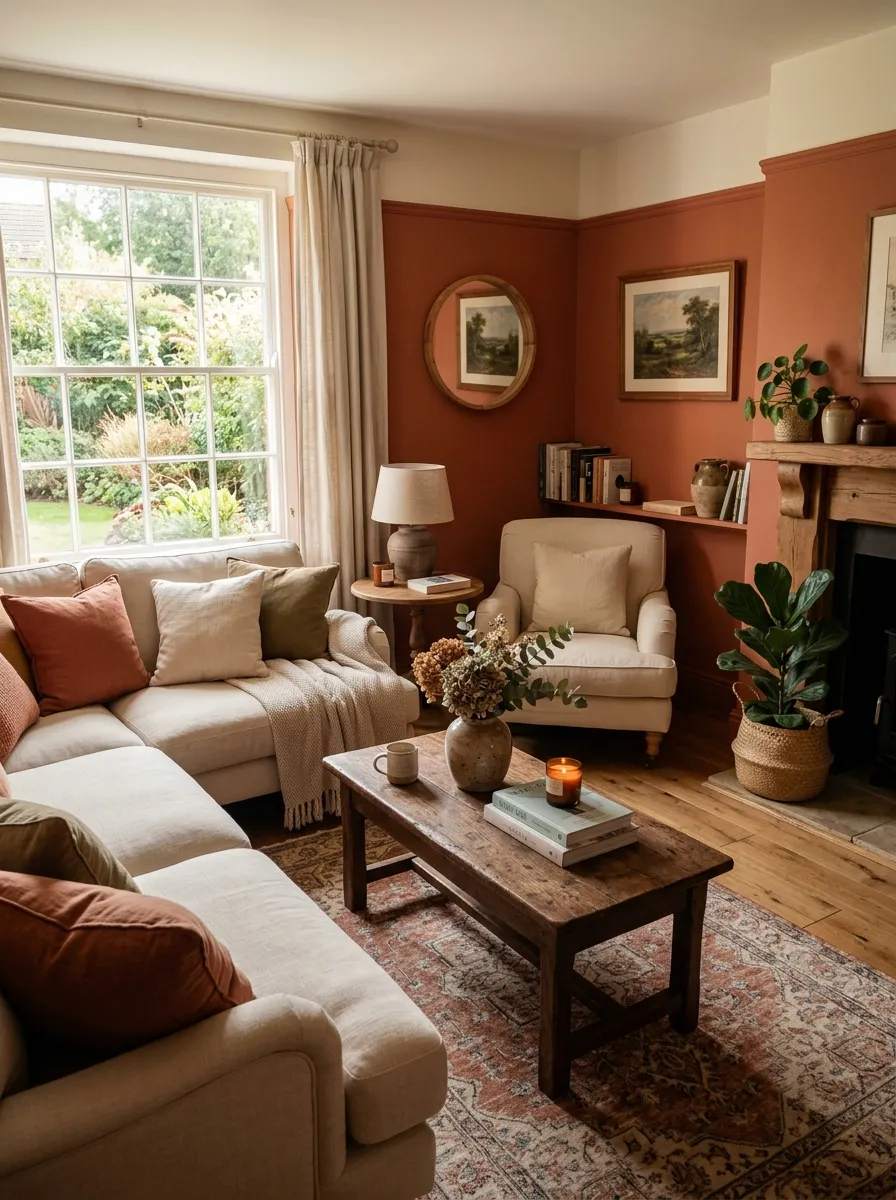
Color sets the mood of a room before anything else does. Cool grays and stark whites can feel clean but often read as cold rather than inviting. Warmer tones like terracotta, cream, olive, and soft browns tend to feel more grounded and calm. You don’t need to repaint the whole room to shift the palette. Adding warm tones through pillows, a throw blanket, or a piece of art can shift the feeling of the space without touching the walls. If you are ready to paint, test a small swatch on the wall first and look at it in both morning and evening light before committing. Paint samples cost only a few dollars and save you from repainting an entire wall twice. Wood tones in furniture and frames also add warmth, so mixing in a few wooden pieces can balance out a room with cooler wall colors. A warm palette doesn’t mean everything has to be brown or orange. Even a cool blue paired with warm wood and soft lighting can feel comforting.
13. Add a Statement Coffee Table
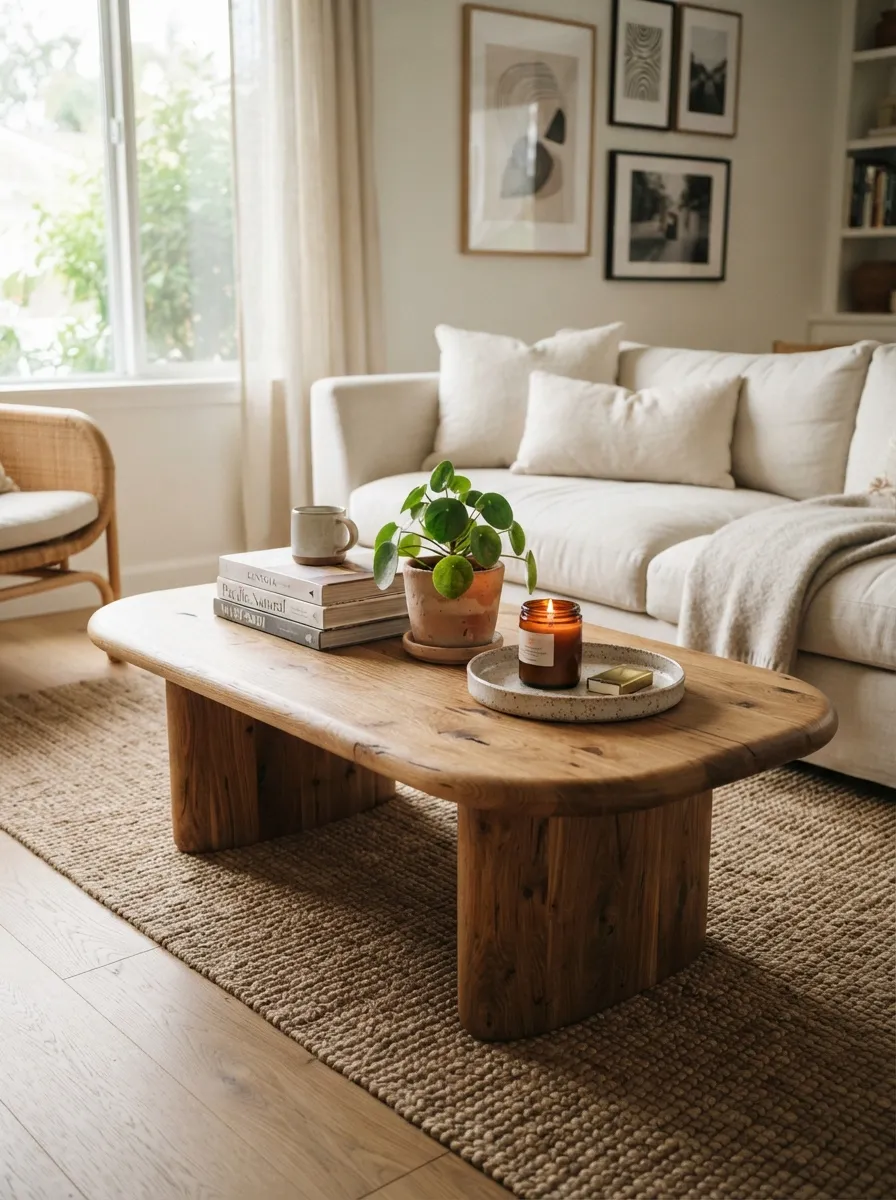
The coffee table is where a sitting room’s personality often shows up most. Choose one with some character, whether that’s a rounded wood shape, a woven base, or a vintage find with a story. Style the top with a small tray to corral remotes and coasters, a stack of books, and one plant or small object. Avoid overcrowding the surface, since you want room to actually set down a drink or plate. A secondhand coffee table can be sanded and refinished with a coat of oil or paint for a fraction of the cost of buying new. If your current table feels plain, add a woven tray or a stack of coffee table books to give it more texture without replacing the whole piece. Round tables work well in smaller rooms since they’re easier to walk around than sharp corners. The coffee table is also a great spot to rotate seasonal decor, like a small pumpkin in autumn or a bowl of fruit in summer.
14. Layer Different Textures Together
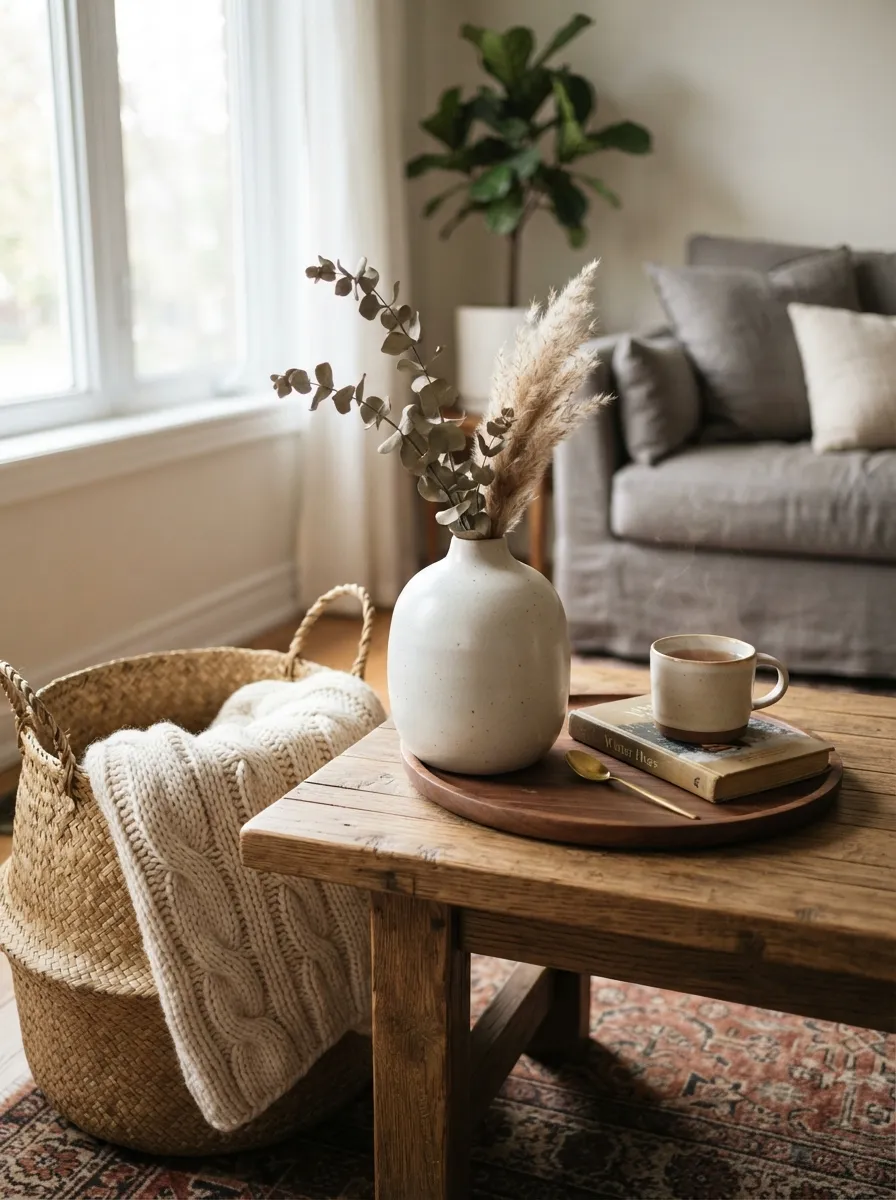
A room built entirely from smooth, matching materials can feel flat even if the colors are right. Mixing textures adds depth the same way mixing patterns does. Pair a smooth ceramic vase with a rough woven basket. Set a soft knit throw next to a hard wood side table. Add a metal lamp base near a linen lampshade. These small contrasts catch the eye and make a room feel more layered without adding clutter. You likely already own pieces in different materials scattered around the house. Try pulling a few together into your sitting room rather than buying anything new. A wicker basket from the laundry room, a wooden bowl from the kitchen, or a woven placemat used as a small table runner can all serve this purpose. The goal isn’t to fill every surface, just to make sure the materials in the room aren’t all the same. A little contrast goes a long way toward making a space feel considered rather than accidental.
15. Create a Window Seat Nook
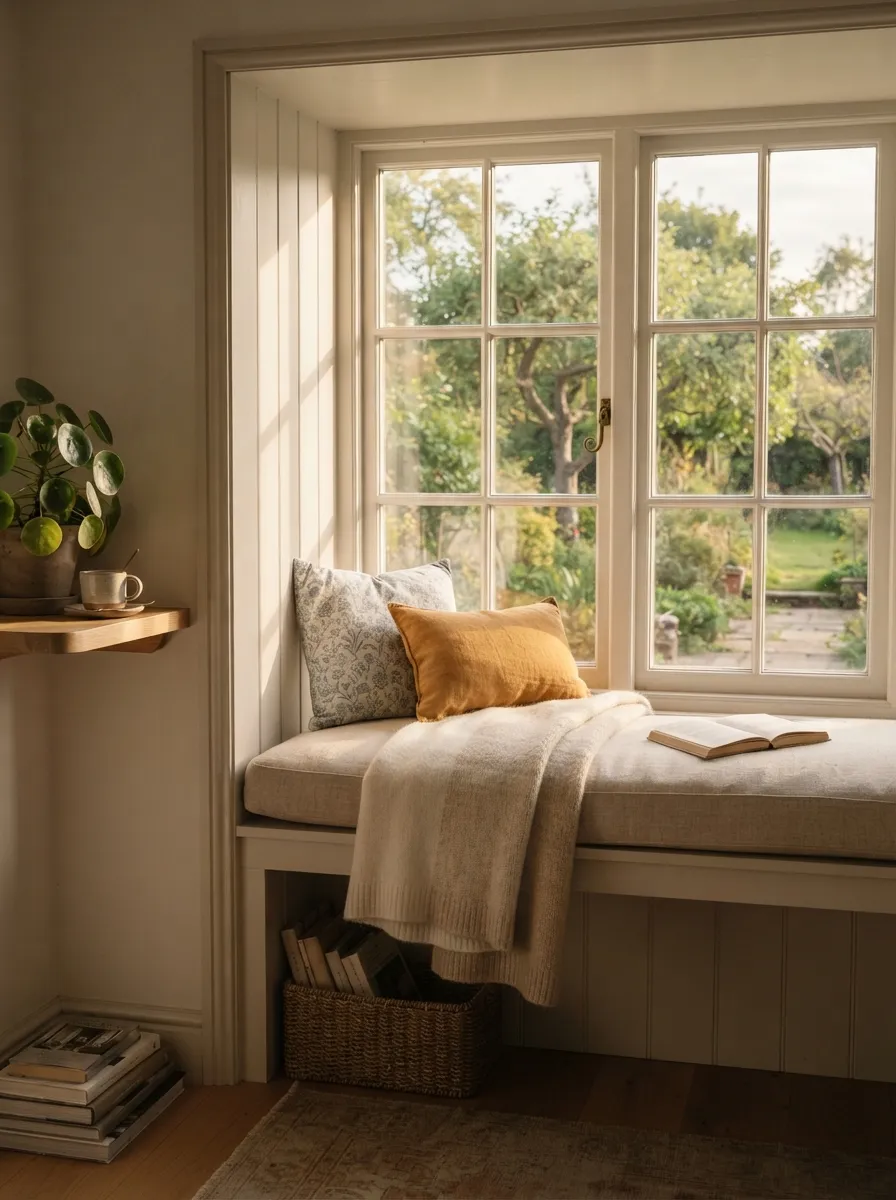
If your sitting room has a window ledge or a built in bench, turning it into a small nook is one of the most rewarding upgrades you can make. Add a thick foam cushion cut to fit the space, cover it in a durable fabric, and pile on two or three small pillows. Even without a built in bench, you can create a similar feel with a low bench or a stack of floor cushions placed under a window. This spot becomes a natural gathering point for morning coffee or afternoon reading, since it’s usually flooded with the best natural light in the room. For a DIY cushion, buy foam from a craft store, cut it to size with a serrated knife, and sew a simple fitted cover. It costs far less than a custom made cushion and only takes an afternoon. Keep the nook simple. A window seat works best when it isn’t overloaded with pillows, since the whole point is having a clear spot to actually sit down.
16. Add Personal Touches with Handmade Items
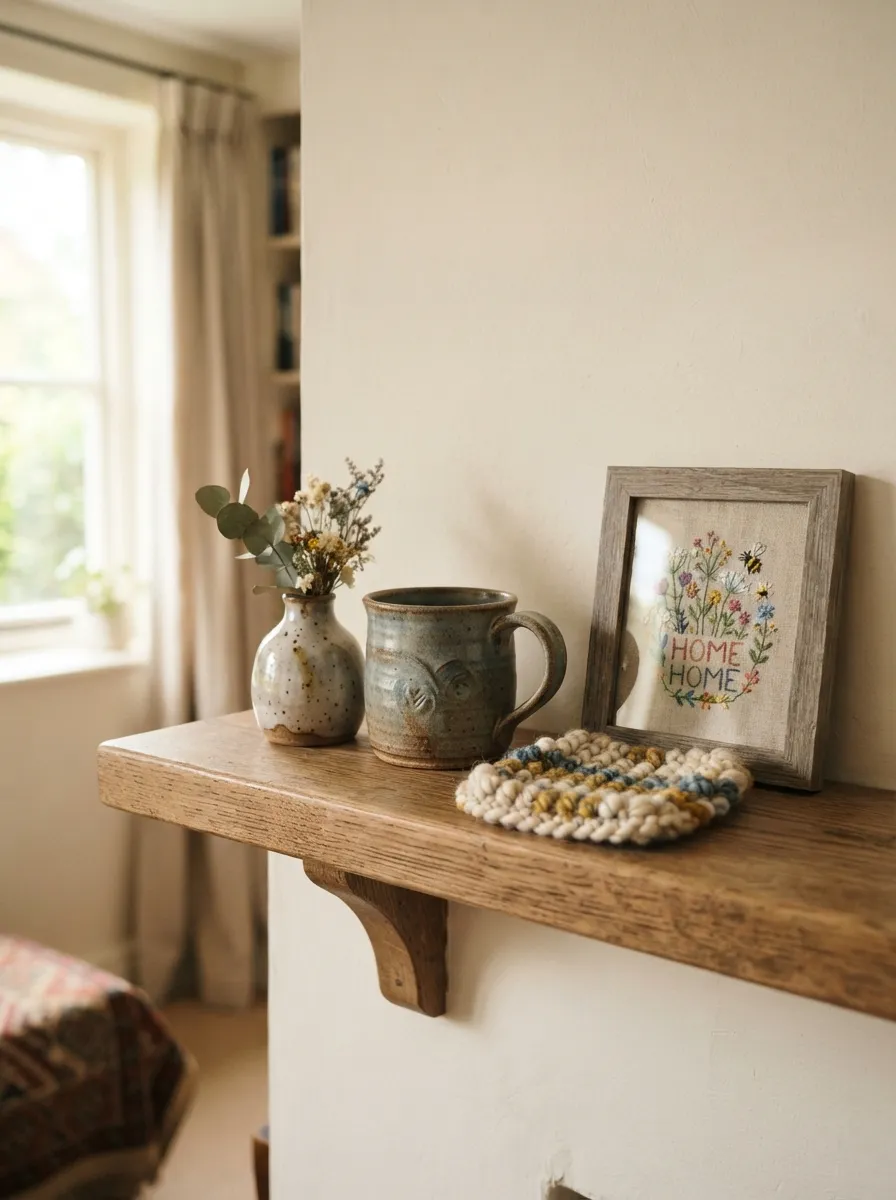
Store bought decor can only take a room so far. What makes a space feel like yours is often the handmade or one of a kind pieces scattered throughout it. A piece of pottery from a local market, a knitted coaster made by a family member, or a small painting you made yourself all add a layer that mass produced items can’t replicate. If you don’t have handmade pieces yet, consider trying a simple craft like embroidery, macrame, or basic pottery. Many of these skills only require a small starter kit and a few evenings to produce something worth displaying. Local craft fairs and secondhand shops are also good places to find handmade items at low prices while supporting independent makers. Even something as simple as a hand-pressed flower in a frame counts. These personal touches don’t need to be perfect. A slightly uneven ceramic bowl or a hand-sewn pillow often adds more character to a room than anything bought off a shelf.
17. Use Scented Elements for a Homey Feel
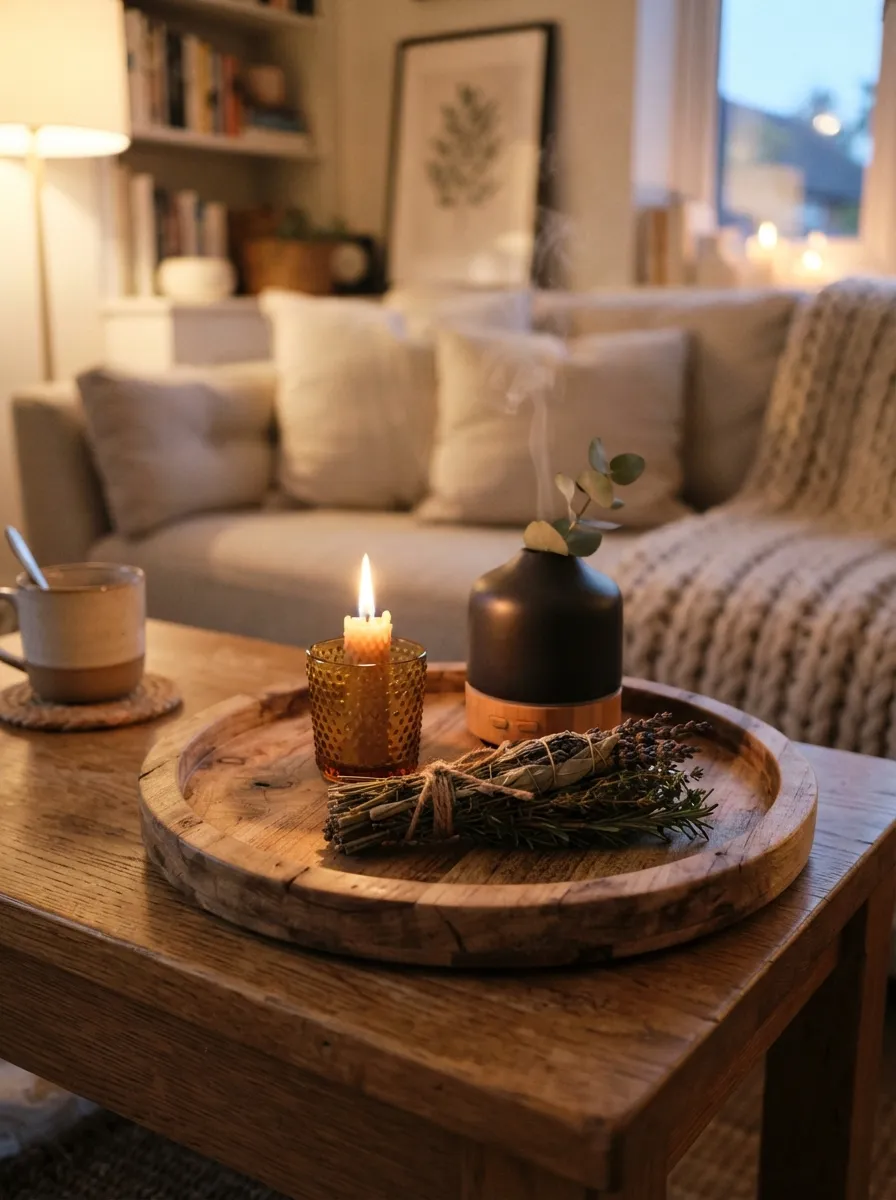
Comfort isn’t only visual. Scent plays a large role in how a room feels the moment you walk in. A simmering pot of water with cinnamon and citrus peels on the stove can fill a whole downstairs with a warm smell for less than a dollar. A reed diffuser or a bundle of dried herbs like lavender or eucalyptus tucked into a bowl also adds a subtle scent without an open flame. Choose warm notes like vanilla, wood, or spice for a sitting room rather than sharp or floral scents, which tend to feel more suited to a bathroom or entryway. If you enjoy making things yourself, dried orange slices and cloves strung together make an inexpensive natural air freshener that also doubles as simple decor. Keep scents light rather than overpowering, since a subtle background note is more relaxing than something that hits you the moment you walk in. Pairing scent with soft lighting and textured decor rounds out the sensory experience of the room.
Conclusion
A sitting room becomes cozy through small, repeated choices rather than one big purchase. Soft lighting, layered textiles, a plant or two, and a handful of personal touches add up to a space that actually feels like yours. None of these 17 ideas require a large budget or a weekend of construction. Start with one or two that fit your current setup, whether that’s swapping a harsh bulb for a warm one or folding a blanket into a basket by the sofa. Comfort builds gradually, and each small change makes the next one easier to notice and enjoy. Pick a spot in your room right now and try the first idea that comes to mind.