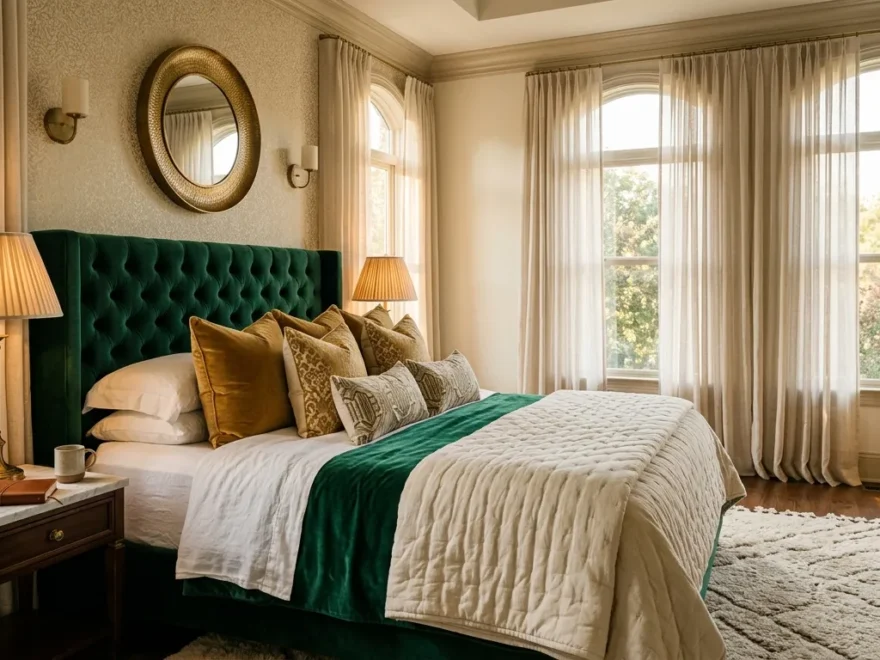
1. Go All In on a Velvet Headboard
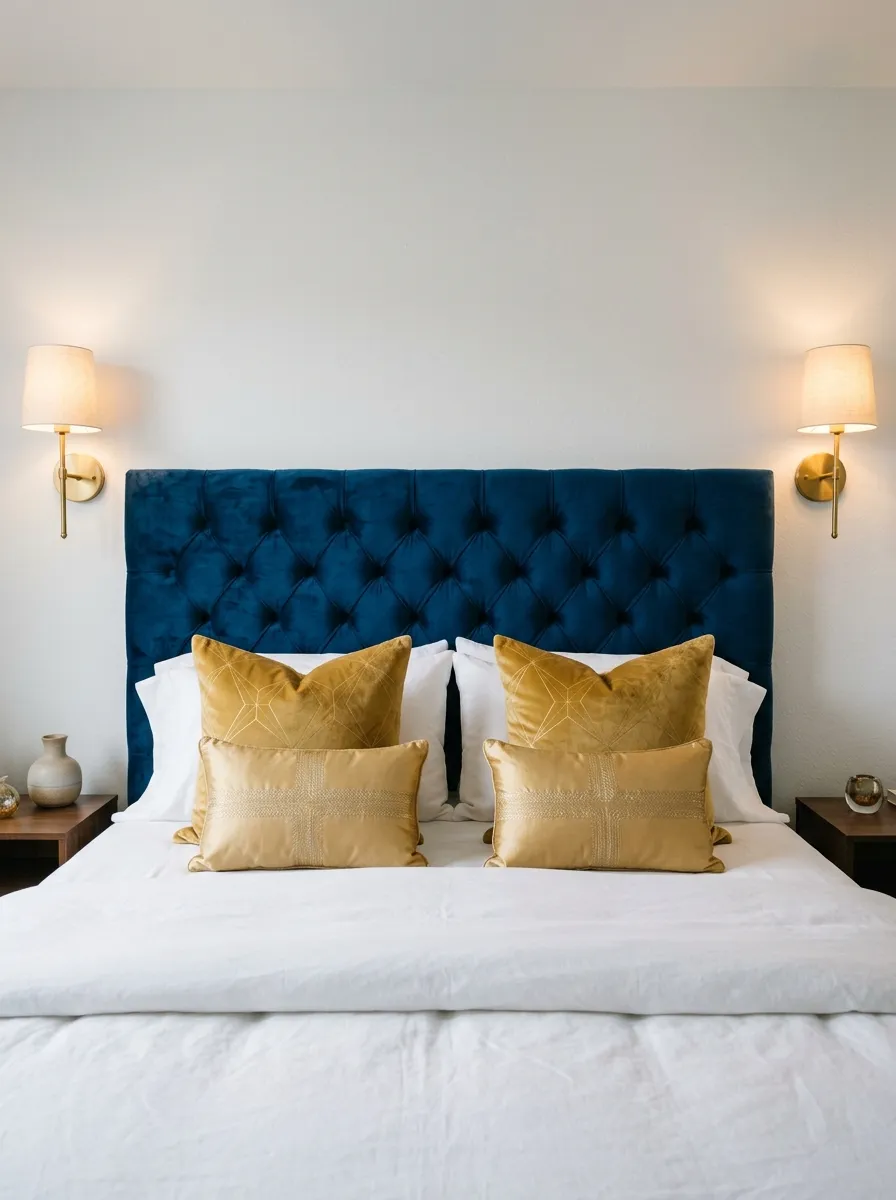
A velvet headboard is one of the fastest ways to make a bedroom look expensive. It draws the eye immediately and sets the tone for everything else in the room.
You do not need a custom piece to get this look. Many online furniture retailers sell velvet headboards for under $200. Deep tones like navy, forest green, dusty rose, and charcoal tend to read as the most luxurious.
If you already have a plain headboard, consider a velvet slipcover or a DIY padded panel mounted to the wall behind your bed. A sheet of plywood, foam batting, and fabric from a home goods store can create a custom look for less than $80.
The key is to keep the bedding relatively simple once you have a bold headboard. Crisp white linen or a neutral duvet lets the headboard be the star. Add two matching decorative pillows in a complementary color and the whole setup looks like it came straight from a boutique hotel.
Symmetry matters here. Matching nightstands and matching lamps on either side reinforce the polished, intentional feel that signals luxury.
2. Layer Your Lighting in Every Corner
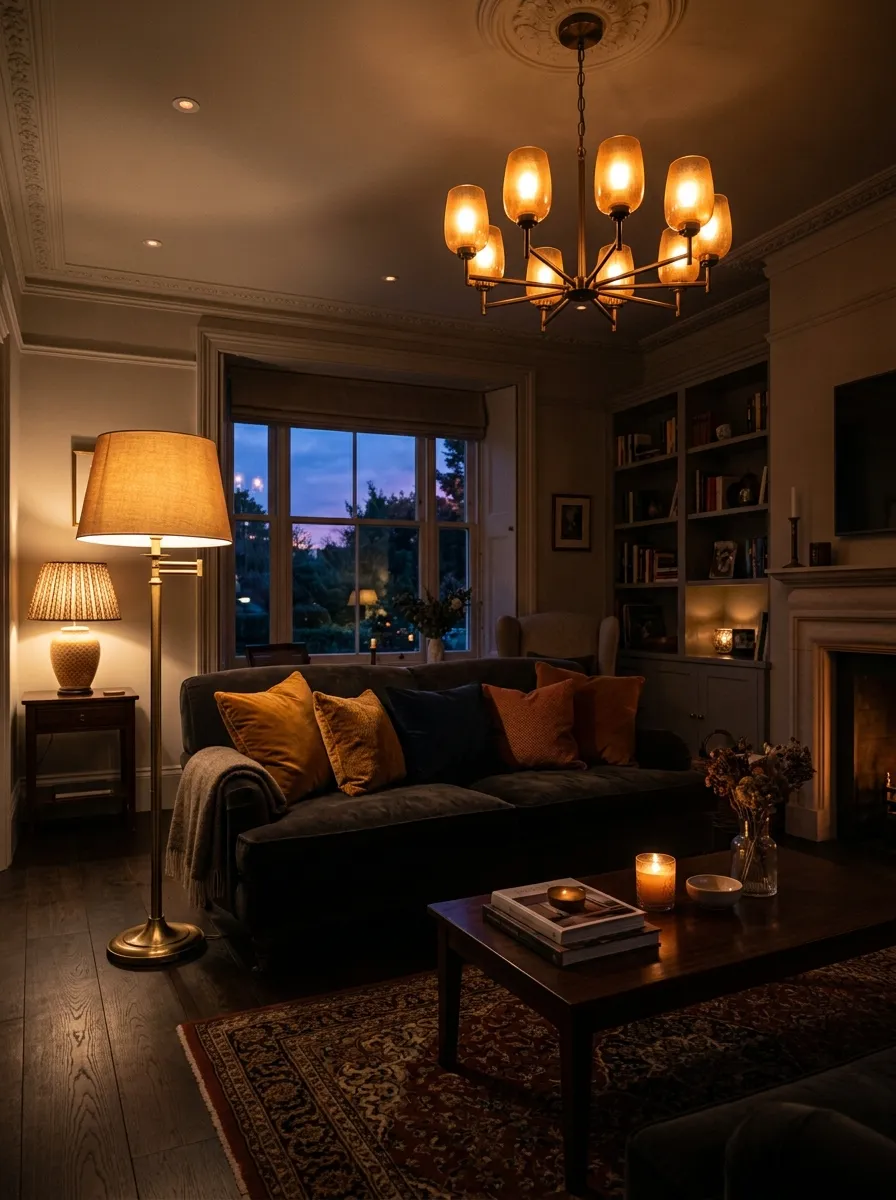
Overhead lighting alone will always make a room feel flat and ordinary. Luxury spaces use layers of light, and that is what you want to replicate.
Think of lighting in three tiers. Ambient light comes from overhead fixtures and sets the general brightness. Task lighting comes from lamps positioned for reading or working. Accent lighting highlights specific objects or architectural details.
A simple floor lamp placed in a dark corner immediately makes a room feel warmer and more intentional. A table lamp on a console or nightstand adds a second layer. If you have art on the walls, a small picture light or a directed spotlight changes the entire mood of the space.
Dimmer switches are one of the most affordable upgrades you can make. A pack of smart bulbs with adjustable warmth lets you shift the atmosphere without spending on new fixtures.
Warm bulbs in the 2700K to 3000K range photograph beautifully and feel inviting in person. Swap out any cool or bright white bulbs you currently have. This single change, costing less than $15, will make your room look more polished immediately.
The goal is to make sure no corner of the room sits in harsh or flat light.
3. Invest in One Oversized Statement Mirror
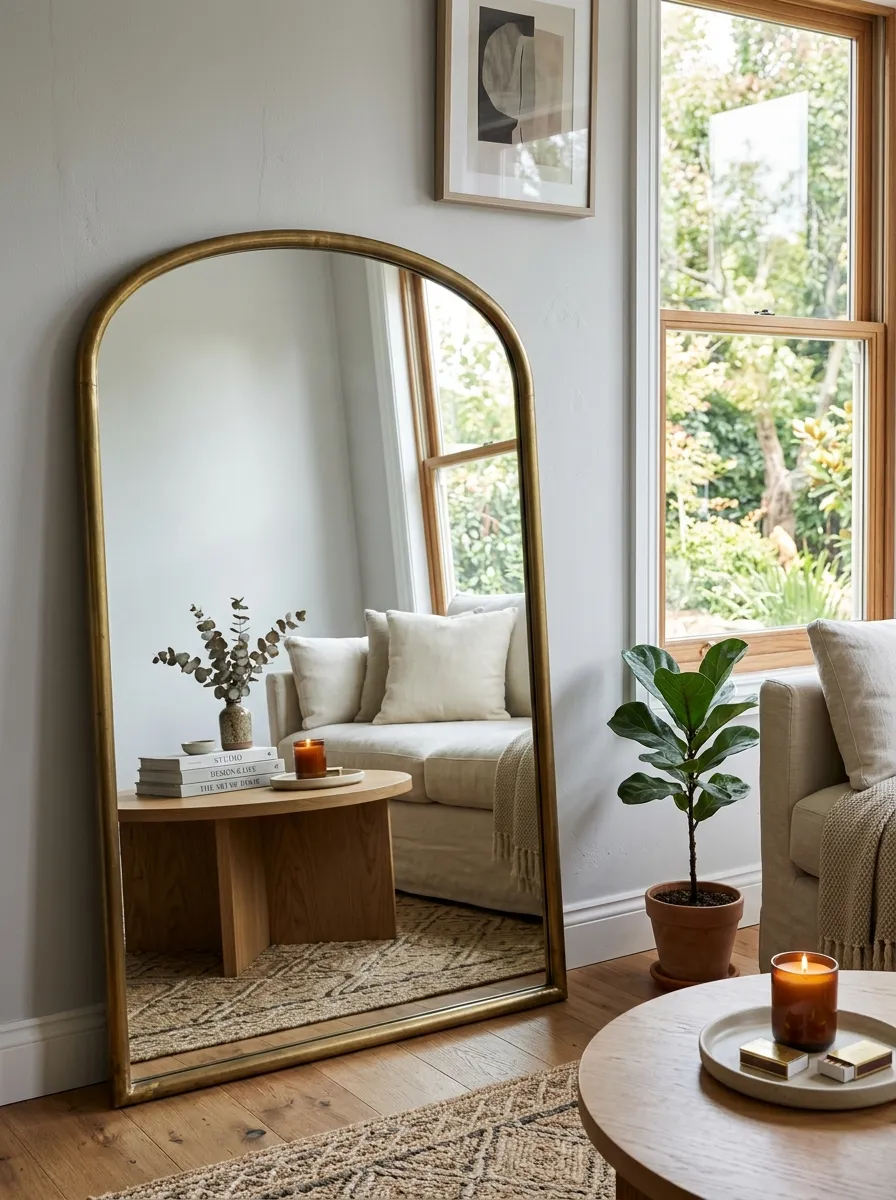
A large mirror does several things at once. It reflects light, makes a space feel bigger, and acts as a piece of art without requiring you to hang anything on the wall.
The style of the frame matters a great deal. Arched mirrors with gold or brass frames have a timeless quality that works across many decor styles. Chunky wooden frames painted in matte black feel more contemporary. Either way, the size is what creates the luxury effect.
Go bigger than you think you need to. A mirror that is at least 40 inches tall will make a real visual impact. Leaning it against the wall rather than hanging it gives a casual, editorial feel that actually photographs better than a mounted piece.
Thrift stores and estate sales are excellent sources for large mirrors at low prices. An outdated frame can be spray-painted with metallic gold, brushed nickel, or matte black paint for under $10. The transformation takes less than an hour and the result looks far more expensive than the actual cost.
Position the mirror so it reflects something beautiful, such as a window, a lamp, or a styled shelf. What a mirror reflects is just as important as the mirror itself.
4. Add Architectural Interest With Curtains Hung High
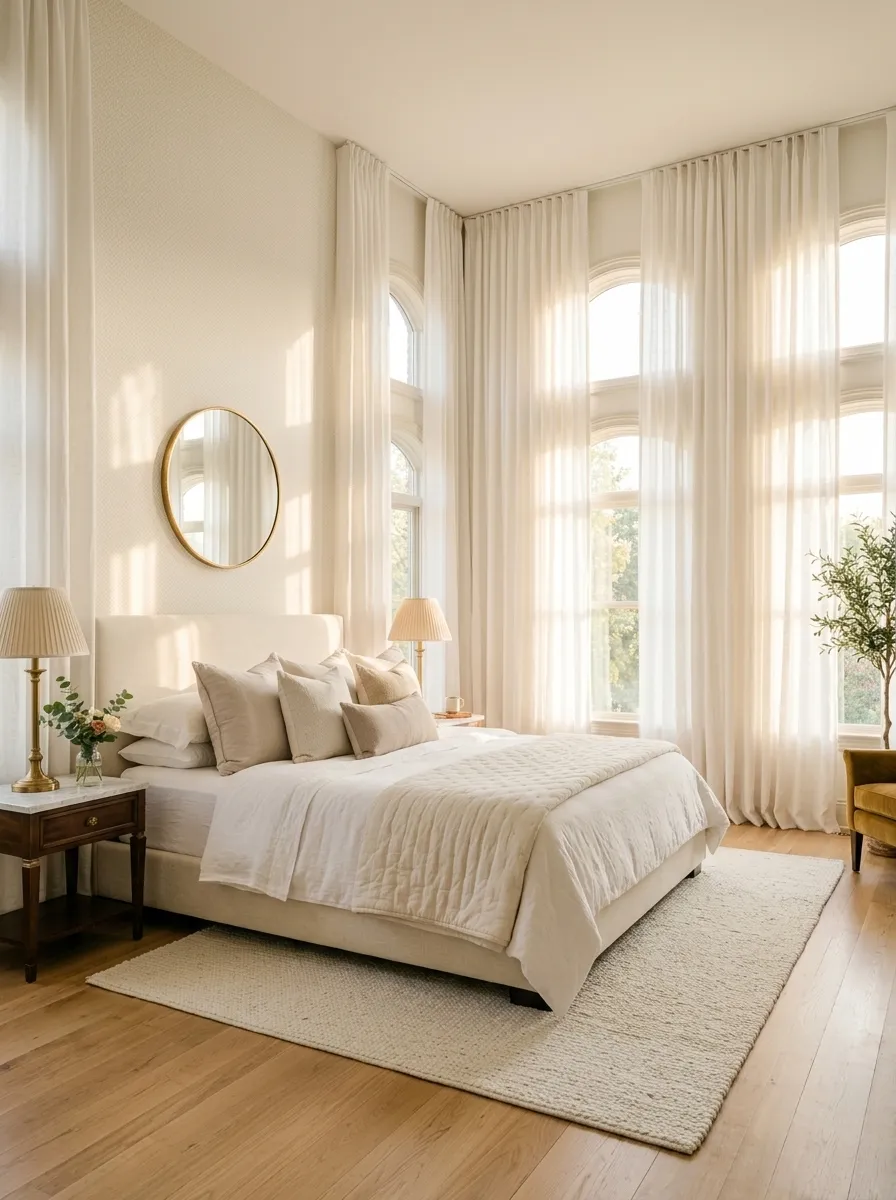
Where you hang your curtains matters more than the curtains themselves. Most people hang them too low and too close to the window frame. That is what makes a room feel small and basic.
Hanging curtain rods as close to the ceiling as possible, even in a room with standard eight-foot ceilings, draws the eye upward and makes the entire room feel taller. Extending the rod six to twelve inches beyond the window frame on each side makes the window appear wider and lets more light in.
The curtain panels should be long enough to graze or slightly pool on the floor. Panels that float two inches above the floor look intentional. Panels that stop mid-wall or at the windowsill look unfinished.
Linen, velvet, and silk-look polyester fabrics are the most effective for creating a luxurious feel. Pure white, deep ivory, charcoal, and forest green are reliable choices that work in most spaces.
Budget tip: IKEA’s Ritva or Dytag curtain panels are under $30 a pair and hang beautifully with the right rod placement. Many interior designers use them in high-end projects precisely because the simple silhouette reads as clean and expensive when positioned correctly.
5. Style a Tray on Every Surface
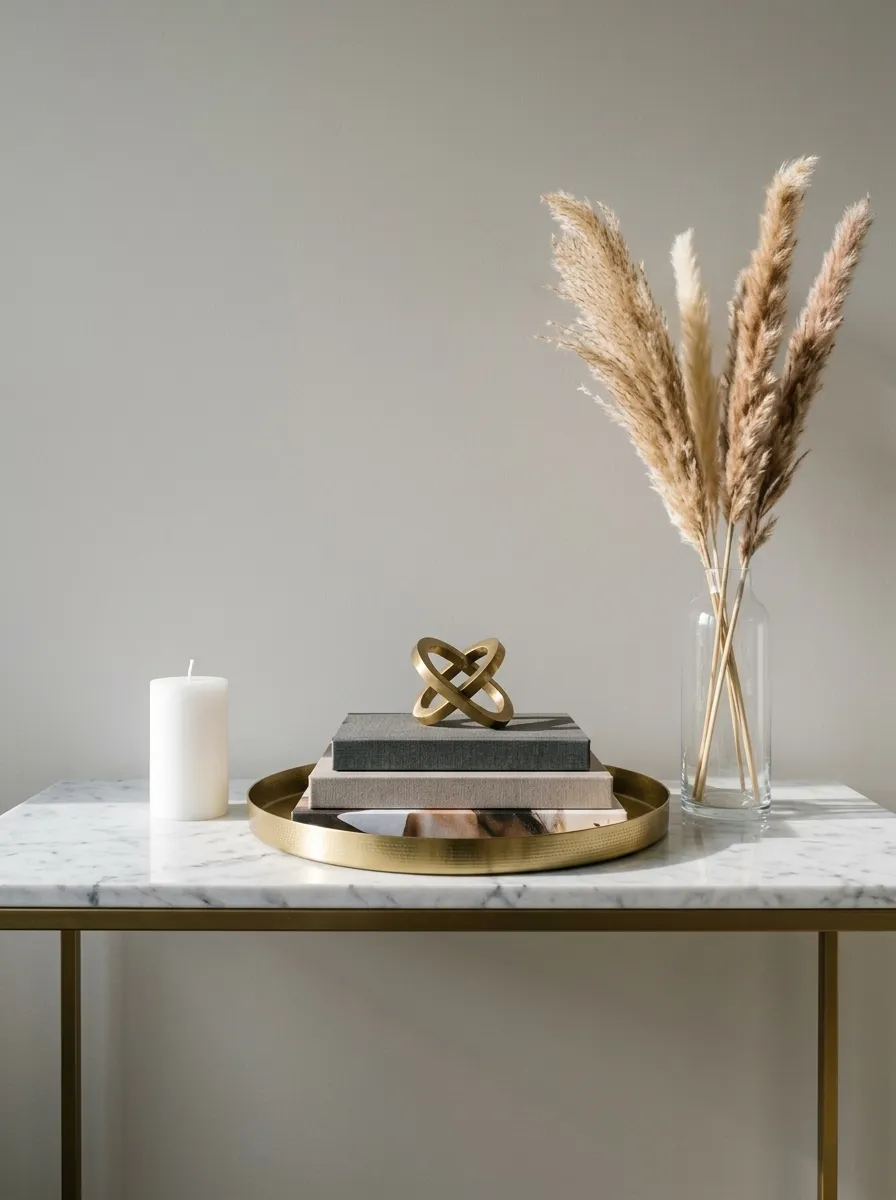
Random objects scattered across a surface always look cluttered. The same objects arranged on a tray instantly look curated and intentional.
A tray acts as a visual container. It tells the eye where to stop looking and gives a collection of small items a sense of purpose. That is why styled trays appear in every high-end hotel room and interior design spread you have ever admired.
You can use any tray you already own. Wooden trays, lacquer trays, marble slabs, and mirrored trays all work. The shape matters less than the way you fill it.
A classic formula is: one tall element like a candle or small vase, one medium element like a small sculpture or coaster stack, and one low flat element like a decorative box or a few folded napkins. Odd numbers tend to look more visually interesting than even ones.
Keep the color palette tight. Two or three tones work better than a rainbow of objects. Metallic accents in gold or bronze add a sense of richness without overwhelming the arrangement.
Replace the objects with the seasons to keep the look feeling current without spending money on new decor. A simple swap from white candles and greenery to warm amber tones changes the whole feel.
6. Choose Bedding Like It Matters
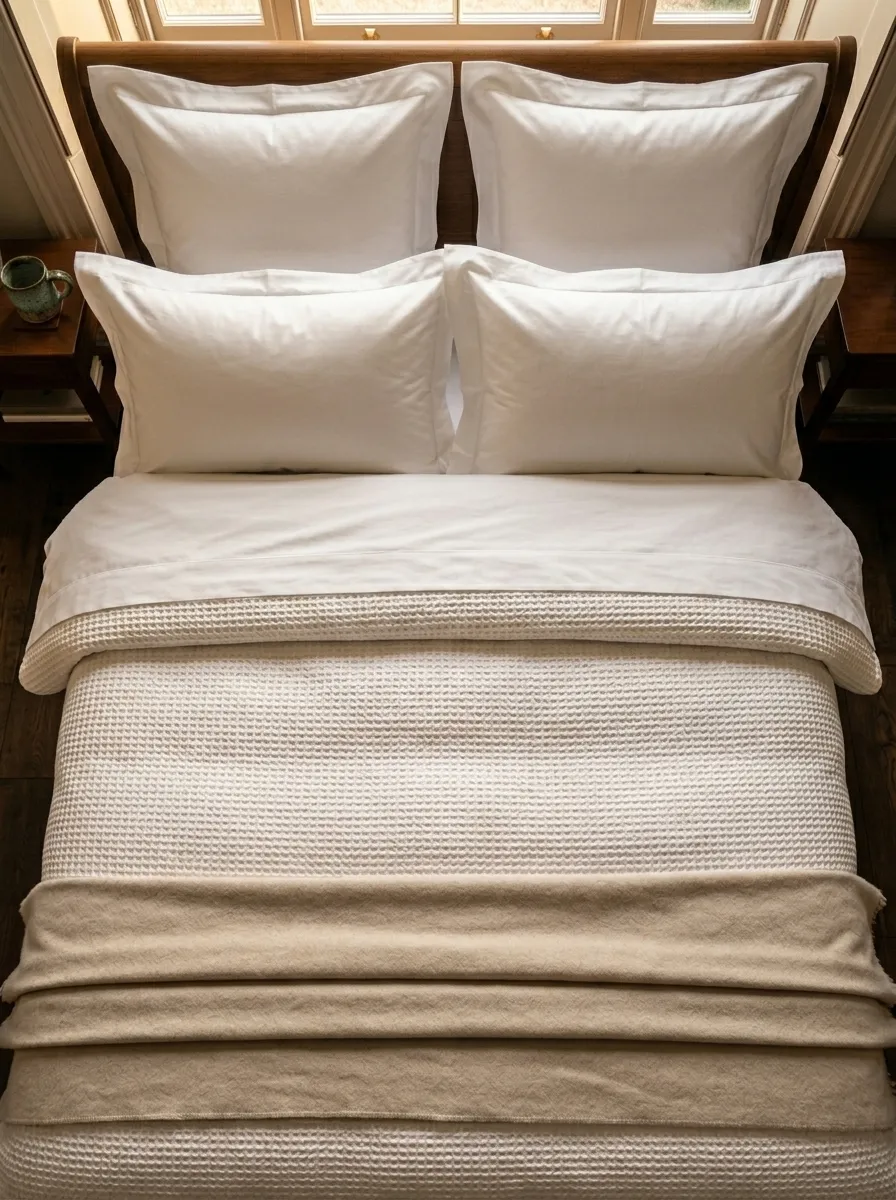
Bedding is one of the highest-impact investments you can make in a bedroom. You spend more time looking at and touching your bed than almost any other surface in the room.
High thread count does not automatically mean better quality. What you are actually looking for is long-staple cotton, a tight weave, and a matte finish rather than a shiny one. Percale and sateen weaves both look expensive when well-made.
White bedding is the classic luxury choice because it photographs so well and launders easily. If you prefer color, deep dusty tones like slate, taupe, and sage feel more refined than bright primary colors.
Pillow count matters too. The hotel pillow arrangement, two sleeping pillows, two euro shams behind them, and one or two decorative pillows in front, gives a bed a full and deliberately styled look.
A good duvet with a cotton cover changes the entire feel of the room. You can find excellent duvet covers at Target, H&M Home, or online shops like Parachute for $40 to $80. Paired with a throw blanket casually folded at the foot, the bed starts to look like a feature, not just a functional piece of furniture.
Wash and iron your bedding before photographing or hosting. Crisp fabric reads as clean and expensive in a way that wrinkled fabric never will.
7. Bring in Warm Metallics Through Accessories
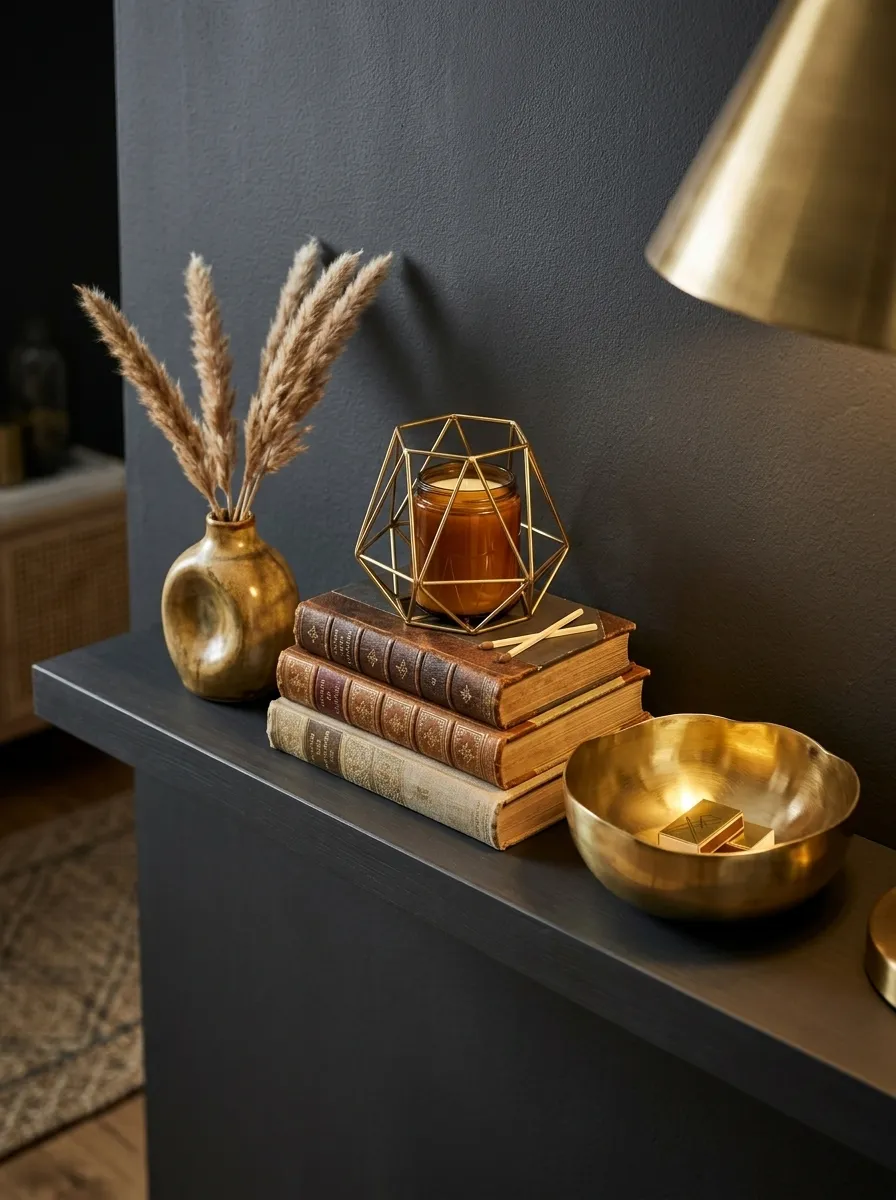
Metallic accents are one of the most reliable tools in luxury decor. They add warmth, catch light beautifully, and make even budget pieces look more expensive.
Brass and gold tones are currently the most popular and work particularly well in warm-toned rooms. Brushed nickel and chrome feel cooler and suit more contemporary spaces. Aged bronze and antique copper suit spaces with a more traditional or moody feel.
The key is consistency. Pick one or two metallic tones and repeat them across the room in small doses. You do not need a lot of metal to make an impact. A brass lamp, a gold picture frame, and a metal candle holder create a cohesive thread that ties a room together.
You can find quality metallic accessories at HomeGoods, TJ Maxx, and Amazon for very reasonable prices. A single brass bowl or a set of gold bookends costs $15 to $30 and adds far more visual richness than the price suggests.
Avoid mixing too many metallic tones in the same space. Two is a maximum. One warm metal and one dark metal, like gold and black iron, can work well together. Three or more different finishes starts to feel random rather than intentional.
Metallics work particularly well when positioned near a light source so they can actually catch and reflect the light.
8. Use Art in a Large Format
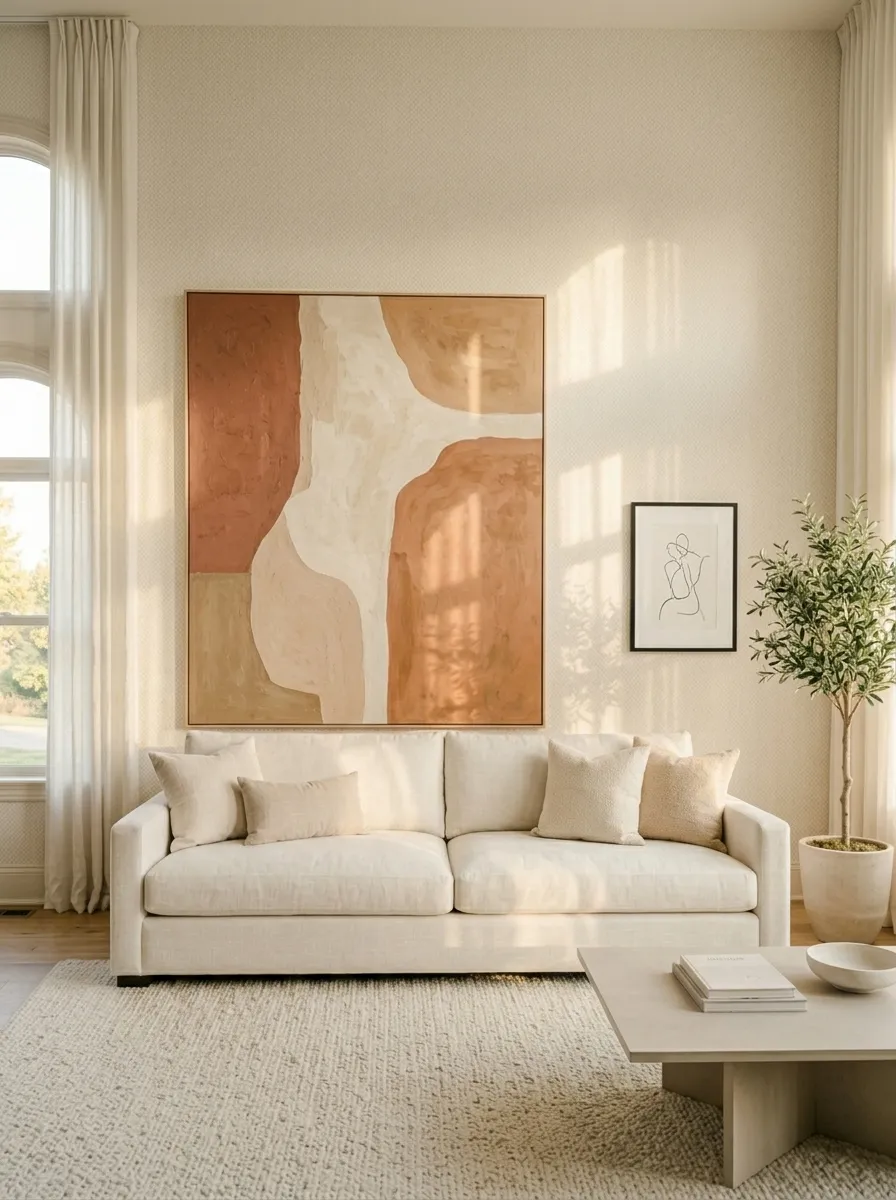
A gallery wall of small frames can look charming, but a single large piece of art makes a room look genuinely expensive. Scale is what does the work here.
Art does not need to be original or costly. Large format prints from Etsy, Society6, or even a digital file printed at a local print shop can be stunning when properly framed and well-positioned.
The framing matters almost as much as the print itself. A simple but well-made frame in black, white, natural wood, or brushed gold makes any print look gallery-quality. Thin, cheap frames undermine the effect no matter how good the image is.
Position art so the center of the piece sits at approximately eye level, which is typically 57 to 60 inches from the floor. Hung too high is one of the most common mistakes people make and it immediately makes a room feel awkward.
For a room with standard ceiling height, a single piece that is at least 24 by 36 inches will feel proportionate against most walls. Larger is always better if the budget allows.
Black and white photography, abstract expressionist prints, and simple botanical illustrations all read as elevated without feeling inaccessible. Match the color palette of the art to two or three tones already present in the room for a pulled-together result.
9. Incorporate Natural Stone Elements
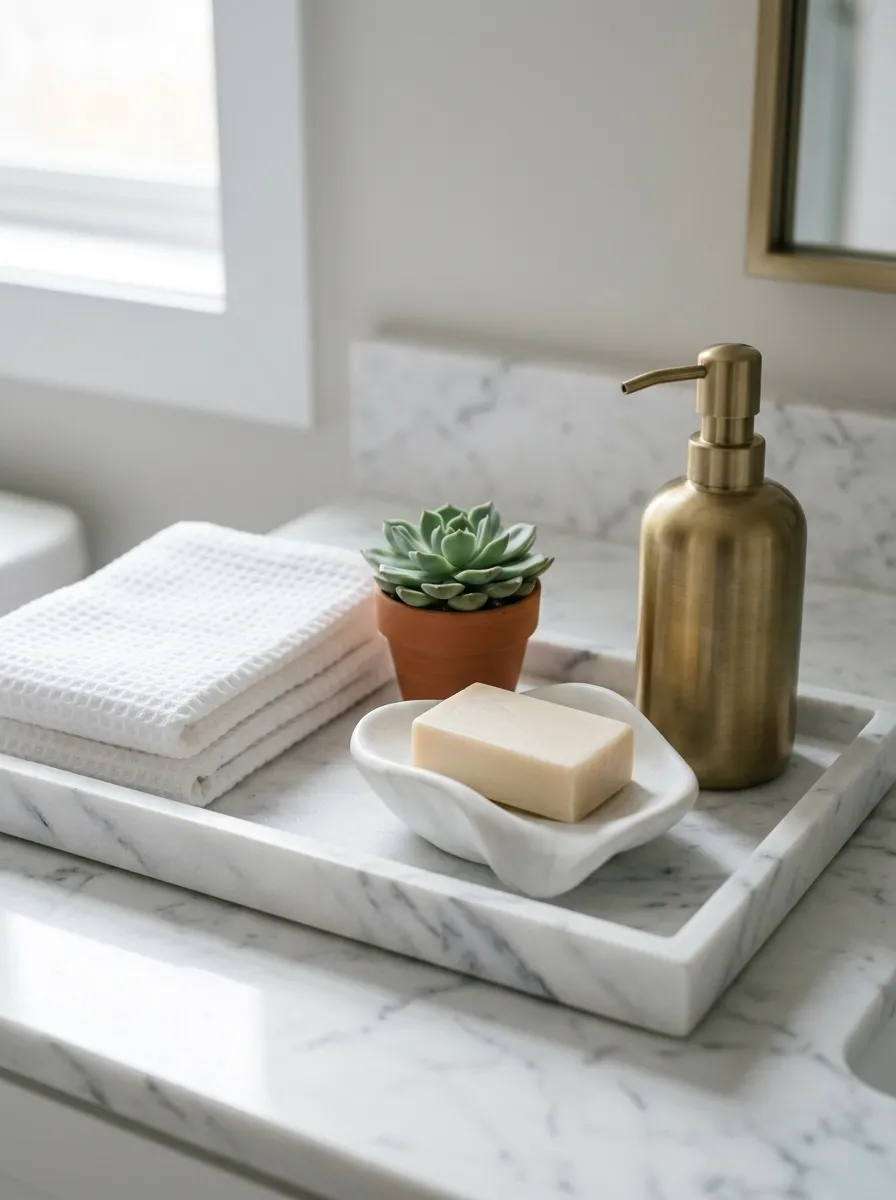
Stone has a weight and permanence that no synthetic material fully replicates. Even a small amount of real or high-quality faux stone makes a space feel grounded and expensive.
Full marble countertops and stone floors are high-cost options, but you can introduce the same visual quality through smaller pieces. Marble trays, stone coasters, travertine candle holders, and agate bookends all bring natural stone into a space affordably.
Marble contact paper is a widely used DIY trick for transforming plain surfaces like tabletops, shelving, or even an old tray. The quality of marble contact paper varies significantly, so look for versions with realistic veining and a matte finish rather than a plasticky sheen.
Travertine and cream limestone tones are particularly warm and work well in living rooms and bedrooms. Black marble with white veining is a dramatic option that suits contemporary spaces.
Even a single marble serving board propped against a kitchen backsplash or a marble slab used as a desk accessory tray signals quality and intentionality.
Real stone pieces are often available cheaply at thrift stores, estate sales, and clearance sections of home goods stores. Because stone is so durable, secondhand pieces are rarely in poor condition.
10. Add a Plush Area Rug That Goes Under the Furniture
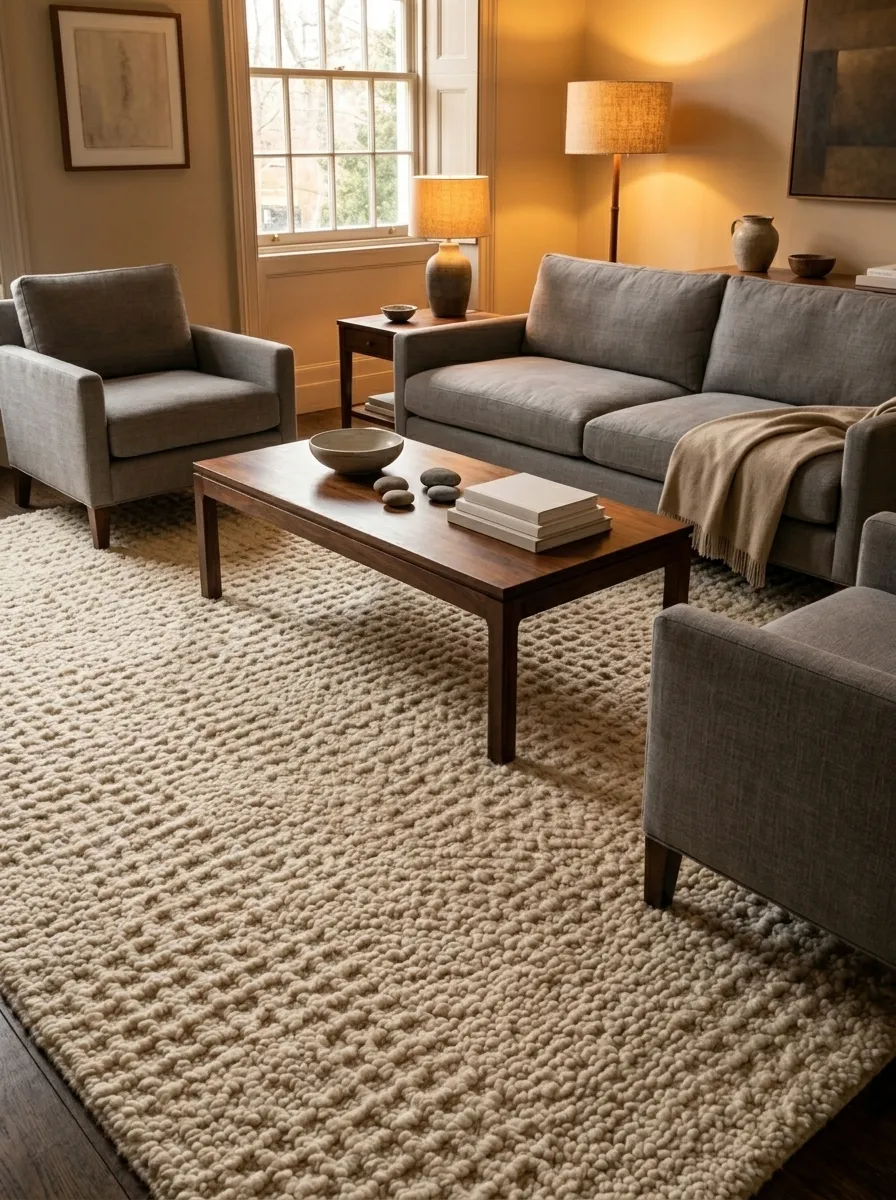
A rug that is too small for a room is one of the most common decor mistakes. It makes a space look like the rug is floating rather than anchoring everything together.
The front legs of all major seating pieces should sit on the rug. In a bedroom, the rug should extend at least 18 to 24 inches on either side of the bed and at least two feet beyond the foot of the bed.
High-pile rugs in neutral tones look the most luxurious and feel incredible underfoot. Wool rugs are the gold standard for texture and durability. Good quality polypropylene rugs mimic the look of wool very convincingly at a fraction of the price.
Cream, ivory, warm gray, camel, and blush are tones that read as expensive and work with a wide range of furniture colors. A subtle pattern like a soft geometric or a textured stripe adds interest without competing with other elements.
Rugs are one area worth spending a little more because they are large, central, and constantly in contact with people. A $300 rug that fills the room properly will always look better than a $100 rug that is too small.
Rug pads are non-negotiable. They protect both the rug and the floor, prevent slipping, and make even a flat rug feel more plush and substantial underfoot.
11. Create a Reading Nook With Intention
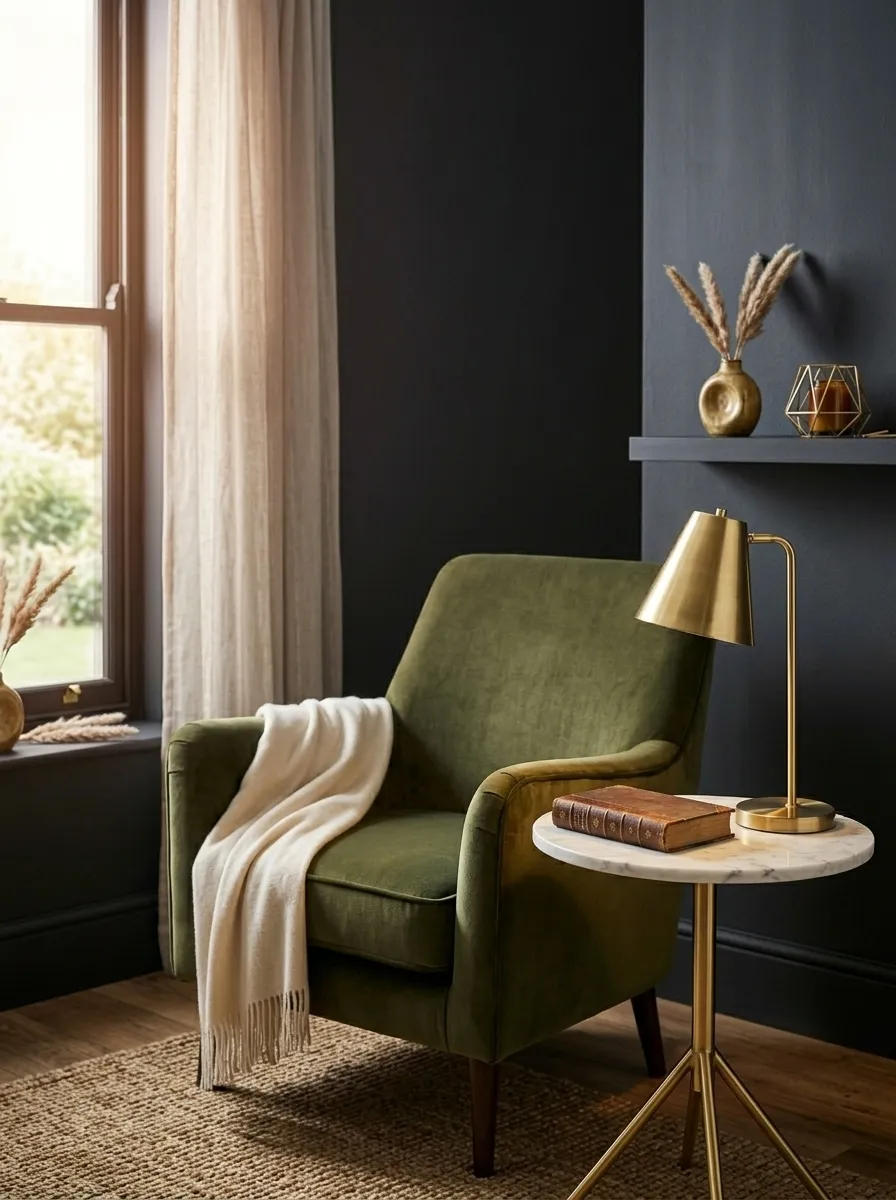
A well-styled reading nook signals that a home is lived in thoughtfully. It also adds a functional, human-scaled moment to a room that might otherwise feel impersonal.
You do not need a dedicated room or a bay window to create this effect. A corner of a living room or bedroom is all you need. A comfortable armchair, a good lamp, a small side table, and a throw blanket are the four essential components.
The chair is the anchor piece. Velvet armchairs in jewel tones photograph beautifully and feel luxurious to sit in. You can find beautiful secondhand armchairs at thrift stores and reupholster them with fabric for $50 to $150.
Position a floor lamp directly behind and slightly to the side of the chair so the light falls naturally over a reader’s shoulder. A small table within arm’s reach for a drink and a book completes the setup.
A woven basket nearby to hold extra throws or books adds texture and practical storage. A small potted plant or a single framed print on the adjacent wall reinforces the sense that this corner was thoughtfully designed rather than just furnished.
The entire setup can be assembled for under $200 if you source pieces secondhand or from budget-friendly retailers.
12. Stack and Style Books as Decor
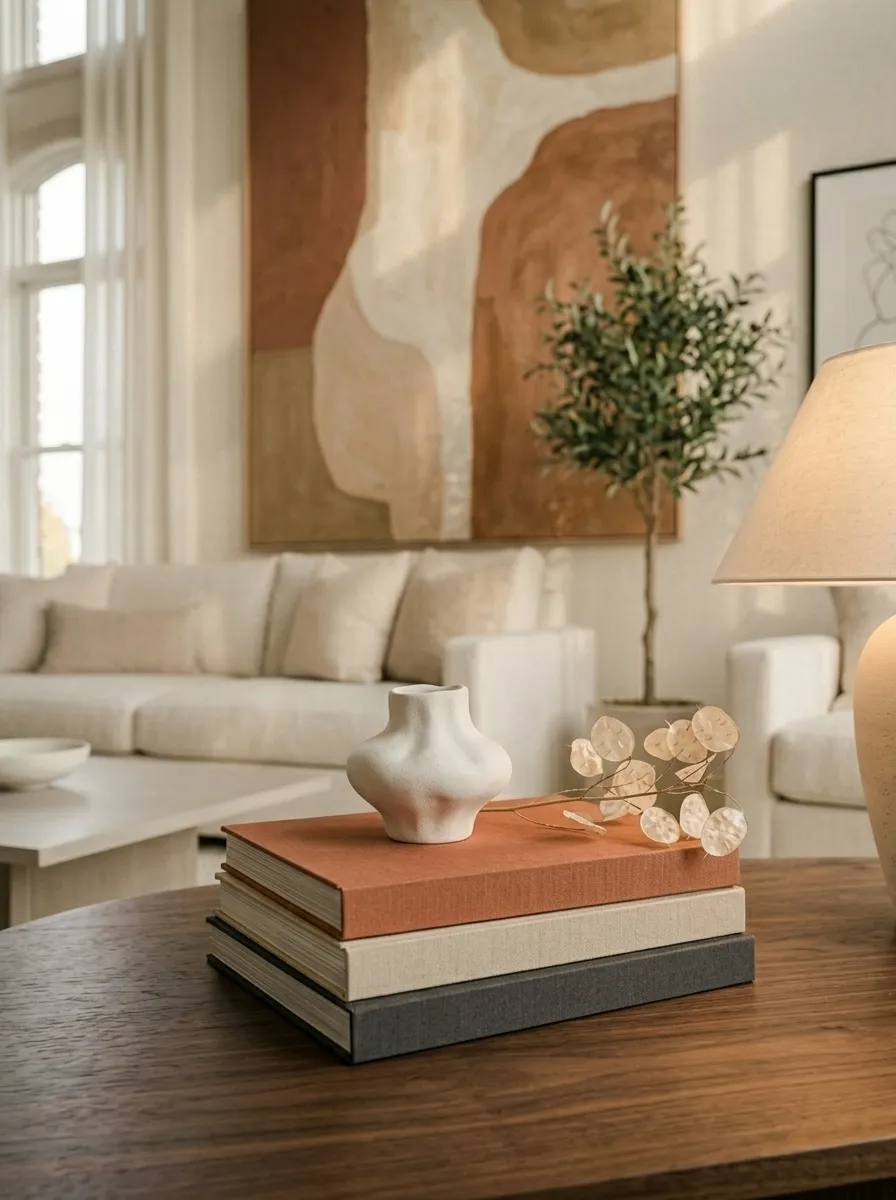
Books used as decor elements are a genuinely effective way to add color, texture, and personality to a room. The key is treating them as visual objects rather than purely functional ones.
Large format coffee table books on art, architecture, fashion, or travel are the best choices for visible display. Their oversized dimensions and often striking covers or spines make them natural focal points.
Stacking two or three books of graduating sizes on a coffee table and topping them with a small decorative object is one of the most used styling tricks in interior design photography. It adds height variation to a flat surface and creates a contained, deliberate arrangement.
On open shelves, books can be arranged by color for a striking visual effect. All-white, all-black, or a gradient arrangement from dark to light reads as highly curated.
You do not need to have read the books. Search thrift stores and library sales for large, beautiful volumes for $1 to $5 each. The subject matter matters less than the visual quality of the cover and size.
Facing books backward with the pages facing out instead of the spines creates a uniform creamy-white look on shelves that feels very current and clean. It works particularly well in rooms with a neutral palette.
13. Use Plants as Living Sculptural Pieces
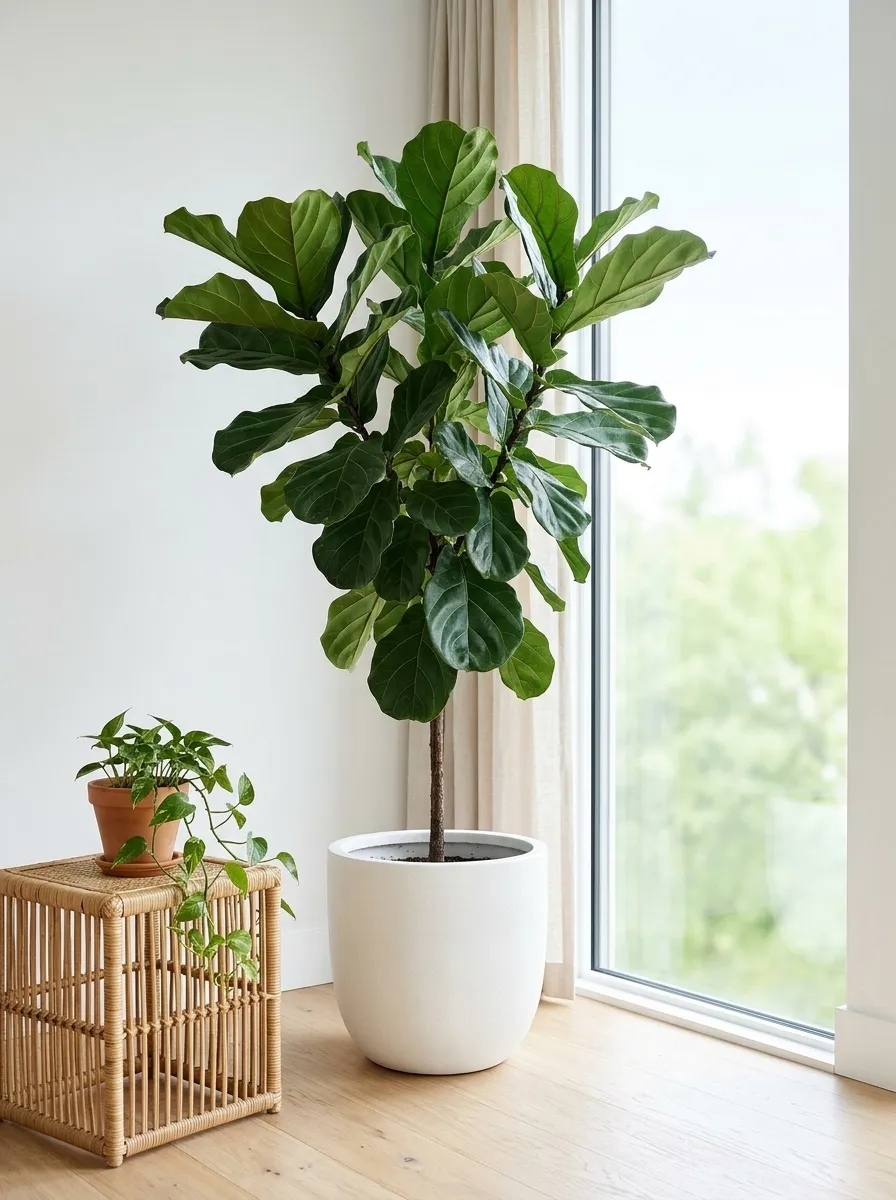
A well-placed plant changes the energy of a room in a way that no inanimate object can fully replicate. Plants add life, color, and scale to a space without competing with other decor.
Large statement plants like fiddle-leaf figs, olive trees, monstera deliciosa, and tall snake plants work particularly well as room anchors. Position them in corners or near windows where they can grow toward light and fill vertical space.
The pot is as important as the plant itself. A beautiful plant in a cheap plastic nursery pot reads as unfinished. Transfer plants to ceramic, terracotta, or concrete pots in tones that suit your room’s palette. A simple matte white or terracotta pot costs $10 to $20 and makes a significant difference.
Styling plants on plant stands rather than on the floor adds height variation and keeps them at a more prominent visual level. Simple wooden or metal stands are widely available for $15 to $40.
If you struggle with live plants, high-quality faux plants have improved dramatically in recent years. The best options are made from real dried or preserved botanicals rather than plastic. Faux olive branches, dried pampas grass, and preserved eucalyptus look entirely authentic.
Cluster smaller plants in odd numbers of three or five for a more natural, styled effect.
14. Hang Wallpaper on a Single Accent Wall
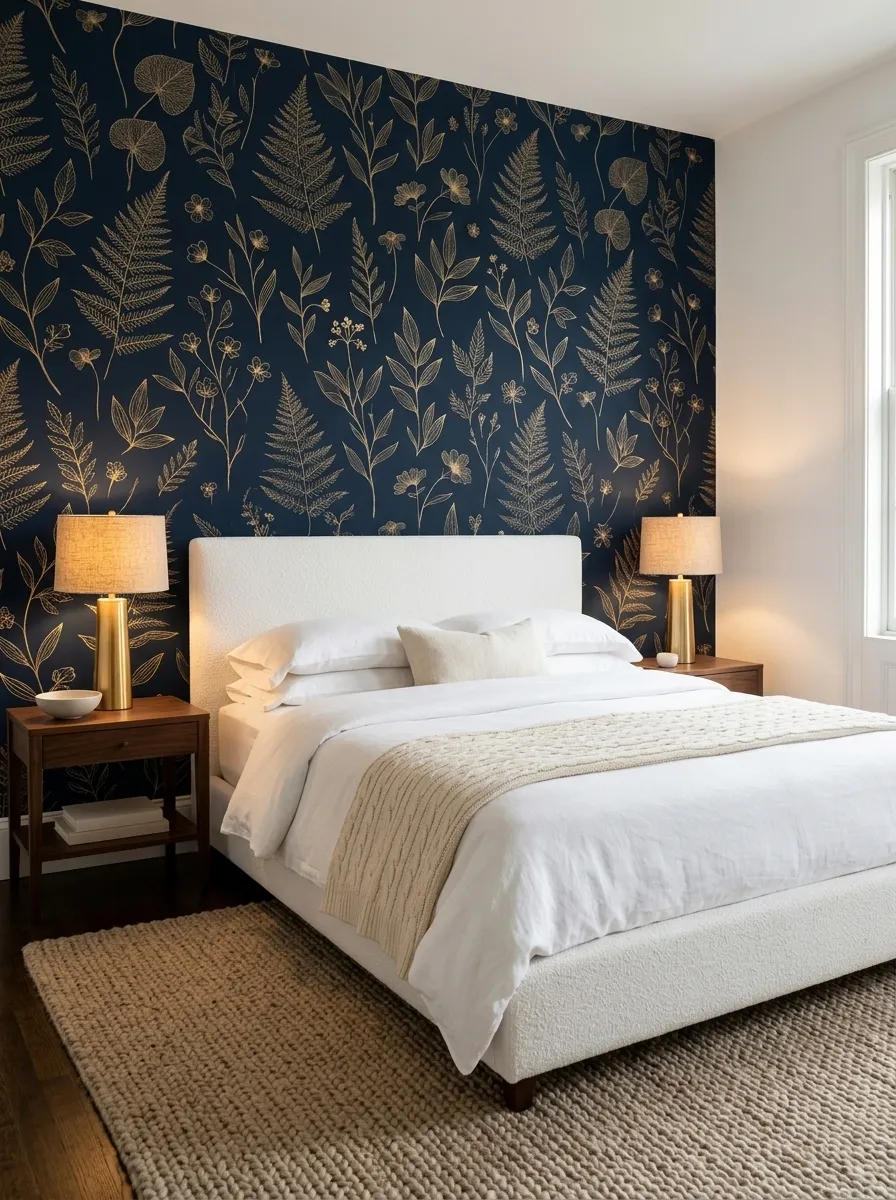
You do not need to wallpaper an entire room to get a dramatic effect. One accent wall, specifically the wall behind the headboard in a bedroom or behind a sofa in a living room, is often enough to transform the entire space.
Peel-and-stick wallpaper has made accent walls far more accessible. Many high-quality versions are available in authentic-looking patterns including grasscloth, botanical prints, marble effects, geometric designs, and classic stripes.
The pattern you choose should feel intentional for the room. Deep botanical patterns in navy or forest green are a classic choice for bedrooms. Subtle geometric or textured patterns suit living rooms well. Marble or stone effects work beautifully in bathrooms or dining areas.
The most important thing is that the wall and floor are properly prepared before application. A smooth, clean surface is the difference between a professional finish and a DIY-looking result.
Budget-friendly peel-and-stick options from brands like NuWallpaper, Chasing Paper, and Tempaper start around $30 to $50 per roll. Most accent walls require two to three rolls.
Once your accent wall is in place, you can keep the surrounding three walls completely neutral. The single featured wall does all the work and keeps the room from feeling visually overwhelming.
15. Display a Perfume or Candle Collection as Decor
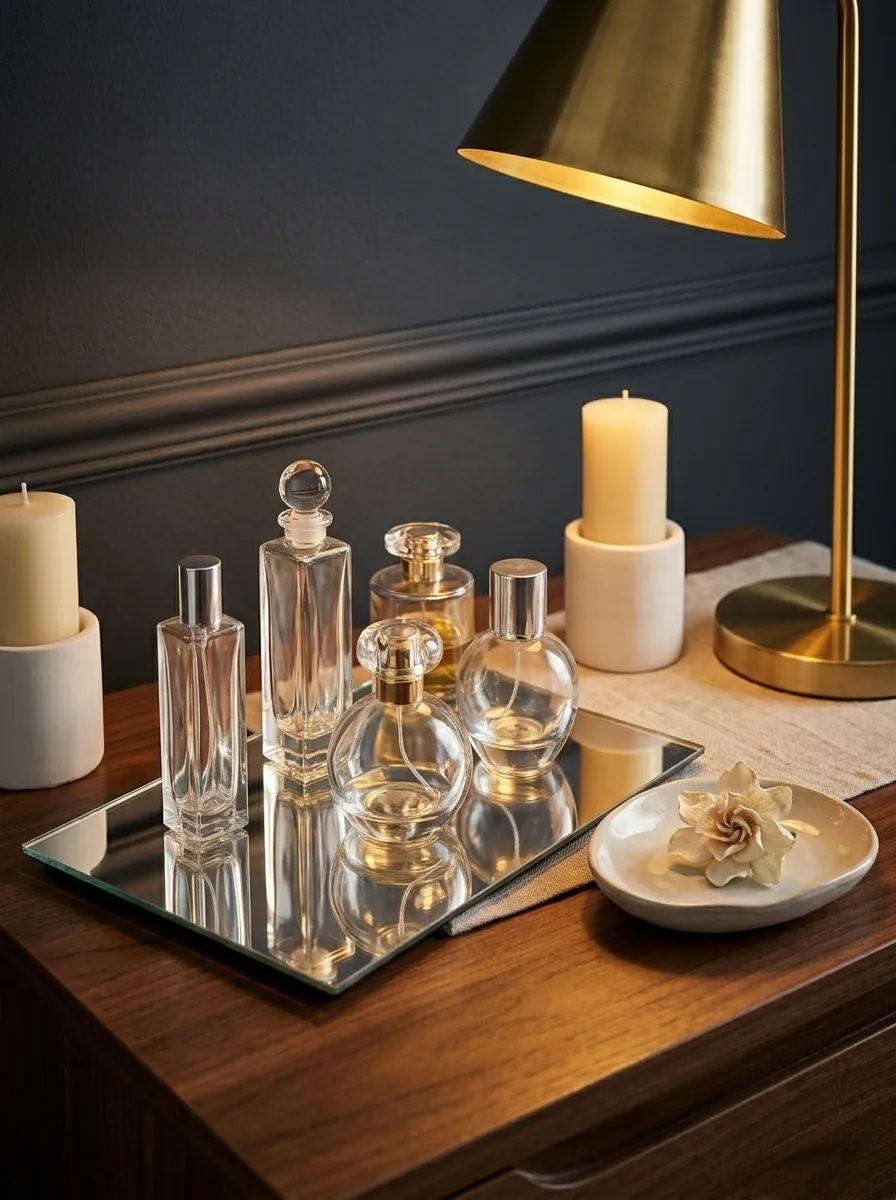
Objects you already own and use every day can become decor when they are displayed with intention. Your candle and fragrance collection is a perfect example.
A group of beautiful glass perfume bottles arranged on a mirrored or marble tray on a dresser or vanity looks like a deliberate still life. It adds sparkle, personality, and a sense of indulgence to a functional surface.
The same principle applies to candles. Rather than keeping them scattered on different surfaces, group three to five candles of varying heights together on a single tray. Mix pillar candles with smaller votive holders for height variation.
High-quality candles in glass vessels, like those from Voluspa or Anthropologie, look elegant on display. But even a simple taper candle in a good brass holder reads as sophisticated.
When candles burn down, keep the vessel. Clean it out with hot water and repurpose it as a small vase, a pencil cup, or a container for cotton balls. Good vessels are worth keeping.
Scent is also part of the luxury experience. A room that smells beautiful feels more deliberate and cared for. Reed diffusers placed on a styled tray contribute to both the visual and sensory quality of the space without requiring you to light anything.
16. Mix Textures Rather Than Matching Everything
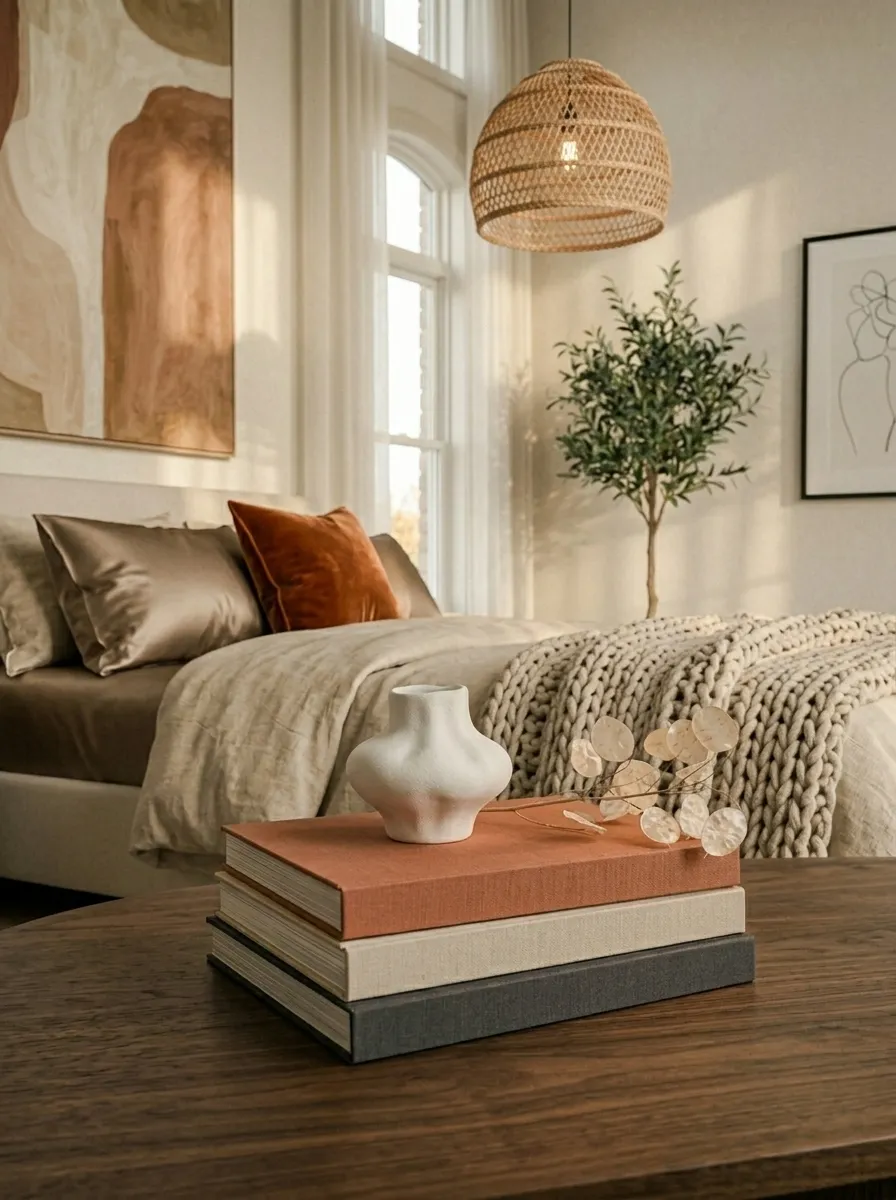
A room where everything matches perfectly often feels corporate rather than luxurious. What makes high-end spaces feel rich is the deliberate mixing of different textures playing against each other.
Think about the range of tactile experiences in a single well-designed room. Smooth leather beside rough linen. Polished marble beside matte plaster. Silky bedding beside a chunky knit throw. Each pairing creates contrast that makes both textures more interesting.
This is something you can do immediately with what you already own. Move objects around and look for opportunities to place rough beside smooth, matte beside shiny, soft beside hard.
When shopping for new pieces, think about whether a potential purchase adds a texture that is already well-represented in the room or one that is genuinely new. A room with too much of one texture, like all smooth, all shiny, or all soft, loses visual interest quickly.
Woven textures are particularly effective for adding warmth. Rattan, jute, macrame, and wicker all bring a natural, organic quality that feels grounded against more refined surfaces like glass, ceramic, and polished metal.
A simple textural upgrade you can do today: add a chunky knit or waffle-weave throw to your sofa or bed. It takes 30 seconds and immediately makes the space feel more layered and considered.
17. Paint an Accent Color on Your Ceiling
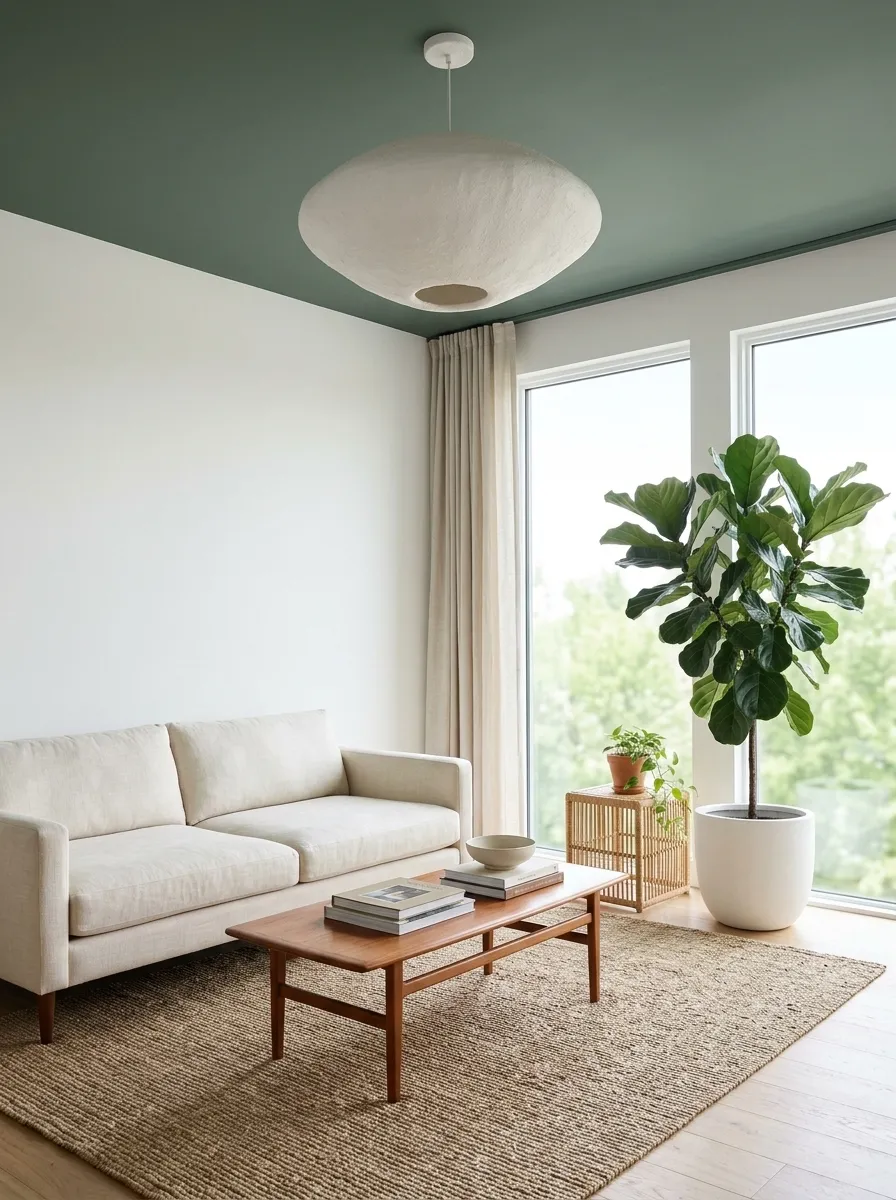
The ceiling is the most overlooked surface in almost every room. Painting it a color is one of the most unexpected and designer-approved ways to add drama and a sense of intentional design.
This technique is called a fifth wall treatment and it creates a cocooning effect that makes a room feel more intimate and carefully considered. It works in any room but is particularly effective in bedrooms, dining rooms, and living rooms.
Deep colors like navy, forest green, dusty terracotta, and charcoal work particularly well. Soft colors like pale blush or sage also feel special and unexpected without being overwhelming.
If painting the entire ceiling feels too commitment-heavy, consider painting only the interior of a tray or coffered ceiling detail, which is a natural boundary that contains the color beautifully.
The walls should generally remain lighter when you use a dark ceiling. This keeps the room from feeling cave-like while still enjoying the drama of the colored overhead plane.
One single can of ceiling paint is usually enough for most standard rooms. This is a $30 to $50 change that takes a Saturday afternoon and creates a result that genuinely looks like a professional interior designer made a deliberate, confident choice.
18. Use Sconces Instead of Table Lamps
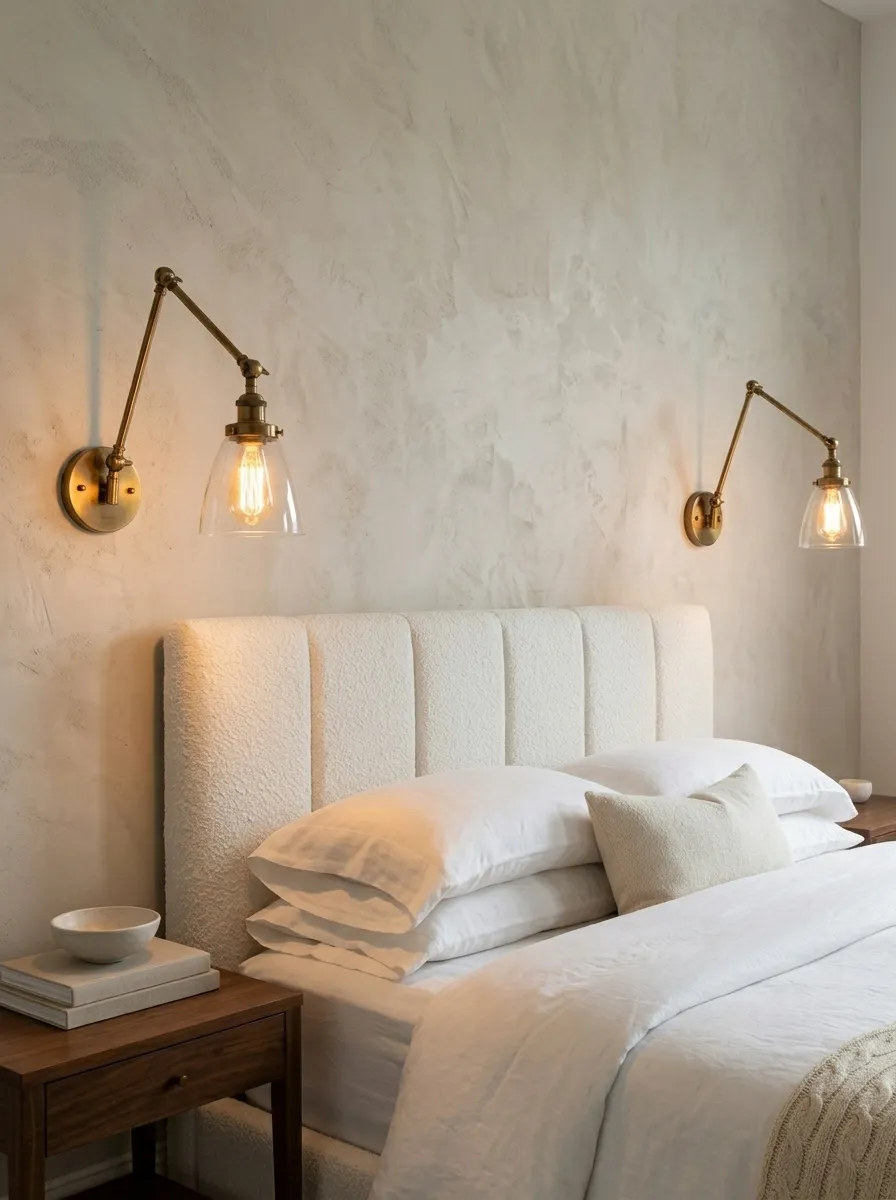
Wall sconces mounted on either side of a bed or sofa immediately free up nightstand and side table surface space and give a room a more architectural, intentional quality.
In a bedroom, this means your nightstands are no longer dominated by a lamp base. That freed-up surface can hold only a book, a glass of water, and maybe a small decorative object. The result looks cleaner and more deliberate than a crowded nightstand with a lamp taking up a third of the space.
Hardwired sconces require an electrician, but plug-in sconces are a completely viable alternative. Many well-designed plug-in options hide the cord behind the wall with a simple cord cover or a channel that is painted to match the wall. The result looks nearly identical to a hardwired fixture.
Brass swing-arm sconces are currently one of the most popular options in high-end bedroom design. They are functional, they look refined, and they suit a wide range of decor styles from modern to traditional.
Budget-friendly plug-in sconces are widely available from Amazon, West Elm, and Wayfair in the $40 to $120 range per pair. Paired with warm Edison-style bulbs, they create the exact kind of warm, layered lighting that makes a bedroom feel like a luxury retreat.
19. Build a Styled Bookshelf That Tells a Story
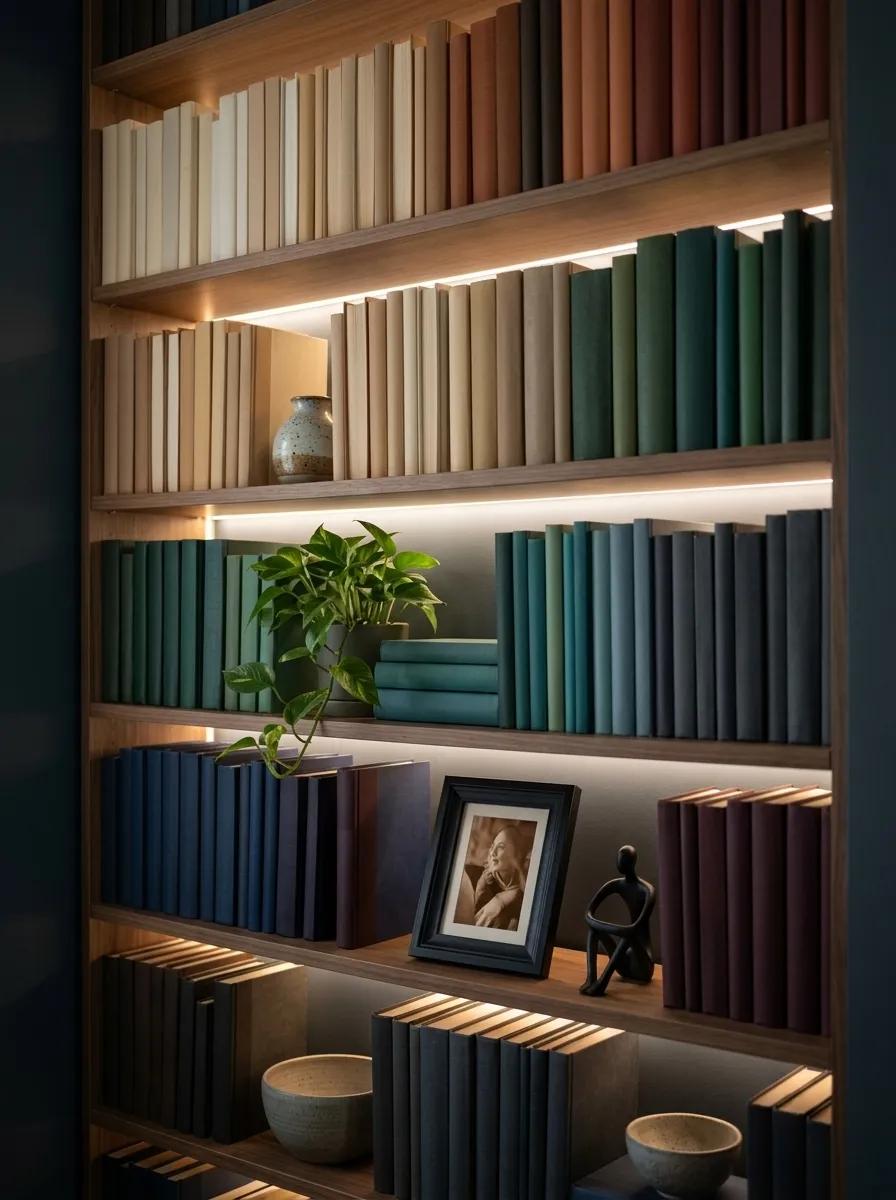
A well-styled bookshelf is simultaneously a storage solution and a piece of art. When done well, it becomes one of the most photographed elements in any room.
The foundational rule is to mix books with objects rather than filling every inch with books alone. A shelf that is 70 percent books and 30 percent objects hits the right balance between functional and curated.
Books can be arranged vertically, horizontally in stacks, and even with some facing backward for a minimalist cream-toned effect. Mixing all three approaches on a single shelf creates the kind of organized but relaxed look that high-end interior designers favor.
Objects between book groupings should vary in height. A tall vase next to a short stack of horizontal books next to a medium-height ceramic piece creates a skyline effect across the shelf that draws the eye along naturally.
Leave a small amount of negative space on each shelf rather than filling every inch. Empty space is what makes the objects that are present feel important. A crowded shelf erases the individual value of everything on it.
Add small LED strip lights or battery-powered puck lights to the inside back edge of each shelf. The warm backlighting makes the entire bookshelf feel like a feature wall and costs less than $20 to install.
20. Introduce Dark Paint in a Small Space First
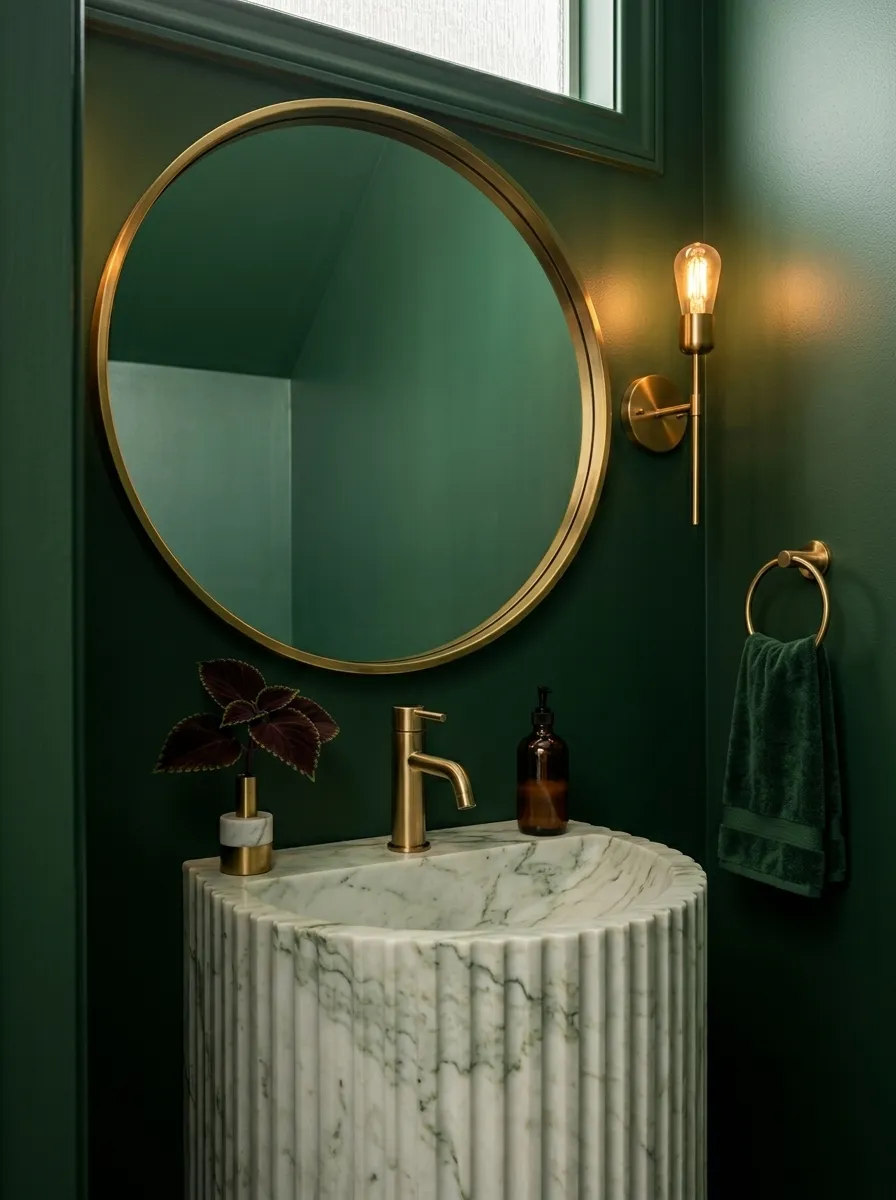
Dark paint colors intimidate many people, but they are one of the most reliable tools for creating a luxurious atmosphere. The trick is to try them in a small space before committing to a large one.
A powder room, a small hallway, a walk-in closet, or a single accent wall are all perfect starting points. Painting a small room in a deep, moody color creates what interior designers call a jewel-box effect. The space feels intimate, glamorous, and deliberately designed.
Deep navy, charcoal, forest green, black, and rich oxblood red are the most effective choices. These colors work particularly well when combined with brass or gold fixtures and warm lighting.
Dark paint actually makes small rooms feel bigger when done properly, not smaller as many people assume. The reason is that the walls visually recede, removing the sense of hard boundaries around you.
One gallon of paint covers approximately 400 square feet. A powder room or small hallway requires about one gallon, making this a $30 to $50 experiment. If you love it, you can take the same approach elsewhere. If you want to reverse it, one coat of white primer and one coat of lighter paint is all it takes.
Use a high-quality paint in an eggshell finish for walls. A satin finish works well for trim. The slight sheen of these finishes adds depth and richness that flat paint cannot achieve.
21. Create Depth With Layered Rugs
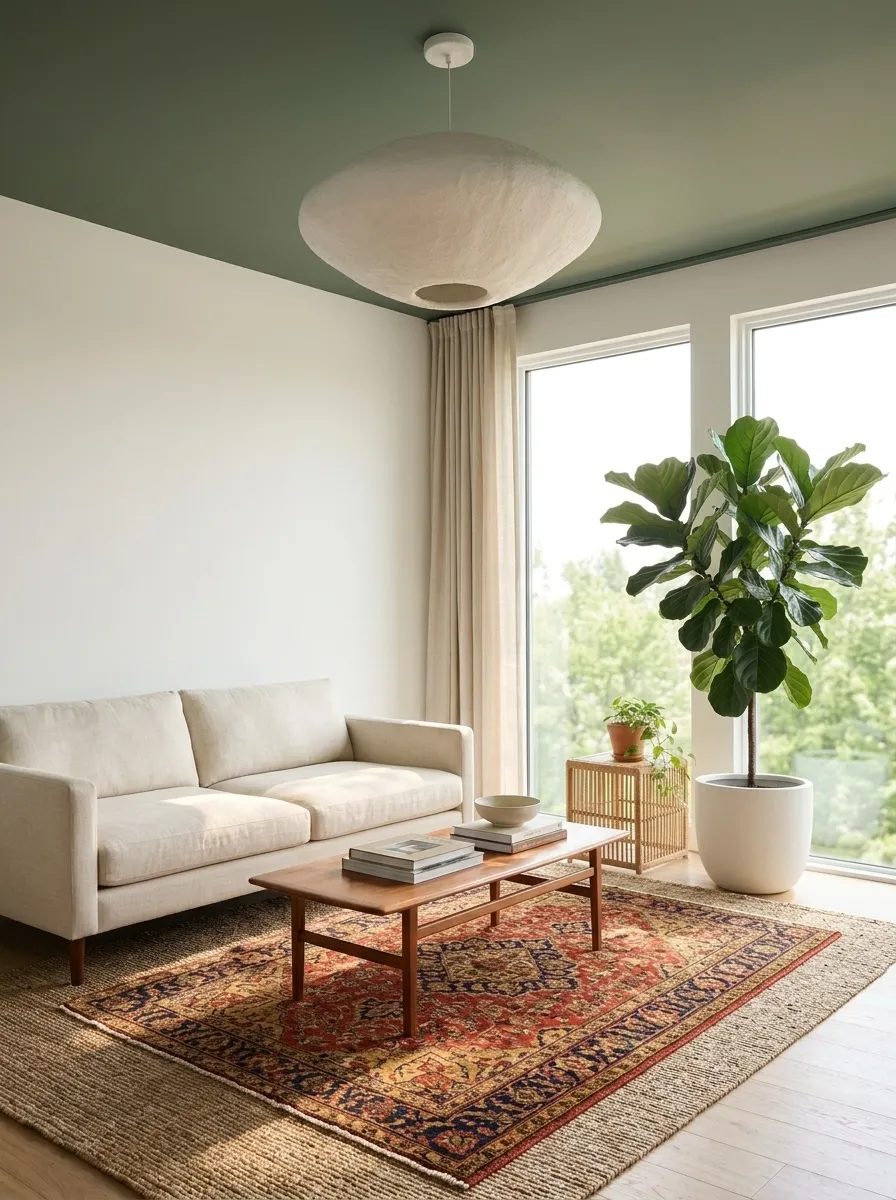
Layering rugs is an interior design technique borrowed from high-end styling shoots that is also entirely practical for everyday living. It adds color, pattern, and texture in a way that a single rug simply cannot.
The most common approach is to start with a large neutral base rug in natural fiber like jute, sisal, or seagrass, and then layer a smaller, more detailed rug on top. The base rug provides grounding. The layered rug adds personality and color.
Persian and Oushak-style rugs work particularly well as top layers because their traditional patterns feel rich and considered. Kilim rugs in geometric patterns are another popular option with a more contemporary feel.
Vintage and secondhand rugs are ideal for layering because they do not need to be in perfect condition. A slightly worn Persian rug placed over a clean jute base actually looks more authentic and lived-in than a brand-new piece.
The size relationship matters. The top rug should be noticeably smaller than the base. A 9 by 12 jute rug layered with a 5 by 8 Persian rug is a reliable pairing for a living room.
Both rugs need rug pads to prevent slipping and to protect floors. Layered rugs without pads will shift constantly with foot traffic, which defeats the entire effect.
22. Frame and Display Personal Objects Meaningfully
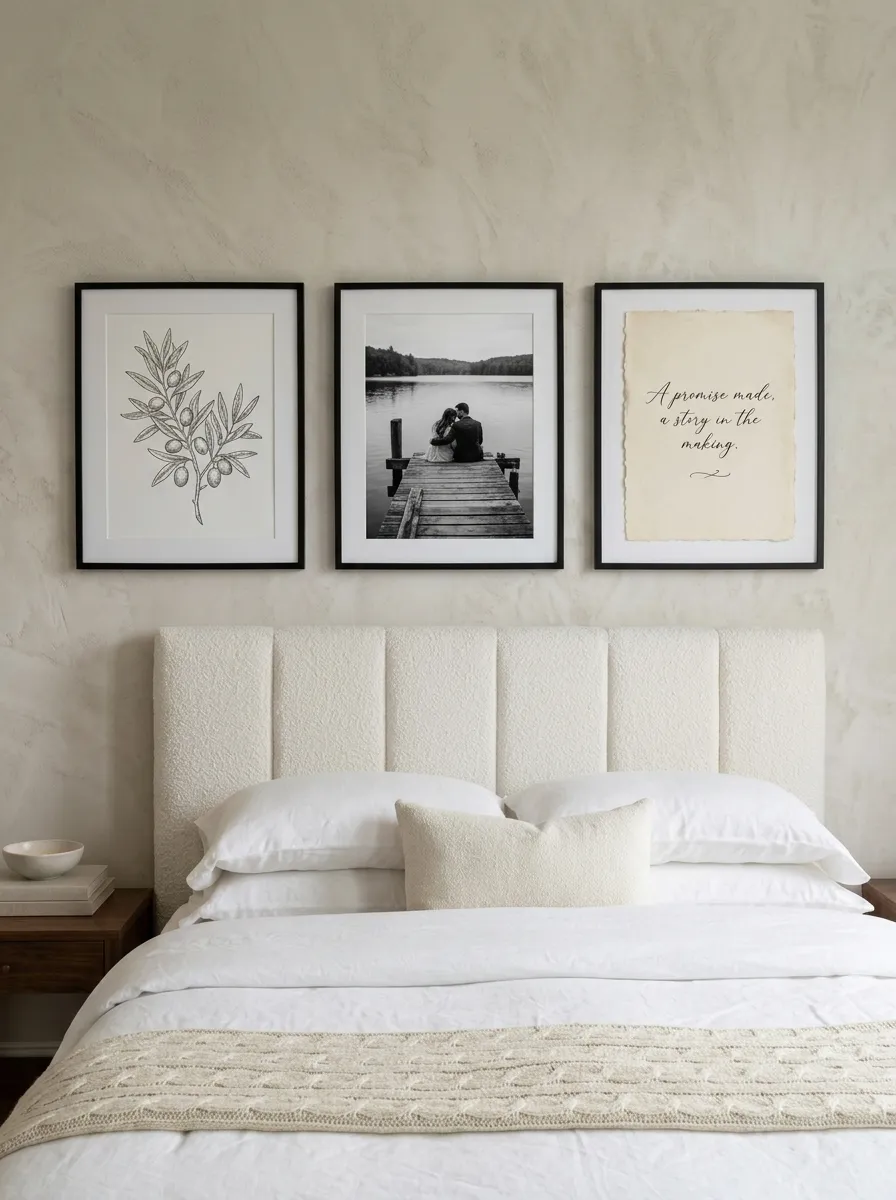
Luxury decor is never purely impersonal. The spaces that feel most elevated also feel like real people live in them. The objects on display tell a story.
Framing personal photographs, handwritten letters, pressed flowers, vintage postcards, or fabric swatches from meaningful textiles creates a display that no one else in the world has. That uniqueness is its own kind of luxury.
The key is treating personal objects with the same visual discipline you would apply to any other decor choice. Frame them in consistent, high-quality frames. Keep the palette cohesive. Arrange them with intention rather than randomly attaching them to the wall.
Converting personal photographs to black and white before framing is an easy way to make them feel more like art and less like casual snapshots. The tonal consistency of black and white also makes it much easier to combine multiple images in a single display.
A simple row of three matching frames, or a symmetrical grid of four, always looks more polished than a random scatter of mismatched sizes and styles.
You do not need expensive art to have a beautifully curated wall. A $5 frame from a thrift store with a $10 print from a digital marketplace, printed at your local copy shop, can look just as considered as a gallery purchase when positioned and lit correctly.
23. Add Crown Molding or Trim Details for Architecture
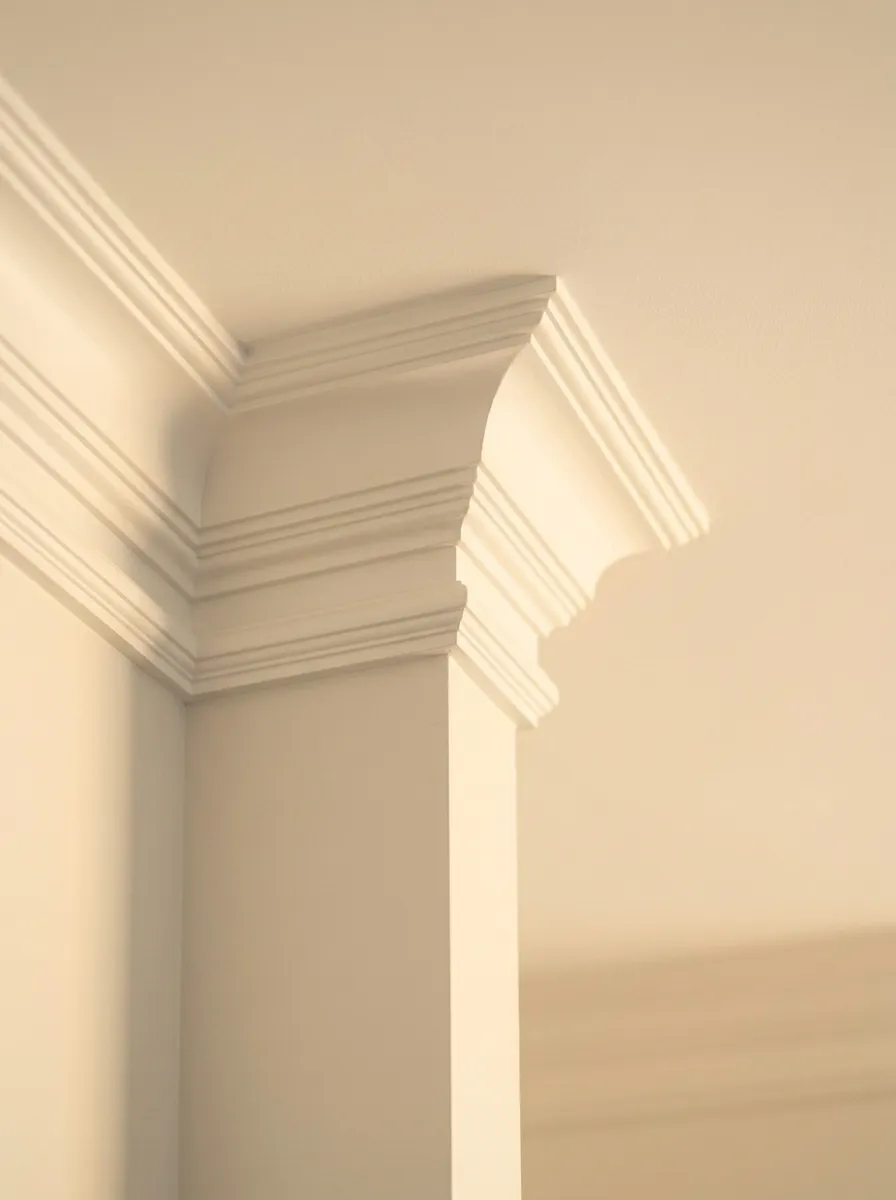
Architectural details like crown molding, picture rail molding, wainscoting, and board-and-batten paneling are what distinguish a house that feels custom-built from one that feels mass-produced. You can add these details to almost any room yourself.
Peel-and-stick or lightweight foam molding can be applied directly to walls with construction adhesive. It is paintable, easy to cut with a miter saw or even a utility knife, and transforms the appearance of a room considerably.
Board-and-batten is one of the most popular DIY architectural upgrades because the materials are inexpensive and the installation is forgiving for beginners. Vertical strips of MDF or pine trim, spaced evenly and capped with horizontal rails top and bottom, create a paneled wall effect that looks custom and expensive.
When painted the same color as the wall, molding adds subtle dimensional texture. When painted in a contrasting tone, typically white molding on a colored wall, it creates a classic formal effect that reads as high-end traditional or transitional design.
The entire material cost for a board-and-batten accent wall in an average bedroom is typically $50 to $100. The labor is a weekend project for someone with basic tools and patience.
The return on this investment, both in terms of daily enjoyment and resale value, far exceeds the modest cost.
24. Declutter Aggressively and Edit What Remains
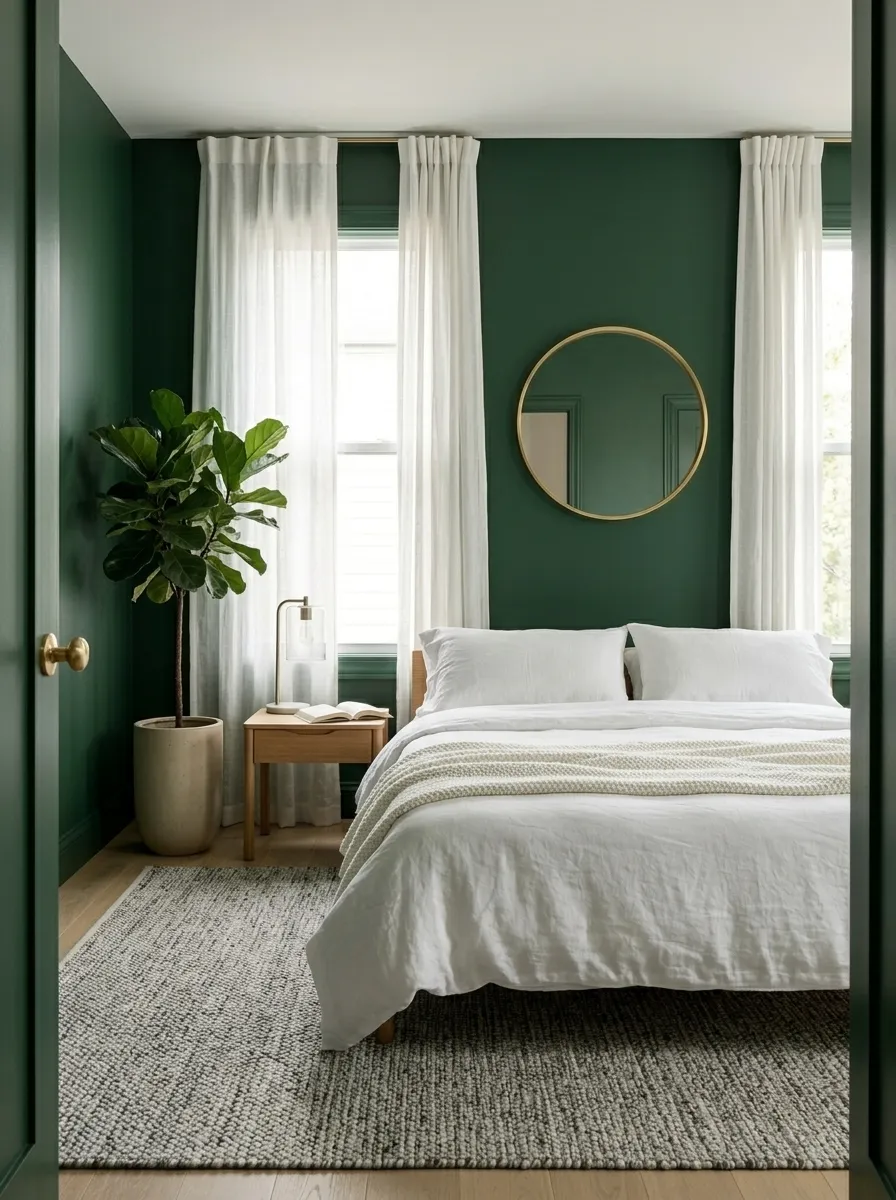
No amount of beautiful decor can compensate for a room that is visually noisy and overcrowded. The single most effective thing you can do to make a room look luxurious costs nothing at all: remove things.
High-end spaces are edited ruthlessly. Every object earns its place. Nothing is present by default, habit, or because you have not dealt with it yet.
Go through every surface in your room and ask whether each object is functional, beautiful, or personally meaningful. If an object does not meet at least one of those criteria, it should not be visible.
This does not mean eliminating all personality or comfort. A cozy throw, a stack of books, a meaningful photograph, and a living plant are all worth keeping. What you are removing is the accumulated clutter: the receipts, the duplicate items, the gifts you kept out of obligation, the decorative objects you no longer love.
Once you have removed everything unnecessary, what remains will look significantly more intentional. Good objects surrounded by negative space look expensive. The same objects buried among 40 other things look like clutter.
A practical approach is to place everything from a surface into a box, live with the empty surface for a day, and then consciously return only what you genuinely want there. Most people return far less than they removed, and the space looks dramatically better for it.
A room that breathes is always more luxurious than a room that accumulates.
After exploring all these approaches, the picture that emerges is clear: a rich-looking room is not about how much money you spend. It is about how deliberately you make each choice. Every surface, every light source, every texture, and every object placement contributes to the overall story a room tells. You can start with a single wall, a new set of curtains hung at the right height, or a tray styled on your coffee table. Small, considered changes compound quickly. Pick two or three of these ideas that feel most doable for your current space and start there. You will be surprised how quickly the room begins to feel like somewhere truly special.