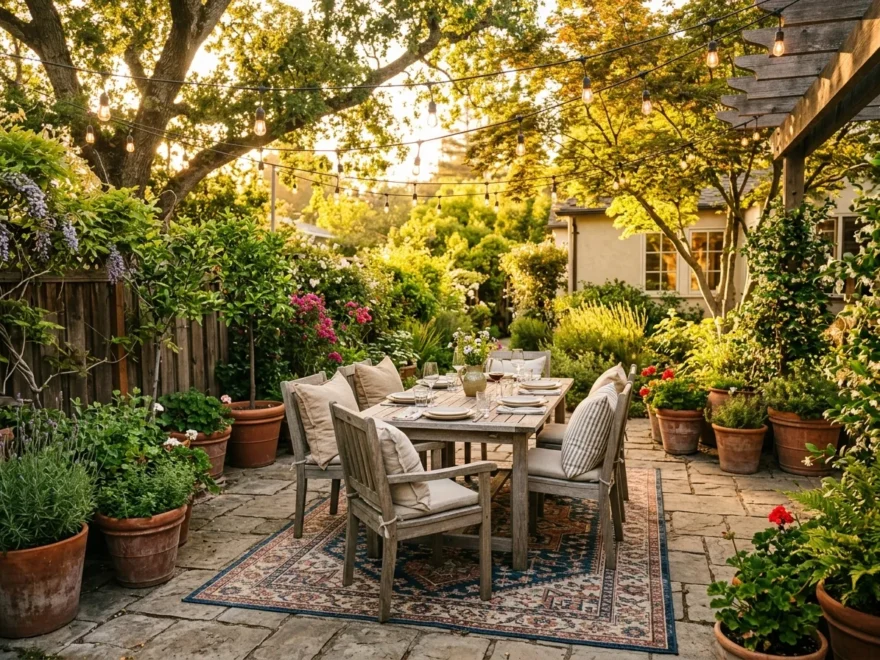
Your patio design decor ideas are more than just an outdoor space. It is a place where mornings feel slower, evenings feel warmer, and every gathering feels a little more special. Whether you have a large backyard or a tiny apartment balcony, there are real, affordable ways to make that space feel like an extension of your home. You do not need a designer budget or professional help. You just need the right ideas and a free weekend. This list covers 20 creative patio decor ideas that work across all budgets, climates, and space sizes. Each one comes with simple, practical steps you can start right now. If you’re also exploring farmhouse decor ideas, mixing rustic wood textures, cozy fabrics, vintage-inspired accents, and warm neutral tones can help create a welcoming space that feels comfortable, timeless, and full of character.
1. Lay Down an Outdoor Rug to Define Your Space
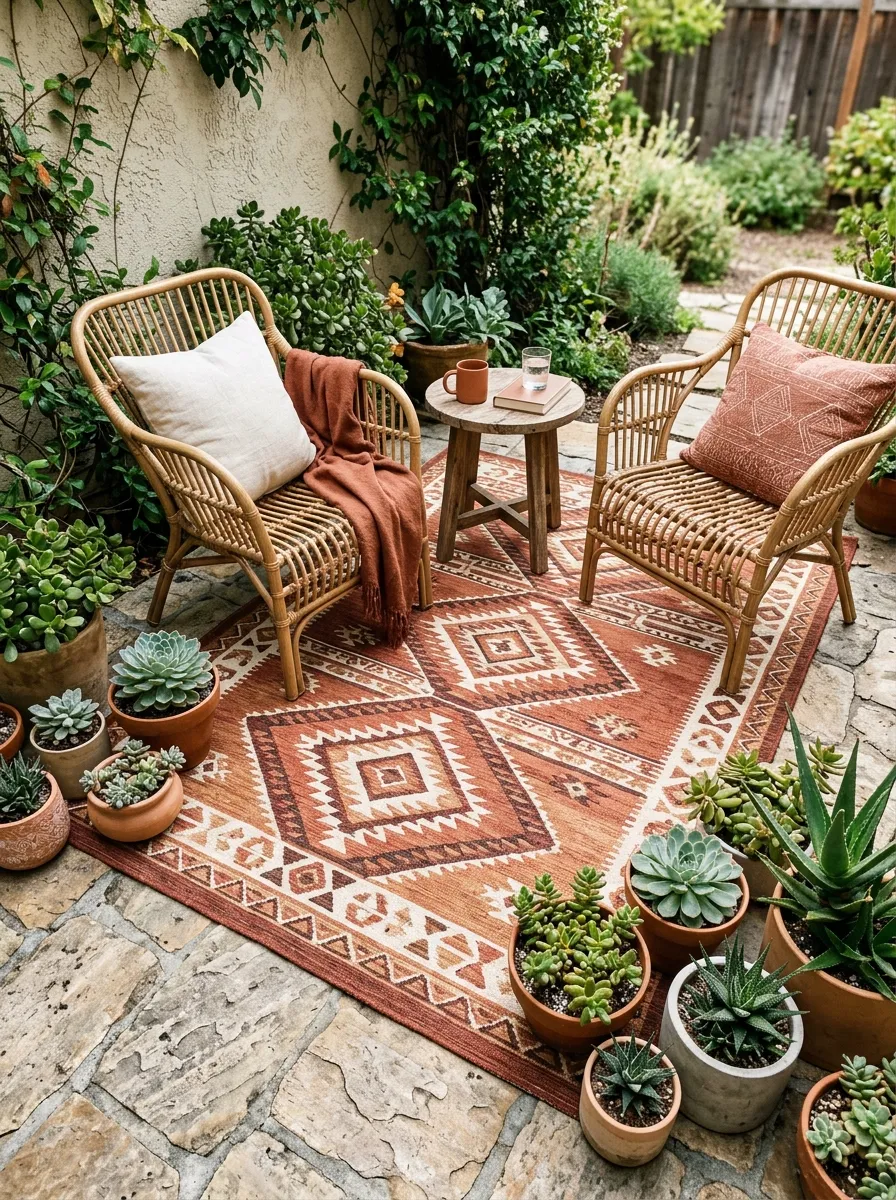
An outdoor rug is one of the simplest ways to make a patio feel intentional. It pulls furniture together and makes the space feel like a real room.
Pick a rug that is rated for outdoor use. These are made from polypropylene or similar materials that resist moisture and fading.
You do not need to spend a lot. Many budget-friendly options are available at home improvement stores or discount retailers for under $50.
Choose a rug that is at least a few inches larger than your seating arrangement on all sides. This frames the space properly rather than making it feel cluttered.
If your patio is small, a rug with a simple stripe or solid color works best. For larger patios, try a bold geometric or floral print.
Outdoor rugs can fade over time. Roll them up and store them indoors during heavy rain or winter months to extend their life.
Layering two rugs of different textures also adds depth. Try a smaller jute rug on top of a larger solid one for a relaxed, layered look.
This one change can make a plain concrete slab feel like a proper lounge area. It is one of the easiest and most affordable upgrades you can make.
2. Hang String Lights for Instant Atmosphere
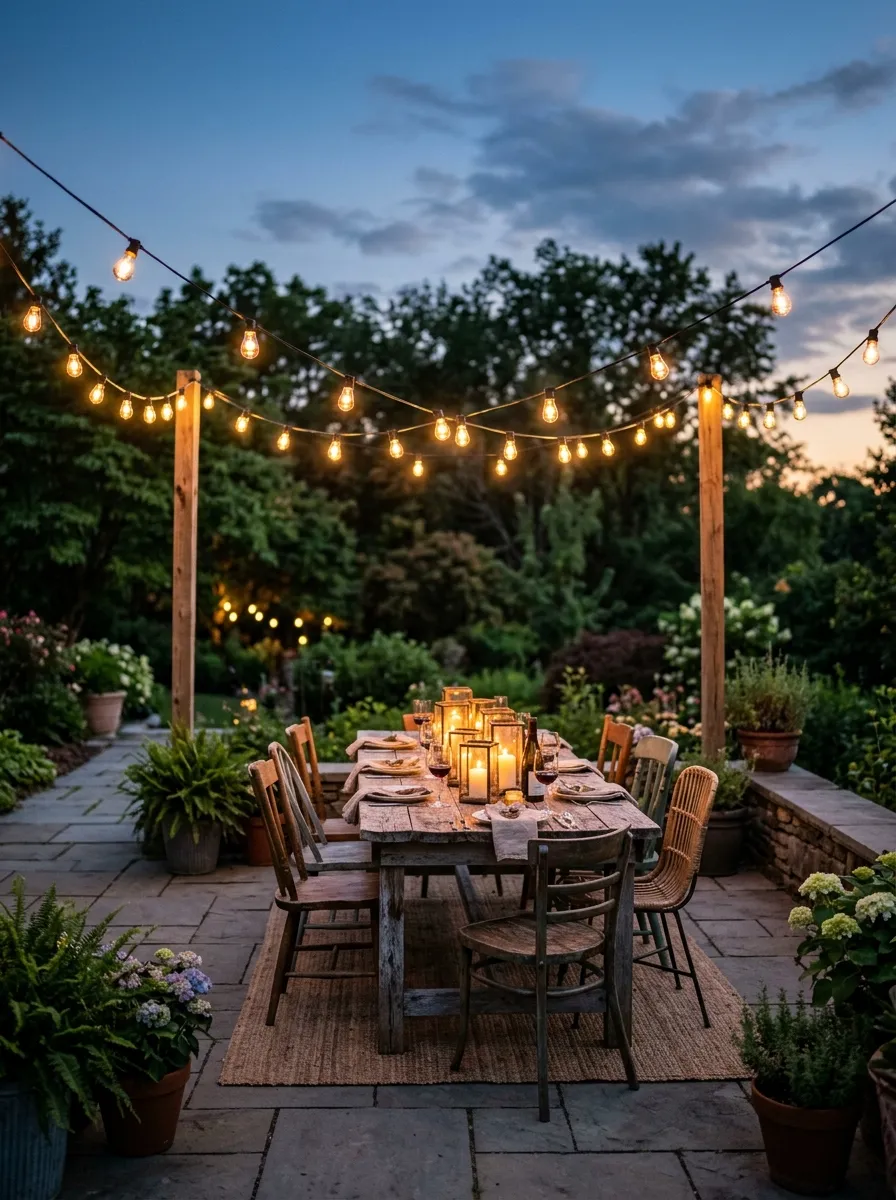
String lights change everything about how a patio feels at night. They add warmth, dimension, and a sense of celebration without costing much.
You can find simple globe or Edison-style outdoor string lights for under $20 at most stores. Solar-powered versions are even more affordable to run.
Drape them overhead in a loose canopy pattern for the most dramatic effect. Use two sturdy poles or attach them to fence posts, your home exterior, or a pergola.
If you do not have anchor points, a simple DIY fix is to use tall potted plants as bases. Insert a wooden dowel into the pot and wrap string lights around the top.
Avoid zigzag or stiff grid patterns. A casual, draped look feels far more inviting and less corporate.
For smaller spaces like balconies, wrap string lights around railings or along the ceiling edge. This adds glow without taking up space.
Solar string lights are perfect if you do not have an outdoor outlet. Set them in a sunny spot during the day and they will glow for hours at night.
Change the mood by swapping bulb types. Warm white bulbs feel cozy. Cooler white bulbs feel modern and clean.
This is one of the highest-impact, lowest-cost changes you can make to any patio or outdoor area.
3. Add a Focal Point with a DIY Fire Pit
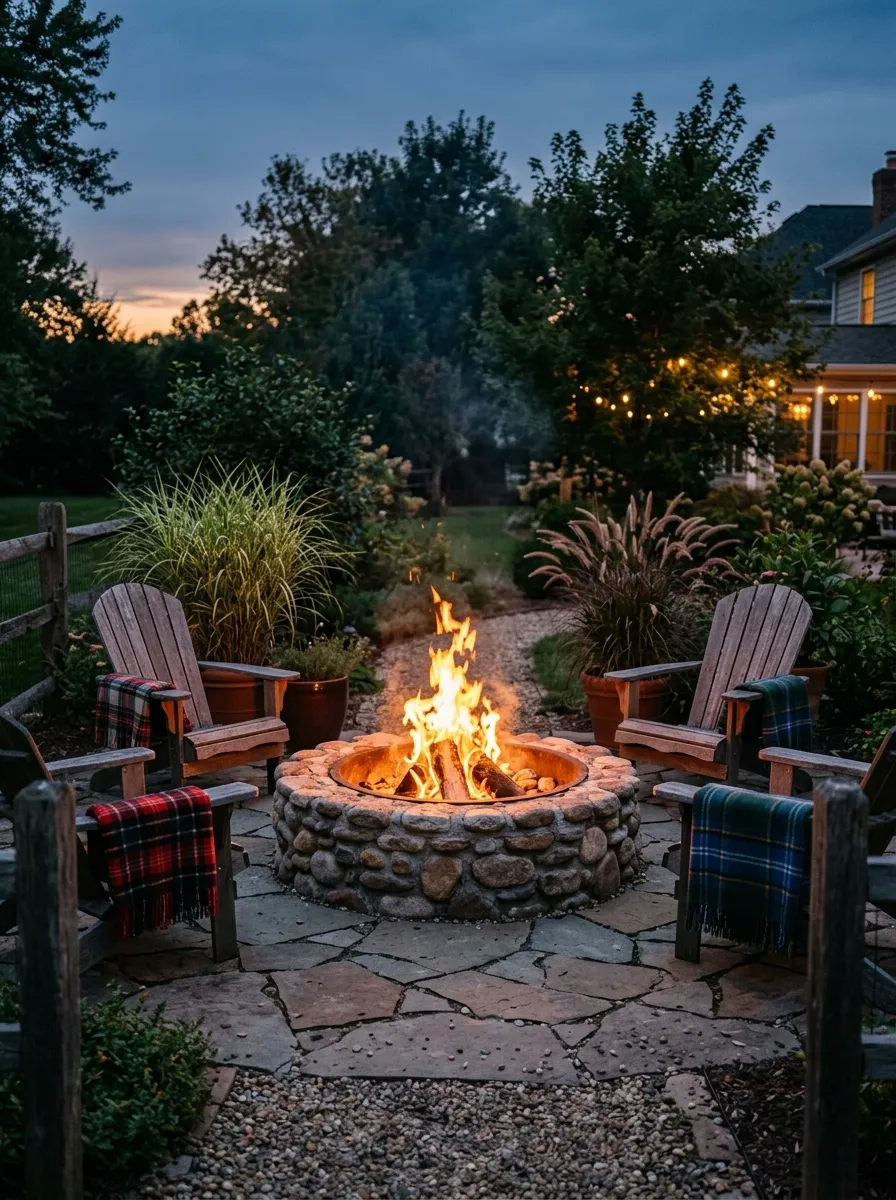
A fire pit gives your patio a natural center point. People gather around it. Conversations happen. It makes the space feel alive even on cool evenings.
You do not need to hire someone to build one. A simple DIY fire pit using retaining wall bricks or large river stones can be assembled in an afternoon for under $100.
Stack bricks or stones in a circular ring, about 12 to 18 inches high. No mortar is needed for a temporary or movable design. Place a metal ring insert inside to hold the fire safely.
Always check local regulations before building. Some areas have fire pit restrictions depending on season or distance from structures.
If you prefer a cleaner look, propane fire pit tables are widely available and require zero assembly or permits in most areas. Prices range from $80 to $300.
Place your fire pit at least 10 feet from your home, fences, and any overhanging trees.
Surround it with low seating. Adirondack chairs, log stumps, or even concrete blocks with cushions all work well.
Add a simple bucket of sand nearby for easy fire control. A long-handled poker and a screen cover are also smart safety additions.
A fire pit turns a plain patio into the spot where everyone wants to spend the evening.
4. Use Vertical Space with a Trellis or Garden Wall
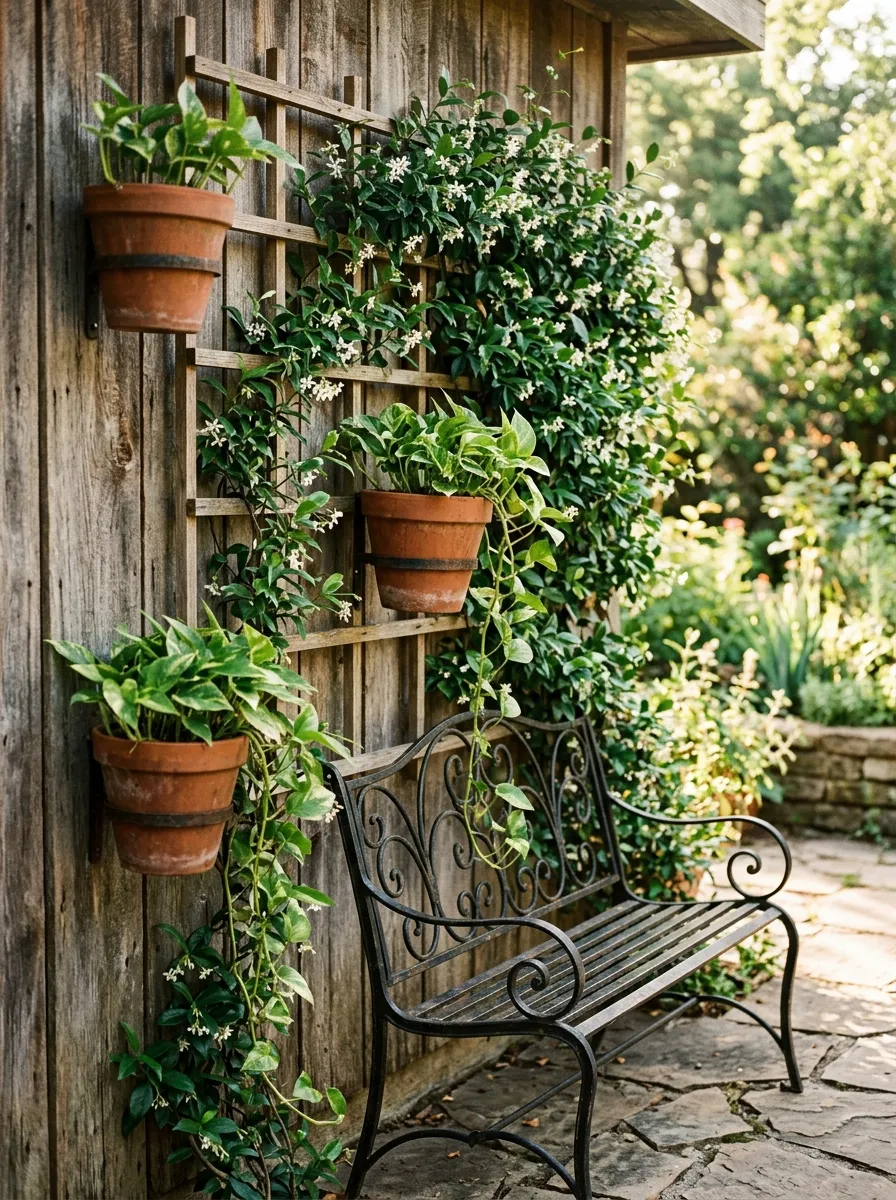
Most patios waste the walls and vertical space around them. A trellis, vertical planter, or garden wall can turn a blank fence into something beautiful.
A basic wooden trellis costs very little at garden centers. You can also build one yourself using wooden slats and a staple gun.
Train climbing plants like jasmine, clematis, or sweet potato vine up the trellis. These grow fast and add real texture and color to bare walls.
If you prefer a more structured look, mount simple wooden shelves or metal rail systems to your fence. Hang small potted plants at different heights for a layered garden wall effect.
Pallet gardens are a popular DIY option. Sand down an old wooden pallet, mount it upright, and plant herbs or succulents in the gaps between slats.
Vertical planters sold at garden stores are another easy option. They hang flat against a wall and hold multiple small pots.
This approach works especially well for renters who cannot dig or change permanent structures. Everything is movable and removable.
A vertical garden also adds privacy. Tall, dense plants create a natural screen between your patio and neighbors without requiring a permit.
Do not forget to water regularly. Vertical planters dry out faster than ground-level pots, especially in warm weather.
5. Create Privacy with Outdoor Curtains
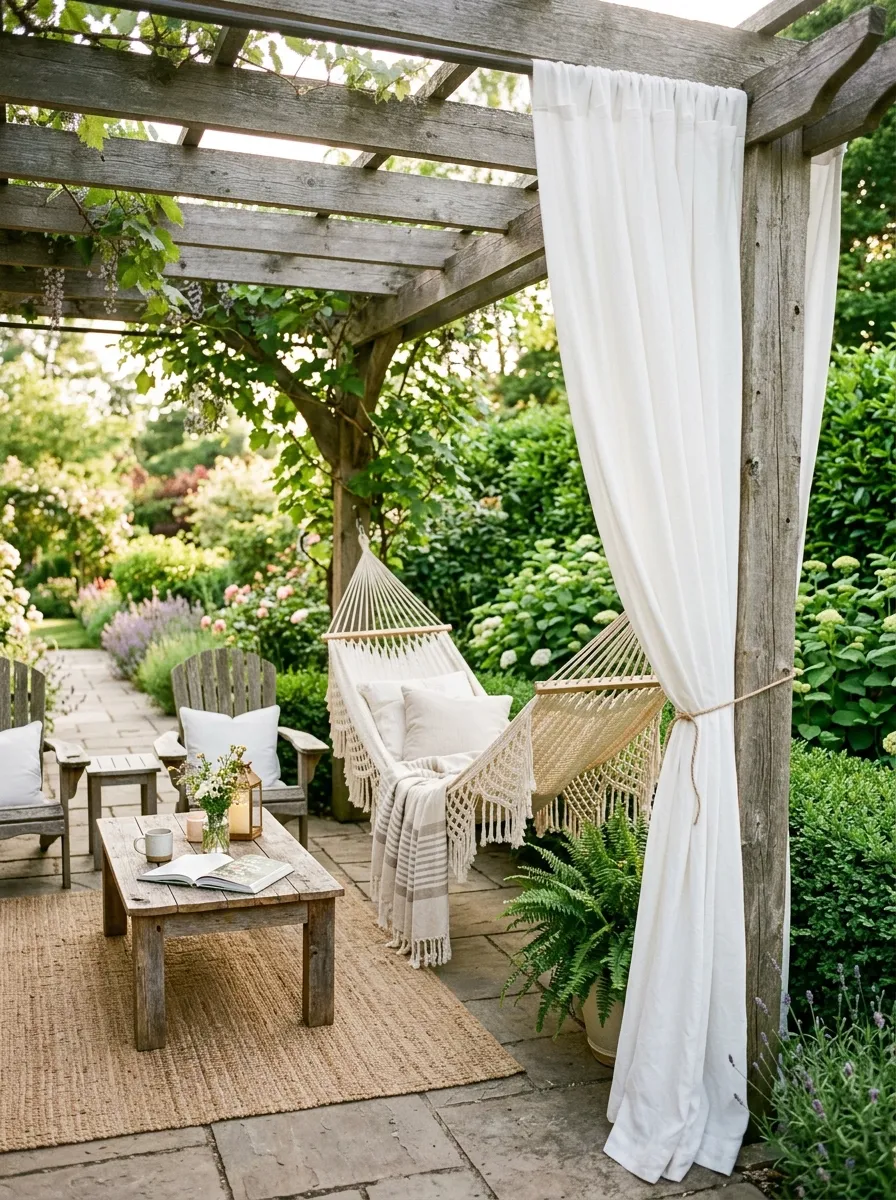
Outdoor curtains solve two problems at once. They add style and they create privacy. If your patio faces a street, a neighbor’s yard, or a busy area, curtains are a game-changer.
Look for curtains made from outdoor-grade fabric. Sunbrella or polyester-blend panels hold up against sun, wind, and light rain far better than indoor fabric.
Install a simple tension rod or curtain wire between two posts or pergola beams. This takes less than 30 minutes and no special tools.
IKEA sells outdoor curtain panels at very affordable prices. Home improvement stores carry both hardware and curtain options that are budget-friendly.
For maximum privacy, use thicker, tightly-woven fabric. For a breezy, airy feel, go with a lighter linen-style panel that still filters views without blocking all light.
Choose a neutral color like white, cream, or gray if you want the curtains to disappear into the background and let other decor shine.
Go bold with a stripe or solid deep color if you want the curtains to become a design feature in themselves.
You can also use bamboo or reed fencing panels as a curtain alternative. These are inexpensive, natural-looking, and very effective for blocking sightlines.
Curtains make any patio feel more like a private outdoor room.
6. Build a Simple Pergola for Shade and Structure
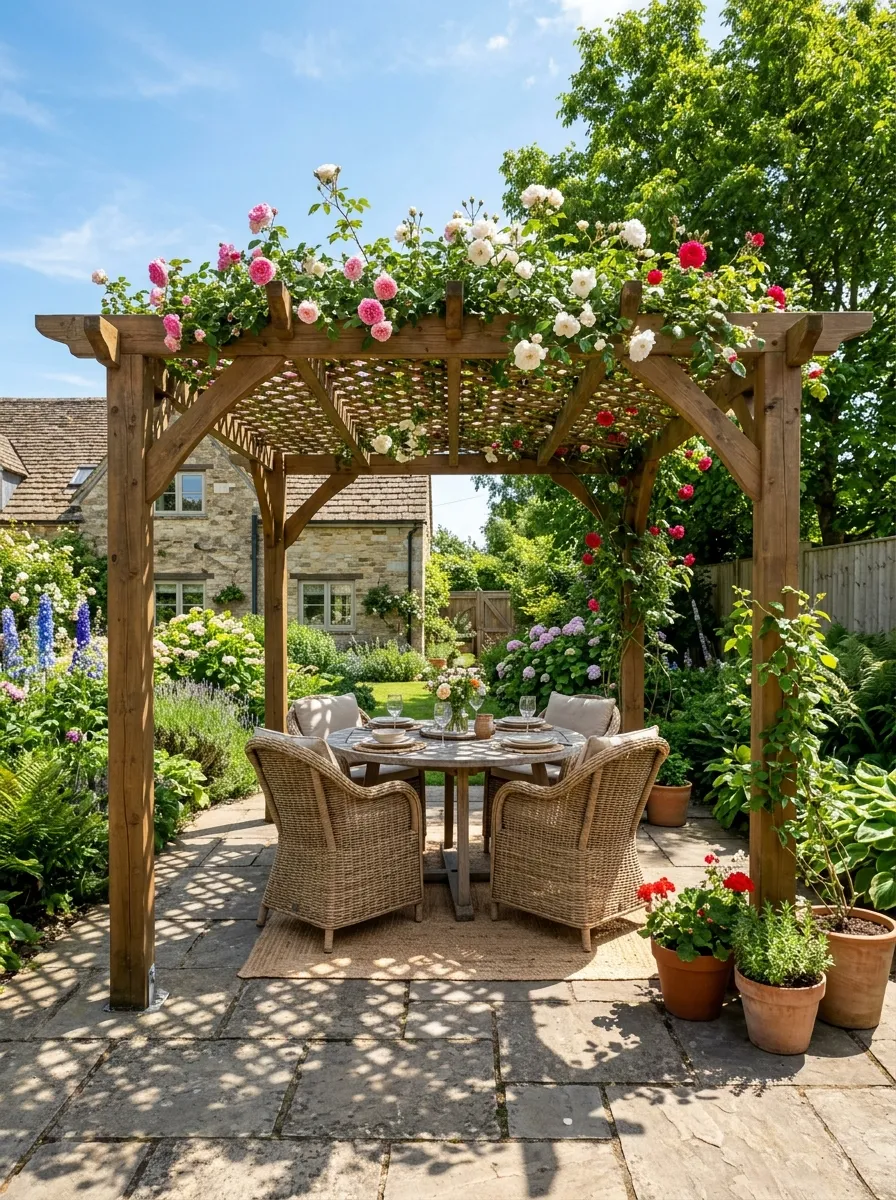
A pergola gives your patio structure, shade, and a sense of architecture. It changes the whole feeling of the space.
You do not need to hire a contractor. Pre-cut pergola kits are available at home improvement stores for $300 to $800 depending on size. They come with all materials and basic instructions.
Choose a cedar or pressure-treated wood for durability outdoors. These resist rot and weather much better than untreated lumber.
If a full pergola feels like too large a project, start with a smaller shade sail. A triangle or square shade sail costs $30 to $80 and attaches to three or four anchor points. It creates overhead coverage without any building.
Once your pergola is up, let climbing plants grow over it. Wisteria, climbing roses, or grapevines turn a simple structure into something lush and inviting.
Hang outdoor curtains from the sides to create a more enclosed, private feel.
Add a ceiling fan or outdoor pendant light to the pergola to make it functional during warm evenings.
Even a simple 8×8 pergola can completely transform a plain concrete patio into a defined outdoor room.
This is one of the most impactful patio projects you can take on as a homeowner.
7. Mix and Match Outdoor Furniture for Character
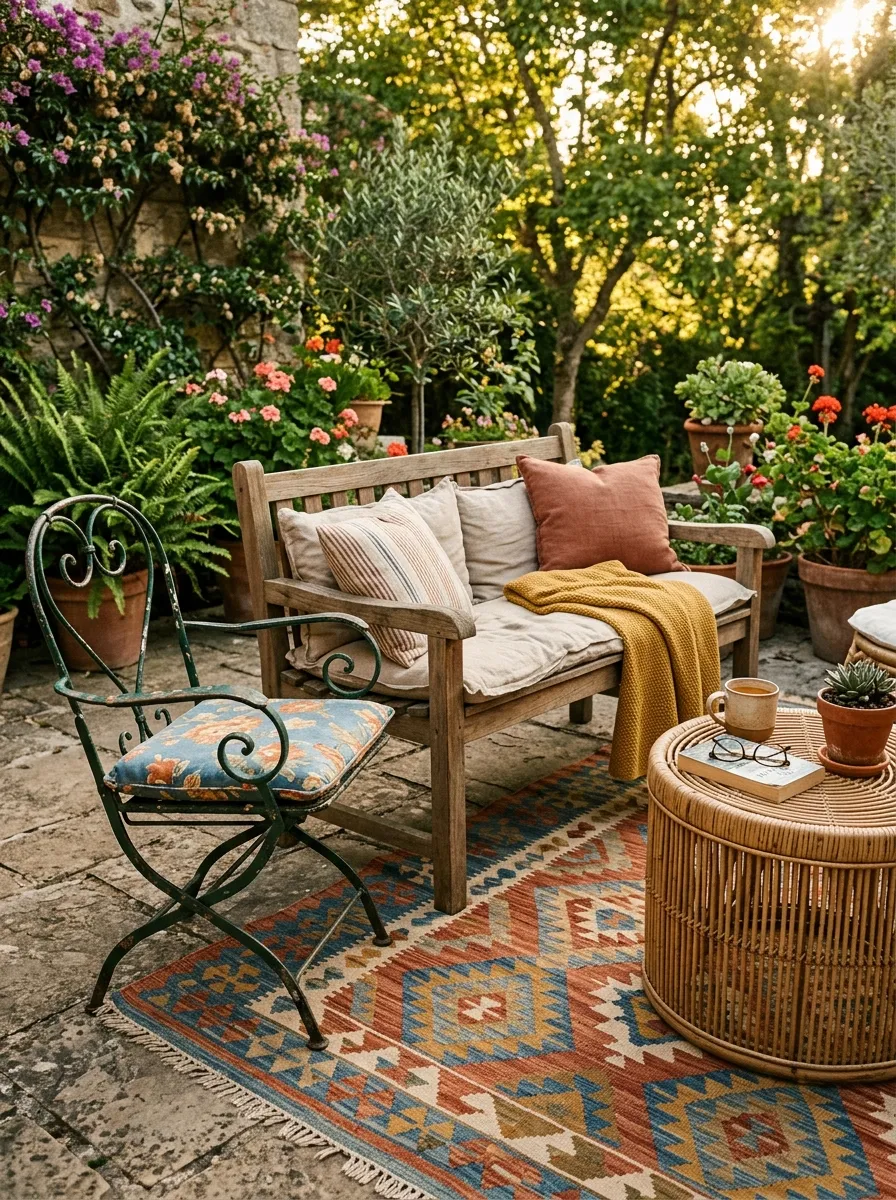
Perfectly matched outdoor furniture sets can look stiff and catalog-like. Mixing pieces creates a more personal, lived-in feel.
You do not need to buy everything at once. Build your patio seating over time by visiting thrift stores, estate sales, or Facebook Marketplace.
Old metal bistro chairs painted in the same color can unite mismatched pieces. A simple can of outdoor spray paint costs around $6 and completely refreshes tired furniture.
Look for basic structural pieces at discount stores or secondhand shops. Add personality through cushions, throw pillows, and a rug.
Choose one unifying element. It might be color, material, or style. For example, all-neutral pieces work together even if they come from completely different places.
Wicker and wood pair beautifully together. So do metal and concrete. Avoid mixing too many finishes at once or the space will feel chaotic.
Cushions and outdoor pillows are where you can get creative with pattern and color. These are also the easiest things to swap out when you want a seasonal refresh.
Shop for cushions at the end of summer for major discounts. Many stores mark outdoor textiles down by 50 to 70 percent in August and September.
Mixing furniture makes your patio feel collected and intentional rather than showroom-perfect.
8. Layer with Outdoor Throw Pillows and Blankets
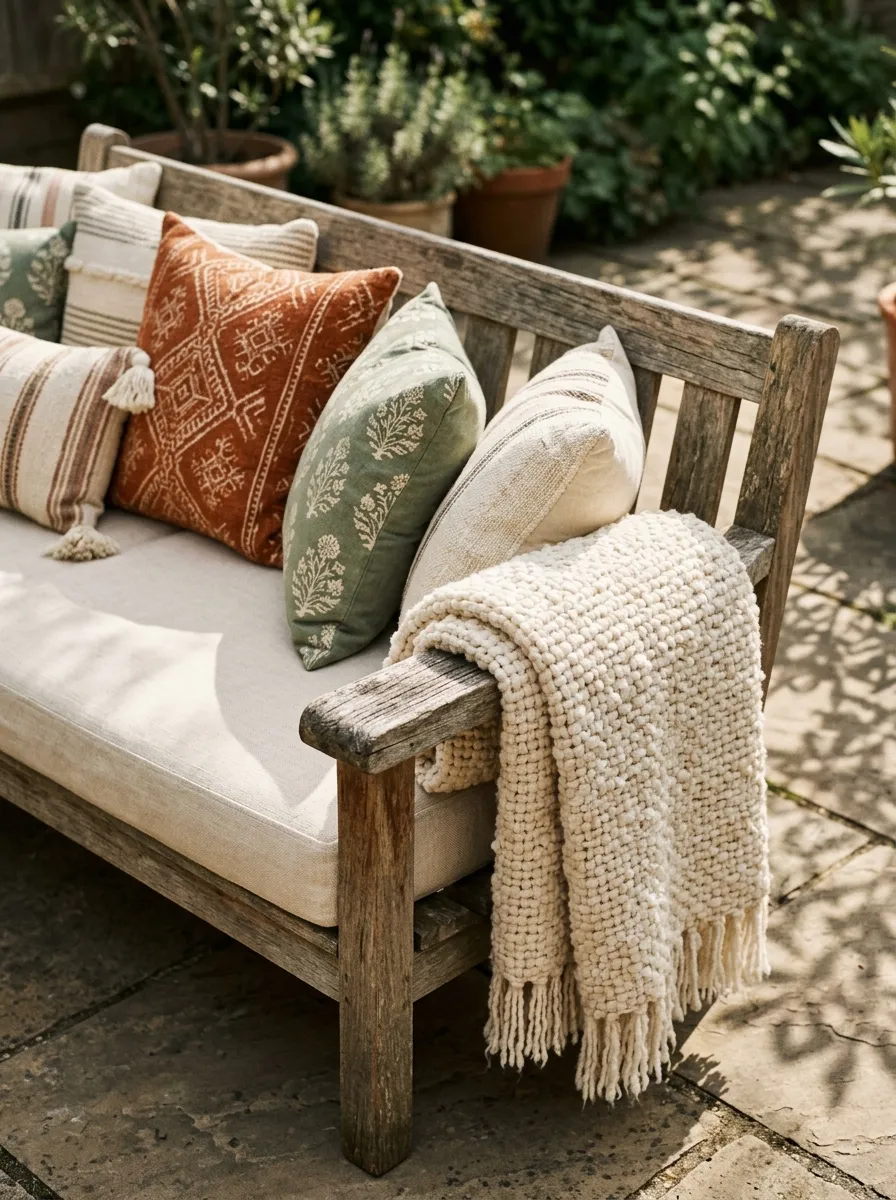
Pillows and blankets do for a patio what they do for any living room. They add softness, color, and comfort in an instant.
Outdoor throw pillows are water-resistant and mold-resistant. They are a worthy investment over regular indoor versions, which degrade quickly when exposed to moisture.
Buy covers rather than full pillows. Outdoor pillow cover inserts are affordable and easy to store or swap. This also makes washing them simple.
Stick to two or three colors for your pillow collection. Too many colors make a space feel restless. A palette of warm neutrals with one or two accent shades looks clean and intentional.
Blankets add warmth for cooler evenings and also serve as a style layer during the day. A chunky knit or woven throw draped over a chair arm adds instant texture.
Look for acrylic or polyester blankets rather than cotton. These dry faster and hold up better outdoors.
A basket near your seating area is perfect for storing blankets and pillows between uses. It also adds a decorative element to the space.
Change your pillow covers seasonally. Bold florals for spring and summer. Earthy plaids or stripes for fall.
This is one of the most affordable and reversible ways to refresh your patio without buying new furniture.
9. Bring in Potted Plants at Different Heights
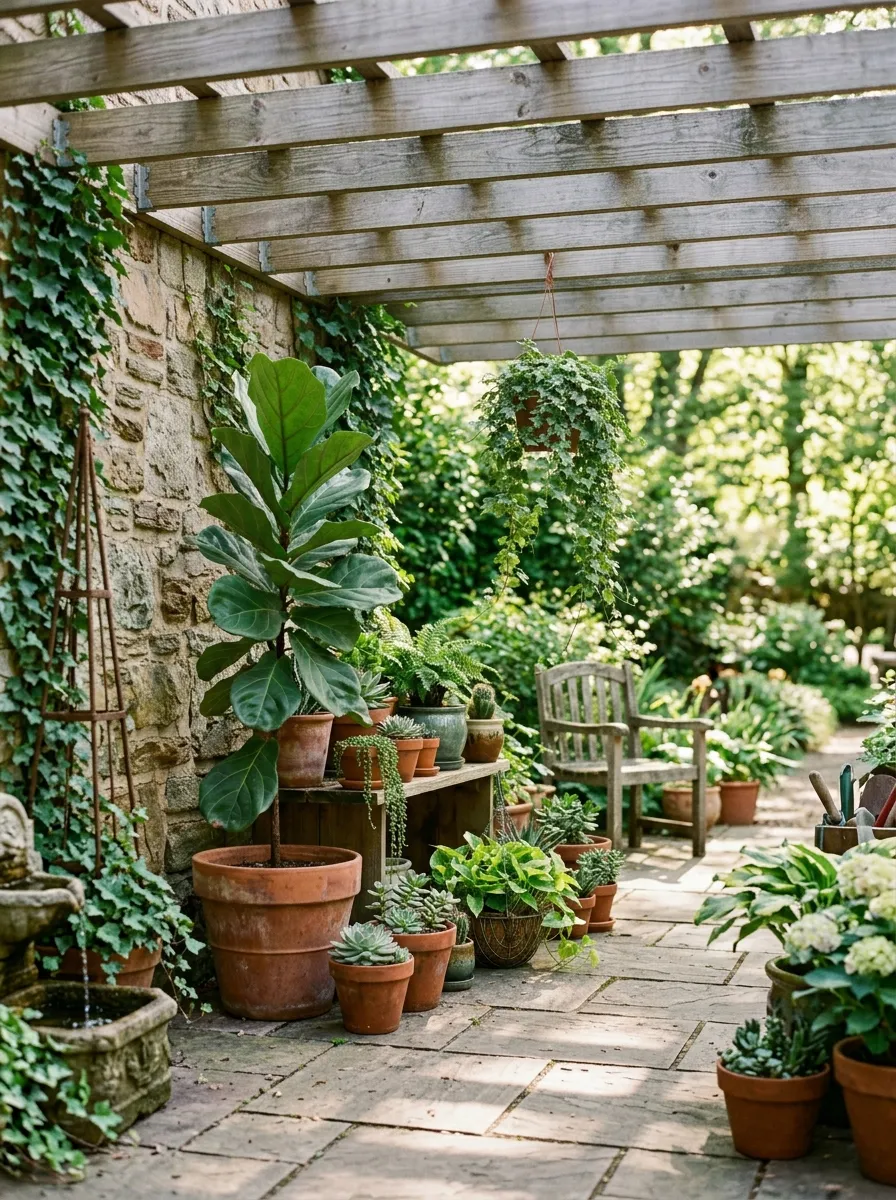
Plants make any outdoor space feel more alive. The key is grouping them at different heights so they create layers rather than a flat row.
Use a mix of tall statement plants, mid-height shrubs, and low-growing ground covers or trailing plants.
Plant stands, overturned pots, or stacked bricks can raise some pots to create height variation without spending extra money.
Tall plants like ornamental grasses, dwarf olive trees, or bamboo work well as anchors. Pair them with trailing plants like sweet potato vine, ivy, or trailing succulents.
Terracotta pots are affordable and beautiful. They also help regulate soil moisture, which is good for most plants.
If you kill plants easily, stick to succulents, ZZ plants, or cast iron plants. These require minimal watering and thrive even with neglect.
Group plants in odd numbers. Three or five pots clustered together always look more natural than two or four.
Add a tall planter or raised garden bed along a fence line to create a green boundary that doubles as privacy screening.
A mix of foliage types adds texture even when nothing is in bloom. Combine fine grasses, broad-leaf plants, and small flowering herbs for year-round interest.
10. Paint Your Concrete Patio Floor
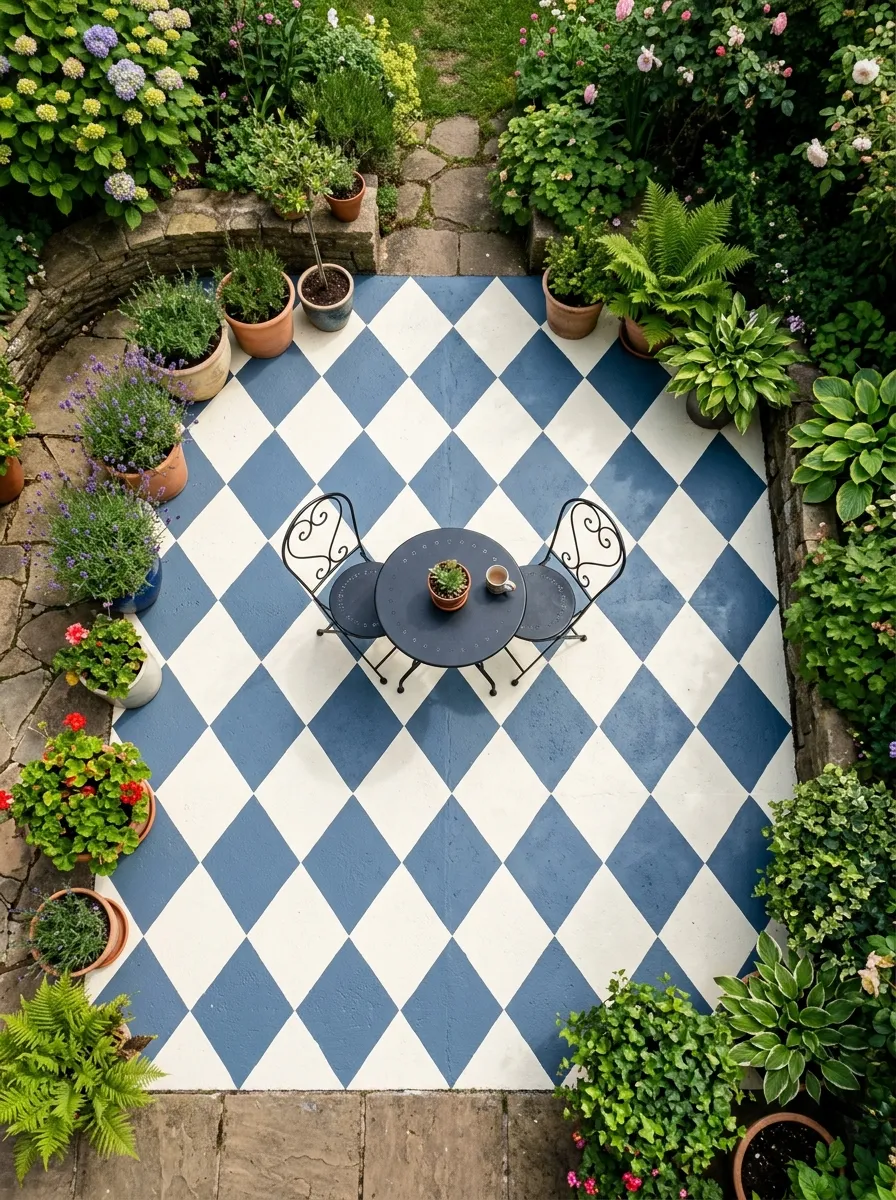
A plain gray concrete slab does not have to stay plain. Concrete patio paint is affordable, durable, and completely transforms the look of your outdoor floor.
Basic concrete patio paint costs around $30 to $50 per gallon and covers approximately 200 to 300 square feet. That is a very affordable floor update.
Clean the surface thoroughly first. Any oil, grease, or loose debris will prevent the paint from bonding properly. A pressure washer works well for this step.
For a simple upgrade, paint the entire surface a solid color. Gray, charcoal, slate blue, or terracotta all look stunning and set a clear aesthetic.
For a bolder look, tape off a geometric pattern and paint alternating sections. Diamond shapes, stripes, and large-scale tiles are all popular options that look like professional work.
Use a concrete-specific paint or floor enamel rather than standard wall paint. These are formulated to resist moisture, foot traffic, and UV fading.
Seal the surface once dry with a clear outdoor sealant. This extends the paint life significantly and makes cleaning easier.
This project takes a weekend but the results are dramatic. A painted concrete floor completely anchors a patio design and makes everything placed on top look more intentional.
11. Set Up an Outdoor Dining Area
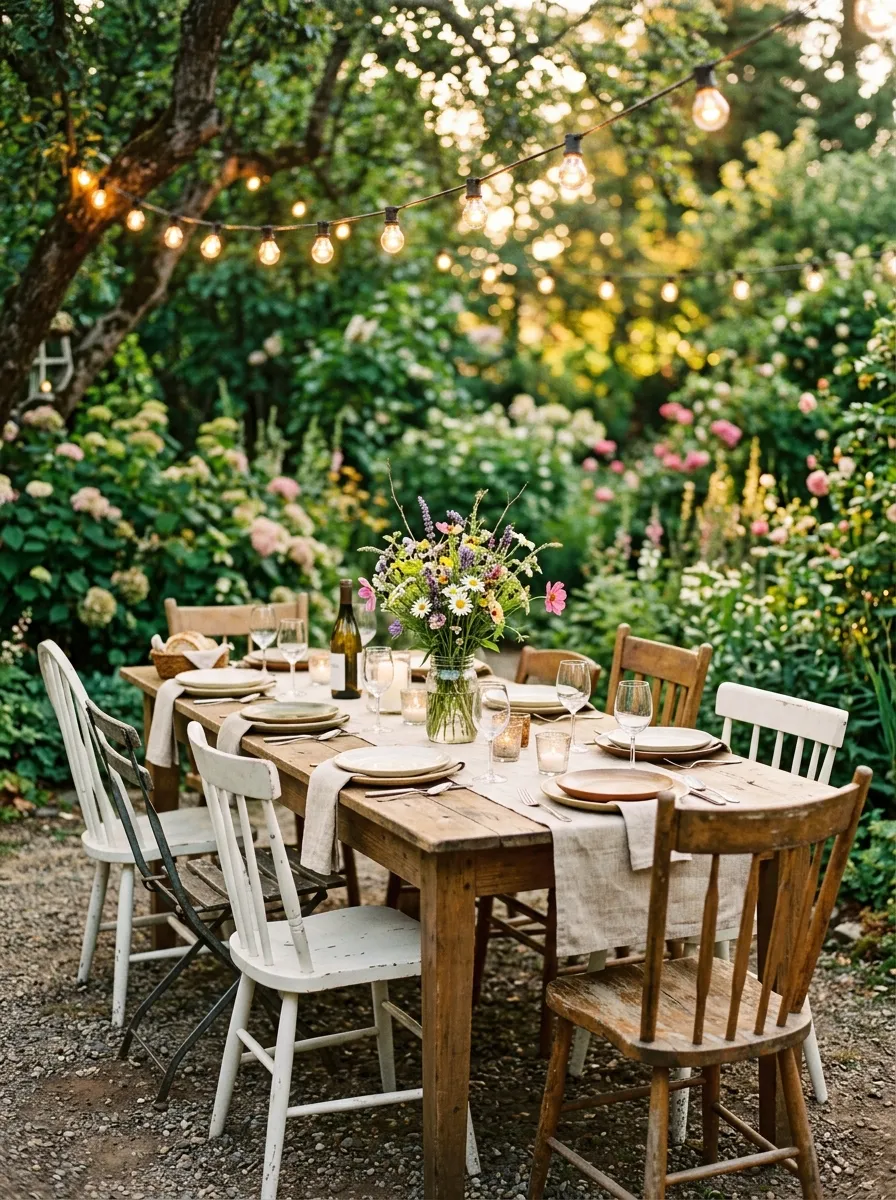
Eating outside completely changes how a meal feels. Setting up a dedicated outdoor dining area makes that experience something you will reach for every day.
A small folding table and chairs is the simplest starting point. These are often found at thrift stores for very little money and fold flat for easy storage.
A wooden farmhouse table is the most versatile and beautiful option for patios with more room. Cedar, teak, or acacia wood all hold up well outdoors with minimal maintenance.
Style your table even when not in use. A simple centerpiece makes the space feel curated rather than functional.
Use a mason jar with cuttings from your garden. A small lantern. A bowl of stones or seashells. These cost nothing and make the table feel intentional.
Add a table runner or placemat set to protect the surface and add color. Choose outdoor-rated fabric that can be wiped down easily.
String lights overhead create a magical atmosphere for evening meals. Pair with candles or lanterns for layered lighting.
If space is tight, a wall-mounted fold-down table is a great option. These mount flat against a wall and fold out when needed, saving floor space the rest of the time.
An outdoor dining area does not need to be elaborate. It just needs to invite people to sit down and stay a while.
12. Install a Water Feature for Calm Ambiance
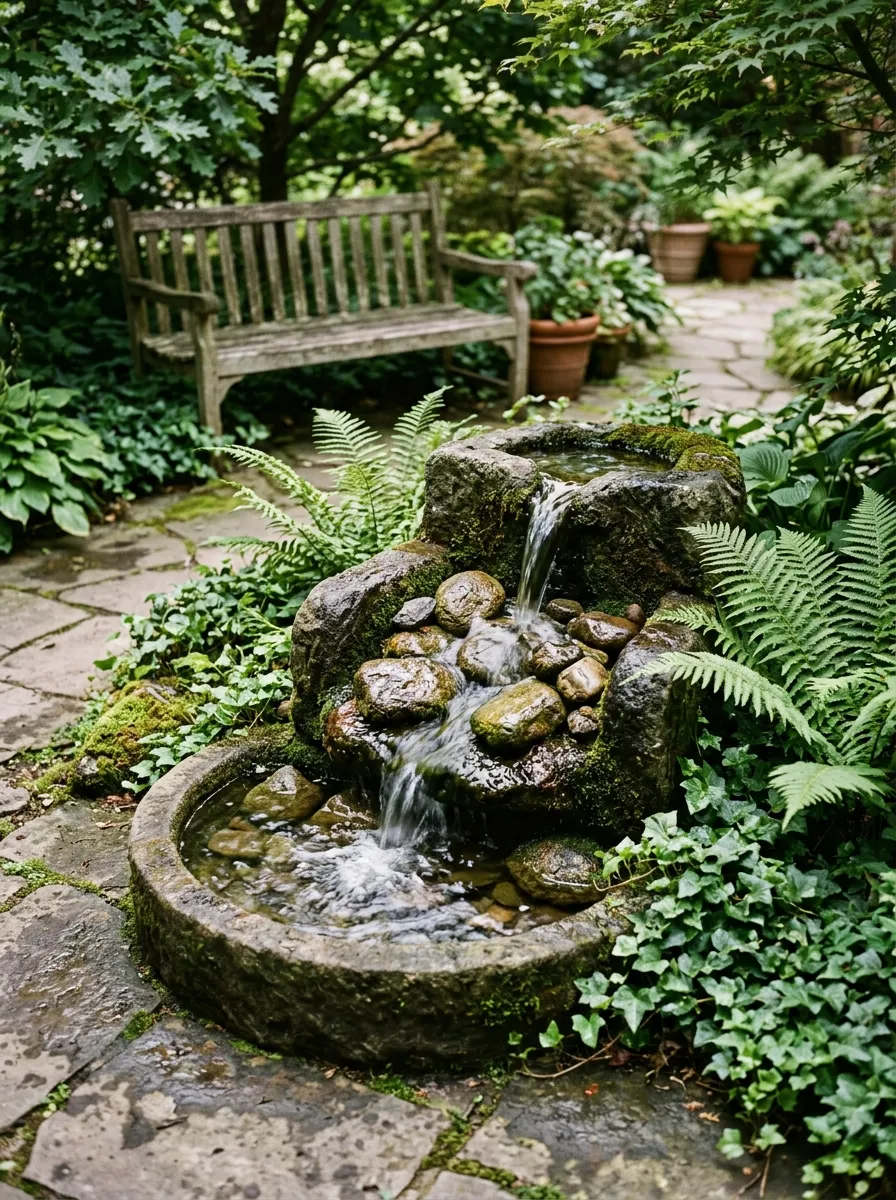
The sound of running water makes any outdoor space feel more peaceful. A water feature does not need to be large or expensive to make a real difference.
Small tabletop fountains are available for as little as $25 to $60. These plug into a standard outdoor outlet and run quietly in the background all day.
Solar-powered fountain pumps are an even more affordable option. You can place them in a large pot or basin, add water, and let the solar panel power the pump for free.
For a simple DIY water feature, use a large ceramic or concrete pot. Add a small pump from a garden center, fill it with water, and place river stones around the pump to hide it. Done.
Position your water feature near your seating area so you can hear it while relaxing.
Surround it with moisture-loving plants like ferns, hostas, or creeping Jenny to create a natural look.
Change the water regularly to prevent mosquito breeding. Adding a small amount of mosquito repellent tablets keeps the water clean and pest-free.
The sound of water also masks traffic noise and neighbor sounds, making your patio feel more private and serene.
This is one of the most underused patio upgrades. The calming effect is immediate and real.
13. Create a Reading Nook with a Hammock or Swing
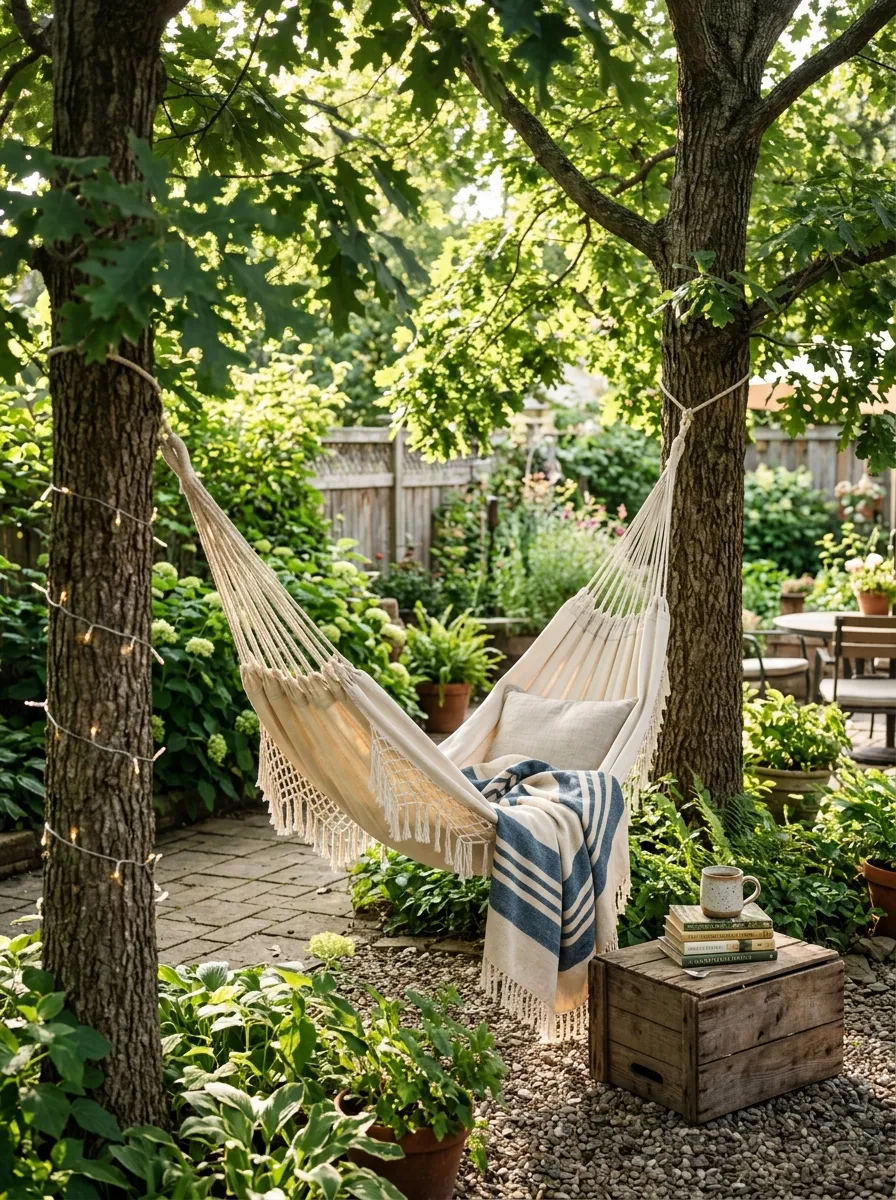
A hammock or outdoor swing gives your patio a specific purpose. It becomes the reading spot, the nap spot, the quiet spot. That specificity makes a patio feel well-designed.
A basic cotton hammock costs as little as $30 to $60. All you need are two trees or sturdy posts at least 10 to 15 feet apart.
If you do not have trees, a freestanding hammock stand solves the problem. These are widely available for $60 to $150 and can be moved anywhere on your patio.
Hanging egg chairs and swinging chairs are great alternatives if a hammock is not your style. These hang from a single overhead anchor point and come in rattan, rope, or fabric styles.
Style your hammock nook with a small side table. A wooden crate, a metal plant stand, or a tree stump all work as inexpensive side tables.
Add a small stack of books, a candle, and a throw blanket to complete the vibe.
Choose a spot with some shade so the space is comfortable during daytime use.
Solar string lights wrapped around nearby trees or posts extend the nook into the evening hours.
This is one of those patio additions that changes how you actually use the space. Once you have it, you will wonder why you waited.
14. Add Lanterns and Candles for Nighttime Glow
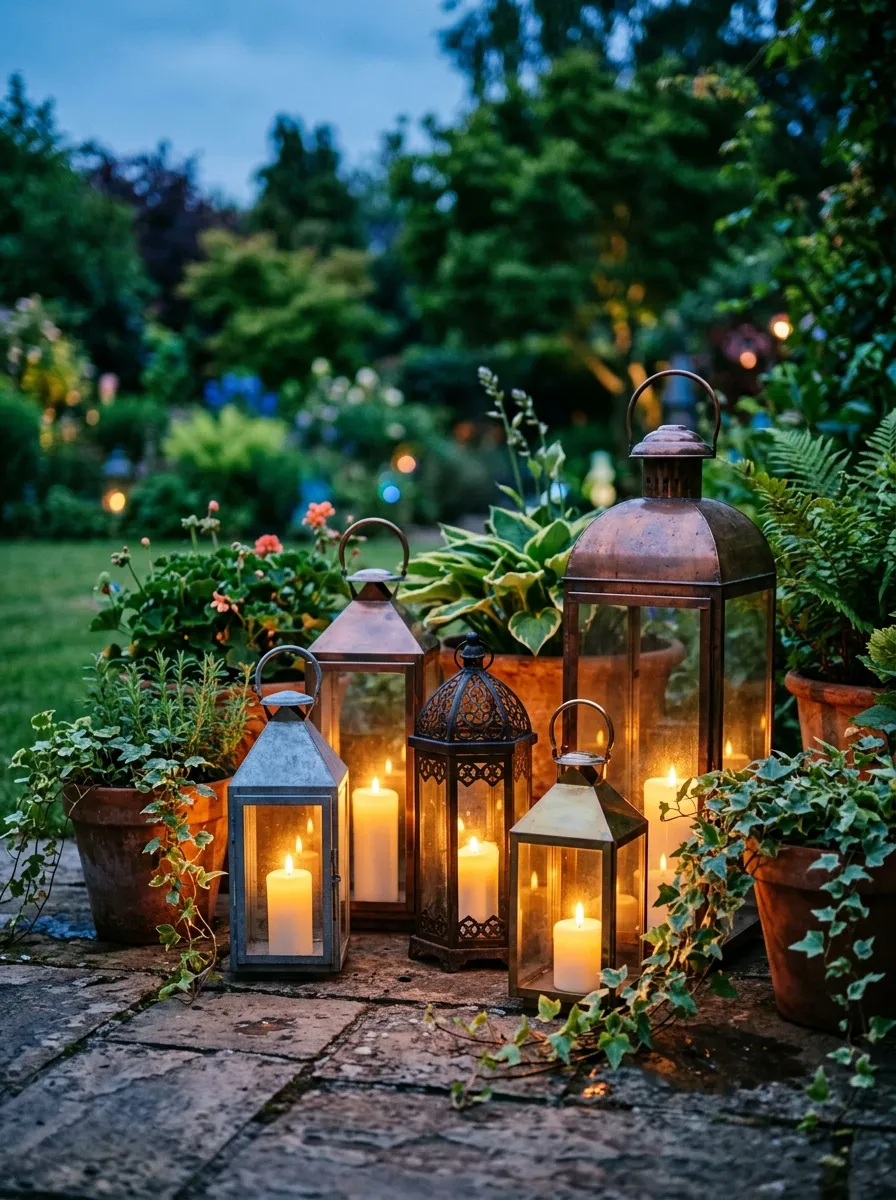
Lanterns are one of the fastest ways to add style and atmosphere to a patio. They work during the day as decor and at night as functional lighting.
Cluster different sizes and heights of lanterns together for a curated look. An odd number of pieces always looks more natural.
Use pillar candles inside lanterns for real flame warmth. LED candles are a safer and longer-lasting alternative that still flicker convincingly.
You can find lanterns at dollar stores, thrift shops, and discount home stores for very little money. A coat of metallic spray paint unifies mismatched pieces.
Place lanterns along pathways, on steps, or at the edges of your patio to define the space and guide guests.
Moroccan-style perforated metal lanterns cast beautiful patterned shadows when lit. These are often available online for under $20 and look spectacular at night.
For a table centerpiece, arrange a cluster of three lanterns of different heights on a tray with a few stones or dried botanicals around them.
Hang lanterns at varying heights from a pergola or tree branch using simple S-hooks and wire for an overhead glow that does not require electricity.
Candlelight and lanterns make any evening on the patio feel like something special.
15. Paint or Stain Your Fence for a Fresh Backdrop
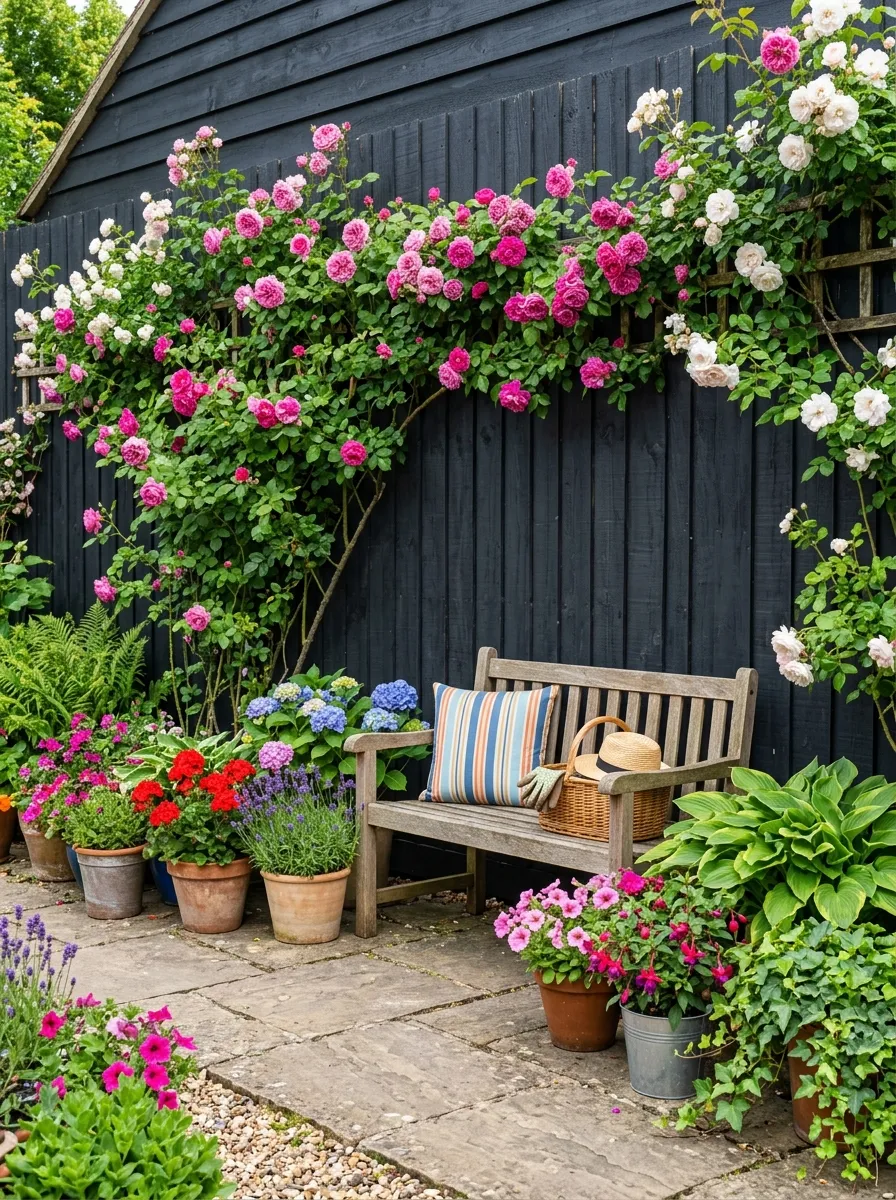
Your fence is the backdrop of your patio. If it looks tired or plain, it affects everything in front of it. A fresh coat of paint or stain changes the whole picture.
Dark fence colors like charcoal, navy, or forest green make plants and decor pop in front of them. They also make the space feel more enclosed and intentional.
Exterior-grade fence paint is water-resistant and UV-stable. One gallon typically costs $20 to $35 and covers a large section of fencing.
A brush-on application gives better coverage in the gaps of wooden panels. A roller speeds up the process on flat surfaces.
Clean the fence first and let it dry completely. Apply two thin coats for a durable finish rather than one thick coat.
If your fence is good quality wood, an oil-based stain rather than paint can bring out the natural grain beautifully while still protecting against weather.
White fences feel classic and open. Dark fences feel dramatic and sophisticated. Both are valid depending on your overall aesthetic.
You can even paint the inside of your fence and leave the outside natural. This is a common approach in rented homes where exterior changes are not permitted.
This project takes a few hours but delivers enormous visual impact. It is one of the best returns on effort in all of outdoor decorating.
16. Use Raised Garden Beds as Patio Borders
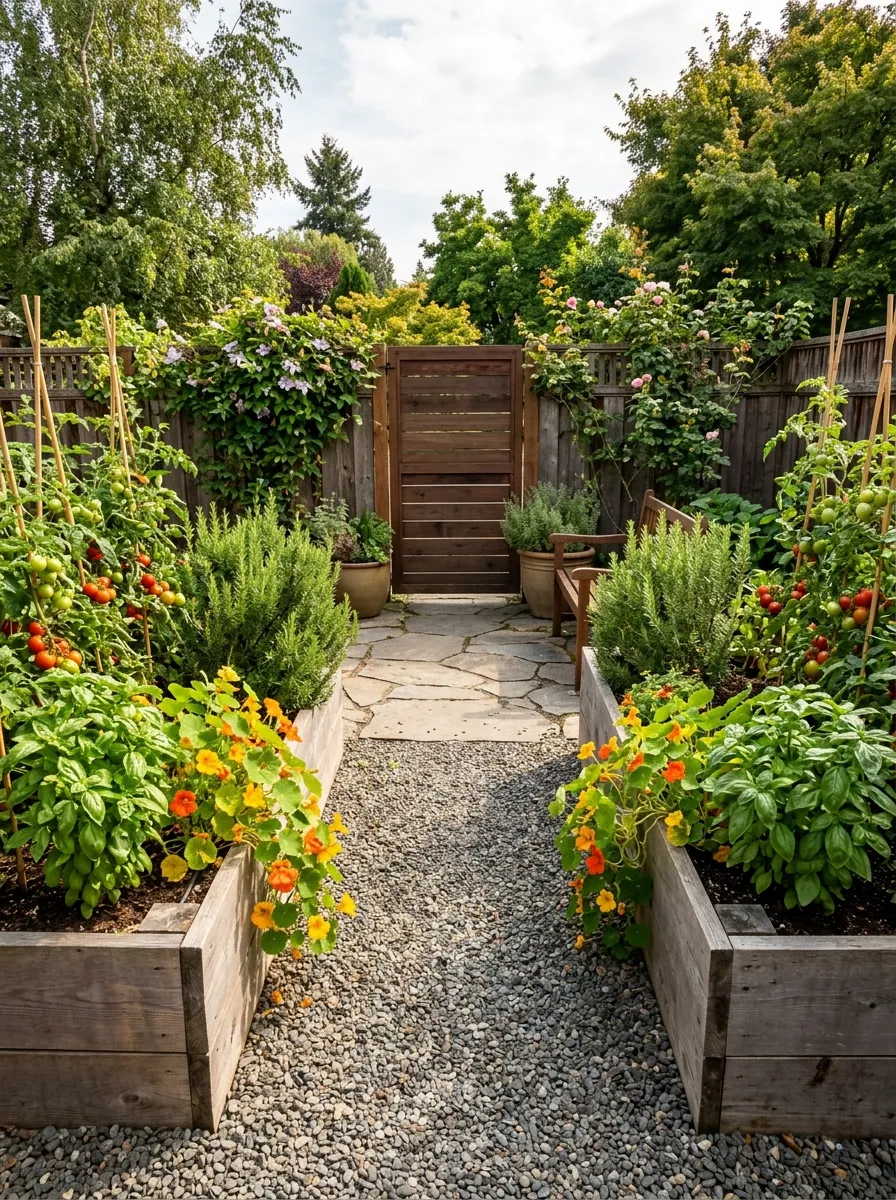
Raised garden beds add structure, greenery, and function to any patio edge. They double as borders and growing spaces.
You can build a simple raised bed using cedar boards, cinder blocks, or even repurposed wooden pallets. Basic cedar boards from a hardware store will cost around $40 to $70 for a 4×4 bed.
Fill with a mix of topsoil and compost for the best growing results. This combination is affordable in bulk bags from any garden center.
Use raised beds along the perimeter of your patio to create a soft, green frame around the entire space.
Grow herbs like rosemary, basil, mint, and thyme. These are practical, fragrant, and beautiful all at once.
Add trailing flowers like nasturtiums or lobelia to spill over the edges and soften the look of the wood.
Raised beds also work as seating edges in larger patios. A bed built to 18 to 24 inches high with a flat, smooth cap board on top becomes a casual bench.
Line the inside of raised beds with landscape fabric before filling with soil to prevent weeds and extend the life of the wood.
A patio surrounded by raised beds feels lush, productive, and beautifully designed without requiring complex landscaping.
17. Add a Bold Outdoor Mirror to Open the Space
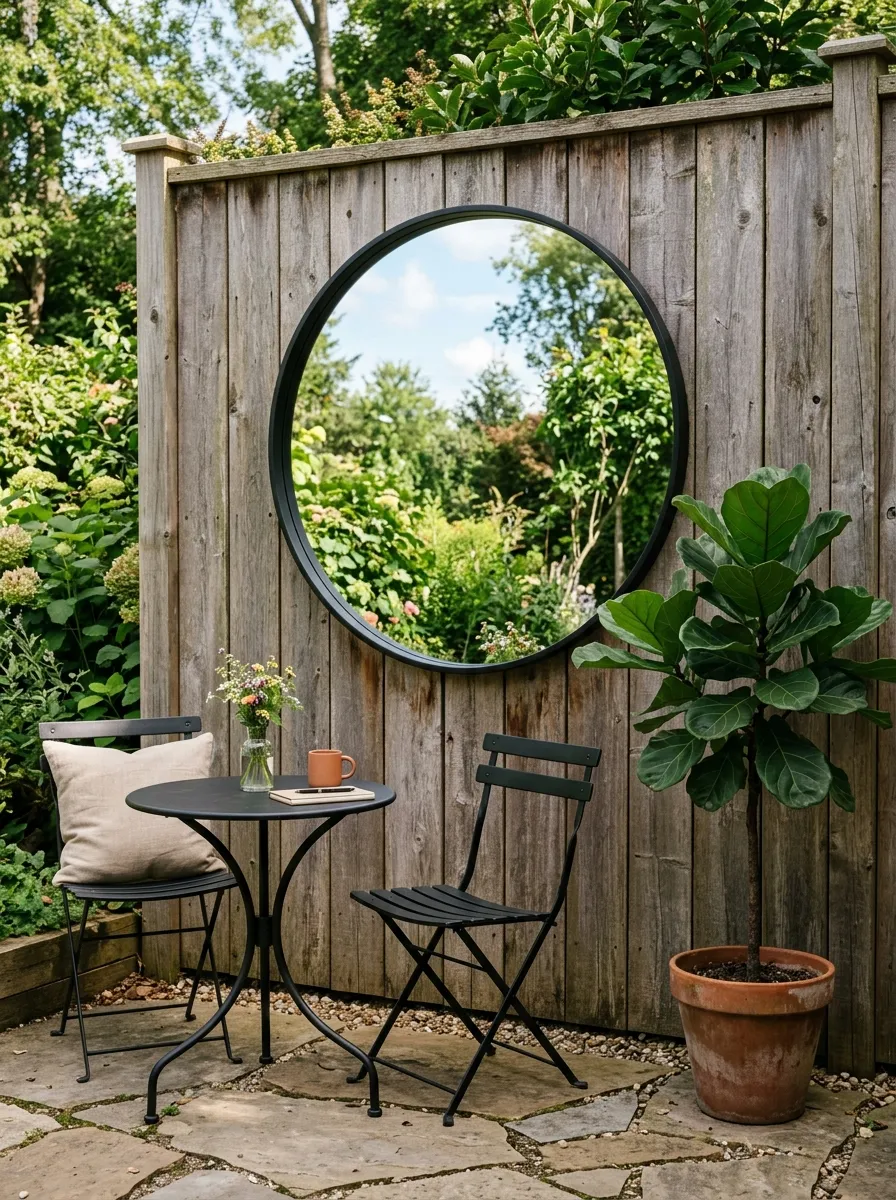
Outdoor mirrors are an underused design trick. They reflect light, greenery, and sky, making any patio feel larger and more open.
Use a mirror with a metal frame that will not rust outdoors. Wrought iron, aluminum, and stainless steel all hold up well in outdoor conditions.
Place the mirror on a fence or wall so it reflects something beautiful. A view of your plants, the sky, or string lights at night all work wonderfully.
A circular or arch-shaped mirror adds softness to the angular lines of a fence or wall. A rectangular mirror can look like a window and create the illusion of more space.
Secure the mirror properly. Use heavy-duty outdoor wall anchors and check periodically that it remains stable.
On small balconies, a mirror mounted to one wall can visually double the apparent depth of the space. This is an effective trick for tight urban outdoor areas.
You can find outdoor-suitable mirrors at home improvement stores or online from $30 to $150 depending on size.
A DIY option is to use a simple wooden frame and a mirror cut to size. Seal the wood with exterior-grade paint or varnish before mounting.
Once you see how a mirror changes the feel of your patio, you will wonder why more patios do not have one.
18. Create an Herb and Edible Garden Corner
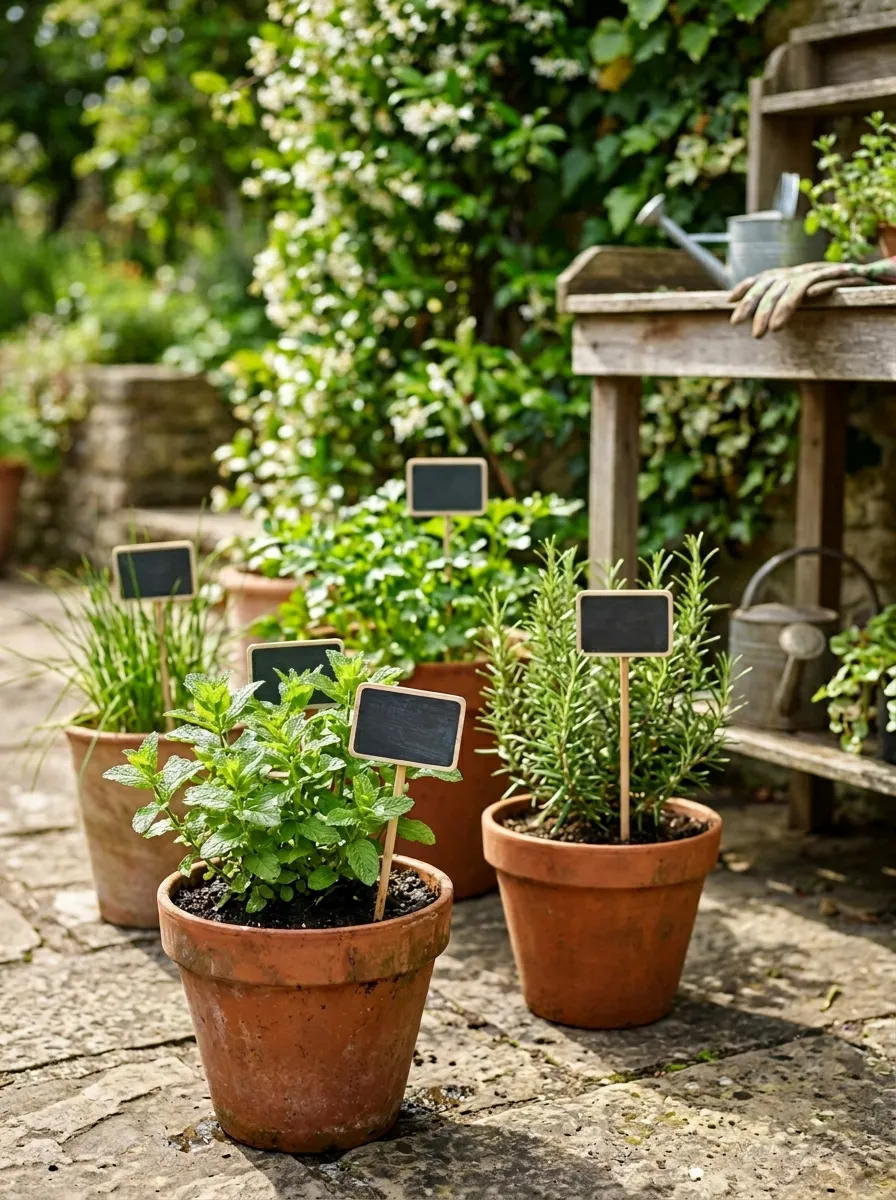
An edible garden on your patio is both beautiful and practical. Fresh herbs at arm’s reach while cooking changes everything about how you use your outdoor space.
You do not need a large area. A cluster of terracotta pots on a sunny corner is enough to grow basil, rosemary, mint, parsley, thyme, and chives.
Group herbs by their watering needs. Mediterranean herbs like rosemary and thyme prefer dry conditions. Basil and parsley like more regular moisture.
Label each pot with a small chalkboard stake or rock marker. This looks charming and is practical if you grow multiple varieties.
Use terracotta pots rather than plastic. They look far better and actually improve growing conditions for most herbs by allowing air circulation through the pot walls.
Add one or two edible flowers like nasturtiums or pansies. These look stunning in the garden and can also be used to garnish salads or desserts.
A small potting bench or garden cart near your herb corner creates a functional workspace and adds a charming design element.
Cherry tomatoes, dwarf peppers, and strawberries all grow well in containers on sunny patios. These give you both color and food.
An edible garden makes your patio feel like a place of real abundance. It also saves money on grocery bills. That is a combination that is hard to beat.
19. Build a DIY Outdoor Bar or Beverage Station
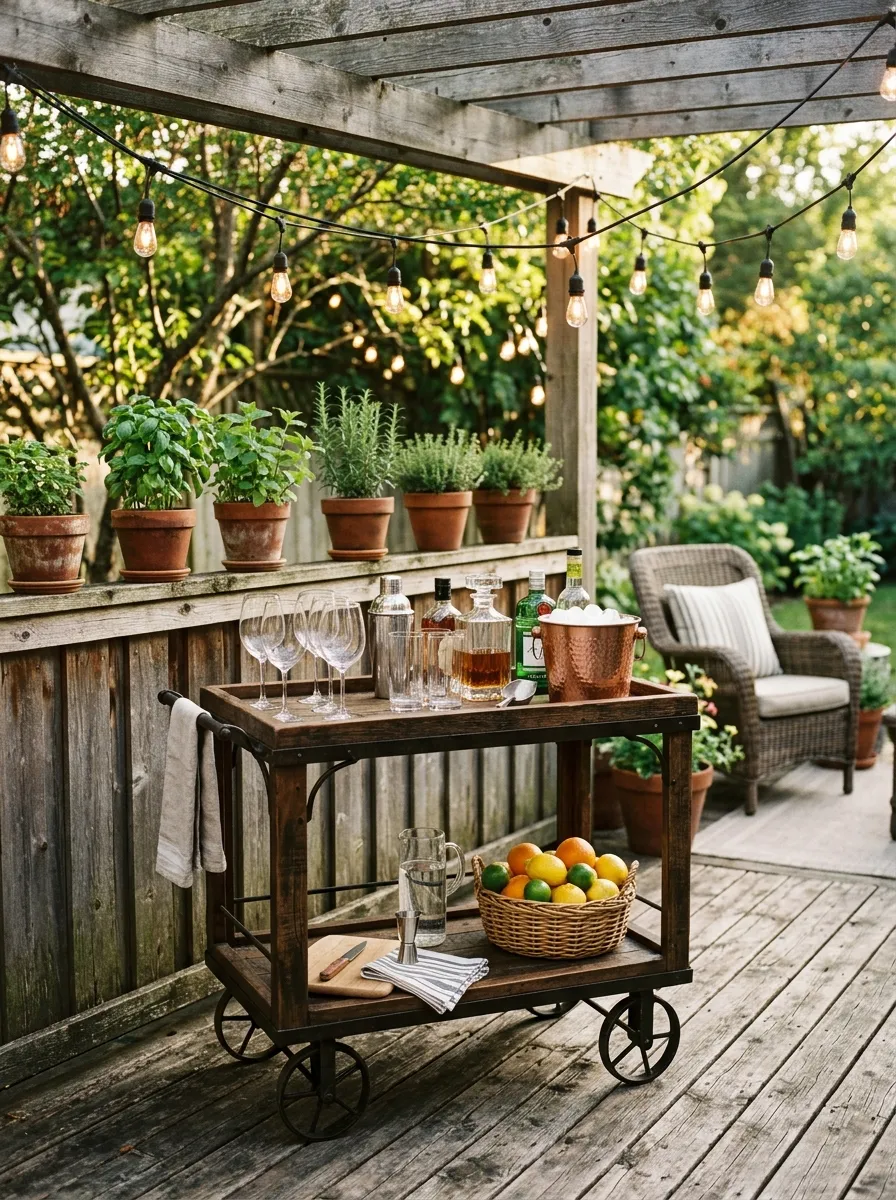
An outdoor bar or beverage station makes entertaining feel effortless. It also gives your patio a social focal point.
The simplest version is a rolling bar cart. These can be purchased new for $60 to $150 or found secondhand for much less. A coat of outdoor spray paint can completely refresh a thrifted piece.
Place your bar cart in a convenient location near your seating area but out of the main traffic path.
Stock it with glassware, a small ice bucket, a cutting board, and a basket for citrus or garnishes. These small functional details make the station feel complete.
For a more permanent setup, repurpose an old dresser, sideboard, or bookshelf. Seal it with exterior-grade paint and use the shelves for glassware and the top surface as the bar area.
A DIY outdoor bar can be built using two wooden crates stacked and mounted to a fence. Add a simple wooden plank on top for the bar surface. This costs almost nothing.
Add a small chalkboard or framed sign listing your signature cocktail or drink menu. It adds personality and makes guests smile.
Include a small outdoor speaker nearby if you enjoy music while entertaining.
A beverage station signals to guests that they are welcome and that this patio is meant for enjoying. It sets the right tone for every gathering.
20. Style with Seasonal Decor to Keep Things Fresh
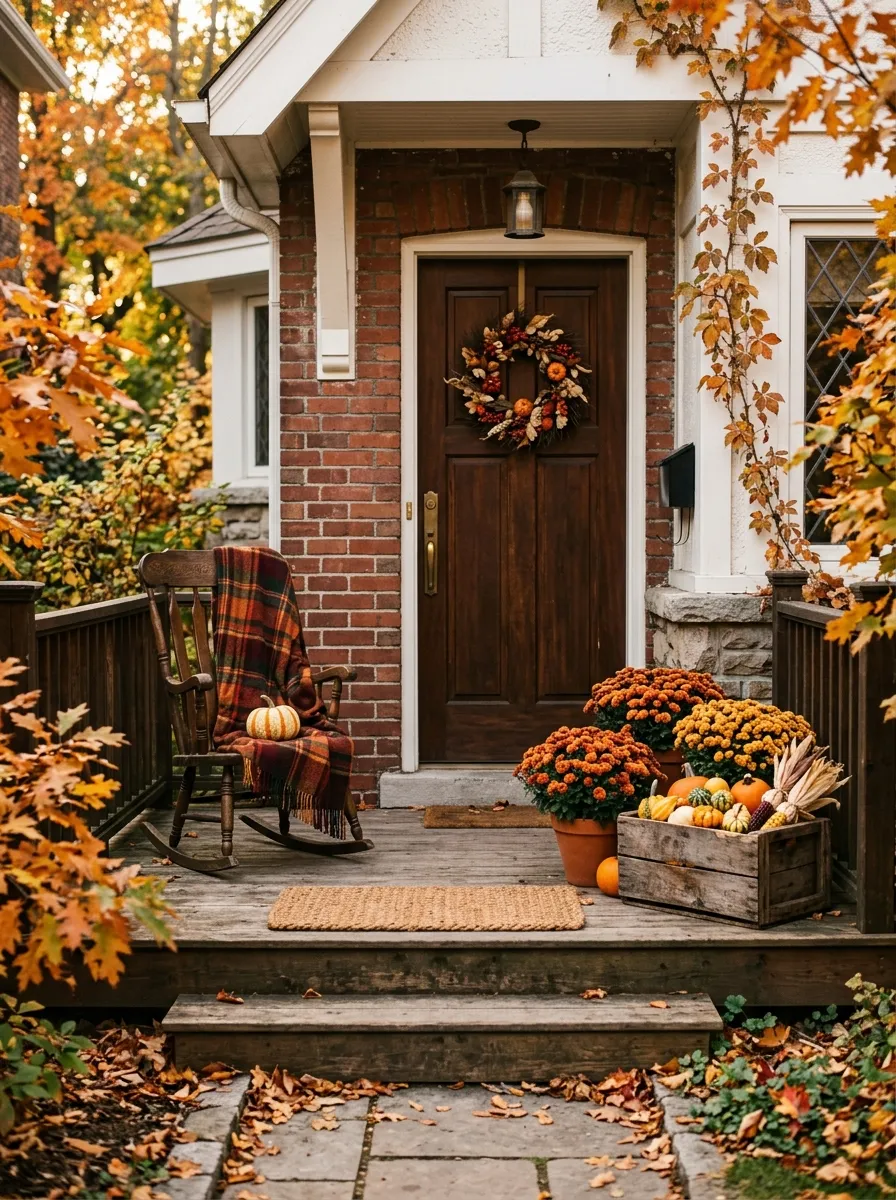
One of the best things you can do for your patio is treat it like a living, changing space. Seasonal decor keeps it feeling fresh and relevant all year long.
Spring and summer call for bright florals, lightweight textiles, and fresh herbs. Fall shifts toward warm earth tones, dried botanicals, and heavier layers.
Swap out just two or three key elements to signal a seasonal change. You do not need to redecorate the entire space. A new doormat, some seasonal flowers, and a different throw blanket is enough.
Source seasonal decor affordably. Dollar stores, farmers markets, and discount home goods stores carry seasonal items at very low prices.
In spring, add window boxes of pansies or petunias. In summer, bring out bold tropical plants. In fall, cluster small pumpkins, gourds, and chrysanthemums near your entrance.
Even in winter, a patio can be styled with evergreen branches, pinecones, and a few lanterns. This keeps the space inviting even when the weather pushes you indoors.
Rotate your pillow covers and rug to match the season. This is the fastest and most affordable way to signal a seasonal change.
Keep a small storage bin for off-season decor so items are easy to find and not damaged while stored.
Treating your patio like a space that evolves with the calendar makes it feel intentional and alive. It also gives you a reason to keep engaging with the space year after year.
Your patio has the potential to be one of the best spaces in your home. It does not matter how large or small it is. With the right mix of lighting, plants, furniture, and personal touches, any outdoor area can become a place you genuinely want to spend time in. Start with one or two of these ideas. See how they change the feel of your space. Then build from there. The most beautiful patios are not the ones with the biggest budgets. They are the ones that reflect the people who use them. Go outside, start small, and let your outdoor space grow into something you love.